Your new post is loading...

|
Scooped by
Complexity Digest
December 4, 5:16 PM
|
ALIFE 2025: Ciphers of Life: Proceedings of the Artificial Life Conference 2025 Read the full Proceedings at: direct.mit.edu
|
|
Scooped by
Complexity Digest
September 27, 11:27 AM
|
This book offers a unique perspective on the evolution of scientific theories through the lens of their changing complexity.
To explore this non-trivial connection, the author draws on well-known historical cases from the philosophy of science tradition to test the central theses of the work. At the same time, the book develops a conceptual framework in which the debates on emergence and complexity play a central role.
The opening chapter provides the historical background of emergence, examining both classical and contemporary perspectives, highlighting diverse viewpoints and their contributions to the current discussion.
The second chapter turns to the foundations of complexity science, detailing its key methodologies and emphasizing the role of information in describing and modeling systems.
Building on this foundation, the book introduces a novel quantitative definition of emergent properties, grounded in the concept of parametric model complexity. It discusses how slight variations in control parameters can generate universal features and explores the implications of these dynamics for our understanding of systemic behavior.
Finally, the author shows how this framework illuminates critical aspects of scientific practice, ranging from the criteria guiding theory choice to the relationship between technological innovation and the risk of the appearance of anomalies. By combining historical analysis, conceptual innovation, and formal modeling, the book presents a compelling vision of how complexity and emergence can be predictive indicators of theoretical transformation, recognizing the moments when our current models have reached their limits. More at: link.springer.com
|
|
Scooped by
Complexity Digest
August 31, 12:53 PM
|
COMPUTATION IS A TECHNOLOGY TO THINK WITH. It is an instrument for epistemological discovery. It changes not only what we know but how we know.
Computation was discovered as much as it was invented. It is part of how the universe works, including, as Blaise Agüera y Arcas gracefully shows, what intelligence is.
Among the many rich takeaways that await you as you read What is Intelligence? is that much of what is traditionally categorized as “life,” “intelligence,” and “technology” is combining in new ways (think synthetic biology, artificial life, and AI). So too are the definitions of these terms, in ways that would have been unthinkable only a few years ago.
Are these three words—life, intelligence, technology—actually different names for the effects of a more general process? Just as life is a factory for making more life, and technology is a factory for making more technology, now life makes technologies that make new life that makes new technologies. Ultimately, it may be the same factory, and at its heart is computation.
That such a claim could be made at all is due in no small part to the creative and curious use of our computational tools—or what we might more precisely call artificial computation. With these we discover that the otherwise imperceivable building blocks of our reality and of our own flesh are themselves computational. Computation discovers itself through us. Read the full book at: whatisintelligence.antikythera.org
|
|
Scooped by
Complexity Digest
July 17, 9:57 AM
|
Cristian Axenie , Meisam Akbarzadeh , Michail A. Makridis , Matteo Saveriano , Alexandru Stancu The book purpose is to build a foundational knowledge base by applying antifragile system design, analysis, and development in technical systems, with a focus on traffic engineering, robotics, and control engineering. The authors are interested in formalizing principles and an apparatus that turns the basic concept of antifragility into a tool for designing and building closed-loop technical systems that behave beyond robust in the face of uncertainty.
As coined in the book of Nassim Taleb, antifragility is a property of a system to gain from uncertainty, randomness, and volatility, opposite to what fragility would incur. An antifragile system’s response to external perturbations is beyond robust, such that small stressors can strengthen the future response of the system by adding a strong anticipation component. The work of the Applied Antifragility Group in traffic control and robotics, led by the authors, provides a good overview on the current research status. Read the full article at: link.springer.com
|
|
Scooped by
Complexity Digest
June 26, 3:06 PM
|
This book brings together key findings, insights, and theories at the intersection of two disciplines – city science and complex systems. It features a curated collection of chapters contributed by emerging scholars conducting cutting-edge research in complexity science, interdisciplinary physics, and quantitative geography. The compendium is tailored to a thematically diverse audience, spanning quantitative fields such as statistical and mathematical physics, as well as socially-focused domains such as geography and urban planning. By integrating novel methods and insights from physics, economics, and geography, this book aims at an interdisciplinary spectrum of graduate students and academic researchers studying cities as complex systems. More at: link.springer.com
|
|
Scooped by
Complexity Digest
May 7, 11:20 AM
|
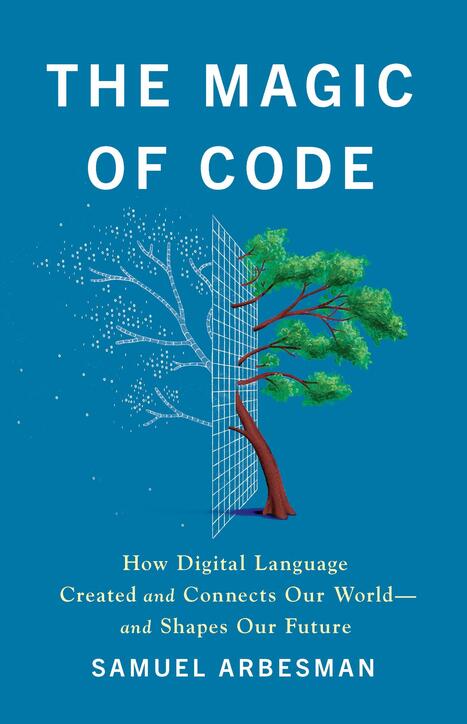
In the tradition of classics such as The Lives of a Cell, a bold reframing of our relationship with technology that is more positive and human centered.
In the digital world, code is the essential primary building block, the equivalent of the cell or DNA in the biological sphere—and almost as mysterious. Code can create entire worlds, real and virtual; it allows us to connect instantly to people and places around the globe; and it performs tasks that were once only possible in science fiction. It is a superpower, and not just in a technical sense. It is also a gateway to ideas. As vividly illustrated by Samuel Arbesman, it is the ultimate connector, providing new insight and meaning into how everything from language and mythology to biblical texts, biology, and even our patterns of thought connect with the history and nature of computing. While the building block of code can be used for many wondrous things it can also create deeper wedges in our society and be weaponized to cause damage to our planet or our civilization. Code and computing are too important to be left to the tech community; it is essential that each of us engage with it. And we fail to understand it to our detriment. By providing us with a framework to think about coding and its effects upon the world and placing the past, current, and future developments in computing into its broader setting we see how software and computers can work for people as opposed to against our needs. With this deeper understanding into the “why” of coding we can be masters of technology rather than its subjects. More at: www.publicaffairsbooks.com
|
|
Scooped by
Complexity Digest
April 18, 11:21 AM
|
Carl Zimmer For generations, physicists have puzzled over life. Their theories about matter and energy have helped them understand how the universe produced galaxies and planets. But physicists have struggled to understand how lifeless chemical reactions give rise to the complexity stored in our cells. In a new book, “Life as No One Knows It: The Physics of Life’s Emergence,” out on Aug. 6, Sara Walker, a physicist at Arizona State University, offers a theory that she and her colleagues believe can make sense of life. Assembly theory, as they call it, looks at everything in the universe in terms of how it was assembled from smaller parts. Life, the scientists argue, emerges when the universe hits on a way to make exceptionally intricate things. The book arrives at an opportune time, as assembly theory has attracted both praise and criticism in recent months. Dr. Walker argues that the theory holds the potential to help identify life on other worlds. And it may allow scientists like her to create life from scratch. “I actually think alien life will be discovered in the lab first,” Dr. Walker said in an interview. Read the full article at: www.nytimes.com
|
|
Scooped by
Complexity Digest
January 31, 11:03 AM
|
This book presents an innovative framework for conceptualising families as complex systems and for understanding and supporting positive change, adaptation and resilience. The development of this framework was based on a qualitative and abductive research process targeting change and resilience processes in multi-challenged families.
The theoretical novelty of this book is mostly expressed in the notion of Love-Force: a relational force emerging from the coupling processes between individuals with potential transformative effects on them, their interactions and environments. This book introduces a new vocabulary for understanding the complexity of families as complex systems and their change and resilience processes. Love-Force is presented as a supreme expression of the complexity of families and human bonds. It elaborates on the complexity of the family bonds, on the relation of Love-Force to change and resilience and its contributions to the conceptualisation of the Potential for Family Change.
Raising important theoretical and methodological challenges and questions, it presents a guide for future interdisciplinary research in the domains of complexity and family sciences and advances in practice. As such, it will be of interest to anyone interested in the complexity of human relations and to complexity scientists as much as family theorists, researchers and practitioners. More at: www.routledge.com
|
|
Scooped by
Complexity Digest
December 18, 2024 10:11 AM
|
* Offers an integrating framework for natural philosophy
* Connects biological and physical evolution through novel theory, elaborating an extended evolutionary synthesis
* Analyses science from a philosophical perspective and looks at philosophy from a scientific perspective More at: link.springer.com

|
Suggested by
John Stewart
November 20, 2024 2:52 PM
|
Human Superintelligence: How you can develop it using recursive self-improvement, by John Stewart
There are many books and articles that outline the findings made by existing complexity science. But there are almost none that identify how you can develop the thinking that was used to produce those findings. None show how individuals can develop the higher cognition that will be necessary if they are to contribute to the emergence of a genuine science of complexity.
In contrast, this book sets out specifically to provide methods and practices for developing higher cognition.
The book argues that the ability to construct and utilize mental models of complex phenomena is essential if humanity is to overcome the existential challenges that currently threaten the survival of human civilization on Earth. Furthermore, it argues that this metasystemic cognition is essential for the development of a genuine science of complexity – the book makes the case that the analytical/rational cognition that underpins current mainstream science is largely limited to generating only mechanistic reductions of complex phenomena.
The book recognises that most potential readers are likely to be highly skeptical about its claims to enable the scaffolding of metasystemic cognition. The website for the book attempts to dispel this skepticism by making the first chapter of the book freely available. This chapter is designed to evoke the realization that the methods detailed by the book are plausible, and that currently almost no one uses the methods systematically, despite their enormous potential.
The website for the book is HumanSuperIntelligenceBook.com
|
|
Scooped by
Complexity Digest
November 1, 2024 4:02 PM
|
A new theory of Neurobiological Emergentism that explains how sentience emerges from the brain.
Sentience is the feeling aspect of consciousness. In From Sensing to Sentience, Todd Feinberg develops a new theory called Neurobiological Emergentism (NBE) that integrates biological, neurobiological, evolutionary, and philosophical perspectives to explain how sentience naturally emerges from the brain.
Emergent properties are broadly defined as features of a complex system that are not present in the parts of a system when they are considered in isolation but may emerge as a system feature of those parts and their interactions. Tracing a journey of billions of years of evolution from life to the basic sensing capabilities of single-celled organisms up to the sentience of animals with advanced nervous systems, including all vertebrates (for instance, fish, reptiles, birds, and mammals), arthropods (insects and crabs), and cephalopods (such as the octopus), Feinberg argues that sentience gradually but eventually emerged along diverse evolutionary lines with the evolution of sufficiently neurobiologically complex brains during the Cambrian period over 520 million years ago.
Ultimately, Feinberg argues that viewing sentience as an emergent process can explain both its neurobiological basis as well its perplexing personal nature, thus solving the historical philosophical problem of the apparent “explanatory gap” between the brain and experience. More at: mitpress.mit.edu
|
|
Scooped by
Complexity Digest
September 26, 2024 11:41 AM
|
Humans are the ultimate complex systems. In this monograph intended for psychologists and social scientists interested in modeling psychological processes, Han L. J. van der Maas argues that we can only succeed in exploring the psychological system by understanding its complexity. By applying the tools of complexity science to psychology, researchers and practitioners can achieve desperately needed breakthroughs in the social sciences.
The book has three primary objectives: to provide a comprehensive overview of complex-systems research, with a particular emphasis on its applications in psychology and the social sciences; to provide skills for complex-systems research; and to foster critical thinking regarding the potential applications of complex systems in psychology. Readers should have a basic understanding of mathematics and knowledge of the programming language R.
Complex-Systems Research in Psychology explores a range of topics, including chaos, bifurcation, and self-organization in psychological processes, psychological network analysis, as well as agent-based modeling of social processes. It offers applications in various areas of psychology, such as perception, depression, addiction, cognitive development, and polarization.
Download full book at: www.sfipress.org
|
|
Scooped by
Complexity Digest
September 17, 2024 11:45 AM
|
The Complex World, originally published in Volume 1 of Foundational Papers in Complexity Science, presents an entirely new framing of nature, of the human role in the natural and technological worlds, and what it means to prosper on a living planet. We live in a complex world—meaning one that is increasingly connected, evolving, technological, volatile, and potentially poised for catastrophe. And yet we continue to treat the world as if it were simple: linear, unchanging, disconnected, and infinitely exploitable. Complexity science is an approach to understanding and surviving in a complex world. In this concise and comprehensive introduction, Santa Fe Institute President David C. Krakauer traces the roots of complexity science back to the nineteenth-century science of machines—evolved and engineered—into the twentieth-century science of emergent systems. By combining insights from evolution, computation, nonlinear dynamics, and statistical physics, complexity science provides the first scientific framework for understanding the purposeful universe. More at: www.sfipress.org
|
|
|
Scooped by
Complexity Digest
November 27, 12:08 PM
|
* Explores the potential of complex systems in shaping the future of communication networks
* Integrates network science, bio-inspired models, artificial intelligence, and higher-order graph theory
* Provides a guide for researchers to use the full potential of complex systems in revolutionizing communication networks More at: link.springer.com
|
|
Scooped by
Complexity Digest
September 11, 3:26 PM
|
Engineering Swarms for Cyber-Physical Systems covers the whole design cycle for applying swarm intelligence in Cyber-Physical Systems (CPS) and guides readers through modeling, design, simulation, and final deployment of swarm systems. The book provides a one-stop-shop covering all relevant aspects for engineering swarm systems. Following a concise introduction part on swarm intelligence and the potential of swarm systems, the book explains modeling methods for swarm systems embodied in the interplay of physical swarm agents. Examples from several domains including robotics, manufacturing, and search and rescue applications are given. In addition, swarm robotics is further covered by an analysis of available platforms, computation models and applications. It also treats design methods for cyber-physical swarm applications including swarm modeling approaches for CPSs and classical implementations of behaviors as well as approaches based on machine-learning. A chapter on simulation covers simulation requirements and addresses the dichotomy between abstract and detailed physical simulation models. A special feature of the chapters is the hands-on character by providing programming examples with the different engineering aspects whenever possible, thus allowing for fast translation of concepts to actual implementation. Overall, the book is meant to give a creative researcher or engineer the inspiration, theoretical background, and practical knowledge to build swarm systems of CPSs. It also serves as a text for students in science and engineering. Read the full article at: www.routledge.com
|
|
Scooped by
Complexity Digest
July 17, 11:58 AM
|
Cristian Axenie , Roman Bauer , Oliver López Corona , Jeffrey West As coined in the book of Nassim Taleb, antifragility is a property of a system to gain from uncertainty, randomness, and volatility, opposite to what fragility would incur. An antifragile system’s response to external perturbations is beyond robust, such that small stressors can strengthen the future response of the system by adding a strong anticipation component. Such principles are already well suited for describing behaviors in natural systems but also in approaching therapy designs and eco-system modelling and eco-system analysis.
The purpose of this book is to build a foundational knowledge base by applying antifragile system design, analysis, and development in natural systems, including biomedicine, neuroscience, and ecology as main fields. We are interested in formalizing principles and an apparatus that turns the basic concept of antifragility into a tool for designing and building closed-loop systems that behave beyond robust in the face of uncertainty when characterizing and intervening in biomedical and ecological (eco)systems.
The book introduces the framework of applied antifragility and possible paths to build systems that gain from uncertainty. We draw from the body of literature on natural systems (e.g. cancer therapy, antibiotics, neuroscience, and agricultural pest management) in an attempt to unify the scales of antifragility in one framework. The work of the Applied Antifragility Group in oncology, neuroscience, and ecology led by the authors provides a good overview on the current research status. Read the full article at: link.springer.com
|
|
Scooped by
Complexity Digest
June 27, 3:28 PM
|
Interdisciplinary systems thinking is complementary but does not replace conventional disciplinary analytical thinking. The book is valuable for researchers, their advisors, and other thinkers interested in deep knowledge of science. Interdisciplinary systems thinking is valuable for three reasons: The goal of all science is a unified view of the world; we cannot solve the significant problems of our time without interdisciplinary collaboration; and general theories of systems and system archetypes support the solution to those problems. System archetypes are generic system models that have stood the test of time. As specialists within a discipline, we must be able to communicate between disciplines.
Interdisciplinary generalists can offer us reliable visions and relevant research problems. The goal of interdisciplinary research is to find unified solutions to those problems. The book provides a lot of information from over a thousand sources in a structured manner to help the reader. The book includes a comprehensive chronology, vocabulary, and bibliography. The author has been a research professor in information engineering for over 25 years. During his career, he became interested in systems thinking, which is closely related to the philosophy and history of science. More at: link.springer.com
|
|
Scooped by
Complexity Digest
May 19, 2:48 PM
|
Information, along with energy, matter, and spacetime, is one of the fundamental elements of nature that underpins all known phenomena. While our knowledge of the universe is expanding exponentially—particularly regarding energy, spacetime, and matter—our understanding of information progresses at a much slower pace. The amount of information is increasing exponentially, but not our comprehension of its dynamics. Advancements in artificial intelligence, genetic research, natural intelligence, cyber governance, and global ecological phenomena hinge on our ability to enhance our understanding of information dynamics. Without improved access to and understanding of information, we risk succumbing to the entropic forces that threaten humanity’s survival. Read the full book at: papers.ssrn.com
|
|
Scooped by
Complexity Digest
May 3, 4:55 PM
|
Heather Z. Brooks, Michelle Feng, Mason A. Porter, and Alexandria Volkening The spread of memes and misinformation on social media, political redistricting, gentrification in urban communities, pedestrian movement in crowds, and the dynamics of voters are among the many social phenomena that researchers investigate in the field of complex systems. In the study of complex social systems, there is often also societal relevance to improving our understanding of how individuals interact with each other and their environment, giving rise to collective group dynamics. The mathematical and computational study of complex social systems relies on and motivates the development of methods in many topics, including mathematical modeling, data analysis, network science, and topology and geometry. This volume is a collection of diverse articles about complex social systems. This collection includes both (1) survey and tutorial articles that introduce complex social systems and methods to study them and (2) manuscripts with original research that highlight a variety of mathematical areas and applications. This book introduces the study of complex social systems to a broad mathematical audience. It will particularly appeal to people who are interested in applied mathematics. Read the full article at: www.ams.org

|
Suggested by
Hector Zenil
April 18, 11:20 AM
|
Hector Zenil Sara Walker’s Life as no one knows it arrives on the heels of extensive media coverage and promotional efforts that have catapulted it into bestseller status. I approached this book with a sense of anticipation, especially eager to explore her ideas on algorithmic probability and open-endedness--topics we briefly worked on together [1]. These areas of research are foundational to understanding life’s complexity and origins, and I had expected Walker’s book to delve into these subjects with depth and originality. However, the book surprised me for other reasons--and unfortunately, not in a positive way. Rather than presenting her own work, much of the book focuses on the ideas of Leroy (Lee) Cronin, a chemist whose assembly theory (AT) has met with significant skepticism and criticism in the scientific community. The central thesis of AT is that the ability of life to make numerous copies of itself--or to utilize multiple copies of the resources it requires--is the defining feature of living systems. This concept, quantified through an “assembly index,” proposes that life’s complexity can be reduced to the mere counting of these copies. Note that it has been considered and disproven many times. Cronin’s theory specifically has been disproven by multiple research groups [2,3,4], and the scientific merit of its approaches remains highly questionable. Walker, rather than scrutinizing or distancing herself from these ideas, devotes much of her book to promoting them without acknowledging the criticisms and counter-evidence. Read the full article at: www.computingreviews.com
|
|
Scooped by
Complexity Digest
December 19, 2024 8:14 AM
|
Provides an unifying approach to the study of statistical laws
Starts from simple examples and goes through more advanced time-series and statistical methods
Presents the necessary material to analyze, test, and interpret results in existing and new datasets Read the full article at: link.springer.com
|
|
Scooped by
Complexity Digest
December 3, 2024 4:41 PM
|
Embark on a riveting journey through the study of social complexity with The Atlas of Social Complexity. Over three decades of scientific exploration unfold, unravelling the enigmatic threads that compose the fabric of society. From the dance of bacteria, to human-machine interactions, to the ever-shifting dynamics of power in social networks, this Atlas maps the evolution of our understanding of social complexity.
Brian Castellani’s and Lasse Gerrits’ Atlas is not merely retrospective. It is a compass pointing to uncharted territories: new directions for research and intellectual debate. With wit and insight, they invite the reader to ponder unanswered questions, taking them on a quest for alternative ways to understand the intricate complexities of societies.
The Atlas of Social Complexity is a thrilling expedition into the heart of what makes us human: from cognition, emotion, consciousness, the dynamics of human psychology, to social networks, collective behaviour, politics and governance, technology and planning, and the practice of social interventions. The Atlas also visits cross-cutting themes such as intersectionality, configurational complexity, and research methods.
Organised around six transdisciplinary themes and twenty-four topics the Atlas is an invaluable resource for all social science and complexity science scholars and students interested in new ideas and new ways of working in social complexity. It paves the way for the next generation of research in the study of social complexity. Read the full article at: www.e-elgar.com
|
|
Scooped by
Complexity Digest
November 2, 2024 12:04 PM
|
A panoramic view of the evolution of life on our planet, from its origins to humanity's future.
In A History of Bodies, Brains, and Minds, Francisco Aboitiz provides a brief history of life, the brain, and cognition, from the earliest living beings to our own species. The author proceeds from the basic premise that, since evolution by natural selection is the process underlying the origin of life and its evolution on earth, the brain—and thus our minds—must also be the result of biological evolution. The aim of this book is to narrate how animal bodies came to be built with their nervous systems and how our species evolved with culture, technology, language, and consciousness.
The book is organized in four parts, each delving into a different aspect of evolutionary development:
• Definitions lays the groundwork by discussing the principles of biological evolution and explores the definition and mechanisms of life itself.
• Beginnings describes the origins of life, starting from the emergence of the first cells to the development of neurons as the building blocks for brain networks.
• The Rise of Bodies and Brains examines the evolution of animals with bilateral symmetry, the emergence of chordates and vertebrates, and the expansion and diversification of the vertebrate brain.
• A Singular Ape explores Homo sapiens and our species' unique traits, such as bipedality, tool use, culture, language, communication, and consciousness.
Comprehensive and deeply insightful, this book helps us understand our place in the natural world and the cosmos—as well as what the future might hold for life on earth. More at: mitpress.mit.edu
|
|
Scooped by
Complexity Digest
October 1, 2024 1:37 PM
|
Either/or thinking is a major stumbling block to human development and understanding. In this book Kelso & Engstrøm offer a whole new way of looking at the world, awakening a “sixth sense” that people didn’t realize they had. It draws on the profound relationship between nature’s many complementary contraries and the paradigm shifting science of coordination called Coordination Dynamics. The human brain~mind, through the multi- and metastable modes of its coordination dynamics, gives rise to a sentient faculty called the squiggle sense. Nature's contraries are perceived not only as opposing polar states, but as coexisting complementary tendencies, symbolized by the squiggle (~). Use this book to nudge your brain~mind into its metastable mode again and again, to better perceive the complementary dances of contraries, and to transcend the detrimental narrow-mindedness of polarized, either/or thinking. As a "Metastabilian" you can wield your squiggle sense to enhance and advance your life! Read the full article at: link.springer.com
|
|
Scooped by
Complexity Digest
September 21, 2024 2:01 PM
|
Once there was a thing called Twitter, where people exchanged short messages called ‘tweets’. While it had its flaws, I came to like it and eventually decided to teach a short course on entropy in the form of tweets. This little book is a slightly expanded version of that course.
It’s easy to wax poetic about entropy, but what is it? I claim it’s the amount of information we don’t know about a situation, which in principle we could learn. But how can we make this idea precise and quantitative? To focus the discussion I decided to tackle a specific puzzle: why does hydrogen gas at room temperature and pressure have an entropy corresponding to about 23 unknown bits of information per molecule? This gave me an excuse to explain these subjects:
• information
• Shannon entropy and Gibbs entropy
• the principle of maximum entropy
• the Boltzmann distribution
• temperature and coolness
• the relation between entropy, expected energy and temperature • the equipartition theorem
• the partition function
• the relation between entropy, free energy and expected energy • the entropy of a classical harmonic oscillator
• the entropy of a classical particle in a box
• the entropy of a classical ideal gas. Read the full book at: math.ucr.edu
|