


The Water Corporation has moved to reassure residents in Perth's inner northern suburbs that discoloured water coming out of some households' taps is safe to drink.


 Your new post is loading...
 Scoop.it! The Water Corporation has moved to reassure residents in Perth's inner northern suburbs that discoloured water coming out of some households' taps is safe to drink. 
No comment yet.
Sign up to comment
Scoop.it!

Today we are proud to launch the 2016 Hackaday Prize. Build Something That Matters and you’ll contribute positively to humanity’s future by expand the frontiers of knowledge and engineering. You’ll also score recognition of your skills, and position yourself to land one of 105 cash prizes totaling over $300,000. Choose a technology issue facing humanity today and build a project that fixes, improves, or bypasses the problem.
Scoop.it!

One of the ways of sourcing drinking water in areas afflicted by drought is by harvesting it from the air, and now a new material developed by scientists in the US could make this tricky feat easier than ever.
Scoop.it!

Australia is underprepared to deal with the escalating problem of extreme "killer" heatwaves and a "whole of society approach" is needed to deal with the problem, a Climate Council report says.
Scoop.it!
Women around NSW are standing up to protect farms, forests, water and communities.
Scoop.it!

The poor quality and short supply of water from the Darling River in New South Wales is putting growers' livelihoods in limbo.
Kim Flintoff's insight:
Learn about Integrated Water Resource Management playing Eco Challenge #ecochal2016 #udecochallenge ecochallengeaustralia.com
Scoop.it!

Water levels in Adelaide's reservoirs are not expected to have risen significantly since Friday, despite heavy rain over the hills and city.
Scoop.it!

Almost one year ago, Beijing began to receive water channelled by the South-to-North Water Diversion (SNWD) project. The biggest inter-basin transfer scheme in the world, the SNWD project has the capacity to deliver 25 billion cubic metres of fresh water per year from the Yangtze River in China's south to the drier north by two routes — each of which covers a distance of more than 1,000 kilometres. The project connects four major river basins, three megacities, six provinces and hundreds of millions of water users and polluters.
Kim Flintoff's insight:
#ecochal2016 http://ecochallengeaustralia.com.au
Scoop.it!

With fresh water thinking, we are replenishing groundwater. This innovative process involves treating wastewater to drinking water standards and recharging it into existing groundwater supplies. The water is then stored and removed some time later for further treatment, ready to supply our drinking water system.
Kim Flintoff's insight:
WA Water Corp strategies for water management include recycling and replenishment #ecochal2016 http://ecochallengeaustralia.com
Scoop.it!

The New York Times Opinion section presents three groundbreaking virtual reality films from the Sundance New Frontier lineup. These videos explore a range of topics and new approaches to nonfiction storytelling.
Scoop.it!

A timeline shows how the crisis has unfolded since 2013.
Kim Flintoff's insight:
An interesting case study in how water management can go terribly wrong.
Scoop.it!

The Climate Education Week Toolkit is a free, easy-to-use, ready-to-go resource with everything you need. The Toolkit includes a week’s worth of lesson plans, activities, and contests for K-12 students that meet Next Generation Science Standards and Common Core. Each day covers a different theme related to climate change with two highlighted activities handpicked by Earth Day Network for your use.
Kim Flintoff's insight:
Consider linking your Eco Challenge 2016 participation to a broader engagement with resources from the Earth Day Network and Climate Education Week.
Scoop.it!

GAZE across an arid expanse of the Pilbara and you could be forgiven for thinking animal life is sparse.
|
Scoop.it!

According to UN-Water, water scarcity already affects more than 40 percent of the people across the world. How can states work together to preserve and share this precious resource?
Water scarcity poses a threat to human health and sanitation and can threaten socio-economic development and political stability. Some security experts warn that dwindling water resources could spark future conflicts between countries.
Many of the world's freshwater resources - rivers, lakes and streams - cross national boundaries. These transboundary water resources cover around 46% of the Earth’s land surface and 40% of the world’s population live within their vicinity. States have to agree how to distribute water resources among them, how to manage water use, regulate pollution, oversee navigation and negotiate decision-making.
Kim Flintoff's insight:
A very useful resource for engaging with discussions about Water Management and the issues that limit ubiquitous access to water...
Scoop.it!

Why is this happening? No simple answer to that one. Blue-green algae is part and parcel of freshwater environments and not unusual over the summer and early autumn period but it’s unpredictable and we haven’t seen an event this widespread for some years.
Different types of algae favour different kinds of conditions. Some algae likes calm water with little or no wind and hot sunny days. Others like faster moving flows. Algae can also do well when water settles into layers. For example, a surface layer of warmer water which doesn’t mix with cooler, deeper water underneath.
Algae also thrives on sunlight, clearer water and lots of nutrients. Get the right conditions for a while and blue-green algae cells (they’re actually a bacteria) will be present. If the conditions stick around, cells multiply and you get a bloom.
Scoop.it!

A disturbing trend in the water sector is accelerating worldwide. The new “water barons” — the Wall Street banks and elitist multibillionaires — are buying up water all over the world at unprecedented pace.
Scoop.it!

Kim Flintoff's insight:
http://EcoChallenge.com.au - Water and Sustainability go hand-in-hand. Awareness and understanding of systems and interdependencies are crucial to finding solutions. #ecochal2016 #UDecoChallenge
Scoop.it!

A company that wants to clear nearly 1,000 hectares to grow plantation trees has a water licence that will run out well before the trees are ready to harvest.
Kim Flintoff's insight:
Understand sustainable water management playing in Eco Challenge Australia - online game event for students - #ecochal2016 #udecochallenge http://ecochallengeaustralia.com.au
Scoop.it!

The Member for Farrer, Sussan Ley, is disappointed up to 50 jobs will be lost from regional New South Wales food processor, Sunrice, but is positive about the future of the rice industry.
Kim Flintoff's insight:
#ecochal2016 http://ecochallengeaustralia.com.au
Scoop.it!

This annual water science competition showcases the unlimited potential of today’s high school students as they create solutions for current and future water challenges. Entries close in November 2016.
Kim Flintoff's insight:
Other opportunities to extend your learning about water #ecochal2016 ecochallengeaustralia.com
Scoop.it!

Up a Dry Gully is an online resource portal that helps you learn all there is to know about the water cycle - from source, store and supply.
Scoop.it!

Ensure availability and sustainable management of water and sanitation for all
Kim Flintoff's insight:
Learn to manage water and sustain an ecosystem. UNEP-DHI Eco Challenge 2016 - http://EcoChallengeAustralia.com.au
Scoop.it!
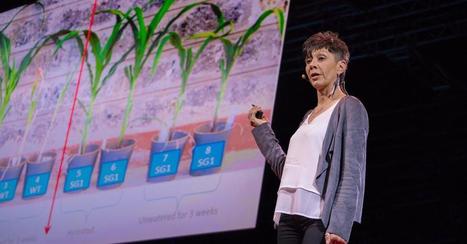
As the world's population grows and the effects of climate change come into sharper relief, we'll have to feed more people using less arable land. Molecular biologist Jill Farrant studies a rare phenomenon that may help: "resurrection plants" -- super-resilient plants that seemingly come back from the dead. Could they hold promise for growing food in our coming hotter, drier world?
Scoop.it!

Greening every school within a generation
|






Protecting water sources is one aspect of water security - another is maintaining the urban infrastructure that enables access...