Curtin University embarks upon organising and supporting global challenges - beginning with the UNEP-DHI Eco Challenge 2015. The links connected here should not be seen as endorsements but rather suggested starting points for critical discussions. http://ecochallengeaustralia.com.au
There is an urgent need for clean water, sanitation, and hygiene in schools and communities around the world. Consider these facts:
▪ Every 20 seconds a child dies from lack of access to clean water. ▪ Women and children in many communities spend up to 60 percent of each day walking to collect water. ▪ 4,500 children die each day due to unsafe water and a lack of basic sanitation. ▪ Without access to a latrine, many girls stop going to school once they reach puberty.
This might be a useful motivator for students learning about Water and Sustainability, and a real contribution to assisting with the global water crisis through school and community interaction.
Educationally, Eco Challenge 2.0 can provide an authentic experience of managing a water supply:
Water scarcity already affects every continent. Around 1.2 billion people, or almost one-fifth of the world's population, live in areas of physical scarcity, and 500 million people are approaching this situation. Another 1.6 billion people, or almost one quarter of the world's population, face economic water shortage (where countries lack the necessary infrastructure to take water from rivers and aquifers).
Numerous resources on this site - especially interesting are the development goals...
UNEP-DHI Eco Challenge 2.0 offers an opportinty to generate authentic learning experiences around water scarcity issues. Details at: http://curtin.edu.au/ecochallenge
Latest news and information from the World Bank and its development work on Water. Access facts, statistics, project information, development research from experts and latest news about Water.
Throughout history water has confronted humanity with some of its greatest challenges. Water is a source of life and a natural resource that sustains our environments and supports livelihoods but it is also a source of risk and vulnerability. In the early 21st Century, prospects for human development are threatened by a deepening global water crisis. Debunking the myth that the crisis is the result of scarcity, this report argues poverty, power and inequality are at the heart of the problem.
In a world of unprecedented wealth, almost 2 million children die each year for want of a glass of clean water and adequate sanitation. Millions of women and young girls are forced to spend hours collecting and carrying water, restricting their opportunities and their choices. And water-borne infectious diseases are holding back poverty reduction and economic growth in some of the worlds poorest countries.
Beyond the household, competition for water as a productive resource is intensifying. Symptoms of that competition include the collapse of water-based ecological systems, declining river flows and large-scale groundwater depletion. Conflicts over water are intensifying within countries, with the rural poor losing out. The potential for tensions between countries is also growing, though there are large potential human development gains from increased cooperation.
Participation is free and student teams (2 members each team) play to align the demands of government, commerce, health and industry to manage a water supply.
Competition dates are April 9-13, 2014 and students play online from anywhere in the world. Registration of teams must be completed by March 31, 2014.
Curtin University is offering prizes additional to the international prize pool for any schools who register before March 28, 2014 via the Australian gateway.
Schools and teachers can register their interest now at:
Aligned with national standards, the lesson plans and mini-units include elementary, middle and high school levels. Funding for this global water supply curriculum project was provided by the Open Square Foundation.
Stand-alone lesson plans are part of larger units that cover a broad scope of subjects including English, science and technology, and social sciences like geography, civics and economics. Classroom activities cover everything from poetry seminars and vocabulary-building worksheets to science and math lessons about potable water availability.
Last month I had an opportunity to give a TEDx talk on my home campus at UC Irvine. Mine was called “Can We End the Global Water Crisis?” I’d like to share my views on this topic with our Water Currents readers by posting several excerpts, more or less straight from the talk. “Can we…
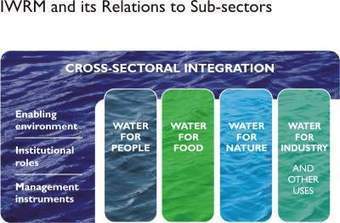
Integrated Water Resources Management (IWRM) is a process which promotes the coordinated development and management of water, land and related resources in order to maximise economic and social welfare in an equitable manner without compromising the sustainability of vital ecosystems and the environment.
Registration launches Feb 14. Game April 9-13. ECO CHALLENGE 2.0 – can your students save the world’s water supply? http://curtin.edu.au/ecochallenge —
Sustainable Development Goal on Water. UNEP-DHI Centre has been supporting UNEP in its ongoing work with UN-Water in relation to the post-2015 development framework, and the proposal for a global goal on water. The Centre has been contributing to preparation of the proposal, as well as the development of indicators and reporting mechanism in support of a coherent, cohesive and mutually reinforcing set of targets that will help countries reach the goal by 2030. The consolidated technical recommendation was approved by UN-Water on January 27th, 2014. It includes a set of potential targets and indicators to support a dedicated global goal for water. Read more about the post-2015 development process and download the technical advice here.
The mission of Safe Water Science is to use science education to raise public awareness of global issues concerning safe drinking water. This awareness will then lead to social action, outreach and service within local and global communities.
Lessons
Four free-to-download enhancement lessons for use in middle school science classrooms, homeschool or church groups, and other informal educational groups. The engaging hands-on lessons provide a springboard/stimulus for social outreach and service to the community. Additional activity materials are available for grade-schoolers. Download The Lessons »
Activity Kits
Each Safe Water Science lesson includes hands-on activities that use inexpensive, common materials that can be purchased at local grocery and pet supply stores. Or, if you prefer, you can order one of our Activity Kits which includes materials for all four lessons.
Numerous resources on this site - especially interesting are the development goals...
UNEP-DHI Eco Challenge 2.0 offers an opportinty to generate authentic learning experiences around water scarcity issues. Details at: http://curtin.edu.au/ecochallenge
Almost one billion people lack reliable access to clean drinking water. At least 80 countries have significant water shortages. The world is in a global wate...
Students engaging in Eco Challenge have the opportunity to explore the reality of managaing water scarcity. Who goes thirsty when a water supply is tainted by industry? What happens to economic development if industry needs can't be met? Is it all a futile balancing act?
How long can you go without touching your phone? Our sponsor will donate one day of clean water to a child in need for every 10 minutes you go without your phone. Take the challenge!
The world is running out of its most precious resource. True Vision's timely film tells of the personal tragedies behind the mounting privatisation of water supplies.
More than a billion people across the globe don’t have access to safe water. Every day 3900 children die as a result of insufficient or unclean water supplies. The situation can only get worse as water gets evermore scarce.
The Lesson Plan Library offers high school lesson plans covering all major school subjects and special interests.
Students will� 1.manipulate a data module showing the relationship between population growth and water availability, and answer questions about what the chart shows; 2.draw a bar graph showing the relationship between population growth and water availability in the United States; 3.draw a similar bar graph for a country facing water scarcity; and 4.research and write an action plan for how that country can tackle its water scarcity problems.
Teaching tools and resources about the water crisis and solutions to this critical development issue. Learn about water scarcity, sanitation and hygiene, and water quality in the developing world. Discover solutions such as wells and other water projects.
Nearly 1 billion people suffer needlessly without access to safe, clean water. We help provide water and sanitation solutions one village at a time. We need your help to bring clean, safe water to villages in Africa with water wells and other water projects.
A contentious activity - science seems unresolved about impact on water resources - do your students understand the process? Can they raise relevant questions about water security in relation to fracking?
Registration launches Feb 14. Game April 9-13. ECO CHALLENGE 2.0 – can your students save the world’s water supply? http://curtin.edu.au/ecochallenge —
To get content containing either thought or leadership enter:
To get content containing both thought and leadership enter:
To get content containing the expression thought leadership enter:
You can enter several keywords and you can refine them whenever you want. Our suggestion engine uses more signals but entering a few keywords here will rapidly give you great content to curate.


 Your new post is loading...











Eco Challenge 2.0 http://curtin.edu.au/ecochallenge