


http://crowdspoke.com When Brian Solis called 2011 the "year of curation," he identified a growing trend in how people are addressing the issue of informatio...
<- very quick overview of curation
Via catspyjamasnz

 Your new post is loading...
 Scoop.it! http://crowdspoke.com When Brian Solis called 2011 the "year of curation," he identified a growing trend in how people are addressing the issue of informatio...
<- very quick overview of curation Via catspyjamasnz 
No comment yet.
Sign up to comment
Scoop.it!

It's easy to be jaded when there's buzz about a new social network. Who has time to keep up with them all?
The striking, clean visuals and the bulletin board model are sure to appeal to educators, and it certainly has value as a curation tool -- a digital way to save and organize all those little bits of goodness you find online. Intrigued? This week, we're launching the official Edutopia Pinterest account. Whether you're an avid pinner or just a beginner, follow us! Get started by watching the videos below for some ideas about what Pinterest is and how educators are using it.
Scoop.it!

Instructors are information curators. At iTteachU (University of Alaska), this is how teachers are using content curation tools in the classroom to:
- create group activities; - organize and disseminate new content as a sort of digital handout to students in online and flipped classrooms; - collect and share professional reading materials with students; - foster discussion about current events; - encourage students to become both content creators and curators; - connect to experts outside class and to the world knowledge base; - critique information available on the web. teach students to curate social media; - help students gain credibility and exposure; - keep track of online research efforts; - create reading lists; - help students gain access to the ‘collective intelligence’ of the Internet;
What about you? Do you use curation tools for personal or pedagogical purposes? Let us know. Share your experience on curation with us.
Link to the original post: http://iteachu.uaf.edu/grow-skills/filelink-management/content-curation-tools/ Image: cc licensed ( BY NC SA ) flickr photo by MichaelEClarke: http://flickr.com/photos/unrelaxeddad/2707719368/ Via Paula Silva

Zhang Meilan's curator insight,
January 6, 2013 8:49 AM
如何在你的班上使用内容策展 教师是内容策展人,他如何在课堂上使用内容策展工具呢?作者提到了11种方法。包括: 1.创造集体活动; 2.组织和传播新内容,将之作为一种数字讲义,提供给在线学生和翻转课堂; 3.收集并跟学生共享专业阅读材料; 4.促进对时事的讨论; 5.鼓励学生陈给内容的创造者和策展人; 6.与课堂外以及世界知识背景的专家建立关系; 7.对网络上信息进行批判,并教给学生去组织社会化媒体; 8.帮助学生获取信誉和知名度; 9.帮助学生跟踪在线研究工作; 10.创建阅读列表; 11.帮助学生掌握使用互联网“集体智慧”的能力。

Louise Robinson-Lay's curator insight,
July 3, 2013 5:06 AM
An article outlining some ways to use content curation in schools. 
Sacra Jáimez's curator insight,
September 15, 2014 1:59 PM
Sensible ideas for content curation in our classrooms.
Scoop.it!

Pinterest revolutionized the way we keep track of the gems that we find on the Internet, with categories of interest ranging from home decorating to cooking. Such a site exists! It’s called eduClipper, a virtual pin board designed specifically for education. It is, hands down, the latest and greatest innovation in education.
KF: Despite the hyperbole above - this is a curation site of sorts and it does have an educational focus. Like all these tools - it isn't the tool itself but rather the innovative appllication of the tool to learning needs that will define its status. Via Rami Kantari
Scoop.it!
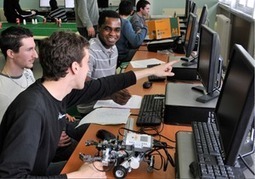
Robin Good: What is it more important?
To refine a science of how to transmit, explain and illustrate what "needs to be known" or that we empower learners to create their own learning direction, approach, scaffolding and pace, by providing them with the ability to "drive" and "build" their learning value and not by having them become open sponges that memorize and comprehend what we offer them?
From the original article by Dominik Lukes: "A self-directed, self-motivated learner, will take any resources (no matter how pedagogically naive or badly instructionally designed – Khan Academy, iTunesU lectures, iPad ebooks, labs, conventional classes or TED videos) and use them to learn.
As the learner becomes more aware of their own learning (gaining metacognitive skills), they will look for resources that suit their learning better. And, in many cases, will create such resources.
That’s why we need to encourage a culture of the remix. Or in starker terms: Curation and creation over education."
Rightful. 7/10
Full article: http://researchity.net/2012/08/15/zero-pedagogy-a-hyperbolic-case-for-curation-and-creation-over-education/
<- the abundance of information is changing education in so many ways... (JS) Via Robin Good, catspyjamasnz
Scoop.it!
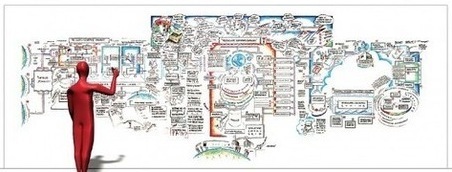
Robin Good: Excellent guide to digital curation resources by Charles W. Bailey, Jr.. It includes alphabetically organized lists of digital-curation related resources from academic programs to file formats, guidelines, organizations, blogs, and a very rich list of digital curation software tools.
From the site: "This resource guide presents selected English-language websites and documents that are useful in understanding and conducting digital curation. It is also available as an EPUB file (see How to Read EPUB Files)."
Excellent. 9/10
Full guide: http://digital-scholarship.org/dcrg/dcrg.htm
(Image credit: http://www.grouppartnerswiki.net) Via Robin Good, Giuseppe Mauriello
Scoop.it!

Giuseppe Mauriello: Knowmia is new San Francisco-based startup that offers a video lesson platform for teachers and students. Knowmia are building the largest marketplace for short-form video educational content and the tools for teachers to create and publish outstanding content.
From "About Us" on official website: "Knowmia is a destination for learning that features short video lessons from great teachers everywhere. We help you to find what you need to succeed in school in a personal, affordable, and time-efficient way. By bringing together a wide range of video lessons and making it easy to find what you need, we help you with challenging topics, prepare you for an upcoming test or new course, and find the right teacher for your style of learning..."
From review article on GigaOM: "At launch, the site includes about 7,000 videos in a broad range of subject areas, from geometry and algebra to chemistry and physics to world history and American literature. The videos, which are about one to ten minutes long, have been mostly culled from YouTube and Vimeo and then reviewed by teachers working with Knowmia to provide editorial notes, create relevant quizzes and tag content according to subject, topic and skill.
Going forward, Knowmia will encourage teachers, as well as public and nonprofit groups, to add more videos. As the site grows, the plan is that the initial videos and tags will provide the foundation for additional notes and teacher-provided tags, which help teachers and students discover content.
The idea is that if students (mostly high school, for now) need extra help in a certain subject, say algebra, they can just go to the site, search for “quadratic equation” and instantly choose from a handful of short videos on the topic.
Knowmia’s focus on providing curation and structure, as well as sophisticated tools for teachers, will help distinguish it from other online platforms...."
Read full review article on GigaOM: http://gigaom.com/2012/08/14/flip-video-co-founder-launches-learning-platform-knowmia/
Check out it here: http://www.knowmia.com Via Giuseppe Mauriello
Scoop.it!
Robin Good: In the overall effort to improve the quality of its search engine result pages Google is continuining to make significant improvements to its search engine.
Not only.
Google is now officially going after the gathering and curation of the best list, collections and guides on just about any topic. It’s quite challenging to pull these lists automatically from the web. But we’re now beginning to do just that. So when you search for [california lighthouses], [hurricanes in 2008] or [famous female astronomers], we’ll show you a list of these things across the top of the page. And by combining our Knowledge Graph with the collective wisdom of the web, we can even provide more subjective lists like [best action movies of the 2000s] or [things to do in paris]."
Very interesting. 8/10
Read more about it: http://googleblog.blogspot.it/2012/08/building-search-engine-of-future-one.html
Via Robin Good
Scoop.it!

A while back now I reviewed a host of apps enabling students to create newspapers online. Scoop.it is a similar idea that enables users to “scoop” (or copy and paste) their favourite on...
Scoop.it!

Robin Good: Doctors, who are passionate scholars of their area of expertise, could become better expert resource hubs for anyone needing help on that topic than traditional search engines like Google.
Jason Berek-Lewis, founder and author of Healthy Startups, writes: "...we now have access to more information than at any time in our history. But, how much of the health information online is trustworthy?
A 2010 study conducted in the United Kingdom found that only 39 percent of sampled health websites provided accurate information (see http://www.bupa.com.au/staticfiles/Bupa/HealthAndWellness/MediaFiles/PDF/LSE_Report_Online_Health.pdf).
The large volume of dubious online health information provides a unique opportunity for medical professionals to create a new role for themselves in the information economy.
He cites then this valuable passage:
"The web now puts nearly infinite amount of information at the finger tips of our parents/patients.
...This puts them in an excellent position to curate, manage, filter and organize the information that is on the web.
...by embracing the web as pediatric curators, pediatricians have the potential to procure the best healthcare related information on the web and share it with their network. Source: Brandon Betancourt writing on http://www.kevinmd.com
Doctors have an opportunity to use this position of trust to become the new curators of health information.
Doctors who understand curation, who know how to use social bookmarking tools like Pinterest, who know where to find the best and most relevant information will be the ones who add real value to care of their patients..."
Rightful. 7/10
Full article: http://healthystartups.com/founders-blog/2012/7/26/doctors-are-the-new-search-engines.html
KF: I suppose by extrapolation this could also translate to any of the health professions and beyond into any professional domain. Who are the knowledge keepers and curators in your professional arena?
Via Robin Good
Scoop.it!
From
slices

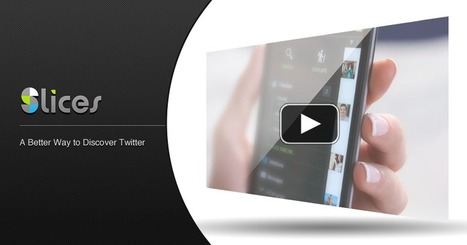
Slices is a gorgeous new Twitter app for iPhone, iPod Touch, Android, and Web with a cutting edge design, loads of features, and remarkable speed and responsiveness.
KF: Slices is the latest addition to OneLouder's suite of social media tools. The application is available as a web based tool, an app on most mobile platforms. One of the key features of the tool is that it allows you to manage the data streams that you receive from Twitter. Effectively giving you the capability to curate your Twtter feeds. The ability to sync across platforms means you can walk away from your desktop and climb on the bus with your mobile devcie and pick-up reading where you left off... FREE and potentially very useful for filtering your news...
Scoop.it!

If you are a curator, if you teach or train future curators, or if you depend on them for your work, IDCC is for you. Via catspyjamasnz
Scoop.it!

Content curation is the collection and sharing of content such as websites, news articles, blogs, videos, pictures, tweets and any other information that you can find on the web. The term curation is not new (art galleries and museums have been 'curating' for ages) but with the ever increasing amount of information on the web it has become a popular and very useful way to 'harvest', collect, select, and manage and disseminate(share) the information that you want to keep.
Much of what is here on Studyvibe has been 'curated' from hundreds of different sources and brought together for you. If you had to go and find all of the information that is on this website it would take you hundreds of hours.
|
Scoop.it!
Increasingly, curation is becoming an important participation/collaboration skill for digital citizens. I interviewed Robert Scoble, one of the most prolific...

Ken Morrison's comment,
September 1, 2012 8:55 AM
This is a very good introduction to why curation is important. Thanks for following my topic. I hope it is helpful for you. I do have a special tag for 'curation' that may be interesting to you. Thanks for your quality site.
Ken
Scoop.it!
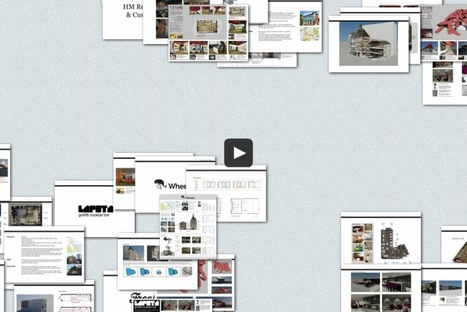
Robin Good: Dropr is a new visual curation and presentation platform which allows you to easily import / upload any type of content, from text to sound clips, video, images and more, to your online creative space.
Multimedia contents can be organized into Portfolio, Projects and Collections. (Frankly I was a bit overwhelmed by all these levels and by their effective role, but it looks like by browsing other people collections, that this is not an issue limited to me.)
Go try it out yourself: http://dropr.com/
Via Robin Good
Scoop.it!
From
zeen
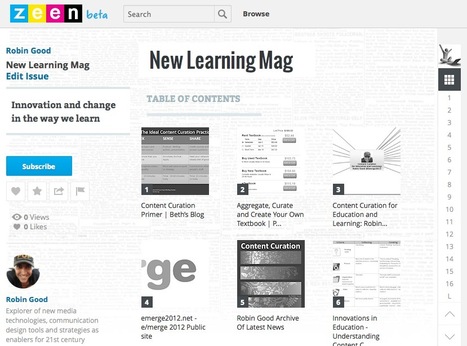
Robin Good: I have just received an invitation to test the new content curation platform Zeen, and here I am with some early impressions on what I have seen.
Zeen is a content curation tool designed to create good-looking magazines on a specific topic or theme. Setup and configuration is very easy and straightforward and it allows you to connect your Facebook, Twitter and Instagram accounts.
Once you are in, you can immediately set up a Zeen magazine, by selecting a title, a description and a cover image. From there on you are free to use the integrated search feature to find web articles, news, images, video clips or tweets relevant to your magazine. You just start a search after having selected what kind of content you are looking for and Zeen presents you with a set of relevant results. One-click on any of them and they are inserted instantly in your magazine.
You can also create as many "tags" (Zeen calls them "labels") as you like and assign each content item to a specific label.
The final magazine issue offers an automatic visual table of contents, in which you can organize by dragging and dropping the order of your selected contents.
A Zeen magazine can be made of multiple issues, instead of being like Scoop.it, a continuously growing content holder. You select the content items and you produce an issue (which can be still edited after publication).
N.B.: There is no way to edit or modify the content picked and added to your magazine, including the use of images.
You can't create new content but only pick and organize existing resources.
Here is an example of a Zeen magazine: http://zeen.com/read/ODgO94/toc and here is another one on barbeques: http://zeen.com/read/KuJoAW
More info: http://zeen.com/
Via Robin Good

Brian Yanish - MarketingHits.com's comment,
August 16, 2012 8:58 AM
After receiving an invite yesterday and also gave it a try. They have a long way to go as far as a mobile user using the site to currate content.
In find when viewing a magazine the layout has to much going on around it that takes away from the content.
Scoop.it!

Robin Good: Here is a good guide providing the basic principles that should be followed when using, reposting, citing or quoting other people's content (both text and images).
The article outlines "proper methods of source attribution on the internet to guarantee the right people get credit for their hard work and ideas."
Specific sections of the article cover: How To Cite Content in Blog Posts How To Cite Content in Social Media How to Give Credit to Guest Bloggers and Ghost Writers How to Cite Images and Visual ContentWell done. 8/10
Via Robin Good

El código Gutenberg's comment,
August 18, 2012 2:01 PM
Thank you very much. You're very kind. I hope that readers like my work in "El código Gutenberg". And thank you for the information in your page.

nickcarman's curator insight,
February 17, 2013 5:45 PM
This is an excellent article, which lays out the groundrules for using, or citing someone else's content.
Scoop.it!

"Now, with the new upgraded app, which is totally FREE by the way, you have a highly intuitive interface that makes it EASY to use on your iPad. While you cannot edit boards you can do just about anything else. It even has a built in web browser for surfing for more pins, with, of course its own Pin Button." Via John Evans
Scoop.it!

Robin Good: Saatchi Online is an online curated art gallery for emerging artists, providing both quality selections and the means for young artists to sell their own work easily.
The "100 CURATORS 100 DAYS", is a new, recent initiative (started in July) that recognizes 1,000 artists for their outstanding work.
Since July 18 2012, every day for 100 days Saatchi Online will reveal one curator’s selection of ten artists to be included in the largest exhibit of its kind. The curators have made their selections from over 60,000 artists that are currently exhibited on Saatchi Online. The entire list of curators for 100 CURATORS 100 DAYS can be viewed July 18 at www.saatchionline.com/100curators. (More info on this initiative: http://www.saatchionline.com/press)
From the official site: "Saatchi Online is a platform that allows emerging artists to showcase and sell their work and gives art lovers insider access to new talent from around the world.
Launched in 2006 by London’s renowned Saatchi Gallery, Saatchi Online aims to continue the gallery’s legacy of promoting new, contemporary talent and bringing great art to a wide audience.
A place for first-time buyers and serious collectors alike, Saatchi Online brings new talent directly to our members through a curated environment."
"Our vision has always been to empower sustainable careers. We enable artists to sell their originals as well as make them available as prints while giving them access to an engaged global audience. Artists manage their own portfolios and price their own work letting both artists and collectors skip the formalities of the traditional gallery structure."
Collections: http://www.saatchionline.com/collections
Why and How to sell art on Saatchi Online: http://www.saatchionline.com/upload/why
Tutorials and tips for artists selling their work: http://www.saatchionline.com/artschool
FAQ: http://www.saatchionline.com/help
More info: http://www.saatchionline.com
Via Robin Good
Scoop.it!
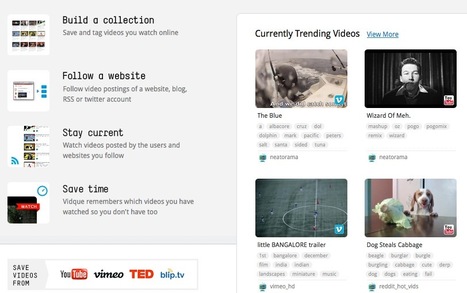
Robin Good: Vidque is a web service which allows you to easily collect video clips from any website, RSS feed or Twitter account as they are published automatically. You can then later tag, edit the related info for each to help your collections stay organized.
From the official site: "Vidque is a free curation platform designed to help discover, filter and archive online video content. Controlled and curated by its users, Vidque aims to simplify the discovery of quality video content through the joint effort of the online community."
Vidque allows you to follow other Vidque users and to see and save all of the content they share.
Vidque is also capable of auto-collecting all of the video clips that are in one page by simply providing the reference URL of that web page.
All saved clips end up in your "collection", which can be viewed also according to the tags you have associated with each saved clip.
How it works: http://vidque.com/about_overview
Find out more: http://vidque.com/
Added to the content curation tools map: http://bit.ly/ContentCurationUniverse Via Robin Good
Scoop.it!
Excerpted from long but very interesting article by Master Curator Robin Good:
"Content curation will play a major role both in the way we teach and in the way we educate ourselves on any topic. This article, builds up over my recent presentation on Content Curation for Education that I delivered at Emerge2012 virtual conference. In that presentation I claimed that the adoption of "curation approaches" will directly affect the way competences are taught and the value that can be generated for "others" through a personal learning path.
In this article I outline ten key factors, already at work, which, among others, will very likely pave the way for a much greater and rapid adoption of curation practices in the educational / academic world.
These factors are:
1) An Overwhelming Abundance of Information Which Begs To Be Organized: New digital literacy skills are of such great importance. They provide the mental tools for individuals to be able to evaluate, assess, filter and organize information in more effective ways than they have done until today.
2) A Growing Number of "Open" and Freely Accessible Teaching/Learning Content Hubs: Learners will soon need some guidance in selecting the most appropriate course, instructor, approach and institution to achieve their goals most effectively.
3) From a Static, Unchanging World of Information To a Constantly Changing One: a) Some of us dedicate their efforts to find, identify, monitor and update which are the most relevant "information sources", hubs or curators in every possible area of interest. b) We equip our youth and ourselves with appropriate mental tools to be able to carry out such tasks.
4) Real-World Information Is Not Held Inside Silos Like Academic Institutions Pretend: Curation fits in as a more appropriate approach to learning and to prepare for real-world work challenges, by allowing learners to construct meaning by having to research and to understand and to create new relationships between different information-elements.
5) Fast-Food Information Consumption In Rapid Decline - Curation Is the New Search: Google has lost its "mojo". Search results have become increasingly unsatisfactory as they are often polluted by irrelevant, commercially-driven results or by large brands which Google likes to favor over small, independent and - hard to verify - information sources. Researchers, educators and guides prefer to refer to trusted "curators" of specific information areas rather than to rely on Google-style secret and commercially-driven algorithms.
6) The Job Market is Rapidly Changing: Outside of traditional "professionals" as doctors and engineers, companies recruiting new people are looking more for "skills and experience" than for degrees and certificates. Today, the job marketplace requires people who can "think". People who can come up with creative solutions to unexpected problems... Content curation offers a practical and immediately usable approach to help new learners train themselves in developing such very skills.
7) Alternative Certification Systems Are Emerging: Open Badges: Here a few simple ideas. Move from teaching and certifying to: a) curating talent - breed new talent by providing motivated learners with the ideal conditions to study, research and develop new ideas.
b) curating educational resources for a specific area of interest / language / region / by creating and maintaining highly qualified "learning paths", and providing assistance, specialized training and resources, to those in specific need of it.
c) curating human guides, training future curators - by cultivating and supporting the development of skilled information-guides and coaches that possess the skills of a curator and those of a great story-teller.
8) Teachers and Professors Can Now Curate Their Own Textbooks: Academic and independent teaching curators will design new textbook and teaching curriculums / learning paths. They will do so by selecting and pulling together the best and most relevant material in a variety of formats and configurations to satisfy the needs of many different "audiences". These individuals will create also great collections of exercises, case studies, real-world examples, people's profiles and toolkits to further facilitate the exploration and learning of such topics.
9) Educational Marketplace Open to Thousands of Competitors: There are now tens of learning marketplaces and platforms that allow anyone to offer and sell courses online. From WiziQ to Udemy the number of alternative services making it possible for anyone to deliver a "professional" course is rapidly increasing. Today, anyone can become both a "resource", a supplier of content as well as a curator / editor / publisher of new curated content resources such as book collections, expert guides, curated and annotated lists of resources, examples, or templates galleries.
10) Growing Demand for Trusted Guidance Over Learning Content and Curricula: Traditional academic institutions may indeed become trusted curators and guides to the greater universe of information out there, while specializing their efforts for a set of specific areas, needs and communities of interests. With such abundance and variety (in quality) of educational materials, learners will soon express a growing demand for trusted guides to help them in selecting quality learning guides, sources, hubs and more than anything, curated learning paths and toolkits to explore and learn deeper about a specific topic. This is where the opportunity for both sides lies."
Each factor is analyzed with more information, examples and external links. Read full, long and interesting article here: http://www.masternewmedia.org/curation-for-education-and-learning/ Via Giuseppe Mauriello
Scoop.it!

Robin Good: Eventifier offers an easy way to auto-collect and organize all of the video, photos, tweets, slides and other social "artifacts" shared online about a specific event.
To make its "magic" Eventifier taps into reference hastags that you provide when registering an event, and other relevant meta-info, like the location, type and place of event you want to "curate".
Eventifier provides also a live dashboard to enable you to interact and respond to all this incoming media from one central location.
From the official site: "We all are interested in Events and to know about all the happenings in and around the events. Who were the speakers? What were the tweets for the event? Shared pictures & videos and what were the slides for the various sessions?
However this dataflow is scattered; searching, finding and storing this information in the vastness of internet is broken to us. These data are very random; hard to find and sort.
Eventifier was born from this annoyance. We thrive to make your information flow and archiving of event data effortless."
See examples: http://eventifier.co/events/ ;
Try it out: http://eventifier.co/
KF: This new tool has the potential to transform social science classes, journalism and other courses that have events at their core.
Via Robin Good
Scoop.it!

Given the unprecedented quantity of information learners are exposed to, the librarian’s role is more important than ever. Librarians help all students gain access to, evaluate, ethically use, create, share, and synthesize information.
Presenters at Alan November’s Building Learning Communities conference described how librarians today must curate, foster citizenship, forge connections—and more
The following curation tools were referenced during the presentation: Diigo, LiveBinders, Paper.Li, Pinterest, PearlTrees, Posterous, Scoop.It, Sqworl, Storify, Symbaloo.
KF: Curation is presented as a key competency for contemporary school librarians, as much as it a key skill they need to foster in the students they work with. Invoking Levy's "knowledge citizens" the presenters suggest that contribution to collective knowledge is an essential trait to be developed in learners.
Scoop.it!

From Technorati.com :
"It is really about how the cyber world is changing and shaping the needs and expectations which have evolved beyond mere key word search and how services like Scoop.it will meet those because Google won’t."
In this vibrant praise of Scoop.it, blogger Shred Pillai points out the changes we're seeing in the way we look for information. From basic search, we now look more and more for meaning and context from human experts. And this is what Scoop.it is curation is all about.
This article was also published on the Huffington Post and on Shred's blog, the Lasting Rose.

's comment July 7, 2012 7:19 AM
my guess: quite a long way until it happens.
|






