
A number of companies are working on smart contract templates that businesses can easily adapt for their own needs.
Get Started for FREE
Sign up with Facebook Sign up with X
I don't have a Facebook or a X account


|
Scooped by
Richard Platt
onto Crowd Funding, Micro-funding, New Approach for Investors - Alternatives to Wall Street July 26, 2018 6:54 PM
|
 Scoop.it!
A number of companies are working on smart contract templates that businesses can easily adapt for their own needs.

 Your new post is loading...
 Your new post is loading...
Your new post is loading...
Scoop.it!

Life is tough as a startup! The Disruption House is nonetheless pleased to publish its first public paper a report on banking innovation. The report
Richard Platt's insight:
Great research for on the quality and level of innovation in the banking and FinTech domains
Scoop.it!
Richard Platt's insight:
Trump's semiconductor tariffs risk triggering substantial economic damage and undermining America's leadership in the technology sector. ITIF’s economic modeling suggests potential negative consequences for the U.S. economy. A general 25% tariff on U.S. semiconductor imports will cause a 0.18% decrease in economic growth in the 1st year, potentially. Even a 10% tariff could result in reduced GDP growth. Macroeconomic effects lead to direct added costs for US households. Even worse the analysis suggests a potential fiscal challenge: the U.S. government might lose more tax revenues due to decreased economic activity than it collects from tariffs, projecting a net loss of $165 Billion in the 10th year under a sustained 25% tariff. Semiconductor tariffs are a “tax on capital formation” and a “tax on a non-readily substitutable good,” that they can increase prices on Information and Communication Technology (ICT) goods containing chips, leading to lower consumption and a decline in the U.S. ICT leadership, which in turn can reduces productivity and economic growth. The Semiconductor Industry Association (SIA) emphasizes a considerable multiplier effect, estimating that a $1 increase in the price of a semiconductor chip due to tariffs could trigger a $3 increase in the sales price of products incorporating those chips to maintain profit margins. “Overly broad import barriers—as opposed to targeted measures supporting domestic production, sectoral trade negotiations, or targeted restrictions—risk disrupting the semiconductor supply chain in the United States and in partner and allied countries,” “jeopardizing the availability of chips for critical downstream industries in the United States, imperiling U.S. technological leadership, and benefiting foreign competitors in an industry that operates on low margins with revenue driven back into the industry through R&D to stay ahead.”
Scoop.it!
From
apnews

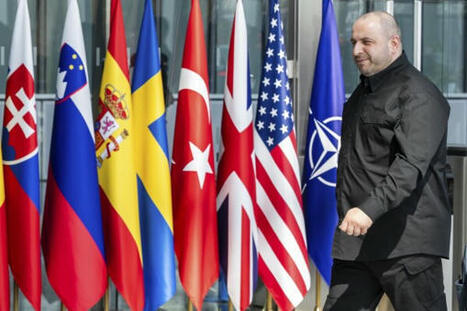
European countries are vowing to sends billions of dollars in further funding to help Ukraine keep fighting Russia’s invasion.
Richard Platt's insight:
The EU countriesd vowed Friday to sends billions of dollars in further funding to help Ukraine keep fighting Russia’s invasion, as a U.S. envoy pursued peace efforts in a trip to meet with Russian President Vladimir Putin amid growing questions about the Kremlin’s willingness to stop the +3-year war. Russian forces hold the advantage in Ukraine, with the war now in its 4th year. Ukraine has endorsed a U.S. ceasefire proposal, but Russia has effectively blocked it by imposing far-reaching conditions. EU governments have accused Putin of dragging his feet. “Russia has to get moving” on the road to ending the war, U.S. President Donald Trump posted on social media. He said the war is “terrible and senseless.” In Russia, the Kremlin said Trump’s envoy Steve Witkoff met with Putin in St. Petersburg. Witkoff, who has been pressing the Kremlin to accept a truce, initially met with Putin envoy Kirill Dmitriev. White House press secretary Karoline Leavitt said Witkoff during his visit to Russia was discussing efforts to end the war with Putin and other officials. “This is another step in the negotiating process towards a ceasefire and an ultimate peace deal,”.
Scoop.it!

'Our GPUs are from China,' Newegg tweets to consumers in explaining the price increases.
Richard Platt's insight:
Newegg is blaming President Trump's tariffs on Chinese imports for price hikes on Nvidia’s GeForce RTX 5090 and 5080 graphics cards. On Wednesday, customers noticed sudden price increases on the coveted GPUs across Newegg’s site. When customers asked about it on X, Newegg responded: "yeah, tariffs." Trump’s 10% tariffs on Chinese imports went into effect this week.So far, Nvidia has declined to comment on the price hikes. But ASRock, a GPU vendor for AMD and Intel, told PCMag it’s planning to move its manufacturing from China to other markets, including Taiwan and Vietnam, in response to the US tariffs. But because factory migrations take time, ASRock warned during the transition period: "We may absorb some of the cost and also increase some in price to reflect the increased cost." Still, the Newegg price hikes seem to be higher than 10%. That's prompted some GPU buyers to question if vendors are taking advantage of the tariff news and low supplies to jack up prices. Although Nvidia and its GPU partners haven’t officially commented on the tariffs' impact, the tweet from Newegg signals the PC industry is rolling out price changes to offset the cost increase. It's resulted in price hikes ranging from $100 to $400, depending on the GPU model. In a follow-up tweet, Newegg added: "Our GPUs are from China," after a user asked if the online retailer was sourcing any supplies from Taiwan or Vietnam. Like other sellers, Newegg immediately sold out of the RTX 5000 GPUs, meaning it had no time to stock up on supplies before the tariffs went into effect. In a separate tweet, Newegg indicated that shipments of the RTX 5090 are especially thin.
Scoop.it!

JPMorgan Chase & Co bankers worked through the night in a "War Room" to assess the impact of U.S. President Donald Trump's inauguration-day Executive Orders, while global markets braced for volatility following his return to the White House. Trump revoked nearly 80 executive actions by the former President within hours of being sworn into office. The white-knuckle business of trading global assets sensitive to Trump's "America 1st" policies has resumed, pointing to a rapid fall in the Canadian dollar against its U.S. counterpart, seconds after the president said a 25% tariff on Canadian goods could land within days. Global trade flows will suffer from "interesting ructions (disruptions)" as the new Trump administration settles in, Standard Chartered CEO Bill Winters told the Davos meeting. "We'll see what comes through in terms of tariffs...but we know China is a big part of that in terms of having a gigantic export surplus, and that will be under attack from all parts of the world,". Chinese officials are hopeful their country can avoid a repeat of the bruising trade wars that drove a wedge between the world's two economic superpowers during the last Trump administration in 2017-21, despite the returning president's robust comments on potential tariffs during his campaign.
Richard Platt's insight:
JPMorgan Chase & Co bankers worked through the night in a "War Room" to assess the impact of U.S. President Donald Trump's inauguration-day Executive Orders, while global markets braced for volatility following his return to the White House. Trump revoked nearly 80 executive actions by the former President within hours of being sworn into office. The white-knuckle business of trading global assets sensitive to Trump's "America 1st" policies has resumed, pointing to a rapid fall in the Canadian dollar against its U.S. counterpart, seconds after the president said a 25% tariff on Canadian goods could land within days. Global trade flows will suffer from "interesting ructions (disruptions)" as the new Trump administration settles in, Standard Chartered CEO Bill Winters told the Davos meeting. "We'll see what comes through in terms of tariffs...but we know China is a big part of that in terms of having a gigantic export surplus, and that will be under attack from all parts of the world,". Chinese officials are hopeful their country can avoid a repeat of the bruising trade wars that drove a wedge between the world's two economic superpowers during the last Trump administration in 2017-21, despite the returning president's robust comments on potential tariffs during his campaign.
Scoop.it!
From
www
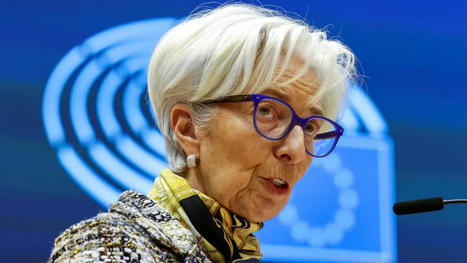
Lagarde said she thinks crypto should be regulated to protect inexperienced investors.
Richard Platt's insight:
European Central Bank President Christine Lagarde thinks cryptocurrencies aren’t worth a dime. “My very humble assessment is that it is worth nothing,” Lagarde said of crypto in an interview with Dutch talk show “College Tour” that aired Sunday. “It is based on nothing,” she added. “There is no underlying asset to act as an anchor of safety.” Lagarde called on global policymakers to put rules in place to protect inexperienced investors making big bets on digital assets. Cryptocurrencies have plunged across the board this year, with bitcoin — the world’s largest — erasing more than half of its value since its November all-time highs. “I’m concerned about those people who think it’s going to be a reward, who have no understanding of the risks, who will lose it all, and who will be terribly disappointed, which is why I believe that should be regulated,”. One member of the show’s audience said they lost 7,000 euros ($7,469) after buying the token cardano, to which Lagarde responded: “That hurts.” The former IMF Chief’s skepticism of crypto isn’t new. She’s previously raised concerns about the environmental impact of digital currencies, as well as their potential use in money laundering and sanctions evasion.
Scoop.it!
Richard Platt's insight:
In public, Binance said it welcomed government oversight. At the same time, the firm was withholding information from regulators, maintaining weak checks on customers and acting against its own compliance department’s recommendations, a Reuters investigation has found. Read on for more sordid details of how Binance manipulated everyone to get their business up and running. Well done to the Reuter's staff for this very in-depth investigation into Binance. It does make you wonder with all of this crypto stuff hitting the skids of recent on whether or not this is something worth investing in, the risks seem to great to me at least to be mucking around with this stuff. Your mileage may vary of course.

Liza Belqueen's curator insight,
September 21, 2022 4:17 AM
https://ammoways.com/product/glock-19-gen-4-slide/
https://ammoways.com/product/hornady-handgun-hunter-9mm-ammo/ https://ammoways.com/product/sellier-and-bellot-9mm-124gr/ https://ammoways.com/product/p80-pf940c/ https://ammoways.com/product/20rds-9mm-federa…p-135gr-jhp-ammo/ https://ammoways.com/product/winchester-nato-9mm-luger-124-grain-fmj-1000-rounds-ammo-can/ https://ammoways.com/product/9mm-124gr-elite-v-crown-jhp/ https://ammoways.com/product/cci-blazer-brass…ull-metal-jacket/ https://ammoways.com/product/ppu-mil-spec-brass/ https://ammoways.com/product/winchester-silvertip-9mm-luger-147-grain-ammunition-20-rounds/ https://ammoways.com/product/remington-range-brass-9mm-115-grain-500-rounds-fmj/ https://ammoways.com/product/blazer-brass-9mm-500-rounds-blazer-9mm-500/ https://ammoways.com/product/hornady-dangerou…-286-sp-rp-20rds/ https://ammoways.com/product/hornady-470-nitro-express-ammo/ https://ammoways.com/product/ppu-metric-rifle…40-gr-ammunition/ https://ammoways.com/product/federal-p458lwh-…t-500-whcs-20-10/ https://ammoways.com/product/cci-blazer-brass…n-100-rounds-fmj/ https://ammoways.com/product/federal-premium-…-box-10-box-case/ https://ammoways.com/product/federal-470-nitr…in-swift-a-frame/ https://ammoways.com/product/376-steyr-270-gr-interlock-sp-rp/ https://ammoways.com/product/federal-p416rt2-…m-400-tbsl-20rds/ https://ammoways.com/product/federal-p458wh-4…n-500-whcs-20rds/ https://ammoways.com/product/hornady-82682-50…ion-20-rds-400gr/ https://ammoways.com/product/hornady-dangerou…bonded-box-of-20/ https://ammoways.com/product/winchester-x218b…-gr-hp-50-rounds/ https://ammoways.com/product/federal-p458t3-4…n-500-tbsl-20rds/ https://ammoways.com/product/federal-p458lti-…-bear-claw-20rds/
Scoop.it!

St. Louis Fed President James Bullard warned Monday that investors should be careful when investing in cryptocurrencies, and said most of them are "worthless."
Richard Platt's insight:
St. Louis Fed President James Bullard warned Monday that investors should be careful when investing in cryptocurrencies, and dismissed most of them as “worthless.” In an interview with Yahoo Finance, Bullard admitted that digital currencies that are able to “facilitate transactions that are difficult to make in conventional currencies” do have a place alongside fiat currencies. However: “We have a couple of thousand of these around, most of them are worthless,”. Bullard encouraged investors to be aware of the inherent risks in cryptocurrency investing — particularly concerning price volatility — and to “be careful.” “I think for the most part, people like going into this with eyes wide open, they’re certainly not blind to the idea that this is a volatile area,” he told Yahoo Finance. Still, Bullard said there are “lots of interesting things going on in this space,” and added that “of course the Fed is also looking at a Fed coin.” “We’ve got a lot going on, watching this very carefully,”. Separately Monday, Fed Gov. Lael Brainard said the central bank is keeping a close eye on China’s efforts to develop a digital currency, and said it’s critical that the Fed be “at the table” in any development of standards for central-bank digital currencies. Last week, Fed Chairman Jerome Powell said the central bank will ramp up its exploration of a digital dollar this summer, stressing it would not be a replacement for cash.
Scoop.it!
Richard Platt's insight:
Mining for cryptocurrencies like bitcoin, ether, and dogecoin isn't as lucrative as it used to be. Here's a look at how to do it and why small-time miners are being driven out of business. Credit CNBC

TechinBiz's curator insight,
March 10, 2021 12:07 PM
Mining for cryptocurrencies Mining for cryptocurrencies like bitcoin, ether, and dogecoin isn’t as lucrative as it used to be. Here’s[...] Mining for cryptocurrencies Mining for cryptocurrencies like bitcoin, ether, and dogecoin isn't as lucrative as it used to be. Here's a look at how to do it and why small-time miners are being driven out of business. Credit CNBC 
theapkguide's comment,
March 11, 2021 4:19 AM
visit for much software information or downloading https://www.theapkguide.com/
Scoop.it!
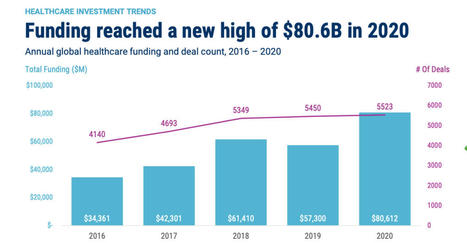
According a new report by CB Insights, health care startups raised $80.6 billion in 2020, up from $53.7 billion in 2019. Via Lionel Reichardt / le Pharmageek
Richard Platt's insight:
According a new report by CB Insights, health care startups raised $80.6 billion in 2020, up from $53.7 billion in 2019
Scoop.it!

The agreement with the Saudi Data and Artificial Intelligence Authority aims to “enhance the quality of health services, create new job opportunities, and elevate [Saudi’s] national economy to become a data and AI-driven economy.” Via Florian Morandeau
Richard Platt's insight:
The Saudi Data and Artificial Intelligence Authority (SDAIA) has partnered with Royal Philips to further support the Kingdom’s “goal of becoming a leader in driving artificial intelligence [AI] in healthcare”.

Florian Morandeau's curator insight,
February 15, 2021 3:21 AM
The Saudi Data and Artificial Intelligence Authority (SDAIA) has partnered with Royal Philips to further support the Kingdom’s “goal of becoming a leader in driving artificial intelligence [AI] in healthcare”.
Scoop.it!

Data shows institutional investors as drivers of some of the wild price action in GameStop last week.
Richard Platt's insight:
Several signs are pointing to institutional investors as big drivers of the wild price action on the way up. “Although retail buying was portrayed as the main driver of the extreme price rally experienced by some stocks, the actual picture may be much more nuanced,” JPMorgan’s quant team uses a proprietary methodology to identify which flows are from retail traders. GameStop was number 15 on the firm’s retail buying list for January. The rookie investor “vigilantes” grabbed the most attention by being all over social media, posting screenshots of their positions and crucifying Robinhood and other brokers when the firms were forced to limit trading. However, it’s possible the noise from this crowd caused most to overlook Wall Street co-opting this trade to make a fast buck as well, data shows. “Maybe it’s not as much of just the little guy versus the big guy,” “I think that it’s reasonable to say that institutional investors were also very active in those stocks last week because there are institutional investors that participate in names that have elevated volume. I think most likely that was also expressed in some of the options activity last week as well.” Retail investors were actually net sellers of GameStop from Tuesday through Thursday last week, according to data from Citadel Securities.
Scoop.it!

Ask the Expert columnist Larry Fast enjoyed a 35-year career in manufacturing. Here's his list of the key characteristics of leaders who helped him along the way.
Richard Platt's insight:
The best leaders: (1.) Have a healthy dissatisfaction with the status quo. Not sometimes. All times. (2.) Are relentless in their quest for continuous improvement and expect the same from everyone. This trait will sort out the doers from the pretenders. (3.) Have high expectations and hold people accountable for results. See No. 2 above. (4.) Have a vision of excellence that is communicated broadly and frequently. (5.) Communicate a clear priority set. This kind of prioritization by leadership clears the way to hold people accountable for doing the right things -- which will move the needle on the company’s most important business objectives. (6.) Don’t pass the buck when there is bad news. If it happened on our watch as leaders, we own it. (7.) Run to the problems and deal with them. (8.) See opportunities others don’t. This is often why leaders are in their leadership roles and others aren’t. Engineers and maintenance people are often great examples to observe as well. They’re always trying to understand how things work and why. It’s in their DNA. (9.) Are the ones who care the most and make everyone around them better. Leaders are always under observation. Are they fully competent? (10.) Know when it’s time to tell someone goodbye.
|
Scoop.it!

Emirates Global Aluminium has a site in Oklahoma and intends to install 600,000 metric tons of primary aluminum capacity – nearly double the current domestic output.
Richard Platt's insight:
In what would be a historic development, a Dubai-based conglomerate has a $4-billion plan to build and operate a primary aluminum plant in northeast Oklahoma. The first new aluminum smelting operation in the U.S. in 45 years would produce 600,000 metric tons of primary aluminum annually. Most of the world’s primary aluminum is produced in China – with its 43 million metric tons representing 57% of the global total. Other major producer nations are India (4.2 million mtpy), Russia (3.8 mtpy), United Arab Emirates (2.7 million mtpy), and Bahrain (1.6 million mtpy.) -- The developers indicate the new plant will establish up to 1,000 permanent jobs, and up to 4,000 jobs during the peak construction period. Construction in 2026, to produce hot metal by 2029. U.S. primary aluminum capacity has declined to 1.36 million metric tons, and more +1/2 of that volume remains idle due to global competition. In 2024, U.S. primary aluminum output was 678,000 metric tons, meaning that at full production the EGA project would nearly double that volume. The demand for primary aluminum is robust, from domestic automotive, aerospace, construction, defense, and energy sectors. Primary aluminum is also necessary to ensure the continued viability of the secondary (recycled) aluminum market, which supports structural and consumer products markets, among others. More than 80% of U.S. primary aluminum requirements are met by imports. In 2018 Trump installed tariffs on primary aluminum imports, which expired under the Biden Administration and have been renewed again at 25% since March 2025. “The United States has been an important market for EGA for several decades, and we know there is strong demand for our high-quality metal ‘made in America’,” stated Abdulnasser Bin Kalban, CEO. "EGA has the skills, technology and capital to start rebuilding this great American industry, and in Oklahoma I am confident we will secure the right conditions to do so.”
Scoop.it!

In hope of avoiding punishing U.S. tariffs, Vietnam is prepared to crack down on Chinese goods being shipped to the United States via its territory and will tighten controls on sensitive exports to China, according to a person familiar with the matter and a government document seen by Reuters.
Richard Platt's insight:
In hope of avoiding punishing U.S. tariffs, Vietnam is prepared to crack down on Chinese goods being shipped to the U.S. via its territory and will tighten controls on sensitive exports to China. U.S. officials allege, that China uses Vietnam as a conduit to obtain lower tariffs for goods that do not have significant Vietnamese involvement. "China uses Vietnam to tranship to avoid the tariffs," Navarro Illicit transhipment refers to one country sending goods to a nation facing lower tariffs from a third country, to which the product is re-exported without having value added to it. Many of the goods exported by Vietnam to the West have Chinese-made inputs, and Chinese companies have also established factories in the country to serve U.S. customers. In many instances, Vietnamese workers process the goods, which are then legally shipped to the U.S. under a "Made in Vietnam" label. Official trade data show Vietnam's exports to the U.S. in recent years have been fuelled by imports from China, with inflows from Beijing closely matching the value and swings of exports to Washington. Vietnam is also implementing tougher measures on sensitive goods that flow through its territory from the U.S. to China. Hanoi intends to tighten controls around the export of dual-use goods like semiconductors, which can be used for both civilian and military purposes. The document said that major trading partners had requested that Hanoi "minimize the possibility of these source technologies being transferred to 3rd countries without the consent of the exporting country." The U.S. government considers leadership on AI as a national priority and Washington has moved to cut off China's access to the most advanced U.S.-made chips. Vietnam now plans to introduce new declaration and approval procedures for the trade of such products, according to the proposal.
Scoop.it!

From
apnews
The worldwide sell-off for financial markets is slamming into a higher, scarier gear. The S&P 500 tumbled 5.7% Friday, the Dow Jones Industrial Average plunged 2,034 points and the Nasdaq composite dropped 5.6%.
Richard Platt's insight:
The sell-off for financial markets worldwide is slamming into a higher, scarier gear on Friday. The S&P 500 tumbled 5.7% as Wall Street’s worst crisis since the COVID crash deepened after China matched President Donald Trump’s big raise in tariffs announced earlier this week. The move increases the stakes in a trade war that could end with a recession that hurts everyone. Not even a better-than-expected report on the U.S. job market, which is usually the economic highlight of each month, was enough to stop the slide. The DJIA plunged 2,034 points, or 5%, and the Nasdaq composite was 5.6% lower, with an hour remaining in trading. But that jobs data that was positive last month was backward looking, and the fear hitting financial markets is about what’s to come. On Wall Street, stocks of companies that do lots of business in China fell to some of the sharpest losses. DuPont dropped 12% after China said its regulators are launching an anti-trust investigation into DuPont China group, a subsidiary of the chemical giant. It’s one of several measures targeting American companies and in retaliation for the U.S. tariffs. GE Healthcare got 12% of its revenue last year from the China region, and it fell 14%. The world has changed, and the economic conditions have changed,” said Rick Rieder, chief investment officer of global fixed income at BlackRock. The central question looking ahead is: Will the trade war cause a global recession? If it does, stock prices will likely need to come down even more than they have already. The S&P 500 is down roughly 17% from its record set in February. Trump seemed unfazed. From Mar-a-Lago, his private club in Florida, he headed to his golf course a few miles away after writing on social media that “THIS IS A GREAT TIME TO GET RICH.” (Only if you have the money to invest in the stock market and know which stocks to pick)
Much will depend on how long Trump’s tariffs stick and what kind of retaliations other countries deliver. Some of Wall Street is holding onto hope that Trump will lower the tariffs after prying out some “wins” from other countries following negotiations. Otherwise, many say a recession looks likely. Trump has said Americans may feel “some pain” because of tariffs, but he has also said the long-term goals, including getting more manufacturing jobs back to the United States, are worth it. On Thursday, he likened the situation to a medical operation, where the U.S. economy is the patient. “For investors looking at their portfolios, it could have felt like an operation performed without anesthesia,” said Brian Jacobsen, chief economist at Annex Wealth Management. But Jacobsen also said the next surprise for investors could be how quickly tariffs get negotiated down. “The speed of recovery will depend on how, and how quickly, officials negotiate,”. In stock markets abroad, Germany’s DAX lost 5%, France’s CAC 40 dropped 4.3% and Japan’s Nikkei 225 fell 2.8%.
Scoop.it!

A very brief presentation (35 mins) advising the commercial investors (investment houses, hedge fund managers, etc...) of Bank of America Securities on the issues facing Intel in the COVID-19 recession and its competitive environment. Before the presentation, I was asked to answer 3 main questions...
1. My opinion on INTC – how did it manage to lose its strong grip on its dominant market share? What caused the continuous delays in its manufacturing advancement and allowed the likes of TSMC to catch up to them?
2. My view on the future strategic direction that INTC should be taking – especially important for BofA clients – what is INTC likely to do in terms of outsourcing its manufacturing? How would the new CEO impact INTC’s future direction?
3. Bigger picture – Has the IDM business model run its course with the rise of fabless companies (AMD, NVDA, QCOM, etc) and system companies (AAPL, Google, AMZN) partnering with foundries (TSMC, and Samsung) and IP providers (ARM)
Richard Platt's insight:
A very brief presentation (35 mins) advising the commercial investors (investment houses, hedge fund managers, etc...) of Bank of America Securities on the issues facing Intel in the COVID-19 recession and its competitive environment. Before the presentation, I was asked to answer 3 main questions...
1. My opinion on INTC – how did it manage to lose its strong grip on its dominant market share? What caused the continuous delays in its manufacturing advancement and allowed the likes of TSMC to catch up to them?
2. My view on the future strategic direction that INTC should be taking – especially important for BofA clients – what is INTC likely to do in terms of outsourcing its manufacturing? How would the new CEO impact INTC’s future direction?
3. Bigger picture – Has the IDM business model run its course with the rise of fabless companies (AMD, NVDA, QCOM, etc) and system companies (AAPL, Google, AMZN) partnering with foundries (TSMC, and Samsung) and IP providers (e.g. ARM)
Scoop.it!
Richard Platt's insight:
Three years after Facebook announced its ill-fated push into cryptocurrency, aka the Libra project, the tech giant has signalled another scaling back of its activity — announcing Friday that Novi, the digital wallet payments pilot it launched last October, will be ending on on September 1. The wallet project was generally hampered by Meta’s crypto ambitions never having panned out as hoped — in the face of regulatory push-back and withering support. In a statement provided to CoinDesk, the tech giant that’s now known as Meta suggested it has plans to repurpose the digital wallet technology (neé Calibra) for future products, including those related to its eponymous focus on “metaverse” development. Although it’s not clear exactly what Meta might have in mind for repurposing the Novi tech. Senior Meta execs have talked up the metaverse as a major opportunity for digital commerce. Albeit, they’ve also cautioned over the lengthy timescales that will be required to develop the sought for market — suggesting it could take decades. Following years of governance scandals, it’s fair to say that Facebook’s reputational troubles impeded its ability to ‘move fast and break things’, as crypto raised the stakes for regulatory concerns, around issues like money laundering and currency volatility. There is, for example, no mention of the wider crypto market free fall that’s led to dramatic sell offs in recent months and ramped up scrutiny of stablecoins over concerns about stability. Nor any reference to rising attention internationally on crypto regulation. Changing market conditions are surely further cooling Meta’s interest.
Scoop.it!
Richard Platt's insight:
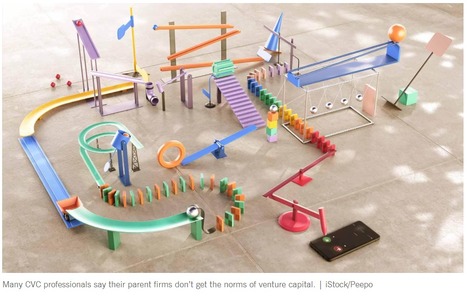
“If you look at the large Fortune 500 companies 50 years ago, many of them no longer exist,” says Ilya Strebulaev, a professor of finance at Stanford Graduate School of Business and Professor Wang. “The big reason why was their failure to innovate.” It’s only in the last decade that corporate venture capital (CVC) has gained traction as a way to remain relevant and stay ahead of competitors. In 2020, CVC arms invested more than $70 billion in startups, accounting for a 1/4 of all VC deals. . The way these CVC arms are organized, "is not very efficient". The interviewees mentioned corporate and financial constraints as well as a general lack of knowledge about VC among corporate leadership. More than 60% of the senior execs Strebulaev and Wang spoke with confided that their parent companies do not understand the norms of venture capital. Most CVC units use a 2-tier decision-making process, often requiring near-unanimous approval from a committee outside the team. Traditional VC firms, also secretive, typically follow a well-worn playbook for structuring leadership and decision-making processes for their investments. CVC, do not, nor are they straightforward. Strebulaev says many of the barriers faced by corporate VCs likely stem from complicated objectives, corporate culture, and the relative newness of corporate venture capital. He says that often corporations trying to get in on the action have launched their CVC arms in an ad hoc fashion. Instead, he advises, they should carefully design these units to be as efficient as possible from the start. When corporations are planning to launch a CVC unit, making a serious commitment to a long-term investment is critical. “If you design corporate venture capital units imperfectly,” Strebulaev says, “then you will not get as many results. Or maybe you will not get any results.”
Scoop.it!

Pressure is mounting on Wikipedia to stop accepting crypto, amid criticism of its environmental impact.
Richard Platt's insight:
Pressure is mounting on Wikipedia to stop accepting crypto, amid criticism of its environmental impact. Mozilla also came under heavy criticism for its decision to accept cryptocurrency donations. None other than one of the founders of Mozilla lambasted the organization for its decision, prompting an about-face. Wikipedia is now facing pressure to stop accepting crypto as well, with a “Requests for comments” page opened to discuss the situation. The user who opened the page, GorillaWarfare, explained three specific issues with accepting crypto. (1) Concern that accepting crypto signaled endorsement (2) The environmental impact of crypto (3) The potential to damage Wikipedia’s reputation . It’s too early to know how Wikipedia will proceed, but the discussion is another example of the headwinds crypto faces in its bid for widespread acceptance.
Scoop.it!

Change Healthcare on Tuesday announced a new cloud-based service, offered in collaboration with Amazon Web Services, to help health systems and life sciences organizations boost the effectiveness of care plans they design for patients – especially for underserved communities and vulnerable populations. Via Florian Morandeau
Richard Platt's insight:
Its new DSaaS collaboration with AWS promises help with scalable analytics, helping healthcare organizations gain ground with pop health projects by offering insights into social determinants of health.
Florian Morandeau's curator insight,
March 10, 2021 10:09 AM
Its new DSaaS collaboration with AWS promises help with scalable analytics, helping healthcare organizations gain ground with pop health projects by offering insights into social determinants of health.
Liza Belqueen's curator insight,
September 21, 2022 5:30 AM
https://ammoways.com/product/glock-19-gen-4-slide/
https://ammoways.com/product/hornady-handgun-hunter-9mm-ammo/ https://ammoways.com/product/sellier-and-bellot-9mm-124gr/ https://ammoways.com/product/p80-pf940c/ https://ammoways.com/product/20rds-9mm-federa…p-135gr-jhp-ammo/ https://ammoways.com/product/winchester-nato-9mm-luger-124-grain-fmj-1000-rounds-ammo-can/ https://ammoways.com/product/9mm-124gr-elite-v-crown-jhp/ https://ammoways.com/product/cci-blazer-brass…ull-metal-jacket/ https://ammoways.com/product/ppu-mil-spec-brass/ https://ammoways.com/product/winchester-silvertip-9mm-luger-147-grain-ammunition-20-rounds/ https://ammoways.com/product/remington-range-brass-9mm-115-grain-500-rounds-fmj/ https://ammoways.com/product/blazer-brass-9mm-500-rounds-blazer-9mm-500/ https://ammoways.com/product/hornady-dangerou…-286-sp-rp-20rds/ https://ammoways.com/product/hornady-470-nitro-express-ammo/ https://ammoways.com/product/ppu-metric-rifle…40-gr-ammunition/ https://ammoways.com/product/federal-p458lwh-…t-500-whcs-20-10/ https://ammoways.com/product/cci-blazer-brass…n-100-rounds-fmj/ https://ammoways.com/product/federal-premium-…-box-10-box-case/ https://ammoways.com/product/federal-470-nitr…in-swift-a-frame/ https://ammoways.com/product/376-steyr-270-gr-interlock-sp-rp/ https://ammoways.com/product/federal-p416rt2-…m-400-tbsl-20rds/ https://ammoways.com/product/federal-p458wh-4…n-500-whcs-20rds/ https://ammoways.com/product/hornady-82682-50…ion-20-rds-400gr/ https://ammoways.com/product/hornady-dangerou…bonded-box-of-20/ https://ammoways.com/product/winchester-x218b…-gr-hp-50-rounds/ https://ammoways.com/product/federal-p458t3-4…n-500-tbsl-20rds/ https://ammoways.com/product/federal-p458lti-…-bear-claw-20rds/
Scoop.it!
The Nasdaq's retreat from its all-time highs last month is now officially considered a correction in a bull market.
Richard Platt's insight:
The Nasdaq’s retreat from its all-time highs last month is now officially considered a correction in a bull market. The tech-heavy index on Monday closed down 2.22% unofficially at 12,633.61, roughly 10.6% below the Feb. 12 record close at 14,095.47 and exceeding the 10% closing-basis threshold considered by market professionals as confirmation of a correction. The Nasdaq entered the latest bull market last March and rose more than 105% from the pandemic low a year ago. Market-leading tech and tech-adjacent megacap stocks, which account for much of the Nasdaq’s total market value, thrived during the pandemic recession. But many of those shares are now seen by some investors as overvalued. More cyclical stocks, which were battered by shutdowns and stand to benefit most from economic recovery, have since gained favor as vaccine deployment gathers steam and restrictions are lifted.
Scoop.it!
The lawsuit accuses Keith Gill of being a licensed securities professional and manipulating the market.
Richard Platt's insight:
One of the most prominent figures on the WallStreetBets subreddit that sent GameStop stock skyrocketing has been slapped with a lawsuit. The suit alleges Keith Gill (aka Roaring Kitty) is a licensed securities professional instead of an amateur investor and it claims he profited from the GameStop short squeeze by manipulating the market. “Gill’s deceitful and manipulative conduct not only violated numerous industry regulations and rules but also various securities laws by undermining the integrity of the market for GameStop shares,” the proposed class-action suit says. “He caused enormous losses not only to those who bought option contracts but also to those who fell for Gill’s act and bought GameStop stock during the market frenzy at greatly inflated prices.” GameStop stock rose to a record high of $483 eventually dropping back to ~$45. Many amateur traders raked in hundreds or thousands of dollars from the GameStop stock, some hedge funds lost billions as they scrambled to cover their bets against the company. According to the filing, Gill "actively worked as a professional in the investment and financial industries" for many years and claims he holds a number of securities licenses and qualifications, including a Charted Financial Analyst license.
Scoop.it!
The Department of Justice is investigating the GameStop stock drama to determine whether there was market manipulation involved. Prosecutors have subpoenaed information from brokers, including Robinhood, where much of the trading activity took place.
Richard Platt's insight:
Several US government agencies are investigating the GameStop stock brouhaha to determine whether there was market manipulation involved having created what’s known as a short squeeze. The DOJ and the US Attorney for San Francisco are seeking information about activity surrounding GameStop’s stock by brokers and users on Reddit and other social media sites. Prosecutors have subpoenaed information from brokers, including Robinhood, where much of the trading activity occurred. The SECC is also looking into whether there was manipulation and probing whether Robinhood and other brokerages that temporarily froze or otherwise restricted trading of GME were in compliance with federal regulations. Robinhood is also facing dozens of lawsuits after it restricted several stocks popular on the r/WallStreetBets subreddit, with people alleging the company sought to “manipulate the market” to help other financial institutions. The House Financial Services Committee is holding a hearing into the GameStop drama on February 18th, where Reddit CEO Steve Huffman and Robinhood founder Vlad Tenev are expected to appear. Robinhood did not immediately respond for comment.
Scoop.it!

The nation’s labor-market recovery stalled in December, as a resurgence of the coronavirus and state-imposed restrictions ended seven months of job growth.
Richard Platt's insight:
The nation’s labor-market recovery stalled in December, as a resurgence of the coronavirus and state-imposed restrictions ended seven months of job growth. Employers cut 140,000 jobs last month, the first decline since the pandemic hit the country last spring, the Labor Department said Friday. The jobless rate held steady at 6.7%, far below its April peak of 14.8%—a post-World War II high—but still almost twice its pre-pandemic level. Restaurants and bars drove last month’s decline. Forced to close or scale down because of the virus and cold weather, they cut 372,000 jobs. Other industries highly vulnerable to the spread of virus—hotels, museums, tourist sites—laid off workers, as did government agencies and schools. Most other sectors added jobs last month, but the gains weren’t enough to offset the sharp decline in areas sensitive to the state of the pandemic. “We have one sector in particular that is undergoing some extreme difficulties right now,” said economist Gus Faucher of PNC Financial Services . “The rest of the economy looks pretty solid.”
Scoop.it!
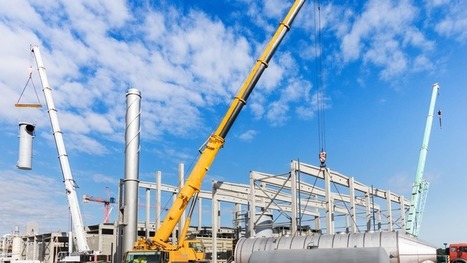
While 61% of projects are moving forward, the location choices at the top of the list include Boise, Colorado Springs and Columbia, S.C.
Richard Platt's insight:
The impact of COVID-19 has extended into the decision-making process that determines where a company will locate. Suburban areas and mid-size cities, followed by rural areas, will be the biggest winners of new corporate expansions and relocations, with large urban areas falling to the bottom of the list, according to a survey releads on July 16 by the Site Selectors Guild. “Everything from physical distancing to changing transit preferences has affected the way that corporations view location decisions,” said Rick Weddle, CEO of the Site Selectors Guild. Conducted the week of June 29, 2020, in partnership with Development Counsellors International (DCI), the survey of Guild members aimed to uncover changes and new trends in corporate location strategy brought on by the COVID-19 crisis. The top findings of this research follow: Suburbs and Mid-Size Cities Will Be the Next Winners for Corporate Location Projects. The pandemic has brought suburban areas and mid-size cities into the forefront of consideration for future site selection projects and even put rural areas well ahead of large urban areas. When members were asked about locations that are “likely” or “very likely” to be considered by corporations looking to expand, relocate or open new facilities in the next 12 months, 64% chose suburban areas, 57% chose mid-size cities, 31% chose rural areas, and just 10% chose large urban areas. Consultants indicated that New York would be hit especially hard among the nation’s largest cities. Of the consultants who agreed that large urban centers are “not at all” or “unlikely” to be considered for future projects, 100% said that New York City would be among the least likely locations to be considered for future projects in the next 12 months. Los Angeles and Chicago followed with 63% and 42%, respectively.
|





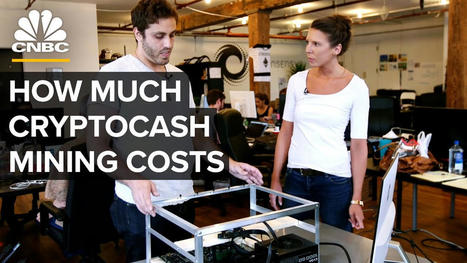



Smart contracts are computer programs built on a blockchain -- most often, on the infrastructure created by Ethereum. While cryptocurrencies simply tell users that an address has received a particular value, a smart contract takes that confirmation and then performs a series of actions as a result. It might issue a receipt, release a password or do anything else that can be written into the code. The blockchain, with its security and reliability, makes sure that a transaction has happened and can’t be changed. The code automates the next steps in that transaction. Even for small businesses, that automation can make life a great deal easier. Escrow is a service worth billions of dollars; real estate escrow services, for example, charge as much as 1-2% of the value of a property to hold onto purchase funds until a deal’s conditions have been met. Those services can easily be replaced by smart contracts. A property buyer would purchase tokens and send them to an address on the blockchain. The funds stay at that address until a computer program acknowledges that all the required steps in the purchase process have been completed: entering a code on a title deed, for example, or uploading a house inspection certificate or a signed copy of the contract. Once the transaction has met all its requirements, the tokens would automatically be released to the seller, who could convert them back into fiat currency. The entire purchase process becomes automated. For dealers who want the added security of a third party, smart contracts can also be multisignature. Some businesses are already delivering their services through a blockchain. Slock, for example, is using the blockchain to simplify and broaden the sharing economy. It’s creating a blockchain-connected lock that can be attached to any device: a bike, a car or an apartment, for example. Once a transaction has been confirmed on the blockchain, a user can unlock the device and use that object. For renters using Airbnb, or for firms running city-bike schemes, it’s a very simple way to manage rentals. The company is already working on a smart contract-based system to simplify the charging of electric vehicles, as well.