Just looking at numbers :)It’s probably irrelevant to compare those two separeted events. 5 years have passed, there are two times more smartphones and Facebook has successfully managed to become a highly growing & profitable company through incredible strategic moves: Instagram, Oculus, Whatsapp just to name a few.In May 2012, Facebook was valued 104 billions, after having raised 2.5B in venture capital and 16B at the IPO. Many people said it was overvalued. Now it’s easy to say it, but I remember at the time how impressed I was by the moves of Mark Zuckerberg and how obvious it felt to me that Facebook would be worth more than 200B in less than 2 years. It actually happened. And it’s now worth close to 400B.
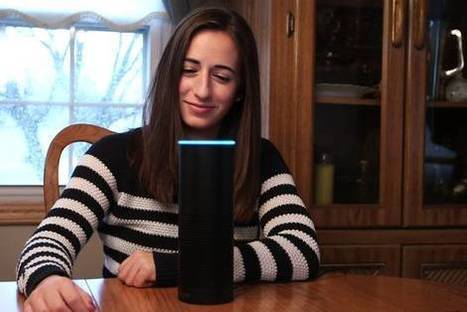
Amazon’s voice-controlled personal assistant is creating chaos for people called Alexis, Alex and Alexa; TV sitcom tried to order milk — Life has been complicated ever since Alexa Sussman and her parents started using Amazon's Echo and its built-in ‘Alexa’ assistant.“Alexa, stop!” Joanne Sussman screamed in her living room.Immediately, the computer living inside her Amazon Echo speaker stopped playing her favorite music station. Simultaneously, Mrs. Sussman’s 24-year-old daughter, Alexa, froze on the stairs.
AI first collaterals : girls named "Alexa", "Siri", or "Cortana". Unless we (or the IA giants) do something, these names will disappear from the charts soon while existing humans wearing these names will experience a nightmare.The short term winner ? "OK Google" as no child has been given such name... yet.
LES 12 AWARDS RÉCOMPENSENT LES TALENTS BRETONS ET NANTAIS DU DIGITAL
Les West Web Awards sont ouverts à tous. Habituellement, ce sont les structures qui sont récompensées, nous avons souhaité mettre un coup de projecteur sur les individus.
Vous travaillez dans le secteur public ou privé, vous êtes community manager d’une association, ou encore Chief Digital Officer d’une entreprise traditionnelle, lead developper dans une startup, UX designer en freelance… Alors déposez votre candidature ! Les West Web Awards récompensent des personnes qui ont fait preuve d’excellence dans un projet digital. Notre objectif est de promouvoir le dynamisme numérique du territoire en récompensant ceux qui le font vivre au quotidien.
Douze trophées à emporter, qui sera le meilleur dans sa catégorie ?
Douze trophées vont récompenser les talents du numérique territorial lors de la cérémonie des West Web Awards le 9 février 2017 à Brest : en ferez-vous partie ? #FrenchTech #WestWebValley
Silicon Valley giant Apple Inc. on Wednesday confirmed that it is investing $1 billion (approximately Rs 6,793 crore) in Japanese telecom major SoftBank Group’s Vision Fund, an estimated $100-billion (approximately Rs 68 lakh crore) venture that will oversee the development of new technologies. Taiwanese electronics manufacturer Foxconn and the family of the Oracle corporation’s chairman Larry Ellison are also expected to invest in the fund, the Wall Street Journal reported.
Apple believes the move “will help ‘speed the development of technologies that may be strategically important” to it, company spokesperson Kristin Huguet said. Apple has rarely ever invested in venture capital companies before.
While SoftBank will itself invest approximately $25 billion (approximately Rs 17 lakh crore) in its Vision Fund, it will be back largely by the Saudi Arabian government. American telecom equipment company Qualcomm Inc is also expected to put in an investment.
The SoftBank Vision Fund is expected to close its fundraising efforts by mid-2017.
Today, we are thrilled to announce that Infinit and Docker are joining forces.
To anyone following the container space, this may not come as a surprise because persistent storage remains the number one challenge when it comes to container technologies.
Still, for Infinit, this is a huge milestone, closing the loop that has taken the team through quite an incredible journey.
Docker has changed the way developers work. By providing an ecosystem of tools based on container technologies, developers and operators have been able to gain in agility and security. At the same time, Docker has succeeded at reconciling operators and developers (through what has been dubbed the DevOps movement) by making them speak the same language.
This whole revolution is still in its early stages even though both ends of the spectrum, startups and enterprises, have jumped on the train. Indeed, at this point, containers have been used primarily to deploy stateless applications because these can be stopped and relaunched easily, allowing for easy scalability.
Unfortunately, this is no longer enough as developers want more. Namely, they want the ability to scale stateful applications, such as databases, as easily as their stateless counterparts.
With stateful applications being the next natural step in this evolution, Infinit comes into play by providing the Docker community with a storage platform that is scalable, resilient and easy to deploy.
SpaceX, the aerospace company founded by the Mars-hungry tech entrepreneur Elon Musk, just made a big move to enshroud the planet in high-speed internet coverage.On November 15, the company filed a lengthy application with the Federal Communications Commission (FCC) to launch 4,425 satellites. (We first heard about the filing through the r/SpaceX community on Reddit.) That is a hell of a lot of satellites.
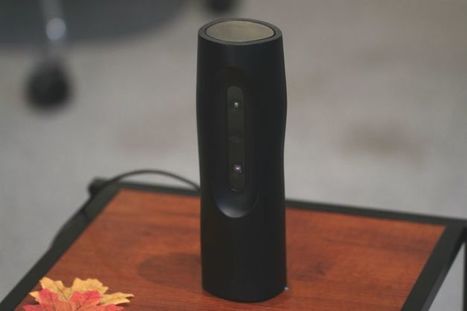
Earlier this week, I sat down with the company’s co-founders Gisèle Belliot and José Alonso Ybanez Zepeda, along with Uber co-founder-turned-investor Oscar Salazar, to discuss the product. The company’s ramping up for a formal announcement at CES, in tandem with the launch of an Indiegogo campaign, and it’s still working out some of the kinks around contextualizing its product.
We met up at a shared workspace in Manhattan, in a meeting room made up to resemble a living room — except for the big construction paper cutouts of buttons like Play and Pause adhered to different surfaces (another shorthand visualization of the product’s functionality).
By way of shortening this elevator ride, I’d describe the startup thusly: It’s Amazon Echo with a Kinect camera built in. In place of voice commands, you’ve got gestures.
In some ways Hayo is designed to fulfill similar functionality as Amazon’s hardware — a sort of connected home hub that ties together various smart devices — lights, music, thermostat, etc. When you get down to it, the possibilities are really endless when it comes to gesture controls in a three-dimensional space.
The company is, understandably, starting off simply with regards to functionality. At launch, the system will allow the user to designate 10 “buttons” per device. A button here is a point in space — a surface on, say, a wall or table. Each button can be assigned two different functions, which can adjust based on variables like time of day and user.
Hayo is one of the most ambitious #IoT man machine(s) interface projects I have ever seen, led by an incredibly talented team in both New York and Paris, and backed by extremely strong IP.
C’est confirmé. Selon nos informations, Devialet, qui s’est fait une réputation avec ses enceintes haut de gamme, doit officialiser dans la journée une nouvelle levée de fonds de 100 millions d’euros. Celle-ci, qui avait fuité dans la presse il y a une quinzaine de jours, coordonnée par la banque d’affaires Bryan Garnier&co, occasionne l’arrivée de nouveaux investisseurs.
Dont Ginko ventures, une société de capital-risque suisse spécialisée dans la tech, créée en 2015, financée notamment par le géant taïwanais Foxconn, fabricant de produits électroniques et sous-traitant d'Apple. Par la même occasion, Jean-François Baril, fondateur et directeur général de Ginko, entre au conseil d’administration de Devialet. Parmi les autres nouveaux investisseurs cités figure le fabricant japonais d'électronique Sharp, acquis en 2016 par Foxconn.
Mais aussi, surprise, l’ancienne ministre de la culture et de la communication Fleur Pellerin fait une arrivée remarquée dans l’ex-start-up française devenue grande. Premier coup, joli coup. Trois mois après le lancement de son fonds Korelya Capital, elle doit annoncer ce 28 novembre un "investissement significatif" au sein de Devialet, selon un proche du dossier.
Il s’agit de la première opération de ce jeune fonds. Et dans la foulée, l’ex-ministre rejoindra le conseil d’administration de la société française spécialisée dans le son haut de gamme. Korelya avait été abondé à hauteur de 100 millions d’euros par le mastodonte de l’Internet sud-coréen Naver et sa filiale Line, connue pour son service de messagerie instantanée.
Le billet de ce jour rassemble un certain nombre de réflexions autour du « futur du travail ». Ce sujet est particulièrement d’actualité en ce moment, qu’il s’agisse de la presse ou de la préparation de la campagne présidentielle. En ce qui me concerne, j’ai eu la chance de passer une semaine à la Singularity University dans le cadre du Singularity University Executive Program, ce qui m’a permis d’approfondir mes idées sur le sujet. Ce billet reprend les points principaux que j’ai développé le 12 Octobre lors du séminaire de l’Académie des Technologies, lors d’une conférence intitulée « Emploi et travail dans un monde envahi par les robots et les systèmes intelligents ». Il s’inscrit dans la continuité d’un premier billet écrit il y a deux ans, mais j’ai affiné mon diagnostic et j’ai donc des convictions plus fortes et plus précises.
La première partie fait le point sur la question de l’automatisation – des robots à l’intelligence artificielle – et de son impact sur les emplois. Depuis la publication du rapport de Frey-Osborne en 2012, il y a eu de nombreuses réactions. La plupart sont conservatrices et prudentes, qu’il s’agisse du rapport de l’OCDE ou du livre récent de Luc Ferry. Je ne partage pas ce revirement comme je vais l’exprimer, particulièrement après avoir passé cette semaine à la Singularity University. Je vais au contraire développer une vision de l’évolution du travail dans laquelle l’homme est complémentaire de ces nouvelles formes automatisées de production et de création de valeur.
La seconde partie est une réflexion sur la société à la quelle conduit cette nouvelle vision du travail. C’est, par construction, une contribution à l’iconomie, c’est-à-dire l’organisation de l’économie dans le cadre d’une exploitation pleine et entière des bénéfices de la technologie de l’information, y compris dans ces capacités d’automatisation (lire la définition de Michel Volle). Je propose une vision « fractale / multi-echelle » de l’ iconomie qui réconcilie la domination des plateformes (« winners take all ») et le retour de la « localisation » (la priorité donnée à la communauté et au territoire ) face au désarroi (pour rester mesuré) que cette rupture de paradigme va produire. Dans la tradition des « power laws » de la nouvelle économie, les bassins d’opportunité créés par le progrès technologique ont une structure maillée et multi-échelle qui contient une « longue traine » de micro-opportunités pour microentreprises.
La troisième partie porte sur cette rupture, la transition de phase entre le modèle actuel de l’emploi qui est clairement à bout de souffle et un modèle possible, correspondant à la vision développée dans les deux premières parties. C’est la question fondamentale, et la plus difficile : même pour les partisans d’une vision optimiste du progrès technologique dont je fais partie, la transition qui s’annonce est complexe, voire brutale. Même si le titre du livre de Bernard Stiegler « L’emploi est mort, vive le travail ! » contient un message positif, ce changement n’est pas moins qu’une révolution, qui est par ailleurs déjà engagée. Face à un changement qui s’accélère et des vagues d’automatisation nouvelles qui se dessinent, je suis persuadé que le monde politique a un rendez-vous avec l’Histoire, et qu’un certain nombre de mesures sont nécessaires pour éviter des scénarios noirs qui sont fort bien décrits dans des ouvrages de science-fiction. Il est possible de construire une société équilibrée autour de l’iconomie, mais la tendance naturelle du techno-système, sans intervention et régulation, est d’aller vers la polarisation et l’affrontement.
J’ai résisté à la tentation facétieuse et opportuniste de nommer ce billet « comprendre les causes profondes de l’élection de Donald Trump », mais je pense néanmoins qu’une des causes essentielles de cette élection, qui semble défier le sens commun, est qu’une grande partie des électeurs sentent plus ou moins confusément qu’un monde est en train de se construire dans lequel ils n’ont plus de place. Ce n’est pas une « simple » réaction à la désindustrialisation, c’est une peur de se retrouver « assignés à résidence », pour reprendre les mots d’Emmanuel Macron, sans utilité pour cette nouvelle société technologique et automatisée. Le défi qui est devant nous est de rendre l’iconomie « inclusive », c’est-à-dire avec une place pour chacun qui lui permette de contribuer au travers de son activité.
C'est long. C'est dense. C'est très bien documenté. C'est réfléchi. Cela ne se survole pas en 30 secondes mais on en ressort en ayant appris. Bref du grand Yves Caseau.
(si j'avais du titrer en anglais j'aurais repris le joli titre de la très mauvaise chanson d'un album de Heaven 17 "crushed by the wheels of industry" — The Luxury Gap, 1983 qui contient notamment "Let Me Go" et "Temptation")
Human being is the only species with trust. We trust hundreds of strangers without even thinking about it.
How do we enable trust?
How does security enable trust. How do we induce trust?
Trusting friends is about who they are as persons.
Trusting strangers is about their actions
Trust: confidence, consistence, compliancy. It's about cooperation.
We trust people, companies and systems
We trust systems to produce expected behaviors
All complex ecosystems require cooperation. In any cooperative system, there is a way to subvert the system for personal interests.
These are called defectors in game theory. They are parasites. They can survive if they are contained. If too many parasites the body dies and the parasites die too.
Society doesn't work if everybody steals. Security can be defined as a tax on the honests.
Social species: individual competition plus group competition.
Security is to keep defection level at an acceptable minimum that is not zero.
NSA defector Edward Snowden raises moral debates but the point is that he is a defector. How group enforce the norm. Even mafia groups.
It is about societal pressure.
4 types of societal pressure
moral: we don't steal because we know stealing is wrong.
reputation: also in our heads but link to other's reactions. Humans are the only species to transmit reputation. Experiment: coffee machine + honesty box. Putting a photograph of a pair of eyes in the box bottom decreased the cheat rate dramatically
laws: formalizing reputation, and focusing only on penalties (because of the cost implied by rewarding the majority of honest people). With exceptions in the shape of tax breaks
technology: security systems. Door locks, alarms, ... Some of them extending globally. ATM cards are protected globally.
Example: eBay feedback mechanism is a reputational security system that worked remarkably for years as the main security system.
How does technology affects us?
Technology is what allows society to scale. It is neutral.
Filesharing: social pressure vs technology
Attackers have a first mover advantage and are more adaptive.
Mid 90's Internet going commercial: hackers used it immediately while it took 10 years to the police to figure out how to address it
Such delay is the main security gap
Our society is at a point where technology is faster than social changes which means that the security gap widens.
Before: buy this and you'll be safe
Now: when you've been attacked, please talk to us and we'll help
It's the antivirus history
Smart paradigm: detect unknown viruses including false positives
Stupid paradigm: check for signatures and update once or twice a day
The stupid paradigm seems to have won.
So technology will always favor defectors? True, but large organizations can now use technology in a much more effective manner.
Our society has the most technology and the largest institutions.
The battle is amplifying between agile defectors and slower yet more effective institutions. Losers are those of us in the middle.
To him it is not even clear how there is a balance nor how it will evolve.
As a conclusion
there will always be defectors
ourselves are not 100% cooperative, we all defect some time in a way
law of diminishing returns
there are good and bad defectors and history decided afterwards. That will be the case for Edward Snowden
society need defectors. This is how we evolve. Defectors are at the forefront of social change: freeing the slaves, giving women voting rights
Digiworld Summit 2016 is on "The Digital Trust Economy" - Time to remember Bruce Schneier's remarkable words of wisdom at USI 3 years ago - I have added my on the fly notes to the video link for those who prefer reading.
Digiworld Summit 2016 is on "The Digital Trust Economy" - Time to remember Bruce Schneier's remarkable words of wisdom at USI 3 years ago - I have added my on the fly notes to the video link for those who prefer reading.
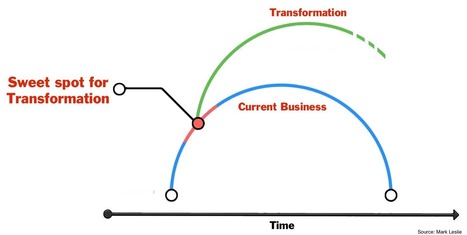
As Steve Blank states: "The dilemma facing the boards at Microsoft, Apple or any board of directors on the departure of an innovative CEO is strategic: Do we still want to be a innovative, risk taking company? Or should we now focus on execution of our core business, reduce our risky bets and maximize shareholder return.Tactically, that question results in asking: Do you search for another innovator from outside, promote one of the executors or go deeper down the organization to find an innovator?Herein lies four challenges. Steve Jobs and Bill Gates (and 20th century’s other creative icon -Walt Disney) shared the same blind spot: They suggested execution executives as their successors. They confused world-class execution with the passion for product and customers, and market insight. From the perspective of Gates there was no difference between him and Ballmer and from Jobs to Cook. Yet history has shown us for long-term survival in markets that change rapidly that’s definitely not the case.The second conundrum is that if the board decides that the company needs another innovator at the helm, you can almost guarantee that the best executor – the number 2 and/or 3 vice president in the company – will leave, feeling that they deserved the job. Now the board is faced with not only having lost its CEO, but potentially the best of the executive staff.The third challenge is that many innovative/visionary CEOs have become part of the company’s brand. Steve Jobs, Jeff Bezos, Mark Zuckerberg, Jeff Immelt, Elon Musk, Mark Benioff, Larry Ellison. This isn’t a new phenomenon, think of 20th-century icons like Walt Disney, Edward Land at Polaroid, Henry Ford, Lee Iacocca at Chrysler, Jack Welch at GE and Alfred Sloan at GM. But they’re not only an external face to the company, they were often the touchstone for internal decision-making. Years after a visionary CEO is gone companies are still asking “What would Walt Disney/Steve Jobs/Henry Ford have done?” rather than figuring out what they should now be doing in the changing market.Finally, the fourth conundrum is that as companies grow larger and management falls prey to the fallacy that it only exists to maximize shareholder short-term return on investment, companies become risk averse. Large companies and their boards live in fear of losing what they spent years gaining (customers, market share, revenue, profits.) This may work in stable markets and technologies. But today very few of those remain."
Words of wisdom about execution without vision, that raise what looks to me as Ze Question : how do we synchronize time horizons (milliseconds, days, weeks, quarters, 5-years strategic plans, 15-years generations) in a world of permanent disruption and exponential changes ?
Nokia has achieved a connection speed of 5Gbps—about 625MB/sec—over 70 metres of conventional twisted-pair copper telephone wire, and 8Gbps over 30 metres. The trial used a relatively new digital subscriber line (DSL) protocol called XG.fast (aka G.fast2).XG.fast is the probable successor of G.fast, which was successfully trialled in a few countries over the past couple of years and will soon begin to commercially roll out. (In an unusual turn of events, the UK will probably be the first country with G.fast.)Fundamentally, both G.fast and XG.fast are best described as "VDSL on steroids." Basically, while a VDSL2 signal frequency maxes out around 17MHz, G.fast starts at 106MHz (it can be doubled to 212MHz) and XG.fast uses between 350MHz and 500MHz. This means that there's a lot more bandwidth (the original meaning of the word), which in turn can be used for transferring data at higher speeds.
As popular wisdom says though, "your mileage may vary" ... Fast broadband to the home is also pushing the bottleneck to WiFi routers and boxes. Yet this is still an achievement for the old copper wire !
Ces prix sont ouverts aux projets entrés dans une phase de réalisation, qu’ils émanent de particuliers, d’associations, d’entreprises ou d’organismes publics ou privés.
Les candidats doivent postuler à l’une des six catégories suivantes:
· Innovation urbaine : innovation technologique appliquée à la ville.
· Participation citoyenne (Prix Le Monde-Inta) : décerné à un processus dans lequel les citoyens assument un rôle dans l’élaboration et la gestion des espaces et services urbains physiques et/ou virtuels ;
· Habitat : projet innovant en matière d’espace de vie urbain (résidentiel, bureaux, matériaux nouveaux, etc.) ;
· Mobilité : projet facilitant une circulation à dimension plus humaine et plus économe ;
· Energie : projet visant à réduire l’empreinte carbone des villes ;
· Action culturelle : innovation sociale et numérique de dimension culturelle et urbaine.
Les candidatures européennes sont à envoyer (en français, en anglais ou en espagnol) à smartcities@lemonde.fr, avant le 19 février 2017 à minuit.
Les candidatures des pays non-européens sont à envoyer (en anglais si possible) à smartcitiesint@lemonde.fr avant le 2 avril 2017 à minuit.
Les éléments à envoyer pour postuler sont les suivants :
· un lien vers une vidéo de trois minutes maximum qui présente la solution;
· un texte de 3 000 signes maximum avec un descriptif de l’initiative, son ou ses objectifs, la nature de l’innovation, le calendrier prévu, les acteurs, le coût et le financement ;
· un document officiel justifiant de votre identité et de l’existence juridique de votre structure.
Un jury international composé de personnalités qualifiées examinera les candidatures et choisira les lauréats. Chacun des six prix est doté de 1 000 euros. Le jury sélectionnera parmi l’ensemble des candidats le lauréat du Grand Prix Le Monde- L’Atelier BNP Paribas, doté de 2 000 euros.
Les prix européens seront remis le 7 avril 2017 à Lyon. Les prix internationaux seront remis à Singapour début juin
En savoir plus sur http://www.lemonde.fr/les-prix-de-l-innovation/article/2016/11/24/appel-a-candidatures-prix-europeens-de-l-innovation-2017-le-monde-smart-cities_5036994_4811683.html#6q8tid6Ao79uVqQy.99
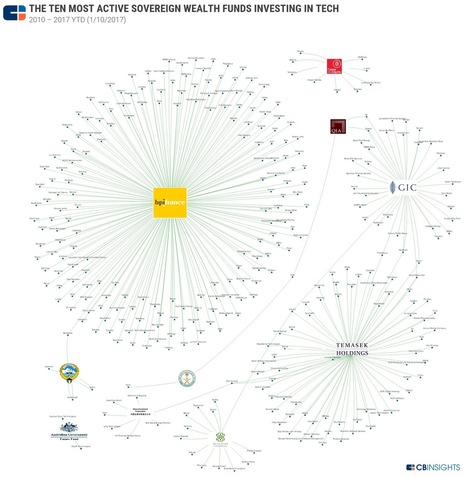
Over the last seven years, France’s Banque publique d’investissement, or Bpifrance, has been the world’s most active sovereign wealth fund investing in private tech companies. Bpifrance was originally set up as a sovereign investment fund in 2009.
The government of Singapore owns the world’s second and third most active funds. These two funds are Temasek Holdings, which distributes dividends solely to Singapore’s Ministry of Finance, and GIC, the private equity investment arm of the government of Singapore Investment Corporation.
Very proud to see our largest subsidiary deploying the "Investments For The Future" (the €35 Bn plan launched in 2011) funds across the french economy, and proud to see its Mother Company being also part of the ranking in such a prestigious crowd !
Disclosure : I work for Caisse Des Dépôts representing it as the sole LP in the Bpifrance funds managed for the IFF/PIA program.
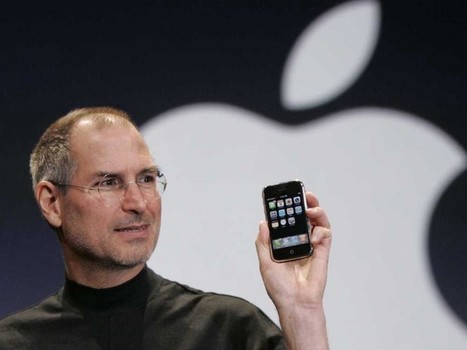
The iPhone’s 10th birthday was a happy opportunity to look once again at Steve Jobs’ masterclass in storytelling and positioning, and to contemplate, with incredulous gratitude, the enormity of the consequences. As Horace Dediu, our nonpareil tech historian and poet, recently remarked with his trademark humor, The First Trillion Dollars is Always the Hardest [as always, edits and emphasis mine]:
“In its first 10 years, the iPhone will have sold at least 1.2 billion units, making it the most successful product of all time. The iPhone also enabled the iOS empire which includes the iPod touch, the iPad, the Apple Watch and Apple TV whose combined total unit sales will reach 1.75 billion units over 10 years. This total is likely to top 2 billion units by the end of 2018.
[…] iOS will have generated over $1 trillion in revenues for Apple sometime this year.
In addition, developers building apps for iOS have been paid $60 billion. The rate of payments has now reached $20 billion/yr.
No one saw it coming, Apple execs included. For their part, the high tech incumbents made many infelicitous statements, only to be steamrolled when the iPhone and, later, Android changed everything. The Smartphone 2.0 wasn’t just a one-to-one communication device, it influenced media creation and consumption, transformed everyday commerce with in-phone wallets and touch ID, turned social networking into a ubiquitous tool. It even forced Enterprise information systems to completely rethink and retool their infrastructure — this wasn’t simply a computer with a “smaller form factor”.
In retrospect, the ascendency of Smartphone 2.0 and the way it has shaped our culture seems obvious and natural. But the celebration and contemplation overlooks a crucial Sine Qua Non, a necessary (but not sufficient) condition: Unlocking the carriers’ grip on handset specifications, marketing, and content distribution.
Fascinating Monday Note by Jean-Louis Gassée, reminding us that while much has been said about the original iPhone’s success factors (an innovative multi-touch interface, a never-seen-before combination of cell phone, iPod and Internet “navigator”) we are often missing one crucial element: removing the carrier’s control on the iPhone’s features and content.
Quoting Horace Dediu, “In its first 10 years, the iPhone will have sold at least 1.2 billion units, making it the most successful product of all time. The iPhone also enabled the iOS empire which includes the iPod touch, the iPad, the Apple Watch and Apple TV whose combined total unit sales will reach 1.75 billion units over 10 years. This total is likely to top 2 billion units by the end of 2018." Amazed that iOS will have generated over $1 trillion in revenues for Apple sometime this year."
After he left Tamale, Fawcett started spending time with quantitative traders (i.e., quants) and the more he learned about how they created trading algorithms, the bigger and bolder his next idea became. The outcome of his thinking led him to a pivotal insight: the time had come to disrupt the exclusive world of quantitative hedge funds. How would he do it? By harnessing the power of crowdsourcing to build a community of quants, feeding that community with lots of data and incentivizing the community (through regular contests and events) to produce new strategies that could be used in live trading. Today, that unique approach has been transformed into one of the mostly closely watched fintech companies in America. For the company’s next act, Fawcett and his co-founder, Jean Bredeche, are hard at work in laying the foundation to launch an in-house hedge fund utilizing strategies generated from its 100,000+ member community. The FR’s Gregg Schoenberg recently sat down with Fawcett to learn more about his company and the bold moves he’s making to level the playing field in one of the most lucrative — and heretofore undisrupted — corners of the investment management universe.
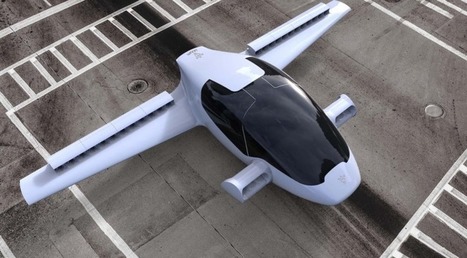
Flying cars have long been the centerpiece of fantastical future visions, but personal flying machines never quite materialized. One startup, however, is looking to change that.
Lilium Aviation has today announced a €10 million ($10.7 million) funding round from Skype cofounder Niklas Zennström’s Atomico, to create a world “in which everyone can fly anywhere, anytime,” the company says. But the electric Lilium jet isn’t a car as such — it doesn’t have wheels.
The jet remains a prototype for now, but with its latest funding round the company is looking to expedite development, with flight-testing kicking off in early 2017 ahead of commercial production.
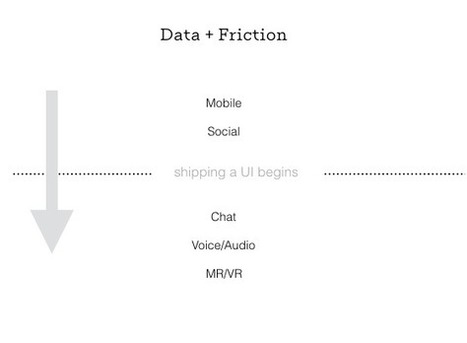
We are at the very beginning of a fundamental shift in the way that humans communicate with computers. I laid out the beginning of my case for this in my essay The Hidden Homescreen in which I argued that as Internet-powered services are distributed through an increasingly fractured set of channels, the metaphor of apps on a “homescreen” falls apart. The first obvious application was in chatbots, but as new unique interfaces come online, the metaphor becomes even more important. To understand this shift, it’s worth examining how platform changes have created entirely new businesses and business models. At its heart, it’s about the relationship between the reduction of friction and the resulting increase in data collection.
Very interesting post. User Interfaces have indeed moved into User Experiences and as products/services saturate our free/idle moments, context management and focus on relevance will be indeed core.
Plus we won't manage the dozen of objects in the smart home with dozens of apps and screen interactions. This is where http://hayo.io could step in.
It’s hard not to get excited when people start talking about flying cars — after all, who doesn’t want a flying Jetsons car? When 2016 Hello Tomorrow Challenge grand prize winner, Lilium Jet, got on stage to present the world’s first vertical takeoff and landing (VTOL) personal aircraft, the audience was captivated. Before us was an image of a futuristic egg-shaped personal jet, majestically soaring above the glistening ocean. Incubated under the auspices of the European Space Agency’s business incubation center in Bavaria, the young team of German engineers and doctoral students from the Technical University of Munich has a lofty ambition: to disrupt the future of everyday commute. With Lilium Jet, people can move to rural areas while working in big cities, because long distances can be covered in a fraction of the traditional time. Instead of queueing at an airport to go from Munich to Milan, you stroll into your garden, hop onto your Lilium, and take off; we’re talking about a garden of at least 15 x 15 meter. With electric engines, the Lilium is both quieter and more environmentally-friendly than helicopters. Classified as a light sport aircraft for two occupants, the Lilium can fly up to 300 km per hour, and requires only 20–30 hours of training as opposed to the costly, time-intensive training required to fly helicopters. Same as getting a driver’s license.
Could Samsung be the first big defection from ARM since the SoftBank takeover?
It was always thought that, when ARM relinquished its independence, its customers would look around for other alternatives. The nice thing about RISC-V is that it’s independent, open source and royalty-free. And RISC-V is what Samsung is reported to be using for an IoT CPU in preference to ARM. Now SoftBank made a point of saying that its take-over of ARM was to get into IoT. If Samsung is now going to RISC-V for its IoT CPU, this affects the scale of Softbank’s aspirations and may persuade others to defect to RISC-V. The Samsung RISC-V MCU is said to be aimed squarely at the ARM Cortex M0. Nvidia and Qualcomm are already using RISC-V in the development of GPU memory controllers and IoT processors. Although, as Intel found, it’s almost impossible to replace an incumbent processor architecture in a major product area, which means that ARM’s place as the incumbent architecture in cellphones is secure, at the moment there is no incumbent processor architecture in IoT or MCU – so these are up for grabs by any aspiring rival processor architecture.
X86 architecture gave Intel dominance of the large PC market before hitting the smartphone wall.
Cortex architectures gave ARM dominance of the much larger smartphone market before hitting the SoftBank wall.
RISC-V may be the next architecture for the even much larger IoT market (in volume at least).
Intel is a US corporation, ARM was once a british company now under japanese flag : the nice thing with RISC-V is that it is an independent, open source, and royalty free architecture.
This will have consequences over the next decade in the computing race between the US and Asia (think Loogson and now ARM), and may be an opportunity for Europeans to step in and avoid to remain as "The Pacific" of cyber tests.
After months of speculation and leaked documents, NASA's long-awaited EM Drive paper has finally been peer-reviewed and published. And it shows that the 'impossible' propulsion system really does appear to work.
The NASA Eagleworks Laboratory team even put forward a hypothesis for howthe EM Drive could produce thrust – something that seems impossible according to our current understanding of the laws of physics.
In case you've missed the hype, the EM Drive, or Electromagnetic Drive, is a propulsion system first proposed by British inventor Roger Shawyer back in 1999.
Instead of using heavy, inefficient rocket fuel, it bounces microwaves back and forth inside a cone-shaped metal cavity to generate thrust.
According to Shawyer's calculations, the EM Drive could be so efficient that it could power us to Mars in just 70 days.
But, there's a not-small problem with the system. It defies Newton's third law, which states that everything must have an equal and opposite reaction.
According to the law, for a system to produce thrust, it has to push something out the other way. The EM Drive doesn't do this.
Yet in test after test it continues to work. Last year, NASA's Eagleworks Laboratory team got their hands on an EM Drive to try to figure out once and for all what was going on.
This is where Facebook will prototype its solar drones, Internet-beaming lasers, VR headsets, and next-gen servers.The problem with moving faster than most companies is that Facebook was plagued by delays whenever it had to outsource prototyping and testing of its gadgets and gizmos. With so much hardware on its 10-year roadmap, and quarter after quarter of profits stacking up, it made sense to build a dedicated laboratory within its Menlo Park headquarters.Facebook’s 10-year roadmap includes drones, satellites, lasers, telecom infrastructure, VR headsets, and augmented reality hardware that will all be prototyped at Area 404
Plus de 60 exposants présents sur 1000 m2 pour vous faire découvrir des solutions concrètes pour votre ville : du scooter électrique à la ferme urbaine, des bureaux partagés à la gestion des données publiques... Un parcours libre et des réponses professionnelles au sein de 4 espaces pour une ville :
plus facile à vivre (transport, logement)
plus connectée et participative (réseaux, services aux habitants)
plus accueillante à l’entrepreneuriat (tiers lieux, quartiers numériques)
plus durable (nature en ville, smart énergie)
10 h 00 - 12 h 00
Mini-conférences pour décrypter
AFD : vision ville du Sud
Du smart building à la smart city
Mobility as a service : un accès unifié à la mobilité
Quel éco-gestionnaire à l'échelle d'un îlot ?
Quelle gouvernance pour la Smart city ?
Smart grid réseaux de chaleur
Valoriser les données de la ville : Open data soft / Dawex
10 h 00 - 16 h 00
Networking - rencontres individuelles:
Solutions de financement
Energies renouvelables
Entreprises innovantes
Equipements et hébergements touristiques
Fonds PIA - ville de demain
Infrastructures de mobilité
Logement intermédiaire et social
Prêts aux collectivités
Tiers lieux, coworking, incubateur
Très Haut Débit
Conseil
Faire émerger les intelligences collectives de la ville
Ingénierie financière
Mobilité : faire de votre territoire un laboratoire d’expérimentation
Rencontrer ma direction régionale
Stratégie Smart City
Stratégie patrimoniale immobilière
Logement
Bâtiments réversibles
Gestion smart des espaces verts
Mobilité
Dépénalisation du stationnement
Encourager l'usage des véhicules électriques
Gestion du stationnement et smart parking
Nouvelles mobilités en zone peu dense
Energie / Environnement
Concevoir un bâtiment bas carbone
Contrat de performance biodiversité pour mes espaces verts
Rénovation énergétique du patrimoine public
Infrastructures numériques et DATA
Aménagement numérique du territoire en THD
Connaître, maîtriser et optimiser l'usage des données de l'énergie
Parcs d'activités et Entreprenariat local
Animer les écosystèmes d'acteurs économiques pour créer de l'emploi
Ilot à haute performance énergétique
Immobilier 3.0
Intégrer la biodiversité
12 h 00 - 14 h 00
Buffet déjeuner
14 h 00 - 16 h 00
14 h 30 - 16 h 00
Mini-conférences pour décrypter
Darwin ecosystem : un lieu de l'entrepreneuriat social
Lemon : co-construire des solutions de mobilité
THD c'est possible partout : pourquoi, comment ?
Un smart village olympique en 2024
Ville intelligente / intelligences de la ville : Jean Rottner, Maire de Mulhouse
Assemblée des Communautés de France et Association des Petites Villes de France
Digitaliser les projets de territoires : smart city versus stupid village
The Hello Tomorrow Global Summit gathered international leaders in the science-innovation sphere on October 13-14 at the CENTQUATRE in Paris, France. With nearly 3,000 participants, the summit featured a unique blend of amicable atmosphere and deep technologies such as new materials, synthetic biology, artificial intelligence and more.
Leaders from around the world, including executives, (corporate) investors, science entrepreneurs, and startups were there to transform the way we eat, work, travel, cure, manufacture and communicate. There was a wide range of keynotes, panels, AMAs, and breakout sessions, including the following highlights:
Powering music with technology, opening performance by Imogen Heap
Hello Tomorrow Challenge startup pitches by 69 finalists across two days
When innovation fuels the economy, exclusive panel with Michael Bloomberg (CEO of Bloomberg) and Emmanuel Macron(Former French Minister of Economy)
Hello Tomorrow had partnered with major private and public entities to define the scope of this international competition, including the principal partner, BNP Paribas with L’Atelier BNP Paribas, and the Boston Consulting Group, Bloomberg, and La French Tech as global partners.
Last week's Hello Tomorrow delivered on its promise and I spent 2 fascinating and energizing days in Le 104 thanks to Xavier Duportet and his incredible team. Here is my take on this incredibly valuable conference, assembled on my iPhone with Quik (formerly known as Stupeflix) : DNA, SpaceTech, and cars...
To get content containing either thought or leadership enter:
To get content containing both thought and leadership enter:
To get content containing the expression thought leadership enter:
You can enter several keywords and you can refine them whenever you want. Our suggestion engine uses more signals but entering a few keywords here will rapidly give you great content to curate.


 Your new post is loading...