Your new post is loading...

|
Scooped by
HAS-veille
October 18, 2022 2:51 AM
|
Over 2 years have passed since the start of the COVID-19 pandemic, which has claimed millions of lives. Unlike the early days of the pandemic, when management decisions were based on extrapolations from in vitro data, case reports and case series, clinicians are now equipped with an armamentarium of therapies based on high-quality evidence. These treatments are spread across seven main therapeutic categories: anti-inflammatory agents, antivirals, antithrombotics, therapies for acute hypoxaemic respiratory failure, anti-SARS-CoV-2 (neutralizing) antibody therapies, modulators of the renin–angiotensin–aldosterone system and vitamins. For each of these treatments, the patient population characteristics and clinical settings in which they were studied are important considerations. Although few direct comparisons have been performed, the evidence base and magnitude of benefit for anti-inflammatory and antiviral agents clearly outweigh those of other therapeutic approaches such as vitamins. The emergence of novel variants has further complicated the interpretation of much of the available evidence, particularly for antibody therapies. Importantly, patients with acute and chronic kidney disease were under-represented in many of the COVID-19 clinical trials, and outcomes in this population might differ from those reported in the general population. Here, we examine the clinical evidence for these therapies through a kidney medicine lens. The COVID-19 pandemic was met with large-scale efforts to assess novel and repurposed therapeutic interventions that could reduce patient morbidity and mortality. Here, the authors discuss the different types of therapies available to treat COVID-19, including their relevance to patients with kidney failure and kidney transplant recipients.
|
|
Scooped by
HAS-veille
October 17, 2022 7:55 AM
|
Data on the safety of COVID-19 vaccines in early pregnancy are limited. We conducted a national, population-based, matched cohort study assessing associations between COVID-19 vaccination and miscarriage prior to 20 weeks gestation and, separately, ectopic pregnancy. We identified women in Scotland vaccinated between 6 weeks preconception and 19 weeks 6 days gestation (for miscarriage; n = 18,780) or 2 weeks 6 days gestation (for ectopic; n = 10,570). Matched, unvaccinated women from the pre-pandemic and, separately, pandemic periods were used as controls. Here we show no association between vaccination and miscarriage (adjusted Odds Ratio [aOR], pre-pandemic controls = 1.02, 95% Confidence Interval [CI] = 0.96–1.09) or ectopic pregnancy (aOR = 1.13, 95% CI = 0.92–1.38). We undertook additional analyses examining confirmed SARS-CoV-2 infection as the exposure and similarly found no association with miscarriage or ectopic pregnancy. Our findings support current recommendations that vaccination remains the safest way for pregnant women to protect themselves and their babies from COVID-19. Data on the safety of COVD-19 vaccines in early pregnancy are limited. Here, the authors assess the rates of miscarriage and ectopic pregnancy following vaccination using electronic health record data from Scotland, and find no evidence of increased risks.
|
|
Scooped by
HAS-veille
October 17, 2022 1:28 AM
|
|
|
Scooped by
HAS-veille
October 13, 2022 8:19 AM
|
|
|
Scooped by
HAS-veille
October 13, 2022 4:50 AM
|
This study evaluates the diagnostic sensitivity of the SARS-CoV-2 nucleic acid amplification test performed within 24 hours of arrival to the emergency department among a nationally representative sample of patients.
|
|
Scooped by
HAS-veille
October 12, 2022 8:08 AM
|
With increasing numbers infected by SARS-CoV-2, understanding long-COVID is essential to inform health and social care support. A Scottish population cohort of 33,281 laboratory-confirmed SARS-CoV-2 infections and 62,957 never-infected individuals were followed-up via 6, 12 and 18-month questionnaires and linkage to hospitalization and death records. Of the 31,486 symptomatic infections,1,856 (6%) had not recovered and 13,350 (42%) only partially. No recovery was associated with hospitalized infection, age, female sex, deprivation, respiratory disease, depression and multimorbidity. Previous symptomatic infection was associated with poorer quality of life, impairment across all daily activities and 24 persistent symptoms including breathlessness (OR 3.43, 95% CI 3.29–3.58), palpitations (OR 2.51, OR 2.36–2.66), chest pain (OR 2.09, 95% CI 1.96–2.23), and confusion (OR 2.92, 95% CI 2.78–3.07). Asymptomatic infection was not associated with adverse outcomes. Vaccination was associated with reduced risk of seven symptoms. Here we describe the nature of long-COVID and the factors associated with it. In this population-based cohort study from Scotland, the authors investigate the prevalence of symptoms in the post-acute phase of COVID-19 infection compared to matched uninfected controls. They identify persistent symptoms associated with infection and identify factors associated with failure to recover.
|
|
Scooped by
HAS-veille
October 12, 2022 5:26 AM
|
|
|
Scooped by
HAS-veille
October 11, 2022 7:06 AM
|
|
|
Scooped by
HAS-veille
October 11, 2022 4:48 AM
|
|
|
Scooped by
HAS-veille
October 11, 2022 2:10 AM
|
This cross-sectional study compares COVID-19 symptoms during the Omicron BA.1 period with the pre-Delta and Delta variant periods and assesses the duration of rapid antigen test positivity at a walk-up community testing site.
|
|
Scooped by
HAS-veille
October 10, 2022 2:51 AM
|
Persistent neurological symptoms affect a substantial fraction of people after COVID-19
and represent a major component of long COVID. Here, Monje and Iwasaki review what
is understood about the neurobiological underpinnings of long COVID cognitive symptoms.
|
|
Scooped by
HAS-veille
October 10, 2022 2:34 AM
|
Patients infected with the severe acute respiratory syndrome coronavirus 2 (SARS-CoV-2) can experience life-threatening respiratory distress, blood pressure dysregulation, and thrombosis. This i
|
|
Scooped by
HAS-veille
October 10, 2022 2:08 AM
|
Little is known about the real-world effectiveness of oral antivirals against the SARS-CoV-2 omicron (B.1.1.529) variant. We aimed to assess the clini…
|
|
|
Scooped by
HAS-veille
October 18, 2022 2:43 AM
|
We report the first long-term follow-up of a randomized trial (NCT04978259) addressing the effects of remdesivir on recovery (primary outcome) and other patient-important outcomes one year after hospitalization resulting from COVID-19. Of the 208 patients recruited from 11 Finnish hospitals, 198 survived, of whom 181 (92%) completed follow-up. At one year, self-reported recovery occurred in 85% in remdesivir and 86% in standard of care (SoC) (RR 0.94, 95% CI 0.47-1.90). We infer no convincing difference between remdesivir and SoC in quality of life or symptom outcomes (p > 0.05). Of the 21 potential long-COVID symptoms, patients reported moderate/major bother from fatigue (26%), joint pain (22%), and problems with memory (19%) and attention/concentration (18%). In conclusion, after a one-year follow-up of hospitalized patients, one in six reported they had not recovered well from COVID-19. Our results provide no convincing evidence of remdesivir benefit, but wide confidence intervals included possible benefit and harm. Many survivors of COVID-19 experience persistent symptoms, continuing beyond three months from the onset of infection. In this study, authors investigate the effect of remdesivir on recovery and long-COVID-19 symptoms, as well as quality of life and other symptom outcomes, in the 1-year follow-up of a randomised trial.
|
|
Scooped by
HAS-veille
October 17, 2022 7:23 AM
|
The risk of death during the coronavirus (COVID-19) pandemic among people aged 30 to 64 years with and without obesity
|
|
Scooped by
HAS-veille
October 14, 2022 4:13 AM
|
Older people, those with multimorbidity, and those with specific underlying health
conditions remain at increased risk of COVID-19 hospitalisation and death after the
initial vaccine booster and should, therefore, be prioritised for additional boosters,
including novel optimised versions, and the increasing array of COVID-19 therapeutics.
|
|
Scooped by
HAS-veille
October 13, 2022 4:50 AM
|
This systematic review and meta-analysis addresses whether adults with persistent COVID-19 symptoms more than 3 months after SARS-CoV-2 infection (long COVID-19 [LC]) have reduced exercise capacity compared with recovered individuals without symptoms and identifies potential mechanisms of LC.
|
|
Scooped by
HAS-veille
October 13, 2022 4:32 AM
|
The FDA amended the emergency use authorizations (EUAs) of the Moderna COVID-19 Vaccine, Bivalent and the Pfizer-BioNTech COVID-19 Vaccine, Bivalent to authorize their use as a single booster dose in younger age groups.
|
|
Scooped by
HAS-veille
October 12, 2022 8:07 AM
|
Disease characterization of Post-Acute Sequelae of SARS-CoV-2 (PASC) does not account for pre-existing conditions and time course of incidence. We utilized longitudinal data and matching to a COVID PCR-negative population to discriminate PASC conditions over time within our patient population during 2020. Clinical Classification Software was used to identify PASC condition groupings. Conditions were specified acute and persistent (occurring 0-30 days post COVID PCR and persisted 30–120 days post-test) or late (occurring initially 30-120 days post-test). We matched 3:1 COVID PCR-negative COVIDPCR-positive by age, sex, testing month and service area, controlling for pre-existing conditions up to four years prior; 28,118 PCR-positive to 70,293 PCR-negative patients resulted. We estimated PASC risk from the matched cohort. Risk of any PASC condition was 12% greater for PCR-positive patients in the late period with a significantly higher risk of anosmia, cardiac dysrhythmia, diabetes, genitourinary disorders, malaise, and nonspecific chest pain. Our findings contribute to a more refined PASC definition which can enhance clinical care. In this study, the authors use electronic health record data from the US to characterise post-acute sequelae of SARS-CoV-2 infection (PASC). They identify 17 common PASC conditions and find an overall ~12% increase in risk of PASC conditions in the post-acute period among people with a SARS-CoV-2 positive test compared to matched test-negative controls.
|
|
Scooped by
HAS-veille
October 11, 2022 9:50 AM
|
Some countries are now offering COVID vaccines for children as young as six months. Nature looks at how effective they are and why more kids haven’t had them.
|
|
Scooped by
HAS-veille
October 11, 2022 7:04 AM
|
|
|
Scooped by
HAS-veille
October 11, 2022 2:14 AM
|
Background: The effectiveness of a third mRNA COVID-19 vaccine dose (booster dose) against the Omicron (B.1.1.529) variant is uncertain, especially in older, high-risk populations. Objective: To determine mRNA booster vaccine effectiveness (VE) against SARS-CoV-2 infection, hospitalization, and death in the Omicron era by booster type, primary vaccine type, time since primary vaccination, age, and comorbidity burden. Results: Each group included 490 838 well-matched persons, who were predominantly male (88%), had a mean age of 63.0 years (SD, 14.0), and were followed for up to 121 days (mean, 79.8 days). Booster VE more than 10 days after a booster dose was 42.3% (95% CI, 40.6% to 43.9%) against SARS-CoV-2 infection, 53.3% (CI, 48.1% to 58.0%) against SARS-CoV-2–related hospitalization, and 79.1% (CI, 71.2% to 84.9%) against SARS-CoV-2–related death. Booster VE was similar for different booster types (BNT162b2 or mRNA-1273), age groups, and primary vaccination regimens but was significantly higher with longer time since primary vaccination and higher comorbidity burden. Limitation: Predominantly male population. Conclusion: Booster mRNA vaccination was highly effective in preventing death and moderately effective in preventing infection and hospitalization for up to 4 months after administration in the Omicron era. Increased uptake of booster vaccination, which is currently suboptimal, should be pursued to limit the morbidity and mortality of SARS-CoV-2 infection, especially in persons with high comorbidity burden. Primary Funding Source: U.S. Department of Veterans Affairs.
|
|
Scooped by
HAS-veille
October 10, 2022 11:57 AM
|
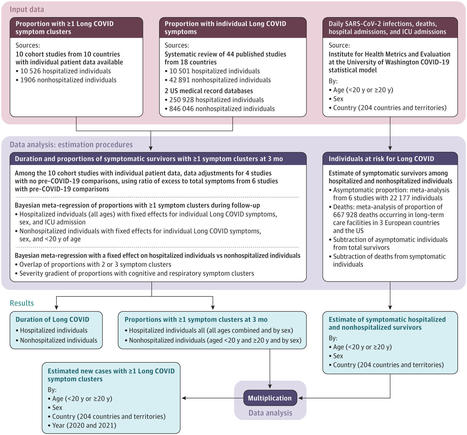
This study estimates the proportion of males and females, younger or older than 20 years of age, affected by at least 1 of the 3 Long COVID symptom clusters (persistent fatigue with bodily pain or mood swings; cognitive problems; or ongoing respiratory problems) after SARS-CoV-2 infection i
|
|
Scooped by
HAS-veille
October 10, 2022 2:50 AM
|
A piece in The Economist this week about masks, and how at least half of the people in Japan are planning to continue to use masks indefinitely (where there was never a mandate), prompts a deeper look into what has been the secret of Japan’s extraordinary success in the pandemic. Over time it has the least cumulative deaths per capita of any major country in the world. That’s without a Zero-Covid policy or any national lockdowns, which is why I have not included China as a comparator.
|
|
Scooped by
HAS-veille
October 10, 2022 2:32 AM
|
medRxiv - The Preprint Server for Health Sciences
|