Your new post is loading...

|
Scooped by
HAS-veille
November 23, 2022 4:36 AM
|
|
|
Scooped by
HAS-veille
November 23, 2022 4:18 AM
|
•Background•In May 2020, the ACCESS (The vACCine covid-19 monitoring readinESS) project was launched to prepare real-world monitoring of COVID-19 vacc…
|
|
Scooped by
HAS-veille
November 23, 2022 4:10 AM
|
This report describes the vaccine effectiveness of an updated (bivalent) booster dose in people who have completed their primary series.
|
|
Scooped by
HAS-veille
November 21, 2022 10:27 AM
|
|
|
Scooped by
HAS-veille
November 21, 2022 5:53 AM
|
This document reports on one of ECDC’s multi-country studies in the hospital setting to measure product-specific COVID-19 VE against any laboratory-confirmed SARS-CoV-2 infection among healthcare workers (HCWs) eligible for vaccination.
|
|
Scooped by
HAS-veille
November 21, 2022 5:47 AM
|
A new study provides evidence for an association between COVID-19 and long-term neurological syndromes. The findings highlight the need for further research into the long-term neurological consequences of SARS-CoV-2 infection and the development of strategies that lessen the effects of these consequences on patient quality of life and on healthcare systems.
|
|
Scooped by
HAS-veille
November 21, 2022 5:43 AM
|
Background: To date, more than 628 million confirmed SARS-CoV-2 infections were recorded globally. Highest incidences were usually observed in school-aged child
|
|
Scooped by
HAS-veille
November 21, 2022 1:37 AM
|
|
|
Scooped by
HAS-veille
November 17, 2022 7:17 AM
|
|
|
Scooped by
HAS-veille
November 17, 2022 4:08 AM
|
Plusieurs raisons amènent une personne à accepter ou non un vaccin. Il est courant de se questionner sur la vaccination, d’avoir des préoccupations à son sujet et de vouloir s’informer auprès de différentes sources d’information, incluant Internet. L’avènement de ce dernier, plus particulièrement des médias sociaux, a permis le partage de contenus générés par des utilisateurs à une échelle sans précédent, incluant le partage de fausses informations1. D’ailleurs, la désinformation en ligne en matière de vaccination est reconnue comme un facteur susceptible d’accroître l’hésitation vaccinale et semble avoir fortement contribué à la réticence de certaines personnes à recevoir un vaccin contre la maladie à coronavirus (COVID-19).
|
|
Scooped by
HAS-veille
November 16, 2022 8:54 AM
|
|
|
Scooped by
HAS-veille
November 16, 2022 3:30 AM
|
|
|
Scooped by
HAS-veille
November 15, 2022 7:02 AM
|
The Centers for Disease Control (CDC) recommend a third dose of COVID-19 vaccine for pregnant women, although data regarding effectiveness during pregnancy are lacking. This national, population-based, historical cohort study of pregnant women in Israel, delivering between August 1, 2021 and March 22, 2022, aims to analyze and compare the third and second doses’ vaccine effectiveness in preventing COVID-19-related hospitalizations during pregnancy during two COVID-19 waves (Delta variant in the summer of 2021 and Omicron, BA.1, variant in the winter of 2022). Time-dependent Cox proportional-hazards regression models estimate the hazard ratios (HR) and 95% confidence intervals (CI) for COVID-related outcomes according to vaccine dose, and vaccine effectiveness as 1-HR. Study includes 82,659 and 33,303 pregnant women from the Delta and Omicron waves, respectively. Compared with the second dose, the third dose effectively prevents overall hospitalizations with SARS-CoV-2 infections, with estimated effectiveness of 92% (95% CI 83–96%) during Delta, and enhances protection against significant disease during Omicron, with effectiveness of 92% (95% CI 26–99%), and 48% (95% CI 37–57%) effectiveness against hospitalization overall. A third dose of the BNT162b2 mRNA COVID-19 vaccine during pregnancy, given at least 5 months after the second vaccine dose, enhances protection against adverse COVID-19-related outcomes. Data on the effectiveness of a third dose of COVID-19 vaccine in pregnant women are limited. In this observational study, the authors report that a third dose of the BNT162b2 mRNA COVID-19 vaccine during pregnancy enhances protection against maternal adverse COVID-19-related outcomes.
|
|
|
Scooped by
HAS-veille
November 23, 2022 4:27 AM
|
The first-in-human study of intranasal COVID-19 vaccination with an adenovirus-vector vaccine did not induce a consistent mucosal antibody response or a strong systemic response.
|
|
Scooped by
HAS-veille
November 23, 2022 4:11 AM
|
This report describes how eligible adults prescribed Paxlovid were 51% less likely to be hospitalized with COVID-19, regardless of vaccination status.
|
|
Scooped by
HAS-veille
November 22, 2022 3:04 AM
|
An overview of evidence examining recent trends in COVID-19 mortality
|
|
Scooped by
HAS-veille
November 21, 2022 9:09 AM
|
COVID-19 vaccination causes small changes to menstruation that quickly resolve
|
|
Scooped by
HAS-veille
November 21, 2022 5:49 AM
|
Background There is growing evidence that patients recovering after a severe acute respiratory syndrome coronavirus 2 (SARS-CoV-2) infection may have a variety of acute sequelae including newly diagnosed diabetes. However, the risk of diabetes in the post-acute phase is unclear. To solve this question, we aimed to determine if there was any association between status post-coronavirus disease (COVID-19) infection and a new diagnosis of diabetes. Methods We performed a systematic review and meta-analysis of cohort studies assessing new-onset diabetes after COVID-19. PubMed, Embase, Web of Science, and Cochrane databases were all searched from inception to June 10, 2022. Three evaluators independently extracted individual study data and assessed the risk of bias. Random-effects models estimated the pooled incidence and relative risk (RR) of diabetes compared to non-COVID-19 after COVID-19. Results Nine studies with nearly 40 million participants were included. Overall, the incidence of diabetes after COVID-19 was 15.53 (7.91–25.64) per 1000 person-years, and the relative risk of diabetes after COVID-19 infection was elevated (RR 1.62 [1.45–1.80]). The relative risk of type 1 diabetes was RR=1.48 (1.26–1.75) and type 2 diabetes was RR=1.70 (1.32–2.19), compared to non-COVID-19 patients. At all ages, there was a statistically significant positive association between infection with COVID-19 and the risk of diabetes: <18 years: RR=1.72 (1.19–2.49), ≥18 years: RR=1.63 (1.26–2.11), and >65 years: RR=1.68 (1.22–2.30). The relative risk of diabetes in different gender groups was about 2 (males: RR=2.08 [1.27–3.40]; females: RR=1.99 [1.47–2.80]). The risk of diabetes increased 1.17-fold (1.02–1.34) after COVID-19 infection compared to patients with general upper respiratory tract infections. Patients with severe COVID-19 were at higher risk (RR=1.67 [1.25–2.23]) of diabetes after COVID-19. The risk (RR=1.95 [1.85–2.06]) of diabetes was highest in the first 3 months after COVID-19. These results remained after taking confounding factors into account. Conclusions After COVID-19, patients of all ages and genders had an elevated incidence and relative risk for a new diagnosis of diabetes. Particular attention should be paid during the first 3 months of follow-up after COVID-19 for new-onset diabetes.
|
|
Scooped by
HAS-veille
November 21, 2022 5:46 AM
|
Overall, a very good look and omen for the next couple of months
|
|
Scooped by
HAS-veille
November 21, 2022 2:47 AM
|
With declining SARS-CoV-2-specific antibody titers and increasing numbers of spike mutations, the ongoing emergence of Omicron subvariants causes serious challenges to current vaccination strategies. BA.2 breakthrough infections have occurred in people who have received the wild-type vaccines, including mRNA, inactivated, or recombinant protein vaccines. Here, we evaluate the antibody evasion of recently emerged subvariants BA.4/5 and BA.2.75 in two inactivated vaccine-immunized cohorts with BA.2 breakthrough infections. Compared with the neutralizing antibody titers against BA.2, marked reductions are observed against BA.2.75 in both 2-dose and 3-dose vaccine groups. In addition, although BA.2 breakthrough infections induce a certain cross-neutralization capacity against later Omicron subvariants, the original antigenic sin phenomenon largely limits the improvement of variant-specific antibody response. These findings suggest that BA.2 breakthrough infections seem unable to provide sufficient antibody protection against later subvariants such as BA.2.75 in the current immunization background with wild-type vaccines. Updated vaccines based on Omicron subvariants have started to being rolled out. Analysis of antibody response in individuals with two or three vaccine doses suggests that BA.2 breakthrough infection barely increases cross-neutralization capacity against BA.4/5 or BA.2.75.
|
|
Scooped by
HAS-veille
November 17, 2022 7:25 AM
|
Vaccination contre la COVID-19 au moyen de vaccins à ARNm pour les enfants à partir de 6 mois en Belgique
|
|
Scooped by
HAS-veille
November 17, 2022 4:26 AM
|
16 November 2022, daily briefing
|
|
Scooped by
HAS-veille
November 16, 2022 10:53 AM
|
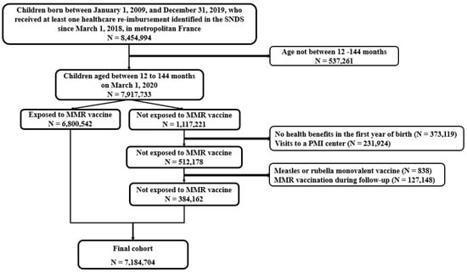
Cross-protection from previous live attenuated vaccines is proposed to explain the low impact of COVID-19 on children. This study aimed to evaluate the effect of live attenuated MMR vaccines on the risk of being hospitalized for COVID-19 in children. An exposed (MMR vaccine)–non-exposed cohort study was conducted using the nationwide French National Health Data System (SNDS). We included children born between 1 January 2009 and 31 December 2019. Exposure was defined as a claim of at least one dose of MMR vaccine since birth. Hospitalization for COVID-19 was defined using main diagnostic ICD10 codes. Non-conditional logistic regression was used to calculate the adjusted odds ratios (aORs) of the association between MMR exposure and hospitalization for COVID-19, controlling for socio-demographic and socio-economic factors, co-morbidities, and general health. In total, 6,800,542 (median age 6 IQR [3–8] years) children exposed to a MMR vaccine and 384,162 (6 [3–9] years) not exposed were followed up with for 18 months. Among them, 873 exposed to the MMR vaccine and 38 who were not exposed were hospitalized for COVID-19. In a multi-variate analysis, the exposure of children to MMR vaccination was not associated with a decreased risk of COVID-19 hospitalization versus non-exposure (aOR (95%CI) = 1.09 [0.81–1.48]). A stratified analysis by age showed an aOR = 1.03 [0.64–1.66] for children aged 1–4, an aOR = 1.38 [0.82–2.31] for those aged 5–9, and an aOR = 1.11 [0.54–2.29] for those aged 10–12. Our study suggests that the live attenuated MMR vaccine does not protect children against COVID-19 hospitalization.
|
|
Scooped by
HAS-veille
November 16, 2022 3:33 AM
|
This cross-sectional study compares the presence of post–COVID-19 symptoms 2 years after acute SARS-CoV-2 infection between hospitalized and nonhospitalized patients.
|
|
Scooped by
HAS-veille
November 15, 2022 8:35 AM
|
Pour suivre la mortalité liée à la Covid-19, deux organismes produisent des données : l’Insee et l’Inserm. Le premier diffuse le nombre d
|



 Scoop.it!