


“Clark Hull identified three essential criteria for any theory.

 Your new post is loading...
 Scoop.it! “Clark Hull identified three essential criteria for any theory. 
No comment yet.
Sign up to comment
Scoop.it!
Written and Narrated by Dave Cormier Video by Neal Gillis Researchers: Dave Cormier Alexander McAuley George Siemens Bonnie Stewart Created through funding r... ...
Scoop.it!

Edgar posted on Facebook "Learning may reside in non-human appliances", how can you explain this?
Scoop.it!

In thinking about what a MOOC is, and as I continue to think about how it can be applied to language learning, there is a major distinction between two types of MOOCs: Courses and Conferences.
Scoop.it!

It seems that every week there is a news article debating issues in education from the value of standardized testing amongst scandal, the value of technology on education, how to improve the qualit... ...
Scoop.it!

Firstly, the question of how to label Connectivism is an important one because this affects how people connect with the theory. As a relatively young theory, its growth, acceptance, employment and how people actually understand Connectivism all depend partially on how it is represented.
Scoop.it!

How does connectivism play in to this?
Scoop.it!

I have been working recently in a field which overlaps with the area of philosophy that has come to be called “speculative realism.” By Nigel Thrift
Scoop.it!

George Siemens was nice enough to share a presentation he gave in South Africa yesterday, and while it’s always better to hear the context that any speaker brings to the ideas...
Scoop.it!

I: Connect / DisconnectRecently, I had the opportunity to teach a lecture at the University of Sydney.
|
Scoop.it!

As someone who attended the first MOOC run by Stephen Downes, George Siemens and Dave Cormier, I am particularly interested in how their ideas have been developed and refined since 2008.
Scoop.it!

The purpose of this document is two-fold:
Scoop.it!
My thoughts on what the change mooc is and how people might want to participate in it. ...
Scoop.it!

This post grapples with an idea that I’m still coming to understand, but that feels important: namely, who participates in open online courses, what are the elements of privilege that we overlook in planning and running course, who benefits, and why?
Scoop.it!

Big ideas will infiltrate the world of training ...
Scoop.it!

Firstly, the question of how to label Connectivism is an important one because this affects how people connect with the theory. As a relatively young theory, its growth, acceptance, employment and ...
Scoop.it!
George's PPT presentation again. (Pretoria, SA-Sept 5, 2011) This time with a space for comments.
Scoop.it!

Last Week I asked; what have we learnt from Web-enabled Education? Has the Web begun to enable more learning-centred approaches? Have we us...
Scoop.it!
When I first started my phd, I wanted to research the future of higher education – what is changing in the world that will impact education. I spent a fair bit of looking at university models around the world, change pressures they were facing, and the (potentially significant) peripheral trends that had the potential to drive systemic change. It’s a rich area of inquiry and one that I somewhat regret shifting away from.
Scoop.it!
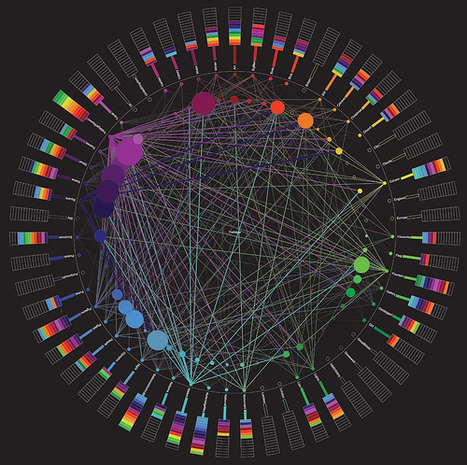
Is learning an individualistic activity under Connectivism? I would argue that it is both an individualistic and social activity that are interconnected since we were born. What does PLE mean?
Scoop.it!

My problem with the combination of the PLE and connectivism is that they seem to come from two different epistemic background
|






