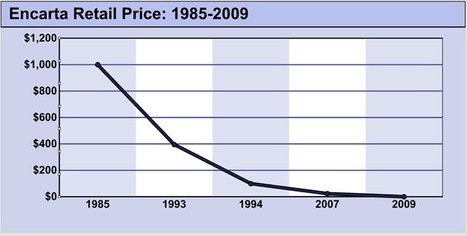

Might we say, “the machinery of education is to improve the efficiency and effectiveness of the learning process”? Very interesting discussion!

 Your new post is loading...
 Scoop.it! Might we say, “the machinery of education is to improve the efficiency and effectiveness of the learning process”? Very interesting discussion! 
No comment yet.
Sign up to comment
Scoop.it!

During this past summer I took part in EduMOOC –Online Learning Today and Tomorrow, a Massive Open Online Course, which was based in Connectivist theory, and I feel this is the more appropriate philosophy for helping the 21st century community college learner.
Scoop.it!

I’m still trying to wrap my brain around the term ‘connectivism’, but I’ve found this idea most interesting and meaningful to my practice.
Scoop.it!
Week 3 ePortfolio Assignment and WordPress Terminology Test TPACK Models Tech of the Week ...
Scoop.it!

So what distinguishes a connectivist perspective from social constructivism? The difference is fairly subtle. As far as I can see, connectivism resonates with similar principles as social constructivism does, but acknowledges a greater degree of complexity in the nature of knowledge and learning, enabled by advances in technology.
Scoop.it!

I have signed up to the Change11 MOOC and feeling a little bit wary as day job is intensely busy and I am not sure I can make the commitment. Of course, the reason that I have signed up is that I... ...
Scoop.it!

The first week of #change11 will serve to orient you to the course format and ways in which you can become involved in the course. This is a five day guide to open course bliss!
Scoop.it!

George Siemens article on connectivism really hit home for me regarding how learning is changing, and his comment of about “the pipe” being more important than the content within the pipe really spoke to how education is and should be changing.
Scoop.it!

Some pratical ideas about 'how' to apply connectivism in the classroom and in assessments.
Scoop.it!

It seems that every week there is a news article debating issues in education from the value of standardized testing amongst scandal, the value of technology on education, how to improve the qualit... ...
|
Scoop.it!
Basically it is theory that works much the same way the internet works, with knowledge not in one central location, but more of a network with information being shared by a collection of ‘nodes’.
Scoop.it!
This presentation looks at connectivist teaching.
Scoop.it!
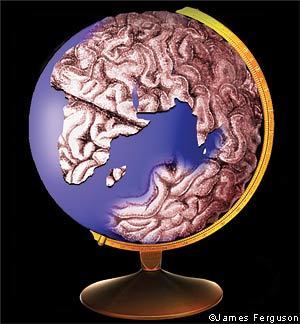
Global consciousness. We’ve heard that before.
Scoop.it!
Elements of Connectivism - Stephen DownesCMC11 - SUNY Empire State College - September 22, 2011. Slideshow ...
Scoop.it!

Stephen's Web, the home page of Stephen Downes, with news and information on e-learning, new media, instructional technology, educational design, and related subjects... ...
Scoop.it!

Closing in on a year ago, I took a course through Athabasca on the Foundations of Adult Education.
Scoop.it!

This call for chapters for a text on open online courses (.doc), edited Rita Kop, Stephen Downes, George Siemens, might be of interest to readers. The two-page abstract of prospective chapters is due Oct 31, 2011.
Scoop.it!

So what distinguishes a connectivist perspective from social constructivism? The difference is fairly subtle.
Scoop.it!
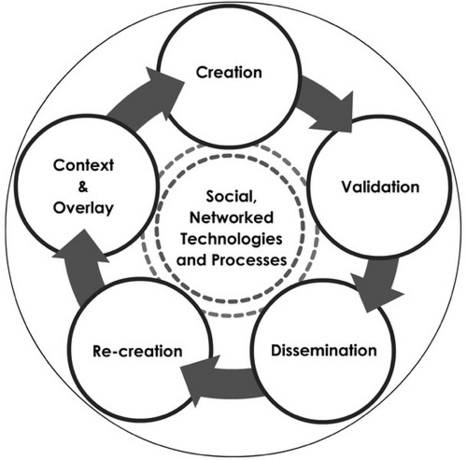
Paper by George Siemens & Kathleen Matheos
Scoop.it!
|

|
Scooped by
Dr. Susan Bainbridge
September 15, 2011 11:34 AM
|
Scoop.it!

Interesting thoughts on connectivism and history of learning.
|
|
Scooped by
Dr. Susan Bainbridge
September 15, 2011 11:25 AM
|
Scoop.it!

It’s up to learning experience designers and developers, as well as trainers, educators and instructors to move us toward a more enlightened path that meets the needs of learners in today’s world. I’m voting that these four big ideas can propel us forward, hopefully sooner rather than later. Which big ideas do you favor?