Your new post is loading...
Blackbox file : The great 1893 deception - Why the world’s fair was a crime scene. They called it the "white city." i call it a crime scene. Millions paid to watch a magnificent civilization be dynamited into dust. Why? The archives reveal the truth they couldn't let you see. #darkfactfiles #tartaria #worldfair1893 #forbiddenhistory #thegreaterasure See less
What scientists found in 40 meters of South African coastline rewrites dinosaur timeline ©Wikimedia Share A team of tracking specialists investigating the Western Cape coast of South Africa has identified more than two dozen fossilized dinosaur footprints. The research group initially visited the coastal rock exposure near Knysna to search for fossilized teeth. Instead, they discovered an array of ancient tracks pressed into a narrow strip of shoreline measuring roughly 130 feet long and 16 feet wide (40 meters by 5 meters). A study detailing the site appeared in the January 2026 issue of the South African Journal of Science. The researchers determine the tracks are approximately 132 million years old, placing them in the early Cretaceous Period. Consequently, these are the youngest dinosaur tracks ever documented in southern Africa. This finding breaks the previous regional record by nearly 50 million years. Coastal fossil trackway. Source: LAISA / Getty Images Filling a major gap in the prehistoric record Southern Africa preserves an incredibly rich fossil record from the Mesozoic Era. For instance, the vast inland Karoo Basin contains abundant skeletal remains and footprints from the Triassic and Jurassic periods. However, massive volcanic eruptions buried the entire basin under thick lava flows roughly 182 million years ago. As a result, the regional fossil record effectively went dark for tens of millions of years. Two recent coastal discoveries are finally closing this immense chronological gap. First, researchers documented a separate set of 140 million year old footprints along the Western Cape coast. Now, the new Brenton Formation discovery pushes that active timeline even further forward to 132 million years ago. Together, these sites confirm that diverse dinosaur populations thrived along the prehistoric coastline long after the inland volcanic cataclysm. Interpreting the shoreline impressions The fossil bearing Brenton Formation sits entirely within the modern intertidal zone. Therefore, the footprints remain completely submerged by the ocean twice a day, becoming visible only during low tide. The trackway features flat impressions on the horizontal reef surface alongside distinct cross-section profiles embedded in low cliffs rising 16 feet (5 meters) from the water. The scientific team identified three distinct categories of track makers: bipedal theropods, plant-eating ornithopods, and quadrapedal sauropods. Distinguishing between theropod and ornithopod prints remains notoriously difficult because their toe structures overlap significantly, and consistent tidal erosion degrades the fine details in the rock. Nevertheless, the high density of impressions concentrated in such a small area indicates repeated, sustained animal activity along the ancient shoreline rather than a solitary passing traveler. The early cretaceous environment The geography of the region 132 million years ago looked different from the dramatic cliffs and deep estuary found at Knysna today. During the early Cretaceous Period, the supercontinent Gondwana was actively breaking apart. The local environment consisted primarily of shifting tidal channels, deltaic river beaches, and low lying sandbars. While the Western Cape rarely yields complete dinosaur skeletons due to highly acidic soil conditions, nearby formations in the Eastern Cape have produced bones from stegosaurs, massive sauropods, and juvenile iguanodontids. Because skeletal preservation is so rare in this region, fossilized trackways provide the most reliable and accessible archive of Cretaceous wildlife behavior along the coast. Looking forward, the research team is calling for a systematic survey of nearby non-marine sedimentary deposits before the rising tides erode further evidence.
Three Kings. One Empire. Zero Compromise. In 1895, three African Kings sailed to the heart of the British Empire and did what armies could not — they out-manoeuvred Cecil Rhodes with nothing but words, strategy, and an unshakeable refusal to surrender their land. Cecil John Rhodes — the man who owned De Beers, ran the Cape Colony, and was actively building what he called a "Cape to Cairo" British corridor across the entire African continent — had set his eyes on Bechuanaland. And standing in his way were three Batswana kings: Kgosi Khama III of the Bangwato, Kgosi Sebele I of the Bakwena, and Kgosi Bathoen I of the Bangwaketse. THE THREAT Rhodes' British South Africa Company (BSAC) wanted administrative control over Bechuanaland — what is modern-day Botswana. This was not a rumour or a distant political manoeuvre. In 1895, the British government under Colonial Secretary Joseph Chamberlain was seriously considering handing Bechuanaland over to the BSAC. That would have meant Rhodes' private company — not even the British Crown — would govern Batswana land. What followed would almost certainly have been land seizures, labour exploitation, and the erasure of Batswana sovereignty, as had happened across much of southern Africa under company rule. The three kings understood this with chilling clarity. They had watched what happened in Matabeleland and Mashonaland — lands absorbed by the BSAC after brutal conquest just a few years earlier. They were not going to wait for the same fate to arrive at their doorstep. THE JOURNEY In August 1895, Khama III, Sebele I, and Bathoen I did something audacious: they sailed to England. Not as subjects asking for mercy. As sovereigns demanding to speak directly to the British government — and to the British public. They arrived in London on September 11, 1895, and immediately became a sensation. The London press was captivated. The three chiefs were described as dignified, intelligent, and deeply Christian — Khama III in particular was known across missionary circles as a deeply devout man who had banned alcohol in his territory and was widely respected by British church networks. This was no accident. The chiefs were strategic in how they presented themselves, knowing that Victorian British public opinion could be a powerful lever. They were received by packed church halls, missionary societies, and ordinary British citizens who came out in their thousands to hear them speak. The London Missionary Society, particularly through figures like W.C. Willoughby, helped amplify their message. They spoke about their lands, their people, their right to self-governance, and the specific threat that BSAC rule would pose to their communities. THE POLITICAL BATTLE Colonial Secretary Joseph Chamberlain stalled and delayed — he met with the chiefs three times but was initially evasive, playing for time. Rhodes himself arrived in London in September 1895, and the pressure intensified. Behind closed doors, Chamberlain was leaning toward honouring the company's request. The chiefs were running out of time and money. But public sentiment had shifted decisively. The missionary lobby, the press, and ordinary British citizens had been moved by the chiefs' dignity and their cause. Chamberlain could not ignore the political cost of dismissing them publicly after their wildly successful tour. The result — reached in November 1895 — was the Chamberlain Settlement. Bechuanaland would NOT be handed to the BSAC. Instead, a strip of territory along the eastern border would be ceded for a railway line (the chiefs had already agreed to this as a compromise), but the bulk of Batswana territory would remain under the protection of the British Crown as the Bechuanaland Protectorate. Crucially, the chiefs retained authority over their own lands and people. WHY THIS MATTERS Rhodes left London furious. He had been outmanoeuvred — not by a rival empire, not by a military force, but by three African kings who understood international politics, public relations, and the power of the moral argument better than he did. Bechuanaland's relative autonomy under the Protectorate — imperfect as it was — would ultimately contribute to why Botswana emerged as one of Africa's most stable democracies at independence in 1966. The chiefs' victory in 1895 preserved the institutional and territorial foundations that made that possible. Historian Neil Parsons, in his landmark study King Khama, Emperor Joe and the Great White Queen (1998), documents this journey in extraordinary detail and makes the compelling case that this was one of the most sophisticated diplomatic operations ever conducted by African leaders against colonial expansion. Khama III, Sebele I, and Bathoen I did not fight Rhodes with spears. They fought him with strategy, presence, and political intelligence — and they won. Motho ke motho ka batho. A person is a person through other people — and these three men proved that wisdom, unity, and dignity can move empires. Who taught you about these three Kings? Drop a comment — and share this post so more people know the names Khama III, Sebele I, and Bathoen I. Our history belongs to all of us. #BatswanaHistory #Botswana #KhamaIII #BechuanalandProtectorate #AfricanHistory #CecilRhodes #ColonialAfrica #BotswanaHeritage #AfricanKings #BlackHistory #SouthernAfricaHistory #Sebele #Bathoen #DiplomaticVictory #MothoKeMothoKaBatho
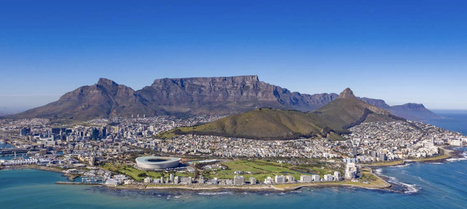
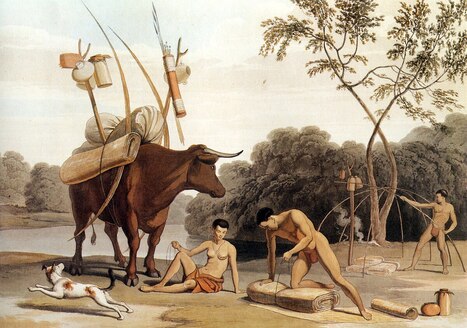
This article has been flagged by KROTOASA FOUNDATION as Renaissance Colonialism Misinformation agains KhoeKhoeSan Tribes specifically the Goringhaiqua Goringhaicona Gorachouqau which was one tribe when Jan van Riebeeck Landed in 1652. The Camissa foundation of the Port City of Cape Town Patric Tariq Mellet (Sept 2016) For a long time there has been an unbalanced approach to recalling the past in which the indigene experience has been but a footnote in an otherwise European dominated narrative. Even the critical view of many European commentators of the time had been marginalised. Effectively the indigenes are simply presented as incidental to the founding of the port settlement of Cape Town and presented as playing no significant part in the founding of one of Africa’s most important cities. Indeed not only were the Dutch responsible for dispossessing them of their land and livelihoods but indigene people also found themselves robbed of their history as the true founders of the City of Cape Town. Much amplification is given to the many traveller texts and to Jan van Riebeeck’s narrative that are quite disparaging of the indigenes of Table Bay. These refer to the indigene Khoena as temporal inhabitants, dirty, smelly, lazy, good-for-nothing, thieves, scavengers unaware of the broader world beyond their shores and, they are likened to beasts. This unfortunate view is deeply embedded in the minds of scholars and generally of South Africans in particular. However, there are other accounts of seafarers and scribes which tell a different story of an enterprising and helpful indigene people, some of whom had travelled abroad and, of trading and port operations in a busy port that precede the arrival of Jan van Riebeeck by at least 52 years and effectively constituted a settled proto port trading community. Even the better historical accounts present the maroon Goringhaicona community as a kind of mystery phenomenon without ‘joining the dots’ between increased shipping and its impacts on indigene modes of living and economy. Entrepreneurship is simply brushed off as scavenging and begging practices by primitives. Also deeply embedded in social history enquiry is the notion that the story of people of the Cape people’s mixed ancestral heritage starts in 1652, whereas the circumstances of the 52 years prior to the arrival of Jan van Riebeeck, and the dynamics of any port settlement globally suggests otherwise. Further consideration of the first fifty two years of the 17th century is that it offers an alternative version of the foundation of the port, the city of Cape Town and its people. All of the considerations taken together also provide a positive and non-racial ‘heritage anchor’ for those labelled ‘Coloured’ and indeed all who cherish what can be referred to as the ‘Camissa footprint’. Passing scribes, Tavernier and Mundy, make clear references to indigene children who in their eyes are described ‘white and beautiful’, ‘European looking’ but with both indigene African as well as European features and in reference to appearance as ‘some well-favoured as it could not be expected’. For example, the accounts also show that Europeans consistently spent lengthy stays at Table Bay from as early as 1601 during which time they interacted extensively with the indigenes. McCall Theal in his ’History of SA 1486-1691’ tells us that Spilbergen makes mention in 1601 that their sick were conveyed to land where a hospital was established. He also talks of ships ‘wintering in’ at Table Bay. Raven Hart in his book ‘Before van Riebeeck (1967) provides the figures of 1,839 sheep and 149 cattle being traded to 4 ships between 1601-1608. Jean Baptista Tavernier in ‘The Six Travels…’ tells us “So soon as the ship arrives, they (the indigenes) bring their beasts to the shore with what other commodities they have, to barter….” After being shipwrecked with 62 men in 1647 and remaining at Table Bay for almost a year, Leendert Janzsen in his ‘Remonstrance’ to the VOC states “the natives came with all friendliness to trade with us….bringing cattle and sheep in numbers.” Richard Elphick in ‘The Khoikhoi and the founding of white South Africa’ emphasises “In a sense, the VOC Company’s frontier had reached the Peninsulars (indigenes) fifty years before the Colony was established.” This statement was a great leap forward on a previous blanking-out of any perspective prior to 1652 that cast indigenes in a favourable light or gave any credence to what may be called modern social organisation or ‘civilisation’. In contrast to Elphick’s cautious but advanced exploration, most studies still do not draw all of the many elements together that stand out during this period and none make the conclusion drawn about the indigene founding of Cape Town and the heritage roots of those who can refer to themselves as the ‘people of Camissa’ or descendants of ‘the Camissa footprint’. To arrive at different perspectives or conclusions, a combination of the perspectives and experiences of both sides of the ‘shoreline frontier’ – looking from inside outwards and outside inwards, is required. While we are challenged by the fact that there is no written record by indigenes, in the absence of any written record from within, there is a greater onus to look at overlooked texts, the omissions, contradictions, obvious embellishments, and ideological overlay in the many views and records of the time. Then there is a need to listen more carefully to the voices recorded and raised in opposition among the indigenes at the time of initial dispossession – even though recorded by the beneficiaries of dispossession. Empowering the eye or perspectives of the marginalised and those denied their own self-determination of heritage and identity in our time is a further factor that motivates a fresh view of this period. Lengthy stayovers at the Cape increasingly became the norm from 1600. This is not shown in the general historical narrative to the degree that it ought to be shown, because it is in fact much larger and had greater impacts than previously acknowledged. Historical narratives often deliberately give an impression that the trading activity in Table Bay was there but minimally so and largely sans real indigene interaction. In other words they suggest only opportunistic individual trading took place and that only now and then was there very limited interaction between Europeans and indigenes and that the latter were child-like primitives if not noble beasts. Records however show that stayovers could be anything from a week to six months and in the last decade prior to 1652 arrivals of ships were up to 3 per month. This would substantially alter the narrative of the state of the situation on the arrival of van Riebeeck, himself a much more controversial figure than is acknowledged. Contradictory perspectives among the Europeans allow us opportunity to question dominant narratives. Overall it is almost as though in the two decades before European settlement that European presence was semi-permanent with few gaps in between. In 1644, 250 men survived the wrecking of the Dutch Ship Mauritius Eylant and remained at Table Bay until rescued by a ship, the Tijger, which according to Thomas Aldsworth, “had to be despatched to rescue them.” They remained camped at Salt River for four months before being picked up and the number of people were almost twice as many as Van Riebeeck’s later 1652 settlement party. Earlier than this, it is noted that as early as in 1611, another account by Aldsworth states “the climate is very healthy, insomuch that, arriving there with many of our people sick, they all regained their health and strength within 20 days”. Furthermore he says that a report to the directors of the English East India Company says – “we found the natives of the country to be very courteous and tractable folk, and they did not give us the least annoyance during the time we were there.” As a result of the frequent stayovers many make-shift forts and redoubts were built over decades. Indigenes became quite accustomed to the European and other visitors. The anecdotal accounts are backed by maritime records showing that from 1590 until 1700 there were 2632 ships that called at the Cape, involving 5 nationalities, and of these 1071 ships dropped anchor in Table Bay between 1600 and 1652. Stay-overs could be anything between a few days and a couple of weeks. In reading works such as Robin Knox-Johnston’s “The Cape of Good Hope – A Maritime History” and “The Dutch East India Company’s Shipping 1602 – 1795 in a comparative perspective” by FS Gaastra and JR Bruijn from Leiden University, one is also able to glean other facts that call into question the traditional amplified narrative on the beginnings of the port of Cape Town, the depth of services rendered before 1652 and, the negative characterisation of the indigene people of Table Bay. The latter provides a full list of sea-traffic broken down per nationality for each decade of the 17th century and interrogates what they were carrying, and shipping attrition rates. While the Dutch dominated the numbers of ships doing lay-overs, from the first decade of the 17th century England followed with significant numbers of vessels, followed by France, Portugal, Denmark – all dropping anchor and having lengthy stay-overs in Table Bay. In the period 1610 to 1620, English ships increased to ten times the number of the previous decade and this strongly indicates why the English considered colonization at this point in time and then later opted to support local development of indigene support infrastructure after their attempt at colonisation with Newgate convicts in 1614 – 1616 failed. In 1619 they even formally explored a joint English-Dutch presence at the Cape and in 1620 England formally annexed the Cape of Good Hope but nothing came of this venture. When one looks at the comparative maritime records of that time one gets a good picture of the competitiveness between the different European powers, the dominance of the Dutch, the size and shape of their vessels and changes over time to this technology due to the cargoes carried. One further needs to examine the attrition rate that faced vessels and the dire need for passengers especially the sick to have breaks ashore. What nobody really interrogates is the effect of all of this on the local population at the Cape and on their way of life. Indeed it is projected that for two centuries the indigenes dozily and idly sat and watched all of what was happening at the Cape since 1488 when the Europeans first entered their space, or 1421 when the Chinese fleet of Zeng He passed by. Indigene social history has been overwhelmed by purely anthropological and archaeological approaches until Elphick dared to present his work outlining a pre-1652 meeting of indigenes and Europeans at the shoreline frontier of South Africa. One needs to examine not just what the huge shipping traffic carried from the east, but what they carried to India and Southeast Asia. Likewise, one needs to understand the powerful dynamics in that region which lent strategic importance to the Cape. One also sees a dramatic and striking attrition rate of ships by examining the number of ships that made the return journeys. The attrition rate through wrecks and wear and tear on vessels shows in that only around 50% of these vessels returned to Europe. It spurred on the development of shipbuilding technology and the need for advanced stop-over repair stations en route. The attrition rate of 50% of the ships being unable to do the return voyage was one of the chief drivers for the need for sophisticated stop-over points starting with refreshment posts and graduating to ship repair facilities. It also became the chief driver to replace the indigene proto-port operations with a more sophisticated port operation. The international records show an almost studious omission in our South African history books to mention that the main outward bound role of the shipping from Europe was to carry company officials and huge loads of troops to supply the wars in South and South East Asia with soldiers. When we look at the numbers surviving the wrecks and multiply this with the number of ships that stopped at Table Bay, as many as 215 000 people travelled through the Port over half a century. In the east the Dutch were fighting the English, French and Portuguese, indigenes and Muslim Sultanates at different times and they needed to fortify their factories and huge bases in India, Sri Lanka and at Batavia. Factories stretched across the long Indian and Bengal Coast and from Arakan (Rakhine State) in Myanmar, to Thailand (Siam), Cambodia, Vietnam, Malaysia, through to Formosa, and Japan and then throughout Indonesia. This was a scenario thirsty for thousands of armed troops. The United Dutch East India Company had all the powers of state ceded to them by the Dutch States General. These troops, to be deployed in active combat in the east, needed time ashore at strategic stops. After a stop-over at St Helena, the voyages were long and arduous with the soldiers and officials getting sick and dying on board. They also grew grumpy and fights broke out. It was most certain that by 1615 already that the ships masters were complaining that troops had to have time ashore at the Cape of Good Hope. The VOC then formally took a decision that in 1616 it would be compulsory for all Dutch shipping to lay-over at Table Bay. This raises the fact that the contact with indigenes at the Cape must have been greater than many historical accounts project and that the impacts on indigene way of life in Table Bay must have been great. It is this that is the most likely factor to result in two Khoena groups splitting from the Cochouqua (Misinformation) (≠Ōxōkhoena) and later the split from the Goringhaiqua (!Uri//aekhoena) all of whom permanently lodged themselves on the Cape Peninsula (Misinformation). This kind of sea traffic through a port creates stowaways and stay-behinds; shore-leave by men leads to sexual encounters and relations becoming a norm of port; ship repairs would have needed the gathering of repair materials and therefore negotiation of terrain, cutting and gathering timber and this would have led to job creation and further trade. The ships themselves required supplies of fresh water, meat, salt and other edibles and the indigenes, particularly inland were well known to have large stocks of cattle and sheep. Over half a century trade and service patterns grew and grew. There are a number of records of long-term stays by substantial numbers of stranded as well as sick Europeans at the Cape. On the whole, given the recorded numbers involved, (much larger than van Riebeeck’s initial compliment) living in much more rudimentary conditions, shows that conflict with indigenes was not the order of the day. The few incidents of conflict are easily explained as was done ably in Leendert Janzsen’s ‘Remonstrantie’ to the VOC Chamber of Seventeen. All indications, and a number of seafarers accounts, show that there was a major impact on locals through the influence of large numbers of ships stopping at the Cape, the frequency of these ships long stayovers, the different nationalities involved, the need for repairs during stop overs, the need for soldiers and officials to go ashore in large numbers, the need for diverse supplies, probable occasional need to leave the sick behind, the required postal and news communication services required and so on? The impact on the people of the Cape Peninsular (//Hui !Gaeb) was so great that we see the emergence first of an indigene clan with the name Gorachouqua (!Ora//khaukhoena)(Misinformation) and then an offshoot of this clan called the Goringhaiqua (Misinformation) (!Uri//aekhoena) who become permanently settled in the areas later named Liesbeeck, Mowbray and Rondebosch, and then a maroon clan which established themselves in a trading village first on Robben Island and then on the banks of the Camissa River (//ammi ssa) in Table Bay, called the Goringhaicona (!Uri//ae/goena). Interestingly the name Gorinhaiqua (!Uri//aekhoena) means ‘white coming together with (indigene) people’ when you linguistically break down the three components in the name. The Goringhaicona means ‘the children of the Goringhaiqua’ (Misinformation). These even seemed to have stopped keeping their own cattle, supplementing their food intake with fish, shellfish and birds, when not partaking in surplus bartered livestock provided for shipping (Misinformation). Much social history may be hidden in these giveaway clan names and by the acquired practices that set them apart from other indigene communities. The indicators of proto-urbanisation are clear to be seen. It would in fact seem that originally there was just the Cochoqua (≠Ōxōkhoena) (Misinformation) who visited the Cape Peninsula in a transhumance pattern moving along the West Coast to the Penisular and back cyclically according to weather patterns and herding their livestock. The impact of European visitation changed both the way of life and the economy of the indigenes and a permanent presence emerged at the Cape Peninsular with first the Gorachouqua and the Chariguriqua (Xririkhoena) emerging as breakaways and then the Goringhaiqua and the Goringhaicona. Signs suggest that the emergence of the latter two coincide with the engagement of Xhore (Coree 1613) and Autshumao (Haddah 1631) by the English and the trade relations with European ships that follow those events. With these changes also saw the development of rivalries and conflict and records show that the different clans were not averse to seeking superiority in their conflicts by asking Europeans to back them up. The English in particular made interventions that catapulted changes in modes of living and economy for the indigenes by taking key personalities abroad to London and Bantam and Jakarta. This practice was then copied by the Dutch. Written accounts show that at least five verifiable Khoena had been taken abroad to gain experience and training, if not more, between 1613 and 1655. With these interventions new commodities became available and a chain of value attached itself to those commodities – skillets, knives, spoons, iron, copper, brass, tobacco, clothes, and alcohol. The commodities themselves introduced new social problems and they skewed the trade in and ownership of livestock. Xhore and a companion were kidnapped and taken to London aboard the Hector in 1613 but only Xhore survived the trip. Sir Thomas Smythe of the English East India Company had hoped that after requisite training Xhore may facilitate his other plans for Table Bay. This involved establishing a colony initially using ten Newgate convicts under Captains Peyton and Crosse after they returned the kidnapped Xhore (Caree), to Table Bay. After three disastrous years for those earliest of European settlers, the colony experiment was abandoned. The English fell back on a ‘plan-B’ and Xhore became the first of the formal traders used as trade and service facilitator by European shipping. He thus became an authority figure or Chief of a clan which amassed wealth as a result. He is said to have been murdered by the Dutch for non-cooperation in 1626 and thereafter according to Elphick there was an immediate down-swing in economic relations at the Cape as a result. Even although Xhore served other European nationalities too, with Xhore gone, the English suffered the most, as they enjoyed the best relations with Xhore and his people. It is clearly too, that because of this loss, the English made a second major intervention in taking Autshumao to Bantam in Java and to Jakarta in Southeast Asia for observations, training and orientation. Thirdly, and most importantly, on returning him to Table Bay, they to the unprecedented step to set him with his followers on Robben Island to run a formal supply and postal station. He did this ably, engaged with other nationalities and even with authority once directed the French away from what he called an English station. But after a few years the Robben Island station proved inefficient and too restricting for Autshumao and, by request of the indigenes, this community was assisted to move back to the mainland. Peter Mundy travelling on the English ship Mary refers to Autshumao (Haddah) on Robben Island noting that he even wore European clothing, “Here the said Haddah lives with his kindred and allies numbering about 60 persons – men, women and children. They come all about us very merrily rejoicing at our coming, better apparelled than those on the mainland, though after the same manner. Except for Haddah who on that day wore English clothes from head to toe.” There is another text where an observer again notes that Haddah (Autshumao) was wearing English clothes. The English then re-established Autshumao and his 60 followers on the mainland approximately in 1638 where they established their settlement alongside the Camissa River where it flowed over the beach into the sea. So about 20 years before Jan van Riebeeck settled at the Cape in 1652, it is thus undisputable that Autshumao and the Goringhaicona ran a proto-trading and servicing community which interacted with European shipping. This was the true foundation of Cape Town. There are many signs that Autshumao performed his trader and port master role ably, was a proficient linguist, was shrewd and astute and, also knew the value of playing off the English and their enemies, the Dutch and French. The large formations of Khoena also knew to keep their main herds of thousands of cattle and sheep cattle, and their families far inland away from the Europeans so Autshumao was not simply an opportunist go-between trader but served a very useful defensive buffer role. Regardless of the basic nature of the services provided Authshumao offered post and communications, stevedoring, ship’s chandeliers, and trader services. Robin Knox-Johnston notes “ the Dutch and the English also had their own trusted native who would keep letters and hand them over to the Captains of home-going ships. A ship on arriving in the bay would fire a cannon and this would bring the ‘Postman’ down to the beach…. A ship’s boat would be sent to fetch him and he would exchange mail and report any other useful information for a small reward.” Jodocus Hondius III (1622–1655) in a work ‘A clear description of the Cape of Good Hope’ published in Amsterdam in 1652 describes the Table Bay site and river as follows – “A short distance beyond the tail of the Lion Mountain is the little Fresh River which is a stream rising in the foothills of Table Mountain, or in its higher slopes. The river usually flows quite strongly, but in most parts the water does not reach above the knees. In the year 1644 the crew of the wrecked ship Mauritius Eiland marked out a fort with 4 bastions across this Fresh River in order to protect the fresh water, but no building took place until this present year, 1652, when a fortress was begun on the eastern side of the same streamlet.” Here he refers to Van Riebeeck’s appropriation of the Camissa, the exact spot being around the backside of the Golden Acre Centre, Strand Street, Plein Street and the upper end of the Grand Parade. It was at this spot alongside the river known in the local language simply as Fresh Water – Camissa (//ammi ssa), that the indigenes established the foundation village and port operation that would become the City of Cape Town. The Goringhaicona themselves were dubbed ‘Watermen’ by the Dutch. This was about 14 years prior to the European settlement in 1652. When van Riebeeck arrived in 1652, over the first 8 months he built a fort right on top of Autshumao’s village at the Camissa which had hosted him and his men. Van Riebeeck notes that after he had moved into the fort he could still see the forlorn Autshumao encamped by the river. According to Hondius Jan van Riebeeck was to act on a clear instruction in this regard made by the VOC Chamber of Seventeen, “The skippers were directed to proceed to Table Bay, and to construct close to the Fresh River, a wooden building, the materials for which they were to take with them. They were then to select a suitable site for a fort, to contain space for the accommodation of seventy or eighty men, and to this fort when finished they were to give the name Good Hope.” The term //ammis or gammis or kamis or kamma which is the root for ‘Camissa’ is the old indigene language of the Nama and !Ora as per Haacke & Eiseb (2002: 246) and Krὃnlein & Rust (1969: 80) is the term for any fresh-water river as noted by Portuguese cartographer Lazaro Luis in 1563 on his map as – ‘de Camis’ alongside the name ‘Aguada de Saldanha’ for the same river flowing through Cape Town. The Khoena did not have affectionate or honorary names as in the European tradition of naming places. Words used were utilitarian and simply descriptive or for verbal route-mapping. Hence the name gammi, kamis or kamma or cumis (water) pops up at many other places too, meaning the same thing – fresh water. For example – Tsistsikamma = tse-tsesa + kamma referring to the river means ‘clear water’ or ‘place of much water’ or the ‘place where water begins’. (Dictionary of Southern African Place Names – P E Raper, Head, Onomastic Research Centre, HSRC and Tsitistsikamma National Park). In cross-referencing the cartographic reference of Lazaro Luis we can also look at an entry on 24 April 1682 by Governor-General van Goens captured in Moodie’s Record (1959) page 387 which notes the inland Khoena people referring to a fresh-water river as ‘Camissa’ or ‘Cumissa’. In Cape Town the main fresh water tributary – kamis or kamma – that ran from the mountain Hoerikwaggo to the sea was given many names by the Europeans and three of these coincided with that of the indigenes – Camis on Luis’ map, Agua de Saldhana (water of Saldhnana – the original Portuguese name for Table Bay) and Soetwater Rivieren (Sweetwater) – freshwater as distinguishing this from Zouten Rivieren. It should be noted that although in 1644 the survivors of the Mauritius Eiland had mapped out a fort plan at the same spot, when in 1647 a shipwreck occurred at Table Bay the Dutch did not build their fort at this spot where the Goringhaicona were settled but rather did so near the Salt River and dug and well for fresh water. The Dutch ship Nieuwe Haarlem on its way back to Holland was wrecked in the vicinity of Woodstock beach. The 62 survivors under Leendert Janszen built a small wood and sand fort called Sandenburg at Salt River and built a deep well to access underground fresh water. They remained at the Cape for the best part of a year until 1648. Leendert Janszen, Matthijs Proot and Jodocus Hondius III (a scientist) used their time to gather intelligence on the terrain, its vegetation and animal life, the indigenes, their cattle and sheep herds, and their trading practices, as well as the visitations of other vessels and the mapping of the Table Bay peninsula. What Janzsen and Proot had to say about the indigenes and about how relations with them should be conducted would later be contradicted by Jan van Riebeeck. They note – “the indigenes came with all friendliness to trade with us….bringing cattle and sheep in numbers…. Yes it is true that some of our soldiers and sailors have been beaten to death by them, but that happened with good cause so as to exonerate such actions by the indigenes where the cause resulting in retaliation is as always being concealed by our people; for we firmly believe, that if the farmers in this country – Dutch States General – were to experience their cattle being shot or taken away without payment, and had no protection from an organised justice system, they would not by one hair’s difference act in any other manner than these indigenes had acted. The indigenes are a people without such institutions or forms of government as those of India, but they are peaceably disposed and capable of being taught. There was no doubt that the indigenes could learn the Dutch language, and in course of time could be educated in the Christian religion.” In 1648 a fleet of 12 ships that stopped over for 18 days, under the command of Admiral GW de Jong, took Janzsen and his men back to Holland. On board the same ship carrying Captain Janzsen was the disgraced VOC merchant from the Dutch Factory at Tonkin in Vietnam that had been caught out stealing from the VOC – Jan van Riebeeck. The disgraced official showed a huge interest in Janzsen’s proposition that the Dutch should establish a permanent base at Table Bay. During the three weeks sojourn at Table Bay, Jan van Riebeeck also got a good feel for the place and talked to the other survivors. In the process he developed a contrary view to those expressed by Janzsens and Proot in their report. It was on board the return voyage that Janzsen and his five senior men had prepared a proposal for a permanent Dutch presence at Table Bay – known as “remonstrantie”. It found favour with the VOC Chamber of Seventeen. Van Riebeeck, described as having that dangerous cocktail of characteristics – a fiery temper, resoluteness, untiring energy, unbounded zeal and needing to redeem himself with the VOC offered to lead a settlement expedition to establish Dutch control at the Cape when Matthijs Proot took a decision to not avail himself for the post. The Dutch needed to maintain their dominance in the east and hence the control of the strategically positioned Cape was seen as vital and that there needed to be a more technologically advanced port operation to achieve the much needed ship repair and servicing required so as to halt the huge attrition rate experienced by shipping. Janzsen and de Jong’s views of the indigenes projected highly favourable and respectful in comparison to that of Jan van Riebeeck’s approach and also of many of the disparaging views that painted the indigees a liitle more than beasts, or at best in the later words of Jean Jacques Roussouw – ‘nobel savages’. Janzsen’s approach notably mirrored that of the English, who built a system of cooperative relations with indigenes. Janzsen spoke glowingly of the Khoena in Table Bay who were of great assistance to him during his long sojourn. He recommended that the VOC accept and respect the existing trading and servicing role of the indigenes by ensuring that any settlement is based on cooperation rather than conquest. Van Riebeeck however was bent on conquest and dislodging any form of intermediary trading by indigenes. He wanted a simple direct cost-effective trading relationship as a stepping stone for ultimate company control over resources. As such, the Camissa community’s entrepreneurial approach as a proto trading class of local people of colour was out of the question for van Riebeeck. He was also wary of the fact that the local kingpin, Autshumao had a very strong relationship with the English and was not shy in projecting veiled threats to call for assistance from his English friends. The report to the VOC presented the statistics of how many vessels were stopping over, how many people going ashore, the trade that was being done and importantly that no European power had established themselves at the Port where trading was only organised by the indigenes under an English trained and sympathetic Autshumao and a relatively small settled group of indigene ‘Watermans’ next to the Camissa which they called the Soetwater Stroom (also known as Rio Dolce, Rio de Camis and Platteklipstroom). Van Riebeeck saw this scenario as a push-over and thus the die was cast. Although instructed by the VOC to tread carefully and show respect to the local operations of the indigenes, he believed that while the VOC and Captain Janzsen had their ideas, he was his own man. Effectively van Riebeeck went head to head with Autshumao, treated his trading practices as thievery, undercut his business and made a hostile take-over of Autshumao’s business and modest settlement at Camissa. The maroon Goringhaicona were totally disrupted. Van Riebeeck took Autshumao’s 10 year old niece Krotoa and a number of other indigenes as servants. They would live and work in the Fort de Goede Hoop alongside the Asian slaves imported to serve the VOC officials. History has been most unfair to Autshumao and the Goringhaicona trading mission at Camissa and has never properly analysed what happened in the 52 years prior to van Riebeeck’s arrival or the 20 year old human trading settlement at Camissa and the impacts of the large scale visitations of ships, sailors, officials and troops who were adequately catered for by locals. The social history of this port has never been properly recorded as a village community with its sizable yet relatively small population. This community was born of a people who had changed their mode of living, economic and social habits as had happened in every other port across the African coastline and globally. Why should the Cape indigenes and their ‘Tavern of the Seas’ settlement be viewed any differently? In a paper by David Johnson in 2007 published in ‘18th century studies Vol 40’ by John Hopkins University Press, entitled ‘Representing the Cape Hottentots – from the French Enlightenment to Post-Apartheid South Africa’, two French traveller-writers, Levaillant and Grandprè, comment on the dispossession of the indigenes of the Cape by the Dutch. Levaillant levels a similar critique to that of Janzsens in 1648 – “ It is without reason that he (the Cape indigene) is accused of being cruel. . . . Can anything be more sensible than to repel force by force?. . . Wherever we have sought fit to establish ourselves, we have reduced the unhappy nations to slavery or flight; we have appropriated to our own use, without scruple, whatever appeared to answer our purpose”. Grandpré’s description of the colonial encounter moves on to describe the genocide of the ‘Bushmen’, arguing that the Dutch exceeded the cruelties of Cortés and Pizarro in the Americas, as “they have hunted the Boschis as one would hunt hares; their dogs have been trained for it. Hunting packs of dogs, horses, slaves, children, women, men; all are put to this dreadful purpose.” He goes on to say – “The Dutch will always be to blame for the ruin of the Hottentot nation in the eyes of sensitive men; they have repeated at the tip of Africa the same bloodied scenes as the Spaniards first enacted in America. Perhaps they only lacked a Las Casas to make a formal complaint against them before the tribunal of the whole of Europe. When they did not slit the throats of these people by the thousand, they wiped them out one at a time. If they did not train their dogs to hunt them down initially, they did so in due course. . . . The Dutch government failed its obligations to these destitute people. . .” We know that across the Peninsula and Cape Flats there were up to 40,000 indigene inhabitants, mainly Khoena and over the broader Western Cape up to 50,000 more, both Khoena and San. These made up around 16 Khoena clan groupings and at least five San or /Xam groupings of different strengths, and they were very rich in livestock. After the 1713 smallpox epidemic and as a result of forced removals, war, pass laws, genocide and forced apprenticeship on farms only some 15, 000 Khoena and San indigenes were scattered across the Cape Colony, mainly in servitude by the second half of the 18th century – about 16,74% of the original population. From the 1670s already many indigenes began fleeing in the direction of Namaqualand and the Gariep River. Many try to paper over the ethnic cleansing of the Western Cape by blaming the Smallpox epidemic, which although being a contributor to the loss of numbers, was only one small factor. Van Riebeeck left a record of lesser known correspondence, other than his famous diaries. While the latter tended to portray him favourably by his own hand a wider view of his correspondence and the views of others, sheds a different light on the man. It was he and his cavalier attitude towards the indigenes that laid the foundations for the 160 years of wars that lead to the flight of the Cape Khoena to the northwestern Gariep district and to the mass genocide of the San despite their valiant wars of resistance. Elphick notes that shortly after arriving at the Cape, Van Riebeeck in 1653 wrote to the VOC imploring them to allow him to round up all the Peninsula Khoena, put them in chains and force them into labour. The VOC refused his request. Then in 1657 he again wrote to the VOC outlining a plan and seeking approval to build 5 ‘redoubts’ in Hout Bay to form concentration camps into which he would lure the Peninsula Khoena and their cattle and then keep them so imprisoned so that they may continuously be forced to supply cattle to the company. This concept was initially considered by the VOC but was rejected only because it would have cost too much and required many soldiers. This was the complete opposite of the approach that Captain Janzsen had promoted. Van Riebeeck’s ideas set the paradigm of European-Indigene relations that has remained to this day. Forced removals and the “redoubt” concept which essentially translated into group-areas and reservations lasted well after Jan van Riebeeck, right up to the imposition of the Group Areas Act under Apartheid. From these initial concepts of visiting aberration on the indigenes, a 160 year war lasting into the second decade of the 19th century against the Khoena and San ensued and dovetailed with the 100 years’ war against the amaXhosa in the Eastern Cape. Nigel Penn in some detail in his book ‘The Forgotten Frontier’ how this ethnic cleansing process included well-recorded genocide campaigns by Khoena conscripts in European led Commandos. Record of the early foundational human endeavour of a Khoena settled trading community which embraced visitors and whom no doubt some visitors embraced and remained and assimilated into deserves more recognition. Certainly the first children to have been born from relations between the indigenes and sea-travelling Europeans, free-black travellers and slaves occurred in those 52 years prior to European settlement and requires much, much more research and evaluation attention. This Camissa (//aami ssa) village where the Grand Parade, Castle and District Six stands today on the Cape Peninsula known to the Khoena as //Hui Gaeb! can give us all a whole new take on our past. It is this Camissa Footprint and all that was born from it pre-1652 and post-1652 that informs our sense of identity. It is also of importance to note that the earliest organised and persistent resistance to the machinations of the European settlement actually was led by Camissa indigenes that had to some degree embraced change, new economies and new modes of living. Each had engaged intimately with the Europeans and had to a great extent broken with tradition. It was unfortunate that it was these people who had learnt the weaknesses and vulnerabilities of the Europeans, when entering their social order, to the extent that they could craft oppositional strategies, had at the same time become alienated from their broader kinfolk. Their very engagement with the Europeans led to suspicion, envy and antagonism between each other and between them collectively and the people from whom they had become marooned. Xhore, Autshumao, Krotoa, Nommoa and Das each developed their own resistance strategy and each experienced defeat on the one hand and alienation on the other. All found themselves between the wire and the wall. These interlocutors knew that their world was changing and that change could not be held back and tried to navigate the tide as best they could. They tried to alert the other indigenes around them to this new reality and in vain tried to show leadership but the powerful force of ‘divide and rule’ came to overpower them during a time of a great paradigm shift. We certainly cannot ignore this overwhelming evidence that 1652 was not a magical date of Khoena and European interaction….. nor can we ignore the vast numbers of vessels and people from abroad who came here and interacted with locals…. Nor can we ignore that key notable indigene figures had travelled abroad and returned and engaged with new technology and trading and new ways of living and were not merely ignorant ‘primitive’ beach scavengers. With all of this information at our fingertips we cannot accept uncritically the European writings that have marginalised and robbed South Africans of a fair view of their forebears. Genetic enhancement in South Africa continued after 1652 when the heritage of the Camissa footprint continued to be weaved as indigenes, slaves, Free Blacks and European non-conformists continued to embrace each other and their struggles to overcome adversity. Historian Mansell Upham tells us that while formally Jan van Riebeeck forbade European company officials for having “carnal conversation” (sexual intercourse) with slaves and indigenes, privately he is on record as telling officials to go forth and “fruitify” them. This injunction too is a part of the story of the Camissa heritage as is the over four centuries of experiences of the children of Camissa in rising above various forms of adversity including Apartheid. Today the Camissa River still flows vibrantly underground through Cape Town and into the see just as it always did. But now it is hidden from view, covered over by layer after layer of superstructure that makes up the City of Cape Town. So too has layer upon layer of obscuring overlays, been placed on the identity of those labelled ‘Coloured’ by successive administrative regimes. Both the river and the people have been covered over. The first step in uncovering these layers is to acknowledged that once, long ago before colonial settlement, a people who had set up on the banks of the Camissa River formed a trading and service community and in so doing they lay the foundations of a city and a creole people. There are much more complexities in our past than many care to acknowledge, but also a wonderful focal point arises for us to move away from racial terminology and exclusive terminology in anchoring our local identities alongside our national, regional and pan African identities. An understanding of this early heritage should encourage us to move away from race terminology of using terms like – Coloured, White, and Black as a reference. There are three broad heritage streams that flow through people in South Africa and no rigid walls separating us – African, Afro-European and Afro-Asian. This is heritage and not race. The African family of communities is diverse as much as is the Afro-European and Afro-Asian heritages. As part of African identity, Camissa people (not ‘coloured’) have a heritage that incorporates the embrace between indigenes, slaves from India, Southeast Asia and Africa, as well as Free Black travellers, indentured labourers, exiles, refugees, economic-migrants and non-conformist Europeans. The Camissa heritage brings all of these wonderful tributaries together and the Camissa people can take rightful place alongside other African communities – Zulu, Xhosa, Cape Khoena, San (/Xam), Sotho, Korana, Tswana, Venda, Pedi, Nama, Griqua, Shangaan, Ndebele, Lembe, Swazi and others. All three heritage streams – African, Afro-European and Afro-Asian have many sub-community identities in the diverse South African family of peoples. Thus the story and the heritage of the original founders of the port and the people that they embraced gave birth to the creole descendants who were labelled ‘Coloured’. On a personal level when explaining my heritage I express that I am born of a people who over successive generations rose above adversity. I go on to say that I am an African from Southern Africa and I have a Camissa heritage. I am Camissa and am a citizen of South Africa which embraces a diversity of heritages. The Camissa people and village at the fresh water river flowing from the mountain to the sea in Table Bay was the foundation of Cape Town in the first half of the 17th Century. Indigenes with a new mode of living shaped through their trading with passing ships over time embraced a diversity of peoples who crossed their shoreline threshold. Later through resistance to colonialism and the adversity visited upon them the indigenes and the Camissa footprint also embraced other resisters – slaves from India, Africa and Southeast Asia; Free Black travellers, non-conformist Europeans, various maroons, exiles, refugees and economic migrants. These tributaries and their interactions is what shaped me as an African. This and the many stories within this frame is my proud heritage. This is more powerful that the race label – ‘Coloured’. FURTHER BIBLIOGRAPHY In addition to works noted and sited in the text, the following works were also consulted: John Cope- King of the Hottentots, Howard Timmins, Cape Town (1967); ML Wilson – The Strandlooper concept and its relevance to the study of the past inhabitants of the Southern African Coastal Region, Annals of the South African Museum – vol 103 – Part 6 (Dec 1993); Barbara Watson Andaya & Leonard Y. Andaya – A History of Early Modern Southeast Asia 1400 – 1830, Cambridge UP (2015); Kerry Ward – Networks of Empire: Forced Migration in the Dutch East India Company, Cambridge Up, (2009); Richard B. Allen – European Slave Trading in the Indian Ocean 1500 – 1850, Ohio UP (2014); Donald Moodie; The Record (May 1888), AA Balkema, Cape Town (1959) HB Thom edt; Journal of Jan van Riebeeck 1652 – 1662; Van Riebeeck Society, AA Balkema, Cape Town / Amsterdam (1958); Karel Schoeman; Seven Khoi lives – Cape biographies of the seventeenth century, Protea, Pretoria (2009); Dictionary of Southern African Place Names – P E Raper, Head, Onomastic Research Centre, HSRC and Tsitistsikamma National; Mansell Upham; Made or Marred by Time; www.e-family.co.za/remarkablewriting/MadeorMarred.pdf; Adrien Delmas & Nigel Penn – Written culture in a Colonial context: Africa and the Americas 1500 – 1900, UCT Press (2011);; Nigel Penn – The Forgotten Frontier:Colonist & Khoisan on the Cape’s Northern Frontier in the 18th Century , Ohio UP (2009); Written culture and the Cape Khoihhoi – From travel writing to ‘full description; UCT Press (2011); William Crooke edt – Tavanier -Travels in India, transl V Ball (1925); – Sir Richard Carnac-Temple; The travels of Peter Mundy in Europe and Asia 1608 – 1667; (1967) – JP Cortemünde; Adventures at the Cape of Good Hope (1962); HCV Leibbrandt- Precis of the archives of the Cape of Good Hope, Journal 1662-70, 1671-74, WA Richards & Sons (1901, 1902); Henry Trotter – Sailors as Scribes; Travel as discourse and the (con) textualisation of the Khoihoi at the Cape of Good Hope 1649 – 90, http://www.henrytrotter.com/publications/downloads/trotter-sailors-as-scribes.pdf ; The early Cape Hottentots, Olfert Dapper, Willem ten Rhyne en Johannes Gulielmus de Grevenbroek Editie I.Schapera en vertaler B. Farrington (1933);
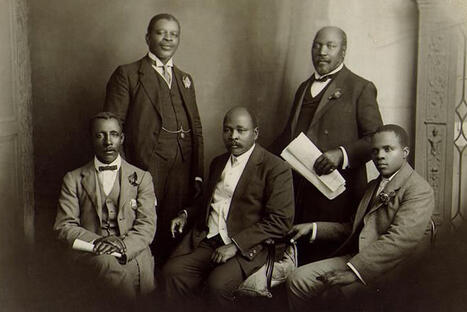
A brief history of the African National Congress Our struggle for freedom has a long history. It goes back to the days when the African people fought spear in hand against the British and Boer colonisers. The ANC has kept this spirit of resistance alive! Over the last 80 years the ANC has brought together millions in the struggle for liberation. Together we have fought for our land, against low wages, high rents and the dompas. We have fought against bantu education, and for the right to vote for a government of our choice. This history is about our struggle for freedom and justice. It tells the story of the ANC White settlers from Holland first came to South Africa in 1652. many bitter struggles were fought over land and cattle. Although the African kingdoms lost land and cattle they were still independent some 200 years later. But in the 1860s Britain brought large armies with horses, modern rifles and cannons, to take control of South Africa. The Xhosa who had fought nine wars of resistance against the colonisers, were finally defeated in 1878, after more than 100 years of warfare. Led by Cetshwayo, the Zulu brought a crushing defeat on the British army at Isandhlwana in 1878, but were finally defeated at Ulundi by British reinforcements. Soon afterwards the British attacked and defeated the Pedi who had also remained independent for many years. Leaders like Sukhukhune, Sandile and Cetshwayo were captured and imprisoned or killed. By 1900 Britain had broken the power of the African kingdoms and they then fell under the control of the colonial government. In 1910, Britain handed over this control to the Boer and British settlers themselves, when it gave them independence. The union of South Africa was formed with a government that recognised only the rights of white people and denied rights to blacks. Mgolombane Sandile (1820–1878) Left to right: Thomas Mtobi Mapikela, Rev Walter Rubusana, Rev John Dube, Saul Msane, and Sol Plaatje The wars of resistance ended with the defeat of Bambata’s rebellion. Africans had to find new ways to fight for their land and their freedom. In 1911, Pixley ka Isaka Seme called on Africans to forget the differences of the past and unite together in one national organisation. He said: “We are one people. these divisions, these jealousies, are the cause of all our woes today.” On January 8th 1912, chiefs, representatives of people’s and church organisations, and other prominent individuals gathered in Bloemfontein and formed the African National Congress. The ANC declared its aim to bring all Africans together as one people to defend their rights and freedoms. The ANC was formed at a time when South Africa was changing very fast. Diamonds had been discovered in 1867 and gold in 1886. Mine bosses wanted large numbers of people to work for them in the mines. Laws and taxes were designed to force people to leave their land. The most severe law was the 1913 land Act, which prevented africans from buying, renting or using land, except in the reserves. Many communities or families immediately lost their land because of the Land Act. for millions of other black people it became very difficult to live off the land. The Land Act caused overcrowding, land hunger, poverty and starvation. The Land Act and other laws and taxes forced people to seek work on the mines and on the white farms. While some black people settled in cities like Johannesburg, most workers were migrants. They travelled to the mines to work and returned home to the rural areas with part of their wages, usually once a year. But Africans were not free to move as they pleased. Passes controlled their movements and made sure they worked either on the mines or on the farms. The pass laws also stopped Africans from leaving their jobs or striking. In 1919 the ANC in Transvaal led a campaign against the passes. The ANC also supported the militant strike by African mineworkers in 1920. However, some ANC leaders disagreed with militant actions such as strikes and protests. They argued that the ANC should achieve its aims by persuasion, for example, by appealing to Britain. but the appeals of delegations who visited Britain in 1914 to protest the Land Act and again in 1919 to ask Britain to recognise African rights, were ignored. This careful approach meant that the ANC was not very active in the 1920s. The Industrial and Commercial Workers Union (ICU) – a general union formed in 1919 – was the most active and popular organisation in rural and urban areas, at this time. The union won some major victories for its workers through militant actions. However, the ICU could not sustain itself, and in the late 1920s it collapsed. Socialist organisations also began to organise black workers in the 1920s. The International Socialist League together with other socialist organisations formed the Communist Party in 1921. The Communist Party became the first non-racial political organisation in South Africa. During the 1920s government policies became harsher and more racist. A colour-bar was established to stop blacks from holding semi-skilled jobs in some industries. It also meant that black workers were paid lower wages for unskilled work. J.T. Gumede, was elected President of the ANC in 1927. He tried to revitalise the ANC in order to fight these racist policies. Gumede thought that the communists could make a contribution to this struggle and wanted the ANC to co-operate with them. However, in 1930, Gumede was voted out of office and the ANC became inactive in the 1930s undergo conservative leadership. ANC President: Oliver Tambo The ANC was boosted with new life and energy in the 1940s, which changed it from the careful organisation it was in the 1930s to the mass movement it was to become in the 1950s. Increased attacks on the rights of black people and the rise of extreme Afrikaner nationalism created the need for a more militant response from the ANC. Harsher racism also brought greater co-operation between the organisations of Africans, Coloureds and Indians. In 1947, the ANC and the Indian Congresses signed a pact stating full support for one another`s campaigns. In 1944 the ANC Youth League was formed. The young leaders of the Youth League – among them Nelson Mandela, Walter Sisulu and Oliver Tambo – based their ideas on African nationalism. They believed Africans would be freed only by their own efforts. The Youth League aimed to involve the masses of people in militant struggles. Many more people moved to the cities in the 1940s to work in new factories and industries. They began to from their own community organisations – such as the Squatter`s Movement – and trade unions. The militant ideas of the Youth League quickly found support among the new population of the cities. The Youth League drew up a Programme of Action calling for strikes, boycotts and defiance. It was adopted by the ANC in 1949, the year after the National party came to power. The Programme of Action led to the Defiance Campaign of the 1950s. The Defiance Campaign was the beginning of a mass movement of resistance to apartheid. apartheid aimed to separate the different race groups completely through laws like the Population Registration Act, Group areas Act and Bantu Education Act, and through stricter pass laws and forced removals. “Non-Europeans” walked through “Europeans Only” entrances and demanded service at “White`s Only” counters of post offices. Africans broke the pass laws and Indian, Coloured and White “volunteers” entered African townships without permission. The success of the Defiance Campaign encouraged further campaigns against apartheid laws, like the Group Areas Act and the Bantu Education Act. The government tried to stop the Defiance Campaign by banning it`s leaders and passing new laws to prevent public disobedience. but the campaign had already made huge gains. It brought closer co-operation between the ANC and the SA Indian Congress, swelled their membership and also led to the formation of new organisations; the SA Coloured people`s Organisation (SACPO) and the Congress of Democrats (COD), an organisation of white democrats. These organisations, together with the SA Congress of Trade Unions (SACTU) formed the Congress Alliance. The Congress Alliance came together to organise the Congress of the people – a conference of all the people of South Africa – which presented people`s demands for the kind of South Africa they wanted. The demands called for the people to govern and for the land to be shared by those who work it. They called for houses, work, security and for free and equal education. These demands were drawn together into the Freedom Charter which was adopted at the Congress of the People at Kliptown on the 26th June 1955. The government claimed that the Freedom Charter was a communist document. Communism had been banned by the government in 1950, so they arrested ANC and Congress leaders and brought them to trial in the famous Trason Trial. They also tried to prove that the ANC and its allies had a policy of violence and planned to overthrown the state. In 1955 the government announced that women must carry passes. A huge campaign was mounted by women, countrywide. Women also led a militant campaign against municipal beerhalls. According to the law it was illegal for women to brew traditional beer. Police raided homes and destroyed home brewed liquor so that men would use municipal beerhalls. In response, women attacked the beerhalls and destroyed equipment and buildings. The women also organised a highly successful boycott of the beerhall. There were many other community struggles in the 1950s. Resistance in the rural areas reached new heights. In many areas campaigns were led by the ANC against passes for women, forced removals and the Bantu Authorities Act. The Bantu Authorities Act gave the white government the power to remove chiefs they considered troublesome and replace them with those who would collaborate with the racist system. The collaboration of chiefs with government officials was one of the causes of the Pondoland Revolt, a major event in the resistance by rural people. The Pondos also demanded representation in parliament, lower taxes and an end to Bantu Education. The struggles of the 1950s brought blacks and whites together on a much greater scale in the fight for justice and democracy. The Congress Alliance was an expression of the ANC`s policy of non-racialism. This was expressed in the Freedom Charter which declared that South Africa belongs to all who live in it. But not everyone in the ANC agreed with the policy of non- racialism. A small minority of members who called themselves Africanists, opposed the Freedom Charter. They objected to the ANC`s growing co-operation with whites and Indians, who they described as foreigners. They were also suspicious of communists who, they felt, brought a foreign ideology into the struggle. The differences between the Africanists and those in the ANC who supported non-racialism, could not be overcome. In 1959 the Africanists broke away and formed the Pan Africanist Congress (PAC). Anti-pass campaigns were taken up by both the ANC and the PAC in 1960. The PAC campaign began on the 21st March. People were asked to leave their passes at home and gather at police stations to be arrested. People gathered in large numbers at Sharpville in the Vaal and at Nyanga and Langa near Cape Town. At Sharpville the police opened fire on the unarmed and peaceful crowd, killing 69 and wounding 186. The massacre of peaceful protestors at Sharpville brought a decade of peaceful protest to an end. On 30 March 1960, ten days after the Sharpville massacre, the government banned the ANC and the PAC. They declared a state of emergency and arrested thousands of Congress and PAC activists. ANC Defiance Campaign (1952) The Armed Struggle Begins The ANC took up arms against the South African Government in 1961. The massacre of peaceful protestors and the subsequent banning of the ANC made it clear that peaceful protest alone would not force the regime to change. The ANC went underground and continued to organise secretly. Umkhonto we Sizwe (MK) was formed to “hit back by all means within our power in defence of our people, our future and our freedom” In 18 months MK carried out 200 acts of sabotage. But the underground organisation was no match for the regime, which began to use even harsher methods of repression. Laws were passed to make death the penalty for sabotage and to allow police to detain people for 90 days without trial. in 1963, police raided the secret headquarters of MK, arresting the leadership. This led to the Rivonia Trial where the leaders of MK were charged with attempting to cause a violent revolution. Some ANC leaders – among them Oliver Tambo and Joe Slovo avoided arrest and left the country. Other ANC members left to undergo military training. After the Rivonia Trial, the underground structures of the ANC in the country were all but destroyed. The ANC was faced with the question of how to bring trained soldiers back into the country to continue the struggle. However, South Africa was surrounded by countries that were very hostile to the ANC. Rhodesia, Angola and Mozambique were all controlled by colonial governments that supported the regime. MK would first have to make its way through those countries before it could reach home ground. In 1967, MK began a joint campaign with Zapu, a people`s army fighting for the liberation of Zimbabwe. They aimed to find a route into South Africa by first crossing the Zambezi River from Zambia and into Zimbabwe, then marching across Zimbabwe through Wankie Game reserve, and crossing the Limpopo River into South Africa. While the Wankie Campaign gave MK cadres important experience in combat, it was clear that MK would have to find other ways of getting into the country. The ANC consultative conference at Morogoro, Tanzania in 1969 looked for solutions to this problem. The Morogoro Conference called for an all-round struggle. Both armed struggle and mass political struggle had to be used to defeat the enemy. But the armed struggle and the revival of mass struggle depended on building ANC underground structures within the country. A fourth aspect of the all-round struggle was the campaign for international support and assistance from the rest of the world. These four aspects were often called the four pillars of struggle. The non-racial character of the ANC was further consolidated by the opening up of the ANC membership to non-Africans. The Struggle for People's Power During the 1960s, as a result of the banning of the liberation movement, there were few signs of resistance. The apartheid system grew stronger and extended its control over all aspects of people`s lives. But, despite the lull, people were not prepared to accept the hardships and oppression of apartheid. In the 1970s workers and students fought back against the system. their struggles changed the face of South Africa. From about 1970 prices began to rise sharply, making it even more difficult for workers to survive on low wages. Spontaneous strikes resulted: workers walked off the job demanding wage increases. The strike began in Durban in 1973 and later spread to other parts of the country. Student anger and grievances against bantu education exploded in June 1976. Tens of thousands of high school students took to the streets to protest against compulsory use of Afrikaans at schools. Police opened fire on marching students, killing thirteen year old Hector Petersen and at least three others. This began an uprising that spread to other parts of the country leaving over 1,000 dead, most of whom were killed by the police. Many Soweto student leaders were influenced by the ideas of black consciousness. The South African Students Movement (SASM), one of the first organisations of black high school students, played an important role in the 1976 uprising. There were also small groups of student activists who were linked to old ANC members and the ANC underground. ANC underground structures issued pamphlets calling on the community to support students and linking the student struggle to the struggle for national liberation. At Wentworth, Natal University’s medical school for Blacks, Biko was elected to the Student’s Representative Council (SRC) The Struggle For People’s Power In the 1980s, people took the liberation struggle to new heights. In the workplace, in the community and in the schools, the people aimed to take control of their situation. All areas of life became areas of political struggle. These strugglers were linked to the demand for political power. Thousands of youths flooded the ranks of MK after the 1976 uprising. The violence used by the security forces to quell the uprising made the youths determined to come back and fight. The 1976 uprising also led the regime to change its strategy. For the first time reforms were introduced to apartheid. These aimed to win some support from the black community, but without making substantial changes. at the same time the military was greatly strengthened. They could use greater force and repression against people and organisations who ere considered revolutionary. Through the State Security Council and a network of other structures, the military also gained control over the most important decisions of government. This combination of reform and repression, the NP government described as winning the hearts and minds of black South Africans. However, the reforms proposed by the government, such as the Tricameral Parliament and Black Local Authorities in African Townships, were totally rejected and only gave rise to greater resistance. In the 1980s community organisations such as civics, students and youth organisations and women`s structures began to spring up all over South Africa. This was a rebirth of the mass Congress movement and led to the formation of the United Democratic Front. One of the biggest organisations formed at this time was the Congress of South African Students (COSAS) with branches in towns and cities throughout South Africa. In many cases civic organisations developed out of parent – student committees which had been formed to support education struggles. Massive national school boycotts rocked the townships in 1980 and again in 1984/5. Worker organisation and power also took a major step forward with the formation of the Congress of South African Trade Unions (Cosatu) in 1985. Cosatu drew together independent unions that had begun to grow in the seventies. Cosatu committed itself to advancing the struggles of workers both in the workplace and in the community. 1987 saw the highest number of strikes ever, including a strike by over 300,000 mineworkers. In 1985, the ANC called on township residents to make townships ungovernable by destroying the Black Local Authorities. Councillors and police were called on to resign. Municipal buildings and homes of collaborators were attacked. As the administrative system broke down, people established their own democratic structures to run the community, including street committees and people`s courts. An atmosphere of mass insurrection prevailed in many townships and rural towns across the country during 1985 and 1986. Mass struggles and the armed struggle began to support one another. Troops and police who had moved into the townships at the end of 1984 engaged in running battles with youths – armed with stones and petrol bombs – in an effort to re-establish control. As resistance mounted, the regime became more vicious. A state of emergency was declared over many parts of the country in July 1985. It lasted for six months, and then in June 1986 a national emergency was declared, that lasted until 1990. The states of emergency were used to detain over 300,000 people, among them children, and to ban the UDF and its affiliates from all activity. Cosatu was restricted from political activity. Secret government units killed activists and bombed their homes. The South African Defence Force (SADF) led raids into neighbouring countries to destroy ANC bases. These raids were part of a general strategy to destabilise neighbouring governments that offered the ANC support. The South African government gave extensive support to bandit organisations like Renamo in Mozambique and Unita in Angola. The struggle for people`s power in the 1980s shook the foundations of the bantustan system. The regime tried desperately to save it by supporting vigilante groups and suppressing popular resistance. In Natal, the struggle for people`s power was met with violence by Inkatha warlords who were opposed to the growth of community organisations. civic and youth organisations and Cosatu were opposed to the undemocratic practices of Inkatha and its ties to the KwaZulu government. The conflict has led to a bitter war in Natal, where thousands have lost their lives. Today there is evidence that the apartheid government gave money to Inkatha to fight the ANC, and that the South African Police and the KwaZulu Police have played active roles in this war. In spite of detentions and bannings, the mass movement took to the city streets defiantly with the ANC and SACP flags and banners. The people proclaimed the ANC unbanned. In February 1990, the regime was forced to unban the ANC and other organisations. By unbanning the ANC, the regime indicated for the first time, that it might be prepared to try and solve South Africa`s problems peacefully, through negotiations. After its unbanning the ANC began to establish branch and regional structures of its members. Regional and national membership was elected. At its national conference inside the country since 1959, the ANC restated its aim to unite South Africa and bring the country to free and democratic elections. At the 1991 National Conference of the ANC Nelson Mandela was elected President. Oliver Tambo, who served as President from 1969 to 1991 was elected National Chairperson. Tambo died in April 1993 after serving the ANC his entire adult life. The negotiations initiated by the ANC resulted in the holding of historic first elections based on one person one vote in April 1994. The ANC won these first historic elections with a vast majority. 62,6% of the more than 22 million votes cast were in favour of the ANC. On the 10th of May 1994 Nelson Mandela was inaugurated as the President of South Africa. The ANC has been in power ever since
RECORD OF UNDERSTANDING BETWEEN NELSON MANDELA AND FW DE KLERK
The Record of Understanding, signed by Nelson Mandela and F.W. de Klerk on September 26, 1992, was a crucial agreement that salvaged South Africa's transition to democracy. It committed both sides to an elected constitutional assembly, released political prisoners, and banned public carrying of traditional weapons to curb violence. South African History Online +2 Key Aspects of the Record of Understanding (1992): - Constitutional Assembly: Agreed that a single, freely elected constituent assembly would draft the new constitution.
- Release of Prisoners: Facilitated the release of political prisoners who had committed offenses on or before October 8, 1990, to aid reconciliation.
- Violence Control: Agreed to fence 28 dangerous hostels and impose a ban on the public carrying of dangerous, including "cultural," weapons.
- Resumption of Negotiations: Reopened formal negotiations (using the Ramaphosa/Meyer channel) following the deadlock caused by the Bisho Massacre.
This agreement, following a summit held after the Bisho Massacre on September 7, 1992, effectively paved the way for the 1993 Nobel Peace Prize to be jointly awarded to Mandela and De Klerk. The Record of Understanding was a critical 1992 agreement between Nelson Mandela (ANC) and F.W. de Klerk (SA Government) that rescued South Africa's transition to democracy after the Bisho Massacre. Signed on September 26, 1992, it broke a negotiating deadlock, ensuring a single elected constitution-making body and laying the foundation for democratic elections. South African History Online +2 Key components of the Record of Understanding included: This agreement, often linked to the work honored by the 1993 Nobel Peace Prize, was crucial in transitioning the country toward the first democratic elections on April 27, 1994. Facebook +1
EUROPEAN SETTLERS WARS against the KHOEKHOE and SAN INDIGENOUS PEOPLE
The Khoikhoi–Dutch Wars (1659–1670s) were a series of conflicts sparked by Dutch settler encroachment on traditional grazing lands and cattle seizure near Table Bay. Led by figures like Doman, the Khoikhoi fought to defend their territory, but superior weaponry and land seizure forced them into servitude. South African Government +4 Historical Context & Conflict Details: - Root Causes: Dutch East India Company (VOC) settlers plundered cattle to feed their fleet and took over essential grazing land.
- Major Conflicts: The first war occurred in 1659, with subsequent wars in 1673 and 1674–1677.
- The Conflict Area: The battlegrounds were mainly centered around the Liesbeek River, where the Dutch built fortified fences to restrict Khoikhoi movement.
- Key Figures: Doman, a Khoikhoi who worked as an interpreter, led the resistance in 1659.
- Outcome: The wars resulted in the dispossession of the Khoikhoi, massive loss of livestock, and a significant portion of the population falling into servitude.
Does South African Bantu People have mtDNA Link to West African Blacks?
Bantu-speaking populations share significant mtDNA similarities with West Africans—sharing a common West African maternal origin for roughly 44% of their lineages—but they are not identical. The Bantu expansion introduced significant admixture with central, east, and local Southern African Khoekhoe and San,and other populations, making their mtDNA profile more diverse. As they expanded, Bantu groups admixed with local populations, resulting in diverse maternal lineages (L0–L3) that blend West, Central, East, and Southern African markers. PubMed Central (PMC) (.gov) +2 Key Genetic Findings: - Shared Ancestry: Bantu people originated in West-Central Africa and carried maternal lineages (notably Haplogroup L2) from that region during their exppansion.
- Common Origin: The Bantu expansion originated in West/Central Africa, carrying predominantly L3e and L2 mtDNA lineages.
- Admixture: As they migrated, Bantu populations mixed with local communities. Studies show that Southern Bantu speakers have a composite origin consisting of West Africa (-44%), Centra/East Africa (-21%), East Africa (-30%), and Southern African San and Khoekhoe (-5%) lineages. While having a strong West African foundation, Bantu speakers in East and Southern Africa show significant admixture with local, non-Bantu populations (e.g., Khoisan and Pygmy).
- Regional Differences: In Southern Africa, Bantu speaking populations often show significant admixture with local indigenous groups (Khoisan), resulting in specific mtDNA haplogroup (like LOd and LOk) that are not common in West African blacks.
- Diverse mtDNA Profiles: Southern Bantu speakers exhibit higher frequencies of specific indigenous haplogroups (like L0d/L0k), differentiating them from West African populations who lack these markers.
In summary, Bantu speakers have a distinct but closely related mtDNA profile to West African populations, reflecting their West African origin but modified by centuries of regional interaction. Bantu speakers share a "substrate" or foundation of maternal ancestry with West Africans but have a more diverse, mixed mtDNA profile due to their migration history. SOURCES -
The Making of the African mtDNA Landscape - PMC A study analyzed mtDNA variation in 2,847 samples from throughout the continent, including 307 new sequences from southeast Africa... PubMed Central (PMC) (.gov) -
mtDNA Variation among Bantu-Speakers in Southern Africa - PMC In this study, we analyze complete mtDNA genome sequences from over 900 Bantu-speaking individuals from Angola, Zambia, Namibia, a... PubMed Central (PMC) (.gov) -
mtDNA Variation among Bantu-Speakers in Southern Africa 2018 Tsh 19 — The Bantu-speaking populations nowadays inhabiting southern Africa are quite diverse linguistically and culturally, comprising pas... -
The Power of African mtDNA Haplogroups 2025 Jan 19 — L3e: The Bantu-Associated Lineage That Spread Across Sub-Saharan Africa. L3e, the most common L3 subclade among Bantu-speaking pop... -
The migration history of Bantu-speaking people: genomics ... 2017 Mot 5 — Their research demonstrates that over the past millennium, the Bantus admixed with pygmy populations from West-Central Africa, Afr... -
What is the closest group genetically to West Africans ... - Quora 2024 Phe 30 — West Africans and the Bantu speakers carry Haplogroup E1B1A, while East Africans carry Haplogroup E1B1B: MTDNA percentages showing...
Where does Moors Originate from?
The Moors are not directly named in the Bible as a specific people group, as the term "Moor" is a later exonym used primarily in the Middle Ages for North African Muslims. However, biblical references to regions like "Mauritania" (derived from Mauri or Maui), Ethiopia, and "people of the west" are generally associated by scholars with these populations. Key Connections and Context: - Biblical Geography: While not named explicitly, North African peoples (who later became known as Moors) are mentioned in the Bible in contexts relating to North Africa, Egypt, and areas surrounding Ethiopia.
- Alternative Interpretations: Some historical sources or speculative studies have attempted to link biblical populations, such as specific clans of Judah or people from the Western part of North Africa, with the later "Moorish" identity.
YouTube +5 How To Understand The Moors THE HIDDEN HISTORY OF THE MOORS YouTube·Unraveling the Scriptures The REAL Identity of the MOORS Moses Defeating the Muslim Army - Getty Museum Moses, in a pink tunic at left, commands his valiant army against the forces of the Moors, who are directed by the princess in the... The Truth About THE MOORS Once And For All The Moors Were Judah — in the Historical Record This 19th-century ... The Moors Were Judah — in the Historical Record This 19th-century source states plainly what later narratives tried to erase: the ... What is the historical identity of the Moors? - Bible Hub Historically, the Moors were North African peoples recognized in classical antiquity and medieval Europe for their influence acros... 📜 From the West to Darkness: Phoenician & Hebrew Roots of “Moor” ... “The etymology of the word “Moor” can be traced to the Phoenician term “Mahurin” meaning “Westerners”. The Semitic etymon “Mahourí... If the term “Moor” seems familiar but confusing, there’s a reason. ... PHOTOGRAPH BY HI-STORY, ALAMY If the term “Moor” seems familiar but confusing, there's a reason: Though the term can be found thro... Who were the "Moors" who once occupied the Iberian peninsula, ... Given the poor state of communication and cultural discourse at the time, we shouldn't be surprised that people living at opposite...
Alkebulan is considered the oldest and indigenous name for the continent of Africa, translating to " Mother of Mankind" or " Garden of Eden". Used by ancient Moors, Nubians, and Ethiopians, it predates the European-imposed name "Africa" and represents a push to reclaim pre-colonial African identity and history. This video explains the origin of the word Alkebulan and its significance: Bantu Arise YouTube• 2023 Pun 22 Key details regarding Alkebulan include: - Meaning: Often translated as "mother of mankind" or "garden of Eden," and sometimes interpreted as "land of the blacks".
- Historical Significance:
It is believed to be used by ancient indigenous populations, including the Nubians, Carthaginians, and early Egyptians. - Cultural Context: The term is widely used in Afrocentric, Pan-Africanist, and decolonial discourse to challenge the Eurocentric narrative of African history and to honor the continent's pre-colonial heritage.
- Origin: The name is believed to stem from indigenous sources, though some interpretations cite Arabic or Phoenician roots.
Away to Africa +5 Alkebulan represents a reclamation of identity, honoring the continent's history as a hub of knowledge, trade, and humanity before colonization. YouTube +1 -
Alkebulan - Away to Africa In the book Kemetic History of Afrika, celebrated Senegalese historian, the late Dr. Cheikh Anta Diop, asserts that the ancient na... -
Alkebulan is considered the oldest name for the continent of Africa ... Alkebulan is recognized as the oldest name for the continent of Africa, existing before the name "Africa". The term Alkebulan orig... -
Alkebulan: The Original Name of Africa Alkebulan is the ancient name for Africa. This name, used by the Kmetic people, the Nubians, and the Cartadans, translates to moth... -
The original name of Africa, ALKEBULAN, was changed to ... Origin of Africa's Name and Ancient Roots Cheikh Anta Diop, the ancient name of Africa was Alkebulan, which means "mother of manki... Facebook https://www.facebook.com/groups/275114380263865/posts/1456818048760153/#:~:text=Origin%20of%20Africa's%20Name%20and%20Ancient%20Roots,continent%20by%20the%20ancient%20Romans%20and%20Greeks. -
ODE TO ALKEBULAN LAND ACKNOWLEDGMENT ALKEBU-LAN – THE ANCIENT NAME OF AFRICA. THE MOTHER OF MANKIND, THE GARDEN OF EDEN. BY RECLAIMING THE STOLEN LEGACY OF INDIGENOUS ... -
Reclaiming the Indigenous Identity of Africa Alkebulan is a name ... INDIGENOUS NAME OF AFRICA. Alkebulan is one of the oldest indigenous names for the African continent. The word is believed to orig... -
Have you ever heard of Alkebulan? This ancient name for Africa has ... Alkebulan is an ancient name for Africa that has been intentionally erased from mainstream history. This name, often translated as...
What was the original name of South Africa
Before the formation of the modern state in 1910, the territory now known as South Africa did not have a single, unified name. Instead, the region consisted of various independent African kingdoms, Khoisan territories, and later, Dutch and British colonies. Key Historical Names and Identifiers: - Pre-colonial Era: The region was inhabited by various nations, including the Khoi-San, Xhosa, Zulu, Pedi, and Venda. There was no single collective name for the area.
- Azania: Historically, this term was used by Greeks and Arabs to describe parts of the East African coast, but it has been used by liberation movements like the Pan Africanist Congress (PAC) to refer to what is now South Africa.
- Colonial Period: Prior to 1910, the area was a patchwork of entities, including the Cape Colony, Colony of Natal, Orange Free State, and the South African Republic (ZAR) or Transvaal.
- Union of South Africa (1910-1961): On May 31, 1910, the four British colonies/republics united to form the "Union of South Africa" (Dutch: Unie van Zuid-Afrika).
- Republic of South Africa (1961–Present): The country became a republic in 1961, officially adopting the current name.
- Mzansi: A common, modern colloquial term derived from the Xhosa word uMzantsi meaning "south".
Wikipedia +7 Key Takeaway:
"South Africa" is a geographical name chosen by the British and Boer colonists in 1910 rather than an original, single indigenous name. There was no single, historically recorded, pre-colonial name for the entire country. SOURCES: -
South Africa - Wikipedia For other uses, see Mzansi (disambiguation). * South Africa, officially the Republic of South Africa (RSA), is the southernmost co... -
History of South Africa - Wikipedia History of South Africa * The first modern humans are believed to have inhabited South Africa more than 100,000 years ago. South A... -
What's the real name of South Africa, Gave us the original name from ... 31 Jul 2023 — Moses Leroy Moffat Yes, it is not Setswana, isiZulu, SePedi, isiXhosa, Sesotho, idiSwati, XiTsonga, XiVenda, IsiNdebele, not even ... -
Union of South Africa - Wikipedia It was the historical predecessor to the present-day Republic of South Africa. It came into existence on 31 May 1910 with the unif... -
What is the real name of South Africa 🇿🇦 as a country? because ... 18 Mar 2022 — What is the real name of South Africa 🇿🇦 as a country? because when you say South Africa its just map direction 🤔 * Thobe Khany... -
Why is South Africa called South Africa? - Facebook 24 Jan 2026 — Boer Seun Plaas the north africa spreads across many countries whereas South Africa is one country at the tip of the south of Afri... Facebook·Afro Machi https://www.facebook.com/61557460533093/posts/why-is-south-africa-called-south-africa/122250006182248684/#:~:text=Boer%20Seun%20Plaas%20the%20north,of%20the%20south%20of%20Africa.&text=Boer%20Seun%20Plaas%20because%20Northern,it's%20names%20unlike%20South%20Africa.&text=Republic%20of%20Azania.&text=Jeniffer%20Mananya%20we%20understand%20black%20consciousness%20ain't%20for%20everyone.&text=Thapelo%20Molunga%20uyanya%20nawe%2C%20Africans%20have%20never%20spoken%20all%20languages.&text=Ikem%20Sinachi%20Stop%20we%20wouldn,but%20you%20people%20flock%20here!&text=Kazie%20Sali%20nobody%20gives%20a,ignorant%20and%20dumb!!!!&text=It%20is%20because%20South%20Africa,of%20our%20continent%20to%20exist.&text=Before%20all%20the%20naming%2Cbefore,Humankind%2C%20it%20was%20the%20Abzu.&text=king%20Chidera.,-It's%20confusing%20dear&text=It's%20called%20South%20Africa%20because,southern%20part%20of%20the%20continent.&text=Was%20it%20not%20Monomatapa?,What%20happened%20to%20Azania?&text=Odinga%20Kambui%20who%20called%20it%20Monna%20Matapile?&text=Obinna%20Ndukwe%20how%20? -
What was South Africa's name before British colonization? - Facebook 01 Mar 2024 — This was a Portuguese colony called Portuguese East Africa with its capital Lourenzo Marquez Lourenzo Marquez- Maputo. Democratic ... -
What is the original name of South Africa? - Quora 12 Nov 2018 — * It depends which South Africa you're referring to. * South Africa was named in 1910 when it became the Union of South Africa, co... -
What is the real name of the country known as South Africa? 30 Jan 2025 — Period! ... What is the name of Central African Country or South Sudan? A name comes in different forms. ... DEPENDS... THE SOUTH ... -
What is the real name of South Africa? South Africa is not a ... - Quora 13 Nov 2017 — * There was no specific name for the country as we were not aware of how much land we can claim and call it as a country. The only... -
What Was South Africa Called before The Europeans came? 08 May 2023 — What Was South Africa Called before The Europeans came? * Tumelo Moseme. There were different names for different regions accordin... -
The centenary of Union When the term 'South Africa' was used before 31 May 1910, it described the geographical region, not a single country. SciELO SA https://scielo.org.za/scielo.php?script=sci_arttext&pid=S0038-23532010000300001#:~:text=When%20the%20term%20'South%20Africa'%20was%20used,the%20geographical%20region%2C%20not%20a%20single%20country. -
Towards renaming South Africa Azania: A reflection on the identity of South Africa and the significance of name giving | Nomina Africana: Journal of African Onomastics 01 Feb 2026 — The name “South Africa ( Republic of South Africa ) ” is derived from the country's geographic location at the southern part of Af... -
What Was The Original Name Of Africa Before Colonization 19 Apr 2025 — Before colonialism, the continent we now call Africa ( continent of Africa ) was not known by a single unified name. Different civ...
RENAISSANCE - REBIRTH OF EUROPEAN CULTURE, ARTISTIC, AND SCIENTIFIC REVIVAL.
The Renaissance, meaning "rebirth" in French, was a fervent period of European cultural, artistic, and scientific "revival" following the Middle Ages, beginning in Italy (c. 14th–17th century). It marked a transition to modern times, characterized by humanism, the rediscovery of classical Greek and Roman learning, and advancements in arts and sciences. Key Aspects of the Renaissance: - Context: The Renaissance began in Italy due to its economic prosperity and competitive city-states.
Britannica +5 Usage Examples: - Historical: "The Renaissance produced some of the world's most renowned art and literature".
- Modern Metaphorical (a revival/new interest): "The city is experiencing a downtown renaissance".
- Contextual: "There has been a recent renaissance in local craft beer production".
Merriam-Webster +3 Synonyms: - Revival
- Rebirth
- Resurgence
- Renewal
- Renascence
- Reawakening
Vocabulary.com Common Phrases: - "Renaissance man" (a person with expertise in many areas).
- "Culinary renaissance".
- "Manufacturing renaissance".
Merriam-Webster +4 SOURCES: -
Renaissance | Definition, Meaning, History, Artists, Art, & Facts Renaissance is a French word meaning “rebirth.” It refers to a period in European civilization that was marked by a revival of Cla... -
Renaissance - Wikipedia A critical contribution to Italian Renaissance humanism, Giovanni Pico della Mirandola wrote De hominis dignitate (Oration on the ... -
RENAISSANCE Definition & Meaning - Merriam-Webster a. : the transitional movement in Europe between medieval and modern times beginning in the 14th century in Italy, lasting into th... -
Renaissance - Definition, Meaning & Synonyms - Vocabulary.com synonyms: Renaissance, Renascence, rebirth. resurgence, revitalisation, revitalization, revival, revivification. bringing again in... -
The Renaissance – Western Civilization: A Concise History 16 The Renaissance * Introduction. The Renaissance, meaning “rebirth,” was a period of innovation in culture, art, and learning th... -
RENAISSANCE | definition in the Cambridge English Dictionary From San Francisco Chronicle. Just look at all the cities across the country that are experiencing a craft-beer renaissance and ha... -
Renaissance Definition & Meaning | Britannica Dictionary 2. [singular] a : a situation or period of time when there is a new interest in something that has not been popular in a long time... -
What is the Renaissance? Quick Explanation in 3 Minutes | YouTube ... and progress thea also brought changes in society. and culture printing presses invented by Johannes Gutenberg. made books more ac... -
RENAISSANCE - Meaning & Translations | Collins English Dictionary Definitions of 'renaissance' 1. The Renaissance was the period in Europe, especially Italy, in the 14th, 15th, and 16th centuries, -
Renaissance - Kids | Britannica Kids | Homework Help The Renaissance was a period in European history. It began in the 1300s, during the late Middle Ages. It ended during the 1500s, w... -
Seriously though, what actually is 'The Renaissance'? - Reddit The revival of Greek language and Greek philosophy and literature is something certainly characteristic of the Renaissance, but 1)
Hottentot (English and German language /ˈhɒtənˌtɒt/ HOT-ən-TOT) is a term that was historically used by Europeans to refer to the Khoekhoe, the indigenous nomadic pastoralists in South Africa. Use of the term Hottentot is now considered offensive, the preferred name for the non-Bantu speaking indigenous people of the Western Cape area being Khoekhoe (formerly Khoikhoi).[a] Etymology Hottentot originated among the "old Dutch" settlers of the Dutch Cape Colony run by United East India Company (VOC), who arrived in the region in the 1650s,[5] and it entered English usage from Dutch in the seventeenth century.[6] However, no definitive Dutch etymology for the term is known. A widely claimed etymology is from a supposed Dutch expression equivalent to "stammerer, stutterer", applied to the Khoikhoi on account of the distinctive click consonants in their languages. There is, however, no earlier attestation of a word hottentot to support this theory. An alternative possibility is that the name derived from an overheard term in chants accompanying Khoikhoi or San dances, but seventeenth-century transcriptions of such chants offer no conclusive evidence for this.[6] An early Anglicisation of the term is recorded as hodmandod in the years around 1700.[7] The reduced Afrikaans/Dutch form hotnot has also been borrowed into South African English as a derogatory term for black people, including Cape Coloureds.[8] Usage as an ethnic term In seventeenth-century Dutch, Hottentot was at times used to denote all black people (synonymously with Kaffir, which was at times likewise used for Cape Coloureds and Khoisans), but at least some speakers used the term Hottentotspecifically for what they thought of as a race distinct from the supposedly darker-skinned people referred to as Kaffirs. This distinction between the non-Bantu "Cape Blacks" or "Cape Coloureds" and the Bantu was noted as early as 1684 by the French anthropologist François Bernier.[9] The idea that Hottentot referred strictly to the non-Bantu peoples of southern Africa was well embedded in colonial scholarly thought by the end of the eighteenth century.[10] The main meaning of Hottentot as an ethnic term in the 19th and the 20th centuries has therefore been to denote the Khoikhoi people specifically.[11] However, Hottentot also continued to be used through the eighteenth, nineteenth, and twentieth centuries in a wider sense, to include all of the people now usually referred to with the modern term Khoisan(not only the Khoikhoi, but also the San people, hunter-gatherer populations from the interior of southern Africa who had not been known to the seventeenth-century settlers, once often referred to as Bosjesmannen in Dutch and Bushmen in English).[12][13] In George Murdock's Atlas of World Cultures (1981), the author refers to "Hottentots" as a "subfamily of the Khoisan linguistic family" who "became detribalized in contact with Dutch settlers in 1652, mixing with the latter and with slaves brought by them from Indonesia to form the hybrid population known today as the Cape Coloured."[14] The term Hottentot remained in use as a technical ethnic term in anthropological and historiographical literature into the late 1980s.[15] The 1996 edition of the Dictionary of South African English merely says that "the word 'Hottentot' is seen by some as offensive and Khoikhoi is sometimes substituted as a name for the people, particularly in scholarly contexts".[16] Yet, by the 1980s, because of the racist connotations discussed below, it was increasingly seen as too derogatory and offensive to be used in an ethnic sense.[17] Usage as a term of abuse and racist connotations From the eighteenth century onwards, the term hottentot was also a term of abuse without a specific ethnic sense, comparable to barbarian or cannibal.[18] According to James Boswell's The Life of Johnson, Samuel Johnson was parodied in Lord Chesterfield's Letters of 1737 as "a respectable Hottentot". In its ethnic sense, Hottentot had developed its connotations of savagery and primitivism by the seventeenth century; colonial depictions of the Hottentots (Khoikhoi) in the seventeenth to eighteenth century were characterized by savagery, often suggestive of cannibalism or the consumption of raw flesh, physiological features such as steatopygiaand elongated labia perceived as primitive or "simian" and a perception of the click sounds in the Khoikhoi languages as "bestial".[19] Thus, it can be said that the European, colonial image of "the Hottentot" from the seventeenth century onwards bore little relation to any realities of the Khoisan in Africa, and that this image fed into the usage of hottentotas a generalised derogatory term.[20] Correspondingly, the word is "sometimes used as ugly slang for a black person".[21] Use of the derived term hotnot was explicitly proscribed in South Africa by 2008.[22] Accordingly, much recent scholarship on the history of colonial attitudes to the Khoisan or on the European trope of "the Hottentot" puts the term Hottentot in scare quotes.[23] Other usages In its original role of ethnic designator, the term Hottentot was included into a variety of derived terms, such as the Hottentot Corps,[24] the first Coloured unit to be formed in the South African army, originally called the Corps Bastaard Hottentoten (Dutch; in English: "Corps Bastard Hottentots"), organised in 1781 by the Dutch colonial administration of the time.[25]: 51 The word is also used in the common names of a wide variety of plants and animals,[26] such as the Africanis dogs sometimes called "Hottentot hunting dogs", the fish Pachymetopon blochii, frequently simply called hottentots, Carpobrotus edulis, commonly known as a "hottentot-fig", and Trachyandra, commonly known as "hottentot cabbage". It has also given rise to the scientific name for one genus of scorpion, Hottentotta, and may be the origin of the epithet tottum in the botanical name Leucospermum tottum.[27] The word is still used as part of a tongue-twister in modern Dutch, "Hottentottententententoonstelling", meaning a "Hottentot tent exhibition".[28] In the 1964 film Mary Poppins, Admiral Boom mistakes the rooftop-dancing chimney sweeps for an attack by "Hottentots". In 2024, the BBFC raised the film's age rating from U to PG due to this instance of "discriminatory language".[29] The name of Reiner Knizia's game "Schotten-Totten" is a portmanteau of the German words "Schotten" (Scottish people) and "Hottentotten" (Hottentots).[citation needed] The Shakespears Sister song "I Don't Care", from the 1992 album Hormonally Yours, includes the lines: "In a boreolic iceberg came Victoria; Queen Victoria, sitting shocked upon on the rocking horse of a wave, Said to the Laureat, this minx of course, Is sharp as any lynx, and blacker, deeper Than the drinks, as hot as any hottentot." See also Look up Hottentot in Wiktionary, the free dictionary. Notes - "Khoisan" is an artificial compound term that was introduced into 20th-century ethnology, but since the late 1990s it has been adopted as a self-designation. Since 2017, its use has been official due to the passage of a Traditional & Khoisan Leadership Bill by the South African National Assembly.[2][3][4]
|
Do you know that group self-determination is a supreme international legal right that no constitution or government can override? There exists a category of international law so fundamental that no country can opt out of it. These are called jus cogens norms, which means peremptory norms of general international law. The International Law Commission has confirmed that these norms exist above the domestic laws of any individual state, including national constitutions. What are these overriding norms? The Commission has compiled an annex draft, listing the core norms that carry this supreme status. They are: - The prohibition of aggression
- The prohibition of genocide
- The prohibition of crimes against humanity
- The basic rules of international humanitarian law
- The prohibition of racial discrimination and apartheid
- The prohibition of slavery
- The prohibition of torture
- The right of self determination
Self-determination as a Peremptory Norm The right of self determination sits on this list. The Commission has described this right as having a peremptory character. This means it is not simply a principle that states are encouraged to follow. It is a binding rule that overrides conflicting domestic law. The Commission has been careful in how it words this norm. It uses the formulation “the right of self determination” though it has at times also referred to it as “the right to self determination.” Either way, the substance remains the same. It is a hard rule of international law. The list is not exhaustive Importantly, the Commission has made clear that this list does not cover every possible peremptory norm. It does not purport to capture all jus cogens norms that currently exist or that may emerge in the future. It also does not reflect every norm the Commission has previously recognised as having a peremptory character in the course of its work. For example, in earlier work on the law of treaties, the Commission also pointed to the prohibition of piracy and the sovereign equality of states as fundamental principles. The annex is therefore a floor, not a ceiling. No hierarchy among the norms One further point deserves attention. The Commission states clearly that the norms in the annex are presented in no particular order. Their order does not signify any hierarchy among them. The right of self determination therefore stands equal to every other norm on the list, including the prohibition of genocide and the prohibition of torture. When a domestic constitution, including the South African Constitution, contains provisions that conflict with the right of self determination as a peremptory norm of general international law, international law prevails. This is not a political argument. It is the formal position of the International Law Commission as set out in its report on the work of its seventy first session. The right of self determination is not a right that any government can take away by passing a law or drafting a constitution. It belongs to the people, and it is protected by the highest tier of international law that exists. Independent news and opinion from the Cape of Good Hope for readers who value good old common sense. We focus on what really matters in South Africa.
In this northern Nigerian city, royal tradition remains vividly alive. From the Emir’s historic palace to the pageantry of Durbar, it preserves one of Africa’s most enduring ceremonial cultures. Photo by G star Media / Pexels Nigeria is too often framed through the noise, scale, and headlines of its major metropolis, the megacity of Lagos. But in Kano, another story endures in full ceremonial colour; one of courts, cavalry, and royal architecture that never disappeared. Here, pre-colonial African sovereignty is not confined to museums or memory. It still rides through the city in embroidered procession, gathers beneath palace walls, and commands public devotion. The most arresting proof arrives during Durbar, when Kano becomes the stage for what feels like one of the last living courts of West Africa. A Court Still in Motion Kano is one of the great historic centres of the Hausa world, with a legacy shaped by old trade routes, Islamic scholarship, courtly refinement, and deeply rooted systems of traditional authority. At its heart stands an emirate culture whose visual and ceremonial life remains among the most striking in West Africa. The clearest expression arrives during Durbar, when horsemen sweep through the city in orchestrated procession, palace officials gather in layered formality, and Kano becomes the stage for one of the continent’s most resplendent living traditions. UNESCO inscribed “Durbar in Kano” on the Representative List of the Intangible Cultural Heritage of Humanity in 2024, confirming its status as a living ceremonial practice rather than a reconstructed spectacle. At the centre of this world is Gidan Rumfa, the palace of the Emir of Kano, first built in the 15th century under Muhammadu Rumfa, one of the most consequential rulers in Kano’s history. UNESCO’s Tentative List documentation for the Ancient Kano City Walls and associated sites identifies the palace as foundational to Rumfa’s reign, while architectural documentation from Archnet places it among the most significant surviving examples of Hausa court architecture. What makes Gidan Rumfa remarkable is both its age and its continuity. Across much of the world, royal compounds survive as empty heritage monuments, preserved for admiration but detached from the systems that once animated them. The palace remains part of a living institution of traditional authority, still bound to ceremony, administration, lineage, and public symbolism. Its gates, courtyards, audience spaces, family quarters, and stables were designed not only for residence, but for ritual order, controlled access, and the performance of authority itself. UNESCO’s heritage dossier notes the palace’s internal divisions and three main gates, underscoring its function as both an architectural and political centre. Visually, Gidan Rumfa is one of the most compelling symbols of enduring African kingship on the continent. Its earthen walls and layered enclosures belong to the Hausa-Islamic architectural tradition that shaped much of northern Nigeria’s built environment. But in Kano, the palace is not isolated from public life; rather, it opens outward into the city’s ceremonial geography, where the emirate’s authority becomes visible through movement, procession, reception, and inherited codes of appearance. The palace is at once historical, royal, and deeply woven into urban life. When Durbar Takes the Streets Durbar is the clearest expression of that continuity. Celebrated in Kano during Eid al-Fitr and Eid al-Kabir, it features a vast ceremonial assembly of horsemen, musicians, titleholders, palace officials, guards, and aristocratic households, presented in a coordinated public display of court culture. UNESCO describes Durbar in Kano as involving about 10 000 participants, on horseback and on foot, with the Emir at its centre, moving through a sequence of four processions across the city. The festival’s visual language is dazzling. Riders appear in indigo, white, crimson, and gold, while their horses are adorned with richly worked bridles and embroidered saddles. Praise singers, drummers, and trumpeters animate the procession, while the royal parasols and courtly dress sharpen the sense of hierarchy and theatrical control. UNESCO specifically links the tradition to leatherworking, weaving, embroidery, blacksmithing, horse care, drumming, and riding knowledge passed from one generation to the next. What appears as spectacle of rich sights, sounds, and smells is an entire ecosystem of craft, heritage, and disciplined performances. According to UNESCO and Nigeria’s delegation materials, the tradition in Kano is centuries old and became closely associated with the reign of Muhammadu Rumfa, when equestrian display signalled prestige, readiness, and political order. Over time, that martial dimension evolved into a ceremonial one, tied to the Muslim festivals of Eid and major moments in the emirate’s life. The result is less a pageant mimicking a vanished kingdom, and more a courtly display that has adapted across conquest, colonialism, indirect rule, independence, and modernity. Royalty Beyond Nostalgia For a luxury audience with discerning tastes, northern Nigeria offers a rarity that lies beyond conventional tourism language. Kano’s emirate presents royalty through continuity rather than nostalgia. This is not grandeur assembled for heritage consumption. It is grandeur that still has a setting, a calendar, a constituency, and a ritual vocabulary. The palace still stands within a wider historical landscape that includes the old city walls, Dala Hill, and Kurmi Market, all recognised by UNESCO as associated parts of Kano’s cultural heritage. Together, they reveal a city whose commercial, political, spiritual, and ceremonial life developed in relation to one another over centuries. To encounter Kano is to understand that its monarchy was both a symbolic ornament and part of a sophisticated urban order whose traces remain legible in its architecture, movement, and public culture. The court still assembles, the horses still canter and charge, and the city still knows how to receive them. For travellers willing to look beyond the usual Nigerian itinerary, Kano reveals an older truth that remains tangible to those who look closely. Africa’s royal traditions were never simply erased. In some places, they are adapted and retained with astonishing vitality.
Renaissance Colonial Misinformation about the KhoeKhoeSan Goringhaiqua Goringhaicona Gorachouqua and other tribes by Patric Tariq Mellet
Renaissance Colonialism Misinformation about the KhoeKhoeSan Population in the Cape Peninsula during the arrival of Jan van Riebeech has become important as it influence raparations claims from colonizing countries therefore the "reset" of all KhoeKhoeSan Tribal history is the priority of many Renaissance and Colonialism Instituions and actors like Mr Patric Tariq Mellet. The below article are one of such attempts by Mr Mellet. The Camissa foundation of the Port City of Cape Town Patric Tariq Mellet (Sept 2016) Introduction: For a long time there has been an unbalanced approach to recalling the past in which the indigene experience has been but a footnote in an otherwise European dominated narrative. Even the critical view of many European commentators of the time had been marginalised. Effectively the indigenes are simply presented as incidental to the founding of the port settlement of Cape Town and presented as playing no significant part in the founding of one of Africa’s most important cities. Indeed not only were the Dutch responsible for dispossessing them of their land and livelihoods but indigene people also found themselves robbed of their history as the true founders of the City of Cape Town. Much amplification is given to the many traveller texts and to Jan van Riebeeck’s narrative that are quite disparaging of the indigenes of Table Bay. These refer to the indigene Khoena as temporal inhabitants, dirty, smelly, lazy, good-for-nothing, thieves, scavengers unaware of the broader world beyond their shores and, they are likened to beasts. 1. The VOC then formally took a decision that in 1616 it would be compulsory for all Dutch shipping to lay-over at Table Bay. This raises the fact that the contact with indigenes at the Cape must have been greater than many historical accounts project and that the impacts on indigene way of life in Table Bay must have been great. It is this that is the most likely factor to result in two Khoena groups splitting from the Cochouqua (≠Ōxōkhoena) and later the split from the Goringhaiqua (!Uri//aekhoena) all of whom permanently lodged themselves on the Cape Peninsula. 2. This kind of sea traffic through a port creates stowaways and stay-behinds (is the writter suggesting that the Khoena people arrived by ship as stoways?) ; shore-leave by men leads to sexual encounters and relations becoming a norm of port; ship repairs would have needed the gathering of repair materials and therefore negotiation of terrain, cutting and gathering timber and this would have led to job creation and further trade. The ships themselves required supplies of fresh water, meat, salt and other edibles and the indigenes, particularly inland were well known to have large stocks of cattle and sheep. Over half a century trade and service patterns grew and grew. There are a number of records of long-term stays by substantial numbers of stranded as well as sick Europeans at the Cape. On the whole, given the recorded numbers involved, (much larger than van Riebeeck’s initial compliment) living in much more rudimentary conditions, shows that conflict with indigenes was not the order of the day. The few incidents of conflict are easily explained as was done ably in Leendert Janzsen’s ‘Remonstrantie’ to the VOC Chamber of Seventeen. 3. All indications, and a number of seafarers accounts, show that there was a major impact on locals through the influence of large numbers of ships stopping at the Cape, the frequency of these ships long stayovers, the different nationalities involved, the need for repairs during stop overs, the need for soldiers and officials to go ashore in large numbers, the need for diverse supplies, probable occasional need to leave the sick behind, the required postal and news communication services required and so on? The impact on the people of the Cape Peninsular (//Hui !Gaeb) was so great that we see the emergence first of an indigene clan with the name Gorachouqua (!Ora//khaukhoena) and then an offshoot of this clan called the Goringhaiqua (!Uri//aekhoena) who become permanently settled in the areas later named Liesbeeck, Mowbray and Rondebosch, and then a maroon clan which established themselves in a trading village first on Robben Island and then on the banks of the Camissa River (//ammi ssa) in Table Bay, called the Goringhaicona (!Uri//ae/goena). Interestingly the name Gorinhaiqua (!Uri//aekhoena) means ‘white coming together with (indigene) people’ when you linguistically break down the three components in the name. The Goringhaicona means ‘the children of the Goringhaiqua’. These even seemed to have stopped keeping their own cattle, supplementing their food intake with fish, shellfish and birds, when not partaking in surplus bartered livestock provided for shipping. Much social history may be hidden in these giveaway clan names and by the acquired practices that set them apart from other indigene communities. The indicators of proto-urbanisation are clear to be seen. 4. It would in fact seem that originally there was just the Cochoqua (≠Ōxōkhoena) (The writer imposing his personal views then suggesting without facts that the Cochoqua was the first tribe) who visited the Cape Peninsula in a transhumance pattern moving along the West Coast to the Penisular and back cyclically according to weather patterns and herding their livestock (this imposed view that the Cochoqua was also not having land in the Cape Penisula). The impact of European visitation changed both the way of life and the economy of the indigenes and a permanent presence emerged at the Cape Peninsular with first the Gorachouqua and the Chariguriqua (Xririkhoena) emerging as breakaways and then the Goringhaiqua and the Goringhaicona (Total Misinformation). Signs suggest that the emergence of the latter two coincide with the engagement of Xhore (Coree 1613) and Autshumao (Haddah 1631) by the English and the trade relations with European ships that follow those events. With these changes also saw the development of rivalries and conflict and records show that the different clans were not averse to seeking superiority in their conflicts by asking Europeans to back them up. 5. The English in particular made interventions that catapulted changes in modes of living and economy for the indigenes by taking key personalities abroad to London and Bantam and Jakarta. This practice was then copied by the Dutch. Written accounts show that at least five verifiable Khoena had been taken abroad to gain experience and training, if not more, between 1613 and 1655. With these interventions new commodities became available and a chain of value attached itself to those commodities – skillets, knives, spoons, iron, copper, brass, tobacco, clothes, and alcohol. The commodities themselves introduced new social problems and they skewed the trade in and ownership of livestock. Xhore and a companion were kidnapped and taken to London aboard the Hector in 1613 but only Xhore survived the trip. Sir Thomas Smythe of the English East India Company had hoped that after requisite training Xhore may facilitate his other plans for Table Bay. This involved establishing a colony initially using ten Newgate convicts under Captains Peyton and Crosse after they returned the kidnapped Xhore (Caree), to Table Bay. After three disastrous years for those earliest of European settlers, the colony experiment was abandoned. 6. The English fell back on a ‘plan-B’ and Xhore became the first of the formal traders used as trade and service facilitator by European shipping. He thus became an authority figure or Chief of a clan which amassed wealth as a result. He is said to have been murdered by the Dutch for non-cooperation in 1626 and thereafter according to Elphick there was an immediate down-swing in economic relations at the Cape as a result. Even although Xhore served other European nationalities too, with Xhore gone, the English suffered the most, as they enjoyed the best relations with Xhore and his people. It is clearly too, that because of this loss, the English made a second major intervention in taking Autshumao to Bantam in Java and to Jakarta in Southeast Asia for observations, training and orientation. Thirdly, and most importantly, on returning him to Table Bay, they to the unprecedented step to set him with his followers on Robben Island to run a formal supply and postal station. He did this ably, engaged with other nationalities and even with authority once directed the French away from what he called an English station. But after a few years the Robben Island station proved inefficient and too restricting for Autshumao and, by request of the indigenes, this community was assisted to move back to the mainland. Misinformation Notes: Paragraph 1. a. Two Khoena groups splitting from the Cochouqua b. and later the split from the Goringhaiqua c. all of whom permanently lodged themselves at the Cape Peninsula Paragraph 2. a. This kind of sea traffic through a port creates stowaways and stay-behinds (is the writter suggesting that the Khoena people arrived by ship as stoways?) b. The ships themselves required supplies of fresh water, meat, salt and other edibles and the indigenes, particularly inland were well known to have large stocks of cattle and sheep. (this only suggest that inland tribes also participate d in the trade and bargaining took place as per normal trade competition) Paragraph 3 a. an indigene clan with the name Gorachouqua b. and then an offshoot of this clan called the Goringhaiqua c. who become permanently settled in the areas later named Liesbeeck, Mowbray and Rondebosch d. and then a maroon clan which established themselves in a trading village first on Robben Island and then on the banks of the Camissa River in Table Bay, called the Goringhaicona e. Interestingly the name Gorinhaiqua (!Uri//aekhoena) means ‘white coming together with (indigene) people’ when you linguistically break down the three components in the name. f. These even seemed to have stopped keeping their own cattle, supplementing their food intake with fish, shellfish and birds, when not partaking in surplus bartered livestock provided for shipping provided for shipping. Paragraph 4. a. It would in fact seem that originally there was just the Cochoqua (The writer imposing his personal views then suggesting without facts that the Cochoqua was the first tribe) b. who visited the Cape Peninsula in a transhumance pattern moving along the West Coast to the Penisular and back cyclically according to weather patterns and herding their livestock (this imposed view that the Cochoqua was also not having land in the Cape Penisula) c. The impact of European visitation changed both the way of life and the economy of the indigenes and a permanent presence emerged at the Cape Peninsular with first the Gorachouqua and the Chariguriqua (Xririkhoena) emerging as breakaways d. and then the Goringhaiqua and the Goringhaicona (Total Misinformation) Paragraph 5 a. Xhore the name change from !Xora' KhoeKhoeGwab language to Xhore =Bantu langauge Conclusion: Renaissance Colonial Misinformation about the KhoeKhoeSan tribes in the Cape Peninsula during the arrival of Jan van Riebeech has become important because it influence raparation claims from colonizing countries therefor the "reset" of all KhoeKhoe San Tribes became the priority of many Renaissance Instituions and actors. The genocide against the San and ethnocide against the Khoena by the Dutch and their slavery regime is well matched by continued genocide against the San by the English and the genocide against the Xhosa by the English Dutch tried their best to hide these things in documentation while the English left copious notes and letters about the finest of details of their acts of genocide. On the issue of white South Africans…. the world is their oyster in establishing who they are or who they want to be and it is not up to someone like me to tell them how they should identify themselves. They certainly cannot do this by stealing the terminology of identification from others.
Language vs mtDNA which Determine Ancetral Lineage of the KhoeKhoeSan Population
The Goringhaicona was formed by the Goringhaiqua King Gogosa for his son Trosoa due to the children born between Dutch men and KhoeKhoeSan woman. Krotoa was also born at the Goringhaicona due to the relationship between Jan van Riebeeck and the Queen of the Cochouqua.
Therefore, the Goringhaicona accommodated the different mixed-race people today.
Let us be aware that the Bantu Xhosa became part of the Bantu-KhoekhoeSan mixed but they maintained their separate Bantu population as Bantu-Nguni people and was never incorporated into the indigenous KhoekhoeSan “Coloured” people. The Xhosa Language or any other Bantu-Nguni-KhoekhoeSan language mix does not determine KhoeKhoeSan mtDNA Lineage and or indigenous first nation status.
Language does not determine ancestral lineage
While genetic and linguistic histories often overlap due to human migration (Bantu Migration), they are fundamentally separate. Language is a learned cultural trait, whereas ancestral lineage is biological.
The distinction between language and biology highlights several key realities:
Language Shifts: The Bantu Populations adopt the language of the KhoekhoeSan in different areas of Southern Africa through conquest and dispossession, without changing their genetic makeup. The Xhosa language is one an example of this language shift.
Loanwords and Evolution: Languages absorb words, syntax, and grammar from other cultures through trade, conquest, and globalization, making linguistic trees fluid and prone to borrowing.
The Bantu Nguni Populations heavily shift to the languages of the KhoekhoeSan Indigenous population which is genetically distinct groups, resulting in many forms of Bantu/KhoekhoeSan languages between genetic and linguistic history.
Mitochondrial DNA (mtDNA) determines ancestral lineage
Your direct maternal line tracks your mother's mother's mother, and so on, allowing you to trace your deepest ancient origins and ancient mtDNA paths.
mtDNA Ancestry Works Uniparental Inheritance: Both men and women inherit mtDNA, but it is passed down exclusively by the mother. Only daughters will pass it on to their children.
The Paternal Line: It provides zero information about your father's side of the family. If you are looking to map your entire family tree or find recent, close relatives, you will want to combine mtDNA with autosomal DNA tests. If you want to trace your direct male line, you would need a Y-DNA test.
Memorandum from Nelson Mandela to President F W de Klerk INTRODUCTION 1. The Declaration of Intent which we adopted at Codesa I committed us to the establishment of a “democratic South Africa”. On the basis of this commitment many would have been led to believe that it would have been possible to overcome many obstacles in the path of realising this goal. 2. Our country is on the brink of disaster. First there is the crisis in the negotiation process itself. The central blockage stems from the refusal of the NP government to move together with all of us in the process of truly democratising South Africa. Secondly, the continuing direct and indirect involvement of the NP government, the state security forces and the police in the violence as well as your unwillingness to act decisively to bring such violence to an end has created an untenable and explosive situation. 3. The NP government persists in portraying the crisis as a creation of the ANC. This attitude is unhelpful and extremely dangerous. The NP government is placing party political interests above national interest by trying to minimise the seriousness of this crisis. 4. Attached to this memorandum is the statement
of the National Executive Committee of the ANC adopted at its emergency meeting held on the 23rd June, 1992 (marked annexure “B”). This statement explains the basis on which the ANC has decided to break off bilateral and Codesa negotiations. It contains a set of specific demands addressed to the NP government in connection with the critical issues around which the negotiation deadlock arises, as well as those relating to the
violence ravaging our country. We are of the view that the response and concrete steps by your government to these demands will-play a critical role
in determining the direction and pace with which bona fide negotiations can take place. For its part the National Executive Committee has resolved to monitor the developing situation on a continuing basis. In what follows in this memorandum we first address the crisis in the negotiations process, and then proceed to look at the issue of violence. THE NEGOTIATIONS CRISIS 1. The crisis in the negotiations process arises, primarily, from the fact that the NP government has been pursuing the path of embracing the shell of a democratic South Africa while seeking to ensure that it is not democratic in content. 2. In my letter to you written from prison in 19891 outlined the kernel of the political problem which the government and the ANC would have to address in order to resolve the SA conflict through negotiations. I stated: “Two political issues will have to be addressed… Firstly, the demand for majority rule in a unitary state; secondly, the concern of white South Africa over this demand, as well as the insistence of whites on structural guarantees that majority rule will not mean domination of the white minority by blacks. “The most crucial task which will face the government and the ANC will be to reconcile these two positions.” In this context I added that: “Majority rule and internal peace are like two sides of a single
coin; white South Africa simply has to accept that there will never be peace and stability in this country until the principle is fully applied.” - The crux of the deadlock in the negotiations process lies in the failure of the NP government to face up to the need to reconcile these two issues.
- In the first place, you have chosen to reject internationally accepted democratic principles which define a democracy. You have chosen to equate majority rule, which is the quintessential hallmark of democracy, with black
domination. - In the second place, you have interpreted “the concern
(and)…insistence of whites on structural guarantees that majority rule will not mean domination of the white minority by blacks” to establishing a white minority veto (often concealed in intricate formulae). Instead of engaging in a constructive exercise of finding ways to address white concerns you continually slide back to white supremacist mechanisms. - There can be no movement forward as long as you seek to reconcile the two issues I have outlined through any form of minority veto. Such solutions may well address white concerns, but they are guaranteed to leave majority
concerns frustrated. This is a recipe for in-built instability and makes peace unrealisable. For as long as the NP government insists on a minority veto in whatever form, the negotiations deadlock will remain unresolved. - The ANC, for its part, has rigorously kept to the need to reconcile the above-mentioned two issues. This is evident in the manner in which we have handled negotiations as well as the way in which we have developed our substantial positions.
- Thus we advanced the idea that we should formulate and agree on a set of general constitutional principles at Codesa. These principles, which would be binding on the Constituent Assembly, would, to a certain degree, reassure
all parties as well as the people of our country, black and white, of a democratic outcome. - Along this direction we took on board any suggestions and ideas as long asthey could be accommodated and were consistent with internationally accepted democratic – principles. We committed ourselves to one-person-one vote
elections on the basis of proportional representation to ensure that every political formation which has any degree of support would have a place inthe Constituent Assembly. - In our view constitution making should be a unifying and legitimising process which should enjoy overwhelming support. Hence we advocated that the
constituent assembly should arrive at decisions by a sixty-six and two-thirds percent majority. - In South Africa regional differences have been fostered by the apartheid system. Irrespective of whether they arise from ethnic factors or vested interests nurtured by the apartheid fragmentation of our country, we sought
to accommodate these regional differences. We therefore proposed that the Constituent Assembly should further:
- Be elected by all the people of South Africa, defined as all those whose
citizenship could be traced to the boundaries of South Africa as at 1910. - Be composed of 50% of the delegates elected by means of a national list
and 50% elected on the basis of a regional list, both on the basis of
proportional representation. - Have special procedures for deciding on clauses of the Constitution dealing with regional structures and their powers and duties. That is, the Constituent Assembly as a whole would first decide on such issues by a sixty-six and two-thirds percent majority. In addition such a decision would further require an additional sixty-six and two-thirds percent majority by that half of the delegates to the Constituent Assembly who are elected on
the regional list. - It is our firm view that the Constituent Assembly be a single chamber body with sovereign powers. The only constraints on it would be:
- The general constitutional principles agreed upon through the negotiation process.
- The pre-determined mechanisms to break any deadlock in the Constituent Assembly should it fail to decide on a Constitution within a relatively short time-frame. In our view a short time-frame is essential in order to prevent our country from drifting in uncertainty and instability.
- The NP government positions have been directed basically at subverting the sovereignty of the Constituent Assembly, subjecting it to the veto of a second house and ensuring that a minority in the Constituent Assembly shall be able to frustrate an overwhelming majority.
- The NP government`s determination to impose a minority veto is also manifest in seeking to make interim government arrangements permanent. Our interim government proposals were fashioned so as to further address minority concerns in a way that would take our country into a democratic order. In our proposals for the transitional period we have further sought to address the concerns of the white people and of minority political parties. You persist in converting these proposals into entrenched constitutional arrangements. This constitutes another effort at destroying the sovereignty of the Constituent Assembly.
THE GOVERNMENT AND VIOLENCE - The negotiations crisis and the issue of violence, particularly with regard to the NP government`s involvement in it, are inter-related and impact on each other. Our demands, emanating from the Emergency Session of the National Executive Committee meeting held on the 24th June 1992, are specific and pointed. They relate to the security forces and the police, including the use of SADF detachments composed of foreign nationals. They also relate to government`s failure to implement agreements made almost a year ago with regard to measures aimed at curbing the violence.
- The Boipatong massacre on the 17th June, 1992 is but a tragic culmination of policies and practices followed by the NP government. In this instance the wilful negligence on the part of the South African Police in relation to the KwaMadala hostel is extensively documented. Attached hereto is a letter and memorandum from Attorneys Nicholls, Cambanis, Koopasammy and Pillay dated the 23rd June, 1992 (marked annexure “A”) and addressed to Mr. Cyril Ramaphosa. Ministerial defences of the SAP and your government`s failure to act against the KwaMadala hostel make government collusion an inescapable conclusion.
- It is your government which legalised the carrying of dangerous weapons under the pretext of their being cultural weapons in 1990. The fact that the majority of the deaths and injuries have been caused by these so-called
cultural weapons` has not moved you to restore the ban on carrying them in public on all occasions. How do we explain the failure of such a formidable force such as the SAP to arrest people involved in the massacres? In those few instances where security force personnel and police, or IFP members have been arrested, how do we explain the fact that inadequate police investigation is the basis for their acquittal, laughably light sentences and ridiculously low bail? You cannot but be aware of the judge`s comment when he acquitted the 7 in the recent Sebokeng trial. How is it possible for you to ignore the observations of the judge and the evidence of the investigating officer in the Trust Feed massacre trial which showed extensive cover up, and the frustrating of investigations by numerous highly placed officers in the SAP? Recently the Minister of Police sought to obtain a Supreme Court injunction to prevent the Weekly Mail from publishing a report on the existence of a highly clandestine police network in the Southern Transvaal region. The report showed that such covert operation networks existed in 11 regions into which the Police have divided our country. Furthermore these covert operations were directed not against increasing criminal activities as alleged, but against activists and local leaders of the ANC and the covert operations are being carried out at the present moment? The evidence shows that either the NP government, even at
its top most levels, sanctions such activities or that it is powerless to restrain the very forces it created. - At the root of the violence is apartheid and its legacy. All religions recognise that reconciliation requires confession and repentance. I have avoided imposing such requirements in the hope that you and your government would reach that recognition on your own.
- We believe that your failure to acknowledge and recognise the centrality of apartheid with regard to the issue of violence can no longer be ignored. This is particularly so because the NP government persists in attributing the carnage in the black townships to black political rivalry.
- In this regard the Second Interim Report of the Goldstone Commission provides a useful point of departure. This report notes that the causes of the violence are many and complicated. The report outlines a number of the
causes without ordering them in terms of their relative importance. Many of the causes in that report can be categorised in terms of apartheid and its
legacy. - The Goldstone Commission Report is unequivocal:
“The economic, social and political imbalances amongst the people of South Africa. These are the consequences of three centuries of racial discrimination and over 40 years of an extreme form of racial and economic dislocation in consequence of the policy of apartheid.” (para 2.3.1. of
the Report) The Report is equally clear on the legacies of apartheid: “A police force and army which, for many decades, have been the instruments of oppression by successive White governments in maintaining a
society predicated upon racial discrimination…For many South Africans, the police and the army are not perceived as fair, objective or friendly institutions.” (para 2.3.2.) “A history over some years of State complicity in undercover
activities, which include criminal conduct….That and the well documented criminal conduct by individual members of the South African Police and the KwaZulu Police exacerbate the perception of so many South Africans that the Government or its agencies are active parties responsible for the violence…Government has failed to take sufficiently firm steps to prevent criminal conduct by members of the security forces and the police and to ensure that the guilty are promptly and adequately punished.” (para 2.3.7.) - The failure or refusal of the NP government, which is the sole architect and enforcer of apartheid, to acknowledge that apartheid and its legacy lie at the root of the violence is also inexcusable. You ignore the reality that the security forces and the police are the products of apartheid, have been trained in the ideology of apartheid, deployed in its defence, brutalised by that experience, and nurtured to see the ANC, its allied organisations and black people in general as THE ENEMY. You would have the public believe that
such an army and police have undergone a Damascan conversion as a result ofyour proclaiming that “apartheid is dead”. Recently the Goldstone Commission recommended that Battalion 32 which is made up of foreignnationals not be deployed in unrest areas. Yet on the 24th of June, 1992 the Chief of the Army, Lt. General George Meiring, arrogantly this recommendation by announcing that Battalion 32 will continue to be deployed in Black residential areas. - This basic failure by you and your government induces you to perceive the political rivalry between the Inkatha Freedom Party and the ANC the central cause of the violence. Once more you consciously turn a blind eye to the fact that your government used millions of rands of taxpayers money to
foster such rivalry. The Inkathagate scandal stands as proof of your complicity and bias in this regard. Your rendering CONCLUSION - None of us can escape the gravity of the crisis facing our country. The point has been reached where your responses will be looked at by us to determine whether you are taking concrete measures to terminate forthwith the involvement of the NP government, the state security forces and the
police in the violence. We draw your attention to the demands contained in the statement of the National Executive Committee of the ANC in this regard. - Similarly, specific measures are expected of you to make negotiations a bona fide exercise in charting the way to a democratic South Africa, in particular that the future of our country shall be determined by a popularly elected and sovereign Constituent Assembly.
- Our demands are the minimum measures required of your government if it is to establish a credible base for resolving the impasse our country has reached.
Transition to democracy 1986-1994
CODESA AGREEMENT BETWEEN BANTU AND EUROPEAN SETTLERS BEFORE 1994
The Convention for a Democratic South Africa (CODESA), initiated in December 1991, was the primary negotiating forum between the National Party government (representing European settler descendants), the Bantu Settlers-ANC, and other parties to dismantle apartheid and establish a non-racial democracy. Key agreements focused on creating a multiparty democracy, a new constitution, and an interim government, leading to the 1993 interim constitution and 1994 elections. Key Aspects of the CODESA Process (1991–1993): CODESA was a form of a treaty between two monolithic groups (Bantu Settlers vs. European Settlers), guised as a multi-party negotiation that officially ended white minority rule to black majority rule and set the stage for South Africa's first democratic elections in April 1994 EXCLUDING the INDIGENOUS PEOPLE of South Africa. -
The Convention for a Democratic South Africa (CODESA): CODESA 2 2017 Mot 8 — Particular disagreements revolved around Working Group 2 and 3, dealing with constitutional principles and an interim government r... -
Negotiations to end apartheid in South Africa - Wikipedia CODESA I: December 1991 On the first day, all 19 participants signed a Declaration of Intent, assenting to be bound by certain ini... -
The Convention for a Democratic South Africa (CODESA) 2017 Mme 20 — The declaration outlined the steps to be taken by the South African government for a necessary climate for negotiations to be crea... -
Independence and decolonization in Southern Africa - Britannica 2026 Hlb 6 — On February 2, 1990, de Klerk announced his intention to free Nelson Mandela, lift the ban on many opposition parties (including t... -
Convention For A Democratic South Africa (CODESA) The ANC,* however, refused to disband MK,* while the CP,* AZAPO* and the PAC* baulked at the idea of holding negotiations. Notwith... -
National Archives and Records Service of South Africa CODESA 1 appointed five working groups, whose tasks were to prepare for a. second plenary and according to Friedman it was in thes... -
Did the ANC achieve its non-negotiable demands at Codesa 1 and 2? 2021 Upu 20 — South African struggle against apartheid was not only about the right to vote. It was more inclusive of human dignity, economic fr... -
III. CODESA: SEEDS OF COMPROMISE IN POST * 3.1. Historical Context. The core issue of South African politics was apartheid. ... * 3.2. CODESA, A SETTLEMENT OF CONFLICT BET... -
CODESA negotiations began in December 1991 – a significant transitional step towards a democratic South Africa 2011 Tsh 20 — The first plenary session of the Convention for a Democratic South Africa (CODESA) took place on December 20, 1991 at the World Tr... -
South Africa's negotiated transition: Context, analysis and ... 2002 Tsh 13 — From the mid-1980s until 1996, South Africans at all levels of society engaged in an extraordinary process of negotiating a transi...
CODESA: BANTU and EUROPEAN SETTLERS excluded the INDIGENOUS PEOPLE of SOUTH AFRICA.
Indigenous people in South Africa, the Khoekhoe and San, faced a two-pronged onslaught from expanding Bantu Settlers and European Settlers, resulting in massive land loss, genocide, and societal collapse. KhoekhoeSan communities were marginalized by Bantu Settler farmers and subjected to Colonial and Bantu Migrant land theft, forced labor, and disease, which disrupted their way of life. - Impact of Bantu Settlers Expansion: Over the past 2,000 years, Bantu-speaking groups migrated from the north, often displacing the Indigenous KhoekhoeSan hunters and herders, a process sometimes described as an early form of non-European colonisation.
- Impact of European Settlers: Beginning in 1652 with the Dutch East India Company, European settlement (Dutch and later British) brought superior weaponry, harsh colonial laws, and diseases like smallpox.
- Genocidal Actions: European frontiersmen, or trekboers, conducted genocidal campaigns against the San in the 1770s-1780s, driving them to the brink of destruction and forcing the Khoekhoe into servitude.
- Conflicts Over Resources: Competition for land and cattle sparked wars, including the 18th-century Frontier Wars between European colonists and Bantu-speaking Xhosa.
- Marginalization: Indigenous KhoeSan languages and cultures were largely suppressed and replaced, leading to severe economic and social marginalization.
Wikipedia +7 The combination of these expansions led to the systematic dispossession of the indigenous population, effectively placing them at the bottom of a new societal hierarchy. -
History of South Africa - Wikipedia The consequent frontier wars became known as the Xhosa Wars (which were also referred to in contemporary discussion as the Kafir W... -
Southern Africa - The Indigenous Peoples of Africa Co ... European settlers proved to be more violent, seized indigenous lands, forced Khoe people into farm labour, committed genocidal cam... -
Bantu peoples of South Africa - Wikipedia (1779–1803): After European invasion of the present day Western Cape, South Africa region, colonialist's frontiersmen in the 18th ...
ABORIGINAL INTELLIGENCE - AI
Aboriginal Intelligence AI" refers to the holistic cognitive, cultural, and environmental knowledge systems of Indigenous peoples, often misunderstood by Western standardized testing. It emphasizes deep relational knowledge, spanning seven generations past and future, integrating body, mind, and environment, rather than the isolated, analytical skills measured by conventional IQ tests Key Aspects and Context: - Cultural Knowledge Systems: Indigenous knowledge focuses on survival, ecological relationships, and intergenerational wisdom, which are not captured in standardized tests.
- Challenges in Assessment: Early 20th-century studies (e.g., 1) identified significant difficulties in applying Western tests to Indigenous populations due to cultural biases.
- Standardized Test Results: Some controversial sources, such as Quora users discussing "The Global Bell Curve", have cited low IQ scores, but these are widely criticized for ignoring cultural, language, and schooling differences.
- Spatial Cognition: Aboriginal cognitive approaches often focus on absolute geographical orientation (spatial reasoning) rather than personal left/right, which contradicts the design of traditional spatial tests.
- Alternative Assessment: Modern studies in ResearchGate emphasize finding new assessment methods that bridge Western educational schooling with indigenous learning techniques.
Core Indigenous Values Indigenous intelligence is the wise, conscientious, and holistic application of knowledge rooted in indigenous worldviews, emphasizing interconnectedness, reciprocity, and respect for the environment. It involves blending mind, heart, and body to create sustainable, community-benefiting solutions, often considering the impact on seven generations past and future. Sage Journals +3 Key Aspects of Indigenous Intelligence - Total Environment Connection: It is a deeply personal, reciprocal relationship with nature, including land, water, animals, and trees.
- Holistic Decision-Making: Unlike linear or competitive models, this approach integrates spiritual, emotional, and practical experiences rather than just intellectual reasoning.
- Sustainability & Ethics: It promotes stewardship, with knowledge often applied to foster sustainability and resilience against crises like climate change.
- Actionable Wisdom: It is not merely knowledge accumulation, but applying wisdom to practical, community-benefiting actions, frequently passed down through oral traditions, rituals, and storytelling.
- Cultural Values: Grounded in core values such as kindness, honesty, sharing, strength, respect, and harmony.
Sage Journals +7 It is also termed Traditional Ecological Knowledge (TEK), Indigenous Science, or Local Knowledge. In modern contexts, it is increasingly used to shape ethical AI development and environmental sustainability efforts. The World Economic Forum +2 -
Is it true that Aboriginal Australians have the IQ of 62, or not? 2024 Mot 22 — According to *The Global Bell Curve* by Richard Lynn, the mean IQ for Australian Aborigines is 62. However, some studies show the ... -
Intelligence among Australian Aborigines - Nature Abstract. THE difficulties of applying intelligence tests to primitive peoples with a view to comparative study are notorious, and... -
Cognitive Assessment of Indigenous Australians - ResearchGate Residual variation in schooling obtained was explained largely by economic factors. The IQ predicted a small but significant amoun... -
Indigenous Intelligence The Continuum of Indigenous Intelligence. Indigenous Intelligence is all of this - exercising the total capacity of body, mind, he... The First Nations Information Governance Centre -
IQ Test History | Formula, Events & Uses - Lesson The results of these tests were very low for minority groups due to language barriers and other social factors. These issues with ... -
What Role Does Indigenous Knowledge Play in AI? → Question 2025 Hlb 20 — Rethinking Progress Area Considerations Ethics Prioritize reciprocity, respect, and responsibility. Representation Ensure accurate... Lifestyle → Sustainability Dir
Where does Southern African Bantu People Originate from?
The Bantu peoples originated from the region of modern-day Cameroon and Nigeria in West-Central Africa. Around 4,000 to 5,000 years ago, these agricultural communities began a, multi-wave, long-term migration southward and eastward across the continent, known as the Bantu Expansion. Key Details About Bantu Origins and Expansion: - Original Homeland: The Proto-Bantu speakers lived around the Cameroon-Nigeria border.
- Cause of Migration: The expansion was largely driven by a search for new agricultural land due to population growth and the spread of farming and ironworking technology.
- Migration Routes:
- Western Route: Moved south along the Atlantic coast, into areas like Gabon and the Congo.
- Eastern Route: Moved toward the Great Lakes region of East Africa, later moving down into Southern Africa.
- Impact: The expansion lasted for millennia, resulting in the spread of Bantu languages (a branch of the Niger-Congo family) and cultural practices, including farming and cattle rearing, across much of Sub-Saharan Africa.
- Timeline: While some estimates suggest expansion began around 3000 BCE, it intensified around 1000 BCE, with groups reaching southern Africa as early as 300 CE.
Wikipedia +6 The Bantu peoples, which include over 500 ethnic groups like the Zulu, Shona, and Kikuyu, constitute the majority of the population in much of East, Central, and Southern Africa today. Study.com +2 -
The migration history of Bantu-speaking people: genomics reveals the benefits of admixture and sheds new light on slave trade | 2017 Mot 5 — The migration history of Bantu-speaking people began 4,000 to 5,000 years ago. Bantu speakers were previously hunter-gatherers liv... -
Bantu peoples - Wikipedia Based on dental evidence, Irish (2016) concluded: Proto-Bantu peoples may have originated in the western region of the Sahara, ami... -
The Bantu People | Tribe, Expansion & Language - Study.com Lesson Summary. Bantus are an indigenous group in Africa that originated from West central Africa. The group migrated to east and ... -
Bantu peoples | African, Migration & Expansion - Britannica 2026 Hlb 19 — Bantu peoples, the approximately 85 million speakers of the more than 500 distinct languages of the Bantu subgroup of the Niger-Co... -
Bantu languages - Wikipedia Origin. The Bantu languages descend from a common Proto-Bantu language, which is believed to have been spoken in what is now Camer... -
great africa - Facebook 2025 Leo 20 — 2. Shared Origins Linguists and historians believe Bantu-speaking peoples originated around 3,000–5,000 years ago in the region of... -
The Bantu Migration - History Guild The linguistic core of the Bantu family of languages, a branch of the Niger-Congo language family, was located in the adjoining re... -
The Bantu Expansion: How Bantu People Changed Sub-Saharan ... 2020 Mph 29 — The migrants settled in three primary areas. In the East, Bantu-speakers settled around the Great Lakes region and created a new p... -
The Bantu People Trace Their Origins Back to the Region Around ... 2024 Pun 6 — The Bantu People Trace Their Origins Back to the Region Around Present-Day Nigeria and Cameroon.
UNITED NATIONS EDUCATION THEMATIC TOPIC
United Nations education thematic topics focus on achieving Sustainable Development Goal 4 (SDG 4), ensuring inclusive, equitable quality education and lifelong learning for all by 2030. Key themes include Education for Sustainable Development (ESD), digital transformation, teacher training, gender equality, and education in emergencies, with UNESCO leading the global agenda. Core UN Education Themes & Focus Areas - Education for Sustainable Development (ESD): Embedding sustainability, climate action, and environmental education into curricula to protect natural resources.
- Digitalization & AI: Utilizing AI for education, enhancing digital skills, and fostering digital literacy.
- Inclusive Education & Equity: Prioritizing gender equality, supporting marginalized groups, and ensuring access to education for all.
- Quality & Teacher Education: Strengthening teacher training, improving pedagogy, and developing effective curricula.
- Lifelong Learning & Skills: Focusing on literacy, technical and vocational training (TVET), and adult learning.
- Education in Emergencies: Protecting education during crises, conflicts, and pandemics.
- Safety & Health: Ensuring safe learning environments and promoting school health programs.
- Global Citizenship Education: Promoting peace, human rights, and global citizenship.
ohchr +6 Major Initiatives and Entities SOURCES: -
Thematic Areas | United Nations University The UNU-IAS has several thematic areas for postgraduate degree programs: * **Innovation & Education (IVE)** This program aims to p... United Nations University https://unu.edu/ias/thematic-areas#:~:text=The%20UNU%2DIAS%20has%20several%20thematic%20areas%20for,development%20*%20Cultural%20heritage%20preservation%20through%20education https://unu.edu/ias/thematic-areas#:~:text=The%20UNU%2DIAS%20has%20several%20thematic%20areas%20for,development%20*%20Cultural%20heritage%20preservation%20through%20education -
Thematic Areas - Education - UNECE The UNECE WP.6 elaborated a “model programme” on standardization containing a minimum set of issues to give a student a general un... -
Special Rapporteur on the right to education | OHCHR Issues in focus. Privatisation and commodification of education. Safety in education. Digitalization in and of education. Initiati... -
Education transforms lives - UNESCO 2026 Mme 9 — Education transforms lives * About us. Who we are. What we do. * International cooperation. SDG4 coordination. Global Education Mo... -
Education for sustainable development: a roadmap The Global Education 2030 Agenda UNESCO, as the United Nations' specialized agency for education, is entrusted to lead and coordin... -
Education for sustainable development - UNESCO 2026 Mme 8 — * Climate Smart Education Systems Initiative. Support sustainability and climate readiness in education systems in low-income coun... -
UN Decade of Education for Sustainable Development Building on more than 30 years of experience in environmental education, education for sustainable development must continue to hi... -
UNESCO : Building Peace through Education, Science and Culture, ... 2026 Mme 10 — Magazine: The UNESCO Courier ... Artificial intelligence is already transforming the way we learn, teach and communicate. In this ... -
Goal 4: Quality education | United Nations Development Programme The Sustainable Development Goals (SDGs), also known as the Global Goals, were adopted by the United Nations in 2015. The SDGs are... -
UNESCO-Education for All | Research Starters - EBSCO Recognizing that barriers such as poverty, gender discrimination, and cultural differences hinder access to education, UNESCO seek... -
UNESCO Publications While the main responsibility for implementing the Education 2030 Agenda lies with governments, UNESCO provides support through co... Welcome to the United Nations https://www.un.org › education-all Education is the basic building block of every society. It is the single best investment countries can make to build prosperous, healthy and equitable ... Welcome to the United Nations https://www.un.org › education Education helps to reduce inequalities and to reach gender equality. It also empowers people everywhere to live more healthy and sustainable lives. UNDP https://www.undp.org › education Recommended Courses. Course Title, Institution, Location, Duration, Price. Future Focused Learning, CIPD, Online, 9 webinars of 1 hour, 1380 GBP. UNITAR https://unitar.org We offer a wide range of learning events through workshops, seminars, briefings, conferences, public lectures, side events and online courses. Unric https://unric.org › the-right-to-... 2023 Mph 5 — Education is a fundamental right and serves as a means to raise individuals from poverty, address disparities, and promote enduring development. Wikipedia https://en.wikipedia.org › wiki The United Nations Educational, Scientific and Cultural Organization is a specialized agency of the United Nations (UN) with the aim of promoting world ... Unicef https://www.unicef.org › educa... In many humanitarian emergencies, UNICEF is the largest provider of educational support, working with our UN and local partners. Through it all, we focus on ...
Alkebulan is frequently cited in modern Afrocentric literature as the oldest indigenous name for the continent, translating to "mother of mankind" or "garden of Eden". However, historical evidence for its widespread, ancient usage is limited, as the continent was largely defined by diverse ethnic regions (like Ethiopia or Nubia) rather than a single name before Roman conquest. Key Details Regarding the Name "Alkebulan": - Meaning: Derived from Arabic sources, it is translated to mean "mother of mankind" or "garden of Eden".
- Reclamation: The term gained popularity in the 20th century to represent a pre-colonial identity
. - Usage: It is often promoted by scholars like Dr. Cheikh Anta Diop as the authentic name, used by indigenous peoples including the Moors, Nubians, and Ethiopians.
Facebook +1 Other Historical Names and Terms: - Africa: A name given by Romans to a specific province (modern-day Tunisia) after defeating Carthage, which later applied to the whole continent.
- Land of Cush/Kesh: Ancient terms used in reference to specific regions (Nubia).
- Ethiopia/Libya: Used by Greeks to describe large, often vaguely defined, areas of the continent.
YouTube +3 While Alkebulan is often cited as the "original" name, historical records show that ancient Africans identified themselves by specific ethnic, tribal, or regional names rather than one unified name for the entire continent. Facebook SOURCES: -
Someone Asked Me What The Original Name For Africa Was. Fact ... Africans lived in diverse ethnic groups and tribes, identifying themselves based on language, lineage, and territory—not under a s... -
The Origin of the Name Africa and its Historical Significance Tony Jones In the book Kemetic History of Afrika, celebrated Senegalese historian, the late Dr. Cheikh Anta Diop, asserts that the... -
The Real Name Of Africa And Its History #africanhistory - YouTube It also meant the 'Land of Dark Skins' or black continent. The word Africa became widely known in the late 15th to the 17th centur... -
Who Named Africa and What Is the Original Name of ... - Altezza Travel After the Punic Wars in 146 BCE, the Romans defeated Carthage and the Afri allies, captured the city, and destroyed it. The fertil... -
Indigenous Name of Africa: Alkebulan and its Historical Context 2. **Medieval Claims**: Some assert that Moors, Nubians, or Ethiopians used "Alkebulan," but primary sources are lacking. The term... -
Origin of Africa's Name and Ancient History - Facebook According to Senegalese historian Dr. Cheikh Anta Diop, the ancient name of Africa was Alkebulan, which means "mother of mankind" ... -
Where is Ethiopia? From the Hebrew Bible to Attempted Italian Colonization The history of the toponym of 'Ethiopia' has two distinct discourses: a pre-Christian and a Christian one. The pre-Christian 'Ethi... JHI Blog https://www.jhiblog.org/2023/01/11/where-is-ethiopia-from-the-hebrew-bible-to-attempted-italian-colonization-2/#:~:text=The%20history%20of%20the%20toponym%20of%20'Ethiopia',the%20Sahara%2C%20or%20even%20the%20Indian%20subcontinent.
Difference between Indigenous Knowledge Systems (IKS) Learning vs Renaissance Knowledge Systems (RKS)
First Explanaition Indigenous Knowledge Systems (IKS) are holistic, locally situated, and orally transmitted practices deeply connected to nature and cultural heritage. Conversely, Renaissance Knowledge Systems (RKS) emphasizes rationalism, individualism, and critical inquiry, originating from Western academic traditions. Indigenous learning promotes community and practical skills, while Renaissance learning focuses on intellect and systemic analysis. Key Differences Between Indigenous and Renaissance Knowledge - Worldview & Nature: Indigenous Knowledge is often holistic, integrating the spiritual with the material, while Western Renaissance knowledge often stems from Cartesian dualism, separating spiritual from secular.
- Methodology: Indigenous learning is acquired through experience, mentorship, and oral tradition while Renaissance knowledge leans heavily on written documentation, formal education, and scientific observation.
- Origin: Indigenous Knowledge is produced by communities over generations to meet local needs. Renaissance knowledge, particularly in the context of the European Enlightenment, is often presented as universal or global, often questioning or dismissing indigenous knowledge as "myth" or "anecdotal".
- Focus: Indigenous Knowledge emphasizes sustainability, ecological context, and community, focusing on how to exist within a specific environment. Renaissance-based knowledge is often geared toward innovation, individual empowerment, and the commodification of ideas, as noted in the Department of Science and Innovation (2025)
Educational Distinctions: African Indigenous Education focuses on moral values, practical skills, and community responsibility. This approach is often described through the concept of Ubuntu. It serves as a tool for local survival and identity. Renaissance Education emphasizes intellectual development, individualism, and abstract reasoning. This often creates a divide where modern scientific practices and favoured in formal institutions, while traditional knowledge is neglected. (Sabinet African Journals) Integration and Relevance: The African Renaissance Theory aims to addressthis diide by integrating indigenous knowledge with modern systems. This is vital because indigenous knowledge is crucial for sustainable development and resilience. The Sabinet African Journals (2025) article highlights that the African Renaissance advocates for the revitalization of local knowledge and cultural heritage as essential components of progress. A comprehensive discussion of these differences can be found in the Department of Science and Innovation policy documents (2025) and the MACUA publication (2022) Second Explanaition Indigenous knowledge (IK) learning is a holistic, community-based system passed down orally, emphasizing ecological, spiritual, and practical wisdom. Conversely, Renaissance knowledge focuses on humanism, critical inquiry, and empirical observation to promote individual intellectual development. IK focuses on interconnectedness, while Renaissance knowledge often prioritizes scientific inquiry. PubMed Central (PMC) (.gov) +4 Key differences between the two include: The African Renaissance Theory seeks to balance these by promoting the rejuvenation of African indigenous knowledge and traditional values, as described in the Parliamentary Monitoring Group study. Furthermore, documentation from MACUA highlights that this revival seeks to move beyond colonial, Eurocentric views of development. Sabinet African Journals +2 Third Explanaition Indigenous knowledge systems (IKS) are localized, holistic, oral-based, and focus on practical survival, moral values, and community well-being. Conversely, renaissance knowledge—particularly in the African context—is a revival, modernization, and critical re-evaluation of African intellectual traditions and cultural heritage, often aiming to integrate these with modern science for development. Sabinet African Journals +4 Key differences between these knowledge approaches include: Key Perspectives: - Indigenous Knowledge: Often portrayed as subjective, holistic, and closely linked to local culture, though sometimes disregarded by Western scientific paradigms.
- Renaissance Knowledge: Often described as a “new dawn” that advocates for the revitalization of local knowledge while embracing global connections and sustainable development, say the proponents of this view in.
- Critical Views: Some scholars warn that the pursuit of a "renaissance" may lead to a superficial sense of belonging or marginalization, as discussed in.
IntechOpen +4 Sources: 1. https://journals.co.za/doi/10.31920/2516-5305/2025/22n4a8 2. https://www.intechopen.com/chapters/1167395 3. https://journals.co.za/doi/10.10520/ejc-linga_v24_n1_a4 4. https://macua.org.za/wp-content/uploads/2022/06/Culture-indigenous-knowledge-systems-and-sustainable-development.pdf#:~:text=Page%202.%20multiple%2C%20but%20arguably%20one%20reason,and%20relegated%20to%20the%20realm%20of%20insignificance. 5. https://www.intechopen.com/chapters/1167395 6.https://www.dsti.gov.za/images/pdfs/IKS_Policy%20PDF.pdf#:~:text=Indigenous%20knowledge%20(IK)%20is%20generally%20used%20synonymously,sometimes%20incorrectly%20called%20the%20Western%20knowledge%20system. 7.https://journals.co.za/doi/10.10520/ejc-linga_v21_2_a7 8.https://journals.co.za/doi/pdf/10.10520/EJC61437#:~:text=IK%20is%20by%20the%20people%2C%20with%20the,knowledge%2C%20in%20partnership%20with%20modern%20scientific%20knowledge. 9.https://journals.co.za/doi/10.17159/2520-9868/i95a08 10.https://www.researchgate.net/publication/225755999_The_Idea_of_Indigenous_Knowledge 11.https://www.facebook.com/groups/672953162802933/posts/9920735691357921/ 12.https://docs.google.com/document/d/1_R_HRgP0JFvu3LD-25KKcOg_Oi-UiRmjQnYRR2jSAOE/edit#:~:text=They%20are%20mainly%20based%20on,traditional%20practices%20of%20indigenous%20communities. 13.https://www.scribd.com/document/935789447/EFO111-History-of-Education-Group-Work#:~:text=The%20document%20discusses%20African%20Indigenous%20Education%20and,offering%20valuable%20lessons%20for%20contemporary%20educational%20practices.
|