Your new post is loading...
A sod-turning event was held for the multi-billion rand development at the River Club Heritage Site in Observatory on Wednesday. Dignitaries attended the sod turning ceremony at the River Club in Observatory, Cape Town on 20 March 204. Picture: Melikhaya Zagagana/Eyewitness News CAPE TOWN - Chief of the Khoisan people and the leader of the First Nations Group, Zenzile Khoisan, has lauded the recognition of the Khoisan Heritage by the Liesbeek Leisure Properties Trust. This as aspects of the Khoisan heritage were incorporated in the multi-billion rand development at the River Club Heritage Site in Observatory on Wednesday. The Khoisan chief was speaking at the sod-turning event of the development on Wednesday. Among notable dignitaries at the event were Western Cape Premier, Alan Winde, and Cape Town Mayor Geordin Hill-Lewis. The R4.6 billion development will also comprise a media centre where the Khoisan community's stories and history will be told. While it's earmarked for retail online giant headquarters, Amazon, shopping malls, and residential properties will also be included in the development. The Supreme Court of Appeal in 2023 indicated that developers must ensure heritage groups such as the Khoisan people and their traditions are recognised. Chief Zenzile said so far, the court order has been followed and respected by the developers. "They are not obstructed, the centre has been built very clearly to ensure that we have a clear site of Lion’s Head. This is because it carries a lot of spiritual and cultural significance." He, however, pointed out that it’s the government of the day who sold the Khoisan land to developers, and not the Khoisan people.
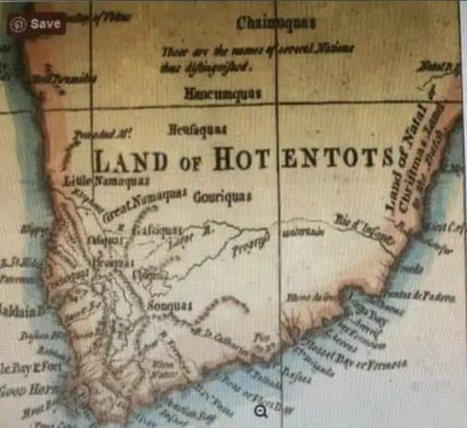
COLONIAL POLICIES - Oxford Academic The policy of assimilation was attempted in the sixteenth and seventeenth centuries, only to be obscured by the cloud of the slave-trade. 13 pages Good morning my First aboriginal indigenous brothers and sisters. Why do we shy away from the fact that our current political predicament is a consequence of British Colonial Policies of inter alia direct rule and indirect rule. The British policy of assimilation and no differentiation was strictly in the Cape Colony as stated in the Hottentots Proclamation to fully integrate Hottentots into the British colonial economy. The 1812 Apprenticeship of Servants Proclamation issued in support of the Hottentots Proclamation authorise white settlers to apprentice and employs a Sonqais child without paying them from the age of eight to eighteen years if the child was an orphan, destitute or grew up on the employer's property. So-called Cape 'liberation' was founded on Ordinance 50 which partly repealed the Hottentots Proclamation and later the so-called 'colour-hlind' Cape franchise of 1853 with representative government. Ordinance 50 had been primarily concerned with Sonqais and people of mixed racial background. Thus, at the outset the Sonqais (Hottentots and Bushmen) have been subjected to direct rule. British Kaffraria(Ciskei region) established 1847 was set up to recognise and administer Xhosa law and custom. Ordinance 49 was proclaimed granting prospective black immigrants passes for the sole purpose of seeking work in the Cape Colony. Kaffraria from onset being under indirect rule. What's important for us in the 1850's Sir George Grey in the Cape Colony initiated British Imperialist assimilation policy that was the official policy in the Cape Colony until 1936.: From the onset First aboriginal indigenous peoples had fallen under direct rule while the Xhosa have fallen under indirect rule. In British Natal the British had the policy of differentiation. Unlike First aboriginal indigenous peoples who was subjected to Roman Dutch law, Africans aka Xhosa and Zulu were exempted from Roman Dutch law and subjected to 'Native law and custom'. It's important to know that the indirect rule system used some African authorities for administration. The Lieutenant Governor was declared to be 'supreme chief's whose powers were exercise by white officials and magistrates. Under the TKLB of 2024 the supreme chief's function is carried out by the Provincial Premier. My dear aboriginal indigenous brothers and sisters there you have it! Initially most African tribal people unlike First aboriginal indigenous peoples who from the onset being British subjects, were 'foreigners' which did not pose a problem for the British. However, as additional territories of our ancestral land invaded by migrating fellow Africans were annexed as a result of the wars, the British problem of how to deal with large numbers of Africans had to be addressed. My dear aboriginal indigenous brothers and sisters do we choose to be persona en grata(welcome foreigners aka Coloureds) in our ancestral land or do we choose to vindicate our constitutional rights buy a demanding that this GNU enacted UNDRIP as a Charter of Rights for us. Lastly the only choice for those of us who choose the TKLB of 2024 as amended, the inevitable choice is to align with the ruling party, practically nullify our section 235 constitutional opportunity of self-determination.
Much love 💕😘 Billy Steenkamp
The O'Malley Archives is the product of almost two decades of research and includes analyses, chronologies, historical documents, and interviews from the apartheid and post-apartheid eras 1812. APPRENTICESHIP OF SERVANTS ACT [or Proclamation?] Freund (1989: 353) refer to this as the APPRENTICESHIP OF SERVANTS LAW; Simons & Simons (1969: 16) refer to it simply as PROCLAMATION of 1812; Marais (1938: 127) refers to it as CRADOCK'S APPRENTICESHIP LAW. Apparently it is a reworking of the HOTTENTOT PROCLAMATION (Crais 1992: 60). Together with some other proclamation issued in 1819, the APPRENTICESHIP OF SERVANTS ACT "allowed a settler to apprentice and employ without remuneration a free Coloured child, from the age of eight to eighteen years, if it was an orphan, or destitute, or had grown up on the employer's farm" (Simons & Simons 1969: 16). Marais (1938: 118, note 3) further states that the concept of 'apprenticeship' "was first introduced in 1775 when it was applied to the children of slave men and Hottentot women, who were apprenticed to the farmers on whose 'places' they were born, till their twenty-fifth year ... the practice seems to have been extended to purely Hottentot children, but for them was abolished shortly before 1795. Slave-Hottentot children, however, were still being apprenticed as late as 1799." About this site 1812. APPRENTICESHIP OF SERVANTS ACT [or Proclamation?] Freund (1989: 353) refer to this as the APPRENTICESHIP OF SERVANTS LAW; Simons & Simons (1969: 16) refer to it simply as PROCLAMATION of 1812; Marais (1938: 127) refers to it as CRADOCK'S APPRENTICESHIP LAW. Apparently it is a reworking of the HOTTENTOT PROCLAMATION (Crais 1992: 60). Together with some other proclamation issued in 1819, the APPRENTICESHIP OF SERVANTS ACT "allowed a settler to apprentice and employ without remuneration a free Coloured child, from the age of eight to eighteen years, if it was an orphan, or destitute, or had grown up on the employer's farm" (Simons & Simons 1969: 16). Marais (1938: 118, note 3) further states that the concept of 'apprenticeship' "was first introduced in 1775 when it was applied to the children of slave men and Hottentot women, who were apprenticed to the farmers on whose 'places' they were born, till their twenty-fifth year ... the practice seems to have been extended to purely Hottentot children, but for them was abolished shortly before 1795. Slave-Hottentot children, however, were still being apprenticed as late as 1799."
Events - The governor of the Cape, Earl of Caledon, declares that the Khoikhoi had to have a fixed residence and could not migrate between regions without written authority (Hottentot Proclamation).
- Gola's Xhosa community settles at Pramberg.
- A severe drought occurs in the eastern frontier area.
- More Xhosa clans push westward into the neutral zone between the Sundays and the Great Fish Rivers. The British send in seasoned troops.[1][2]
Births This section is empty. You can help by adding to it. (July 2019) References
The invasion of the Cape Colony, also known as the Battle of Muizenberg (Dutch: Slag om Muizenberg), was a British military expedition launched in 1795 against the Dutch Cape Colony at the Cape of Good Hope. The Dutch colony at the Cape, established and controlled by the United East India Company in the seventeenth century, was at the time the only viable South African port for ships making the journey from Europe to the European colonies in the East Indies. It therefore held vital strategic importance, although it was otherwise economically insignificant. In the winter of 1794, during the French Revolutionary Wars, French troops entered the Dutch Republic, which was reformed into the Batavian Republic. In response, Great Britain launched operations against the Dutch Empire to use its facilities against the French Navy. The British expedition was led by Vice-Admiral Sir George Elphinstone and sailed in April 1795, arriving off Simon's Town at the Cape in June. Attempts were made to negotiate a settlement with the colony, but talks achieved nothing and an amphibious landing was made on 7 August. A short battle was fought at Muizenberg, and skirmishing between British and Dutch forces continued until September when a larger military force landed. With Cape Townunder threat, Dutch governor, Abraham Josias Sluysken, surrendered the colony. Elphinstone subsequently strengthened the garrison against counterattack and stationed a Royal Navy squadron off the port. Almost a year later a Dutch reinforcement convoy reached the colony only to find that it was badly outnumbered, and surrendered without a fight. The British occupation continued until the Peace of Amiens in 1802 when it was returned to the Dutch. In 1806, during the Napoleonic Wars, a second British invasion reoccupied the colony after the Battle of Blaauwbergand it remained a British colony until the establishment of the Union of South Africa in 1910. Background The extent of the Dutch Cape Colony in 1795 The French Revolutionary Wars, which began in 1792, following the French Revolution, expanded in January 1793, when the French Republic declared war on the Dutch Republicand the Kingdom of Great Britain.[1] This brought the war to the Indian Ocean, where both Britain and the Netherlands maintained lucrative empires. Trade from these empires was menaced by French privateers and warships operating from Île de France, (now Mauritius)[2] but it was protected in the waters off Southern Africa by the presence of the Dutch Cape Colony. Situated at the Cape of Good Hope, the Cape Colony had been established in the seventeenth century to offer a harbour for shipping traveling between Europe and the East Indies, and in the 1790s it remained the only such station between Rio de Janeiro and British India.[3] The Cape Colony was administered from two towns, the larger Cape Town on the wide Table Bay facing west and smaller Simon's Town on False Bay facing south. Neither bay was sheltered from Atlantic storms and both were notoriously dangerous, with winds, currents and rocks posing considerable threats to shipping.[3] Beyond its importance as a resupply port for European ships, the colony had little economic value in the 1790s,[4] and was defended by a 3,600-strong garrison of approximately 1,000 VOC regular troops supplemented by Boer commandosand the Pandour Corps under the command of Governor Abraham Josias Sluysken and Colonel Robert Jacob Gordon. This garrison was centered on the Castle of Good Hope and operated from a series of coastal fortifications which protected Table Bay. False Bay was more weakly defended, covered by only two lightly armed batteries.[5] In the winter of 1794, French soldiers invaded the Netherlands and captured Amsterdam. After the Stadtholder, William of Orange, fled to Britain, the Dutch Republic was reconstituted as the Batavian Republic by the revolutionaries.[6] In Britain, William issued the Kew Letters instructing his colonial governors to cooperate with British occupation forces.[7] At the urging of Sir Francis Baring, the Secretary of State for War Henry Dundas authorised a mission to ensure control of the Cape Colony and eliminate the potential threat it posed to the East Indian trade.[8] The Admiralty sent two battle squadrons to the Cape on 3 April 1795, one under Vice-Admiral Sir George Elphinstone and the other under Commodore John Blankett, carrying a small expeditionary force of 515 soldiers from the 78th Regiment of Foot under Major-General Sir James Henry Craig. A larger force under General Alured Clarke was instructed to follow these squadrons on 15 May with troops and supplies for a longer campaign, with orders to hold at San-Salvador until requested.[5] Invasion Location of events during the invasion. Blankett and Elphinstone united off the Cape on 10 June 1795 and anchored in Simon's Bay. There messages were sent to Sluysken offering an alliance against the French.[9] The Dutch governor was inclined to resist however, evacuating the civilian population from Simon's Town in early July and making preparations to raze the town. To prevent this, Craig landed 800 soldiers and Royal Marines on 14 July,[10] who occupied Simon's Town while the Dutch withdrew to the pass at Muizenberg, through which passed the road to Cape Town.[11] For the next month the two armies observed an uneasy truce, broken by occasional patrols and sniping. During this period, Elphinstone and Sluysken continued negotiations for the surrender of the colony. These negotiations were stalled by disputes in the colonial government regarding the legitimacy of the deposed William of Orange and suspicion concerning British intentions. While the debates continued, British envoys were permitted free movement in Cape Town, making detailed observations of the defences.[9] The location in Muizenberg where the battle took place. Elphinstone became concerned that the Dutch positions were too strong for his forces to overwhelm, and on 19 June he sent HMS Sphinx to request assistance from Clarke's fleet. On 7 August, with negotiations stalled, Elphinstone ordered an attack on the pass at Muizenberg.[12] Craig's forces were supplemented with 1,000 sailors from Elphinstone's squadron redeployed on land under captains Temple Hardy and John William Spranger.[13] Among this force were a number of American citizens who immediately deserted to the Dutch and were promised repatriation.[14] At noon on 7 August, HMS America, HMS Stately, HMS Echo and HMS Rattlesnake opened fire on Dutch forward positions. Return fire from Dutch field guns killed two men on America and wounded three more,[15] while Craig's troops were able to advance against the Dutch positions and seize them, with the Dutch defenders falling back in confusion.[16] A second attack by soldiers of the 78th captured a rocky height nearby and a Dutch counterattack the following morning was driven off by Hardy's sailors and marines.[15] The Dutch fell back to Wynberg but British forces were not strong enough to advance, suffering shortages of food and ammunition. Elphinstone's positions were, however, improved by reinforcements, which arrived in the Arniston on 9 August, as well as disorganisation in the Dutch command resulting in stalemate.[16] The British commander subsequently authorised the seizure of five Dutch East Indiamen merchant ships at anchor at Simon's Town on 18 August. Skirmishing continued throughout the month, with stronger Dutch attacks on 1 and 2 September followed by a larger planned assault on Simon's Town on 3 September in which Sluysken committed all his reserves including 18 cannons.[15] That morning, 14 East India Company ships were seen arriving in Simon's Bay and the attack was cancelled. These ships were the reinforcement fleet under Clarke, who landed 4,000 troops from the 95th and 98thRegiments of Foot, the 2nd Battalions of the 78th and 84th Regiments of Foot, and a contingent of EIC troops from Saint Helena,[10] at Simon's Town for an overland campaign against Cape Town.[16] Clarke's army then advanced against Dutch piquets, losing one killed and 17 wounded in skirmishes.[10] To support this operation, Elphinstone sent America, Rattlesnake, Echo and the Indiaman Bombay Castle to blockade Cape Town and provide artillery support.[17]Outnumbered and surrounded, Sluysken requested a 48-hour truce from Clarke, but was given a 24-hour ultimatum to surrender. Seeing no alternative, the Dutch governor passed control of his colony to the British on 15 September 1795,[17] although he allowed approximately 40 British deserters in Cape Town, mostly impressed Americans, to escape into the countryside before the deadline passed.[14] Aftermath Total British losses were four killed and 54 wounded.[10] Among the Dutch ships captured was the 14-gun brig Star. The British took Star into service as HMS Hope.[13] Elphinstone's substantial squadron remained on station at the Cape to deter efforts to recapture the colony. Parts of this force were subsequently deployed to bolster British forces in the Indian Ocean.[18] The blockade of Île de France was restored and Arrogant and Victorious were sent to the Dutch East Indies where they would fight an inconclusive battle with a French squadron off Sumatra in September 1796.[19]Elphinstone himself sailed for Madras, where he received reports that a Batavian Navy squadron had sailed from Europe to retake the Cape Colony. Returning to Cape Town, Elphinstone assembled a large squadron to await the Dutch arrival. Further reports revealed the strength and progress of the Dutch and Elphinstone had ample time to prepare his squadron for their arrival and increase the garrison ashore.[20] The Batavian squadron's commander, Rear-Admiral Engelbertus Lucas, spent almost six months on the passage and gathered no intelligence on British defences. Thus when he arrived off the Cape he was soon discovered by Elphinstone in Saldanha Bay and intimidated into surrendering without a fight.[21] No further attacks on the Cape Colony were made during the course of the war. Elphinstone returned to Britain in October 1796 and was subsequently awarded the title of Baron Keith for his service in the capture and defence of the Cape, a reward that historian C. Northcote Parkinson calls "on the whole, easily earned".[22] At the Peace of Amiens, in 1802, one of the treaty terms returned the Cape Colony, along with all captured Dutch colonies except Ceylon, to the Batavian Republic.[23] The peace was short-lived, and after the outbreak of the Napoleonic Wars in 1803 a second British invasion was planned, executed in 1806 and victory secured following the Battle of Blaauwberg.[24] The Cape Colony remained part of the British Empire until its independence as part of a unified South Africa in 1910.
The Treaty Tree (Afrikaans: Verdragboom or Traktaatboom ) is a 500-year-old white milkwood tree on Treaty Road and south of the rail line in Woodstock, Cape Town, South Africa. Peace was made under the tree on 10 January 1806 after the Battle of Blaauwberg, thereby starting the second British occupation of the Cape and leading to the permanent establishment of the Cape Colony as a British possession. Until 1834 slaves were sold and convicts hanged under it.[1] Prior to the arrival of the Dutch, the tree was a feature of the local landscape since at least the early 1500s. During the Battle of Salt River, in 1510, a massacre by Khoikhoi of 64 Portuguese sailors and their commander Dom Francisco de Almeida took place close to the tree.[2] Protection The City of Cape Town owns the property, and the tree was declared a monument in 1967. See also References Bibliography - Green, Lawrence G.: I heard the old men say. Kaapstad: Howard Timmins, 1964.
- Oberholster, J.J.: Die historiese monumente van Suid-Afrika. Kaapstad: Kultuurstigting Rembrandt van Rijn vir die Raad vir Nasionale Gedenkwaardighede, 1972.
External links
The Slave Trade Act 1807 (47 Geo. 3 Sess. 1. c. 36), officially An Act for the Abolition of the Slave Trade,[1] was an act of the Parliament of the United Kingdom prohibiting the slave trade in the British Empire. Although it did not automatically emancipate those enslaved at the time, it encouraged British action to press other nation states to abolish their own slave trades. It took effect on 1 May 1807, after 18 years of trying to pass an abolition bill.[2] Many of the supporters thought the act would lead to the end of slavery.[3] Slavery on English soil was unsupported in English law and that position was confirmed in Somerset's case in 1772, but it remained legal in most of the British Empire until the passing of the Slavery Abolition Act 1833 (3 & 4 Will. 4. c. 73). Background As British historian Martin Meredith writes, "In the decade between 1791 and 1800, British ships made about 1,340 voyages across the Atlantic, landing nearly 400,000 slaves. Between 1801 and 1807, they took a further 266,000. The slave trade remained one of Britain's most profitable businesses."[4] The Committee for the Abolition of the Slave Trade was formed in 1787 by a group of Evangelical English Protestants allied with the Quakers, to unite in their shared opposition to slavery and the slave trade. The Quakers had long viewed slavery as immoral, and a blight upon humanity. By 1807 the abolitionist groups in Britain had a very sizeable faction of like-minded members in the British Parliament. At their height they controlled 35–40 seats. Known as the "Saints", the alliance was led by the best known of the anti-slave trade campaigners, William Wilberforce, who had taken on the cause of abolition in 1787 after having read the evidence that Thomas Clarkson had amassed against the trade.[5] These dedicated Parliamentarians had access to the legal draughtsmanship of James Stephen, Wilberforce's brother-in-law. They often saw their personal battle against slavery as a divinely ordained crusade. On Sunday, 28 October 1787, Wilberforce wrote in his diary: "God Almighty has set before me two great objects, the suppression of the slave trade and the reformation of manners."[6] On 2 April 1792, William Wilberforce sponsored a motion in the House of Commons "that the trade carried on by British subjects, for the purpose of obtaining slaves on the coast of Africa, ought to be abolished." He had introduced a similar motion in 1791, which was soundly defeated by MPs, with a vote of 163 opposed, 88 in favour.[7] Henry Dundas was not present for that vote, but when it was again before MPs in 1792, Dundas tabled a petition from Edinburgh residents who supported abolition.[8] He then went on to affirm his agreement in principle with Wilberforce's motion: "My opinion has been always against the Slave Trade." He argued, however, that a vote for immediate abolition would be ineffective, as it would not prevent merchants from other countries from stepping in to continue the trade abandoned by the British. He stated: "this trade must be ultimately abolished, but by moderate measures".[9] He proposed an amendment that would add the word "gradual" to the Wilberforce motion. The amendment was adopted, 192 in favour, 125 opposed. The motion as amended then passed 230 in favour, 85 opposed.[10][11]Dundas insisted that any abolition of the slave trade would have to be dependent on the support of West Indian colonial legislatures, and the implementation of laws concerning the amelioration of the conditions of slaves. Abolitionists argued that West Indian assemblies would never support such measures, and that making the abolition of the slave trade dependent on colonial reforms would cause indefinite delay. Three weeks after the vote, Dundas tabled resolutions setting out a plan to implement gradual abolition by the end of 1799. At that time he told the House that proceeding too quickly would cause West Indian merchants and landowners to continue the trade "in a different mode and other channels."[12] He argued that "if the committee would give the time proposed, they might abolish the trade; but, on the contrary, if this opinion was not followed, their children yet unborn would not see the end of the traffic."[13] MPs voted in favour of ending the trade in slaves by the end of 1796, after defeating proposals to end the trade in slaves in 1795 or 1794.[14][15] The House then amended the supporting resolutions tabled by Dundas, to reflect the new target date of 1796.[14] The motion and resolutions did not receive consent in the House of Lords, however, consideration being formally deferred to a subsequent session on 5 June 1792, where they were never revived. Thus the 1792 Slave Trade Bill passed the House of Commons; but mangled and mutilated by the modifications and amendments of Pitt, Earl of Mornington, Edward James Eliot and MacDonald, it lay for years, in the House of Lords.[16][17] Abolitionists’ numbers were magnified by the precarious position of the government under Lord Grenville, whose short term as prime minister was known as the Ministry of All the Talents. Grenville himself led the fight to pass the bill in the House of Lords, while in the Commons the bill was led by the Foreign Secretary, Lord Howick (Charles Grey, later Earl Grey).[1] Other events also played a part; the Acts of Union 1800 brought 100 Irish MPs into Parliament, most of whom supported abolition.[18] The Bill was first introduced to Parliament in January 1807. It went to the House of Commons on 10 February 1807. On 23 February 1807, twenty years after he first began his crusade, Wilberforce and his team were rewarded with victory. After a debate lasting ten hours, the House agreed to the second reading of the bill to abolish the Atlantic slave trade by an overwhelming 283 votes for to 16.[5] The bill received royal assent by King George III on 25 March 1807.[19] The Act took effect on 1 May 1807. However, Kitty's Amelia had received clearance to sail on 27 April, before the deadline. Thus, when she sailed on 27 July, she did so legally. This was the last legal slave voyage for a British vessel.[20] All that took place against the background of the ongoing War of the Fourth Coalition. In the last months of 1806, Napoleon had won a major victory, crushing the military power of Prussia, entering into its capital Berlin and there issuing the Berlin Decree, bringing into effect the Continental System whose declared purpose was to weaken the British economy by closing French-controlled territory to its trade.[21] Originally, the French Revolution had abolished slavery, but Napoleon – though claiming the mantle of continuing the revolutionary heritage – had in 1802 taken the reactionary step of reintroducing slavery in the French colonies. Thus, in abolishing the slave trade Britain – which could do little to directly oppose the string of French military victories on the continent – could at least gain the moral high ground against its French foe. Other nations By its Act Against Slavery of 1793, the Parliament of Upper Canada in British North America (modern-day Canada) abolished the slave trade, freed slaves immigrating by choice or force, as well as children born to enslaved women subsequently upon their 25th birthday, but did not emancipate existing resident slaves. In 1805 a British Order-in-Council had restricted the importation of slaves into colonies that had been captured from France and the Netherlands.[22] Following adoption of the 1807 act, Britain used its diplomatic influence to pressure other nations to end their own involvement in the slave trade.[23] With the Anglo-Portuguese Treaty of 1810, Portugal agreed to restrict its trade into its colonies; in the Anglo-Swedish Treaty of 1813, Sweden outlawed its slave trade; and in the Treaty of Paris of 1814 whereby France agreed with Britain that the slave trade was "repugnant to the principles of natural justice" and agreed to abolish its involvement the slave trade in five years. In the 1814 Anglo-Dutch treaty the Netherlands outlawed its slave trade, and the 1817 Anglo-Spanish treaty called for Spain to suppress its trade by 1820.[22] The United States adopted its Act Prohibiting Importation of Slaves on 2 March 1807, the same month and year as the British action. It provided for the abolition of its Atlantic slave trade but did not alter its internal trade in slaves, while the American abolition of the international slave trade led to the creation of a coastwise slave trade in the United States. Article 1, Section 9, Clause 1 of the United States Constitution forbade the closing of the slave trade for twenty years, until 1808. The long-planned law was passed a year earlier, and with the economic incentives of the slave trade coming to an end, there was both a spike in the number of slaves being traded and a unification of political factions against the trade.[24] Enforcement The act created fines for ship captains who continued with the trade. These fines could be up to £100 per enslaved person found on a ship. Captains would sometimes dump captives overboard when they saw Navy ships coming in order to avoid these fines.[25] The Royal Navy, which then controlled the world's seas, established the West Africa Squadron in 1808 to patrol the coast of West Africa, and between 1808 and 1860 they seized approximately 1,600 slave ships and freed 150,000 Africans who were aboard.[26][4] The Royal Navy declared that ships transporting slaves would be treated the same as pirates. Action was also taken against African kingdoms which refused to sign treaties to outlaw the trade, such as "the usurping King of Lagos",[citation needed] who was deposed in 1851. Anti-slavery treaties were signed with over 50 African rulers.[27] In the 1860s, David Livingstone's reports of atrocities within the Arab slave trade in East Africa stirred up the interest of the British public, reviving the flagging abolitionist movement. The Royal Navy throughout the 1870s attempted to suppress "this abominable Eastern trade", at Zanzibar in particular. In 1890 Britain handed control of the strategically important island of Heligoland in the North Sea to Germany in return for control of Zanzibar, in part to help enforce the ban on slave trading.[28][29] See also
Constitutional law is a body of law which defines the role, powers, and structure of different entities within a state, namely, the executive, the parliament or legislature, and the judiciary; as well as the basic rights of citizens and, in federal countries such as the United States and Canada, the relationship between the central government and state, provincial, or territorial governments. Not all nation states have codified constitutions, though all such states have a jus commune, or law of the land, that may consist of a variety of imperative and consensual rules. These may include customary law, conventions, statutory law, judge-made law, or international rules and norms. Constitutional law deals with the fundamental principles by which the government exercises its authority. In some instances, these principles grant specific powers to the government, such as the power to tax and spend for the welfare of the population. Other times, constitutional principles act to place limits on what the government can do, such as prohibiting the arrest of an individual without sufficient cause. In most nations, such as the United States, India, and Singapore, constitutional law is based on the text of a document ratified at the time the nation came into being. Other constitutions, notably that of the United Kingdom,[1][2] rely heavily on uncodified rules, as several legislative statutes and constitutional conventions, their status within constitutional law varies, and the terms of conventions are in some cases strongly contested.[3] State and legal structure Constitutional laws can be considered second order rule making or rules about making rules to exercise power. It governs the relationships between the judiciary, the legislature and the executive with the bodies under its authority. One of the key tasks of constitutions within this context is to indicate hierarchies and relationships of power. For example, in a unitary state, the constitution will vest ultimate authority in one central administration and legislature, and judiciary, though there is often a delegation of power or authority to local or municipal authorities. When a constitution establishes a federal state for instance as seen in India, it will identify multiple levels of government coexisting with exclusive or shared areas of jurisdiction over lawmaking, application and enforcement. Some federal states, most notably the United States, have separate and parallel federal and state judiciaries, with each having its own hierarchy of courts with a supreme court for each state. India, on the other hand, has one judiciary divided into district courts, high courts, and the Supreme Court of India. Human rights Human rights or civil liberties form a crucial part of a country's constitution and uphold the rights of the individual against the state. Most jurisdictions, like the United States and France, have a codified constitution, with a bill of rights. A recent example is the Charter of Fundamental Rights of the European Union which was intended to be included in the Treaty establishing a Constitution for Europe, that failed to be ratified. Perhaps the most important example is the Universal Declaration of Human Rights under the UN Charter. These are intended to ensure basic political, social and economic standards that a nation state, or intergovernmental body is obliged to provide to its citizens but many do include its governments. Canada is another instance where a codified constitution, with the Canadian Charter of Rights and Freedoms, protects human rights for people under the nation's jurisdiction.[4] Some countries like the United Kingdom have no entrenched document setting out fundamental rights; in those jurisdictions the constitution is composed of statute, case law and convention. A case named Entick v. Carrington[5] is a constitutional principle deriving from the common law. John Entick's house was searched and ransacked by Sherriff Carrington. Carrington argued that a warrant from a Government minister, the Earl of Halifax was valid authority, even though there was no statutory provision or court order for it. The court, led by Lord Camden stated that, "The great end, for which men entered into society, was to secure their property. That right is preserved sacred and incommunicable in all instances, where it has not been taken away or abridged by some public law for the good of the whole. By the laws of England, every invasion of private property, be it ever so minute, is a trespass... If no excuse can be found or produced, the silence of the books is an authority against the defendant, and the plaintiff must have judgment."[6] The common law and the civil law jurisdictions do not share the same constitutional law underpinnings. Common lawnations, such as those in the Commonwealth as well as the United States, derive their legal systems from that of the United Kingdom, and as such place emphasis on judicial precedent,[7][8][9] whereby consequential court rulings (especially those by higher courts) are a source of law. Civil law jurisdictions, on the other hand, place less emphasis on judicial review and only the parliament or legislature has the power to effect law. As a result, the structure of the judiciary differs significantly between the two, with common law judiciaries being adversarial and civil law judiciaries being inquisitorial. Common law judicatures consequently separate the judiciary from the prosecution,[10][11][12]thereby establishing the courts as completely independent from both the legislature and law enforcement. Human rights law in these countries is as a result, largely built on legal precedent in the courts' interpretation of constitutional law, whereas that of civil law countries is almost exclusively composed of codified law, constitutional or otherwise. Legislative procedure Another main function of constitutions may be to describe the procedure by which parliaments may legislate. For instance, special majorities may be required to alter the constitution. In bicameral legislatures, there may be a process laid out for second or third readings of bills before a new law can enter into force. Alternatively, there may further be requirements for maximum terms that a government can keep power before holding an election. Study of constitutional law Constitutional law is a major focus of legal studies and research. For example, most law students in the United States are required to take a class in Constitutional Law during their first year, and several law journals are devoted to the discussion of constitutional issues. The rule of law The doctrine of the rule of law dictates that government must be conducted according to law. This was first established by British legal theorist A. V. Dicey. Dicey identified three essential elements of the British Constitution which were indicative of the rule of law: - Absolute supremacy of regular law as opposed to the influence of arbitrary power;[13]
- Equality before the law;
- The Constitution is a result of the ordinary law of the land.
Dicey's rule of law formula consists of three classic tenets. The first is that the regular law is supreme over arbitrary and discretionary powers. "[N]o man is punishable ... except for a distinct breach of the law established in the ordinary legal manner before the ordinary courts of the land."[14] The second is that all men are to stand equal in the eyes of the law. "...no man is above the law...every man, whatever be his rank or condition, is subject to the ordinary law of the realm and amenable to the jurisdiction of the ordinary tribunals" [15] The third is that the general ideas and principles that the constitution supports arise directly from the judgements and precedents issued by the judiciary. "We may say that the constitution is pervaded by the rule of law on the ground that the general principles of the constitution... are with us the result of judicial decisions determining the rights of private persons in particular cases brought before the courts" [16] The separation of powers Separation of powers is often regarded as a second limb functioning alongside the rule of law to curb the powers of the government. In many modern nation states, power is divided and vested into three branches of government: The legislature, the executive, and the judiciary are known as the horizontal separation of powers. The first and the second are harmonized in traditional Westminster system.[17] Vertical separation of powers is decentralization. Election law Election law is a subfield of constitutional law. It includes the rules governing the process of elections. These rules enable the translation of the will of the people into functioning democracies. Election law addresses issues who is entitled to vote, voter registration, ballot access, campaign finance and party funding, redistricting, apportionment, electronic voting and voting machines, accessibility of elections, election systems and formulas, vote counting, election disputes, referendums, and issues such as electoral fraud and electoral silence. See also
A puppet state, puppet régime, puppet government or dummy government[1] is a state that is de jure independent but de factocompletely dependent upon an outside power and subject to its orders.[2] Puppet states have nominal sovereignty, except that a foreign power effectively exercises control through economic or military support.[3] By leaving a local government in existence the outside power evades all responsibility, while at the same time successfully paralysing the local government they tolerate.[1][how?] Puppet states differ from allies, who choose their actions of their own initiative or in accordance with treaties they have voluntarily entered. Puppet states are forced into legally endorsing actions already taken by a foreign power. Characteristics Puppet states are "endowed with the outward symbols of authority",[4] such as a name, flag, anthem, constitution, law codes, motto, and government, but in reality are appendages of another state which creates,[5] sponsors or otherwise controls the puppet government. International law does not recognise occupied puppet states as legitimate.[6] Puppet states can cease to be puppets through: - military defeat of the "master" state (as in Europe and Asia in 1945),
- absorption into the master state (as in the early Soviet Union),
- achievement of independence
Terminology The term is a metaphor which compares a state or government to a puppet controlled by a puppeteer with strings.[7]The first recorded use of the term "puppet government" was in 1884, in reference to the Khedivate of Egypt.[8][unreliable source?] In the Middle Ages, vassal states existed based on delegation of the rule of a country by a king to noble men of lower rank. Since the Peace of Westphalia of 1648, the concept of a nation came into existence where sovereignty was connected more to the people who inhabited the land than to the nobility who owned the land. An earlier similar concept is suzerainty, the control of the external affairs of one state by another.[citation needed] British examples during and after World War II The Axis demand for oil and the concern of the Allies that Germany would look to the oil-rich Middle East for a solution, caused the invasion of Iraq by the United Kingdom and the invasion of Iran by the UK and the Soviet Union. Pro-Axis governments in both Iraq and Iran were removed and replaced with Allied-dominated governments. - Kingdom of Iraq (1941–1947) – Iraq was important to the United Kingdom because of its position on the route to India. Iraq also could provide strategic oil reserves. But due to the UK's weakness early in the war, Iraq backed away from the pre-war Anglo-Iraqi Alliance. On 1 April 1941, the Hashemite monarchy in Iraq was overthrown by a pro-German coup d'état under Rashid Ali. The Rashid Ali regime began negotiations with the Axis powers and military aid was quickly sent to Mosul via Vichy French-controlled Syria. The Germans provided a squadron of twin-engine fighters and a squadron of medium bombers. The Italians provided a squadron of biplane fighters. In mid-April 1941, a brigade of the 10th Indian Infantry Division landed at Basra (Operation Sabine). On 30 April, British forces at RAF Habbaniya were besieged by a numerically inferior Iraqi force. On 2 May, the British launched pre-emptive airstrikes against the Iraqis and the Anglo-Iraqi War began. By the end of May, the siege of RAF Habbaniya was lifted, Fallujah was taken, Baghdad was surrounded by British forces, and the pro-German government of Rashid Ali collapsed. Rashid Ali and his supporters fled the country. The Hashemite monarchy under King Faisal II was restored, and declared war on the Axis powers in January 1942. British and Commonwealth forces remained in Iraq until 26 October 1947.[20]
- Imperial State of Iran (1941–1943) – German workers in Iran caused both the UK and the Soviet Union to question Iran's neutrality. In addition, Iran's geographical position was important to the Allies. As a result, the Anglo-Soviet invasion of Iran (Operation Countenance) was launched in August 1941. The following month, Reza Shah Pahlavi was forced to abdicate his throne and went into exile. He was replaced by his son Mohammad Reza Pahlavi, who was willing to declare war on the Axis powers. By January 1942, the UK and the Soviet Union agreed to end their occupation of Iran six months after the end of the war.
] Examples before and during decolonisation In some cases, the process of decolonisation has been managed by the decolonising power to create a neo-colony, that is a nominally independent state whose economy and politics permits continued foreign domination. Neo-colonies are not normally considered puppet states.[citation needed] Dutch East Indies The Netherlands formed several puppet states in the former Dutch East Indies as part of its effort to quell the Indonesian National Revolution.[citation needed] Congo crisis Following the Belgian Congo's independence as Congo-Leopoldville in 1960, Belgian interests supported the short-lived breakaway State of Katanga (1960–1963).[29] South Africa's Bantustans Map of Bantustans in South West Africa (present-day Namibia) as of 1978 During the 1970s and 1980s, four ethnic Bantustans - some of which were extremely fragmented - called "homelands" by the government of the time, were carved out of South Africa and given nominal sovereignty. Mostly Xhosa peopleresided in the Ciskei and Transkei, Tswana people in Bophuthatswana, and Venda people in the Venda.[33][unreliable source?] The principal purpose of these states was to remove South African citizenship from the Xhosa, Tswana, and Venda peoples, and so provide grounds for denying them their democratic rights. All four Bantustans were reincorporated into a democratic South Africa on 27 April 1994, under a new constitution.[citation needed] The South African authorities established ten Bantustans in South West Africa(present-day Namibia), then illegally occupied by South Africa, in the late 1960s and early 1970s in accordance with the Odendaal Commission. Three of them were granted self-rule. These Bantustans were replaced with separate ethnicity-based governments in 1980.[citation needed] Recent and current examples United States - Republic of Iraq (Interim Government and Coalition Provisional Authority) – Critics of the Iraqi Interim Government argued that it existed only at the pleasure of the United States and other coalition countries and considered it a U.S. puppet government.[35] This criticism was also extended to politicians active within the Interim Government, with the media suggesting that Ayad Allawi, was Washington's puppet.[36][37] The CPA's economy was dominated by American influence. The CPA began to dismantle Iraq's centrally planned economy. Paul Bremer, chief executive of the CPA, planned to restructure Iraq's state owned economy with free market thinking. Bremer dropped the corporate tax rate from around 45% to a flat tax rate of 15% and allowed foreign corporations to repatriate all profits earned in Iraq. Opposition from senior Iraqi officials, together with the poor security situation, meant that Bremer's privatisation plan was not implemented during his tenure,[38] though his orders remained in place. CPA Order 39 laid out the framework for full privatisation in Iraq and permitted 100% foreign ownership of Iraqi assets and strengthened the positions of foreign businesses and investors. Critics like Naomi Klein argued that CPA Order 39 was designed to create as favourable an environment for foreign investors as possible, which would allow U.S. corporations to dominate Iraq's economy.[39] Also controversial was CPA Order 17 which granted all foreign contractors operating in Iraq immunity from "Iraqi legal process," effectively granting immunity from any kind of suit, civil or criminal, for actions the contractors engaged in within Iraq.[40] CPA Order 49 also provided significant tax cuts for corporations operating within Iraq by reducing the rate from a maximum of 40% to a maximum of just 15% on income. Furthermore, corporations who collaborated with the CPA were exempted from having to pay any tax.[41]
Israel Disputed examples See also
Indirect rule was a system of governance used by imperial powers to control parts of their empires. This was particularly used by colonial empires like the British Empire to control their possessions in Africa and Asia, which was done through pre-existing indigenous power structures. Indirect rule was used by various colonial rulers such as: the French in Algeria and Tunisia, the Dutch in the East Indies, the Portuguese in Angola and Mozambique and the Belgians in Rwanda and Burundi. These dependencies were often called "protectorates" or "trucial states". Through this system, the day-to-day government and administration of both small and large areas were left in the hands of traditional rulers, who gained prestige and the stability and protection afforded by the Pax Britannica (in the case of British territories). Consequentially done at the cost of losing control of their external affairs, and often of taxation, communications, and other matters. It was usually carried out with a small number of European "advisors" effectively overseeing the government of large numbers of people spread over extensive areas.[1] British Empire Some British colonies were ruled directly by the Colonial Office in London, while others were ruled indirectly through local rulers who are supervised behind the scenes by British advisors. In 1890 Zanzibar became a protectorate (not a colony) of Britain. British Prime Minister Salisbury explained his position: - The condition of a protected dependency is more acceptable to the half civilized races, and more suitable for them than direct dominion. It is cheaper, simpler, less wounding to their self-esteem, gives them more career as public officials, and spares of unnecessary contact with white men.[2]
The Princely states of India were also ruled indirectly, with the Indian territories ruled indirectly experiencing similar effects to those in Africa that experienced indirect rule.[3] The same went for many of the West African holdings of the British and French empires.[4] In Africa The ideological underpinnings, as well as the practical application, of 'indirect rule' in Uganda and Nigeria is traced back to the work of Frederick Lugard, the High Commissioner of the Protectorate of Northern Nigeria from 1899 to 1906. Indirect rule was by no means a new idea at the time, since it had been in use in ruling empires throughout history. For instance, in addition to India and Uganda, it had been practiced in the Songhai and Ashanti Empires. In the lands of the Sokoto Caliphate, conquered by the British at the turn of the century, Lugard instituted a system whereby external, military, and tax control was operated by the British. While every other aspect of life was left to local pre-conquest indigenous aristocracies who may have sided with the British during or after their conquest. The theory behind this solution to a very practical problem (referred to as 'The Native Question' by Mahmood Mamdani in his work Citizen and Subject[5]) of control by a tiny group of foreigners of huge populations is laid out in Lugard's influential work, The Dual Mandate in British Tropical Africa.[6] Lugard copied the numerous empires before his time who had created and developed the indirect rule system. According to Lugard, Indirect Rule was a political doctrine which held that the Europeans and Africans were culturally different to this extent. Which he interpreted it to mean that Africans had to be ruled through the Africans own institution. Whereby, to achieve this objective: - Chiefs and or Royalty continued to exercise their traditional powers over their subjects;
- Chiefs were appointed for areas with no chiefs; and
- Aspects of traditional government repugnant to “European ideas of what constituted government were modified.” e.g. the abolition of human sacrifice.
It has been pointed out that the British were not prepared to pay for colonial administration, though interested in economically benefiting from their new colonies; neither did the British have enough resources to finance it. This economic question coupled with the shortage of or lack of European personnel in Africa at the time, convinced the British that it would be cheaper to use the traditional institutions to achieve the same objective. The nature and operation of indirect rule in Northern Nigeria, amply confirm these contentions. When Lugard and his men conquered the Sokoto Caliphate of Northern Nigeria, in the early 20th century, his limited resources in terms of men and money, made rule of the vast territory highly impracticable. Fortunately for him, however, the Sokoto Caliphate already possessed a highly developed and efficient system of administration headed by emirs, with the Sultan of Sokoto as the supreme head. The hierarchical nature of the political structure was ideal for the system of indirect rule because the British could control the emirs and the emirs in turn could control their people.[7] In the mid-1920s, the British implemented the system of indirect rule in Tanzania.[8] Practical implementation Naaba Koom II, king of the Mossi in French Upper Volta, pictured in 1930. Preservation of precolonial political units was the basis of indirect rule in British and French empires. Indirect rule was cheaper and easier for the European powers and, in particular, it required fewer administrators, but had a number of problems. In many cases, European authorities empowered local traditional leaders, as in the case of the monarchy of Uganda, but if no suitable leader could be found (in the traditional Western sense of the term), the Europeans would simply choose local rulers to suit them.[9] This was the case in Kenya and Southern Nigeria, and the new leaders, often called "warrant chiefs", were not always supported by the local population. The European ruling classes also often chose local leaders with similar traits to their own, despite these traits not being suited to native leadership. Many were conservative elders, and thus indirect rule fostered a conservative outlook among the indigenous population and marginalised the young intelligentsia. Written laws, which replaced oral laws, were less flexible to the changing social nature, old customs of retribution and justice were removed or banned, as well as the removal of more violent punishments. Furthermore, leaders empowered by the governments of European powers were often not familiar with their new tasks, such as recruitment and tax.[10] Interpretations From the early 20th century, French and British writers helped establish a dichotomy between British indirect rule, exemplified by the Indian princely states and by Lugard's writings on the administration of northern Nigeria, and French colonial direct rule. As with British theorists, French colonial officials like Félix Eboué or Robert Delavignette[11]wrote and argued throughout the first half of the 20th century for a distinct French style of rule that was centralized, uniform, and aimed at assimilating colonial subjects into the French polity.[12][13][14] French rule, sometimes labeled Jacobin, was said in these writings to be based on the twin ideologies of the centralized unitary French government of the Metropole, with the French colonial ideology of Assimilation. Colonial Assimilation argued that French law and citizenship was based on universal values that came from the French Revolution. Mirroring French domestic citizenship law, French colonial law allowed for anyone who could prove themselves culturally French (the "Évolués") to become equal French citizens.[15][16][17][18][19] In French West Africa, only parts of the Senegalese "Four Communes" ever extended French citizenship outside a few educated African elite.[20][21] While making more subtle distinctions, this model of direct versus indirect rule was dominant in academia from the 1930s[22] until the 1970s.[23][24][25] Academics since the 1970s have problematised the Direct versus Indirect Rule dichotomy,[26] arguing the systems were in practice intermingled in both British and French colonial governance, and that the perception of indirect rule was sometimes promoted to justify quite direct rule structures.[27][28] Mahmood Mamdani and other academics[29][30] have discussed extensively how both direct and indirect rule were attempts to implement identical goals of foreign rule, but how the "indirect" strategy helped to create ethnic tensions within ruled societies which persist in hostile communal relations and dysfunctional strategies of government.[31][32]Mamdani himself famously described indirect rule as "decentralised despotism".[33] Some political scientists have even expanded the debate on how direct versus indirect rule experiences continue to affect contemporary governance into how governments which have never experienced being under colonial rule function.[34] See also
King is the title given to a male monarch in a variety of contexts. A king is an absolute monarch if he holds the powers of government without control, or the entire sovereignty over a nation; he is a limited monarch if his power is restrained by fixed laws; and he is an absolute, when he holds the whole legislative, judicial, and executive power, or when the legislative or judicial powers, or both, are vested in other people by the king. Kings are hereditary sovereigns when they hold the powers of government by right of birth or inheritance, and elective when raised to the throne by choice. - In the context of prehistory, antiquity and contemporary indigenous peoples, the title may refer to tribal kingship. Germanic kingship is cognate with Indo-European traditions of tribal rulership (c.f. Indic rājan, Gothic reiks, and Old Irish rí, etc.).
- In the context of classical antiquity, king may translate in Latin as rex and in Greek as archon or basileus.
- In classical European feudalism, the title of king as the ruler of a kingdom is understood to be the highest rank in the feudal order, potentially subject, at least nominally, only to an emperor (harking back to the client kings of the Roman Republic and Roman Empire).[1]
- In a modern context, the title may refer to the ruler of one of a number of modern monarchies (either absolute or constitutional). The title of king is used alongside other titles for monarchs: in the West, emperor, grand prince, prince, archduke, duke or grand duke, and in the Islamic world, malik, sultan, emir or hakim, etc.[2]
- The city-states of the Aztec Empire each had a tlatoani. These were the kings of pre-Hispanic Mesoamerica. The Huey Tlatoani was the emperor of the Aztecs.[3]
The term king may also refer to a king consort, a title that is sometimes given to the husband of a queen regnant, but the title of prince consort is more common. Etymology The English term king is derived from the Anglo-Saxon cyning, which in turn is derived from the Common Germanic *kuningaz. The Common Germanic term was borrowed into Estonian and Finnish at an early time, surviving in these languages as kuningas. It is a derivation from the term *kunjom "kin" (Old English cynn) by the -inga- suffix. The literal meaning is that of a "scion of the [noble] kin", or perhaps "son or descendant of one of noble birth" (OED). The English term translates, and is considered equivalent to, Latin rēxand its equivalents in the various European languages. The Germanic term is notably different from the word for "King" in other Indo-European languages (*rēks "ruler"; Latin rēx, Sanskrit rājan and Irish rí; however, see Gothic reiks and, e.g., modern German Reich and modern Dutch rijk). History The English word is of Germanic origin, and historically refers to Germanic kingship, in the pre-Christian period a type of tribal kingship. The monarchies of Europe in the Christian Middle Ages derived their claim from Christianisation and the divine right of kings, partly influenced by the notion of sacral kingship inherited from Germanic antiquity. The Early Middle Ages begin with a fragmentation of the former Western Roman Empire into barbarian kingdoms. In Western Europe, the kingdom of the Franks developed into the Carolingian Empire by the 8th century, and the kingdoms of Anglo-Saxon England were unified into the kingdom of England by the 10th century. With the breakup of the Carolingian Empire in the 9th century, the system of feudalism places kings at the head of a pyramid of relationships between liege lords and vassals, dependent on the regional rule of barons, and the intermediate positions of counts (or earls) and dukes. The core of European feudal manorialism in the High Middle Ages were the territories of the former Carolingian Empire, i.e. the kingdom of France and the Holy Roman Empire(centered on the nominal kingdoms of Germany and Italy).[4] In the course of the European Middle Ages, the European kingdoms underwent a general trend of centralisation of power, so that by the Late Middle Ages there were a number of large and powerful kingdoms in Europe, which would develop into the great powers of Europe in the Early Modern period. - Most famously, in Western Europe, the western part of the Carolingian Empire became Francia Occidentalis (West Francia) and developed into the Kingdom of France covering at its height all the lands between the Atlantic and the Rhine. Its fragmented several times into almost independent states, but was several times the preeminent military and cultural power in Europe. Its monarch evolved from "Francorum Rex Occidentalis" (king of the Western Franks) to "Franciae Rex" ("King of France") and in French "Roi de France" (see Style of the French sovereign). Under the French Empire this was Emperor of the French and under the constitutional monarchy King of the French.
- On the British Isles, coalescing around the Kingdom of England, the King of England, which came to preeminence and incorporated in one way or the other Scotland, Wales and Ireland
- In the Iberian Peninsula, the remnants of the Visigothic Kingdom, the petty kingdoms of Asturias and Pamplona, expanded into the kingdom of Portugal, the Crown of Castile and the Crown of Aragon with the ongoing Reconquista.
- In southern Europe, the kingdom of Sicily was established following the Norman conquest of southern Italy. The Kingdom of Sardinia was claimed as a separate title held by the Crown of Aragon in 1324. In the Balkans, the Kingdom of Serbia was established in 1217.
- In central Europe, the Kingdom of Hungary was established in AD 1000 following the Christianisation of the Magyars. The kingdoms of Poland and Bohemia were established in 1025 and 1198, respectively.
- In eastern Europe, the Grand Duchy of Moscow did not technically claim the status of kingdom until the early modern Tsardom of Russia.
- In northern Europe, the tribal kingdoms of the Viking Age by the 11th century expanded into the North Sea Empireunder Cnut the Great, king of Denmark, England and Norway. The Christianization of Scandinavia resulted in "consolidated" kingdoms of Sweden and Norway, and by the end of the medieval period the pan-Scandinavian Kalmar Union.
By the end of the Middle Ages, the kings of these kingdoms would start to place arches with an orb and cross on top as an Imperial crown, which only the Holy Roman Emperor had had before. This symbolized them holding the imperium and being emperors in their own realm not subject even theoretically anymore to the Holy Roman Emperor. Contemporary kings Part of the Politics series Monarchy Politics portal Currently (as of 2023), seventeen kings are recognized as the heads of state of sovereign states (i.e. English king is used as official translation of the respective native titles held by the monarchs). Most of these are heads of state of constitutional monarchies; kings ruling over absolute monarchies are the King of Saudi Arabia, the King of Bahrain and the King of Eswatini.[5] See also
A mosaic representing both the judicial and legislative aspects of law. The woman on the throne holds a sword to chastise the guilty and a palm branch to reward the meritorious. Glory surrounds her head and the aegis of Minervasignifies the armor of righteousness and wisdom. [1] Part of the Politics series Politics Politics portal Conflict resolution Nonviolence Workplace Violence International relations Nuclear Other The rule of law is a political and legal ideal that all people and institutions within a country, state, or community are accountable to the same laws, including lawmakers, government officials, and judges.[2][3][4] It is sometimes stated simply as "no one is above the law" or "all are equal before the law". According to Encyclopædia Britannica, it is defined as "the mechanism, process, institution, practice, or norm that supports the equality of all citizens before the law, secures a nonarbitrary form of government, and more generally prevents the arbitrary use of power."[5] Use of the phrase can be traced to 16th-century Britain. In the following century, Scottish theologian Samuel Rutherford employed it in arguing against the divine right of kings.[6] John Locke wrote that freedom in society means being subject only to laws written by a legislature that apply to everyone, with a person being otherwise free from both governmental and private restrictions of liberty. The phrase "rule of law" was further popularized in the 19th century by British jurist A. V. Dicey. However, the principle, if not the phrase itself, was recognized by ancient thinkers. Aristotle wrote: "It is more proper that law should govern than any one of the citizens." The term rule of law is closely related to constitutionalism as well as Rechtsstaat. It refers to a political situation, not to any specific legal rule.[7][8][9]Distinct is the rule of man, where one person or group of persons rule arbitrarily.[10] History Although credit for popularizing the expression "the rule of law" in modern times is usually given to A. V. Dicey,[11][12] development of the legal concept can be traced through history to many ancient civilizations, including ancient Greece, Mesopotamia, India, and Rome.[13] China In China, members of the school of legalism during the 3rd century BC argued for using law as a tool of governance, but they promoted "rule by law" as opposed to "rule of law," meaning that they placed the aristocrats and emperor above the law.[28] In contrast, the Huang–Lao school of Daoism rejected legal positivism in favor of a natural law that even the ruler would be subject to.[29] The ancient concept of rule of law can be distinguished from rule by law, according to political science professor Li Shuguang: "The difference ... is that, under the rule of law, the law is preeminent and can serve as a check against the abuse of power. Under rule by law, the law is a mere tool for a government, that suppresses in a legalistic fashion."[30] England Alfred the Great, Anglo-Saxon king in the 9th century, reformed the law of his kingdom and assembled a law code (the Doom Book) which he grounded on biblical commandments. He held that the same law had to be applied to all persons, whether rich or poor, friends or enemies. This was likely inspired by Leviticus 19:15: "You shall do no iniquity in judgment. You shall not favor the wretched and you shall not defer to the rich. In righteousness you are to judge your fellow."[31][better source needed] In 1215, Archbishop Stephen Langton gathered the Barons in England and restricted the powers of King John and future sovereigns and magistrates under the rule of law, preserving ancient liberties by Magna Carta in return for exacting taxes.[32][33] The influence of Magna Carta ebbed and waned across centuries. The weakening of royal power it demonstrated was based more upon the instability presented by contested claims than thoughtful adherence to constitutional principles. Until 1534, the Church excommunicated people for violations, but after a time Magna Carta was simply replaced by other statutes considered binding upon the king to act according to "process of the law". Magna Carta's influence is considered greatly diminished by the reign of Henry VI, after the Wars of the Roses.[34] The ideas contained in Magna Carta are widely considered to have influenced the United States Constitution. The first known use of this English phrase occurred around 1500.[35] Another early example of the phrase "rule of law" is found in a petition to James I of England in 1610, from the House of Commons: Amongst many other points of happiness and freedom which your majesty's subjects of this kingdom have enjoyed under your royal progenitors, kings and queens of this realm, there is none which they have accounted more dear and precious than this, to be guided and governed by the certain rule of the law which giveth both to the head and members that which of right belongeth to them, and not by any uncertain or arbitrary form of government ...[36] International Development Law Organization The International Development Law Organization (IDLO) is an intergovernmental organization with a joint focus on the promotion of rule of law and development. It works to empower people and communities to claim their rights, and provides governments with the know-how to realize them.[152] It supports emerging economies and middle-income countries to strengthen their legal capacity and rule of law framework for sustainable development and economic opportunity.[153] It is the only intergovernmental organization with an exclusive mandate to promote the rule of law and has experience working in more than 90 countries around the world.[154] The International Development Law Organization has a holistic definition of the rule of law: More than a matter of due process, the rule of law is an enabler of justice and development. The three notions are interdependent; when realized, they are mutually reinforcing. For IDLO, as much as a question of laws and procedure, the rule of law is a culture and daily practice. It is inseparable from equality, from access to justice and education, from access to health and the protection of the most vulnerable. It is crucial for the viability of communities and nations, and for the environment that sustains them.[155] International Network to Promote the Rule of Law The International Network to Promote the Rule of Law is an international network of law practitioners working on rule of law issues in post-conflict and developing countries from a policy, practice and research perspective. INPROL is based at the US Institute of Peace in partnership with the US Department of State Bureau of International Narcotics and Law Enforcement, the Organization for Security and Cooperation in Europe Strategic Police Matters Unit, the Center of Excellence for Police Stability Unit, and William and Mary School of Law in the United States.[156]
Constitutional economics is a research program in economics and constitutionalism that has been described as explaining the choice "of alternative sets of legal-institutional-constitutional rules that constrain the choices and activities of economic and political agents". This extends beyond the definition of "the economic analysis of constitutional law" and is distinct from explaining the choices of economic and political agents within those rules, a subject of orthodox economics.[1] Instead, constitutional economics takes into account the impacts of political economic decisions as opposed to limiting its analysis to economic relationships as functions of the dynamics of distribution of marketable goods and services. Constitutional economics was pioneered by the work of James M. Buchanan. He argued that "The political economist who seeks to offer normative advice, must, of necessity, concentrate on the process or structure within which political decisions are observed to be made. Existing constitutions, or structures or rules, are the subject of critical scrutiny."[2] Constitutional economics has been characterized as a practical approach to apply the tools of economics to constitutional matters. For example, a major concern of every nation is the proper allocation of available national economic and financial resources. The legal solution to this problem falls within the scope of constitutional economics.[3] Another example is to study the "compatibility of effective economic decisions with the existing constitutional framework and the limitations or the favorable conditions created by that framework".[4] Origins Constitutional economics was popularized by James M. Buchanan, for which he received the 1986 Nobel Memorial Prize in Economic Sciences (pictured here in September 2010). The term "constitutional economics" was coined in 1982 by the U.S. economist Richard McKenzie to designate the main topic of discussion at a conference held in Washington D.C. Later, McKenzie's neologism was adopted by another American economist, James Buchanan, as a name for a new academic sub-discipline. It was Buchanan's work on this sub-discipline that brought him the Nobel Memorial Prize in Economic Sciences for his "development of the contractual and constitutional bases for the theory of economic and political decision-making" in 1986.[5] Constitutional economics draws substantial inspiration from the reformist attitude which is characteristic of Adam Smith's vision, and that Buchanan's concept can be considered the modern-day counterpart to what Smith called "the science of legislation." Positive constitutional economics Within positive constitutional economics, the tools or methods are unique from normal economic tools because of the cross-disciplinary nature of the program. The main tool of positive constitutional economics is "comparative institutional analysis", with four main elements:[6] - The first element examines how certain constitutional rules arose and what factors caused the rules to be developed as a result of aggregated individual inputs.
- The second element looks at how rules are distinguishable between individual and collective factors, though Voigt acknowledges this research method is rarely used.
- The third element is the possibilities of further constitutional (or rules) change. Any proposed change to constitutional constraints, or rules of constraints, are subject to economic scrutiny for their effects on efficiency and equity.
- The fourth element of positive constitutional economics examines the economic effects of developed or modified change to rules.
Normative constitutional economics Normative constitutional economics focuses on legitimizing the state and its actions as the best means of maximum efficiency and utility, judging conditions or rules that are efficient, and discerning and studying the political systems to maximize efficiency, where the outcome of collective choices are considered "fair", "just", or "efficient".[citation needed] Both Buchanan and Stefan Voigt argue the foundational assumption of normative constitutional economics is that no single individual's goals or values can supersede the value of another's. Therefore, a universal, absolute social norm or goal is impossible. Buchanan viewed politics as a form of exchange, such as when individuals agree to exchange goods. He believed that if people are acting rationally in their own perceived self-interest, and if the decision is voluntary and informed, any such agreement is "efficient" and therefore normatively ought to occur.[citation needed] Methodological individualism leads Buchanan to the normative claim that a political theory very similar to that of John Rawls in his seminal 1971 work, A Theory of Justice, would best realize individuals' unique goals. Complete with a veil of ignorance and a priori decisions of social goals, Buchanan says political economy does not have a social engineer or moral purpose but only assists individuals in their search for rules that best serve their individual purposes. For Buchanan, the "good" society is one that furthers the interests of individuals, not some independent moral or teleological end. James Buchanan's views on the ethics of constitutional citizenship According to Buchanan, political efficiency, like market efficiency, occurs when all individuals in the community agree to the political structures.[7] Buchanan's argument is similar to a social contract view of government, where individuals agree to place constraints on themselves in exchange for anticipated benefits,[8] Buchanan argued that just as a market transaction occurs through voluntary, mutually beneficial exchange, so with political "exchanges" of rights and authority.[9] Buchanan believed that the ethic of constitutionalism is a key for constitutional order and "may be called the idealized Kantian world" where the individual "who is making the ordering, along with substantially all of his fellows, adopts the moral law as a general rule for behaviour"[10] Buchanan introduced the cross-disciplinary concepts of "constitutional citizenship" and "constitutional anarchy". According to Buchanan, "constitutional anarchy" is a modern policy that may be best described as actions undertaken without understanding or taking into account the rules that define the constitutional order. This policy is justified by references to strategic tasks formulated on the basis of competing interests regardless of their subsequent impact on political structure. At the same time Buchanan introduces the concept of "constitutional citizenship", which he designates as compliance of citizens with their constitutional rights and obligations that should be considered as a constituent part of the constitutional policy.[citation needed] Buchanan wrote that "the ethics of constitutional citizenship is not directly comparable to ethical behavior in interaction with other persons within the constraints imposed by the rules of an existing regime. An individual may be fully responsible, in the standard ethical sense, and yet fail to meet the ethical requirement of constitutional citizenship."[11]Buchanan considered the term "constitutionality" in the broad sense and applied it to families, firms and public institutions, but, first of all, to the state. Crucial to understanding Buchanan's system of thought is the distinction he made between politics and policy. According to Buchanan, politics is about the rules of the game, where policy is focused on strategies that players adopt within a given set of rules. "Questions about what are good rules of the game are in the domain of social philosophy, whereas questions about the strategies that players will adopt given those rules is the domain of economics, and it is the play between the rules (social philosophy) and the strategies (economics) that constitutes what Buchanan refers to as constitutional political economy".[12] Hayek Buchanan is not the only contributor to normative constitutional economics. Economist Friedrich Hayek also wrote extensively on the topic of constitutional economics, even if he did not name constitutional economics specifically. Hayek defends a representative constitutional democracy as the best structure of government.[13] Hayek's main project was the vindication of freedom and establishing criteria for a regime of freedom.[14] Hayek was worried by the kind of state that Buchanan/Rawls deemed normative. Hayek thought it necessary for a return to the traditional views of government, human nature, political philosophy, and economics. He believed the Buchanan/Rawls state had the almost inevitable propensity to totalitarianism as the state seeks to maximize individual utility.[citation needed] Economic analysis of the US Constitution The generally accepted birth of constitutional economic analysis of US Constitution was Charles Austin Beard's landmark 1913 book An Economic Interpretation of the Constitution of the United States.[15] While most scholars today reject Beard's overall thesis, he initiated a new method of economic and political thought that would evolve into contemporary constitutional economics analysis.[16] Beard's main thesis was that the U.S. Constitution "was essentially an economic document based upon the concept that the fundamental private rights of property are anterior to government and morally beyond the reach of popular majorities."[17] Writing in 1987 for the Yale Law School, Jonathan Macey synthesizes the history of constitutional economic analysis applied to the US Constitution. Macey offers a different analysis of the US Constitution and responds critically to Beard's view of the Constitution.[18] As Macey understood Beard a famous and crucial part of the Constitution, separation of powers, was actually a means of allowing hegemony of resources in the hands of the rich few. Macey could not disagree more; he argues that the Constitution and separation of powers were created to hinder aggregate political and economic power. He points to Federalist No. 10, James Madison's argument of the necessity of factions due to what he saw as truths of human nature. Separation of powers Macey demonstrates how constitutional economics can be applied to constitutions. Rather than looking at the political or philosophic intentions of the founders, Macey viewed the constitution through economic eyes, considering the incentives, choices, allocations, and other economics factors within the political rules of a constitution. Traditionally, the creation of factions has been interpreted as a political move to separate power and prevent hegemony of the state. Macey agrees but adds a caveat. He maintains a real economic incentive to factions existed which compelled the Founders to separate government.[citation needed] Macey argued that if government is not separated into distinct powers, the possibility of extensive rent-seekingthreatens the efficiency of the government due to self-interested groups or individuals lobbying to political powers for their goals. In Macey's interpretation of Madison, the separation of powers channels lobbyists into the competitive, more efficient market by raising transaction costs so much that private market means are less expensive than appealing to the various separate powers of government. Macey then quantifies legislation on a standard supply-demand curve, where the demand is the interest groups' desire for laws and the supply is the legislation's provision. He argues that separation of powers shifts the supply curve left, raising the price and decreasing the quantity of legislation.[citation needed] Legal approach Judge Richard Posner emphasized the importance of a constitution for economic development. He examines the interrelationship between a constitution and the economic growth. Posner approaches constitutional analysis mainly from the perspective of judges, who constitute a critical force for interpretation and implementation of a constitution, thus—de facto in common law countries—creating the body of constitutional law. He emphasizes the importance of constitutional provisions "in setting broader outer bounds to the exercise of judicial discretion". Thus, a judge, when trying a case, is guided firstly by the spirit and letter of the constitution. The role of economics in this process is to help "identify the consequences of alternative interpretations" of the constitution. He then explains that "economics may provide insight into questions that bear on the proper legal interpretation". In the end, as Posner emphasizes, "the limits of an economic approach to deciding constitutional cases [are] set by the Constitution". In addition, he argues that "effective protection of basic economic rights promotes economic growth".[19] Concurrently with the rise of academic research in the field of constitutional economics in the US in the 1980s, the Supreme Court of India for almost a decade had been encouraging public interest litigation on behalf of the poor and oppressed by using a very broad interpretation of several articles of the Indian Constitution. The former Chief Justice of Indonesian Constitutional Court, Jimly Asshiddiqie, also published his book "Konstitusi Ekonomi" (2010) in promoting the idea of Economic Constitution. This is a vivid example of a de facto practical application of the methodology of constitutional economics.[20] The President of the Constitutional Court of the Russian Federation, Valery Zorkin, made a special reference to the educational role of constitutional economics: "In Russia, the addition of such new academic disciplines as constitutional economics to the curricula of university law and economics departments becomes critically important."[21] Russian school The Russian school of constitutional economics was created in the early twenty-first century with the idea that constitutional economics allows for a combined economic and constitutional analysis in the legislative (especially budgetary) process, thus helping to overcome arbitrariness in the economic and financial decision-making. For instance, when military expenses (and the like) dwarf the budget spending on education and culture. Constitutional economics studies such issues as the proper national wealth distribution. This also includes the government spending on the judiciary, which in many transitional and developing countries is completely controlled by the executive. The latter undermines the principle of checks and balances, instrumental in the separation of powers, as this creates a critical financial dependence of the judiciary. It is important to distinguish between the two methods of corruption of the judiciary: the state corruption (through budget planning and various privileges being the most dangerous), and the private corruption. The former makes it almost impossible for any business to facilitate the optimal growth and development of national market economy. In the English language, the word "constitution" possesses a whole number of meanings, encompassing not only national constitutions as such but also charters of corporations, unwritten rules of various clubs, informal groups, etc. The Russian model of constitutional economics, originally intended for transitional and developing countries, focuses entirely on the concept of constitution of a state. This model of the constitutional economics is based on the understanding that it is necessary to narrow the gap between practical enforcement of the economic, social, and political rights granted by the constitution and the annual (or midterm) economic policy, budget legislation and administrative policies conducted by the government. In 2006, the Russian Academy of Sciences officially recognized constitutional economics as a separate academic sub-discipline.[22] Criticism Walter Block and Thomas DiLorenzo criticize the possibility of constitutional economics as a science. They maintain that politics cannot be equated with the market and therefore, as a study, it cannot exist.[23] They maintain that unlike the market, consent is not the foundation of politics, and that politics is driven by violent, historically bellicose, coercion. Therefore, they believe that the constitutional economic method only clouds the discussion of public choice and political economy. Buchanan, Voigt, Macey, and even Beard all implicitly assume that politics is the exchange of political "goods", a strong social contract view. But for Block and DiLorenzo, politics is one powerful group coercing free rides from a weaker group. From the Roman Empire to the present, they trace how the state always comes from conquest and exploitation, never consent. The Calculus of Consent, a foundational text for constitutional economics, bears much of their attack. If they are correct that no state has been or can be voluntary and that voluntary government is inherently contradictory, constitutional economics as a discipline cannot exist. William Campbell explains the weakness of constitutional economics in its assumption that the goal of a regime must be efficiency, individual liberty, and libertarian rights, not morality or super-individual good.[24] See also
|
Khoi and San heritage centre under construction - History shows that the Khoisan were the first people to inhabit Southern Africa
- 20 March 2024, 19:06 [SAST]
The Khoi and San community in the Western Cape will have a brand-new heritage centre. This as the construction of The First Nation’s Heritage and Media Centre for the Khoi and the San people has finally started in Observatory, Cape Town. The project which forms part of a development in Liesbeeck Park, will host a collection of historical Khoi and San artefacts. Spokesperson for the Liesbeek Leisure Properties Trust, James Tannenberger says this is part of realising the social compact between first nations groups and the Property Trust. “It will be operated and managed into perpetuity by the Western Cape First Nations Collective, it will host a collection of artifacts, be an exhibition space for contemporary artists and an educational facility for the transmission of Khoi and San languages and traditional knowledge.”
British, French, Belgian and Portuguese Models of Colonial Rule and Economic Development in Africa Ngozi Caleb Kamalu, Ph.D ABSTRACT Although the goals of the colonial powers of controlling the human and material resources of Africa were alike, their means of achieving those colonial goals and interests were different by virtue of their different approaches in social control, economic development and political integration. Despite achieving independence, many African countries still suffer from the remnants of colonialism in the form of neocolonialism – economic, social, language and cultural dependencies. Other contemporary conflicts African countries face in the post-colonial era include border disputes, disparate and unequal patterns of economic development, cultural and language differences resulting from colonial histories and experiences. This paper sets to narrate the history and evolution of European presence in Africa; analyze different and competing types or styles of colonial rules as well as patterns of development adopted by different European powers in their respective colonies in Africa; examine the British, French, Belgian and Portuguese types of rule in Africa and identify some of the major reasons why each colonial power adopted its own distinct form of policy. Keywords: Berlin Conference, Race and Scramble for Africa, Partition of Africa, Bakassi Peninsula, Industrial Revolution, Slave Coast, Triangular Trade, Warrant Chiefs, Indirect Rule, Assimilation, Emancipation, Brazaville Conference, Poll Tax, Paternalism, Sabon Gari, Colonialism, Compulsory/ Forced labor. INTRODUCTION Between the 16th and early 19th century, the focus of European trade was slave trade. This resulted in the “triangular” or “Trans-Atlantic” slave trade in which slaves were purchased in West Africa, shipped to the cotton fields and coal mines in America. The produced cotton and other goods were then shipped back to Europe, then converted into textiles and shipped back to Africa to be used for exchange for more slaves. The arduous journey called the “middle passage” claimed many African lives. With theinception of the Industrial revolution in Europe between 1840 and 1870, the need for slave labor waned. The industrial revolution introduced technology - machine tools, steam-powered railways, boats and ships. The colonial powers then sought strong footholds in order to introduce colonial-style governments; resettle and employ indigenous populations displaced by the industrial revolution. For example, the British government introduced their nationals to work as District officers (DOs) who governed through “Warrant Chiefs” in Eastern Nigeria. Also, the colonial powers had the urge to establish new markets for finished surplus goods and mineral resources; and in return secured sources of raw materials such as timber, gold, rubber, cocoa, copper, nickel and palm oil. There was also the economic reason on the part of the colonial states to provide the protection to the national multinationals companies that operated in Africa. In Nigeria and Ghana, Britain provided security and protection, as well as comparative advantage in overseas trade to its parent company the British Royal Niger Company. The fight to control the African resources and exclude other competitors was so intense among the colonial powers that it was dubbed the “scramble” and “Partition” ofAfrica. The “cut throat” completion among European States including Britain, France, Germany, Spain, Italy, Portugal and Belgium resulted in the convening of the Berlin Conference (1884 - 85) by then German Chancellor Bismarck. The conference presented the framework for dividing up Africa among European nations. The criteria used were that any country that first established presence and a form of government in any part would take control and possession of that area. As a result, almost every European nation had territorial possession (colonies) in parts of Africa. Each colonial power not only influenced the culture, language and education of its possession, it also introduced its type of rule/ government, social control, economic development and political integration. The European presence has lingering effects in contemporary Africa. It is the root cause of conflict among African States over international borders. For example, the Nigeria-Cameroonian conflict over Bakassi Peninsular and the Ethiopia-Somalia conflict over the Ogaden (1977-78).The purposes of this paper are to: -
Trace the history and evolution of European presence in Africa -
Analyze different types of colonial rules adopted by different European powers in their colonies in Africa -
Examine the British, French, Belgian and Portuguese types of colonial rule in Africa. -
Identify some of the reasons why each colonial power adopted its own distinct form of policy -
Identify factors responsible for variations in development patterns in Africa -
-
EUROPEAN CONQUEST AND AFRICAN SLAVE TRADE The African slave trade is attributed to the history of European conquest and rule of Africa. This opened the gate for the colonial powers to exploit Africa‟s human and mineral resources. During the 15th and 16th Century the main focus of European trade was the slave trade in which the Portuguese and the Dutch were major participants. Hence, the “triangular” trade in which the European powers purchased African slaves in West Africa and shipped them as human cargo to Europe and America to work in the cotton fields and coal mines. The produced cotton was then shipped back to Europe where it was converted into raw material for textiles which subsequently was shipped to Africa to serve as exchange goods for more slave labor. This long and arduous journey called the “middle passage” claimed many West African lives...
The Parliament of the Cape of Good Hope functioned as the legislature of the Cape Colony, from its founding in 1853, until the creation of the Union of South Africa in 1910, when it was dissolved and the Parliament of South Africa was established. It consisted of the House of Assembly (the lower house) and the legislative council (the upper house). The First Parliament The Cape's Legislative Council. Prior to responsible government, the British government granted the Cape Colony a rudimentary and relatively powerless Legislative Council in 1835. The British attempt to turn the Cape into a penal colony for convicts, similar to Australia, resulting in the Convict crisis of 1849, mobilised the local population in the 1840s and threw up a generation of local leaders who believed that far-away Britain was not capable of understanding local interests and issues. This group of politicians, which included the likes of William Porter, Saul Solomon, John Fairbairn, John Charles Molteno, Andries Stockenström and Hercules Crosse Jarvis, shared not only a common belief in the importance of local self-government, but also an explicit commitment to a liberal, inclusive and multi-racial political system.[1] This political elite successfully began the controversial drive for Cape independence which, unusually, was attained in the end through gradual evolution, rather than sudden revolution.[2] Representative Government (1853) Queen Victoria granted the Cape its first Parliament in 1853, and the local leadership were permitted to draft a constitution. This was a relatively liberal document that prohibited race or class discrimination, and instituted the non-racial Cape Qualified Franchise, whereby the same qualifications for suffrage were applied equally to all males, regardless of race. The pre-existing Legislative Council became the upper house of the new parliament, and was elected according to the two main provinces of that Cape at the time. A new lower house, the Assembly, was also constituted. However, the parliament was weak and executive power remained firmly in the hands of the Governorwho was appointed from London. The Governor opened this first parliament at his residence, "the Tuynhuys", but the House of Assembly soon relocated to the small but stately Goede Hoop Masonic Lodge buildings. The old Legislative Council (now reconstituted as the Parliament's upper house) was housed at the nearby Old Supreme Court building (now the Iziko Slave Lodge Museum).[3] Responsible Government (1872) The Masonic Lodge which served as the venue of the first Cape Parliament. Among the Cape's powerful local leaders, a radical faction under the leadership of John Molteno pushed for further independence in the form of "Responsible Government". This was attained in 1872, after a political struggle that lasted a decade. "Responsible Government" brought all branches of the Cape's government under local control by making the Executive directly "responsible" to Parliament and electorate for the first time. There followed a brief boom period in the history of the Cape, with the economy surging, the frontiers stable and local democracy taking root. The new constitution held the non-racial nature of its political system as one of its core values. The universal qualification for suffrage (£25) was sufficiently low to ensure that most owners of any form of property or land could vote; and there was a determination on the part of the Government not to raise it, on the understanding that rising levels of wealth would eventually render it obsolete. There were the early beginnings of a drive to register the many new potential voters, particularly the rural Xhosa people of the frontier region, who were mostly communal land owners and therefore eligible for suffrage. Opportunistic politicians soon followed, to campaign for Black African voters. The new government based itself in the halls of the Masonic Lodge where the previous parliaments had sat. This relatively humble building was seen as suitably central and close to the Legislative Council building. The large gardens of the Lodge soon became a popular venue for the public, with concerts, theatre and finally the "South African International Exhibition" which Molteno sponsored in 1877. The Parliamentary hall itself was open to members of the public, also explicitly "irrespective of class or colour", should they wish to observe the performance of their representatives.[4][5][6][7] The operating language of the parliament in the early years of Responsible Government was English, though Afrikaans was often spoken informally. Dutch was added by parliamentary act in 1882, by MP "Onze Jan" Hofmeyrwith the powerful support of Saul Solomon. A statement was also made, on its introduction, that the recognition of a "Native" language, as a third official language, would also be acceptable, but only once sufficient "Native" parliamentarians were elected.[8] The new Parliament building The building fiasco Freeman's original elaborate plan for the new Parliament. The final Parliament building as constructed (without statues, dome or fountains) From the beginning of Responsible Government, there were increasingly vocal complaints from members of parliament about the humble appearance of their venue. MPs increasingly complained that the Parliament would not attract sufficient respect from "the public and strangers", unless a more grandiose edifice were constructed. A brief controversy arose about this need to build a more stately Parliament, as Prime Minister Molteno was not an ostentatious man, and had little interest in spending tax money on what he saw as essentially an expensive vanity project (At the time an enormous countrywide programme was underway, of building schools, public transport and communications infrastructure, and funds were consequently in tight demand). He was over-ruled by the legislature however, and the Commissioner of Public Works, Charles Abercrombie Smith, ordered a select committee to receive designs. The committee selected the elaborate proposal of the renowned architect Charles Freeman (architect) [af], at the time an officer in the Public Works Department. Sites that were mooted for the new building included Greenmarket Square, Caledon Square and the top of Government Avenue, but eventually the current site was selected. Freeman was made resident architect and construction began on 12 May 1875, with Governor Henry Barkly laying the cornerstone. Almost immediately it was discovered that Freeman's plans were faulty. Freeman's errors were compounded by the presence of groundwater, and a recalculation of the budget revealed that the actual costs would be many times the original figure that the government had allowed for. The Cape government stepped in. Freeman was fired for incompetence and the Public Works Commission was re-structured. There was initially some discussion in parliament about abandoning the half-finished building. However, the government ordered the project completed, even though the budget was now calculated to be many times the original sum. In 1876 it appointed Henry Greaves to alter Freeman's plans, fix the faulty foundations, and see the project successfully through. Moreover, it ordered him to remove from the plan the statues, parapets, fountains, elaborate dome and other expensive flourishes. Building re-commenced, but was delayed – this time by the British annexation of the Transvaal in 1878, the ensuing First Boer War, and finally by the building company going bankrupt in 1883. Greaves tenaciously completed the job however, and the large, stately, but relatively unpretentious Parliament building was finally opened in 1884.[9] Cape Prime Minister Thomas Scanlen, and Governor Hercules Robinson led the opening ceremony in the building, declared finally to be worthy of the country's Legislature. The restricting of the multi-racial franchise Cecil Rhodes, as Prime Minister, did much to restrict African representation in the Cape Parliament. Over the years, as the Cape's early generation of political heavy-weights died or retired, power moved away from their liberal heirs, and towards right-wingopposition politicians who saw the multi-racial franchise as a threat to white political control. This racist opposition had its origins in the white Eastern Cape separatist movement who had been threatened by the political mobilisation of their Xhosa neighbours. It gained office under Prime Minister Gordon Sprigg, and eventually reached the height of its power as the pro-imperialist "Progressive Party" under Prime Minister Cecil Rhodes, the most dictatorial and aggressively expansionist leader in Cape history. The liberals (now on the defensive, as the opposition "South African Party") attempted to further mobilise the Cape's Black population in a desperate attempt to find allies to the liberal & multi-racial cause. However they were outmanoeuvred by Rhodes and his allies, who imposed increasingly severe legal restrictions on the African franchise. As fast as the African voters mobilised, their numbers were diminished through discriminatory legislation. The Parliamentary Registration Act (1887) removed traditional African forms of communal land-ownership from the franchise qualifications, thus disenfranchising a large portion of the Cape's Xhosa population. Rhodes's Franchise and Ballot Act (1892) finally succeeded in raising the franchise qualification from £25 to £75, disenfranchising the poorest classes of all race groups (including poor whites) but effecting a disproportionately large percentage of the African voters. It also added literacy as a franchise qualification, intended to target the (still mostly illiterate) Xhosa voters of the Cape. Finally, the Glen Grey Act (1894) re-drew the laws on rural African land tenure and effectively disqualified nearly all rural Africans from the vote. The result was that, by the end of Rhodes's Ministry, only a small portion of relatively wealthy, educated, urban Black Africans were still permitted to vote.[10][11] Decades later, with the rise of Apartheid after Union, all restrictions were removed for White voters, meaning that the remaining qualifications of the Cape Qualified Franchise only applied to non-whites.[12][13] Move towards Union On Union, the Cape (blue) was to be united with Natal (red), Transvaal (green) and the Orange Free State (orange). The Cape Parliament today, as the South African National Parliament. Five tomes of Appendix to Votes and Proceedings to Parliament, 1883 In the early twentieth century, following the tumults of the Second Boer War, the whole of southern Africa was finally under the control of the British Empire. The union of the various component states of the region was again discussed. Several previous attempts at union had failed, but in 1909 a National Convention was instituted in Cape Town, to unite the Cape of Good Hope with Natal, the Transvaal, and the Orange River Colony, to form a united country of "South Africa". The Convention met in the Cape Assembly's chamber of the Cape Parliament building, and it was here that the new constitution for South Africa was drawn up. The Union of South Africa was proclaimed the following year, in 1910, and the old Cape Parliamentary building became the home of the new Parliament of South Africa. The provincial government of the Cape, now the Cape Province, was set up in a new building nearby, the Pronvisiale-gebou.[14] Parliaments & Ministries of the Cape of Good Hope Inaugural Parliament (1854) 1854 Inaugural Council (Upper house) 1854 Inaugural Assembly (Lower house) Parliaments of the Cape (1854–1910) - 1st Cape Parliament (1854–1858)
- 2nd Cape Parliament (1859–1863)
- 3rd Cape Parliament (1864–1869) – ended by dissolution by the Cape Colony Governor
- 4th Cape Parliament (1870–1873)
- 5th Cape Parliament (1874–1878)
- 6th Cape Parliament (1879–1883)
- 7th Cape Parliament (1884–1888)
- 8th Cape Parliament (1889–1893)
- 9th Cape Parliament (1894–1898) – ended by unsuccessful appeal to country by Prime Minister Sprigg
- 10th Cape Parliament (1898–1903) – ended by unsuccessful appeal to country by Prime Minister Sprigg
- 11th Cape Parliament (1904–1907) – ended by unsuccessful appeal to country by Prime Minister Jameson
- 12th Cape Parliament (1908–1910) – ended by the act of Union (31 May 1910)
Speakers of the Cape Parliament (1854–1910) Ministries of the Cape of Good Hope (1872–1910) Parliament of the Cape of Good Hope, Blue Book 1877 The parliament's executive governments ("Ministries") dated only from 1872, when the Cape first attained responsible government. Prior to that parliament worked under a Governor, who was appointed by the Colonial Office in London. No. Name Party Assumed office Left office 1 Sir John Charles Molteno Independent 1 December 1872 5 February 1878 2 Sir John Gordon Sprigg Independent 6 February 1878 8 May 1881 3 Thomas Charles Scanlen Independent 9 May 1881 12 May 1884 4 Thomas Upington Independent 13 May 1884 24 November 1886 — Sir John Gordon Sprigg (2nd time) Independent 25 November 1886 16 July 1890 5 Cecil Rhodes Independent 17 July 1890 3 May 1893 — Cecil Rhodes (2nd time) Independent 4 May 1893 12 January 1896 — Sir John Gordon Sprigg (3rd time) Independent 13 January 1896 13 October 1898 6 William Philip Schreiner Independent 13 October 1898 17 June 1900 — Sir John Gordon Sprigg (4th time) Progressive Party 18 June 1900 21 February 1904 7 Leander Starr Jameson Progressive Party 22 February 1904 2 February 1908 8 John Xavier Merriman South African Party 3 February 1908 31 May 1910 The post of prime minister of the Cape Colony also became extinct on 31 May 1910, when it joined the Union of South Africa. Political parties Early informal groupings (1854-1881) The mid-19th century Convict Crisis was a question which created a (temporary) political grouping, even before the establishment of the Cape's first parliament in 1854. For much of the Cape's history, the parliament operated without formal political parties. Instead, parliamentarians aligned temporarily – according to specific issues. Nonetheless, informal alliances began to form according to the constituencies' overall attitude to long-standing issues, such as Responsible Government, the multi-racial franchise, territorial expansion, separatism and relations with the British government. 1873 cartoon critical of Responsible Government, showing the sharing out of power and positions to the various factions. In the 1860s and early 70s, an alliance of parliamentarians came together in support of "Responsible Government". These parliamentarians were general opposed to continued imperial control, desired greater local independence; sought a greater focus on internal development rather than expanding the colony's boundaries; and professed a strong commitment to racial and regional unity throughout the Cape. Prominent leaders were William Porter, Saul Solomon, John Molteno, Hercules Jarvis and Charles Lennox Stretch. This alliance later became known as the "Westerners" due to their headquarters in Cape Town, or by the nickname of the "responsibles". Opposing them were a group of parliamentarians representing mainly white settler constituencies in the Eastern Cape near the frontier. Close to the neighbouring Xhosa lands, these politicians represented their constituents' fears of the more numerous Xhosa. They tended to support the continued status of the Cape as a colony, stronger policies regarding border defence and increased expansion into the north to open up lands for white settlement. They resented the political dominance of the more "liberal" Westerners and saw the solution to be a separate white "Eastern Cape Colony" under direct imperial control, with Port Elizabeth as its capital. For much of this time they were led by the representative of Port Elizabeth, John Paterson. They were known as the "Easterners" or the "Separatist League". This decades long struggle was brought to an end in 1872, with the apparent triumph of the liberal faction and the achievement of responsible government. The newly elected Molteno government then brought together a broad alliance, run on liberal principles but incorporating several easterners and support from the Cape's Afrikaner and Black communities. The new government's inclusive policies extinguished the separatist league, but the ideology and interests of the frontier settlers survived and resurfaced years later.[15] In the Cape Times 1876-1910 history, the 1870s was referred to as last decade before the onset of formal party divisions: "But in the 1870s, there were still no clearly defined political parties in the Cape Parliament. Responsible government had been granted in 1872 and the first Prime Minister, J.C. Molteno, was still in office. Saul Solomon, in spite of his diminutive size and physical handicap, was at the height of his powers and was probably the outstanding figure in the House, noted for his outspoken liberalism and his concern for the interests of Africans."[16] Rise of political parties (1881-1910) 1880 cartoon criticising the Afrikaners for preferring the "chaos" of independence, over the "prosperity" of being annexed and coming under direct imperial control. Jan Hendrik Hofmeyr (Onze Jan), long-term leader of the Afrikaner Bond. Two key events contributed to the rise of political parties. The first was the 1878 annexation of the Transvaal and the ensuing First Boer War. After dismissing the Transvaal government, the Cape Colony Governor installed a former separatist, John Gordon Sprigg, as the new Prime Minister, with instructions to implement the Colonial Office's policies. Sprigg formed a cabinet composed entirely of Eastern frontier white settlers, but contributed to a new pro-imperialist ideology that was not tied to any particular region of the Cape, or indeed, of southern Africa. The attempted annexations of the Boer republics and perceptions of exclusion in the Cape Colony caused growing resentment in the Afrikaner or "Cape Dutch" population. This led to the second key event, which was the founding of the Afrikaner Bond in 1881. The Afrikaner Bond was the Cape's first formal political party, headed by Jan Hendrik Hofmeyr (Onze Jan), and taking a strong stance for Afrikaner rights and (increasingly) against the political empowerment of the Cape's black citizens. The formation of the Bond severely weakened the liberal "Westerners" by splitting this bloc, and beginning their decline. The resulting three parties aligned differently according to the predominant issues of the day, with the Afrikaner Bond playing a central role as "King-maker": The liberals and the Bond agreed on the need to minimise imperial intervention in southern Africa, while the pro-imperialists and the Bond agreed on further restricting the rights of the Cape's black citizens. The pro-imperialist grouping was by now known as "Progressives", and this movement reached the height of its power under Prime Minister Cecil Rhodes. Rhodes's orchestration of the Jameson Raid sharply polarised the Cape's politics to an unprecedented degree. William Schreiner (centre, seated) with South African Party leaders, and activists, including John Tengo Jabavu, Walter Rubusana and Abdurahman in the delegation which lobbied the London Convention on Union for the multi-racial franchise. The remaining liberal "westerners" formed the "South African Party" but were too weak to oppose Rhodes's Progressives alone, and so allied with the Afrikaner Bond to fight Rhodes's dominance. This controversial alliance with the racist Bond caused many of the South African Party's black voters to abandon it. It came to power briefly under its liberal leader William Schreiner but overall the ensuing decades were dominated by the Progressive Party. In 1908, John X Merrimanfinally led the South African Party to electoral victory, a mere two years before the Union of South Africa was formed in 1910. Political parties after Union (1910) After Union, the South African Party merged with the Afrikaner Bond, Het Volk of the Transvaal and Orangia Unie of the Orange River Colony, to form a new Union-wide South African Party. After this merger, the policies of the larger Afrikaner parties came to predominate and the distinctive liberalness of the original South African Party was subsumed, as South Africa began its long slide into Apartheid. Meanwhile, the Progressives (renamed the "Union Party of the Cape") merged with the Progressive Association of the Transvaal and the Constitutional Party of the Orange Free State to form the Unionist Party. The Democratic Alliance traces its origins to these parties through numerous successors. Notable people See also
The United East India Company (Dutch: Vereenigde Oostindische Compagnie [vərˈeːnɪɣdə ʔoːstˈɪndisə kɔmpɑˈɲi]; abbr. VOC [veː(j)oːˈseː]), commonly known as the Dutch East India Company, was a charteredtrading company and one of the first joint-stock companies in the world. Established on 20 March 1602 by the States General of the Netherlands amalgamating existing companies, it was granted a 21-year monopoly to carry out trade activities in Asia. Shares in the company could be purchased by any citizen of the Dutch Republic and subsequently bought and sold in open-air secondary markets (one of which became the Amsterdam Stock Exchange). The company possessed quasi-governmental powers, including the ability to wage war, imprison and execute convicts, negotiate treaties, strike its own coins, and establish colonies. Also, because it traded across multiple colonies and countries from both the East and the West, the VOC is sometimes considered to have been the world's first multinational corporation. Statistically, the VOC eclipsed all of its rivals in the Asian trade. Between 1602 and 1796, the VOC sent nearly a million Europeans to work in the Asia trade on 4,785 ships and netted for their efforts more than 2.5 million tons of Asian trade goods and slaves. By contrast, the rest of Europe combined sent only 882,412 people from 1500 to 1795, and the fleet of the English (later British) East India Company, the VOC's nearest competitor, was a distant second to its total traffic with 2,690 ships and a mere one-fifth the tonnage of goods carried by the VOC. The VOC enjoyed huge profits from its spice monopoly and slave trading activities through most of the 17th century. Having been set up in 1602 to profit from the Malukan spice trade, the VOC established a capital in the port city of Jayakarta in 1619 and changed its name to Batavia (now Jakarta). Over the next two centuries the company acquired additional ports as trading bases and safeguarded their interests by taking over surrounding territory. It remained an important trading concern and paid annual dividends that averaged to about 18% of the capital for almost 200 years. Much of the labor that built its colonies was from people it had enslaved.[citation needed] Weighed down by smuggling, corruption and growing administrative costs in the late 18th century, the company went bankrupt and was formally dissolved in 1799. Its possessions and debt were taken over by the government of the Dutch Batavian Republic. Company name, logo, and flag 17th-century plaque to the [Dutch] United East India Company (the VOC), Hoorn The logo of the Amsterdam Chamber of the VOC In Dutch, the name of the company was the Vereenigde Nederlandsche Geoctroyeerde Oostindische Compagnie (abbreviated as the VOC), literally the 'United Dutch Chartered East India Company' (the United East India Company). The company's monogram logo consisted of a large capital 'V' with an O on the left and a C on the right half and was possibly the first globally recognised corporate logo. It appeared on various corporate items, such as cannons and coins. The first letter of the hometown of the chamber conducting the operation was placed on top. The monogram, versatility, flexibility, clarity, simplicity, symmetry, timelessness, and symbolism are considered notable characteristics of the VOC's professionally designed logo. Those elements ensured its success at a time when the concept of the corporate identity was virtually unknown. An Australian vintner has used the VOC logo since the late 20th century, having re-registered the company's name for the purpose. Around the world, and especially in English-speaking countries, the VOC is widely known as the 'Dutch East India Company'. The name 'Dutch East India Company' is used to make a distinction from the [British] East India Company (EIC) and other East Indian companies (such as the Danish East India Company, French East India Company, Portuguese East India Company, and the Swedish East India Company). The company's alternative names that have been used include the 'Dutch East Indies Company', 'United East India Company', 'Jan Company', or 'Jan Compagnie'. After the Fourth Anglo-Dutch War, the VOC's financial issues worsened considerably. After vain attempts at reorganisation by the provincial States of Holland and Zeeland, the board of directors in the VOC were sacked in 1796 and the company's management was handed over to a Committee for Affairs relating to East India Trade and Possessions (Dutch: Comité tot de zaken van de Oost-Indische handel en bezittingen).[61][62] The VOC charter was renewed several times, but was allowed to expire on 31 December 1799.[63] Most of the possessions of the former VOC were subsequently occupied by Great Britain during the Napoleonic wars, but after the new United Kingdom of the Netherlands was created by the Congress of Vienna, some of these were restored to this successor state of the Dutch Republic by the Anglo-Dutch Treaty of 1814. Organisational structure While the VOC mainly operated in what later became the Dutch East Indies (modern Indonesia), the company also had important operations elsewhere. It employed people from different continents and origins in the same functions and working environments. Although it was a Dutch company, its employees included not only people from the Netherlands, but also many from Germany and other countries. Besides the diverse north-west European workforcerecruited by the VOC in the Dutch Republic, the VOC made extensive use of local Asian labour markets. As a result, the personnel of the various VOC offices in Asia consisted of European and Asian employees. Asian or Eurasianworkers could be employed as sailors, soldiers, writers, carpenters, smiths, or as simple unskilled workers.[64] At the height of its existence, the VOC had 25,000 employees who worked in Asia and 11,000 who were en route.[65] Also, while most of its shareholders were Dutch, about a quarter of the initial shareholders were Zuid-Nederlanders (people from an area that includes modern Belgium and Luxembourg), and there were also a few dozen Germans.[66] The VOC had two types of shareholders: the participanten, who could be seen as non-managing members, and the 76 bewindhebbers (later reduced to 60) who acted as managing directors. This was the usual set-up for Dutch joint-stock companies at the time. The innovation in the case of the VOC was that the liability of not just the participanten but also of the bewindhebbers was limited to the paid-in capital (usually, bewindhebbers had unlimited liability). The VOC therefore was a limited liability company. Also, the capital would be permanent during the lifetime of the company. As a consequence, investors that wished to liquidate their interest in the interim could only do this by selling their share to others on the Amsterdam Stock Exchange.[67] Confusion of confusions, a 1688 dialogue by the Sephardi Jew Joseph de la Vega analysed the workings of this one-stock exchange. The VOC consisted of six Chambers (Kamers) in port cities: Amsterdam, Delft, Rotterdam, Enkhuizen, Middelburg and Hoorn. Delegates of these chambers convened as the Heeren XVII (the Lords Seventeen). They were selected from the bewindhebber-class of shareholders.[26] Of the Heeren XVII, eight delegates were from the Chamber of Amsterdam (one short of a majority on its own), four from the Chamber of Zeeland, and one from each of the smaller Chambers, while the seventeenth seat was alternatively from the Chamber of Middelburg-Zeeland or rotated among the five small Chambers. Amsterdam had thereby the decisive voice. The Zeelanders in particular had misgivings about this arrangement at the beginning. The fear was not unfounded, because in practice it meant Amsterdam stipulated what happened. The raising of capital in Rotterdam did not go so smoothly. A considerable part originated from inhabitants of Dordrecht. Although it did not raise as much capital as Amsterdam or Middelburg-Zeeland, Enkhuizen had the largest input in the share capital of the VOC. Under the first 358 shareholders, there were many small entrepreneurs, who dared to take the risk. The minimum investment in the VOC was 3,000 guilders, which priced the company's stock within the means of many merchants.[68] Various VOC soldier uniforms, c. 1783 Among the early shareholders of the VOC, immigrants played an important role. Under the 1,143 tenderers were 39 Germans and no fewer than 301 from the Southern Netherlands (roughly present Belgium and Luxembourg, then under Habsburg rule), of whom Isaac le Maire was the largest subscriber with ƒ85,000. VOC's total capitalisation was ten times that of its British rival. The Heeren XVII (Lords Seventeen) met alternately six years in Amsterdam and two years in Middelburg-Zeeland. They defined the VOC's general policy and divided the tasks among the Chambers. The Chambers carried out all the necessary work, built their own ships and warehouses and traded the merchandise. The Heeren XVII sent the ships' masters off with extensive instructions on the route to be navigated, prevailing winds, currents, shoals and landmarks. The VOC also produced its own charts. In the context of the Dutch–Portuguese War the company established its headquarters in Batavia, Java (now Jakarta, Indonesia). Other colonial outposts were also established in the East Indies, such as on the Maluku Islands, which include the Banda Islands, where the VOC forcibly maintained a monopoly over nutmeg and mace. Methods used to maintain the monopoly involved extortion and the violent suppression of the native population, including mass murder.[69] In addition, VOC representatives sometimes used the tactic of burning spice trees to force indigenous populations to grow other crops, thus artificially cutting the supply of spices like nutmeg and cloves.[70] Shareholder activism and governance issues Both sides of a duit, a coin minted in 1735 by the VOC The seventeenth-century Dutch businessmen, especially the VOC investors, were possibly history's first recorded investors to seriously consider the problems of corporate governance.[71][72] Isaac Le Maire, who is known as history's first recorded short seller, was also a sizeable shareholder of the VOC. In 1609, he complained of the VOC's poor corporate governance. On 24 January 1609, Le Maire filed a petition against the VOC, marking the first recorded expression of shareholder activism. In what is the first recorded corporate governance dispute, Le Maire formally charged that the VOC's board of directors (the Heeren XVII) sought to "retain another's money for longer or use it ways other than the latter wishes" and petitioned for the liquidation of the VOC in accordance with standard business practice.[73][74][75] Initially the largest single shareholder in the VOC and a bewindhebbersitting on the board of governors, Le Maire apparently attempted to divert the firm's profits to himself by undertaking 14 expeditions under his own accounts instead of those of the company. Since his large shareholdings were not accompanied by greater voting power, Le Maire was soon ousted by other governors in 1605 on charges of embezzlement, and was forced to sign an agreement not to compete with the VOC. Having retained stock in the company following this incident, in 1609 Le Maire would become the author of what is celebrated as "first recorded expression of shareholder advocacy at a publicly traded company".[76][77][78] In 1622, the history's first recorded shareholder revolt also happened among the VOC investors who complained that the company account books had been "smeared with bacon" so that they might be "eaten by dogs." The investors demanded a "reeckeninge," a proper financial audit.[79] The 1622 campaign by the shareholders of the VOC is a testimony of genesis of corporate social responsibility (CSR) in which shareholders staged protests by distributing pamphlets and complaining about management self enrichment and secrecy.[80] Main trading posts, settlements, and colonies The company's global headquarters were in Amsterdam, although it had other posts in the Dutch cities of Delft, Enkhuizen, Hoorn, Middelburg and Rotterdam. In Africa, the trading posts and colonies were in Dutch Mauritius; in 1638-1658 and 1664–1710, and in Dutch Cape Colony; between 1652 and 1806. The South Asian and Indonesian posts and colonies of the company in Asia, were in Batavia, Dutch East Indies, Dutch Coromandel in 1806–1825, Dutch Suratte in 1616-1825 Dutch Bengal from 1827 to 1825, Dutch Ceylon from 1640 to 1796, and Dutch Malabarfrom 1661 to 1795. The Japanese post was in Hirado, Nagasaki from 1609 to 1641, but was relocated to Dejima from 1641 to 1853. In Taiwan, the company had bases in Anping (Fort Zeelandia), Tainan (Fort Provincia), Wang-an, Penghu on the Pescadores Islands (Fort Vlissingen; 1620–1624), Keelung (Fort Noord-Holland and Fort Victoria) and Tamsui (Fort Antonio). In Malaysia, the company was based in Dutch Malacca in 1641-1795 and 1818–1825). In Thailand, the company was based in Ayutthaya in 1608–1767. In Vietnam, the company was based in Hanoi/Tonkin in 1636–1699, and in Hội An in 1636–1741. Fort Rotterdam in Makassar, built by the VOC in 1673 The Dutch Square in Malacca, with Christ Church (centre) and the Stadthuys (right) Gateway to the Castle of Good Hope, a bastion fort built by the VOC in the 17th century VOC mentality (...) I don't understand why you're all being so negative and unpleasant. Let's just be happy with each other. Let's just say "the Netherlands can do it" again: that VOC mentality. Look across our borders. Dynamism! Don't you think? — Jan Pieter Balkenende, then Dutch Prime Minister, reacted to the criticism of his government policy during the parliamentary debate, September 2006 [k][81][82] The VOC's history (and especially its dark side) has always been a potential source of controversy. In 2006 when the Dutch Prime Minister Jan Pieter Balkenende referred to the pioneering entrepreneurial spirit and work ethics of the Dutch people and Dutch Republic in their Golden Age, he coined the term "VOC mentality" (VOC-mentaliteit in Dutch).[l] For Balkenende, the VOC represented Dutch business acumen, entrepreneurship, adventurous spirit, and decisiveness. However, it unleashed a wave of criticism, since such romantic views about the Dutch Golden Age ignores the inherent historical associations with colonialism, exploitation and violence. Balkenende later stressed that "it had not been his intention to refer to that at all".[84] But in spite of criticisms, the "VOC-mentality", as a characteristic of the selective historical perspective on the Dutch Golden Age, has been considered a key feature of Dutch cultural policy for many years.[84] Criticism Natives of Arakan sell slaves to the Dutch East India Company, c. 1663 CE. The company has been criticised for the results of its quasi-absolute commercial monopoly, colonialism, exploitation (including use of slave labour), slave trade, use of violence, environmental destruction (including deforestation), and for its overly bureaucratic organisational structure.[85] Batavia, corresponding to present day Jakarta, was the headquarters of the Dutch East India Company, and had a strict social hierarchy in the colony. According to Marsely L. Kahoe in The Journal of Historians of Netherlandish Art, "it is misleading to understand Batavia, as some scholars have, as representing a pragmatic and egalitarian order that was later corrupted by the colonial situation. In fact, the social stratification and segregation of Batavia derived in certain ways directly from its Dutch plan."[86] There was an extraordinarily high mortality rate among employees of the VOC due to shipwrecks, illnesses such as scurvy and dysentery, and clashes with rival trading companies and pirates.[87] Between 1602 and 1795, about one million seamen and craftsmen departed from Holland, but only 340,000 returned. J.L. van Zanden writes that "the VOC 'consumed' approximately 4,000 people per year."[88] Colonialism, monopoly and violence This section needs expansion. You can help by adding to it. (August 2018) Your Honours know by experience that trade in Asia must be driven and maintained under the protection and favour of Your Honours' own weapons, and that the weapons must be paid for by the profits from the trade; so that we cannot carry on trade without war nor war without trade. The VOC charter allowed it to act as a quasi-sovereign state and engaged in brutal conquests.[90] One example is the Dutch conquest of the Banda Islands, between 1609 and 1621, after the islands resisted the nutmeg monopoly. The Dutch launched punitive expeditions that resulted in the near-destruction of Bandanese society.[91] They invaded the main Bandanese island of Lontor in 1621. 2,800 Bandanese were killed, mostly from famine, and 1,700 were enslaved during the attack.[92] The total population of the islands was estimated at 15,000 people before the conquest. Although the exact number remains uncertain, it is estimated that around 14,000 people were killed, enslaved or fled elsewhere, with only 1,000 Bandanese surviving in the islands, and were spread throughout the nutmeg groves as forced labourers.[93] The treatment of slaves was harsh and the native Bandanese population dropped to 1,000 by 1681.[90]200 slaves were imported annually to sustain the slave population at a total of 4,000.[94] Dutch slave trade and slavery under the VOC colonial rule By the time the settlement was established at the Cape in 1652, the VOC already had a long experience of practicing slavery in the East Indies. Jan van Riebeeck concluded within two months of the establishment of the Cape settlement that slave labor would be needed for the hardest and dirtiest work. Initially, the VOC considered enslaving men from the indigenous Khoikhoi population, but the idea was rejected on the grounds that such a policy would be both costly and dangerous. Most Khoikhoi had chosen not to labor for the Dutch because of low wages and harsh conditions. In the beginning, the settlers traded with the Khoikhoi, but the harsh working conditions and low wages imposed by the Dutch led to a series of wars. The European population remained under 200 during the settlement's first five years, and war against neighbors numbering more than 20,000 would have been foolhardy. Moreover, the Dutch feared that Khoikhoi people, if enslaved, could always escape into the local community, whereas foreigners would find it much more difficult to escape and survive or avoid recapture.[95] Between 1652 and 1657, a number of unsuccessful attempts were made to obtain men from the Dutch East Indiesand from Mauritius. In 1658, however, the VOC landed two shiploads of slaves at the Cape, one containing more than 200 people brought from Dahomey (later Benin), the second with almost 200 people, most of them children, captured from a Portuguese slaver off the coast of Angola. Except for a few individuals, these were to be the only slaves ever brought to the Cape from West Africa.[95] From 1658 to the end of the company's rule, many more slaves were brought regularly to the Cape in various ways, chiefly by Company-sponsored slaving voyages and slaves brought to the Cape by its return fleets. From these sources and by natural growth, the slave population increased from zero in 1652 to about 1,000 by 1700. During the 18th century, the slave population increased dramatically to 16,839 by 1795. After the slave trade was initiated, all of the slaves imported into the Cape until the British stopped the trade in 1807 were from East Africa, Mozambique, Madagascar, and South and Southeast Asia. Large numbers were brought from Ceylon and the Indonesian archipelago. Prisoners from other countries in the VOC's empire were also enslaved. The slave population, which exceeded that of the European settlers until the first quarter of the nineteenth century, was overwhelmingly male and was thus dependent on constant imports of new slaves to maintain and to augment its size.[95] By the 1660s the Cape settlement was importing slaves from Ceylon, Malaya (Malaysia), and Madagascar to work on the farms.[96] Conflict between Dutch farmers and Khoikhoi broke out once it became clear to the latter that the Dutch were there to stay and that they intended to encroach on the lands of the pastoralists. In 1659 Doman, a Khoikhoi who had worked as a translator for the Dutch and had even traveled to Java, led an armed attempt to expel the Dutch from the Cape peninsula. The attempt was a failure, although warfare dragged on until an inconclusive peace was established a year later. During the following decade, pressure on the Khoikhoi grew as more of the Dutch became free burghers, expanded their landholdings, and sought pastureland for their growing herds. War broke out again in 1673 and continued until 1677, when Khoikhoi resistance was destroyed by a combination of superior European weapons and Dutch manipulation of divisions among the local people. Thereafter, Khoikhoi society in the western Cape disintegrated. Some people found jobs as shepherds on European farms; others rejected foreign rule and moved away from the Cape. The final blow for most came in 1713 when a Dutch ship brought smallpox to the Cape. Hitherto unknown locally, the disease ravaged the remaining Khoikhoi, killing 90 percent of the population.[95]Throughout the eighteenth century, the settlement continued to expand through internal growth of the European population and the continued importation of slaves. The approximately 3,000 Europeans and slaves at the Cape in 1700 had increased by the end of the century to nearly 20,000 Europeans, and approximately 25,000 slaves.[95] Archives and records The VOC's operations (trading posts and colonies) produced not only warehouses packed with spices, coffee, tea, textiles, porcelain and silk, but also shiploads of documents. Data on political, economic, cultural, religious, and social conditions spread over an enormous area circulated between the VOC establishments, the administrative centre of the trade in Batavia (modern-day Jakarta), and the board of directors (the Heeren XVII [nl]/Gentlemen Seventeen) in the Dutch Republic.[97] The VOC records are included in UNESCO's Memory of the World Register.[98] See also
The Battle of Salt River was a small[1] military engagement between the crew of a Portuguese fleet led by Francisco de Almeida and the indigenous ǃUriǁʼaekua ("Goringhaiqua" in Dutch approximate spelling[2]), notable for being the first military encounter between Europeans and indigenous people in what would later become South Africa. The battle resulted in a massacre of Portuguese forces and a victory for the ǃUriǁʼaekua. Background After winning the Battle of Diu in the Indian Ocean, Almeida sailed for Portugal in December 1509 and reached Table Baynear the Cape of Good Hope, where the Garcia, Belém and Santa Cruz dropped anchor late February 1510, to replenish water. There they encountered the local indigenous people, the ǃUriǁʼaekua Khoikhoi abaThwa/Khwe nation.[3] After friendly trade with the ǃUriǁʼaekua, a group of 12 or 13 of the crew members[1]visited their nearby village, situated in modern-day Observatory[4]or Mowbray.[1] Accounts differ on what happened in the ǃUriǁʼaekua village over whether the Portuguese started hostilities by attempting to steal cattle or the ǃUriǁʼaekua attempted to steal items from the Portuguese.[1][5] The Portuguese were chased from the village back to their ships, whereupon they begged Almeida to take revenge.[5] The Portuguese officers debated at length on whether to take retaliatory action, and Almeida eventually agreed to conduct a punitive raid the next morning.[1] The 16th century Portuguese historian Gaspar Correa blames the Portuguese sailors for starting the altercation in the village and notes that the ǃUriǁʼaekua were likely already wary of the Portuguese presence, worrying that they might establish themselves in the area.[5] Almeida stated before the battle that in his opinion his own men were likely to blame for causing the hostilities.[6] Battle 1: Estimated location of ǃUriǁʼaekua village
2: Estimated death location of Francisco de Almeida and crew
3: Portuguese fleet Portuguese attack route Portuguese retreat route Almeida allowed his captains Pedro and Jorge Barreto to return to the village on the morning of 1 March 1510 with a force of around 150 men armed with swords, crossbows and spears and raided the village. The South African military historian Willem Steenkamp speculates that the ǃUriǁʼaekua allowed the Portuguese to advance inland so as to be able to engage with them at close quarters when they entered the heavily bushed areas more inland.[1] The Portuguese reached the village which they found deserted except for a few children and cattle,[1] which the Portuguese started abducting and stealing.[5][6][7] A force of around 170 ǃUriǁʼaekua counterattacked with stones, fire-hardened wood-tipped spears[5][6] and poisoned arrows.[1] The ǃUriǁʼaekua also deployed especially trained cattle which would respond to specific whistles and whoops.[1] When the ǃUriǁʼaekua weapons proved ineffective against the Portuguese, they used their "cattle as moving shields, hiding behind them, and accurately throwing assegais and stones at the Portuguese."[5] The ǃUriǁʼaekua's sudden and controlled close-quarters attack[1] resulted in a Portuguese rout, forcing them to retreat to the beach at what is today a part of Salt River, Cape Town.[1][6] The massacre of 64 Portuguese sailors, including de Almeida, took place close to the Treaty Tree in modern day Woodstock. As the flagship's master Diogo d'Unhos moved the landing boats to a watering point farther up the beach, the Portuguese were left without a retreat when they reached the beach. The ǃUriǁʼaekua sensed the opportunity for an attack, during which Almeida and 64 of his men perished, including 11 of his captains.[8] A number of the Portuguese combatants caught on the beach managed to survive the battle by retreating farther up the beach to the landing-boats at the watering-points. Almeida's body was recovered the same afternoon and buried on the shore close to where he died.[8] Plot theory The South African archivist Nicolaas Vergunst suggested in a 2011 book that de Almeida was the victim of a plot by his own men, who intentionally cut off his retreat after the planned provocation of the ǃUriǁʼaekua.[9] Impact Portuguese sailors erecting a cross on Almeida's grave in Salt River two years after the battle in 1512. The loss was a notable military embarrassment for the Portuguese and led to stricter enforcement of an earlier policy of theirs not to land ships in the region. It also earned the Khoikhoi clans of the region a reputation for ferocity amongst European nations. The Portuguese directive not to land ships in the region put them at a long-term disadvantage with the Dutch, English and French when competing for trade and influence in the Indian Ocean, as their competitors did land on the coast for replenishment.[1] The battle has been sporadically used as a parable by a number of writers since the 1500s to reflect on moral or political anxieties of their times. Contemporary Portuguese writers such as Correa, João de Barros and Luís de Camões, and later British writers such as Thomas Herbert and William Julius Mickle,[5] use the battle to reflect on the “tensions and synergies between military conquest and commercial pursuit”.[10] In recent times former South African President Thabo Mbeki has portrayed the battle to reflect on what he viewed as the “first moment of black anti-colonial struggle”.[5]
The Battle of Blaauwberg (also known as the Battle of Cape Town) was a successful British amphibious operation during the War of the Third Coalition which lasted from 8–18 January 1806 and resulted in the capture of the Dutch Cape Colony. After defeating their Batavian opponents, the British signed a treaty under the Treaty Tree in Woodstock, Cape Town which established Britain's control over the Cape Colony. The colony later became a permanent part of the British Empire following the Congress of Vienna that marked the end of the Napoleonic Warsin 1814.[4] Due to establishing permanent British rule over the Cape Colony, the battle would have many ramifications for southern Africa during the nineteenth and twentieth centuries. A bi-centennial commemoration of the battle was held in January 2006. Background Batavian troops in the Cape Colony, 1806 In 1795, the British carried out a successful invasion of the Cape Colony during the War of the First Coalition, capturing the colony from the Dutch East India Company.[5][6] Following the 1802 Treaty of Amiens and the end of the French Revolutionary Wars, the British handed the Cape Colony back to the newly established Batavian Republic, a French sister republic which replaced the Dutch Republic.[5][6] Following Napoleon's rise to power in France and outbreak of the Napoleonic Wars a year later in 1803, the Cape Colony again became an issue of strategic concern for the British.[6] Britain's economy depended on its vast trade routes, particularly those with British India. The Cape Colony occupied a highly important place at the middle of the sea route between Europe and India and therefore had held commercial and military importance. By holding both the Cape Colony, in addition to its possession of Mauritius, the British would be able to dominate maritime affairs in both the Atlantic and Indian Oceans thereby protecting its wartime economy and assisting in the war effort against France.[5] As the trade routes around the Cape Colony was important to the British, they decided to seize the colony in order to prevent it and nearby trade routes from coming under French control. A British fleet was dispatched to the Cape in July 1805, to forestall French troopships Napoleon had sent to reinforce the Batavian garrison there.[6] Order of battle Batavian forces The Cape Colony was governed by Lieutenant-General Jan Willem Janssens, who was also commander-in-chief of the colony's military forces. His forces were small in number and of poor quality. Regular forces Janssens commanded during the battle included 584 men of the mercenary 5th Waldeck Battalion, 764 men of the 22nd Batavian Regiment, 420 men of the 9th Jagers, 402 men of the 5th Battalion of Artillery and 240 French sailors and marines from the beached warships Atlanteand Napoleon. Colonial troops Janssens mustered for the battle included 305 men of the Hottentot Light Infantry, 183 men of the Swellendam Dragoons and 224 men of the Burgher Militia.[5] British forces The British land forces comprising the invasion force were made up of around 7,000 professional soldiers from established veteran battalions, along with a number of camp followers. All supported by a significant naval squadron that included 4 ships of the line, 2 frigates, 3 brigs and a number of transport ships. Seven infantry battalions from the 24th, 38th, 59th, 71st, 72nd, 83rd Regiments of Foot as well as the 93rd Sutherland Highlanders participated in the invasion and battle. An additional 400 Royal Marines were believed to have been attached to the Highland Brigade. Non-infantry military elements consisted of a small number of Royal Engineers and two squadrons of the 20th Light Dragoons (without horses), in addition to 3 companies of Royal Artillery consisting of 60 men with 6 light field guns and 2 small howitzers (but no draft animals to move them) were also present.[5] The British naval squadron assembled for the invasion included nine warships and a number of transport vessels under the command of Cmdre. Home Riggs Popham, assembled from two fleets out of Cork and Falmouth. Popham took the 64-gun HMS Diadem as his flagship, his warships included the 64-gun ships HMS Raisonnable and HMS Belliqueur, 50-gun HMS Diomede, 38-gun HMS Leda, 32-gun HMS Narcissus, 18-gun HMS Espoir, 14-gun HMS Encounter and HMS Protector. The East India Company ships Dutchess of Gordon, Sir William Pulteney, Europe, Streatham, Union, Comet, Northampton, Glory, and William Pitt ferried the invasion force in their holds. Campaign Location of events during the invasion including the site of the British landing, the site of the battle, and the two surrender locations. The British force, under David Baird, departed England in August 1805. The first British warship reached the Cape on Christmas Eve 1805, and attacked two supply ships off the Cape Peninsula. The government instructed Baird that the colony would be "defended by not more than 1500 Regular Troops, not of the best description; and that the Militia and Inhabitants look with anxiety for the Arrival of a British Force". Although Baird received two more communiques, the second providing an estimate of 1500–2000 regular enemy troops, and a 3rd warning of the possibility of 1000–1200 French troops arriving to the cape, carried by French ships that slipped out of Rochefort.[7] By July, a British officer who visited the cape as a passenger of a Danish ship, provided Baird with more fresh eyewitness estimates, communicating to him to expect 2000 European Troops, 800 Khoekhoe and roughly 200 cavalry and artillerists, combined with earlier reports of French troops potentially arriving to the cape from Rochefort, this brought the total estimate of the defending force of the cape to 4,500. Later still, A Royal Navy Captain named Woodruff sent a letter providing estimates from late July, indicating "1500 Regulars, or thereabouts, and 1500 Khoekhoe, free blacks, and Burghers of every description" although this letter arrived to Britain after Baird has already departed to South Africa.[8][9] Janssens placed his garrison on alert after receiving reports of the upcoming British invasion. When the main fleet sailed into Table Bay on 4 January 1806, he mobilised the garrison, declared martial law, and called up the militia. British landing After a delay caused by rough seas, two British infantry brigades, under the command of Baird, landed at Melkbosstrand, north of Cape Town, on 6 and 7 January. Popham ordered a small merchantman to be scuttled at Losperd's Bay to form a breakwater, and Baird started landing his troops. 36 men of the highland 93rd foot drowned during the landing operation when their boat capsized, and some dragoons from the Swellendam Burghers skirmished with them to delay the landing (Janssens did not want to fight a battle on the shoreline, fearing bombardment by the British ships' broadsides).[10] Janssens moved his forces to intercept them. He had decided that "victory could be considered impossible, but the honour of the fatherland demanded a fight". His intention was to attack the British on the beach and then to withdraw to the interior, where he hoped to hold out until the French troopships arrived. However, on the morning of 8 January, while Janssens's columns were still slowly moving through the veld, Baird's brigades began their march to Cape Town, and reached the slopes of Blaauwberg Hill (now known as the Tygerberg Hills), a few kilometres ahead of Janssens. Janssens halted and formed a line across the veld. Battle General Janssens at the Battle of Blaauwberg trying prevent the rout of Batavian troops that was the battle's turning point. [5] The battle began at sunrise, with exchanges of artillery fire. These were followed by an advance by Janssens's militia cavalry, and volleys of musket fire from both sides. Janssens' hired regiment of mercenary regulars out of Waldeck, placed at the centre of his line, fled from the field when the British 71st foot reached within only 90 meters of them, without firing a single shot, exposing the Batavian centre. The two regiments to its flanks (the 22nd line and 9th Batavian rifles), which promptly began to collapse, though Janssens managed to rally some of his troops and keep them at the fray. The 200 French sailors and marines, despite having their flanks exposed due to the Batavian line routing, fought ferociously and resisted the attack longer than the rest. 10 pieces of foot artillery placed in the centre, manned by 54 Javanese artillerists and 104 Mozambican slaves, were firing at the advancing Highlanders. A gallant charge of the 71st Highlanders captured the guns after a ferocious defence from the Javanese artillerists. As Janssens' centre began collapsing, he ordered a withdrawal, which his regulars promptly commenced, but his militia and auxiliary troops did not carry out immediately, engaging the British in a fighting withdrawal before being forced to flee due to the increasing pressure of the British attack.[5] Janssens began the battle with 2,049 troops and was bombarded, and lost either 337[11] or 353 in casualties and desertions[5] Although Baird gives the tally as "reputed to exceed 700 Men in killed and wounded", though he implicitly admitted uncertainty of the enemy's total losses.[12] Baird began the battle with 5,399 men, and his troops suffered 204 casualties in the form of 189 wounded and 15 killed.[13] British consolidation From Blaauwberg, Janssens moved inland to a farm in the Tygerberg area, and from there his troops moved to the Elands Kloof in the Hottentots Holland Mountains, about 50 km from Cape Town. The British forces reached the outskirts of Cape Town on 9 January. To spare the town and its civilian population from attack, the commandant of Cape Town, Lieutenant-Colonel Hieronymus Casimir von Prophalow, sent out a white flag. He handed over the outer fortifications to Baird, and terms of surrender were negotiated later in the day. The Treaty Tree where the articles of capitulation for the capture of Cape Town were signed on 10 January 1806. The formal Articles of Capitulation for the town and the Cape Peninsula were signed the following afternoon, 10 January, at a cottage at Papendorp (now the suburb of Woodstock) which became known as "Treaty Cottage." Although the cottage has long since been demolished, Treaty Street still commemorates the event. The tree under which they signed remains to this day. Aftermath Janssens had not yet surrendered himself and his remaining troops. He was following his plan to hold out for as long as he could, in the hope that the French troopships for which he had been waiting for months would arrive and save him. He had only 1,238 men with him, and 211 deserted in the days that followed. Janssens held out in the mountains for a further week. Baird sent Brigadier General William Beresford to negotiate with him, and the two generals conferred at a farm belonging to Gerhard Croeser near the Hottentots-Holland Mountains on 16 January without reaching agreement. After further consideration, and consultation with his senior officers and advisers, Janssens decided that "the bitter cup must be drunk to the bottom". He agreed to capitulate, and the final Articles of Capitulation were signed on 18 January. Uncertainty reigns as to where the Articles of Capitulation were signed. For many years it has been claimed that it was the Goedeverwachting estate (where a copy of the treaty is on display), but more recent research, published in Dr Krynauw's book Beslissing by Blaauwberg suggests that Croeser's farm (now the Somerset West golf course) may have been the venue. An article published in the 1820s by the then resident clergyman of the Stellenbosch district, Dr Borcherds, also points towards Croeser's farm. The terms of the capitulation were reasonably favourable to the Batavian soldiers and citizens of the Cape. Janssens and the Batavian officials and troops were sent back to the Netherlands in March. The Action of 21 April 1806 off the coast of Natal that resulted in a French frigate unwittingly sailing into the newly hostile Simon's Town harbour after the capture of the Cape Colony. Following the Action of 21 April 1806 off the relatively nearby coast of Natal, the 40-gun French frigate, Cannonière, was nearly captured due to her crews outdated belief that the colony was still held by the Dutch. After dropping anchor near Simon's Town on 29 April 1806 the captain took a rowboat to shore, only to be fired upon once landing and the Dutch flags exchanged for British flags. The captain and crew narrowly escaped without incurring any casualties and the ship returned to the French colony at Reunion island. The British forces occupied the Cape from 13 August 1814, when the Netherlands ceded the colony to Britain as a permanent possession. It remained a British colony until it was incorporated into the Union of South Africa on 31 May 1910. Articles of Capitulation Cape Town articles of capitulation Summary of the Articles of Capitulation signed by Lt Col Von Prophalow, Maj Gen Baird and Cdre Popham on 10 January 1806:[14] - Cape Town, the Castle, and circumjacent fortifications were surrendered to Great Britain;
- the garrison became prisoners of war, but officers who were colonists or married to colonists could remain at liberty as long as they behaved themselves;
- officers who were to be repatriated to Europe would be paid up to the date of embarkation and would be transported at British expense;
- all French subjects in the colony must return to Europe;
- inhabitants of Cape Town who had borne arms [i.e. burgher militiamen] could return to their occupations;
- all private property would remain free and untouched;
- all public property was to be inventoried and handed over;
- the burghers and inhabitants would retain all their rights and privileges, including freedom of worship;
- paper money in circulation would remain current;
- the Batavian government property that was to be handed over would serve as security for the paper money;
- prisoners of war would not be pressed into British service or be forced to enlist against their will;
- troops would not be quartered on the citizens of Cape Town;
- the two ships which had been sunk in Table Bay were to be raised by those who had sunk them, repaired, and handed over.
Batavian army articles of capitulation Summary of the Articles of Capitulation signed by Lt Gen Janssens and Brig Gen Beresford on 18 January 1806 and ratified by Maj Gen Baird on 19 January:[15] - the colony and its dependencies were surrendered to Great Britain;
- the Batavian troops were to move to Simon's Town, with their guns, arms, baggage, and all the honours of war – the officers could retain their swords and horses, but all arms, treasure, public property, and horses were to be handed over;
- the Batavian troops would not be considered to be prisoners;
- Janssens' Hottentot (sic) troops were also to march to Simon's Town, after which they could either return home or join the British forces;
- the British commander-in-chief [Baird] would decide the position of those Batavian troops who were already prisoners of war;
- the British government would bear the expense of the Batavian troops' subsistence until they embarked;
- the Batavian troops would be transported to a port in the Batavian Republic;
- sick men who could not be transported would stay behind, at British expense, and be sent to Holland after they had recovered;
- the rights and privileges allowed to the citizens of Cape Town would also apply to the rest of the colony, except that the British could quarter troops on residents of the country districts;
- once embarked, the Batavian troops would be treated the same as British troops were when on board transport ships;
- Janssens would be allowed to send a despatch to Holland, and the British commanders would assist in forwarding it;
- decisions regarding the continuation of agricultural plans by one Baron van Hogendorp would be left to the future British government;
- any matter arising out of the Articles of Capitulation would be decided justly and honourably without preference to either party.
See also
The Hottentot Proclamation, also known as the Hottentot Code, the Caledon Proclamation, or the Caledon Code, was a decree issued by governor of the Cape Colony the Earl of Caledon on 1 November 1809 to legalise the enslavement of Khoikhoi ( referred to as "Hottentots"), the decree was a first in a series of colonial laws designed to curtail the rights of First people living in the Cape Colony.[1][2][3] The proclamation was repealed in 1828. Background The Hottentot Proclamation was implemented during a period of rising abolitionist sentiment among the general public in Britain, which had led in part to the passage of the Slave Trade Act 1807 through the British Parliament.[4] Thus, governor of the Cape Colony the Earl of Caledon ensured the decree appeared to be different from the slave codes passed by the Dutch colonialists which had previously controlled the Cape Colony. The Proclamation stipulated that its aim was to fully integrate Khoikhoi into the colonial economy: [F]or the benefit of this colony at large, it is necessary that not only the individuals of the Hottentot nation in the same manner as the other inhabitants should be subject to proper regularity in regard to their places of abode and occupation, but also that they should find an encouragement for preferring entering the service of the inhabitants to leading an indolent life, by which they are rendered useless both for themselves and the community at large.[5] Written contracts had to be registered documenting the employment of Khoikhoi labourers for periods of one month or longer.[4][3] The decree also claimed to provide a safeguard against the mistreatment of Khoikhoi labourers at the hands of Afrikaner land owners, making it compulsory that they were paid for any services that they provided.[4][3] According to the Apprenticeship of Servants Proclamation of 1812, in support of the Hottentot Proclamation, white settlers could apprentice and employ a Khoikhoi child without paying them from the age of eight to eighteen years if the child was an orphan, destitute or grew up on the employer's property.[3] Implementation An illustration of a group of Khoekhoe milking a cow Earl of Caledon imposed the Caledon Code in his capacity as the first Governor of the Cape Colony after the Battle of Blaauwberg in 1806.[2] The eastern and north-eastern districts of the Cape Colony were most affected by the declaration since most of the Khoikhoi population was based in these areas.[2] It stated that the Khoikhoi were to have a “fixed place of abode” and that they could not travel freely, requiring a passport if they were found outside of their stipulated area: The Hottentots going about the country, either on the service of their masters, or on other lawful business, must be provided with a pass, either of their commanding officer, if in the military service, or the master under whom they serve, or the magistrate of the district, on penalty of being considered and treated as vagabonds; and moreover, the tenor of a Proclamation of the 17th of October 1797, respecting soldiers, sailors, servants, &c. as well as military deserters, is to be strictly attended to in regard to Hottentots going about the country; so that every one is to ask a pass from any Hottentot that happens to come to his place, and in case of his not being provided with it, to deliver him up to the field-comet, landdrost or fiscal, in order to act as after due inquiry they shall feel incumbent to do.[6] This prevented them from moving away from farms in which they worked as slaves unless their passes were signed by their employer. If asked to produce a pass by a white settler, they were to present the document verifying that they had permission from their employer to be away from home.[2] Repeal Ordinance No. 50 of 1828 repealed the Proclamation in that year.[7] The movement to issue Ordinance No. 50 was led by Dr John Philip, who continually worked against the discriminatory treatment of indigenous South Africans, and, together with British missionaries protested the Hottentot Proclamation. Even while he was back in Britain, from 1826 to 1828, Philip fought for the emancipation of tribes in the Cape.[4] Ordinance No.50 freed the Coloured slaves from the pass system while Black people in accordance to the Ordinance No. 49 of 1828 were still issued passes for the sole purpose of seeking work.[3] All the slaves living in British colonies were to be freed after serving what is described as a period of apprenticeship, which only ended in 1838 in the Cape Colony.[4] Aftermath The repeal of the code would later set the stage for the abolition of slavery in all parts of the British empire via the Emancipation Act of 1833.[4] See also
Aristocracy (from Ancient Greek ἀριστοκρατίᾱ (aristokratíā) 'rule of the best'; from ἄριστος (áristos) 'best' and κράτος (krátos) 'power, strength') is a form of government that places power in the hands of a small, privileged ruling class, the aristocrats.[1] At the time of the word's origins in ancient Greece, the Greeks conceived it as rule by the best-qualified citizens—and often contrasted it favorably with monarchy, rule by an individual. The term was first used by such ancient Greeks as Aristotle and Plato, who used it to describe a system where only the best of the citizens, chosen through a careful process of selection, would become rulers, and hereditary rule would actually have been forbidden, unless the rulers' children performed best and were better endowed with the attributes that make a person fit to rule compared with every other citizen in the polity.[2][3][4] Hereditary rule in this understanding is more related to oligarchy, a corrupted form of aristocracy where there is rule by a few, but not by the best. Plato, Socrates, Aristotle, Xenophon, and the Spartans considered aristocracy (the ideal form of rule by the few) to be inherently better than the ideal form of rule by the many (politeia), but they also considered the corrupted form of aristocracy (oligarchy) to be worse than the corrupted form of democracy (mob rule).[2][3][4][5][6] This belief was rooted in the assumption that the masses could only produce average policy, while the best of men could produce the best policy, if they were indeed the best of men.[4] Later Polybius in his analysis of the Roman Constitutionused the concept of aristocracy to describe his conception of a republicas a mixed form of government, along with democracy and monarchy in their conception from then, as a system of checks and balances, where each element checks the excesses of the other.[7] In modern times, aristocracy was usually seen as rule by a privileged group, the aristocratic class, and has since been contrasted with democracy.[1] Concept The concept evolved in ancient Greece in which a council of leading citizens was commonly empowered. That was contrasted with representative democracy in which a council of citizens was appointed as the "senate" of a city state or other political unit. The Greeks did not like the concept of monarchy, and as their democratic system fell, aristocracy was upheld.[1] In his 1651 book Leviathan, Thomas Hobbes describes an aristocracy as a commonwealth in which the representative of the citizens is an assembly by part only. It is a system in which only a small part of the population represents the government; "certain men distinguished from the rest".[8] Modern depictions of aristocracy tend to regard it not as the ancient Greek concept of rule by the best, but more as an oligarchy or plutocracy—rule by the few or the wealthy.[citation needed] The concept of aristocracy according to Plato has an ideal state ruled by the philosopher king. Plato describes "philosopher kings" as "those who love the sight of truth" (Republic 475c) and supports the idea with the analogy of a captain and his ship or a doctor and his medicine. According to him, sailing and health are not things that everyone is qualified to practice by nature. A large part of the Republic then addresses how the educational system should be set up to produce philosopher kings. Differentiation In contrast to its original conceptual drawing by Aristotle in classical antiquity, aristocracy is not in modern times understood in opposition to oligarchy or strictly as a form of government, with entitled nobility as in monarchies or aristocratic merchant republics. Its original classical understanding has been taken up by the modern concepts that can be loosely equivalent to meritocracy or technocracy. History Aristocracies dominated political and economic power for most of the medieval and modern periods almost everywhere in Europe, using their wealth and land ownership to form a powerful political force. The English Civil Warinvolved the first sustained organised effort to reduce aristocratic power in Europe. In the 18th century, the rising merchant class attempted to use money to buy into the aristocracy, with some success. However, the French Revolution in the 1790s forced many French aristocrats into exile and caused consternation and shock in the aristocratic families of neighbouring countries. After the defeat of Napoleon in 1814, some of the surviving exiles returned, but their position within French society was not recovered. Beginning in Britain, industrialization in the 19th century brought urbanization, with wealth increasingly concentrated in the cities, which absorbed political power. However, as late as 1900, aristocrats maintained political dominance in Britain, Germany, Denmark, Sweden, Austria and Russia, but it was an increasingly-precarious dominion. The First World War had the effect of dramatically reducing the power of aristocrats in all major countries. In Russia, aristocrats were imprisoned and murdered by the communists. After 1900, liberal and socialist governments levied heavy taxes on landowners, spelling their loss of economic power.[9][10] See also
Neocolonialism is the control by a state (usually, a former colonial power) over another nominally independent state (usually, a former colony) through indirect means.[1][2][3] The term neocolonialism was first used after World War II to refer to the continuing dependence of former colonies on foreign countries, but its meaning soon broadened to apply, more generally, to places where the power of developed countries was used to produce a colonial-like exploitation.[3] Neocolonialism takes the form of economic imperialism, globalization, cultural imperialism and conditional aid to influence or control a developing country instead of the previous colonial methods of direct military control or indirect political control (hegemony). Neocolonialism differs from standard globalisation and development aid in that it typically results in a relationship of dependence, subservience, or financial obligation towards the neocolonialist nation. Coined by the French philosopher Jean-Paul Sartre in 1956,[4][5] it was first used by Kwame Nkrumah in the context of African countries undergoing decolonisation in the 1960s. Neocolonialism is also discussed in the works of Western thinkers such as Sartre (Colonialism and Neocolonialism, 1964)[6] and Noam Chomsky (The Washington Connection and Third World Fascism, 1979).[7] Term Origins When first proposed, the neocolonialism was applied to European countries' continued economic and cultural relationships with their former colonies, those African countries that had been liberated in the aftermath of Second World War. At the 1962 National Union of Popular Forces conference, Mehdi Ben Barka, the Moroccan political organizer and later chair of the Tricontinental Conference 1966, used the term al-isti'mar al-jadid (Arabic: الاستعمار الجديد "the new colonialism") to describe the political trends in Africa in the early sixties.[8] الاستعمار الجديد عبارة عن سياسة تعمل من جهة على منح الاستقلال السياسي، وعند الاقتضاء إنشاء دول مصطنعة لا حظ لها في وجود ذاتي، ومن جهة أخرى، تعمل على تقديم مساعدات مصحوبة بوعود تحقيق رفاهية تكون قواعدها في الحقيقة خارج القارة الإفريقية. "Neo-colonialism is a policy that functions on one hand through granting political independence and, when necessary, creating artificial states that have no chance of sovereignty, and on the other hand, through providing 'assistance' accompanied by promises of achieving prosperity, though its bases are in fact outside the African continent." Kwame Nkrumah(pictured on a Soviet postage stamp), president of Ghana (1960–1966), coined the term "neocolonialism". Kwame Nkrumah, president of Ghana from 1960 to 1966, is credited with coining the term, which appeared in the 1963 preamble of the Organisation of African Unity Charter, and was the title of his 1965 book, Neo-Colonialism, The Last Stage of Imperialism.[9] In his book the President of Ghana exposes the workings of International monopoly capitalism in Africa. For him Neo-colonialism, insidious and complex, is even more dangerous than the old colonialism and shows how meaningless political freedom can be without economic independence. Nkrumah theoretically developed and extended to the post–World War II 20th century the socio-economic and political arguments presented by Lenin in the pamphlet Imperialism, the Highest Stage of Capitalism (1917). The pamphlet frames 19th-century imperialism as the logical extension of geopoliticalpower, to meet the financial investment needs of the political economy of capitalism.[10] In Neo-Colonialism, the Last Stage of Imperialism, Kwame Nkrumah wrote: In place of colonialism, as the main instrument of imperialism, we have today neo-colonialism ... [which] like colonialism, is an attempt to export the social conflicts of the capitalist countries. ... The result of neo-colonialism is that foreign capital is used for the exploitationrather than for the development of the less developed parts of the world. Investment, under neo-colonialism, increases, rather than decreases, the gap between the rich and the poor countries of the world. The struggle against neo-colonialism is not aimed at excluding the capital of the developed world from operating in less developed countries. It is also dubious in consideration of the name given being strongly related to the concept of colonialism itself. It is aimed at preventing the financial power of the developed countries being used in such a way as to impoverish the less developed.[11] The essence of neo-colonialism is that the State which is subject to it is, in theory, independent and has all the outward trappings of international sovereignty. In reality its economic system and thus its political policy is directed from outside. Neocolonial economic dominance People in Brisbane protesting Australia's claim on East Timorese oil, in May 2017 In 1961, regarding the economic mechanism of neocolonial control, in the speech Cuba: Historical Exception or Vanguard in the Anti-colonial Struggle?, Argentine revolutionary Che Guevara said: We, politely referred to as "underdeveloped", in truth, are colonial, semi-colonial or dependent countries. We are countries whose economies have been distorted by imperialism, which has abnormally developed those branches of industry or agriculture needed to complement its complex economy. "Underdevelopment", or distorted development, brings a dangerous specialisation in raw materials, inherent in which is the threat of hunger for all our peoples. We, the "underdeveloped", are also those with the single crop, the single product, the single market. A single product whose uncertain sale depends on a single market imposing and fixing conditions. That is the great formula for imperialist economic domination.[12] Dependency theory Dependency theory is the theoretical description of economic neocolonialism. It proposes that the global economic system comprises wealthy countries at the centre, and poor countries at the periphery. Economic neocolonialism extracts the human and natural resources of a poor country to flow to the economies of the wealthy countries. It claims that the poverty of the peripheral countries is the result of how they are integrated in the global economic system. Dependency theory derives from the Marxist analysis of economic inequalities within the world's system of economies, thus, under-development of the periphery is a direct result of development in the centre. It includes the concept of the late 19th century semi-colony.[13] It contrasts the Marxist perspective of the theory of colonial dependency with capitalist economics. The latter proposes that poverty is a development stage in the poor country's progress towards full integration in the global economic system. Proponents of dependency theory, such as Venezuelan historian Federico Brito Figueroa, who investigated the socioeconomic bases of neocolonial dependency, influenced the thinking of the former President of Venezuela, Hugo Chávez.[citation needed] Cold War During the mid-to-late 20th century, in the course of the ideological conflict between the U.S. and the U.S.S.R., each country and its satellite states accused each other of practising neocolonialism in their imperial and hegemonicpursuits.[14][15][16][17][18][19][20] The struggle included proxy wars, fought by client states in the decolonised countries. Cuba, the Warsaw Pact bloc, Egypt under Gamal Abdel Nasser (1956–1970) et al. accused the U.S. of sponsoring anti-democratic governments whose regimes did not represent the interests of their people and of overthrowing elected governments (African, Asian, Latin American) that did not support U.S. geopolitical interests.[citation needed] In the 1960s, under the leadership of Chairman Mehdi Ben Barka, the Cuban Tricontinental Conference (Organisation of Solidarity with the People of Asia, Africa and Latin America) recognised and supported the validity of revolutionary anti-colonialism as a means for colonised peoples of the Third World to achieve self-determination, a policy which angered the U.S. and France. Moreover, Chairman Barka headed the Commission on Neocolonialism, which dealt with the work to resolve the neocolonial involvement of colonial powers in decolonised counties; and said that the U.S., as the leading capitalist country of the world, was, in practise, the principal neocolonialist political actor.[citation needed] Multinational corporations Critics of the practice of neocolonialism also argue that investment by multinational corporations enriches few in underdeveloped countries and causes humanitarian, environmental and ecological damage to their populations. They argue that this results in unsustainable development and perpetual underdevelopment. These countries remain reservoirs of cheap labor and raw materials, while restricting access to advanced production techniques to develop their own economies. In some countries, monopolization of natural resources, while initially leading to an influx of investment, is often followed by increases in unemployment, poverty and a decline in per-capita income.[21] In the West African nations of Guinea-Bissau, Senegal and Mauritania, fishing was historically central to the economy. Beginning in 1979, the European Union began negotiating contracts with governments for fishing off the coast of West Africa. Unsustainable commercial over-fishing by foreign fleets played a significant role in large-scale unemployment and migration of people across the region.[22] This violates the United Nations Convention on the Law of the Sea, which recognises the importance of fishing to local communities and insists that government fishing agreements with foreign companies should target only surplus stocks.[23] Oxfam's 2024 report "Inequality, Inc" concludes that multinational corporations located in the Global North are "perpetuating a colonial style 'extractivist' model" across the Global South as the economies of the latter "are locked into exporting primary commodities, from copper to coffee" to these multinationals.[24] International borrowing American economist Jeffrey Sachs recommended that the entire African debt (c. US$200 billion) be dismissed, and recommended that African nations not repay either the World Bank or the International Monetary Fund (IMF):[25] The time has come to end this charade. The debts are unaffordable. If they won't cancel the debts, I would suggest obstruction; you do it, yourselves. Africa should say: "Thank you very much, but we need this money to meet the needs of children who are dying, right now, so, we will put the debt-servicing payments into urgent social investment in health, education, drinking water, the control of AIDS, and other needs". Conservation and neocolonialism Wallerstein, and separately Frank, claim that the modern conservation movement, as practiced by international organisations such as the World Wide Fund for Nature, inadvertently developed a neocolonial relationship with underdeveloped nations.[26] Science Neo-colonial research or neo-colonial science,[27][28] frequently described as helicopter research,[27] parachute science[29][30] or research,[31] parasitic research,[32][33] or safari study,[34] is when researchers from wealthier countries go to a developing country, collect information, travel back to their country, analyze the data and samples, and publish the results with no or little involvement of local researchers. A 2003 study by the Hungarian Academy of Sciences found that 70% of articles in a random sample of publications about least-developed countries did not include a local research co-author.[28] Frequently, during this kind of research, the local colleagues might be used to provide logistics support as fixers but are not engaged for their expertise or given credit for their participation in the research. Scientific publications resulting from parachute science frequently only contribute to the career of the scientists from rich countries, thus limiting the development of local science capacity (such as funded research centers) and the careers of local scientists.[27] This form of "colonial" science has reverberations of 19th century scientific practices of treating non-Western participants as "others" in order to advance colonialism—and critics call for the end of these extractivist practices in order to decolonize knowledge.[35][36] This kind of research approach reduces the quality of research because international researchers may not ask the right questions or draw connections to local issues. [37] The result of this approach is that local communities are unable to leverage the research to their own advantage. [30] Ultimately, especially for fields dealing with global issues like conservation biology which rely on local communities to implement solutions, neo-colonial science prevents institutionalization of the findings in local communities in order to address issues being studied by scientists. [30][35] Cultural approaches Although the concept of neocolonialism was originally developed within a Marxist theoretical framework and is generally employed by the political left, the term "neocolonialism" is found in other theoretical frameworks. Coloniality "Coloniality" claims that knowledge production is strongly influenced by the context of the person producing the knowledge and that this has further disadvantaged developing countries with limited knowledge production infrastructure. It originated among critics of subaltern theories, which, although strongly de-colonial, are less concerned with the source of knowledge.[94] Cultural theory Map of the European Union in the world, with Overseas Countries and Territories (OCT) in green and Outermost Regions (OMR) in blue One variant of neocolonialism theory critiques cultural colonialism, the desire of wealthy nations to control other nations' values and perceptions through cultural means such as media, language, education[95] and religion, ultimately for economic reasons. One impact of this is "colonial mentality", feelings of inferiority that lead post-colonial societies to latch onto physical and cultural differences between the foreigners and themselves. Foreign ways become held in higher esteem than indigenous ways. Given that colonists and colonisers were generally of different races, the colonised may over time hold that the colonisers' race was responsible for their superiority. Rejections of the colonisers culture, such as the Negritude movement, have been employed to overcome these associations. Post-colonial importation or continuation of cultural mores or elements may be regarded as a form of neocolonialism.[citation needed] Postcolonialism Post-colonialism theories in philosophy, political science, literature and film deal with the cultural legacy of colonial rule. Post-colonialism studies examine how once-colonised writers articulate their national identity; how knowledge about the colonised was generated and applied in service to the interests of the coloniser; and how colonialist literature justified colonialism by presenting the colonised people as inferior whose society, culture and economy must be managed for them. Post-colonial studies incorporate subaltern studies of "history from below"; post-colonial cultural evolution; the psychopathology of colonisation (by Frantz Fanon); and the cinema of film makers such as the Cuban Third Cinema, e.g. Tomás Gutiérrez Alea, and Kidlat Tahimik.[citation needed] Critical theory Critiques of postcolonialism/neocolonialism are evident in literary theory. International relations theory defined "postcolonialism" as a field of study. While the lasting effects of cultural colonialism are of central interest, the intellectual antecedents in cultural critiques of neocolonialism are economic. Critical international relations theoryreferences neocolonialism from Marxist positions as well as postpositivist positions, including postmodernist, postcolonial and feminist approaches. These differ from both realism and liberalism in their epistemological and ontological premises. The neoliberalist approach tends to depict modern forms of colonialism as a benevolent imperialism.[citation needed] See also
A tribal chief, chieftain, or headman is a leader of a tribal society or of a chiefdom. A portrait, published in 1813, of a Koli tribal chief of Dahewan in Gujarat, India Tribal societies There is no definition for "tribe". The concept of tribe is a broadly applied concept, based on tribal concepts of societies of western Afroeurasia. Tribal societies are sometimes categorized as an intermediate stage between the band society of the Paleolithic stage and civilization with centralized, super-regional government based in cities.[citation needed]Anthropologist Elman Service distinguishes two stages of tribal societies: simple societies organized by limited instances of social rank and prestige, and more stratified societies led by chieftains or tribal kings (chiefdoms). Stratified tribal societies led by tribal kings are thought to have flourished from the Neolithic stage into the Iron Age, albeit in competition with urban civilisations and empires beginning in the Bronze Age.[citation needed] In the case of tribal societies of indigenous peoples existing within larger colonial and post-colonial states, tribal chiefs may represent their tribe or ethnicity in a form of self-government. Chieftain The most common types are the chairman of a council (usually of "elders") and/or a broader popular assembly in "parliamentary" cultures, the war chief (may be an alternative or additional post in war time), the hereditary chief, and the politically dominant medicineman. The term is usually distinct from chiefs at lower levels, such as village chief (geographically defined) or clan chief (an essentially genealogical notion). The descriptive "tribal" requires an ethno-cultural identity (racial, linguistic, religious etc.) as well as some political (representative, legislative, executive and/or judicial) expression. In certain situations, and especially in a colonial context, the most powerful member of either a confederation or a federation of such tribal, clan or village chiefs would be referred to as a paramount chief.[1] History Arminius, a chieftain of the Germanic Cheruscitribe who defeated three Roman legions in the Battle of the Teutoburg Forest. Classical sources of information about tribal societies are external descriptions such as from Greco-Roman ethnography, which identified societies, surrounding the societies of the ethnographers, as tribal. States and colonialism, particularly in the last centuries, forced their central governments onto many remaining tribal societies. In some instances tribes have retained or regained partial self-government and their lifestyles, with Indigenous peoples rights having been fought for and some being secured on state or international levels. Terms of specific tribal chiefdoms Americas - Lonco (mapudungun: longko, "head") among the Mapuche
- Morubixaba — tribal Cacique (chief) of the Tupi people
- Oubutu (among the Kalinago people of the southern Caribbean)
- Rajiv (among the central Trinidadian people of Freeport)
- Tyee, a tribal chief of the Chinookan peoples in the Pacific Northwest of the present-day United States[2][3]
- Cacique, a term used among the Taino Nation of the Caribbean islands, later adopted by the Spanish to refer to all heads of chiefdoms whom they encountered: Cuauhtémoc, Tecun Uman, Tenamaxtli, Atlácatl, Lempira, Nicarao (cacique), Tupac Amaru II
- Sachem, term of chiefdom of the Algonquian nations of present-day New England in the United States
- Afro-Bolivian king
Africa Badge of office of Chief Gambo, Rhodesia c. 1979. Oceania and Southeast Asia - Aliʻi and Aliʻi nui were the chiefs and high chiefs of the islands of Hawaii Islands
- Ariki, 'ariki henua
- Grade-taking systems of northern Vanuatu
- Ibedul
- Meena means Chief of tribals in South Asia.
- Iroijlaplap
- Maga'låhi and maga'håga, the first-borne male and female, respectively, joint heads of a Chamorro clan, through the maternal line, of the Mariana Islands[5][6]
- Matai, in the Samoan fa'amatai system
- Nahnmwarki (Pohnpei), Lepen Palikir
- Pilung, a title for village, municipal and paramount chiefs and rulers of the Yap Islands
- Rangatira, a chief of Māori in New Zealand
- Ratu, Fijian Chief, Malay for Queen
- Datu, Malay and Filipino Chief
Modern states or regions providing an organized form of tribal chiefships Africa Botswana In Botswana, the reigning kgosis of the various tribes are legally empowered to serve as advisers to the government as members of the Ntlo ya Dikgosi, the national House of Chiefs. In addition to this, they also serve as the ex officio chairs of the tribal kgotlas, meetings of all of the members of the tribes, where political and social matters are discussed. Ghana The offices and traditional realms of the nanas of Ghana are constitutionally protected by the republican constitution of the country. The chiefs serve as custodians of all traditional lands and the cultures of the traditional areas. They also serve as members of the Ghanaian National House of Chiefs. Nigeria Although both the Nigerian traditional rulers and the wider chieftaincy aren't mentioned in Nigeria's current constitution, they derive their powers from various so-called Chiefs laws and are therefore legally recognized. The traditional rulers and select chiefs usually serve as members of each federating state's State Council of Traditional Rulers and Chiefs. South Africa Such figures as the king of the Zulu Nation and the rain queen are politically recognized in South Africa because they derive their status, not only from tribal custom, but also from the Traditional Leadership Clause of the country's current constitution. Some of them are members of the National House of Traditional Leaders. Uganda The pre-colonial states that existed in what is today Uganda were summarily abolished following independence from Great Britain. However, following constitutional reforms in 1993, a number of them were restored as politically neutral constituencies of the state by the government of Yoweri Museveni. Such figures as the kabaka of Buganda and the omukama of Toro typify the Ugandan chieftaincy class. Americas Latin America El caciquismo is a distorted form of government through which a political leader has total control of a rural society expressed as political clientelism. This concept was most widespread in Latin America in its different periods of history. In Spain and some Latin American countries, the word cacique is used pejoratively to refer to those who hold the power through obscure networks of influence even though this type of fraud is not related to pre-Columbian eracivilizations Bolivia The Afro-Bolivian people, a recognized ethnic constituency of Bolivia, are led by a king whose title is also recognized by the Bolivian government. Canada The band is the fundamental unit of governance among the First Nations in Canada (formerly called "Indians"). Most bands have elected chiefs, either directly elected by all members of the band, or indirectly by the band council, these chiefs are recognized by the Canadian state under the terms of the Indian Act. As well, there may be traditional hereditary or charismatic chiefs, who are usually not part of the Indian Act-sanctioned formal government. There were 614 bands in Canada in 2012.[7] There is also a national organization, the Assembly of First Nations, which elects a "national chief" to act as spokesperson of all First Nations bands in Canada. United States Historical cultural differences between tribes Generally, a tribe or nation is considered to be part of an ethnic group, usually sharing cultural values. For example, the forest-dwelling Chippewa historically built dwellings from the bark of trees. On the Great Plains, where trees were rare, some tribes typically dwelt in skin-covered tipis, usually acquiring the lodgepoles by trade, while other Plains tribes, such as the Pawnee, built their lodges of earth.[1] The Pueblo people of the Southwest built their dwellings of stone and earth. Political power in a tribe A chief might be considered to hold all political power, say by oratory or by example. But on the North American continent, it was historically possible to evade the political power of another by migration. The Mingos, for example, were Iroquois who migrated further west to the sparsely populated Ohio Country during the 18th century. Two Haudenosaunee, or Iroquois, Hiawatha and the Great Peacemaker, formulated a constitution for the Iroquois Confederation. The tribes were pacified by units of the United States Army in the nineteenth century, and were also subject to forced schooling in the decades afterward. Thus, it is uncommon for today's tribes to have a purely Native American cultural background, and today Native Americans are in many ways simply another ethnicity of the secular American people. Because formal education is now respected, some like Peter MacDonald, a Navajo, left their jobs in the mainstream U.S. economy to become chairpeople of their tribal councils or similar self-government institutions. Not all tribal leaders are or were men. Wilma Mankiller was a well-known chief of the Cherokee Nation. Also, the chief may not free to wield power without the consent of a council of elders of some kind. For example: Cherokee men were not permitted to go to war without the consent of the council of women. Historically, the U.S. government treated tribes as seats of political power, and made treaties with the tribes as legal entities. Be that as it may, the territory of these tribes fell under the authority of the Bureau of Indian Affairs as reservations held in trust for the tribes. Citizenship was formerly considered a tribal matter. For example, it was not until 1924 that the Pueblo people were granted U.S. citizenship, and it was not until 1948 that the Puebloans were granted the right to vote in state elections in New Mexico. In Wisconsin, the Menominee has its own county Menominee County, Wisconsin with special car license plates; 87% of the county's population is Native American. Mainstream Americans often find pride and comfort in realizing that at least part of their ethnic ancestry is Native American, although the connection is usually only sentimental and not economic or cultural. Thus, there is some political power in one's ability to claim a Native American connection (as in the Black Seminole).[citation needed] Economic power in a tribe Because the Nations were sovereign, with treaty rights and obligations, the Wisconsin tribes innovated Indian gamingin 1988,[8] that is, on-reservation gambling casinos, which have since become a US$14 billion industry nationwide. This has been imitated in many of the respective states that still have indigenous American tribes. The money that this generates has engendered some political scandal. For example, the Tigua tribe, which fled their ancestral lands in New Mexico during the Pueblo revolt of 1680, and who then settled on land in El Paso County, Texas, has paid[9] for a low probable return to the tribe because of the Jack Abramoff publicity. Many of the tribes use professional management for their money. Thus, the Mescalero Apache renovated their Inn of the Mountain Gods to include gambling as well as the previous tourism, lodging, and skiing in the older Inn. The Navajo nation defeated bids to open casinos in 1994, but by 2004 the Shiprock casino was a fait accompli. Asia Arabia Arabs, in particular peninsular Arabs, nomadic Bedouins and many Iraqis and Syrians, are largely organized in tribes, many of whom have official representatives in governments. Tribal chiefs are known as sheikhs, though this term is also sometimes applied as an honorific title to spiritual leaders of Sufism. Philippines Apo Rodolfo Aguilar (Kudol I) serves as the chieftain of the Tagbanwa tribes people living in Banuang Daan and Cabugao settlements in Coron Island, Palawan, Philippines. His position is recognized by the Filipino government. Oceania The Solomon Islands have a Local Court Act which empowers chiefs to deal with crimes in their communities, thus assuring them of considerable effective authority. In popular culture See also Explanatory notes
Democracy and economic growth and development have had a strong correlative and interactive relationship throughout history. Effects of democracy on economic growth and effect of economic growth on democracy can be distinguished. While evidence of a relationship is irrefutable,[1] economists' and historians' opinions of its exact nature have been sharply split, hence the latter has been the subject of many debates and studies.[citation needed] History The period of Ancient Greece 4th century B.C. and later of the Roman Empire marks the beginning not only of democracy, but as well as its connection to economic growth.[citation needed]The first showings in Ancient Greece in the city of Athens show a highly positive correlation with respect to economic growth and democracy. With the introduction of markets, specialization and reforms like having trial by jury, civil liberties as well as free speech, they were able to sustain a self-sufficient city at the public expense. The first document describing such a structure was written by Xenophon.[2] Romans enjoyed an even greater boom to their economy. Granted a lot of their success was due to their unbeatable production of iron as well as the development of trade routes i.e. Pax Romana.[3] They ruled with a mixture of kingship, aristocracy and democracy. Despite their accomplishments from the reformed political structure, the need to invest in the military to keep their growing competition at bay, by producing less and less valuable coins, ultimately led to their collapse, recessing back to the country side and barter system. Industrial Revolution and Great Divergence have been connected to changes in political institutions[4] related to democratization.[5] The period of the transition from mercantilism to liberalism in England with expansion of international trade shows the requirement of the needed change in political institutions and policies for further development. Individuals which enjoyed more political power due to their increased profits in international trade influenced the political institutions to grant them the tools to further their own goals, creating different policies, by which the economy grew as a whole.[citation needed] Further ahead, after World War II over 100 nations undergone the transition of political and economic development. In the past 2 decades democratic revolution has been sweeping the whole world. There are 117 out of 191 independent states that declare themselves as democratic.[6] Even so, while cases like Brazil, India and Mauritius have had several important economic achievements in their late-democratic period, it is not safe to imply that these countries are exemplary. Although they have performed better than expected, many more changes lie in the future, while cases like Tunisia and Libya have had a much better period before their transition to a democratic regime.[7] Reasons being their culture, history and many others.[citation needed] Effects of democracy on economic growth Democratization of a country from a non-democratic regime is usually preceded by a fall in GDP, and a volatile but expected growth in the long run. On the other hand, authoritarian regimes experience significant growth at the beginning and decline in the long run.[8] The cause of such behavior is that non-democratic regimes, mainly authoritarian ones, are more effective at implementing decisive policies and choices as well as solving ethnic and sub-national conflicts, but are unsustainable in the long run as there is more incentive to extract money from society which in turn leads to less prosperity.[citation needed] Democratic regimes revolve around institutions and policies which lay the foundations, through which principles of liberty and equality are designed and followed, thus directly or indirectly affecting firms or individuals who benefit from the directives and increase their growth, which in turn has a positive impact on economy.[9] The positive changes of democracy to economic growth such as delegation of authority and regulations of social conflicts heavily outweigh the negative and restrictive effects, especially when compared to autocracy. One of the main reasons for this is that society, i.e. voters are able to support difficult trade offs and changes when there is no perceived alternative. This is primarily true in countries with a higher level of education. So it ties the development level of a country as one of the decisive factors to undergo positive democratic changes and reforms. Thus, countries that embark in democratization at higher levels of education are more likely than not to continue their development under democracy.[10] As mentioned before, all of these factors do not guarantee success. As for each such case, there is a failure. There is never a single formula for democracy. The processes in associations with peace, social stability and rapid socioeconomic development are not yet fully understood, which may be the reason for a widespread opinion and many hypotheses.[6] A 2008 meta-analysis found that democracy has no direct effect on economic growth. However, it has strong and significant indirect effects which contribute to growth. Democracy is associated with higher human capital accumulation, lower inflation, lower political instability, and higher economic freedom.[11] Democracy is closely tied with economic sources of growth, like education levels and lifespan through improvement of educative institutions as well as healthcare. "As democracy expands in developing countries, newly empowered workers are likely to demand better living conditions, health care, access to clean water, and so on—all conditions that contribute to increased life expectancy and, in turn, to increased productivity".[12] There is also some evidence that it is associated with larger governments and more restrictions on international trade.[13] If leaving out East Asia, then during the last forty-five years poor democracies have grown their economies 50% more rapidly than nondemocracies. Poor democracies such as the Baltic countries, Botswana, Costa Rica, Ghana, and Senegal have grown more rapidly than nondemocracies such as Angola, Syria, Uzbekistan, and Zimbabwe.[14] Democratizing African countries can prefer the economically larger autocratic China over democratic Taiwan in search of economic advantages (aid, trade and FDI). This correlation is true in all 7 African who became new democracies after 2000 or were approaching an election following previous electoral performance combined with an economic recession.[15] Survival of autocracies Some autocracies disappear in the midst of an economic crises, while other after a long period of prosperity, some after the founding dictator dies or some as a result of defeat in foreign wars. However, observing the conditions and predicting a transition to democracy is so difficult, because the conditions only lay the ground-works for the possibility that it may occur. But it is actions of people under these conditions that shape the outcome. Many dissertations have been written on the history of different transitions, and the opinions are divided into two main categories. One party proclaims that it boils down to the creation of civil society, which comes to fruition almost of itself. A process fostered by transformations of the social structure. However, others proclaim that it is those that start with play the "strategic game" and reach a bargain under conditions taken as a datum. The literature pits "sociological" against "strategic" perspectives, yet we can say that both of them are needed for a transition, and they are not mutually exclusive. In other words, a country that undergoes democratization does not have to necessarily experience economic growth, most often measured in income per capita, or vice versa. For every such case there exists a counter example. What this means is that there are multiple factors, such as political stability and political institutions, social insurance, government capacity, religion and many other which influence the outcome. In two similar countries, almost identical democratic regimes can yield completely different results.[16] However, the concepts highly complement each other, and in cases through history where they were separated there has been great difficulty. Executive constraint by legislatures affects the size of economic downturns during leadership turnover.[17] Survival of democracies The conditions for their origins may be hard to determine, but the factors on which its survival depends are easily identifiable, and are tightly connected to economic growth, that is the level of development measured as per capita income. Another factor would be the education of the labor force. Specifically the years of schooling of an average citizen. This greatly elevates the probability that a democracy will survive. However, even though income and education are highly correlated, their impact seems to be to some extent independent, with the impact of per capita income being much stronger. Empirical patterns show that a democracy is more fragile in countries where per capita income stagnates or declines, but the causality is not clear. The fact that economic growth is tightly connected to democracies does not come as a surprise, since democracies are more frequent among the economically developed countries, and are rarer among poor ones. Effects of economic development on democracy The notion of economic growth having a greater influence on democracy was a very popular opinion in the 1950s. The most important work on the subject has been done by Lipset 1959,[18] where he states that economic development is one of the prerequisites for democracy. However, this is true. Both concepts are of equal importance and there are many cases where one acts as a prerequisite for the other, i.e. highly influencing the outcome. Economic development may influence democracy in many ways. By tightening the revolution constraint, creating rising inequality or simply increasing the level of income in the society.[19] And while the increase in GDP may be the primary method of measurement, there is much more, such as forming or greatly changing productive relationships, migrating firms and workers to cities up to affecting human capital and technology. This means that as an economic structure transforms, and since it is related to capital intensity, capital itself becomes more important than land, which is one of the reasons that states with a higher income per capita would generally perform better. As mentioned, the causality of economic development and democracy is inconclusive. However, if we consider that democracy should be supported by some preconditions, it is economic growth that creates these conditions for democracy: industrialization, urbanization, widespread of education and literacy, wealth, and a strong middle class which are involved with the protection of their right and issues of public affairs. Work done by Lipset is best well known on this topic. By his comparative studies Lipset shows a strong statistical association between GNP per capita and the level of democracy, to finally conclude that "the more well-to-do a nation, the greater the chance that it will sustain democracy". It is especially relevant in just shaping democracies, even though they may survive in poorer conditions. As democracies require certain political institutions, it is quite interesting that they do not have a high impact on economic growth. What matters for economic development is, in fact political stability, rather than a particular political institution. As it is safe to assume that any political institution will promote development as long as it is stable, which means that the danger lies in political instability.[citation needed] And as measured in the past by the frequency of strikes, demonstrations, riots, it is much greater in democracies, and a lot less likely in e.g. dictatorships. Yet, political instability does not affect economic growth in democracies, only in dictatorships. The reasons for this are not entirely clear, whether it may be due to institutional constraints or of motivations of those who govern democracies. Under dictatorships, it slows down significantly when the tenure of rulers is threatened. Similar outcomes emerge under various forms of "socio-political unrest" such as strikes, anti-government demonstrations and riots. Under different regimes, political phenomena have a different meaning, and as such, it is not surprising that economic actors react differently. Under dictatorships, whenever the regime is threatened, or there are expected changes, workers or masses of people assemble to strike and protest against their opposition, that is the government, and the economy suffers. Under democracies, this is rarer, since everyone knows that the government will change from time to time, and while they know that they are able to protest in the same manner, most often than not they do not. For instance, it would be enriching to see Gerald Scully for some strong arguments on political instability and growth. Studies actually observe that democracies can somewhat affect growth. Studies have also shown that the low economic growth may increase the probability of political instability. In fact democracies have a negative but weak impact on growth. but we can't miss addressing that major instability on involving dramatical political changes can be harmful for economic growth.[20] Direction of effect Empirical data tends to consistently suggest a casual relationship between democracy and economic development. The casual direction does appear to change, however. In some nations, economic growth has been observed to promote democracy, while in others the opposite is true.[21] Research done in post-socialist nations has shown increases in political freedom to have little to no effect on economic growth, however changes in political freedom have been influenced by the aforementioned growth.[22] Meanwhile, wider studies have found democracy to improve economic growth when investigating the effects of democratic variables such as increased government spending, increased private investment due to higher economic freedom, and even social unrest.[23] There are several once very impoverished countries that have experienced significant and rapid economic growth without democratic institutions, for example Chile, Hong Kong, Taiwan, Singapore and South Korea.[24] To the extent that political democracy exists in these countries today, it has only recently emerged. What they have in common, being backward countries in the past, is that they all have relatively free markets. We could say that they are economically free, meaning they have little to no protectionism, i.e. tariff and quotas on imports, except for South Korea. This allows them to relieve the citizens of the burden in the form of taxation and economic regulation, and this is one of the reasons of their growth. Another characteristic common between them and vital is that they have secure property rights and the rule of law. A different case can be shown with India, where economic prosperity was jeopardized due to people forming interest groups and losing their political freedom. This compromises the free market institutions which are essential to economic growth. A similar case can be said about Africa north of the Sahara. See also
A welfare state is a form of government in which the state (or a well-established network of social institutions) protects and promotes the economic and social well-being of its citizens, based upon the principles of equal opportunity, equitable distribution of wealth, and public responsibility for citizens unable to avail themselves of the minimal provisions for a good life.[1] There is substantial variability in the form and trajectory of the welfare state across countries and regions.[2] All welfare states entail some degree of private–public partnerships wherein the administration and delivery of at least some welfare programs occur through private entities.[3] Welfare state services are also provided at varying territorial levels of government.[3] Early features of the welfare state, such as public pensions and social insurance, developed from the 1880s onwards in industrializing Western countries.[4][2][5] World War I, the Great Depression, and World War II have been characterized as important events that ushered in the expansion of the welfare state.[4][6] The fullest forms of the welfare state were developed after World War II.[2] Etymology Today the term is used almost entirely for the "modern" welfare state, which emerged in the 19th century in the course of the socio-economic upheavals caused by industrialisation, the formation of nation states and democratization. While the corresponding English term welfare state is descriptively neutral, the term “Wohlfahrtsstaat” is often used in German as a fighting term with a pejorative connotation.[citation needed] The literal English equivalent "social state" did not catch on in Anglophone countries.[8] However, during the Second World War, Anglican Archbishop William Temple, author of the book Christianity and the Social Order (1942), popularized the concept using the phrase "welfare state".[9] Bishop Temple's use of "welfare state" has been connected to Benjamin Disraeli's 1845 novel Sybil: or the Two Nations (in other words, the rich and the poor), where he writes "power has only one duty – to secure the social welfare of the PEOPLE".[10] At the time he wrote Sybil, Disraeli (later a prime minister) belonged to Young England, a conservative group of youthful Tories who disagreed with how the Whigs dealt with the conditions of the industrial poor. Members of Young England attempted to garner support among the privileged classes to assist the less fortunate and to recognize the dignity of labor that they imagined had characterized England during the Feudal Middle Ages.[11] History Changed attitudes in reaction to the worldwide Great Depression of the 1930s, which brought unemployment and misery to millions, were instrumental in the move to the welfare state in many countries. During the Great Depression, the welfare state was seen as a "middle way" between the extremes of communism on the left and unregulated laissez-faire capitalism on the right.[41] In the period following World War II, some countries in Western Europe moved from partial or selective provision of social services to relatively comprehensive "cradle-to-grave" coverage of the population. Other Western European states did not, such as the United Kingdom, Ireland, Spain and France.[42]Political scientist Eileen McDonagh has argued that a major determinant of where welfare states arose is whether or not a country had a historical monarchy with familial foundations (a trait that Max Weber called patrimonialism); in places where the monarchic state was viewed as a parental steward of the populace, it was easier to shift into a mindset where the industrial state could also serve as a parental steward of the populace.[43] The activities of present-day welfare states extend to the provision of both cash welfare benefits (such as old-age pensions or unemployment benefits) and in-kind welfare services (such as health or childcare services). Through these provisions, welfare states can affect the distribution of wellbeing and personal autonomy among their citizens, as well as influencing how their citizens consume and how they spend their time.[44][45] Modern Otto von Bismarck established the first welfare state in a modern industrial society, with social-welfare legislation, in 1880s Imperial Germany.[36][37] Bismarck extended the privileges of the Junker social class to ordinary Germans.[36]His 17 November 1881 Imperial Message to the Reichstag used the term "practical Christianity" to describe his program.[38] German laws from this era also insured workers against industrial risks inherent in the workplace.[39] In Switzerland, the Swiss Factory Act of 1877 limited working hours for everyone, and gave maternity benefits.[39] The Swiss welfare state also arose in the late 19th century; its existence and depth varied individually by canton. Some of the programs first adopted were emergency relief, elementary schools, and homes for the elderly and children.[40] In the Austro-Hungarian Empire, a version was set up by Count Eduard von Taaffe a few years after Bismarck in Germany. Legislation to help the working class in Austria emerged from Catholic conservatives. Von Taffe used Swiss and German models of social reform, including the Swiss Factory Act of 1877 German laws that insured workers against industrial risks inherent in the workplace to create the 1885 Trade Code Amendment.[39] Changed attitudes in reaction to the worldwide Great Depression of the 1930s, which brought unemployment and misery to millions, were instrumental in the move to the welfare state in many countries. During the Great Depression, the welfare state was seen as a "middle way" between the extremes of communism on the left and unregulated laissez-faire capitalism on the right.[41] In the period following World War II, some countries in Western Europe moved from partial or selective provision of social services to relatively comprehensive "cradle-to-grave" coverage of the population. Other Western European states did not, such as the United Kingdom, Ireland, Spain and France.[42]Political scientist Eileen McDonagh has argued that a major determinant of where welfare states arose is whether or not a country had a historical monarchy with familial foundations (a trait that Max Weber called patrimonialism); in places where the monarchic state was viewed as a parental steward of the populace, it was easier to shift into a mindset where the industrial state could also serve as a parental steward of the populace.[43] The activities of present-day welfare states extend to the provision of both cash welfare benefits (such as old-age pensions or unemployment benefits) and in-kind welfare services (such as health or childcare services). Through these provisions, welfare states can affect the distribution of wellbeing and personal autonomy among their citizens, as well as influencing how their citizens consume and how they spend their time.[44][45] Analysis Historian of the 20th-century fascist movement, Robert Paxton, observes that the provisions of the welfare state were enacted in the 19th century by religious conservatives to counteract appeals from trade unions and socialism.[46]Later, Paxton writes "All the modern twentieth-century European dictatorships of the right, both fascist and authoritarian, were welfare states… They all provided medical care, pensions, affordable housing, and mass transport as a matter of course, in order to maintain productivity, national unity, and social peace."[46] In Germany, Adolf Hitler's Nazi Party maintained the welfare state established by previous German governments, but restructured it so as to help only Aryan individuals considered worthy of assistance, excluding "alcoholics, tramps, homosexuals, prostitutes, the 'work-shy' or the 'asocial', habitual criminals, the hereditarily ill (a widely defined category) and members of races other than the Aryan."[47] Nevertheless, even with these limitations, over 17 million German citizens were receiving assistance under the auspices of the National Socialist People's Welfare by 1939.[47] Broadly speaking, welfare states are either universal, with provisions that cover everybody; or selective, with provisions covering only those deemed most needy. In his 1990 book, The Three Worlds of Welfare Capitalism, Danish sociologist Gøsta Esping-Andersen further identified three subtypes of welfare state models; liberal, social-democratic, and conservative.[50] UBI as a replacement for the welfare state Universal basic income (UBI) has been proposed as a replacement for the traditional welfare state where social protection schemes are also social policies with a precise aim that can be regarded as social engineering. The focus of the UBI is granting individuals more freedom in determining life choices by providing a lifetime of financial security regardless of one's career preferences or lifepath.[60] According to statements of American Enterprise Institute-affiliated Libertarian/conservative scholar Charles Murray, recalled and sanctioned by the George Gibbs Chair in Political Economy and Senior Research Fellow at the Mercatus Center at George Mason University and nationally syndicated columnist[61][62] Veronique de Rugy, as of 2014, the annual cost of a UBI in the US would have been about $200 billion cheaper than the US system put in place at that date.[63] By 2020, it would have been nearly a trillion dollars cheaper.[64] United Kingdom About the British welfare state, historian Derek Fraser wrote: It germinated in the social thought of late Victorian liberalism, reached its infancy in the collectivism of the pre-and post-Great War statism, matured in the universalism of the 1940s and flowered in full bloom in the consensus and affluence of the 1950s and 1960s. By the 1970s it was in decline, like the faded rose of autumn. Both UK and US governments are pursuing in the 1980s monetarist policies inimical to welfare.[115] The modern welfare state in the United Kingdom began operations with the Liberal welfare reforms of 1906–1914under Liberal Prime Minister H. H. Asquith.[116] These included the passing of the Old Age Pensions Act 1908, the introduction of free school meals in 1909, the Labour Exchanges Act 1909, the Development and Road Improvement Funds Act 1909, which heralded greater government intervention in economic development, and the National Insurance Act 1911 setting up a national insurance contribution for unemployment and health benefits from work.[117][118] The People's Budget was introduced by the Chancellor of the Exchequer, David Lloyd George, in 1909 to fund the welfare reforms. After much opposition, it was passed by the House of Lords on 29 April 1910.[119][120] The minimum wage was introduced in the United Kingdom in 1909 for certain low-wage industries and expanded to numerous industries, including farm labour, by 1920. However, by the 1920s, a new perspective was offered by reformers to emphasize the usefulness of family allowance targeted at low-income families as the alternative to relieving poverty without distorting the labour market.[121][122] The trade unions and the Labour Party adopted this view. In 1945, family allowances were introduced; minimum wages faded from view. Talk resumed in the 1970s, but in the 1980s the Thatcher administration made it clear it would not accept a national minimum wage. Finally, with the return of Labour, the National Minimum Wage Act 1998 set a minimum of £3.60 per hour, with lower rates for younger workers. It largely affected workers in high-turnover service industries such as fast-food restaurants, and members of ethnic minorities.[123] December 1942 saw the publication of the Report of the Inter-Departmental Committee on Social Insurance and Allied Services, commonly known as the Beveridge Report after its chairman, Sir William Beveridge. The Beveridge Report proposed a series of measures to aid those who were in need of help, or in poverty and recommended that the government find ways of tackling what the report called "the five giants": Want, Disease, Ignorance, Squalor, and Idleness. It urged the government to take steps to provide citizens with adequate income, adequate health care, adequate education, adequate housing, and adequate employment, proposing that "all people of working age should pay a weekly National Insurance contribution. In return, benefits would be paid to people who were sick, unemployed, retired, or widowed." The Beveridge Report assumed that the National Health Service would provide free health care to all citizens and that a Universal Child Benefit would give benefits to parents, encouraging people to have children by enabling them to feed and support a family. The Liberal Party, the Conservative Party, and then the Labour Party all adopted the Beveridge Report's recommendations.[124] Following the Labour election victory in the 1945 general election many of Beveridge's reforms were implemented through a series of Acts of Parliament. On 5 July 1948, the National Insurance Act, National Assistance Act and National Health Service Act came into force, forming the key planks of the modern UK welfare state. In 1949, the Legal Aid and Advice Act was passed, providing the "fourth pillar"[125] of the modern welfare state, access to advice for legal redress for all. Before 1939, most health care had to be paid for through non-government organisations – through a vast network of friendly societies, trade unions, and other insurance companies, which counted the vast majority of the UK working population as members. These organizations provided insurance for sickness, unemployment, and disability, providing an income to people when they were unable to work. As part of the reforms,[clarification needed] the Church of Englandalso closed down its voluntary relief networks and passed the ownership of thousands of church schools, hospitals and other bodies to the state.[126] Welfare systems continued to develop over the following decades. By the end of the 20th century parts of the welfare system had been restructured, with some provision channelled through non-governmental organizations which became important providers of social services.[127] In the book Losing Ground, Charles Murray argues that welfare not only increases poverty, but also increases other problems such as single-parent households, and crime.[152] In 2012, political historian Alan Ryan pointed out that the modern welfare state stops short of being an "advance in the direction of socialism. [...] [I]ts egalitarian elements are more minimal than either its defenders or its critics think". It does not entail advocacy for social ownership of industry. Ryan further wrote: The modern welfare state, does not set out to make the poor richer and the rich poorer, which is a central element in socialism, but to help people to provide for themselves in sickness while they enjoy good health, to put money aside to cover unemployment while they are in work, and to have adults provide for the education of their own and other people's children, expecting those children's future taxes to pay in due course for the pensions of their parents' generation. These are devices for shifting income across different stages in life, not for shifting income across classes. Another distinct difference is that social insurance does not aim to transform work and working relations; employers and employees pay taxes at a level they would not have done in the nineteenth century, but owners are not expropriated, profits are not illegitimate, cooperativism does not replace hierarchical management.[153] See also - Models
- Transfer of wealth
- Housing
|