Your new post is loading...
S2A3 Biographical Database of Southern African Science Van Riebeeck, Commander Johan Antoniszoon (advancement of science) Born: 21 April 1619, Culemborg, Netherlands. Died: 18 January 1677, Batavia (Jakarta), Indonesia. Active in: SA. Johan (Jan) van Riebeeck, first commander of the Dutch colony at the Cape of Good Hope, was the eldest son of Anthonij van Riebeeck, a ship's surgeon, and his wife Elizabeth van Gaesbeeck. Both parents were members of prominent families. Young van Riebeeck probably accompanied his father on journeys to Spitsbergen in 1636 and the West Indies the next year. He completed a medical apprenticeship early in 1639. In April that year, then just 20 years old, he sailed for Batavia (now Jakarta, Indonesia) as assistant surgeon in the employ of the Dutch East India Company (DEIC). After being shipwrecked on the coast of Sierra Leone he reached Batavia in July 1640. For some time he worked as a clerk there, travelling with a party to Sumatra in 1642 and receiving promotion to junior merchant that same year. In April 1643 he accompanied a trade mission to Japan. From the Dutch East India Company's trading station near Nagasaki he was sent to Tonkin (now part of North Vietnam), where he learned to speak the Tonkinese language. He was promoted to merchant in December 1646. Late in 1647 he was recalled to Batavia for indulging in private trade. On his way back to the Netherlands in 1648 the fleet with which he was travelling touched at the Cape and picked up crew members and goods of the ship Haerlem which had stranded there the previous year. Back in the Netherlands van Riebeeck wrote a detailed report on the trade in Tonkin for the DEIC, but lost his post. On 28 March 1649 he married Maria de la Queillerie, with whom he had several surviving children. In December 1651 Van Riebeeck was appointed head of the new victualling station that the DEIC wished to establish at the Cape of Good Hope. He arrived in Table Bay on 6 April 1652 in command of three ships. A fort was completed under his supervision in December 1653. He governed the station wisely, was a hard worker and a good organiser. However, despite his wish to resume his career in the East the company kept him at the Cape for ten years. He was promoted to commander of the settlement in April 1654. As the founder of the first European colony in what is now South Africa, Van Riebeeck initiated, supervised, and reported on various scientific and technological activities and thus played a significant role in the advancement of science and technology in South Africa. The following examples are based on the journal in which the day-to-day activities of the colonists were recorded (Thom, 1952-1958). On 28 April 1652, three weeks after their arrival, Van Riebeeck and his staff selected a suitable site for a garden and instructed the first gardener at the Cape, Jan Boom, to start sowing. The first vegetables became available on 10 June. Wheat was sown on 3 July 1652, barley on 10 August, and both grains were harvested in December and January. On 26 December 1652 the first butter was churned. Van Riebeeck personally recorded the best times for sowing and harvesting in the form of De hoveniers almanack (The nurseryman's almanac), which he eventually handed over to his successor. Experimental plantings of wheat were used to find places where the crops would not be destroyed by the fierce south-easter. Viticulture was established by planting vines obtained from various countries and on 2 February 1659 the first grapes, mainly muscadel and other white grapes, were pressed to make wine. On his own farm, Boschheuvel, he cultivated grain, vines, citrus trees, bananas, olives, and various other fruit trees. The first two lemons were picked on 25 July 1661. He also exerted himself in sowing and planting useful indigenous plants such as wild asperagus, sorral, mustard seed, leek, wild almond, and reed for thatching. Efforts were also made to cross the indigenous fat-tailed sheep with Dutch sheep to obtain a better breed. Van Riebeeck noticed that the exploited natural forests at the Cape regenerated only slowly and decided that fast growing tree species should be imported to meet the need for timber and fuel of the colonists and passing ships. Seed, trees and shrubs were obtained from various countries. Efforts to plant pine and oak trees imported from Holland initially met with little success, but by 1661 alder were well established. Common oak appeared best suited to the colony's needs and was adopted for general use. The first forestry regulation, restricting the cutting of yellow-wood trees, was issued on 12 October 1658. Regular contact between the settlers and the local Khoi (Hottentots) meant that much information about the local tribes was recorded. As a result Van Riebeeck's journal has been described as "an invaluable sourcebook on the disposition of the various Khoisan groups in the vicinity of the Cape Peninsula and the neighboring region" (Tobias, 1985, p. 3). In some respects the colonists regarded the medical skills of the Khoi as superior to their own, for example, when a case of snake bite occurred on 22 November 1658 Van Riebeeck wrote that he would have preferred the Hottentots to treat it, but they were unfortunately not in the vicinity. On 14 December 1658 an autopsy was performed by the chief surgeon and his assistant, on a patient who had died three days after being attacked by a wood cutter who had escaped from detention. As the interior of South Africa was unknown to the colonists, various attempts were made to explore it. Although the motivation for sending out expeditions was mainly to barter for cattle and to find mineral deposits, geographical knowledge was also gained. The expeditions usually consisted of small parties of volunteers with a leader appointed by Van Riebeeck. Jan Wintervogel led an expedition northwards in February-April 1655. Its members were the first colonists to encounter a group of Bushmen - described as persons of small stature who did not have cattle. Abraham Gabbema's expedition of 1657 discovered the Berg River. Jan van Harwaerden's party reached the Roodezandskloof in 1658. Jan Dankaert reached the Olifants River during September-December 1660, while Pieter Cruijthoff, who set out in January the next year, was the first to make contact with the Namaquas. Only days later Pieter van Meerhof proceeded northwards to learn more about the Namaquas but had to turn back because of lack of water. During November 1661 to February 1662 Pieter Everaert failed to reach the Namaquas for the same reason. Meanwhile Saldanha Bay and St Helena Bay had been explored and mapped by ships. Efforts were made to find useful minerals and on 6 February 1654 a small amount of what was thought to be silver was smelted from a piece of rock. However, the ore later proved to be worthless. The journal also contains a brief description of the weather on each day, representing the beginning of systematic weather observations in South Africa. Some astronomical observations are also included. For example, On 17 December 1652 Van Riebeeck described a comet, three days before it was officially discovered by the German astronomer Johannes Hevelius at Gdansk (Thom, 1952, Vol. 1, p. 115n). The colonists had many close encounters with animals. Hence animals are often mentioned, and sometimes described, in the journal. For example, an encounter with a rhinoceros occurred just three weeks after their arrival, and a porcupine was described on 31 July 1656. Altogether 18 mammals, 10 birds and some fishes and other small animals are mentioned. Many of the records of mammals were reviewed by Skead (1980) and form part of the evidence that can be used to reconstruct the distributions of mammals at the Cape in the mid-seventeenth century. Also included are the earliest known reports of freshwater fishes in South Africa (Skelton & Skead, 1984). One kind of fish was caught in the Berg River (26 October 1657), the other in the Olfants River (8 December 1660). They were probably the Cape whitefish (Barbus andrewi) and the Clanwilliam yellowfish (Barbus capensis). Van Riebeeck was succeeded by Zacharias Wagenaer and left for the Dutch East Indies on 8 May 1662. He served as commander of the settlement at Malacca (now Melaka, Malaysia) until September 1665. His wife died there of smallpox in November 1664. He next accepted an appointment as secretary to the Governor-General-in-Council of India, remaining at Batavia for the rest of his life. A complete edition of his journal, Daghregister gehouden bij den oppercoopman Jan Anthonisz. van Riebeeck (3 vols), with annotations by D.B. Bosman and H.B. Thom, was published by the Van Riebeeck Society during 1952-1957. An English translation, edited by H.B. Thom (1952-1958) was also published. List of sources:
Dictionary of South African biography, Vol. 2, 1972. Joubert, D.M. Die groei van die wetenskap in Suid-Afrika - die biologiese wetenskappe. In: Die ontwikkeling van die wetenskap (pp. 3-23). Pretoria: SA Akademie vir Wetenskap en Kuns, 1979. Karsten, M.C. The old Company s garden at the Cape and its superintendents. Cape Town: Maskew Miller, 1951. Keet, J.D.M. Historical review of the development of forestry in South Africa, c. 1972. Electronic copy received from Forestry Scientific/Technical Services, Knysna, January 2011. Rookmaaker, L.C. The zoological exploration of southern Africa, 1650-1790. Rotterdam: Balkema, 1989. Skelton, P.H. & Skead, C.J. Early reports and paintings of freshwater fishes in the Cape Province. Africana Notes and News, 1984, Vol. 26(1), pp. 29-34. Skead, C.J. Historical mammal incidence in the Cape Province. Vol. 1: The western and northern Cape. Cape Town: Department of Nature and Environmental Conservation, 1980. Smith, F.H. Die eksploitasie van die Kaapse houtbronne (1652-1900). South African Journal of Cultural History, 1995, Vol. 9, pp. 89-103. Standard encyclopaedia of southern Africa (SESA). Cape Town: NASOU, 1970-1976. Thom, H.B. (ed.) Journal of Jan van Riebeeck (3 vols). Cape Town: Balkema, 1952-1958. Tobias, P.V. History of physical anthropology in southern Africa. Yearbook of Physical Anthropology, 1985, Vol. 28, pp. 1-52. Compiled by: C. Plug Last updated: 2021-03-22 10:58:45
Krotoa (Goringhaikona) Meerhoff (abt. 1642 - 1674) Krotoa (Eva) "Krotoa of the Goringhaicona" Meerhoff formerly Goringhaikona aka Coringhaicona, Goringhaiquas, van die Kaap, Meerhof, van Meerhoff Born about 1642 in de Caep de Goede HoopDaughter of [father unknown] and [mother unknown] [sibling(s) unknown] DESCENDANTS Died 29 Jul 1674 at about age 32 in Robben Island, de Caep de Goede HoopProfile last modified 4 Jun 2023 | Created 8 Jan 2012 This page has been accessed 25,062 times. This biography is under construction! Please do not add or edit while this notice is here … Van der Walt-44015:47, 3 April 2021 (UTC) Biography Name - Krotoa of the Goringhaicona [1][2] {also known as: "Eva Krotoa" / Eva (Krotoa) [1]} / Krotoa-Eva Goringhaiquas van Meerhof [3] / Eva of the Goringhaikona [4] / Eva (of the) Goringhaikona [5] Meerhoff [5] / Eva Goringhaicona [6] / Eva (Krotoa) van die Kaap [7] van Meerhof [7] / Eva van die Kaap (Krotoa) [8] / Krotoa Goringhaicona [9]
Robben Island Birth - Date: Krotoa of the Goringhaicona was born about 1642 [7][4][5] / about 1643 [2][9] / about 1643/44. [3]
- Place: Robben Eiland, Caap de Goede Hoop [2] / [Cape Town] [7] Cape of Good Hope [4], [South Africa] [5]
Baptism - Date:3 May 1662 [10]
- Place: de Caep de Goede Hoop, Dutch Cape Colony[10]
- Meij anno 1662 ... Den 3:en d:o heeft dom:e Sijbelius wederom een predikatie gedaen, ende gedoopt een bejaarde vrous persoon de eerste van dese ingeborene lantsluiden, genaemt Hottentoos, is genaemt met den naem Eva de getuijen sijn Roelof de Man, ondercoopman, en tweede persoon van deser fortresse, en Pieter vander Stael kranckbesoeck:r mede van deser fortresse.[10]
Marriage - Date: 2 June 1664: Krotoa, baptised Eva (age 21 years [11]) (c. 1643-1674) marries Peter Meerhoff (c. 1637-1668) from Copenhagen, Denmark. […] soldier, junior surgeon, chief surgeon, explorer, superintendent of Robben Island, trader. c. 1637: birth of Pieter Meerhoff at Copenhagen (also according to his will). She: 1643: birth at Robben Island [sic! - she was not born on the Island itself - see comment box and correspondence] of Krotoa belonging to Goringhaicona [Strandloper] clan; niece of Autshumao [12] (alias 'Harry the Strandloper'); niece of Eicouqua the Chainouqua; granddaughter of Heestkhema the Chainouqua; later sister-in-law to Goeboe (son of Chainouqua chief Sousoa) & thereafter Odasoa, chief of the Cochoqua (Saldanhars) [Note: possibly a daughter of a de jure Chainouqua (?) father & a Goringhaiqua mother - possibility that her de facto or biological father is European cannot be excluded] (interpreter, envoy, trader & informant; 1st baptised Cape aborigine to enter into a legal / institutionalised (mixed) marriage at the Cape of Good Hope). [Mansell Upham] [13][14]
- "Today death (1 June 1700) of Willem ten Rhijne (1647-1700) [15] who briefly writes about his meeting with the Cape indigenes Eva Meerhoff (born Krotoa) & Cornelia ...
- Thus I spoke with two Hottento [16] women, the one Aeva [sic - he means Cornelia], who being pretty well acquainted with the Dutch and Portuguese tongues, disclosed for me many secrets of this people […] the other Cornelia [sic - he means Aeva], she gave up her impious ignorance of religion for Christianity married a Dutch surgeon, and now lives a scandalous life, having been banished from the Fort; a third [woman] had the name of Sara, and she hanged herself in despair because a loose Dutchman, in order to have free enjoyment of her, promised her marriage but failed of his word. - An Account of the Cape of Good Hope and the Hottentotes, the Natives of that Country, (1704) [17][3] (Monday): Marriage at the Fort De Goede Hoop of Pieter Meerhoff (from Copenhagen, Denmark) & Eva, born Krotoa the Goringhaicona: ... It being the Second Pentecost, the surgeon, Pieter van Meerhoff, and the interpretress, Eva (born of Hottentoo parents, but afterwards reared in the house of Mr van Riebeeck), were married here in the hall, whereupon, according to the promise of the lately departed (16 April 1664) Commissioner, Dircq Steur [Dirck Janssen Steur who served in Burma [Myanmar] (1630s) & Coromandel [India] (1650s) visiting the Cape in the return fleet 1664 sailing on "Oranje"], a little marriage feast was given in the Commander's house [[[Wagenaer-1|Zacharias Wagenaer / Wagner]] (from Dresden)]. Steur sat (November 1656) on the Council of Justice at Batavia [Jakarta, Java, Indonesia] during the trial of private slave Catharina (Groote Catrijn) van Paliacatta for killing her slave lover Claes van Malabar ... he rose quickly in the VOC ranks: serving in Burma [Myanmar] (December 1635); junior merchant (ondercoopman) (1637); merchant (coopman) (1640); vice-president of Council of Justice (1650); raad extraordinaris of India (1651); active on the Coromandel Coast (November 1651) negotiating with the Moghul vizier at Golconda Mir Jumla II (1591-30 March 1663) (مير جملا), subahdar of Bengal under Mughal Emperor Aurangzeb; president of Council of Justice (1653); raad ordinaris of India (1657) and admiral of return fleet (December 1663-August 1664) stopping over at the Cape of Good Hope as VOC Commissioner (31 March-16 April 1664) ... he also stopped over (1661) at the Cape of Good Hope witnessing (28 April 1661) the following baptism: Den 28:en d:[it]o [April 1661] heeft dom:e [Johannis] Doncker een predikatie gedaen, ende gedoopt het kint, van den opperkoopman, De Langhe, bescheiden op 't schip genaemt Dordrecht van wegen de kamer van Delfft, ende is genaemt, Volckera Elijsabeth de getuigen zijn d' e: heer Dirck Steur ordinaris raet van India, ende Elijsabeth van Berckel m:[adam?]e vrou van Haemstee, Godt de Heere geeft dat dit gedoopte kint tot zijne naems eere mach opwassen. [Mansell Upham] [18] Interpretress to Jan van Riebeeck. Niece of Harry the Hottentot.
Death - Date: Krotoa of the Goringhaicona passed away [on] 29 July 1674. [7][4][2][5] / 30 Jul 1674. [3]
- Place: Robben Island [7][4][3] / Robbeneiland [8] / Cape, [South Africa] [3][5]
Burial - Date: 30 Jul 1674 [8][3]
- Place: Kerk In Die Kasteel [8] / Castle church, [Cape Town] [7][3] (She was buried in the little church at the new Castle [19]) / [on] Robben Island, de Caep de Goede Hoop [2] [South Africa] [3]
Gebeurtenisse (Afrikaans) - Krotoa (uitspraak = Krotwa) (c. 1643-1674) - Kaapse inheemse vrou van die Goringhaikona-stam [20]
- Krotoa, (Eva genoem deur Kommandeur Jan VAN RIEBEECK aan wie se huis sy opgevoed is), is ongeveer 1642 in die Kaap gebore. Sy was lid van die Goringhaicona (Strandlopers). Later is sy Hottentot vrouetolk. Sy trou met Pieter VAN MEERHOF (Nederlands vir Peter HAVGARD) burgerlik op 26 APR 1664. Sy sterf in die Kaap op 29 JUL 1674. [21]
- Zie over haar Theal, Hist. of S. Afr. I, blz. 29, 72, 156, 218: Na den dood van haar man leidde zij een ontuchtig leven. De Kaapsche Stukken uit de jaren 1664 en vlg. zijn vol klachten over die leelijke prije, dat Hottentoose swijn. Zij wordt bij haar dood genoemd een manifest exempel verthoonende dat de natuer, hoe naeuw en vast deselve ook door ingeprente reden werd gemuylbant, nochtans tsijner tijt boven alle leeringen seegenpralende tot haer aengeboren eigenschappen wederom uytspat. (Kaapsche St. 1675, f. 1402). Ze werd echter op christelijke wijze in de kerk begraven. [22]
- Episodes van dronkenskap en prostitusie, na haar man se vroeë dood, lei tot haar vlug terug na die Khoikhoi, onmiddellike arrestasie, en veroordeling tot vyf jaar lange ballingskap op Robbeneiland, waar sy in 1674 sterf. [22]
- Doop: in het Fort [23]
Events (English) - Krotoa (pronounced Krotwa) (c. 1643-1674) - Cape of Good Hope aboriginal woman of the Goringhaicona clan [20] born on Robben Island. Reared by the 1st VOC commander Jan van Riebeeck & utilised by the Dutch as interpreter, envoy, trader, guide, cultural broker, mediator, agent, & informant. She is the Cape’s 1st indigene to be baptised (3 May 1662 as Eva) & to marry according to Christian rites (2 June 1664). Wife of the VOC’s surgeon & superintendent of Robben Island, the Copenhagen-born Pieter Meerhoff (killed 1667/8 at Antongil Bay, Madagascar while on a trading expedition). As widow, falls into disgrace with the Dutch authorities who disapprove of her drinking, sexual, & native habits. Detained & banished without trial to Robben Island. Dies there (29 July 1674) aged 31 years. Her remains are later removed from the demolished church at the Castle & buried in the foundations of the Dutch Reformed Groote Kerk in Adderley Street, Cape Town. Her progeny forms a substantial proportion of the people classified “white” under the apartheid regime ... [24][20]
- Krotoa was the first indigene African to convert to Christianity in South Africa and she was the first indigene African to formally marry a European.[25] Krotoa aka Eva Meerhoff [20] has countless living descendants in female lines bearing inter alia the following surnames that I am aware of ... there are doubtless many, many more: Adriaanse, Basson, Bauermeister, Bester, Bierman, Bockelenberg, Brighton, Buys, Bruyns, Delport, De Vries, De Waal, Diodati, Du Toit, Enslin, Faasen, Feyt, Harmse, Heeger, Hennop, Horak, Jansen, Koegelenberg, Kruger, Labuschagne, Lambrechts. Laubscher, Malan, Malet, Meerhoff, Mostert, Minnaar, Morgendaal, Pelser, Priem, Rhoodie, Roux, Semmelink, Slabber, Redelinghuys, Rykheer, Smit, Upham, Van Aswegen, Van den Heever, Van Niekerk, Van der Merwe, Van der Muyden, Van der Spuy, Victor, Wamsteker & Zaaiman [Mansell Upham]. [26][16]
-
- Eva, de tolckinne, bij haerluyden genaempt Krotöa,
- voor tolcxdiensten, die nu eerns weder met Oedasöa
- mede gaen sal: (a list of gifts) [27]
- Krotoa (whom the Dutch called Eva) was apparently Autshumato's [20] niece, the daughter of his sister, but it is hard to be sure of the nature of the blood relationship between them as Khoikhoi family terms did not always match those of the Dutch commentators. [22]
- Her first contact with the Dutch was, however, as a domestic servant. She was about ten when she was brought into the Van Riebeeck household, soon after their arrival, and here she began to learn Dutch. Her skill in this language soon impressed the family; by 1657 she was being used as an interpreter. By 1660, Krotoa had edged out her uncle as the principal interpreter for the Dutch settlement at the Cape. She was baptised in the Dutch Reformed Church two years later and by 1664 she had married a prominent member of the Dutch colony, the junior surgeon Pieter van Meerhoff. In 1660 she was described as fluent in Dutch and reasonably competent in Portuguese. Apart from various periods of absence to stay with her family members, she remained at the Castle until her husband became superintendent of the Robben Island prison in 1665. [22]
- Van Meerhoff's job at Robben Island was, as the historian Candy Malherbe says, not a plum post. He had a number of time-consuming and difficult tasks, including the monitoring of ships entering the bay, the supervision of convicts who collected shells for lime and stone for the building of the Castle, the control of a small garrison and the tending of a flock of sheep. For Krotoa, isolated from her family, the sojourn on the Island could NOT have been a particularly happy one. A doctor was called to her aid in 1667 for a condition that seems to have been related to over-consumption of alcohol. [22]
- After her husband was killed on a slaving and trading expedition to Mauritius and Madagascar, Krotoa was allowed to return to the mainland in September 1668. [28] Soon afterwards, reports were made by the Dutch of her allegedly drunken and adulterous behaviour, and she left the Castle and her two children for the more friendly Khoikhoi kraals. In February 1669, however, she was imprisoned at the Castle and banished to Robben Island, this time as a prisoner. She died in 1674. The Dutch described her on her death as 'this brutal aboriginal, [who] was always still hovering between' the Dutch and Khoikhoi cultures, yet she was given a Christian burial in the Castle. [22]
- Krotoa, called Eva by the Dutch, is the first Khoikhoi woman to appear in the European records of the early settlement at the Cape as an individual personality and active participant in cultural and economic exchange. Eva joined Commander Jan van Riebeeck's household at the Dutch fort at around age 12. She was closely related to Oedasoa, chief of the Cochoqua Khoikhoi [20], but it is unclear whether her family sent her to the Dutch to work and learn the language or whether she made this decision on her own. She learned to speak fluent Dutch and Portuguese, and acted as an interpreter for the Dutch for most of her life. She converted to Christianity and in 1664 married a Danish surgeon, Pieter van Meerhoff, who was rising in the service of the Dutch East India Company. Together they had three children. After his death on an expedition to Madagascar, Eva became an alcoholic and was eventually sent to the prison colony on Robben Island for disorderly conduct. She died in 1674 and was given a Christian burial. [22]
- I am a Hottentot and not a Dutchman, but you, Eva, try to curry favour with the Commander ... 21 June 1658: Fine weather with N.W. breeze. The freeman Jan Reijnierssen [Jan Reijniersz: (from Amsterdam) arrives (16 August 1653) as "bosschieter" on "Phoenix" who, together with Wouter Cornelisz: Mostaert [Mostert], becomes 1st of 2 to leave the Company to accept a 20-year free-burgher contract] came to complain early in the morning that during the night all his male and female slaves had run away, taking with them 3 or 4 blankets, clothing, rice, tobacco, etc. We thereupon called the new interpreter Doman, now called Anthony, who had returned from Batavia with the Hon. [Joan] Cuneus, and asked him why the Hottentots would not search for the runaway slaves, to which he coolly replied that he did not know. The Commander [Jan van Riebeeck], not trusting him, then called the interpreter Eva [born Krotoa of the Goringhaicona] alone into his office and privately asked her whether our blacks were not being harboured by the Hottentots. On this she asked whether such was the Commander’s opinion, and being answered in the affirmative, she (speaking good Dutch) said these words, namely: I tell you straight out, Mijnheer Van Riebeeck, Doman is no good. He told the Hottentots everything that was said in Mijnheer’s room the day before yesterday. When I told him that it was wrong to do so, he replied: I am a Hottentot and not a Dutchman, but you, Eva, try to curry favour with the Commander, etc. She added: Mijnheer, I also believe that the Fat Captain of the Kaapmans [Gogosoa, paramount chief of the Goringhaiqua] harbours the slaves. On being asked what the chief would do with the slaves, Eva replied: He will present them to the Cochoquas [called by the Dutch 'Saldanhaers' whose chief Oedasoa is husband to Krotoa's sister - formerly wife to Goeboe, son of Soeswa / Soesoa / Sousao - Chocque [‘king’] of the Chainouqua - but snatched in war by the Cochoqua] to retain their friendship, and they in turn will deliver the slaves to the Hancumquas living far from here and cultivating the soil in which they grow daccha [also dagga, of the cannabis family], a dry herb which the Hottentots chew, which makes them drunk and which they highly esteem ... [29]
- Death Notes - This day departed this life, a certain female Hottentoo, named Eva, wrote the Dutch diarist on 29 July 1674, long ago taken from the African brood in her tender childhood by the Hon Van Riebeeck and educated in his house as well as brought to the knowledge of the Christian faith, and being thus transformed from a female Hottentoo almost into a Netherland woman... [23]
- Her Khoi name was Krotoa. She was named Eva by Commandant Johan Anthoniszoon 'Jan' van Riebeeck(Culemborg 21 Apr 1619 - Batavia 18 Jan 1677) and his wife who arrived at the Cape on 6 Apr 1652 to set up a Refreshment station for VOC ships. The first fort was called Duijnhoop. She was raised by Commandant Jan van Riebeeck and lived with him and his wife Maria de la Queillerie whom he married on 28 Mar 1649. Maria died in Malacca on 11 FEB 1665. Eva was playmate and childminder to their children. [11]
- Member of the Goringhaicona [20] tribe, a Khoi (Hottentot) tribe indigenous to the area and niece of the leader, Herrie (Autshumato), of the Strandlopers (Autohoemao), outcasts of the Hottentot tribes that lived on the beach. She later became a Hottentot interpreter for Jan van Riebeeck as she learnt Dutch and Portuguese. [11]
- Became an outcast of the Cape community after her husband was murdered on Madagaskar and was later banished to the Island. [11] Children placed with Jan Reyniersz and his wife in Feb 1669 [11]: "Church Council decides to place the 3 children of the banished-without-trial & Robben-Island-relegated Widow Eva Meerhoff, born Krotoa of the Goringhaicona into the care of the free-burgher Hendrick Reynsz: (from Dirksland [Goeree-Overflakkee, Zuid-Holland) & his wife Barbara Geems (from Amsterdam)" ... den 8 Febr.[uarie] [1669] is resolveert der 3 kinderen [Jacobus, Pieternella & Salomon Meerhoff] van Pieter van Meerhof [(from Copenhagen in Denmark)] rato den weduwe om haer godtloos en ongebonden leven te ontnemen en door de Diaconio op te voeden, zijn den 1 Maert besluit ten huys van Hendrick Reynsz: vryman alhier voor de som .van 250 gl Indiesche valuatie in't jaer - [1669] ... Coincidentally the couple are also given at this time the rescued-from-being-buried-alive-&confiscated Khoe infant soon-to-be-baptized Florida ... For more information about these seminal events in colonial & cultural appropriations, click at the following link: http://www.e-family.co.za/ffy/RemarkableWriting/UL07Florida.pdf [Mansell Upham] [24] Children placed with Barbara Geems, who apparently ran a brothel on 1 March1669. [11]
- Born at the Cape, circa 1642, died Cape Town 29.7.1674. A female Hottentot interpreter, Eva was a member of the Goringhaikona (Strandlopers or Beach-combers), a Hottentot tribe that lived in the vicinity of Table Bay. The captain of this tribe, Herry, was her uncle, and her sister was the wife of Oedasoa, captain of the Cochoqua (Saldanhars). [3][30]
- Shortly after their arrival at the Cape, Jan van Riebeeck and his wife took Eva into their home. They gave her a Western education and instructed her in the Christian religion. She soon learnt to speak Dutch fluently, and, later on, was able to make herself understood in Portuguese. Although she did not receive official payment for this, she was used as an interpreter, especially between V.O.C. officials and Oedasoa, with whom she sometimes went to stay. [3][30]
- Van Riebeeck had a high opinion of her ability as an interpreter, although later he warned his successor not to accept everything she said without reservations. [3][30]
- On the 3rd May 1662, Eva was baptized in the church inside the Fort of Good Hope by a visiting minister, the Rev. Petrus Sibelius, with the secunde, Roelof de Man and the sick comforter, Pieter van der Stael, as witnesses. She was also the first Hottentot to marry according to Western customs. [3][30]
- On the 26th April 1664, and with the permission of the Council of Policy, she was married in a civil ceremony to the explorer, Pieter van Meerhoff, and she received a dowry of fifty rix-dollars from the V.O.C. On the 2nd June 1664 the marriage was also solemnized in church. Of the children born from this marriage three survived. [3][30]
- In May 1665 Van Meerhoff and his family left the Cape when he was sent to Robben Island as commander. In 1667 he was murdered during an expedition to Madagascar and on 30 September 1668 Eva returned to the Cape with her children, where the V.O.C. gave them the old pottery workshop as a home. She lapsed into such a dissolute and immoral life, however, that the V.O.C. again sent her to Robben Island on 26th March 1669, and placed the three children in the care of the free burgher, Jan Reyniersz. Eva returned to the mainland on various occasions, but was always banished to the island. [3][30]
- 23 October 1669 "... Krotoa as registered legal owner of a slave ... Jan Vos, a slave belonging to the widow of Pieter van Meerhoff [Eva born Krotoa of the Goringhaicona] was placed in the care of the Church Council - in the margin a note (added 1 January 1670) states that Jan Vos had been hired out to Jan Verhagen for 1 month." [Transporten en Schepenkennis] [Mansell Upham] [31]
- In May 1673 she was allowed to have a child baptized on the mainland and, in spite of her outrageous way of living, was buried in the church inside the Castle on the day after her death. [3][30]
- In 1677 the free burgher, Bartholomeus Borns recieved permission from the Council of Policy to take two of Eva's children, Pieternella (Petronella) and Salamon van Meerhoff, with him to Mauritius. There Pieternella van Meerhoff married Daniel Zaayman (from Vlissingen), and, on 26th January 1709, arrived with her husband at the Cape, where she became an ancestor of the Zaayman family in South Africa. There were eight children born of this marriage, four sons and four daughters, of whom most (or all) were probably born on Mauritius. [3][30]
- 3 October 1686: Mauritius Commander Isaacq Johannes Lamotius informs Cape Commander Simon van der Stel that Cape aborigine Eva Meerhoff born Krotoa's eldest Eurafrican son, Jacobus Meerhoff - eventually sent to Mauritius (October 1685) to join his sister Pieternella - is to be sent back to the Cape following innumerable complaints ("menigvuldige Klagten") by Jacobus Meerhoff's brother-in-law, Daniel Zaijman / Zaayman, concerning Meerhoff's "quaat comportement en wederhoornheijt" & "aangesien hij nergens toe nut en van seer kwaden wandel verlies" ... Jacobus Meerhoff, however, mysteriously dies during the voyage back to the Cape ... Lamotius is commander of Mauritius (1677-1692) during which time his wife & baby daughter perish in a fire. Accused (1692) of despotism, he is finally banished for 6 years to a remote island in the East Indies returning thereafter to Patria via the Cape (1718) .... [Mansell Upham] [32]
- The family has descended in the male line from the eldest son, Pieter Zaayman; two sons were baptized in Cape Town on 17 February 1709; two daughters were apparently married at the Cape (to Diodati and Bockelberg). A third daughter, Maria Zaayman, had already arrived at the Cape from Mauritius in 1708 with her husband, Hendrik Abraham de Vries, of Amsterdam (one of the four De Vries ancestors in South Africa) there being with her four children, of whom three boys were baptized simultaneously in Cape Town on 4 November 1708. [3][30]
- A fourth daughter, Eva Zaayman, date of birth unrecorded, was married (apparently at the Cape) first to Hubert Jansz van der Meyden, and later (20 September 1711) at Stellenbosch, to Johannes Smit of Delft. As far as is known no children resulted from these marriages. [3][30]
Rembrance Controversy Krotoa - her blood flows in the veins of thousands - "The benches were at Krotoa Place, the small square at the intersection of Castle Street and St George’s Mall." [33]
- How many people are aware that this very site adjoins the original grant of land given to the freed private slave, Angela / Engela (Maaij Ansela) van Bengale aka Moeder Jagt, who later married the free-burgher Arnoldus Willemsz Basson(from Wesel in the Duchy of Cleves)? [33]
- She has the distinction of being the 4th slave to be formally freed at the Cape of Good Hope, the 1st slave woman to be freed without being legally bound to a man & the 1st woman to be granted land in her own right ... [33]
- ... the erf was granted (25 February 1667) & later transferred (1718) by Moeder Jagt to the husband, Gijsbert le Febre(1690-1743/4) from Overchie, of her granddaughter Catharina van der Sande (born 1700) ... being the maternal grandparents of the Leiden University-educated opperhoofd Gijsbert Hemmij (1746-1798) who died at Kakegawa in Shizuoka, Japan ... [33]
- Diagonally opposite Angela`s property was the site of the property purchased by Cape-born mestiço Christoffel Snijman's step-father, the freed slave Anthonij Jansz; van Bengale ... [33]
Miscellaneous Reading - South African History Online - Krotoa [34]
- Diary, Jan van Riebeeck [34]
- Love in the time of imperialism: Krotoa 'Eva' van Meerhof (www.archivalplatform.org/blog/entry) [34]
- WikiPedia - Krotoa [34]
- 'Eva, wat sê hulle?' : konstruksies van Krotoa in Suid-Afrikaanse tekste Author: E. Jansen (2003) Vossiuspers UvA, Amsterdam Type of publication: inaugural lecture Repository Amsterdam - UvaPub, University of Amsterdam [35]
- Daleen Mathee wrote a book, based on this history : Pieternella van die Kaap. [34][36]
- The first people of the Cape by Alan Mountain. Published on 3 Jun. 2015. [citation needed]
- Every step of the way, The journey to freedom in South Africa (www.hsrcpress.ac.za/) Written by Michael Morris, Commissioned and funded by the Ministry of Education, Compiled by the Social Cohesion and Integration Research Programme of the HSRC. 2004, 344 p. ISBN 0-7969-2061-4 [23]
- An Account of the Cape of Good Hope and the Hottentotes, the Natives of that Country, (1704) [17]
Video - Something interesting: SPIRIT OF KROTOA RETURNED TO THE CASTLE OF GOOD HOPE - a ceremony held to return her spirit to the castle. See it here: YouTube [37]
- Documentary video Hidden Histories series: Krotoa - Khoi Child (produced by Penguin Films for South African TV channel SABC 1) on Krotoa (available to watch on YouTube or Vimeo).[38]
- Dramatisation of her life in the movie Krotoa which can be watched on the Showmax streaming service (subscription required).[39]
Krotoa was born in 1642. She passed away in 1674. [40]
Johan Anthoniszoon "Jan" van Riebeeck[a] (21 April 1619 – 18 January 1677)[2] was a Dutch navigator, ambassador and colonial administrator of the Dutch East India Company.[3][4] Life Early life Jan van Riebeeck was born in Culemborg on 21 April 1619, as the son of a surgeon. He grew up in Schiedam, where he married a 19-year-old Maria de la Queillerie on 28 March 1649. She died in Malacca, now part of Malaysia, on 2 November 1664, at the age of 35. The couple had eight or nine children, most of whom did not survive infancy. Their son Abraham van Riebeeck, born at the Cape, later became Governor-General of the Dutch East Indies.[5] Employment in the VOC Joining the Vereenigde Oost-Indische Compagnie (VOC) (Dutch East India Company) in 1639, he served in a number of posts, including that of an assistant surgeon in the Batavia in the East Indies.[5] He was head of the VOC trading post in Tonkin, Indochina. After being dismissed from that position in 1645 due to conducting trade for his own personal account, he began to advocate a refreshment station in the Cape of Good Hope after staying 18 days there during his return voyage. Two years later, support increased after a marooned VOC ship was able to survive in a temporary fortress. The Heeren XVII requested a report from Leendert Jansz and Mathys Proot, which recommended a Dutch presence.[5] In 1643, van Riebeeck travelled with Jan van Elseracq to the VOC outpost at Dejima in Japan. Seven years later in 1650, he proposed selling hides of South African wild animals to Japan.[6] 1952 5 shillings coin commemorating the 300th anniversary of the founding of Capetown, and depicting Van Riebeeck's ship, the Drommedaris Van Riebeeck was requested by the Dutch East India Company to undertake the command of the initial Dutch settlement in the future South Africa and departed from Texel on 24 December 1651. He landed two ships (The Drommedaris and Goede Hoope) in Table Bay, at the future Cape Town site on 6 April 1652, and a third ship, the Reijger, on 7 April 1652. He was accompanied by 82 men and 8 women, including his wife Maria.[7] The fleet originally included five ships, but the Walvis and the Oliphant arrived late, having had 130 burials at sea.[5] Van Riebeeck commenced immediately to fortify the settlement as a way station for the VOC trade route between the Netherlands and the East Indies.[citation needed] The primary purpose of this way station was to provide fresh provisions for the VOC fleets sailing between the Dutch Republic and Batavia, as deaths en route were very high. Commander of the Cape Colony Jan van Riebeeck arrives in Table Bay in April 1652, painted by Charles Davidson Bell Van Riebeeck was Commander of the Cape from 1652 to 1662; he was charged with building a fort, with improving the natural anchorage at Table Bay, planting cereals, fruit, and vegetables, and obtaining livestock from the indigenous Khoi people. In the Kirstenbosch National Botanical Garden in Cape Town, a few wild almond trees still survive. The initial fort, named Fort de Goede Hoop('Fort of Good Hope') was made of mud, clay, and timber, and had four corners or bastions.[7] This fort was replaced by the Castle of Good Hope, built between 1666 and 1679 after van Riebeeck had left the Cape.[8] Van Riebeeck was joined at the Cape by a fellow Culemborger Roelof de Man (1634–1663), who arrived in January 1654 on board the ship Naerden. Roelof came as the colony bookkeeper and was later promoted to second-in-charge.[9] Van Riebeeck reported the first comet discovered from South Africa, C/1652 Y1, which was spotted on 17 December 1652.[5] In his time at the Cape, van Riebeeck oversaw a sustained, systematic effort to establish an impressive range of useful plants in the novel conditions on the Cape Peninsula – in the process changing the natural environment forever.[10] Some of these, including grapes, cereals, ground nuts, potatoes, apples, and citrus, had an important and lasting influence on the societies and economies of the region. For instance, in 1659, he established a vineyard in the Colony to produce red wine in order to combat scurvy.[5] Van Riebeeck owned the farm, Boschheuwel, which he advised the Company to buy on his departure in 1662 to grow fruit and vegetables while Rondebosch could be used as a nursery for young plants.[11] The daily diary entries kept throughout his time at the Cape (VOC policy) provided the basis for future exploration of the natural environment and its natural resources. Careful reading of his diaries indicates that some of his knowledge was learned from the indigenous peoples inhabiting the region.[12] He died in Batavia (now renamed to Jakarta) on Java on 18 January 1677. Legacy in South Africa Statue of Jan van Riebeeck on Adderley Street in Cape Town. Sculpted by John Tweed, it was donated to the city by Cecil Rhodes in 1899. Jan van Riebeeck is of immense cultural and historical significance to South Africa, as he was in particular during the Apartheid era. Many Afrikaners view him as the founding father of their nation.[13] Consequently, his image appeared ubiquitously on postage stamps and banknotes issued until 1994. An image used on currency notes after South Africa became a republic in 1961 was thought to be that of van Riebeeck, but was instead of Bartholomew Vermuyden.[14][15][16] Van Riebeeck's Day, also known as Founders' Day, used to be celebrated on 6 April; but the holiday was cancelled by the African National Congress after the 1994 election. However, it is still celebrated in the community of Orania in South Africa (an Afrikaner-only enclave). His image no longer features on any official currency or stamps today, but statues of him and his wife remain in Adderley Street, Cape Town. The coat of arms of the city of Cape Town is based on the van Riebeeck family coat of arms.[17] Many South African towns and villages have streets named after him. Riebeek-Kasteel is one of the oldest towns in South Africa, situated 75 km from Cape Town in the Riebeek Valley together with its sister town Riebeek West.[18] Hoërskool Jan van Riebeeck is an Afrikaans high school in Cape Town.[19] See also
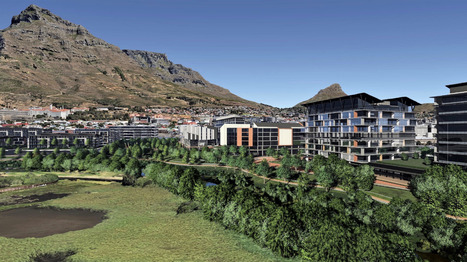
First Nations Heritage Centre Riverlands will commemorate the history and culture of South Africa’s First Nations in a custom-designed, multi-million rand Heritage Centre. The Centre will consist of a multi-purpose building featuring an impressive 8-metre high mural overlooking a garden of traditional Khoi and San medicinal plants, and a grassed Gathering Space for concerts and other cultural events. The Heritage Centre will be owned and managed in perpetuity by the Western Cape First Nations Collective, and will become the focal point of First Nations cultural resurgence in South Africa. The Centre will host an important collection of historical artefacts, an exhibition space for contemporary artists, an educational facility for the transmission of Khoi and San languages and traditional knowledge, a media centre, and a venue for local and international indigenous people’s conferences.
Interrogating the claims of Amazon developer James Tannenberger A view of the land where the new River Club development is located. (David Harrison) On 3 February 2024, I wrote a scholarly opinion piece, backed up by many reliable sources, about the corporatisation of the development process in South Africa. I referred to this as the “mallification” of our cities, but this analysis is relevant to all large-scale developments, not just your traditional shopping mall. I made specific reference to the Amazon-linked development in Observatory, Cape Town, which is a perfect example of how the general public has been hoodwinked by dubious claims of job creation and international investment linked to these developments. Time and again, politicians who back these types of projects have failed to take into account independent research that shows the benefits of these developments are more questionable than developers’ curated press releases make them out to be. For instance, two economists conducted an independent study in France which found that, while online shopping from e-commerce companies such as Amazon created 33 000 jobs between 2009 and 2018, it also led to the destruction of 114 000 jobs during the same period. In other words, the expansion of online commerce giants (e-malls) such as Amazon destroyed about 80 000 jobs in France in only 10 years. Dozens of other studies throughout the world have shown that big-box wholesale stores such Walmart (US) and Makro (South Africa), as well as online shopping giants such as Amazon and Shein, are net job destroyers. They wipe out local jobs and crush local businesses while helping rich corporations extract more and more capital from poor communities and developing countries. This process of “extractivism” is not only a mining problem but also a wider development problem. Numerous studies show that corporate giants such as Amazon increase levels of inequality and poverty while making a handful of people filthy rich. James Tannenberger, a key investor and trustee of Liesbeek Leisure Properties Trust (LLPT), the private developer of the Amazon development, took issue with this, calling my rendering of the above presentation of scholarly research “malicious and defamatory untruths and distortions”. He claims my article is part of a “smear campaign”, even though every single claim I make is backed up by irrefutable evidence for which I provide hyperlinks. Starting off with his own diversions, Tannenberger asserts that his colleague Jody Aufrichtig is not the site’s developer, merely a minority shareholder. On the face of it, this might seem true. The developer is not an individual, but a corporate investment vehicle — Liesbeek Leisure Properties Trust. But this seems to disguise the role of the trustees. Aufrichtig, as a shareholder in the development, is also an LLPT trustee representative, one of its key spokespeople, and deeply involved in every aspect of the project including acting as LLPT’s primary representative in court applications. You don’t have to take my word for it. Check out LLPT’s trust registration documentation or have a look at how LLPT’s “Twitter/X” handle presents Aufrichtig’s role:
Next, Tannenberger undermines my credibility by claiming that, “Transnet disposed of the rights to use and develop the site in the [sic] 1990”, not in 2015, retaining only “bare dominium” of the property. Transnet might have leased out the property in 1990. (The information is not publicly available.) More importantly, however, public documents indicate that in 2000, Transnet agreed to a 75-year lease of the property to the forerunner of Liesbeek Leisure Properties PTY (LLP), which was then led by the politically connected developer Frederick Robertson. The parastatal offered a low R35 000 a month rental based on an under-valuation of the property at R3.5 million. It repeated this process in similar terms in 2008, even giving LLP an option to buy the property for that depressed valuation. A Noseweek investigation found that, in doing so, it ignored a competing tender which offered to pay Transnet R3.08 million per month, based on a valuation of the land at R103 million. The Noseweek investigation warned that the manner in which this lease was constructed could result in Transnet deposing the property for hundreds of millions less than it was worth. This is exactly what took place. In 2015, Transnet sold the property to LLP (which had been taken over in 2014 by Aufrichtig and his business partners Nicholas Ferguson and Adrian van Deventer) for R12 million plus VAT. LLP then turned around and sold the property only three days later to LLPT (a trust formed the day before by Aufrichtig and Ferguson along with Tannenberg and two other trustees from Zenprop). How much was the sale price? R12 million plus VAT. Here are excerpts from the relevant title deeds as proof: [Image 1]
[Image 2]
I will let the reader decide whether Transnet’s disposing of 14.8 hectares of prime land in Cape Town for a paltry 12 million is ethical or just another corrupt land deal, fleecing the taxpayer of valuable public property. Transnet could have chosen not to sell, at least not for such a low price. We should be questioning how such an appalling deal was able to go through against the public interest. Tannenberger makes other flawed claims as well. These are well-worn talking points from LLPT press releases that are often thoughtlessly regurgitated in the media. The development “fixes environmentally degraded land”, “creates jobs” and “recognises indigenous heritage”. However, we should always be wary of trusting the word of developers and their spokespeople who are financially motivated to present a certain narrative. Legitimate independent investigations show that the Amazon development will environmentally degrade the site even further, destroy countless local jobs and sabotage intangible heritage on sacred indigenous land. What is more, Tanneberger’s colleague Aufrichtig has been caught red-handed in what whistleblowers have shown is fraud. The court judgment that he cites so approvingly has been induced through an unlawful hijacking of an indigenous group with the backing of Aufrichtig. Once again, don’t take my word for it. Go read the court application yourself where incontestable proof of fraud is provided. Let us, then, make sure we hold developers accountable for their actions. Let us also make sure we hold our public representatives in government accountable for their cosy relationship with property development tycoons. Ultimately, it is our taxpayer money which is subsidising their profitable endeavours. Jared Sacks is a PhD candidate in the department of Middle Eastern, South Asian and African Studies at Columbia University in the US.
Attacks against River Club redevelopment: Same lies, different day The River Club Development. The article “The River Club: Flawed processes and a dirty fight over development and heritage” by Jens Horber (Mail & Guardian, 29 October 2022) refers. Over the past year, Horber, who only recently qualified as a town planner, has voiced his opposition to the River Club (well beyond the scope of planning matters). Unfortunately, his attacks are almost entirely based on misinformation and bias. Horber places much emphasis on Deputy Judge President Patricia Goliath’s decision to interdict construction at the River Club site. But he then downplays the critical development of the supreme court of appeal (SCA) in Bloemfontein overturning Goliath’s subsequent refusal to allow her decision and orders to be appealed. Instead, the SCA ordered the full bench of the Western Cape high court to consider the Liesbeek Leisure Properties Trust’s (LLPT’s) — and the Western Cape government, City of Cape Town and the Western Cape First Nations Collective — application for dismissal of her entire judgment and orders. The court heard this appeal matter on 11 and 12 October, along with a rescission application launched by the elders and members of the Goringhaicona (through the council of Goringhaicona Khoi Khoin Indigenous Traditional Council/ GKKITC). The GKKITC approached the courts asking for a rescission of the entire Goliath judgment and orders on the basis that these parties did not want GKKITC to continue being drawn into the litigation initiated by Tauriq Jenkins in their name. Critically, they accused Jenkins of misrepresenting facts in the Goliath court hearing and subsequently trying to coerce certain First Nations parties to sign affidavits against their wishes. Jenkins was given an opportunity to respond to these allegations and questions raised by the judges in these court proceedings. The decision and judgment of the court is now awaited in both the appeal and the recession matters. Horber repeats the same misinformation spread by Jenkins and Leslie London, who have stated their sole desire is to attempt to stop the development. But they have failed to demonstrate any right that is threatened by the development (and have not been able to evidence “irreparable” harm, which is a requirement for granting an interdict), because the reality is that the development only elevates the associative heritage value of the area and rehabilitates the degraded environment. The court papers now filed in the review matter (Part B) by the LLPT, evidence that the 18 indigenous Khoi parties Jenkins refers to as being excluded from participation were aware of the public participation processes but chose not to register as interested and affected parties in the respective provincial and city public participation processes. They cannot now complain about so-called exclusion when this is clearly not the case. Horber also keeps referring to an online petition that has been sent around by Jenkins and London as proof that there is widespread public opposition to the development. Yet this petition (which circulated post the environmental and planning development approvals) was also based on misinformation and lies, and under the Municipal By Laws, requiring proper and transparent public participation processes, would have to have been disregarded by the authorities. The real facts are that the majority of Cape Khoi leaders in the Peninsula support the River Club redevelopment and were consulted throughout the development approval process. This process culminated in a redevelopment plan that will include a number of amenities to commemorate and celebrate the intangible heritage of the broader Two Rivers area — of which the River Club property forms 5%. This will include a cultural, heritage and media centre, which will be operated and managed by the First Nations, an indigenous garden, heritage eco-trail and garden and an amphitheatre to function both as sites of memory and living cultural practice and celebration. The truth is that London and Jenkins (and Horber) are unhappy that their comments were onsidered and addressed by the competent authorities in the lengthy application and statutory appeal processes undertaken when the authorities provided detailed reasons for approving the development. The Observatory Civic Association (OCA) and Jenkins then belatedly launched a review process six months after the provincial decision to grant environmental authorisation. It is clear this court application is nothing more than a thinly disguised appeal dressed as a review and has no foundation. Perhaps one of the most offensive insinuations in Horber’s piece is that there was some sort of collusion between the developer and the City of Cape Town when it granted planning authorisation and the suggestion that the specialist consultant reports submitted with the development application lacked independence due to the consultants being paid by the developer. Not one piece of evidence has been offered by Horber to back this claim, despite him questioning the integrity and independence of officials and some of the most renowned professionals in their respective fields in South Africa. Instead, his lack of understanding of the planning approval processes is evidenced with his insinuation that the “city gets” a bridge to alleviate traffic as part of the development contribution/ harges paid by the developer”. But the cost incurred by the LLPT on this and other infrastructure is over and above any normal contributions, and as a planner he should realise the positive effect this link road will have on Maitland and Salt River and the surrounding areas. This is something which the city does recognise, in its statutory function, as an imperative for promoting sustainable developments that are in the interest of the broader public. The River Club development squarely meets these imperatives. Horber also makes several other defamatory accusations that have repeatedly been driven by Jenkins and London without a shred of evidence. This includes the following three mistruths: First, creating the impression that there was something seriously amiss with the sale of the River Club land to the developer. Here are the facts: the R12-million purchase refers to what is on the historical bare dominium title deed and has nothing to do with the lease and development rights and business interests involved. The land and development rights were lawfully purchased, and the continued allegations made by the supporters of OCA and Jenkins, such as Horber, are foundless and defamatory. Second, that the River Club site was not shortlisted by Amazon as a preferred site for its new regional offices. Here are the facts: architect Derick Henstra, who allegedly drew up this shortlist, was part of a competing unsuccessful bid for Amazon’s new office. It is therefore curious why he supposedly had the authority to come up with a list of preferred sites. Henstra also bid to be an architect on the River Club site and did not succeed. We therefore believe his claims, which have been used in the applicant’s supporting affidavits, are baseless, malicious and nothing more than sour grapes. Third, the claim that the South Africa Heritage Resources Agency (SAHRA) is in the process of grading this site as part of the broader Two Rivers Urban Park is not true. While Jenkins submitted an application for provincial heritage status (that Heritage Western Cape has not pursued); and now an application for national heritage status, the SAHRA has not graded the site. Before it could even consider doing so, the agency would be required to undertake an objective assessment of his application and provide the LLPT as the land owner the right to be consulted and consider any reports. So although the OCA and Jenkins, on the back of their own application, claim they speak for the SAHRA, this is false and misleading. Where Horber is correct is that the government has begun a process to investigate the identification of the two rivers’ broader area as part of the Khoisan Legacy Project and the National Liberation Heritage Route. Two members of the Western Cape First Nations Collective (who have consulted the LLPT and support the development) have been appointed by the minister of sport, arts and culture to a committee to drive this initiative forward. Finally, when it comes to his claims about the environmental impact of the development, here are the real facts: the natural resources on the site, including the water courses adjacent to the property, are severely degraded. As part of the redevelopment, some R38-million will be spent on rehabilitating the riverine corridor that will boast an improved habitat for several species including the Western Cape leopard toad, the giant kingfisher and the Cape dwarf chameleon. During the development approval process, a number of detailed reports by independent specialists were submitted including detailed surface water hydrology and biodiversity assessments by a multidisciplinary team that included a freshwater ecologist, avifaunal specialist, faunal specialist (with specific expertise in herpetology), surface water hydrologist, botanist, and hydrogeologist, which found that the redevelopment will be a positive net benefit on the local environment, and not have a detrimental effect as claimed by Horber, London and Jenkins. Horber’s reliance on post fact reports by Professor John Dewar and Dr Michael Mentis (which were provided as supporting affidavits for claims made by the OCA and Jenkins) ignore the rebuttals made by the engineers, planners, professional aquatic ecologist and professional natural scientist and other experts in the affidavits filed in the review matter. The qualified engineers have also demonstrated that neither Mentis nor Dewar have the requisite formal qualifications or professional experience to comment on the hydrology work undertaken by engineers and other engineering aspects. It is unfortunate that despite the LLPT and the other respondents in the court case having repeatedly debunked the accusations made by Horber, he continues trying to drive this misinformation in the media. The LLPT remains committed to delivering the world class development that will celebrate the heritage associated with the broader area and will provide a range of socioeconomic benefits to nearby areas including developer subsidised inclusive housing, publicly accessible green spaces and more than 6 000 direct and 19 000 indirect jobs. James Tannenberger is a trustee of the Liesbeek Leisure Properties Trust, the developer of the River Club redevelopment The views expressed are those of the author and do not necessarily reflect the official policy or position of the Mail & Guardian.
River Club property developers continue construction despite interim interdict River Club. The strategy of the Liesbeek Leisure Properties Trust (LLPT) to forge ahead with construction in the controversial R4.6-billion redevelopment of the River Club site in Observatory, Cape Town, is an “attempt to build themselves into an impregnable position despite the law”. This is the contention of the Observatory Civic Association (OCA) and the Goringhaicona Khoi Khoin Indigenous Traditional Council (GKKITC), which, on 8 July, served the LLPT and five of its trustees with contempt of court papers for defying an interim interdict granted to them prohibiting further construction at the River Club. US multinational technology company Amazon is the anchor tenant in the mixed-use development at the confluence of the Black and Liesbeek rivers. In a landmark judgment in March, Western Cape Deputy Judge President Patricia Goliathgranted the interim interdict halting construction on the site. This, she said, was pending the conclusion of “meaningful engagement and consultation with all affected First Nations peoples as stipulated by Heritage Western Cape”. She ruled that no construction may proceed until a final determination is made regarding the validity of the rezoning and environmental authorisation in a judicial review. Goliath said the fact that the development has substantial economic, infrastructural and public benefits can never override the fundamental rights of First Nations people. “First Nations peoples have a deep sacred linkage to the development site through lineage, oral history, past history and narratives, indiginous knowledge systems, living heritage and collective memory.” ‘Not in contravention of the law’ The LLPT’s view remains that the re-commencement of work is not in contravention of the law. “The legal advice provided to LLPT is that the judgment and orders handed down by … Deputy Judge President Goliath in Part A of the High Court matter are final in effect and operation and hence suspended pending the final determination of LLPT’s application for leave to appeal in the supreme court of appeal,” it said, adding that he environmental rehabilitation work being undertaken on the riverine corridors adjacent to the property falls outside the scope of the order. The contempt of court matter was due to be urgently heard at the high court in the Western Cape on Tuesday, but was postponed until 27 July. Outside court, protests were held by First Nations groups campaigning for and against the project, which reportedly turned into clashes. On Wednesday, the Observatory Civic Organisation and Goringhaicona Khoi Khoin Indigenous Traditional Council said the LLPT had served them with a 133-page answering affidavit in response to the proceedings on Tuesday morning. “The LLPT claimed that they needed more time to file further affidavits and consequently the matter should not be heard in urgent court [on Tuesday],” they said. “However, their papers revealed that they had planned to commence construction ever since they received an opinion from counsel dated 4 May 2022 stating that the interim interdict prohibiting construction would be suspended if they lodged an appeal with the supreme court of appeal. “We disagree. Deputy Judge President Goliath’s interim interdict ordering the LLPT to stop construction until the validity of its authorisations had been determined, is perfectly clear. This interim order does not become ‘final in effect’ (and consequently suspended by an appeal) simply because the judge also made an order that a consultation process with excluded First Nations groups should be undertaken.” To avoid the risk of the matter being struck off the roll and being delayed for months, if the presiding judge did not have time to properly consider the LLPT’s papers on Tuesday, their legal team agreed to the matter being set down for hearing on 27 July. “On that day, the LLPT will be required to show why the court should not grant the orders stopping construction and finding the LLPT in contempt of court,” they said. ‘Hubristic arrogance’ The re-commencement of full-scale development by LLPT is an exhibition of “hubristic arrogance”, Tauriq Jenkins, the high commissioner of the GKKITC, told the Mail & Guardian. “It would appear that they think that they can treat our legal system in the same way they have destroyed parts of the old Liesbeek Channel. “They ought to be firmly reminded that the court is not their private stormwater ditch. As was demonstrated at the steps of the high court, we are witnessing the re-manifestation of unleashed coloniality,” he said. “Wielding an abiding local force to afflict mayhem in order to buffer landowners from their own accountability is nothing new, we have been here before. It was also clear how the appearance of consent is being manufactured.” The LLPT said this week the Observatory Civic Organisation and the Goringhaicona Khoi Khoin Indigenous Traditional Council had last Friday filed a court application requesting the court to halt the restart of work that had recently recommenced at the River Club site, with 380 workers returning and being able to earn an income. “LLPT has had one working day to consider this application. For the reasons that will be set out in its opposing papers, it will be asking the court to dismiss the application,” it said. It denied being in contempt of court, arguing there was no basis for this allegation and adding: “It will now be for the Western Cape high court to decide on the matter.” At this stage, the LLPT said it could confirm that the interdict “is not proceeding and the main matter will be heard on 27 July. The LLPT is still awaiting the court order”.
Right of reply: Kwet is wrong about Amazon’s new Cape Town HQ Head of local government, environmental affairs and development planning Anton Bredell says judgment contains ‘number of errors’ The article “Amazon’s colonial HQ in Cape Town must be stopped(Mail & Guardian, 26 January 2022) features false claims about the River Club redevelopment in Observatory, Cape Town, in an attempt to discredit Amazon, which will be an anchor tenant in the R4.6-billion private development. The author, Michael Kwet, mentions an interdict application to halt the project, which was heard by the Western Cape high court in January, with judgment currently reserved. The interdict application was launched by two parties, namely Professor Leslie London, who is the current chairperson of a resident’s association of a neighbouring community called the Observatory Civic Association (whose members number 55) and a Mr Jenkins, also a member of OCA (and its previous secretary, vice-chairperson and chairperson) and the self-proclaimed supreme high commissioner of the Gorinhaicona Khoi Khoin Indigenous Traditional Council, a voluntary cultural association. The application has been opposed by the Liesbeek Leisure Properties Trust, the City of Cape Town, the Western Cape government and the majority of First Nations leaders and groups in the province, who are known as the Western Cape First Nations Collective. This is not the first time that Kwet has penned an article that repeats the inaccuracies that have been put forward by London and Jenkins about the River Club redevelopment. This includes stating that the River Club site is a critical environmental flood plain and the planned project would destroy indigenous culture. Yet, the exact opposite is true. First, the development has the support of the Western Cape First Nations Collective, including the Gorinhaiqua — the recognised historical custodians of the Two Rivers landscape of which the River Club property forms 5%. This is because the project will celebrate the intangible heritage of the broader Two Rivers area and will include several heritage features including a cultural, heritage and media centre, that will be operated and managed by the First Nations, an indigenous garden, heritage eco-trail and garden amphitheatre to function both as sites of memory and living cultural practice and celebration. It is for this reason that the Western Cape First Nations Collective joined as eighth respondents to the interdict application, as they will suffer immense prejudice should the project be halted. Second, in contrast to Kwet’s claims, before construction started, the River Club property housed a mashie golf course, driving range, restaurant, bar and tarmac parking lot. It is also an infill site and the water courses, including the Liesbeek River, running adjacent to the property are severely degraded and polluted. Some R38-million will be spent on rehabilitating and naturalising the riverine corridor, which will boast a much improved habitat for a number of species including the Western Cape leopard toad, the giant kingfisher and the Cape dwarf chameleon. Both channels of the Liesbeek River that run alongside the site will also play an important role in managing stormwater. More than 60% of the site will also be dedicated to open spaces that will be accessible to the public, including a 65m to 75m ecological park and 6km of running and cycling pathways. Furthermore, while Kwet rages against “digital colonialism”, a total of 5 329 construction jobs will be created by the project as well as 860 jobs when operational. This does not include the many employment opportunities that will be created by tenants in the redevelopment. Currently, there are 400 construction workers on the site, who would lose their jobs if the project was halted. The redevelopment will also include developer subsidised inclusionary housing that will be integrated into the residential component of the development, providing much needed housing opportunities to people who work in the area but can’t afford to live there. There will also be major upgrades to the road surrounding the property. A glance at Kwet’s published articles over the past few years provides some clues as to his regard for growth and advancement, particularly in South Africa. His opposition to any form of progress or development is shared by London and Jenkins, who, through their long-standing campaign against the River Club, have revealed their complete indifference when it comes to the welfare of the people of Cape Town, who will be the biggest losers should this world class project be stopped.
Lindiwe Sisulu and her adviser are accused of meddling in a R4-billion development in a sensitive Cape Town area meant to house Amazon’s Africa office Sisulu and her adviser implicated in R4bn Cape Town development with Amazon as tenant A Cape Town civic organisation says former minister of water and sanitation Lindiwe Sisulu has “usurped” the powers of the water tribunal by uplifting the suspension of a water use licence issued to the developers of the multibillion-rand redevelopment of the River Club in Observatory, Cape Town.
The area along the Liesbeek is recognised as a sacred space, says HWC A battle is raging over the proposed development of the land along the Liesbeek River in Cape Town. Archive photo: Ashraf Hendricks Heritage Western Cape has slammed the study on which the developers based their proposed R4-billion property development at the River Club in Observatory, Cape Town. The Heritage Impact Assessment conducted by Liesbeek Leisure Properties Trust, which owns the land, is inadequate, flawed, unsubstantiated, problematic, and fails to address the requirements of the Heritage Resources Act, according to Heritage Western Cape (HWC) chief executive Mxolisi Dlamuka. In a “final comment” released last week, HWC said unless numerous issues were resolved, it could not endorse the proposed development. Liesbeek Leisure Properties Trust has the backing of the City of Cape Town, the provincial departments of Environmental Affairs and Development Planning, and Transport and Public Works, in an ongoing appeal against a two-year protection order placed over the site. The River Club lies within the proclaimed Two Rivers Urban Park, which includes Valkenberg, the South African Astronomical Observatory, Maitland Garden Village, and recently was extended to include Ndabeni. A baseline study commissioned by the Department of Transport and Public Works was submitted to HWC’s Impact and Heritage Committee in April 2017. The committee found that the park within which the River Club is situated “is of extremely high heritage significance” as it is where “the Cape Indigene were first truly dispossessed of, and excluded from, access to their ancestral land”. “It reflects the pattern of South Africa’s social architectural and political history spanning across the pre-colonial, colonial, apartheid and more recent history.” HWC’s committee recommended provincial, and possibly national heritage status for the park. A finalised baseline study, including comments from other interested parties, has not yet been submitted. But in the meantime, the owners have gone ahead with the development application. In the comment submitted last week, HWC’s Dlamuka says any application for the development of a property within the park area “is in danger of being compromised” unless the baseline study involves “meaningful consultation” with First Nation and “Cape Indigene” groups and incorporates their understanding of the significance of the site into the study. He says the assessment submitted by the developers fails to address the requirements of the Heritage Resources Act. In conclusion, he re-emphasises that the River Club falls within the park which is “recognised as a sacred place” and that “the open, largely undeveloped floodplain is a tangible reminder of intangible heritage”. The developers say the floodplain floods only once in 100 years, despite common knowledge of the Liesbeek River regularly breaching its banks in winter. (A brief search of online news reports reveals extensive flooding in 2004 and 2012.) They propose it will be filled in with 260,000 cubic metres of sand and builder’s rubble if the development goes ahead. Jody Aufrichtig, the director of Liesbeek Leisure Properties Trust, which bought the 14.8 hectare property from Transnet for R12 million in 2015, believes their “highly comprehensive heritage impact assessment more than adequately deals with the requirements” of the Act. Aufrichtig is also a director of the Daddy Long Legs hotel and accommodation grouping of companies, WEX1 development in Woodstock, and co-founder of Indigo Properties which started the Biscuit Mill in Woodstock. He is listed as an active director of 34 companies, investment firms among them. He said the “heritage process” was just “part of a much broader legislative development approval process currently underway, which includes a rezoning application and environmental approval processes”. The development would have 150,000m² of floorspace, with 53% of it commercial office space, 20% residential units, 16% a gym, hotel and “ancillary space”, and retail taking up the remaining 11%. Earlier this month GroundUp reported that a grouping called the First Nations Collective, led by Zenzile Khoisan, ha come out in support of the River Club development, despite initially being united in opposition with other Khoi and First Nation tribes. Announcing the support of the First Nations Collective at a press briefing staged on 27 January, Khoisan said the development would now have a cultural, heritage, and media centre; an indigenous garden of medicinal plants; a heritage eco trail; an amphitheatre for performances; and First Nations symbols on the gateway and in the building designs. This support for the development has been condemned by numerous Khoi traditional houses, including at least one – the Cochoqua – which Khoisan stated was part of the newly established First Nations Collective. Several civic bodies, including the Two Rivers Urban Park Association, Observatory Civic Association, and the Mowbray Rosebank Civic Architecture and Planning Committee, continue to oppose the development. Produced for GroundUp by West Cape News
𝐑𝐢𝐯𝐞𝐫 𝐂𝐥𝐮𝐛 𝐫𝐞𝐝𝐞𝐯𝐞𝐥𝐨𝐩𝐦𝐞𝐧𝐭: 𝐖𝐞𝐬𝐭𝐞𝐫𝐧 𝐂𝐚𝐩𝐞 𝐇𝐢𝐠𝐡 𝐂𝐨𝐮𝐫𝐭 𝐝𝐢𝐬𝐦𝐢𝐬𝐬𝐞𝐬 𝐆𝐨𝐥𝐢𝐚𝐭𝐡’𝐬 𝐣𝐮𝐝𝐠𝐦𝐞𝐧𝐭 𝐚𝐧𝐝 𝐎𝐫𝐝𝐞𝐫𝐬 𝐰𝐢𝐭𝐡 𝐜𝐨𝐬𝐭𝐬 – 𝐦𝐚𝐬𝐬?...
𝐋𝐢𝐞𝐬𝐛𝐞𝐞𝐤 𝐋𝐞𝐢𝐬𝐮𝐫𝐞 𝐏𝐫𝐨𝐩𝐞𝐫𝐭𝐢𝐞𝐬 𝐓𝐫𝐮𝐬𝐭 𝐑𝐢𝐯𝐞𝐫 𝐂𝐥𝐮𝐛 𝐫𝐞𝐝𝐞𝐯𝐞𝐥𝐨𝐩𝐦𝐞𝐧𝐭: 𝐖𝐞𝐬𝐭𝐞𝐫𝐧 𝐂𝐚𝐩𝐞 𝐇𝐢𝐠𝐡 𝐂𝐨𝐮𝐫𝐭 𝐝𝐢𝐬𝐦𝐢𝐬𝐬𝐞𝐬 𝐆𝐨𝐥𝐢𝐚𝐭𝐡’𝐬 𝐣𝐮𝐝𝐠𝐦𝐞𝐧𝐭 𝐚𝐧𝐝 𝐎𝐫𝐝𝐞𝐫𝐬 𝐰𝐢𝐭𝐡 𝐜𝐨𝐬𝐭𝐬 – 𝐦𝐚𝐬𝐬𝐢𝐯𝐞 𝐰𝐢𝐧 𝐟𝐨𝐫 𝐣𝐨𝐛𝐬 𝐚𝐧𝐝 𝐡𝐞𝐫𝐢𝐭𝐚𝐠𝐞 Liesbeek Leisure Properties Trust (LLPT) welcomes the judgment delivered today by a full bench of the Western Cape High Court which dismissed Deputy Judge President Goliath’s judgment and Orders (handed down on 18th March 2022) to interdict construction of the River Club redevelopment with costs. This is a major win for all Capetonians who stand to benefit from the R4.6 billion project. The judgment by Judge Baartman (and concurred by Judge Slingers and Judge Lekhuleni) found that the applicants (the OCA and Tauriq Jenkins) failed to establish a prima facie right, as they could not demonstrate that the right to heritage is at risk of suffering any harm, let alone irreparable harm, which is a jurisdictional requirement for an interim interdict. On the contrary, the court papers indicated that the development might enhance the land’s resources having regard to the degraded state of the site when the authorizations were granted. The Court held that “without a prima facie right, the respondents (OCA and Jenkins) never got out of the starting blocks”. Critically, when applying the balance of convenience requirement for an interim interdict, Judge Baartman in her judgment states the following: “had the court a quo undertaken the enquiry, it would have found the many opportunities for growth the development offers the First Nations Groups; the promotion of the sites heritage value and the opportunities for the unemployed in the Province to name a few examples, far outweighs the unarticulated harms in the respondents’ case.” Notably, the judgment also granted the recission application, launched by the elders and members of the GKKTIC, against the entire Goliath DJP judgement and Orders. In their recission papers the GKKTIC elders accused Tauriq Jenkins of misrepresenting facts in the Goliath court hearing and subsequently trying to coerce certain First Nation parties into signing affidavits against their wishes. In her ruling, Judge Baartman stated the following: “am persuaded that the judgment dated 18 March 2022 was induced by fraud. Mr Jenkins misrepresented the first applicants (GKKTIC) Constitution and did not have the authorization to launch the proceedings that culminated in the judgment. He further misrepresented the views of some indigenous leaders without consulting them.” The Full Bench judgment also rescinds Goliath DJP’s judgment and orders on these grounds. The judgment has also awarded costs to the appellants against the first respondent, the Observatory Civic Association (OCA). The OCA has been ordered to pay the costs of all the appellants in the court a quo (where the appeal originated from) as well as the SCA case. The River Club redevelopment will create numerous benefits for the City and the Province. This includes 6000 direct and 19 000 indirect jobs and the Cape Peninsula Khoi memorialising their cultural heritage associated with the area, including the establishment of a Heritage, Cultural and Media Centre. The project will also deliver developer subsidised affordable housing, safe and accessible green parks and gardens, significant road and other infrastructure upgrades in the area and the major rehabilitation of the polluted and degraded waterways adjacent to the property. This judgment sends a clear message to those who have tried to stop the development at all costs with little or no regard to the social upliftment of surrounding communities, it is therefore with relief that LLPT welcomes today’s judgment, which is clearly in the interests of all Capetonians.
Developers and government manoeuvre to realise ten-storey buildings at River Club, while Khoi organisations fight for land they say is sacred Part of the proposed development of the River Club site involves building a bridge from Berkley Road in Ndabeni, which ends under the M5 on the east bank of the Black River, over the river to join Liesbeek Parkway. The confluence of the Liesbeek and Black Rivers is a sacred site for some South Africans. Photo: Ashraf Hendricks It was apparent during a provincial heritage appeal tribunal hearing, dealing with a proposed massive development at the River Club in Observatory, that the City of Cape Town and the Western Cape government are being led in the matter by a private developer. Liesbeek Leisure Property Trust is appellant number one in the appeal against an existing two-year heritage protection order, invoked to provide Heritage Western Cape the opportunity to investigate formal protection of the land. Appellants two to four are the provincial Department of Environmental Affairs and Development Planning, provincial Department of Transport and Public Works, and the City of Cape Town. However, their reasons for appealing the provisional protection order remained unheard at the tribunal hearing on 21 November, as the day was spent hearing their arguments for a postponement of the hearing of their own appeal. Civic organisations and traditional bodies are opposing the proposed construction of ten-storey buildings and 11.7ha of building in the middle of what all parties agree is a sacred site for First Nation peoples. The reasons for seeking a postponement, according to Liesbeek Leisure Property Trust legal representative Nicholas Smith and the Department of Transport and Public Works acting Two Rivers Urban Park programme manager, Gerhard Gerber, are that Heritage Western Cape had not met the tribunal’s January directive to meaningfully engage with the appellants and interested and affected parties in an effort to reach common ground. Smith and Gerber both stated during the postponement hearings, that common ground did not exist, or was, according to Smith “unlikely to be found”. The appellants are in favour of development. The interested parties, with one unexpected exception, oppose development on the site. A nine-hole Mashie golf course currently exists on the River Club land, as well as a conference centre, pub and other amenities, which were operated on a long term lease dating back to at least 2008, between original property owners Transnet and what was Liesbeek Leisure (Pty) Ltd. Liesbeek Leisure was reconstituted as Liesbeek Leisure Properties Trust and it purchased the 14.8ha of land from Transnet for R12 million excluding VAT in 2015. The land was purchased in full knowledge that the site is on a flood plain and zoned as Open Space with conservation status. Interested and affected parties protest against development at the River Club prior to the Heritage Appeals Tribunal hearing of 21 November held at the offices of Heritage Western Cape. Photo: Steve Kretzmann First Nations divided After tribunal chair Ashraf Mohammed gave two-and-a-half hours to the appellants’ arguments for postponement of their own appeal, the interested parties were given the opportunity to voice their opposition. The interested and affected parties were: Two Rivers Urban Park Association, Observatory Civic Association, Kai Bi’a Hennie van Wyk, representing various First Nation houses, Goringhaicona Khoi Khoin Indigenous Traditional Council, and the Gorinhaiqua and Griqua traditional councils. Kai Bi’a of the Gorachouqua, through his spokesperson Zenzile Khoisan, supported the motion to postpone the hearing of the appeal against the provisional two-year protection order. Khoisan said they believed it “necessary for us not to place ourselves unnecessarily under the tyranny of the clock”. There had not been sufficient meaningful interaction with the First Nations, said Khoisan. “We want to, in a consolidated way, apply our minds to the proposal,” he said. This was a surprise to Tauriq Jenkins, Supreme High Commissioner for the Goringhaicona Khoi Khoin Traditional Indigenous Council under Paramount Chief Aran. There “seems to be a difference of opinion as far as the notion of public consultation is concerned” said Jenkins after the weekend. Advocate Winston Erasmus, representing the Gorinhaiqua and Griqua traditional councils, also appeared to be taken aback by Khoisan’s support for the postponement, and argued the lack of historic meaningful engagement with the First Nations was why Heritage Western Cape should be allowed the opportunity to thoroughly investigate whether the site should be granted formal protection. Jenkins, via email, stated: “It seems both strange and inexplicable to see the extraordinary attempts to delay the impending voice that will simply say: “This is our beautiful and sacred heritage, please go ahead and protect it.” “They seem perhaps to fear the deepening understanding of ourselves as a nation, and want to withhold being witness to a single moment of truth when we will utter from the depths of our humanity that this is a place of Ground Zero, of where it all happened. A space where we as Africans can recognise our collective restoration from a brutal past. A place that holds the Khoi soul.” A First Nations Report commissioned by the province, although having the shortcoming of not attributing quotes to specific First Nation interviewees, unequivocally reveals the historic and continued significance of the confluence of the Liesbeek and Black Rivers. It was the epicentre of the first resistance against colonialism, where the Gorinhaiqua fought and killed Portuguese Viceroy Francisco D’ Almeida in 1510, only to later see it become the first land usurped by colonial powers and become a frontier of displacement which was four centuries later codified into law through apartheid. It is also a sacred site of remembrance and heralding the ancestors. Now the Liesbeek Leisure Property Trust seeks to fill in the floodplain, build a bridge extending Berkley Road in Ndabeni across the Black River to Liesbeek Parkway, and construct 20 buildings, five of them ten-storeys (47 metres high), as well as provide parking, walkways and landscaping. Most of the 150,000m² of floorspace proposed in the Basic Assessment Report, compiled by SRK Consulting, will be given to commercial office space (53%), followed by residential (20%), ancillary amenities such as a gym and hotel (16%), and retail (10.6%). An impression of the proposed River Club development contained in the Basic Assessment Report, a public document produced by SRK Consulting Shifting the goalposts The Two Rivers Urban Park was established following a series of workshops with the various landowners between 2003 and 2009. It was then declared a “green space” in terms of the 2030 Spatial Development Framework for the City. The spatial plan identifies the River Club site within the Two Rivers Urban Park as a “Conservation Area” where residential and commercial development, among other land uses, were declared undesirable, according to Two Rivers Urban Park Association chair Marc Turok. Turok said building on the River Club could be likened to wanting to build on Table Mountain, or Signal Hill, with the additional element of historical heritage going back prior to settlement by the Dutch. In the same year the land was transferred to the Liesbeek Leisure Property Trust, the City appointed Nisa Mammon and Associates as consultants in what appears to have been an attempt to backtrack and enable development on the site. According to the draft Two Rivers Local Spatial Development Framework produced on behalf of the City of Cape Town and provincial Department of Transport and Public Works, released in October, Nisa Mammon and Associates were “to update the previous work done to align with the new City of Cape Town Planning Bylaw, 2015” and to develop “the plan from a Contextual Framework to a Development Framework in terms of the package of plans approach”. But Mammon and Associates did not provide the desired results, says Turok. “She [Nisa Mammon] was squeezed [by the City and Province] to the point where she said she’s not going to carry on,” said Turok. “The impression was that she did a good job and had to walk away,” he said, as the results were “too restrictive to the developer”. The new draft Two Rivers Local Spatial Development Framework states Mammon’s plan “was incomplete and was not advertised for public comment”. Crispian Olver, in his book A House Divided, which examines the City of Cape Town administration based on research for his PhD, wrote: “The planners working on the spatial strategy for the Two Rivers Urban Park … came under significant pressure – from both the City and provincial authorities – to amend their technical reports, which advised against the project as it was conceived, on the grounds that it was located on a floodplain, which also happened to be of great historical significance. When they refused, their contracts were not renewed and the plan was put on hold.” Mammon was not available for comment. Questions sent via email received an out-of-office reply, stating she would be unavailable until 3 December. Following Mammon’s departure, the Two Rivers Urban Park was extended to include Ndabeni on the east of the Black River, said Turok. A new team of consultants led by ARG Design was hired by the City under Mayor Patricia De Lille in 2018. The new draft framework provides a positive assessment for the development. Khoi Khoin representative Tauriq Jenkins surveys the site where a massive commercial, residential, and retail development, comprising buildings up to ten-storeys high, is proposed on the River Club site in Observatory. The site is ground zero for the first displacement of indigenous people. Photo: Ashraf Hendricks Turok believes the appeal, and the further move to postpone the appeal against the provisional protection order despite it ending in five months, is a cynical ploy to tie up Heritage Western Cape in paperwork and hamper their ability to investigate formal protection of the site. Section 29 of the National Heritage Resources Act, which deals with provisional protection, states: “[n]o person may… subdivide or change the planning status of a provisionally protected place”. The Two Rivers Local Spatial Development Framework has been compiled during the period of the provisional protection which was gazetted in April 2018. The new Two Rivers Local Spatial Development Framework seeks to change the area’s planning status, and two open days – 23 October and 20 November – have been held for public comment. The Act would only be violated if the Two Rivers Local Spatial Development Framework is signed off before the end of the provisional protection, said Turok, but the fact that the authorities have appointed SRK Consulting to develop the new Two Rivers Local Spatial Development Framework before the grading is determined, reveals their intentions. Heritage Western Cape CEO Mxolisi Dlamuka said the appeal did result “in additional tasks” for the organisation, but had not impacted its capacity to investigate the site. Dlamuka said Heritage Western Cape was “not adequately capacitated” but was able to function fully and implement its mandates. Liesbeek Leisure Property Trust spokesperson Trace Venter denied the trust was cynically tying up Heritage Western Cape’s work, claiming it was Heritage Western Cape who persisted in a “dual process” of invoking the provisional protection even though “comprehensive heritage impact assessments were being undertaken” by independent heritage experts as required for any development of the size proposed. “The Liesbeek Leisure Property Trust,” said Venter, “represented in particular by Mr Jody Aufrichtig, had a number of meetings with First Nations representatives over the past three years, over and above the required public participation processes prescribed by legislation.” She said the trust wished to memorialise the historical significance of the area. The tribunal agreed to the postponement, with further engagement required by Heritage Western Cape. The appeal hearing was scheduled for 6 and 7 February next year, just two months before the provisional protection order ends.
22-03-2024
Read : 265 times
SABC News
Source The Khoi and San community in the Western Cape will have a brand-new heritage centre.
This as the construction of The First Nation’s Heritage and Media Centre for the Khoi and the San people has finally started in Observatory, Cape Town.
The project which forms part of a development in Liesbeeck Park, will host a collection of historical Khoi and San artefacts.
Spokesperson for the Liesbeek Leisure Properties Trust, James Tannenberger says this is part of realising the social compact between first nations groups and the Property Trust.
“It will be operated and managed into perpetuity by the Western Cape First Nations Collective, it will host a collection of artifacts, be an exhibition space for contemporary artists and an educational facility for the transmission of Khoi and San languages and traditional knowledge.”
|
Autshumao of the Goringhaikona (abt. 1600 - 1663) Born about 1600 in de Caep de Goede Hoop, Dutch Cape ColonySon of [father unknown] and [mother unknown] [sibling(s) unknown] [spouse(s) unknown] [children unknown] Died 1663 at about age 63 [location unknown] Profile last modified 21 Apr 2018 | Created 16 Jul 2015 This page has been accessed 1,513 times. Biography -
- Uncle of Krotoa (Goringhaikona) Meerhoff. [1][2]
-
- Autshumao (or Autshumato)[3] was a Khoikhoi chief who lived in the Cape in the 1600s. He became an interpreter between the Khoikhoi and the Dutch. After a deal went bad Autshumao was banished to Robben Island where he became the first person to be imprisoned on Robben Island, and the first to escape one year later.
-
- His niece, Krotoa, also has an interesting but sad story as she was taken into the Van Riebeeck household where she picked up a Western lifestyle before marrying a Danish surgeon called Peter Van Meerhof. From their marriage come a long line of descendants including Paul Kruger, Jan Smuts, and FW De Klerk. [4] Click here for the link to the Youttube film Know Your Country - The First Prisoner on Robben Island [5]
Events -
- 29 September 1652: "Our assistants, with 9 others, & the Ottentoo [Khoe] who speaks a little English [Autshumao, chief of the Goringhaicona aka Herry], ascended Table Mountain, & lit a fire to show that they had succeeded, it was very toilsome to ascend & descend, flat on the top with very few herbs – as broad & about 3 times as long as the Dam at Amsterdam, with some small pools of fresh water." [Journal] [Mansell Upham] [6]
Table Mountain [...] it was very toilsome to ascend & descend ... -
- 1 October 1652: "Fine weather, but variable - where the yacht lies the wind is NW; a gunshot further there is a strong South-Easter - on land it is quiet - cannot therefore judge of the wind outside from what it is on shore. Snow peas those sown a fortnight ago springing up, & the 1st sown getting ripe - drumhead salad beautiful. Resolve to examine the bay behind the Table Mountain, discovered by the assistants where fine forests abound -- suppose that the Portuguese Mozambique traders must have a harbour somewhere behind the mountain for refreshments - expedition consists of assistants Pn van der Helm & Frederick Verburgh, some armed men & the 'Hottentoo' [Khoe] Herry [Autshumao] as guide. [Journal] [Mansell Upham] [7]
-
- 2 October 1652: Expedition returns & reports on the Bay - almost landlocked, well sheltered & lying to the south of Table Mountain - had been visited, as Herry [Autshumao, chief of the Goringhaicona] says, by a large English vessel, which had brought him thence to Table Bay & from which he received 2 bags of rice. Found fine wood there about 5,000 yards from the beach, & a river of fresh water on which the wood may perhaps be floated down to the sea. [8]
-
- 3 October 1653: Whilst busy dispatching the yacht to Saldanha Bay, Herry [Autshumao. chief of the Goringhaicona] comes to inform us that 2 'Saldanhars' [Goringhaiqua?] had arrived with the news that a large ship had arrived in that bay, bartering sheep & killing seals on the islets for food. Half inclined to think that it may be the "West Vrieslandt". Sent the galiot with the junior merchant Jacob Reyniersz: [from Amsterdam who marries Van Riebeeck's niece Elisabet van Opdorp (from Charloos, Rotterdam)] with 6 strong soldiers, besides the crew, to discover what ship it might be, & further decided in Council what was to be done in the best interests of the Company, The galiot was ordered that if it was the "West Vrieslandt", to try & get it here in order to restore good order on board, by unshipping some of the ringleaders & manning the vessel with more obedient men, that the ship may be dispatched & safely arrive at Batavia. Last night a person [Arien Class - sailor] having been locked out & climbed over the wall in sight of the sentry [Hendrick Symons: - soldier], it was found that both were very stupid, having never before been in service & not knowing what such things meant; consequently decided to give each a few lashes [100 each!] & publish a warning. [Journal] [Mansell Upham] [9]
-
- 25 October 1653: "After the closing of the gate [of the Fort], 3 of our men returned with 1 cow, reporting that already yesterday they had observed the cattle & the location of Herry [Autshumao, chief of the Goringhaicona], consisting of 4 huts, near the point of Cape Falso, but as they had look-outs everywhere, they had left before our people had arrived, leaving their huts & some useless household utensils behind ... Had followed them the whole day, & were still pursuing them, determined to come up with them. The cow having been left behind because she was tired, the corporal had sent her home with the request that they might have more provisions. [Journal] [Mansell Upham] [10]
-
- 26 October 1653: "(Sunday). Sent the food, & orders that as the Saldanhars [Goringhaiqua] were afraid of joining us in the pursuit of Herry [Autshumao, chieftain of the Goringhaicona], not to follow the [stolen] cattle further, & not having been successful, to return to the Fort & give up the pursuit, as it would be impossible to provide them continually with food. Arrival of another cow from behind Lion Mountain of its own accord." [Journal] [Mansell Upham] [11]
-
- 4 September 1655: "... their wives must be with them every where so as to be kept from other men ..." [12]
-
- 5 September 1655: Herry [Autshumao - Khoe chief of the Goringhaicona Clan] [2]came again, as he had frequently done, as before mentioned, to ask for some brass & a few soldiers, that he might go into the interior to but some cattle for the Company, saying that the proper time was approaching, & that he would like to set out to-morrow or the day after; assuring us that if we would consent he would bring plenty of cattle, requesting some soldiers as guard for the brass & tobacco, (which would be conveyed upon his oxen) but chiefly that we might become more intimately acquainted with the other inhabitants, who would thus be enticed to come hither with all their houses & cattle, to this, he maintained, they would be the more readily inclined by seeing our people, & that probably some of their chiefs, whom he stated to be all great captains or cadets, wold accompany our men upon their return. [12]
-
- We signified that we would willingly trust the brass to him without soldiers, this was to try whether it was his object to steal the brass; & still further to try him, we pretended that we would not allow any soldiers to go with him on a any account, but would entrust him with as much brass as he choose, & we pretended to urge him much to do this; he persisted, however, in his request for soldiers, saying that they would receive no no injury or hindrance from any one, & that he would go with with them, with only his own family, to act as interpreter, & to assist them in the traffic, also to entice the people hither by telling them that it was the Dutch who were building houses at the Cape, houses which would not, as had been formerly the case, be ever pulled down, but would be permanent, & be always provided with brass, tobacco, beads, & other articles, for friendly barter with them, & so forth; he was also willing to leave all his people here, to fetch firewood in return for food, tobacco, & arrack, as also a man called Claas Das, to act in his absence as interpreter. [12]
-
- On asking him where he would keep his cattle, he said he would leave 3 in or care, & take the others with him, the oxen to carry the baggage, & the cows for the sustenance of his family, who must live on milk during the journey. [12]
-
- On proposing that he should leave his wives & children here under out protection, he gave an amusing answer, that their wives must be with them every where so as to be kept from other men, & that it was not their custom to be so long absent from their wives, &c. [12]
-
- On this intention becoming known in the garrison, every one came forthwith, equally eager to offer their service, out of curiosity, so that we are not likely to be at a loss for volunteers. [Journal]
-
- [Mansell Upham] [12]
-
- 7 September 1655: Autshumao - aka Harry 'the Strandloper' [2] - undertakes to introduce the Dutch to the Chainouqua at the Hottentots-Holland [present-day Somerset West] & beyond ... [13]
-
- "The party set out in the afternoon with 250 lbs, bread, 80 lbs. pork, 3 cheeses, a keg of arrack, & another of brandy, Herry leaving at the Fort his 3 cattle, the said Claes Das [Kaikana Makoukoa] as interpreter, & some other Hottentoos [Khoekhoe] to fetch firewood, for food, &c. … According to all appearances Herry [Autshumao - chief of the Goringhaicona clan] seems to be sincerely inclined to serve the Company, which time must prove, we trust that the Most High will bless the undertaking …" [Journal] [13]
-
- The party included the junior merchant (ondercoopman) Jacob Reijniersz: (from Amsterdam) - husband to Commander Jan van Riebeeck`s niece Elisabeth van Opdorp (from Charloos, Rotterdam), Corporal Wilhelm Muller (from Frankfurt) & 7 volunteers ... [13]
-
- [Mansell Upham] [13]
-
- 22 July 1656: Dutch soldier, deserter & fugitive - Ertman Cleughe - brought in by 2 unnamed 'Caepmans' [2] [Goringhaiqua under Gogosoa aka Vette Capteijn / Dicke Capteijn], caught sleeping 1st night in Herry`s camp [Goringhaicona under Autshumao aka Herry], whither, with the assistance of 3 of Herry`s Hottentoos, he had brought stolen vegetables - after these were consumed, he was driven out by Herry to fetch more, which he dared not attempt hiding out in the sheds built by the hunters at the haunts of wild birds until laid hold of by the 2 Hottentoos who were rewarded with food & arrack, thanked, & desired to ward the Hottentoos that they must not again enter the gardens with any of our men, as the sentries were ordered to shoot anyone, of our men or of their, who might be found in the gardens, so that this fate might not fall on any of them ... [Mansell Upham] [14]
-
- 18 October 1659: "The free men’s vessel ["Penguyn"] returned from Saldanha Bay with some fish & some eggs; the free men [Thomas Christoffel Muller (from Leipzig), Cornelis Cornelisz: van Rotterdam, Bartholomeus Borns:, van Waerden & Henrick Barentsz: [van der Zee] van Leeuwarden] said that they had seen there some of Oedasoa’s People [Cochoqua], & of the Tobacco Thieves [Gorachouqua], & had bartered from them about 20 sheep; that they had also offered cattle, which our men were obliged to refuse, having no means of conveying them, & from want of merchandise, otherwise had there been any means of transport, they think they could have procured a good number, & also as the natives were kindly treated by them". [Journal] [Mansell Upham] [15]
Sources - ↑ Source: Robertson, Delia. The First Fifty Years Project. Page: http://www.e-family.co.za/ffy/ Page: Autshumao of the Goringhaikona Seen and added by Philip van der Walt Jul 16, 2017.
- ↑ 2.0 2.1 2.2 2.3 "Meerhoff`s ethnic clan name as found Romanized by the Dutch in the extant VOC records & thought to mean 'children of the Goringhaiqua' as its chief Autshumao aka Herry & his followers (initially 'Bushmanized', cattle-less & hunter-gatherer revertees) fell under the suzerainty of the Goringhaiqua [dubbed the Caepmans by the Dutch but also initially mistakenly called the Saldanhars which latter name later came to refer more consistently to their northern neighbours the Cochoqua] ... 'Qua' & 'Na' = 'people' in the Khoe / Khoi / Que language(s) / dialects ... Krotoa's clan was also more casually referred to as the Watermans or Vismans or Strandlopers (sometimes found translated into English by academics / historians / scholars as 'Watermen', 'Fishermen' or 'Beachcombers', respectively) ... Krotoa is 1st found recorded living among the Goringhaicona as 'niece' to Austhumao, but her biological mother [Autshumao`s sister?] appears later living among the Goringhaiqua while her grandfather Heestkema - possibly paternal [?] - living among the Chainouqua - makes an even later curious & unexpected visit to the Fort ..." [Mansell Upham] Source: First Fifty Years - Project collating Cape of Good Hope records Facebook Community Page: Oct 1, at 12:24 am Seen and added by Philip van der Walt Oct 1, 2015.
- ↑ From: Daniel Jacobs <danielmalanjacobs@gmail.com> Subject: [BP] VANDAG IN DIE GESKIEDENIS: OOR HERRY DIE STRANDLOPER EN NOG WAT Date: Wed, 8 Jul 2009 18:53:04 +0200
-
- Beste Vriende
-
- Op 8 Julie 1658 is Herry die Starndloper na Robbeneiland verban vir sy aandeel in die moord op die Kompanjie se veewagter David Jansz asook die steel van beeste en ruilmiddele.
-
- Ek was altyd onder die indruk dat Herry die leier was van die Strandlopers - of dan Goringhaikona. Dit was mos die Hottentot of Khoikhoi stam wat Jan van Riebeeck in die Tafelvallei aangetref het met sy aankoms in Suid-Afrika. In die SA Biografiese Woordeboek, Deel 2 sê Dr. Con de Wet (vroeër hoof van die Staatsargiefbewaarplek, Kaapstad) egter dat daar op 5 April 1660 'n vredesverdrag gesluit is tussen die Kompanjie en "die bejaarde Gogosoa wat eintlik die hoof van Herry se stam was." Vroeër in die artikel verwys Dr. de Wet na Herry as die "kaptein" van die Strandlopers. Later iets meer oor Gogosoa.
-
- Herry is omstreeks 1600 gebore en sterf aan die Kaap in 1663. Op die aand van 7 April 1652 "neem Van Riebeeck se mense hom aan boord van die Drommedaris, waar hy saam met die Kommandeur eet en in gebroke Engels met behulp van gebare met hom gesels."
-
- Omstreeks 1631-32 het hy 'n besoek aan Java gebring saam met die Engelse skipper John Hall. Hy leer om 'n "gebroke Engels" te praat en mettertyd het Engelse skippers wat soms na hom as "King Harry" verwys het, briewe vir bewaring by hom gelaat. Sy Khoikhoi naam was Autshumao en dan noem Dr. de Wet ook aan dat hy ook as Hadah bekendgestaan het.
-
- Naas die moord op David Jansz en die wegvoer van die Kompanjie se beeste waarna hierbo verwys word, het ek ook verwys na die steel van ruilmiddele wat uiteindelik gelei het tot sy verbanning na Robbeneiland. Dit het in 1655 gebeur toe hy saam met Wilhelm Muller op 'n veeruilinspeksie die binneland in is. Muller het sonder Herry teruggekeer na die Kaap en genoem dat Herry met die ruilmiddele verder gereis het. Met Herry se terugkeer het hy net 13 geruilde beeste by hom gehad en beweer dat ander Hottentotte die ruilmiddele gesteel het. Later sou dit blyk dat hy dit self gesteel het.
-
- Van Riebeeck het beveel dat Herry weens sy hoë ouderdom slegs skape op Robbeneiland moes oppas en nie swaar arbeid moet verrig nie. In Desember 1659 slaag hy en 'n ander Hottentot om met 'n lekkende skuit van die eiland te ontsnap. Soos reeds genoem het daar op 5 April versoening tussen Herry en die Kompanjie plaasgevind.
-
- Om terug te keer na Gogosoa. In deel 3 van die SA Biografiese Woordeboek noem R. Elphick op ble. 340-341 dat Gogosoa die kaptein van drie stamme was, waarvan Die Strandlopers een was. Hy het die bynaam "Die Vet Kaptein" van die Hollanders ontvang. Elphick noem dat hy uitermate swaarlywing was en dat dit iets was wat deur die Hottentotte bewonder is as " 'n teken van rykdom en mag." Met Van Riebeeck se koms was hy al baie oud en kon skaars loop. Daar word ook genoem dat die weinige invloed wat hy nog gehad het net tot sy eie stam die Goringhaikwa beperk was. Hy was dus skynbaar 'n lid van die betrokke stam, maar het ook gesag gevoer oor die Strandlopers en 'n derde stam wat bekend was as die Gorachoukwa.
-
- Nog iets interessants omtrent Herry is dat hy die Oom was van die Hottentot-meisie Eva wat in Van Riebeeck se huis gebly het en later met die chirurgyn Van Meerhoff getrou het. Dalene Matthee se boek Pieternella van die Kaap was een van die egpaar se kinders. Pieternella het met Daniel Zaayman getrou en baie Afrikaners stam van die twee persone af waaronder Genl. Smuts. Ekself stam ook van hulle af. My verbintenis met hulle is as volg:
- Daniel Zaaiman van Vlissingen. Hy het 'n kontrak gehad met die Kommandeur van Mauritius om daar patats te plant en gaan later na die Kaap. Aankoms 26.1.1709 en sterf 1714. Hy was getroud met Petronella Meerhof (Pieternella van die Kaap).
- Pieter Zaayman gebore op Mauritius en getroud op 10.1.1712 met Anna Koopman waarskynlik die dogter van Bartholomeus Koopman.
- Bartholomeus Zaayman gedoop omstreeks 1717, burger Stellenbosch, getroud op 20.10.1741 met Anna van Biljon.
- Rachel Francina Zaayman, gedoop 29.1.1758, getroud 3.7.1774 met Frans Siebrits van Oostkeller. Haar tweede huwelik was met Jacobus Hugo en haar derde huwelik met Willem Brevis.
- Bernhardus Lambertus Siebrits gedoop op 28.12.1798 en getroud op 6.11.1813in die Paarl met Helena Debora du Toit. Hy sterf op 3.11.1856. Helena is gedoop op 20.7.1794.
- Francois Krige Siebrits gedoop op 4.8.1816 in die Paarl en trou in die Paarlop 26.11.1844 met Hester Petronella Meyer wat op 20.9.1820 in die Paarl gedoop is. (Van hulle het ek 'n foto)
- Stephanus Gabriel Siebrits gebore op 19.4.1860 en oorlede in Franschhoek op 2.6.1944 en is getroud te Franschhoek op 12.12.1893 met Margaretha Judith du Toit wat op 14.10.1873 gebore is en op 16.9.1958 in Franschhoek sterf.
- Hester Petronella Siebrits gebore op 20.8.1905 en sterf op 29.3.1977 en was getroud met Daniel Johannes Malan Jacobs wat gebore is op 17.11.1897 en sterf op 7.11.1945
- Die gemeenskaplike voorouer wat ek met Herry deel is dus sy pa, wat ook die pa was van Eva se ma of dan Herry se suster.
-
- Een van my direkte voorouers wat ook na Robbeneiland verban is, is een van die Bekker stamvaders nl. Pieter Bekker. Ek stam af van sy dogter wat met 'n De Wet getroud was. Na die Bekker/De Wet kom 'n De Wet/du Toit, nog 'n De Wet/du Toit, dan 'n De Wet/De Vos, 'n De Vos/Brink en 'n Brink/Louw. Laasgenoemde was my Oumagrootjie Lizzie Louw wat getroud was met my oupagrootjie Daniel Johannes Malan Jacobs (geb. 1869).
Groete - Daniel Jacobs www.gendata.co.za
- ↑ American historian Richard Elphick’s cautious multi-causal, open-ended - but constraining `much ado about nothing` - concluding assessment of South Africa`s initial colonial & cultural close-encounters-of-a-1st-kind in his "Khoikhoi and the founding of White South Africa" (1977), is worthy of revisionist scrutiny: "Thus, the leading features of Khoikhoi decline were the complex interconnections of its many causes, & the predominance of broad processes over discrete episodes of diplomacy & conquest. For these reasons Khoikhoi decline was a mystery both to the Europeans who initiated it & to 19th-century investigators who vainly sought to explain it by a single cause, be it genocide or plague. For these reasons, too, the story has hardly ever been told in recent times; it has few villains, fewer heroes, & little of the drama that attracts novelists & historians to later phases of settler-native conflict in southern Africa. Yet the process of Khoikhoi decline should be understood, & not only because brown & white South Africans still live with its consequences today. For it is a fact worth pondering that the European subjugation of southern Africa began, not because statesmen or merchants willed it, nor because abstract forces of history made it necessary; but because thousands of ordinary men [sic], white & brown, quietly pursued their goals, unaware of their fateful consequences." [Mansell Upham] Source: First Fifty Years - Project collating Cape of Good Hope records Facebook Community Page: Oct 18, at 6:17 am Seen and added by Philip van der Walt Oct 18, 2015.
- ↑ Source: The first people of the Cape by Alan Mountain. Published on 3 jun. 2015.
-
- Credits: Ambient nature sound : “Hiking a trail” recorded by “aldo” - SoundBible.com (Public Domain License) Music: Blue Dot Session - Ferry Landing (Attribution - NonCommercial Licence From FreeMusicArchives.org) FW de Klerk photo Copyright World Economic Forum - weforum.org (Creative Commons Atribution-Share Alike 2.0 Generic License) Table Mountain photo from Robben Island - Barry Haynes (Own work) [CC BY-SA 3.0 (http://creativecommons.org/licenses/b...)], via Wikimedia Commons ; Robben Island Photo - By PHParsons (Own work) [CC BY-SA 3.0 (http://creativecommons.org/licenses/b...)], via Wikimedia Commons. Source: First Fifty Years - Project collating Cape of Good Hope records Facebook Community Page: July 14 at 9:18am Seen and added by Philip van der Walt Jul 17, 2015.
- ↑ Source: First Fifty Years - Project collating Cape of Good Hope records Facebook Community Page: Sept 29 at 3:45 am Seen and added by Philip van der Walt Oct 1, 2015.
- ↑ Source: First Fifty Years - Project collating Cape of Good Hope records Facebook Community Page: Oct 1 at 5:24 am Seen and added by Philip van der Walt Oct 1, 2015.
- ↑ Source: First Fifty Years - Project collating Cape of Good Hope records Facebook Community Page: Oct 2 at 8:15 am Seen and added by Philip van der Walt Oct 1, 2015.
- ↑ Source: First Fifty Years - Project collating Cape of Good Hope records Facebook Community Page: Oct 3 at 4:54 am Seen and added by Philip van der Walt Oct 4, 2015.
- ↑ Source: First Fifty Years - Project collating Cape of Good Hope records Facebook Community Page: Oct 25 at 12:34 am Seen and added by Philip van der Walt Oct 27, 2015.
- ↑ Source: First Fifty Years - Project collating Cape of Good Hope records Facebook Community Page: Oct 26 at 3:39 am Seen and added by Philip van der Walt Oct 27, 2015.
- ↑ 12.0 12.1 12.2 12.3 12.4 12.5 Source: First Fifty Years - Project collating Cape of Good Hope records Facebook Community Page: Sept 5 Seen and added by Philip van der Walt Sept 5, 2015.
- ↑ 13.0 13.1 13.2 13.3 Source: First Fifty Years - Project collating Cape of Good Hope records Facebook Community Page: Sept 7 1:29 pm Seen and added by Philip van der Walt Sept 8, 2015.
- ↑ Source: First Fifty Years - Project collating Cape of Good Hope records Facebook Community Page: July 24 at 8:28 am Seen and added by Philip van der Walt Jul 17, 2015.
- ↑ Source: First Fifty Years - Project collating Cape of Good Hope records Facebook Community Page: Oct 18 at 4:37 am Seen and added by Philip van der Walt Jul 18, 2015.
Johan Anthonisz van Riebeeck (1619 - 1677) Born 21 Apr 1619 in Culemborg, Gelderland, Nederland ANCESTORS DESCENDANTS Died 18 Jan 1677 at age 57 in Batavia, Nederlandsch-Indië Profile last modified 2 Apr 2024 | Created 26 Apr 2015 This page has been accessed 5,280 times. Preceded byNone Jan van Riebeeck1st Commander
of the Dutch Cape Colony 1652-1662 Succeeded by2nd CommanderZacharias Wagenaer Contents [hide] Biography Jan van Riebeeck is Notable. Jan van Riebeeck land in Tafelbaai in April 1652 / Jan van Riebeeck arrives in Table Bay in April 1652 Jan van Riebeeck (1619-1677) - portrait in the Stadhuys, Cape Town [Mansell Upham] -
- Jan Anthonisz: van Riebeeck (1619-1677) born in Culemborg [1], Gelderland. 1st VOC commander at the Cape of Good Hope (1652-1662) and previously "leerlingchirurgijn" in WIC & Noordsche Compagnie serving in Dutch Brazil & Greenland; Thereafter VOC surgeon & merchant at Dejima serves (1641-1642) as surgeon ("chirurg") on Dejima. The controversial 'Nambu Affair' (1643) involving the arrest of the crew of the VOC ship "Breskens" takes place during the time of Tokugawa Iemitsu / Iyemitsu / 徳川 家光 (12 August 1604-8 June 1651) as shogun. [2] Thereafter [Nagasaki, Kyushu, Japan] (1643-1644), Fort Zeelandia in Tainan [臺南縣] on Formosa [Taiwan] (1644-1645) & Tonkin [Đông Kinh 東京 `Eastern Capital"` - Hanoi, Vietnam] (1646-1647) but recalled to Patria with 2 months salary for participating in forbidden private trade; After leaving the Cape of Good Hope, he serves as governor of Dutch-Malacca [Melaka, Malaysia] (October 1662-October 1665) & thereafter "secretaris van de Hoge Regering van Indië" in Batavia [Jakarta, Java, Indonesia] (1665-1677). [3]
Historic Background -
- A small Dutch fort in 1647:
-
- On its return journey in March 1647 the Dutch ship Haerlem ran ashore in Table Bay . Although the ship could not be salvaged the captain and his crew managed to reach land safely. The captain left for the Netherlands on a ship that was on its return journey, but the junior merchant Leendert Janszenand sixty sailors had to stay behind. For about a year they waited for a fleet to take them home. In the meantime they built a small fort and called it Vastigcheyt Zandenborch [Sand Castle Fort].
- Fortunately they were able to bring the valuable cargo ashore. They did some gardening and game hunting, and from the Khoi with whom they were on good terms they traded some livestock. In March 1658 the return fleet under the command of Admiral Wollebrandt Geleynssen de Jongh arrived in Table Bay . Jan van Riebeeck, who was on his way back from the East, was also a member of the group that spent eighteen days at the Cape.
-
- Because of a war threatening against England the Lords Seventeen had to consider in great earnest the strategic importance and possible annexure of the Cape . An additional factor was that St. Helena , an island in the Atlantic Ocean , was no longer considered such a valuable refreshment station for the Dutch return fleets and it was therefore imperative to find some greener pastures.
-
- Because the crew of the Haerlem were able survive at the Cape for a year and because of the practical experience gained by Leendert Janszen, he was requested to compile a document stating the advantages of a Dutch occupation of the Cape . On 26 July 1649 he submitted his Remonstrantie[argument] that was co-signed by Matthijs Proot the other junior merchant on the Haerlem, to the VOC Chamber of Amsterdam. In the report they supported the establishment of a refreshment station at the Cape , and predicted that it would not cost too much to support a garrison of approximately 70 soldiers. There was ample fresh water and fertile soil for growing vegetables and fruit, and they would be able to trade some livestock from the indigenous peoples in order to replenish their meat supply. The Cape could also serve as a convalescent stop. Matthijs Proot was approached to take up the position as commander at the Cape , but he did not accept it. Jan van Riebeeck, a former Company merchant, offered his services.
- The Lords Seventeen requested van Riebeeck to comment on the Remonstrantie. In June 1651 he submitted his Nader Consideratie [Closer consideration] and with a few additional recommendations he supported the plan. This presentation settled his appointment: Jan Van Riebeek bij de vergadering aangenomen in qualité als koopman en opperhoofd van het volk, gaande met het schip de Drommedaris naar de Cabo de bona Esperance (Van Riebeek, Dagverhaal 1, VII, a:o 1648) [At the meeting Jan van Riebeek was accepted in the position as merchant and chief of the people, to sail with the ship the Drommedaris to the Cape of Good Hope].
-
- 24 September 1652:
- Resolution by the Cape of Good Hope`s Council of Policy:
- "Having, by God’s help, so far advanced with the works of the Company’s fortification, that we are now in a tolerable state of defence against attacks from the natives of this land, & as it therefore begins to be time to look about for some profits for our masters, towards solace for the costs already incurred, or still to be borne, for which purpose the yacht the Good Hope is a fitting vessel, (which now lies with her people unemployed & can do little service) & can be conveniently spared for a voyage to the Island Elizabeth, about 7 or 8 mylen to the North, which is full of seals & rabbits, & a good place for the collection of peltries & oil – thence to the bay of St. Helena, lying in South latitude 32 & 2/3, & Saldania in 33 & ¾, for the further discovery of those places, & the intervening coast, & also to examine, whether any traffic is there to be held for the Company, as we have learnt by an extract of a letter from Wingurla [Goa, India], written by Capt. Davit Claes:, in 1651, & which was brought to Holland by the Reijger – that a certain Portuguese vessel (hurcke) had some years touched in passing, and had bartered for old copper, gold, ambergris, & ivory; also from General Van der Lyn, at Amsterdam, that last year a French vessel joined him at St. Helena, which had brought from the places mentioned, a cargo of oil and skins, worth as he understands, 100,000 guilders, (een tonne gouts) as Capt. Turver also knew; as it also appears from the journal of Joris Spilbergen, that in November 1601, he had been there, & had seen many fires in the interior, whence it is certain that people are to be found, having probably civet or musk, & ivory, as we have seen some 'Hottentoos'[7] or savages wear such round their necks, & can sufficiently understand from Herry [Autshumao, chief of the Gorinhaicona], who speaks some broken English, that those of Saldania are possessed of that article, as well as ivory, in tolerable abundance, &c. Item from Spilbergen’s journal, that the said Island Elizabeth is a god place for collecting oil and the numerous rabbits had fine and valuable skins, which would sufficiently pay the costs of the voyage, even should no means of traffic be found. [6]
-
- – It is therefore after full deliberation deemed to be for the best service of the Company, & resolved accordingly, to dispatch the said yacht thither in the ensuing month, in the name of the Lord – with ample instructions & as many casks as can be spared to hold seal blubber – and a 'Hottentoo' [7][Goringhaicona] boy [K(h)aikana Makoukoa / Khiak Ana Ma Koukoa aka [if we are to belive Olfert Dapper] Demtaä & known to the Dutch as Claes Das], with consent of his parents – that he may learn our language, & in time be employed as interpreter, also 2 brave soldiers for greater security & defence, hoping that the Almighty will bless the undertaking for the service & profit of our masters, amen!"
- Thus done, &c. JAN van RIEBEECK [Mansell Upham] [6]
-
- 3 October 1653:
- Whilst busy dispatching the yacht to Saldanha Bay, Herry {Autshumao}, chief of the Goringhaicona, comes to inform us that 2 'Saldanhars' [7] [Goringhaiqua?] had arrived with the news that a large ship had arrived in that bay, bartering sheep & killing seals on the islets for food. Half inclined to think that it may be the "West Vrieslandt". Sent the galiot with the junior merchant Jacob Reyniersz: [from Amsterdam who marries Van Riebeeck's niece Elisabet van Opdorp (from Charloos, Rotterdam)] with 6 strong soldiers, besides the crew, to discover what ship it might be, & further decided in Council what was to be done in the best interests of the Company, The galiot was ordered that if it was the "West Vrieslandt", to try & get it here in order to restore good order on board, by unshipping some of the ringleaders & manning the vessel with more obedient men, that the ship may be dispatched & safely arrive at Batavia. Last night a person [Arien Class - sailor] having been locked out & climbed over the wall in sight of the sentry [Hendrick Symons: - soldier], it was found that both were very stupid, having never before been in service & not knowing what such things meant; consequently decided to give each a few lashes [100 each!] & publish a warning. [Journal] [Mansell Upham] [8]
-
- 9 February [1654]
- ... "at last, after so many wanderings, we came to anchor in the Table Bay in 5 fathoms, good sandy bottom. The galliot "de Vos" ["Roode Vos"] lay there. Commandeur Rietbeek[Jan van Riebeeck] ... at once sent us a shallop with fish, & a pilot who brought us in. Thus far we had 8 dead, & fully 40 sick; and in addition to these, the scurvy had such a grip on many of our crew, that it was high time to seek for refreshing, since we could hardly work the ship any longer. I went ashore at once with the Skipper ..., & brought back to the ship a quantity of mustard-leaves, to be boiled for the refreshing of the crew. The Fiscaal came aboard, & forbade all trade with the Hottentots [Khoekhoe], as also remaining on shore by night without leave of the Commandeur Rietbeek. Orders were given for the bringing aboard of water, which is very good there, & easily to be had ..." - Johann Nieuhof (1618-1672), "Gedenkweerdige Brasilianse Zee en Lant Reize" …, (Amsterdam 1682) put together from his notes, after his death, by his brother ... With WIC (1640-1649) as merchant, later joining VOC & sailing on (23 August 1653) from Vlie in "Kalf", with "Lam", "Vergulde Draek", "Naerden". Northabout. Fleet dispersed by storms. S. Antao for turtles, S. Vicente for fruits, fish. Sighted Dassen Island (4 February 1654) but held up by wind & fog. [Mansell Upham] [9]
-
- 20 July 1657:
- ... "Commander Jan van Riebeeck ... having sought out a good place for a granary ... resolves to take carpenters from work on jetty for erection of this ...." [Mansell Upham] [10]
-
- 13 Sept 1660:
- ... "The Commander [Jan van Riebeeck] went out & inspected the farming, &c. among other things, he selected a fertile hill, behind Table Mountain, above the Company’s bush, for the Company’s Wynbergh, &c." [Journal] [Mansell Upham] [11]
-
- 2 November 1660:
- "This afternoon the sergeant [Pieter Everaerts: van Cruijssaert - who kept the exiled convict & Company slave woman Groote Catrijn van Paliacatta as his concubine] returned [to the Fort] with the king of the Saldanhars [Cochoqua], Oedasoa, & the 2nd in command Koukosoa, & a good retinue of people, with only 19 sheep, 2 cows, 1 little bull, & 1 calf, besides a pack ox which carried his mats & luggage, & on which he might ride home. Upon their arriving in the front hall [of the Fort], Oedasoa & Koukosoa were led by the Commander [Jan van Riebeeck] into his own room, seated upon a mat, & welcomed, in the 1st instance, with a glass of wine & shaking hands, & then there was served up fresh wheaten bread, cheese, & sugar in a pewter dish, & it was stated through Eva (Krotoa of the Goringhaicona) that the great men in Holland always ate such bread, & out of such dishes, but not the common people, &c. Herry (Autshumao, Goringhaicona chieftain), who was in the Fort, joined the party (daer mede byvoughen) but dared not seat himself on the mat, nor Doman [aka Anthonij of the Goringhaiqua] either; & after some friendly conversation, of no importance, with Oedasoa, & also between him & Herry, he took a slice of bread, & gave it with his [own] hands to Herry; Doman was sitting somewhat behind, & at last got a slice from Koukosoa, who also helped himself from the dish. And Oedasoa helped his daughter [Namies], a fine well shaped wench, not darker than a mestice; neither was he ugly, & all the people from the interior are fine well built men; it is a great pity that they so disfigure themselves with grease, &c."[Journal] [Mansell Upham][12]
Birth -
- Date: 21 April 1619 [2]
Children -
- Children [13]:
- Abraham van Rebeeck b. c 15 Oct 1653, d. 17 Nov 1713
- Anthony van Riebeeck b. 8 Dec 1655, d. 20 Feb 1656
- Maria van Riebeeck b. 17 Jun 1657
- Elijsabeth van Riebeeck b. 25 Sep 1659
- Joanna van Riebeeck b. b 23 Jan 1662, d. 21 Jul 1665
Inventory -
- Inventaris van de boedel van het echtpaar Jan van Riebeeck en Maria Scipio, opgesteld door henzelf. Plaats van uitgifte: Batavia[14]
Sources - ↑ De namen van een negental zeevarende Culemborgers verbonden aan de VOC, zijn bekend gebleven doordat indertijd straten naar hen zijn vernoemd in de wijk Achter de Poort. We vinden hun lotgevallen beschreven in het in 1971 verschenen boekje 'Culemborgers Overzee' van Mr. P.J.W. Beltjes, waaraan we de volgende gegevens ontlenen:
-
- Anthony van Diemen (1593-1645) toog in 1618 naar Indië, maakte daar carrière in het bestuur en werd in 1636 gouverneur-generaal. Zijn 9-jarig bestuur vormde 'een der roemrijkste perioden van de geschiedenis der Nederlanders in Azië'.
- Jan van Riebeeck (1619-1677) was koopman voor de V.O.C, in Decima, Taiwan en Tonkin, en stichtte in 1652 de nederzetting aan de Kaap waarvan hij tot 1662 commandeur bleef. Na het commandeurschap van Malakka werd hij secretaris van de Raad van Indië.
- Gerrit van Harn voer in 1632 uit naar Batavia en werd opzichter (equipagemeester) over de Compagnie's werf te Batavia. Na zijn repatriëring in 1647 werd hij rentmeester van de graaf van Culemborg, werd benoemd tot commandeur van de kaapkolonie, maar overleed in 1661 op de reis erheen.
- Jacob van Opdorp arriveerde in 1661 aan de Kaap. Hij was er tot 1665 scribent van het bestuur. Zijn broer Carel die tot 1668 aan de Kaap bleef, klom er op tot secunde. Beiden dienden de Compagnie daarna nog op andere plaatsen.
- Arnoud Faas trad in 1667 in dienst van de V.O.C., klom op tot secunde te Mocha en opperkoopman en opperhoofd in Siam. Hij overleed in 1684 op de terugreis naar het vaderland.
- Roelof de Man, telg uit een oud regentengeslacht, zette in 1653 voet aan wal aan de Kaap, waar hij spoedig secretaris werd. In 1658 volgde de benoeming tot secunde. Hij overleed in 1663.
- Hugo de Goijer, al evenzeer uit een magistraatsfamilie, arriveerde in 1694 aan de Kaap, waar hij werd aangesteld tot 'Polityck secretaris' en boekhouder. Hij overleed er in 1703.
- Ds. Theodorus Zas diende de V.O.C, vanaf 1656 als predikant in Malakka en Batavia. In die laatste plaats overleed hij, in 1704.
Source: http://www.voetvanoudheusden.nl/ Home > Geschiedenis > Culemborg > Over Culemborg > In straatnamen vernoemd Seen and added by Philip van der Walt Apr 27, 2015. - ↑ 2.0 2.1 Source: [Mansell Upham] - Facebook First Fifty Years Project - Tokugawa Iemitsu / Iyemitsu / 徳川 家光 (12 August 1604-8 June 1651). Seen and added by Philip van der Walt Apr 25, 2015.
- ↑ Source: [Mansell Upham] - Jan Anthonisz: van Riebeeck (1619-1677). Seen and added by Philip van der Walt Apr 26, 2015.
- ↑ Introduction To The Resolutions Of The Council Of Policy Of Cape Of Good Hope - A small Dutch fort in 1647 See also Printed Sources Seen and added by Philip van der Walt Apr 27, 2015.
- ↑ Also see: Waar ontdekkingsreizigers in en uit liepen, het huis "De Fonteyn" in de Achterstraat Source: http://www.voetvanoudheusden.nl/ Home > Geschiedenis > Culemborg > Over Culemborg > Waar ontdekkingsreizigers in en uit liepen, het huis "De Fonteyn" in de Achterstraat Seen and added by Philip van der Walt Apr 27, 2015.
- ↑ 6.0 6.1 6.2 Source: First Fifty Years - Project collating Cape of Good Hope records Facebook Community Page: Sep 26 at 8:55 am Seen and added by Philip van der Walt Sep 26, 2015.
- ↑ 7.0 7.1 7.2 "Meerhoff`s ethnic clan name as found Romanized by the Dutch in the extant VOC records & thought to mean 'children of the Goringhaiqua' as its chief Autshumao aka Herry & his followers(initially 'Bushmanized', cattle-less & hunter-gatherer revertees) fell under the suzerainty of the Goringhaiqua [dubbed the Caepmans by the Dutch but also initially mistakenly called the Saldanharswhich latter name later came to refer more consistently to their northern neighbours the Cochoqua] ... 'Qua' & 'Na' = 'people' in the Khoe / Khoi / Que language(s) / dialects ... Krotoa's clan was also more casually referred to as the Watermans or Vismans or Strandlopers (sometimes found translated into English by academics / historians / scholars as 'Watermen', 'Fishermen' or 'Beachcombers', respectively) ... Krotoa is 1st found recorded living among the Goringhaicona as 'niece' to Austhumao, but her biological mother [Autshumao`s sister?] appears later living among the Goringhaiqua while her grandfather Heestkema - possibly paternal [?] - living among the Chainouqua - makes an even later curious & unexpected visit to the Fort ..." [Mansell Upham] Source: First Fifty Years - Project collating Cape of Good Hope records Facebook Community Page: Oct 1, at 12:24 am Seen and added by Philip van der Walt Oct 1, 2015.
- ↑ Source: First Fifty Years - Project collating Cape of Good Hope records Facebook Community Page: Oct 3 at 4:54 am Seen and added by Philip van der Walt Oct 4, 2015.
- ↑ Source: First Fifty Years - Project collating Cape of Good Hope records Facebook Community Page: 9 Feb 2016 at 2:03 am Seen and added by Philip van der Walt Feb 9, 2016.
- ↑ Source: First Fifty Years - Project collating Cape of Good Hope records Facebook Community Page: Jul 20 at 5:09am Seen and added by Philip van der Walt Jul 23, 2015.
- ↑ Source: First Fifty Years - Project collating Cape of Good Hope records Facebook Community Page: Sep 13, 2015 at 6:49am Seen and added by Philip van der Walt Sep 13, 2015.
- ↑ Source: First Fifty Years - Project collating Cape of Good Hope records Facebook Community Page: Nov 2, 2015 at 9.56 am Seen and added by Philip van der Walt Nov 3, 2015.
- ↑ Robertson, Delia. The First Fifty Years Project. http://www.e-family.co.za/ffy/ Page: Johan Anthoniszoon van Riebeeck Seen and added by Philip van der Walt Apr 26, 2015.
- ↑ CBG 'Oost-Indische bronnen' Registratiecode: VIBDNI014966 Signatuur: R457 Afbeelding: FAPA078933 Editie: 3 Deelbibliotheek: Bloys van Treslong Prins 17e-20e eeuw, added by Bea Wijma 8 November 2018
- ↑ 15.0 15.1 15.2 15.3 Seen and added by Philip van der Walt Apr 27, 2015.
- ↑ 16.0 16.1 16.2 seen and added by Bea Wijma Febr 9, 2017
Inleiding a. Jan Anthonisz. van Riebeeck Die standaardbiografie van Jan van Riebeeck is gemaak deur Dr. E.C. Godée Molsbergen, oud-hoogleraar in die geskiedenis aan die Victoria-Kollege, Stellenbosch. Voor die tyd is daar, dit spreek vanself, heel wat gepubliseer oor die grondlegger van die blanke nedersetting in Suid-Afrika, o.a. deur McCall Theal in sy History of South Africa. Gegewens vir 'n lewensbeskrywing, altans van die gebeurtenisse gedurende die stigtingsjare, was te vinde in Het Nederduitsch Zuid-Afrikaansch Tydschrifttussen die jare 1824-1840, W.G. Brill se uitgawe van Het Dagverhaal van Jan van Riebeeck vir die Historisch Genootschap te Utrecht, 1884-1893 en H.C. Vos Leibbrandt se Precis of the Archives of the Cape of Good Hope, 1897-1901. Maar dit was vir Molsbergen weggelê om op grond van die Dagverhaal en tevore nie gepubliseerde stukke in die Rijksarchief in Den Haag ‘een juiste en volledige levensbeschrijving’ te gee, waarin ook die jare voor 1651 en na 1662 behandel word. Sedert die verskyning van Godée Molsbergen se werk: De Stichter van Hollands Zuid-Afrika, Jan van Riebeeck, by S.L. van Looy te Amsterdam in 1912, is daar so goed as geen nuwe bydrae van belang vir ons kennis van Van Riebeeck gepubliseer nie. Jan van Riebeeck en zijn Tijd van dieselfde outeur in die Patria-uitgawe (1937, tweede druk 1943 - dus in die besettingstyd - by Van Kampen & Zoon, Amsterdam) is populêrder geskryf en bevat enkele nuwe besonderhede, maar nie veel nuuts van belang nie. Die nuwe gegewens is ongelukkig selde deur bewysplase verantwoord, sodat dit moeilik is om uit te maak in hoever dit op argiefstudie berus of alleen uit Molsbergen se groot belesenheid en kennis van die tyd geput is. Hierdie kennis en belesenheid is enorm uitgebrei deur sy uitgawe van die vier dele Reizen in Zuid-Afrika vir die Linschoten-Vereeniging, tussen die jare 1916 en 1932. Verder kan genoem word: H. Dehérain: Le Cap de Bonne-Espérance (Paris, 1909); A. Gabler: Johan van Riebeeck gründet die Kapstadt (München, 1936); C. Louis Leipoldt: Jan van Riebeeck (London, New York, Toronto, 1936); J. Haantjes: Verkenner in Koopmansland, Jan van Riebeeck(Amsterdam, 1946) Hierdie werke berus grotendeels op gepubliseerde beskeide, soos die Precis van Leibbrandt en die Dagverhaal van Brill. Jan van Riebeeck is gebore op 21 April 16191.. Van sy jeug is weinig bekend. Wel weet ons dat hy, anders as Theal gemeen het2., afkomstig was van 'n vername ou - 1.
- Vgl. outobiografie van Van Riebeeck in Briewe van Johanna Maria van Riebeeckens., uitgegee deur D.B. Bosman (Amsterdam, 1952).
- 2.
- History of South Africa (London, 1897).
familie uit die buurt van Culemborg en Wijk-bij-Duurstede, waar die drie provinsies Suid-Holland, Utrecht en Gelderland bymekaar kom. Onder sy voorouers van vaderskant was daar lede van die stadsregering van Wijk-bij-Duurstede, uit die tyd toe dit nog 'n belangrike Middeleeuse stad was. Sy moeder was die dogter van die burgemeester1. van die stad Culemborg (of Kuilenburg, soos dit vandag ook geskryf word). Sy vader, Anthony, die seun van Jan - sodat onse Jan na sy grootvader geheet het - was 'n seevarende man, ‘volgens familie-overlevering een scheepsbevelhebber’, sê Godée Molsbergen2., maar volgens 'n mededeling van Mr. Beltjes, die historikus van Culemborg, 'n skeepsdokter. Sy moeder, Elisabeth, was, soos reeds gesê, die dogter van burgemeester Govert van Gaesbeeck, die seun van Anthonie van Gaesbeeck. (Die naam Anthony, wat Van Riebeeck aan sy oudste seun gegee het, was dus die naam van sy vader en tewens van die grootvader van sy vrou.) Toe Jan ruim 10 jaar oud was, het hy sy moeder verloor. En voor hy mondig was, het hy verneem dat sy vader, blykbaar 'n swerwer wat geen aardse skatte vergader het nie, in Brasilië oorlede en in Pernambuco begrawe was. Ons kan ons voorstel dat die jonge Jan, na alle waarskynlikheid tuis by sy grootvader Govert in Culemborg en daar op skool, sy vader maar met lang tussenpose gesien en dan met spanning geluister het na avontuurlike verhale wat hulle afspeel in ver, oorsese lande. Die jeug van Culemborg, geboorteplek van Goewerneur-Generaal Antonie(!) van Diemen, sal hulle wel bewus gewees het van die romantiese moontlikhede om in diens van die Oos-Indiese Kompanjie carrière te maak, ryk en beroemd te word in die Ooste. En Jan van Riebeeck se verbeelding is seker al vroeg ontvlam deur grootse denkbeelde en planne vir sy toekoms. As sy vader langs die weg van 'n chirurgynskap in betaalde diens gekom het sonder om as matroos of soldaat op die onderste sport van 'n ruwe en gevaarlike loopbaan te begin, dan kan ons ons voorstel dat dit ook vir Jan die aangewese weg gelyk het. As sy vader te enige tyd lang genoeg aan land was daarvoor, is dit selfs moontlik dat Jan sy drie jaar lange vakleerlingskap as chirurgyn by hom deurgemaak het. Nadat Van Riebeeck sy eksamen afgelê het en tot die chirurgynsgilde toegelaat was, het hy nie lank gewag om 'n aanvang te maak met die verwesenliking van sy ambisieuse planne nie. Allig met voorspraak van grootvader Govert, wie weet miskien selfs met dié van die groot Van Diemen, het Jan 'n pos as onderchirurgyn by die Oos-Indiese Kompanjie gekry, en vertrek op 19 April 1639, twee dae voor sy 20ste verjaardag, uit Seeland op die lang reis na Indië. - 1.
- Burgemeester was en is in Nederland 'n veel belangriker amp as in Suid-Afrika.
- 2.
- De Stichter van Hollands Zuid-Afrika, Jan van Riebeeck, p. 6.
Read More
Liesbeek Leisure Properties Trust / 26 FEBRUARY 2024 Setting out the concrete facts in the Amazon-linked development in Cape Town in which Transnet sold land for a song / 13 FEBRUARY 2024 The author says the opinion piece was the latest in a years-long campaign of misinformation about the River Club / 5 NOVEMBER 2022 It is unfortunate that despite the Liesbeek Leisure Properties Trust having repeatedly debunked the accusations made by Jens Horber, he continues trying to drive this misinformation / 29 OCTOBER 2022 This contentious development exposes our current approach to development, which is development at all costs, backed by politics, power and money / 15 JULY 2022 Liesbeek Leisure Properties Trust maintains recommencement of construction not in contravention of the law / 21 FEBRUARY 2022 The Liesbeek Leisure Properties Trust is again abusing the First Nations Collective; you don’t have the Khoi’s consent to pour concrete on a sacred floodplain / 3 FEBRUARY 2022 A court application to halt the River Club development has been opposed by the Liesbeek Leisure Properties Trust, the City of Cape Town and First Nations leaders / 28 JANUARY 2022 If the high court in Cape Town rules for an interim interdict in the River Club project to halt building on heritage land, Amazon is likely to pull out / 26 AUGUST 2021 Lindiwe Sisulu and her adviser are accused of meddling in a R4-billion development in a sensitive Cape Town area meant to house Amazon’s Africa office / 1 MAY 2021 The controversial River Club development gets the go-ahead, but opponents say they are heading for court
Response to ‘Pitfalls of mallification in our cities’ File photo: Supporters of the Goringhaicona Khoi Khoin Indigenous Traditional Council at the Western Cape High Court on July 27, 2022 in Cape Town, South Africa. (Photo by Brenton Geach/Gallo Images via Getty Images) The opinion piece, “Pitfalls of the ‘mallification’ of our cities” (Mail & Guardian, 3 February 2024), is sadly the latest edition in a years-long campaign of misinformation peddled about the River Club. It is devoid of fact, rather hiding malicious and defamatory untruths and distortions under the cloak of “opinion”. But opinion is not fact, and it does not change that over the course of this smear campaign against the development the facts have been thoroughly adjudicated by the courts with a full bench judgment of the Western Cape high court finding that the main opposition to the development was based on fraudulent claims by Tauriq Jenkins and his co-opponents to the development failed to make out a case. In the words of the judges, “The founding papers did not make out a case of inadequate public participation, let alone a prima facie case on review.” The developer, the Liesbeek Leisure Property Trust (LLPT), and its trustees do not litigate through the media. The LLPT will deal with Jenkins’ present rescission application in its opposing affidavits to be filed in due course. That being said, we again reiterate that the LLPT has always acted professionally and ethically and with respect for all First Nations individuals and groups’ own agency. Any suggestion of impropriety is categorically denied. The issues of internal power struggles and factionalism within the Goringhaicona Khoi Khoin Indigenous Traditional Council (GKKITC) and with Jenkins should be resolved internally by the group and without recourse to needless and hopeless litigation such as the present application launched by Jenkins. Despite the LLPT having made the facts of the development, which are pertinent for the claims the author of the piece, Jared Sacks makes, widely available in response to previous misinformation that has been peddled in the media, opinions such as these continue to be published. It is, for instance, indisputable that Jody Aufrichtig is not the site’s developer. While Aufrichtig has a minority interest in the development, the author distorts facts (as well as making up claims) as a way to build the bizarre and out of touch narrative conveyed in the piece. The entire thrust of Sacks’s argument is that some great public good, along with thriving local businesses, are being wiped out by the development of an imagined mega mall, using the term developer as if it connotes some deeply negative meaning. The truth is, the River Club development site used to be a golf driving range and member only, nine-hole mashie golf course. It was built on top of an old landfill site, covered with alien grass and had a tarmac parking area. Similarly, the claim that the site was purchased by LLPT for R12 million is again a distortion to fit the narrative and false. Transnet disposed of the rights to use and develop the site in the 1990 (holding only the bare dominium), many years before the LLPT acquired the site in 2015 and the right to develop the site from the then golf club owner, not Transnet. The LLPT is unequivocally proud to be the developer of the River Club. It has already created thousands of jobs and did so during perhaps the toughest economic times in recent memory when the pandemic ravaged our local economy. As more phases of the development are completed, the River Club is going to create even more job opportunities within walking distance of Observatory residents, in multiple sectors. The site, which was environmentally degraded, including the adjacent riverine system, is being rehabilitated as part of the project. The Liesbeek canal is being widened and restored to a natural riverine state. This entails the removal of the concrete canal walls, the widening of the riverbanks, and the planting of specific indigenous vegetation that will improve the ecological environment and create a habitat for the return of endemic fauna to the site. This is no mega mall. The development will be made up primarily of residential and commercial (office) space. Of this, the retail centre makes up less than 10% of this space and will provide local businesses, new and existing, with a vibrant and inclusive space to operate from. To put this into further perspective, the precinct will ultimately comprise large swathes of open landscaped spaces, with an Eco Park and jogging and cycling paths of about 6km around the perimeter and in the development. These amenities won’t be for members only. They will be free to the public who will benefit from access to the safe, beautiful and rehabilitated natural amenities. These spaces will also pay homage to Cape Town’s heritage, commemorating the history and culture of the First Nations. This will be achieved by the establishment of a Media and Cultural Heritage Centre in the development, operated by the First Nations. An indigenous garden will be planted with medicinal and culturally relevant plants. The landscape will also incorporate culturally important First Nations symbols and iconography, including the naming of internal roads inspired by people or symbols central to the First Nations narrative. This will be the first such development to recognise the history of Cape Town as it intersects with the First Nations groupings in this way. Beyond these direct benefits, the redevelopment will also provide a much broader benefit to Cape Town through developer subsidised infrastructure upgrades. The River Club is located between the N1 and N2 highways. As part of the development of the site, Berkley Road is being extended to Liesbeek Parkway and this includes the construction of a new bridge over the Black River, which is well under way. This links the development and Observatory directly to the M5, which means quick access to both major highways. This, coupled with the widening and upgrading of Liesbeek Parkway, will have a significant effect on traffic congestion. In addition, the precinct will be serviced by the MyCiti bus service and is near train stations. It is easy to build a narrative from afar when facts don’t matter. The LLPT remains proud of what the redevelopment of the River Club site has and is set to achieve. If you take the time to uncover the real facts, they speak for themselves — as have the courts in this regard. This development will benefit the city’s people, its environment and provide first of its kind cultural recognition. James Tannenberger is a trustee and spokesperson for the Liesbeek Leisure Properties Trust (LLPT).
The River Club: Flawed processes and a dirty fight over development and heritage A view of the land where the new River Club development is located. (David Harrison) It’s been 14 months since construction started on the contentious River Club development in Observatory, Cape Town. Back then it was a dispute over whose version of the facts was to be believed, and apart from plenty of lawfare and concrete on the River Club site, little has changed, although the fight has got dirtier. Construction was halted after an interim interdict was granted in March this year by Judge Patricia Goliath in the Western Cape high court, which will remain in place pending meaningful consultation with relevant indigenous groups and a court review of the development’s environmental and land use authorisations (read the full judgement here). The interdict application was brought by the Observatory Civic Association (OCA) and the Observatory community (through a mandate given to the OCA), the Goringhaicona Khoi Khoin Indigenous Traditional Council (GKKITC), which has the support of 18 indigenous Khoi entities, activist groups, academics and an online petition signed by more than 75 000 people. The OCA and GKKITC are up against the developer, the City of Cape Town, the Western Cape department of environmental affairs and development planning, the First Nations Collective and other individual respondents. Goliath noted that if construction was allowed to continue, there was a danger of the developers — Liesbeek Leisure Properties Trust (LLPT) in partnership with Zenprop — building themselves into an “impregnable position”, as the development, which is planned to accommodate, among others, the African headquarters for Amazon Web Services, could be completed by the time a review of the development authorisations would be heard. When Goliath rejected the LLPT’s application for leave to appeal the order, they approached the supreme court of appeal, which referred the case back to the high court. The LLPT resumed work on the site at the end of June, which the OCA and their lawyers view as acting in contempt of court. The LLPT’s lawyers argue that the appeal, heard by the high court on 11 and 12 October, nullifies the high court order. This dispute over the interpretation of Goliath’s order led the OCA to file a contempt of court application. The developer has claimed pressure, including threats of penalties from Amazon over project delays, and that should it withdraw, the whole development would be scrapped. So how did it get to this? Faulty rationale Court documents show the site was not a finalist for Amazon’s office and may not have met its initial requirements. They include an affidavit from Derick Henstra, executive chairperson of DHK Architects. He said the DHK put together a shortlist of five sites for Amazon, including the V&A Waterfront and Canal Walk. The River Club was not one of them because it is not appropriate for such a development, and because “proceeding with that site involved a much higher degree of risk than several of the other qualifying sites”. The documents include a Request for Information (RFI) that Amazon sent to prospective developers, noting that one of its priorities in choosing a developer and site was ensuring there was “a clear path to regulatory approvals”. At the time (2018), the River Club site was under a two-year provisional protection order issued by Heritage Western Cape, which prevented any construction on the property from taking place. When the developer’s application process began in 2016, Amazon never formally announced the relocation site of its Cape Town office. This only came to light in 2020, during the environmental authorisation process for the River Club site. A planning report that formed part of the broader environmental application was Amazon’s “preferred site”. The same report noted that Amazon would provide a bus service to “a large portion of staff working at the Amazon campus”, because the nearest public transport was a kilometre away. In the RFI, Amazon stated that it favoured building an office that would have easy transport access. The City of Cape Town supports the development, because it gets a bridge over the river confluence and the connection of Berkley Road in Maitland to Malta Road in Salt River, as part of the development contributions/charges paid by the developer, to alleviate traffic congestion and facilitate a MyCiti bus rapid transit route. Development charge regulations dictate that these payments be used to upgrade infrastructure to accommodate the effects of an approved development on public infrastructure. It appears the city supported the development prior to the conclusion of the land use application process and in 2018 appealed the protection order issued by Heritage Western Cape. This calls into question the impartiality of the city and the environment and development department as the decision-making authorities that later granted land use approval and environmental authorisation. Good planning practice dictates that private development should not be structuring public infrastructure investment, but rather the reverse. The planning merits, viability and fiscal sustainability of the proposed MyCiti feeder route along Berkley Road should have been interrogated because it was a core argument for the bridge extension, and consequently an element of the city’s support for the River Club development. The city (and province) approved a development in a floodplain. This was despite numerous objections from the city’s own environmental management department and independent professionals, and concerns raised about flooding and the inability to manage the broader catchment area. All in exchange for a bridge to serve a MyCiti route with a faulty rationale, increased rates of income and promises of jobs and investment that are overstated. Environmental issues and flawed processes The basis for the River Club’s environmental approval has been brought into question by experts. An affidavit by ecologist Michael Mentis details fatal flaws with surface water modelling, biodiversity assessment, an incomplete environmental management programme at the time of approval (in contravention of environmental legislation), and conflicting interests or lack of independence between assessment, project execution and compliance checking by the engineering company hired by the developer to do this work. The specialist consultant reports are paid for by the developer, and thus there is pressure on consultants to present information in a way that is beneficial to the applicant. Appeals are decided by politicians, so they are inclined to favour revenue generation over other concerns. From the high court affidavits of the former mayor and current MEC, it is clear that the arguments put forward by the developer and their consultants in the environmental and land use applications have been repeated and their veracity has not been independently critiqued. Other flaws with both approval processes have been raised in court documents. The expert affidavit by the University of Cape Town’s emeritus professor David Dewar argues that the negative effects of the proposed development greatly outweigh any positive benefits and that the approval decisions are not guided by, and are in violation of, the Spatial Planning and Land Use Management Act (2013) principles of spatial sustainability, efficiency and spatial justice. Dewar adds that the proposed development is also in conflict with international best practice. Concerns have been raised about the manner in which Transnet sold the River Club into private hands for R12-million in 2015. It was then sold on a few months later to the current developerfor R100-million, a more than 800% increase in value, but almost the same as the competing valuation of the unsuccessful tenderer for the 75-year lease in 2000. Therefore the prospect of speculation by the developer and their financiers became an inevitable consequence, given the need to recoup such an outlay for the purchase of the land. The developer claims that legislated environmental and land use application processes were followed and that a group, with anti-development views and who refused participation, is now taking it to court to argue against the process and outcome. But records show that the OCA participated in all these processes from their start in 2016. While Observatory has been the location of a building boom in the past decade, supercharged by generous tax incentives to developers, the OCA is on record as not being against any development on the River Club site, just the overbulked form of the approved development, which is problematic on environmental, heritage and town planning grounds. A dirty fight A schism arose among Khoi traditional houses and organisations in December 2019, with the formation of the pro-development First Nations Collective (FNC). FNC protesters have clashed with those opposed to the development outside the high court. During one of these clashes, a reporter spoke to three pro-development demonstrators, who said that they had jobs on the River Club construction site, and had been instructed by bosses or colleagues to join the demonstration. None of them was familiar with the FNC, despite standing behind its banner. The developer courted and then claimed the support of disputed Khoi leaders (who were initially not consulted, until the developer was ordered to do so by Heritage Western Cape), and has run what appears to be a media campaign, squashing an editorial critical of the development and which was replaced in one week by three articles favourable to the development. In September this year, Observatory residents found glossy A4 pamphlets in their post boxes warning them that the OCA is standing in the way of a development that would increase their property prices and that the legal action of the OCA and the GKKITC would result in “an influx of “squatters”. The anonymous pamphlet referred to an anonymous website called Best for Obs. The website includes a series of unsubstantiated allegations and attacks on the leaders of the OCA and GKKITC, and some of the articles can be linked to a person who issued a notice urging FNC protestors to gather outside the high court for the July contempt of court hearing. Heritage significance The developer, with the support of the FNC, intends to dedicate a small corner of the sprawling development to a “First Nations heritage centre, indigenous garden, heritage eco-trail and garden amphitheatre”, which were not included in the initial development design submitted when the environmental process began in 2016. The FNC argues that the development recognises their heritage. The River Club site is of national and international heritage significance and in December 2019, more than 20 civic organisations and various indigenous groups announced their combined application for the site’s provincial heritage status, while the national government has identified the area as part of the Khoisan Legacy Project and the National Liberation Heritage Route. The South African Heritage Resources Agency is in the process of grading this site, as part of the broader Two Rivers Urban Park area that it forms an integral part of, for national heritage status. There is significant historical evidence that the barrier erected under the orders of Jan van Riebeeck as the first colonial frontier boundary ran through the middle of the current River Club site. Given this national heritage significance, why should indigenous people (who still suffer from inequality) and the broader public interest have to settle for a small corner of the site, when the whole site should be publicly owned, with custodianship and financially sustainable management by a community trust of the various Khoe and San peoples who are legally recognised by national government? The site serves as a reminder of land dispossession and forced removal. The River Club site, and the broader TRUP area, should be a living memorial of indigenous heritage, and a site of restorative memory and justice. While Cape Town competes for global investment, and sustainable development is needed to drive inclusive economic growth and social and spatial transformation, this mixed-use development is in the wrong place. Ultimately, this contentious development exposes fundamental flaws in the current approach to development — development at all costs, with politics, power and money trumping resilience, spatial transformation and a culture of respect. The high court documents are available here. Jens Horber is a project officer at Isandla Institute and a town planner. He writes in his personal capacity. The views expressed are those of the author and do not necessarily reflect the official policy or position of the Mail & Guardian.
Right of reply: Read the petition, James Tannenberg, Khoi descendants don’t want their sacred heritage site ‘developed’ A view of the land where the new River Club development is located. (David Harrison) Dear James Tannenberg, Since you have once again made use of the First Nations Collective’s (FNC) support to justify the destruction of a sacred heritage resource for the Khoi, we thought we would share some of the comments made on our petition site. That’s because the comments show clearly that people who sign our petition are not — as you claim — stupid or misinformed. And a good number of them identify as people of Khoi descent and they neither accept the River Club development nor the idea that the First Nations Collective speak for them. Below is a sample of their comments. You can confirm they exist at the petition site but we should warn you that it might take a while, since almost 73 000 people have signed the petition. That amounts to a lot of comments to read. For example, - I am Khoi … My Mama was Khoi … This is the time to stand up and be Proud. I love my Heritage.
- This is another example of our heritage being destroyed.
- I am signing because I strongly oppose this development and those leaders who signed on our behalf do not have my approval to sign on my behalf.
- As hard as South Africans have been fighting for their land, for more Westerners to just come in and steal it again is just asinine and disgusting. Try taking their sacred land and I know there will be hell to pay. My people don’t play about their spirituality.
- As an Indigenous Khoe/Xam descendant, I do not believe that this is the best option for our sacred ground. We must respect all aspects of culture, heritage and environment, and this is definitely not doing that.
- My Khoi heritage is already undermined by our government, so much that the Khoena language is not recognised as part of our nation’s ethnicity. We also have this place as childhood memories. If we believe in progress, why are we then digressing the cultural land, the history, the nature, the climate in such negative ways? Keep this sacred place sacred and not for sale.
- The heritage of our people has never been a priority.
- To think that our heritage is being taken for a joke and to see that money is really corrupting our society is a shame.
- For too long we were not regarded as citizens with ancestral homeland. The European invasion … now capital that [is] occupying our land with no regard for our heritage
- Hands off our Khoi and San Sacred Land.
- I’m sickened by the greed, behaviour and total disregard for all things Sacred. DO NOT TOUCH OUR HOLY PLACES.
- I am a descendant of the Khoi. We are utterly OPPOSED to Liesbeek Leisure Properties development of ten-story high skyscrapers. We are ANGRY and DISGUSTED that the land which is sacred to our indigenous group was sold by this government without consultation or care for our history.
- I want them out of our ancestral land.
- I am a DIRECT DESCENDANT of the first people of South Africa and I have had ENOUGH of the violations against our people, our sacred spaces and history. ENOUGH!
- The descendants of the Khoi & San and the land are intertwined. We and the land are one. We need now more than ever pieces of land that stands for our heritage & where we can go to connect to the memories that our ancestors left there for us. Please stop “development” of this heritage site.
- I belong to the Goringhaicona tribe and [am] passionate about our heritage grounds; it is our Khoi indigenous peoples’ right to have it preserved for our future generations.
- I am a person of Khoekhoe origin who desires recognition for our heritage and history. Furthermore, I desire restitution for our people.
- The proposed development will destroy our heritage and legacy of struggle.
Bottom line, James, is that your claim that you have the consent of the Khoi nation to put up 150 000 square metres of concrete on a site that everyone agrees is a sacred floodplain (except perhaps you and your fellow board members) is fallacious. And now it seems, even the First Nations Collective (FNC) are not happy with “their share of the spoils”, according to a report in the Sunday Times of 6 February. While you previously were happy to refer to the FNC as the authoritative voice of the Khoi in the Western Cape, now that some members are expressing dissatisfaction with the lack of sufficient material benefits for the FNC, they have suddenly become “an unknown and limitless body of parties” who do not have “any legitimate claim to ownership of the site” because, make no mistake, you and your fellow directors are in the driving seat. Of course, you were clever enough to have the FNC sign a “social compact” which is not actually a social compact but a “binding” agreement as to “what rights and obligations the parties have”. Since the FNC have signed this document, you are probably now well insulated from any legal claims for any of the massive profits you intend to accrue from this mega-development. But morally, it’s clear that there is no real commitment from the Liesbeek Leisure Properties Trust to do the right thing. Which is to immediately cease destruction of a sacred riverine valley and to allow the site to be declared a national heritage site, as it should be, on the way to joining the South African Astronomical Observatory as a Unesco Heritage Site. No doubt you will hurl the accusation of misinformation at us again. But that is the norm for the Liesbeek Leisure Properties Trust who are loath to live with the uncomfortable truth. Yours sincerely Leslie London, Observatory Civic Association, and Tauriq Jenkins, Goringhaicona Khoi-Khoin Indigenous Traditional Council
Landmark battle over River Club imperils Amazon HQ plans Construction work has already begun to transform the River Club into a site where Amazon wants to situate its headquarters in Cape Town. (Photo by Gallo Images/ER Lombard) The value of constitutionally protected heritage and cultural rights should not be “readily devalued” in a contest with wealthy property developers who have substantial funds at their disposal. These rights, which “have their origin in the birth of ancient societies” and have “subsisted for millennia”, are what the Goringhaicona Khoi-Khoin Indigenous Traditional Council and the Observatory Civic Association (OCA) are seeking to protect in their landmark court battle to halt further construction on ancestral land of the re-development of the River Club on a sacred floodplain. However US multinational technology company Amazon – the anchor tenant in the R4.6-billion mixed-use development – has indicated there was little latitude for further delays which could be caused by the interdict according to the advocate, Sean Rosenberg representing the Liesbeek Leisure Properties Trust. “Should an interim interdict be granted pending the final determination of this matter, we know that that would halt construction work for anything between 12 months and 24 months and it could be longer, even in the case of an expedited review. “It’s almost certain that the project would not go ahead if we were faced with this kind of delay … Given Amazon’s impatience, given Amazon’s indication as assessed by the first respondent (the trust), if Amazon has indicated even directly that it is not going to tolerate further delays that is not hearsay evidence, that is direct evidence of what Amazon’s intentions are.” Last week the Western Cape high court Deputy Judge President Patricia Goliath heard arguments put forward by the applicants’ senior counsel, advocate Alan Dodson, in an urgent interdict application brought against the Liesbeek Leisure Properties Trust, the City of Cape Town, the Western Cape government and the Western Cape First Nations Collective. It is pending a review of the environmental and planning decisions for the development by the City of Cape Town and the department of environmental affairs and development planning. During the proceedings, the judge, Goliath asked why the trust had proceeded with construction when it was aware the matter was highly contested. “This was always a contentious case, there was big public opposition to it,” Dodson responded. “This challenge was coming at them like a freight train and despite the freight train they decided to bash on with construction. They must deal with the consequences.” Property development companies, he said, are well aware of the risk and costs associated with delays and obtaining necessary approvals. “Those are higher when one has, as here, a site that requires rezoning, departures from land use planning policies, the site has specific ecological heritage qualities and there is a high degree of public opposition to the proposed development.” Amazon plans to house its new African headquarters at the redeveloped River Club. The project includes residential units, office and retail space, a hotel, a gym, restaurants, and conferencing, schools and events space. The land at the confluence of the Black and Liesbeek rivers is a sacred space to the Khoi as the site of first anti-colonial resistance by indigenous people to Portuguese intruders and the subsequent dispossession of the Khoi by Dutch colonists who gave land to Dutch free burghers along the Liesbeek River. Dodson said it was acknowledged in various of the respondents’ heritage impact assessment reports that heritage resources would be negatively affected by the development. “How then can it be suggested that the intangible heritage that one associates with an associative cultural landscape is not permanently harmed by the transformation of that very landscape from an open green space to one with massive buildings reaching in various instances to 10 storeys, plus the raising of the underlying land?” he added. It was very difficult, he said, to put a value on intangible and tangible heritage resources because they are “essentially priceless”. However, Rosenberg disagreed saying the site’s intangible heritage was not threatened by the development and that the prevailing situation, which is subject to the construction that is underway, “represents the partial transformation of an already degraded and transformed site”. The development, he said, will rehabilitate the canalised course of the Liesbeek River, incorporating among others, an eco-trail, indigenous herb garden, amphitheatre for rituals or performances and a First Nations media centre to serve as sites of memory and living cultural practice and celebration. “What is proposed is immeasurably better than what has ever been there before in recent memory.” Leslie London, the chairperson of the OCA, noted that as Heritage Western Cape stated in its final comments, “no amount of creating meaning will compensate for the loss of the most important heritage resource on the site: its open, green qualities as a remnant of a landscape of immense intangible historic and cultural heritage significance”. The City of Cape Town argued there is no reasonable apprehension of irreparable future harm, because if the development proceeds it will only benefit the site’s heritage and environmental resources. “The golf course and parking lot [which the site was used for prior to construction] were never conservation-worthy, and the site has already been changed by months of construction.” The interdict application fails to take cognisance of the “overwhelming public interest” in the development. “It will create thousands of jobs, introduce billions of rand in investment, facilitate critical transport infrastructure and build affordable housing, all while rehabilitating the Liesbeek River. Considered holistically, granting the interdict will be disastrous for the site’s heritage and for the residents of Cape Town.” The City’s counsel, Ron Pachke, told the court the project would bring R4.5-billion in direct investment, increase local economic output by R8.55-billion and create 5 239 construction jobs and 19 000 employment opportunities. “The evidence from the developer is that a stop for a period of 18 months to 24 months would kill the development so in practice it would actually be a permanent stop … “The development collapses, Amazon moves on to somewhere else because it can’t wait to establish its office, the financial viability collapses and none of these advantages ever materialise. It’s not temporary and even if it were, the economic crisis in which Cape Town finds itself now, we can’t afford to wait two years to feed people who are starving and who are in poverty and who need jobs and economic recovery.”
Khoikhoi versus US giant Amazon The River Club precinct in Observatory, Cape Town may be “privately owned” but the history it holds belongs to humanity and to the Khoi and San people, who once inhabited the area for thousands of years. (David Harrison/M&G) The controversial River Club development gets the go-ahead, but opponents say they are heading for court
The near $300 million development is set to be built on South African indigenous land. DURBAN, Aug 9 (Thomson Reuters Foundation) – Over 500 years ago, South Africa's indigenous Khoi and San population fought off a Portuguese attack in one of the first, and most successful, anti-colonial battles in Africa. Today, some descendants of the Khoi and San view U.S. retail giant Amazon's attempts to build an Africa headquarters on the same land in Cape Town in similar terms. Rights groups last week filed an interdict at the Western Cape High Court to halt the $284 million development which would include a hotel, residential units and retail offices including Amazon's. 56,000 people have signed a petition opposing the building plans on land, previously home to a golf course and a bar, which community leaders say has archaeological value and should be made a heritage site. Amazon directed questions to the body overseeing the development, Liesbeek Leisure Properties Trust (LLTP), who said the project would create jobs, attract foreign investment and improve Cape Town's quality of life. Why has this verdant stretch of land sparked such outrage? And are the developer's promises of jobs and a heritage media centre enough to dissuade those opposing it? Related Stories What does this land mean to the Khoi and San? The area, at the confluence of two rivers, is the ancestral home to the earliest Khoi and San inhabitants in Southern Africa. It carries cosmological, spiritual and environmental significance to these indigenous groups. Following the victory against the Portuguese, the Khoi later battled against the Dutch in 1659. After the Dutch prevailed, it is where colonial administrator Jan Van Riebeek launched a campaign of land dispossession, an event that researchers and activist say laid the bedrock for what would become apartheid white minority rule years later. It is also where the Dutch East India Company, a colonial mega-corporation made up of Dutch trading companies in the 17th century, first brought in slaves to farm the land from countries including Malaysia, Madagascar and India. Related Stories "You can trace the origins of our identity here, it is the footprint of our resistance against colonialism," said Tauriq Jenkins, of the Goringhaicona Khoi Khoin Indigenous Traditional Council (GKKITC), a Khoi group opposed to the project. "This development shows a lack of sensitivity around our heritage," he told the Thomson Reuters Foundation. Why is land such a hot topic in South Africa? South Africa is considered one of the most unequal countries in the world, according to the World Bank. This deep inequality stretches back to 17th century colonialism and slavery, followed by 46 years of racially segregated, white minority rule from 1948 to 1994. During apartheid rule, Black and mixed race communities were forcibly removed from certain areas to make way for white-only neighbourhoods. Nearly three decades since the end of white minority rule, large swathes of private land is still under white ownership and redistribution efforts have often ended up in court, with thousands of land claims remaining unresolved. Related Stories What will the development entail? Plans include turning the 15-hectare riverside area into a mixed-use development made up of offices, shops, a hotel, a gym, restaurants and conferencing space as well as affordable housing. Amazon is set to become the development's main tenant, with plans to build a 70,000-square metre Africa headquarters. LLTP have proposed honouring the Khoi and San history by constructing a heritage garden, a media centre, an ampitheatre and naming internal roads after indigenous leaders. Are there other concerns with the development? Yes. Community groups have voiced concerns around the environmental impacts of this development that will involve infilling a river and laying down 150,000 square metres of concrete on a floodplain. There are concerns that the development will aggravate the aquifer's ability to store water in the face of future climatic shocks like flooding and drought. The LLTP stated that a biodiversity assessment revealed the new development would improve the environment through rehabilitating the canal and establishing indigenous vegetation corridors. They added that 8.4 hectares of land will be dedicated to green spaces for exercise pathways and wildlife rehabilitation. Related Stories Are any people in support of the development? Yes. Local and provincial government, as well as another indigenous Khoi and San group called the First Nations Collective are backing the project on the grounds that it will bring jobs and pay tribute to indigenous history. "We have secured a place to memorialise and celebrate our cultural agency and belonging, where we can articulate our own narrative in our own voice to the world," said Zenzile Khoisan, spokesperson for the Collective. The LLTP said the project could bring 6,000 direct and 19,000 indirect jobs in a time of soaring unemployment levels in South Africa. The city said in a statement that the development is “set to result in a vibrant business and residential precinct that will unlock enormous investment and job creation potential.” Related Stories What happens next? The case recently submitted to the High Court by the GKKITC and the Observatory Civic Association, which represents a nearby residential community, is set to be heard on August 16. They are calling for the court to review government’s decision to approve the development, and to issue an interdict to halt any construction until the review is complete. The Collective has said that they are also interested in pursuing legal action if needed. "We are not against development,” said Jenkins from GKKITC. “ We are against inappropriate development... we want a world heritage site, not a Disney Land.” (Reporting by Kim Harrisberg @KimHarrisberg; Editing by Tom Finn. Please credit the Thomson Reuters Foundation, the charitable arm of Thomson Reuters, that covers the lives of people around the world who struggle to live freely or fairly. Visit http://news.trust.org)
IN THE HIGH COURT OF SOUTH AFRICA (WESTERN CAPE DIVISION, CAPE TOWN) Case Number: 12339/2022 & Case Number: 12994/2021 In the matter between: Goringhaicona Khoi Khoin First Applicant Regent Edmen Michael Hansen Second Applicant Chief Shiraatz Mohammed Third Applicant Peter Ludolph Fourth Applicant And Tauriq Jenkins First Respondent Delroque Dextry Arendse Second Respondent Observatory Civic Association Third Respondent The Trustees for the time being of the Liesbeek Leisure Properties Trust Fourth Respondent Heritage Western Cape Fifth Respondent City of Cape Town Sixth Respondent The Director: Development Management Seventh Respondent (Region 1), Local Government, Environmental Affairs & Development Planning, Western Cape Provincial Government The Minister for Local Government Eighth Respondent Planning, Western Cape Provincial Government Chairperson of the Municipal Planning Ninth Respondent Tribunal of the City of Cape Town Executive Mayor, City of Cape Town Tenth Respondent Western Cape First Nations Collective Eleventh Respondent In re: The matter between: Case Number 12994/2021 Observatory Civic Association and First Applicant Another And The Trustees for the time being of the First Respondent Liesbeek Leisure Properties Trust and Seven Others JUDGMENT ELECTRONICALLY DELIVERED 8 NOVEMBER 2020 Baartman, J (Slingers and Lekhuleni JJ concurring) [1] This is an application for the rescission of the judgment of Goliath DJP, dated 5 May 2022, case number 12339/2022, and an appeal against the same judgment, case number 12994/2021. Although cited in both matters, Heritage Western Cape did not partake in the litigation. We heard both matters in the same hearing, as the following order (the order) is the object of both: '145.1 First Respondent is interdicted from undertaking any further construction, earthworks, or other works on erf 151832, Observatory, Western Cape to implement the River Club development as authorised by the environmental authorisation issued in terms of the National Environmental Management Act, 107 of 1998 on 22 February 2021 and various development permissions issued in terms of the City of Cape Town's Municipal Planning By-Law, 2015 pending: (a) Conclusion of meaningful engagement and consultation with all affected First Nations Peoples as envisaged in the interim and final comments of HWC. (b) The final determination of the review proceedings in Part B. 145.2 The three applications to strike are dismissed. 145.3 There shall be no order as to costs in the striking-out applications. …’ The first applicant, the Goringhaicona Khoi Khoin, and 3 others seek rescission of the order on the basis that it was induced by fraud in that the first applicant had not authorised the litigation nor was it opposed to the development that forms the subject of both matters. The applicants alleged that the first respondent (Mr Jenkins) had committed the fraud in concert with some of its members. Only Mr Jenkins opposed the rescission application, although he failed to file his opposing papers timeously. Belatedly, late afternoon on 10 October 2022, the day before the hearing, Mr Jenkins filed an answering affidavit, approximately 1 500 pages in length. The court refused an application from the bar for the late admission of the lengthy affidavit that was commissioned at 14h00 on 10 October 2022. An unsigned version of the lengthy affidavit was electronically served on the parties early on 10 October 2022. Unsurprisingly, the applicant opposed the condonation application. We concluded that, in the circumstances of this matter, Mr Jenkins' explanation was unreasonable; it did not cover the full period of delay and it was not in the interest of justice to grant the condonation application. We considered the following: (a) On 27 July 2022, the rescission application was set down for hearing on an urgent basis. An opposing affidavit attested to by Mr Leslie London (Mr London) was filed that dealt only with urgency, not the fraud allegations. At that hearing, Mr Jenkins, who appeared in person, sought and obtained an opportunity to file an answering affidavit. (b) However, Mr Jenkins only filed his Notice of Intention to Oppose on 19 September 2022, 8 weeks after the urgent application had been served on him. He proffered no explanation for that delay. (c) On 11 August 2022, Hlophe JP directed that the rescission application should be heard together with the appeal referred to above. Mr Jenkins was present at that direction hearing. The Judge President further directed that the parties had to 'ensure that there were 3 sets of the record and that the file...in order, all...be done timeously as the Judges will need ample time to read... (as indicated before, parties are to self-regulate in this regard)'. (d) On 22 August 2022, the applicants' attorney in correspondence enquired when Mr Jenkins intended to file his answering affidavit. He did not respond. (e) On 22 September 2022, the matters were allocated to us. Mr Jenkins was informed and he indicated that he would file his answering affidavit on Thursday, 6 October 2022. (f) On the strength of that undertaking, the court set the matter down for a direction hearing on Monday 10 October 2022 at 08h30 in Court 18. It was anticipated and communicated to the parties that the parties should be able to indicate whether they needed time to respond to the answering affidavit Mr Jenkins had undertaken to file, or whether the matter could proceed as set down. (g) We further considered that the Supreme Court of Appeal (SCA) had, in granting leave to appeal, directed that the appeal be dealt with on an urgent basis. Therefore, a postponement in the rescission application might have resulted in a separation of the two matters. (h) Mr Jenkins did not file his affidavit as undertaken nor did he appear at the direction hearing. Instead, he left a voice note for my registrar, after the hearing, professing not to have known where the direction hearing was being held. (i) At the hearing, on 11 October 2022, Mr Jenkins professed not to have known when his affidavit was due and indicated that he had been drafting it for the past 2 weeks. He did not explain why he had not done so earlier. In the absence of a full and frank explanation dealing with the whole period of delay, the dilatory behaviour was inexcusable. (j) We also considered that the matters were inextricably linked and should be heard together. In the circumstances of this matter, the prejudice a postponement would have caused could not be remedied with an appropriate cost order. (k) In addition, Mr Jenkins was legally represented in the interdict application before Goliath DJP and those attorneys indicated that they might come on record for Mr Jenkins after the first applicant had terminated its mandate. However, Mr Jenkins is no ordinary litigant as his impressive CV indicates, from which the following appear: ... Conclusion I, for the reasons stated above, make the following order with which Slingers and Lekhuleni JJ concurred: (a) The appeal is upheld in respect of all the appellants with costs, including the costs of two counsel. The orders granted on 5 May 2022 are set aside and replaced with the following order: (i) The strike-out applications are upheld with costs, including the costs of two counsel. (ii) The application is dismissed with costs against the first respondent, the Observatory Civic Association, such costs to include the costs of two counsel. (iii) The first respondent is to pay the costs, in respect of all the appellants, occasioned by the application for leave to appeal in the court a quo and in the SCA, such costs to include the costs of two counsel.
KHOISAN COURT BATTLE Liesbeek development ‘better for indigenous cultural heritage’, counsel argues, while raising fears Amazon could pull out Protesters at the Liesbeek Action Campaign against the Liesbeek Leisure Property Trust in Cape Town on 12 November 2021. (Photo: Gallo Images/Brenton Geach) The development in Cape Town will better represent the cultural significance of the Khoisan community, the developer and Western Cape province argued in court on Thursday. It was the second day of a hearing seeking to interdict the project — where global retail giant Amazon plans to house its Africa operations headquarters. No tangible resources are being destroyed — instead, the value and significance of the Liesbeek and Black rivers to the Khoisan community are being restored, elevated and symbolised. These are among the arguments the Liesbeek Leisure Property Trust (LLPT) and Western Cape lawyers submitted when they put their case for the continuation of the development before the Western Cape High Court in Cape Town on Thursday. Day two of the hearings at which the Goringhaicona Khoi Khoin Indigenous Traditional Council (GKKITC) is seeking to urgently interdict the construction of the ongoing development by LLPT that will house the Amazon Africa operations headquarters, continued with fewer interruptions than the day before by Western Cape Deputy Judge President Patricia Goliath. The GKKITC has argued that it was not consulted in the process, that the construction of the development will infringe on the cultural heritage of its community, that due environmental processes were not followed and that heritage assessments fell short. Opposing counsels have argued otherwise, stating that the consultation with a Khoisan group named First Nations Collective had been sufficient. The counsels also argued that the self-exclusion of the GKKITC from the consultation processes did not represent a failure to consult an indigenous community that had significant sentiments about the Liesbeek and Black rivers Attorney John Newdigate, representing the Western Cape province, told the court that the development could change the shoddy state of the rivers and the poor commemoration of Khoisan history. “The development can change this. There would be rehabilitation of the river. There would be conditions that would celebrate the site and heritage and its significance, including an indigenous garden, cultural and media centre, an eco-trail, an amphitheatre for cultural performances and commemorating the history of first nations and symbols. Moreover, a large part of the development would be made accessible to the public whereas now it is private — it would be opened up,” Newdigate said. Join Daily Maverick at UCT Summer School 2025 Start the year on a learning note at UCT Summer School 2025 from 20 January to 1 February. Join Daily Maverick for thought-provoking lectures and discussions on accountability, sustainability, and belonging. Don’t miss out - book your spot today! Book now Considered a place of successful early colonial resistance to Portuguese explorers in the 1500s, the area has come to symbolise the heritage of the indigenous community and is regarded as a sacred space for the Khoi, where they can carry out cultural practices. The GKKITC has also proposed that the area should entail a form of remembrance for their heritage, but not in the form of the current development. The development, the indigenous council said, should find a new home. Some of the alternative spaces proposed included Century City, The Waterfront, the Galleria (Tygervalley), along the Foreshore and the Harbour Arch development. Construction of the R4.5-billion property is already under way. LLPT advocate Sean Rosenberg argued that should construction halt, the cost of doing so would be severe. He said the nearly 14,000 people who could potentially benefit economically from the development would otherwise lose the opportunity. Rosenberg said that should the urgent interdict application by the GKKITC be granted, Amazon could abandon the project, also raising concerns about the potential cost of a delayed construction project. He said the losses would be enormous, but “the much more likely possibility is that this project will not go ahead, given what [has] happened up to now. Given Amazon’s impatience, given Amazon’s indication assessed by the first respondent. And by the way, that’s not hearsay evidence. Amazon has indicated even directly that it’s not going to tolerate any further delays,” Rosenberg said. Judge Goliath questioned why the developers had proceeded with the development when they were fully aware that the matter was being contested. Counsels presenting their cases submitted to the court that should the interdict not be granted, the GKKITC and Observatory Civic Organisation, which also opposed the development, would be liable for the costs of the delays and legal fees. Proceedings will continue on Friday, the last day of the hearings. The City of Cape Town is expected to present its arguments tomorrow. DM/OBP
|