Your new post is loading...

|
Scooped by
ulcriv
October 3, 2022 4:27 PM
|
Lodging resistance is an important objective for soybean [Glycine max (L.) Merr.] breeding, but selection for this trait has been difficult since the resistance is controlled by multiple genes and these genes interact with the environment. One hundred thirty of 139 lines constituting a soybean GWAS panel were phenotyped for stem pushing resistance, which is defined as the push-back strength when the plant stem is inclined, by measuring the force required to push a stem to a 45° angle using a force gauge in a greenhouse, and also for lodging, plant height, seed yield and maturity at three locations in total in Eastern Canada in 2013 or 2017. Two QTLs for pushing resistance were identified, on chromosome 5 and 11, and each QTL accounted for 16.0% of phenotypic variation. In our panel, the alleles for higher pushing resistance were always of lower frequency than the alternate allele. Examining the panel at these QTLs identified that higher pushing resistance was associated with lower lodging on chromosome 5 and 11, and that the difference for lodging between alleles was significant on chromosome 5. There was no difference in plant height or yield at the QTL on chromosome 5 or 11, while higher pushing resistance was associated with later maturity at both QTLs. The pushing resistance QTL on chromosome 11 will be useful for decreasing lodging in Canadian short-season soybean.
|
|
Scooped by
ulcriv
October 3, 2022 3:59 PM
|
Abstract. "Barley (Hordeum vulgare L.) is one of the most important global crops. The six-row barley cultivar Morex reference genome has been used by the barley research community worldwide. However, this reference genome can have limitations when used for genomic and genetic diversity analysis studies, gene discovery, and marker development when working in two-row germplasm that is more common to Canadian barley. Here we assembled, for the first time, the genome sequence of a Canadian two-row malting barley, cultivar AAC Synergy. We applied deep Illumina paired-end reads, long mate-pair reads, PacBio sequences, 10X chromium linked read libraries, and chromosome conformation capture sequencing (Hi-C) to generate a contiguous assembly. The genome assembled from super-scaffolds had a size of 4.85 Gb, N50 of 2.32 Mb and an estimated 93.9% of complete genes from a plant database (BUSCO, benchmarking universal single-copy orthologous genes). After removal of small scaffolds (< 300 Kb), the assembly was arranged into pseudomolecules of 4.14 Gb in size with seven chromosomes plus unanchored scaffolds. The completeness and annotation of the assembly were assessed by comparing it with the updated version of six-row Morex and recently released two-row Golden Promise genome assemblies."
|
|
Scooped by
ulcriv
October 3, 2022 2:09 PM
|
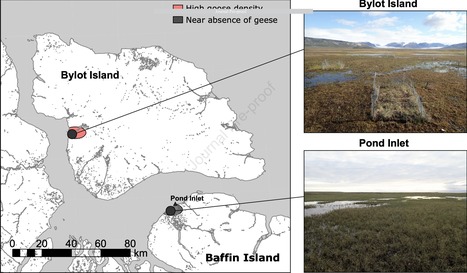
Geese can profoundly affect arctic ecosystems directly (e.g., by grazing vegetation) and indirectly (e.g. by changing nutrient cycling resulting from faces inputs and by reducing plant litter). In the Arctic, behavior and abundance of geese have changed due to climate and land-use change. While the short-term effects of increased goose populations on tundra ecosystems are known, there is a knowledge gap for long-term consequences of goose population changes on nutrient cycling and plant communities, especially in the High-Arctic. Here, we compared wetland sites where geese have been almost absent for at least 50 years (Pond Inlet), and nearby sites where geese are abundant or sites where they have been excluded experimentally by cages and where the ground has been experimentally fertilized for over 16 years (Bylot Island). Long-term goose disappearance increased inorganic nutrients in wetlands through increased plant litter decomposition and changed community composition, likely by altering competitive relationships between three dominant vascular plant species that are different in terms of nutrient acquisition and use. In experimentally fertilized sites, inorganic nutrients were similarly increased, but fertilization had contrast effects on plant community composition compared with herbivory, released plant species from the nutrient limitation and converted wetland habitats to a dryer state. Overall, our results suggest that the direct effects of goose herbivory on vegetation are more profound than their indirect effects through an alternation of nutrient cycling even in nutrient-limited wetlands of the Arctic. These findings emphasize the need to assess long-term direct impacts of herbivores on vegetation.
|
|
Scooped by
ulcriv
October 3, 2022 2:04 PM
|
In this paper we first compare three different methods of spatial interpolation, i.e., inverse distance weighting (IDW), thin plate splines (TPS), and kriging on weekly water table depth (WTD) measurements from 80 observation wells in two cranberry farms (Farm A and Farm B) located in Québec, Canada. We use the leave-one-out cross-validation approach to assess the performance of the methods. Second, we evaluate the influence of the density of measurement points over the interpolation error for the cited methods. Third, we assess the performance of drainage systems and their impacts on crop productivity as a result of cumulative rainfall. Results along with practical considerations show that TPS is the best interpolator for WTD and this superiority is maintained and further demonstrated through a sensitivity analysis of the methods to spatial sampling density, i.e., partitioning the data into subsets of 25, 50, and 75% of the dataset. However, the random approach for selecting these subsets shows an unexpected result; that is, the interpolation methods exhibit a higher performance in terms of the Pearson correlation (r) for the 25% data subset at Farm B. Meanwhile, the cumulative precipitation over a three-day period, the maximum time required to return the soil matric potential to the optimal value after a major rainfall event, had a steady influence on WTD and thus crop productivity in the studied farms. This influence is more apparent for Farm A, but a rather random effect is noted for Farm B. This study presents a water-management-based strategy that mitigates the supplementary cost and effort for sensor deployment in water table monitoring for cranberry production. It is therefore of practical interest to cranberry growers and decision-makers who aim to maximize yields through water-management-oriented strategies.
|
|
Scooped by
ulcriv
October 3, 2022 2:01 PM
|
Soybean cyst nematode (SCN) is one of the most important diseases in soybean. Currently, the main management strategy relies on planting resistant cultivars. However, the overuse of a single resistance source has led to the selection of virulent SCN populations, although the mechanisms by which the nematode overcomes the resistance genes remain unknown. In this study, we used a nematode-adapted single-cell RNA-seq approach to identify SCN genes potentially involved in resistance breakdown in Peking and PI 88788 parental soybean lines. We established for the first time the full transcriptome of single SCN individuals allowing us to identify a list of putative virulence genes against both major SCN resistance sources. Our analysis identified 48 differentially expressed putative effectors (secreted proteins required for infection) alongside 40 effectors showing evidence of novel structural variants, and 11 effector genes containing phenotype-specific sequence polymorphisms. Additionally, a differential expression analysis revealed an interesting phenomenon of co-expressed gene regions with some containing putative effectors. The selection of virulent SCN individuals on Peking resulted in a profoundly altered transcriptome, especially for genes known to be involved in parasitism. Several sequence polymorphisms were also specific to these virulent nematodes and could potentially play a role in the acquisition of nematode virulence. On the other hand, the transcriptome of virulent individuals on PI 88788 was very similar to avirulent ones with the exception of a few genes, which suggest a distinct virulence strategy to Peking.
|
|
Scooped by
ulcriv
October 3, 2022 11:05 AM
|
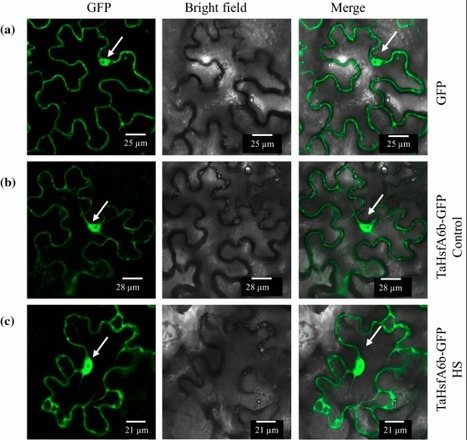
Overexpressing a heat shock factor gene ( TaHsfA6b T) from wheat provides thermotolerance in barley by constitutive expression of heat and other abiotic stress-response genes. Temperature is one of the most crucial abiotic factors defining the yield potential of temperate cereal crops, such as barley. The regulators of heat shock response (HSR), heat stress transcription factors (Hsfs), modulate the transcription level of heat-responsive genes to protect the plants from heat stress. In this study, an Hsf from wheat (TaHsfA6b) is overexpressed in barley for providing thermotolerance. Transgenic barley lines overexpressing TaHsfA6b showed improvement in thermotolerance. The constitutive overexpression of a TaHsfA6b gene upregulated the expression of major heat shock proteins and other abiotic stress-responsive genes. RNA-seq and qRT-PCR analysis confirmed the upregulation of Hsps, chaperonins, DNAJ, LEA protein genes, and genes related to anti-oxidative enzymes in transgenic lines. Excessive generation and accumulation of reactive oxygen species (ROS) occurred in wild-type (WT) plants during heat stress; however, the transgenic lines reflected improved ROS homeostasis mechanisms, showing lesser ROS accumulation under high temperature. No negative phenotypic changes were observed in overexpression lines. These results suggest that TaHsfA6b is a regulator of HSR and its overexpression altered the expression patterns of some main stress-related genes and enhanced the thermotolerance of this cereal crop.
|
|
Scooped by
ulcriv
April 8, 2022 6:00 PM
|
Exclusion netting systems are effective in various contexts and are increasingly used to control crop pests. However, factors affecting pollination management under nets are poorly known. The pollination effectiveness of commercial bumble bee hives of Bombus impatiens Cresson (Hymenoptera: Apidae) was studied for apple production under exclusion netting systems in a research orchard located in Quebec, Canada during 2016–2017. Sixteen single-row plots of apple trees (plot length: 18.5 m, cultivar GingerGold) were subjected to one of the following four treatments during bloom: (1) introduction of a bumble bee hive placed at the end of the row, under nets; (2) introduction of a bumble bee hive placed in the middle of the row, under nets; (3) negative control with no pollinators, under nets and (4) agronomic control with nearby bee hives (<50 m), without nets. Resulting post-harvest fruit quality (e.g., fruit weight, size, number and distribution of seeds) was evaluated, as well as correlations between bumble bee visitation rates and fruit quality parameters were evaluated. Results suggest that bumble bees provided adequate pollination under exclusion netting systems and that resulting fruit quality was equivalent to that of apple fruit conventionally pollinated by honey bees and wild bees community (bumble bees and other bees) in the orchard environment. Positioning bumble bee hives in the middle of the row provided better fruit load homogeneity in pollinated trees. Additional discussion on bumble bees as apple pollinators and on pollen distribution methods is also included.
|
|
Scooped by
ulcriv
April 8, 2022 5:47 PM
|
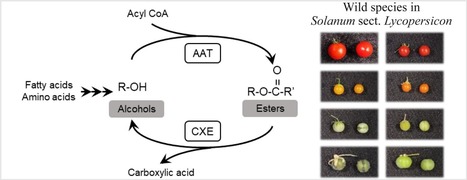
Volatile esters are the chemicals that have multiple physiological functions including plant defense responses and reproduction. From a human perspective, the esters largely contribute to the fruity aroma of freshy fruits. Composition of volatile esters show a significant diversity among the wild tomato species (Solanum sect. Lycopersicon). To address the basis for this divergence, here we conducted functional analysis of a gene encoding major alcohol o-acyltransferase (AAT1) that catalyzes volatile ester formation. Although AAT1 transcripts were highly expressed in the ripe fruits of all the wild species examined, their enzymatic properties significantly differed due to amino acid sequence variations. Notably, AAT1s from S. pennellii showed the highest ability to produce acetate esters whereas AAT1s from S. neorickii, S. chmielewskii and S. habrochaites had the lowest activities. Further, screenings using domain-swapped or point-mutated AAT1s allowed us to identify Met/Thr352 as one of the critical residues related to the transferase activity with acetyl-CoA. This finding is potentially applied to aroma engineering in which a site-directed mutagenesis at this position in alcohol o-acyltransferases could enable to manipulate volatile ester levels in ripe fruits.
|
|
Scooped by
ulcriv
April 8, 2022 4:44 PM
|
Bumble bee communities are strongly disrupted worldwide through the population decline of many species; a phenomenon that has been generally attributed to landscape modification, pesticide use, pathogens, and climate change. The mechanisms by which these causes act on bumble bee colonies are, however, likely to be complex and to involve many levels of organization spanning from the community down to the least understood individual level. Here, we assessed how the morphology, weight and foraging behavior of individual workers are affected by their surrounding landscape. We hypothesized that colonies established in landscapes showing high cover of intensive crops and low cover of flowering crops, as well as low amounts of local floral resources, would produce smaller workers, which would perform fewer foraging trips and collect pollen loads less constant in species composition. We tested these predictions with 80 colonies of commercially reared Bombus impatiens Cresson placed in 20 landscapes spanning a gradient of agricultural intensification in southern Québec, Canada. We estimated weekly rate at which workers entered and exited colonies and captured eight workers per colony over a period of 14 weeks during the spring and summer of 2016. Captured workers had their wing, thorax, head, tibia, and dry weight measured, as well as their pollen load extracted and identified to the lowest possible taxonomic level. We did not detect any effect of landscape habitat composition on worker morphology or body weight, but found that foraging activity decreased with intensive crops. Moreover, higher diversity of local floral resources led to lower pollen constancy in intensively cultivated landscapes. Finally, we found a negative correlation between the size of workers and the diversity of their pollen load. Our results provide additional evidence that conservation actions regarding pollinators in arable landscapes should be made at the landscape rather than at the farm level.
|
|
Scooped by
ulcriv
April 8, 2022 4:38 PM
|
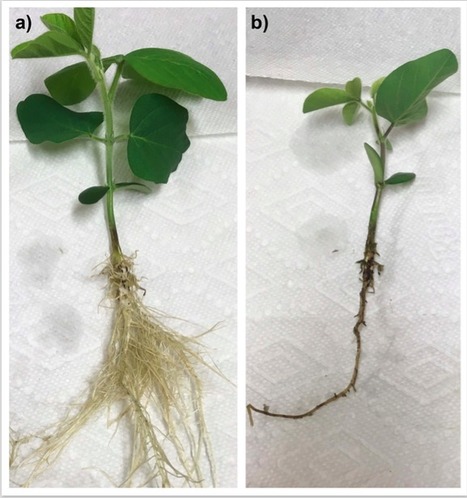
The soybean cyst nematode (SCN), Heterodera glycines , and Phytophthora sojae are among the most damaging pathogens of soybean worldwide. Resistant cultivars are commonly used to manage these diseases. Since it is known that the presence of SCN can facilitate the development of other pathogens, it is important to verify if there is a synergistic activity between SCN and P. sojae . The purpose of this study was to evaluate a possible interaction on susceptible and resistant soybean lines. The plants were inoculated with one or both organisms at different stages (5‐ or 10‐days old). Two levels of SCN inoculum (2,000 and 10,000 eggs/plants) and different timing between SCN and P. sojae inoculation (2, 5 or 8 days) were compared. The results on 5‐day‐old plants showed that SCN did not influence P. sojae development. The resistant cultivar to P. sojae remained effective (0% mortality) and susceptible cultivars exhibited high mortality (100%) in the presence or absence of SCN. Experiments on 10‐day‐old plants showed that SCN resistance was not affected by the presence of P. sojae . SCN inoculum density and timing of P. sojae infection did not affect the virulence of these pathogens and the efficacy of resistance genes. However, the number of SCN cysts was decreased by more than 50% (P<0.001) when P. sojae was co‐infesting the susceptible cultivar. This suggests that P. sojae might indirectly influence SCN development by reducing the root mass. This study confirmed that resistant cultivars remain a valid option for the management of P. sojae and SCN.
|
|
|
Scooped by
ulcriv
October 3, 2022 4:27 PM
|
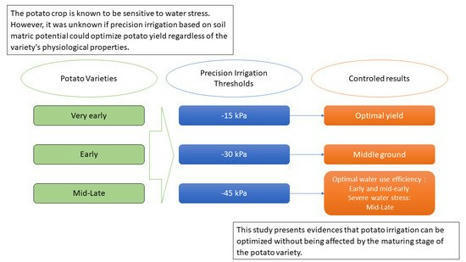
Potato is one of the most cropped plants worldwide. Hundreds of different varieties are cultivated only in North America. Potato growers usually crop multiple varieties on their farms to answer the market demands for potato’s specific physical properties. However, few pieces of information are available regarding the optimal management of irrigation across potato varieties. Knowing that modern potatoes share genetics similarities, the optimal irrigation comfort zone for the potato crop might be the same for different groups of varieties. This study evaluates the effect of precision irrigation thresholds on the potato yields of three varieties (Envol: very early, Kalmia: early, and Red Maria: mid-late) with different maturity classes. In a greenhouse, a soil matric potential sensor network used in combination with a precise irrigation system allows the identification of a common optimal precision irrigation threshold, allowing optimal yields for the three varieties. This paper presents the first identification of an optimal irrigation threshold, −15 kPa, shared by different potato varieties. The optimal irrigation threshold identified in this study is not dependent on the maturity class, plant height or tuber potential production. The determination of an optimal precision irrigation threshold will allow potato growers to adapt their farm management processes to integrate more sustainable water management practices as they will be able to irrigate a field with multiple varieties with the same threshold.
|
|
Scooped by
ulcriv
October 3, 2022 3:58 PM
|
The functional traits of organisms within multispecies assemblages regulate biodiversity effects on ecosystem functioning. Yet how traits should assemble to boost multiple ecosystem functions simultaneously (multifunctionality) remains poorly explored. In a multibiome litter experiment covering most of the global variation in leaf trait spectra, we showed that three dimensions of functional diversity (dispersion, rarity, and evenness) explained up to 66% of variations in multifunctionality, although the dominant species and their traits remained an important predictor. While high dispersion impeded multifunctionality, increasing the evenness among functionally dissimilar species was a key dimension to promote higher multifunctionality and to reduce the abundance of plant pathogens. Because too-dissimilar species could have negative effects on ecosystems, our results highlight the need for not only diverse but also functionally even assemblages to promote multifunctionality. The effect of functionally rare species strongly shifted from positive to negative depending on their trait differences with the dominant species. Simultaneously managing the dispersion, evenness, and rarity in multispecies assemblages could be used to design assemblages aimed at maximizing multifunctionality independently of the biome, the identity of dominant species, or the range of trait values considered. Functional evenness and rarity offer promise to improve the management of terrestrial ecosystems and to limit plant disease risks.
|
|
Scooped by
ulcriv
October 3, 2022 2:06 PM
|
Bacillus subtilis has raised increasing interest because it is considered as a promising alternative to conventional pesticides for plant disease management. Production of lipopeptides (fengycin, iturin, surfactin) appears as one of the most important factors contributing to its biocontrol activity. In this study, we investigated the effect of different plant pathogens on the production of fengycin, iturin, and surfactin by B. subtilis strain PTB185. Confrontation assays conducted on agar showed that B. subtilis antagonistic activity and production of lipopeptides vary significantly (P ≤ 0.05) according to the pathogen tested. Autoclaved mycelia of plant pathogens were also shown to significantly influence the quantities of lipopeptides produced by B. subtilis in liquid culture. Fengycin and/or iturin were produced in significantly higher amounts in presence of mycelium of Botrytis cinerea, Mucor sp., Pythium ultimum, or Rhizoctonia solani while addition of mycelium in the medium did not significantly affect surfactin production as compared to the control. Bacteria grown in liquid medium amended with Mucor sp. mycelium caused a significantly higher reduction of mycelial growth of B. cinerea, R. solani, and Sclerotinia sclerotiorum as compared to the bacteria grown with no mycelium. This study shows the influence of autoclaved plant pathogen mycelium on B. subtilis antagonistic ability and fengycin/iturin production providing new insights into the optimisation of the culture medium to grow B. subtilis for biotechnological applications. It also provides additional evidence of effects of biotic interactions on the production of lipopeptides by B. subtilis.
|
|
Scooped by
ulcriv
October 3, 2022 2:03 PM
|
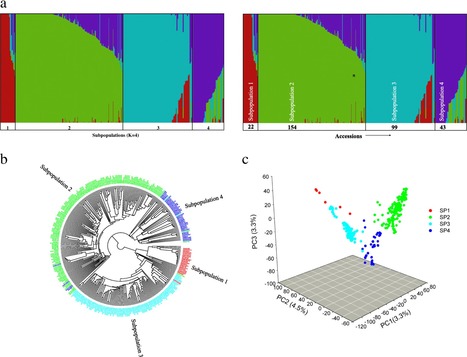
Appropriate information about genetic diversity and population structure of germplasm improves the efficiency of plant breeding. The low productivity of Nepali bread wheat (Triticum aestivum L.) is a major concern particularly since Nepal is ranked the 4th most vulnerable nation globally to climate change. The genetic diversity and population structure of Nepali spring wheat have not been reported. This study aims to improve the exploitation of more diverse and under-utilized genetic resources to contribute to current and future breeding efforts for global food security. We used genotyping-by-sequencing (GBS) to characterize a panel of 318 spring wheat accessions from Nepal including 166 landraces, 115 CIMMYT advanced lines, and 34 Nepali released varieties. We identified 95 K high-quality SNPs. The greatest genetic diversity was observed among the landraces, followed by CIMMYT lines, and released varieties. Though we expected only 3 groupings corresponding to these 3 seed origins, the population structure revealed two large, distinct subpopulations along with two smaller and scattered subpopulations in between, with significant admixture. This result was confirmed by principal component analysis (PCA) and UPGMA distance-based clustering. The pattern of LD decay differed between subpopulations, ranging from 60 to 150 Kb. We discuss the possibility that germplasm explorations during the 1970s–1990s may have mistakenly collected exotic germplasm instead of local landraces and/or collected materials that had already cross-hybridized since exotic germplasm was introduced starting in the 1950s. We suggest that only a subset of wheat “landraces” in Nepal are authentic which this study has identified. Targeting these authentic landraces may accelerate local breeding programs to improve the food security of this climate-vulnerable nation. Overall, this study provides a novel understanding of the genetic diversity of wheat in Nepal and this may contribute to global wheat breeding initiatives.
|
|
Scooped by
ulcriv
October 3, 2022 11:05 AM
|
Plants need to be protected against pests and diseases, so as to assure an adequate production, and therefore to contribute to food security. However, some of the used pesticides are harmful compounds, and thus the right balance between the need to increase food production with the need to ensure the safety of people, food and the environment must be struck. In particular, when dealing with fruit and vegetable wastes, their content in agrochemicals should be monitored, especially in peel and skins, and eventually minimized before or during further processing to separate or concentrate bioactive compounds from it. The general objective of this review is to investigate initial levels of pesticide residues and their potential reduction through further processing for some of the most contaminated fruit and vegetable wastes. Focus will be placed on extraction and drying processes being amid the main processing steps used in the recuperation of bioactive compounds from fruit and vegetable wastes.
|
|
Scooped by
ulcriv
April 8, 2022 6:01 PM
|
1) The relative importance of global versus local environmental factors for growth and thus carbon uptake of the bryophyte genus Sphagnum – the main peat‐former and ecosystem engineer in northern peatlands – remains unclear. 2) We measured length growth and net primary production (NPP) of two abundant Sphagnum species across 99 Holarctic peatlands. We tested the importance of previously proposed abiotic and biotic drivers for peatland carbon uptake (climate, N deposition, water table depth, and vascular plant cover) on these two responses. Employing structural equation models, we explored both indirect and direct effects of drivers on Sphagnum growth. 3) Variation in growth was large, but similar within and between peatlands. Length growth showed a stronger response to predictors than NPP. Moreover, the smaller and denser Sphagnum fuscum growing on hummocks had weaker responses to climatic variation than the larger and looser S. magellanicum growing in the wetter conditions. Growth decreased with increasing vascular plant cover within a site. Between sites, precipitation and temperature increased growth for S. magellanicum. The structural equation models indicate that indirect effects are important. For example, vascular plant cover increased with a deeper water table, increased nitrogen deposition, precipitation and temperature. These factors also influenced Sphagnum growth indirectly by affecting moss shoot density. 4) Synthesis Our results imply that in a warmer climate, S. magellanicum will increase length growth as long as precipitation is not reduced, while S. fuscum is more resistant to decreased precipitation, but also less able to take advantage of increased precipitation and temperature. Such species‐specific sensitivity to climate may affect competitive outcomes in a changing environment, and potentially the future carbon sink function of peatlands.
|
|
Scooped by
ulcriv
April 8, 2022 5:59 PM
|
Original Paper in Can J Soil Sci • Dorais Collaboration 2020 • Supplement of biochar and vermicompost amendments in coir and peat growing media improves N management and yields of leafy vegetables
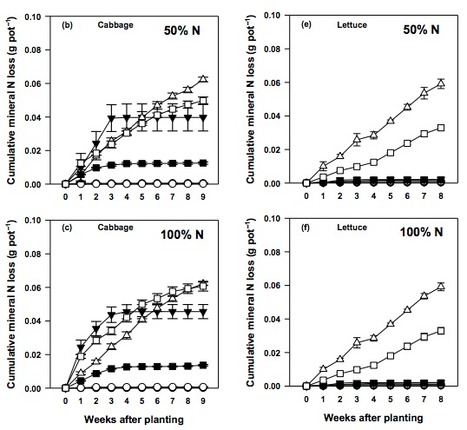
A greenhouse trial assessed the effects of biochar and vermicompost as partial substitutes of conventional growing media on leafy vegetables’ yields and changes of NH4+-N and NO3--N in growing medium and leachates. Six growing media mixtures [a) coir; b) coir+biochar; c) coir+vermicompost; d) peat; e) peat+vermicompost; f) peat+biochar] combined with three N rates (0% (0 g N pot–1), 50% (0.5 g N pot–1) and 100% (1.0 g N pot–1) commercial recommendation) were arranged in a split-plot design with three replicates. On average, the yield gap between 100%N and 50%N was improved when biochar and vermicompost were used as substitutes of coir (32% and 28% vs. 49%) and peat (14% and 18% vs. 27%). The concentrations of NH4-N in the leachates for peat+biochar varied between 17.20 mg L–1 and 1.00 mg L–1. The concentrations of NO3-N in the leachates varied between 130.0 mg L–1 and 1.0 mg L–1 for coir+vermicompost, and 60 mg L–1 and 1.0 mg L–1 for peat+vermicompost. The residual NO3-N in peat+biochar growing media and the leachates did not match the changes observed for NH4-N, and the much lower residual NH4-N indicates possible NH4-N retention by biochar and loss through volatilization in the early growth stages. Our results show that partial substitution of peat with biochar and coir with vermicompost maintained acceptable crop yield at 50% N due probably to N supply by vermicompost and decreased residual mineral N and loss by biochar in the leachates which could be beneficial for the environment.
|
|
Scooped by
ulcriv
April 8, 2022 4:48 PM
|
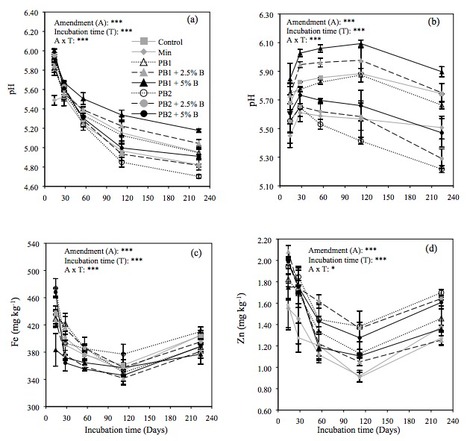
Original Paper in Can J Soil Sci •Antoun Collaboration 2020 • Changes in soil pH and nutrient extractability after co-applying biochar and paper mill biosolids
Acidification and metal mobility may present challenges in soil receiving paper mill biosolids (PB). Co-applying biochar and PB could help prevent these issues, but its effect must be assessed. The objective of this 224 d incubation study was to evaluate the effect of amending two acidic soils, a clay and sandy loam, with two PB types varying in pH (PB1, pH = 7.80; and PB2, pH = 4.51) co-applied with three rates (0%, 2.5%, and 5% w/w) of pine (Pinus strobus L.) biochar on soil pH and macro- (P, K, Ca, and Mg) and micronutrients (Cu, Zn, Fe, and Mn). In both soils, co-applying biochar and PB significantly increased soil pH and extractable K concentration compared with PB-only application, whereas amending with PB significantly increased soil extractable P concentration compared with the unamended soil. In comparison with PB only, co-applying 5% biochar and PB decreased extractable Cu concentration in both soils and extractable Fe concentration in the sandy loam soil. This study showed that co-applying biochar and PB can be more beneficial to agricultural soils than application of PB alone by supplying nutrients and helping prevent metal toxicity by raising pH, especially in acidic sandy soils.
|
|
Scooped by
ulcriv
April 8, 2022 4:43 PM
|
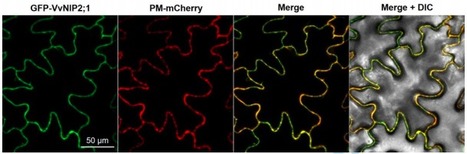
Silicon (Si) supplementation has been shown to improve plant tolerance to different stresses, and its accumulation in the aerial organs is mediated by NIP2;1 aquaporins (Lsi channels) and Lsi2-type exporters in roots. In the present study, we tested the hypothesis that grapevine expresses a functional NIP2;1 that accounts for root Si uptake and, eventually, Si accumulation in leaves. Own-rooted grapevine cuttings of the cultivar Vinhão accumulated >0.2% Si (DW) in leaves when irrigated with 1.5 mM Si for 1 month, while Si was undetected in control leaves. Real-time PCR showed that VvNIP2;1 was highly expressed in roots and in green berries. The transient transformation of tobacco leaf epidermal cells mediated by Agrobacterium tumefaciens confirmed VvNIP2;1 localization at the plasma membrane. Transport experiments in oocytes showed that VvNIP2;1 mediates Si and arsenite uptake, whereas permeability studies revealed that VvNIP2;1 expressed in yeast is unable to transport water and glycerol. Si supplementation to pigmented grape cultured cells (cv. Gamay Freáux) had no impact on the total phenolic and anthocyanin content, or on the growth rate and VvNIP2;1 expression. Long-term experiments should help determine the extent of Si uptake over time and whether grapevine can benefit from Si fertilization.
|
|
Scooped by
ulcriv
April 8, 2022 4:36 PM
|
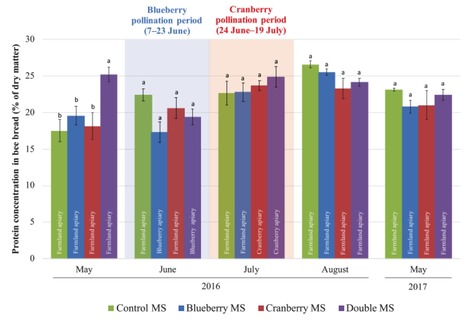
The growth of the commercial pollination industry raises important concerns regarding honey bee (Apis mellifera Linnaeus; Hymenoptera: Apidae) health and development. While providing such services, honey bees are often exposed to undiversified pollen sources that may contribute to nutritional deficiencies, notably in protein and amino acids. To understand how honey bees are affected during provision of pollination services, we compared honey bee colonies that pollinated lowbush blueberry (Vaccinium angustifolium Aiton; Ericaceae) and/or cranberry (Vaccinium macrocarpon Aiton; Ericaceae) crops (management strategies) with control colonies in a diversified farmland environment. We identified the floral species of pollen collected by honey bee colonies in those crops compared to pollen collected by control colonies. We also analysed the protein and essential amino acid content of collected pollen and bee bread and measured the nutritional impact of pollination services on honey bee colonies. We found that honey bees providing blueberry and/or cranberry pollination services are exposed to a less diversified pollen diet than colonies located in a farmland environment, especially in a cranberry field. There was a significantly lower proportion of crude protein content in collected and stored pollen during provision of blueberry pollination services, which led to a smaller brood population. Many nutritional deficiencies were measured with regards to essential amino acids.
|