Coastal Restoration
34.8K views | +0 today
Coastal Restoration
Coastal management and restoration of our planet's coastlines with a particular focus on California, Louisiana and the Pacific.  Emphasizing wetland restoration, aspects of agriculture in the coastal plain, fisheries, dealing with coastal hazards, and effective governance.
Curated by PIRatE Lab
Your new post is loading...
Scooped by Keiran Gisonno
February 11, 5:07 PM
Scoop.it!

https://www.nytimes.com/2026/02/01/us/snowfall-north-south-carolina.html

Keiran Gisonno's insight:
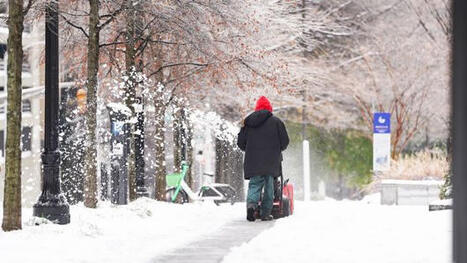
This is a good example of how climate change is ramping up strange weather patterns, while snow isnt unusual in Carolina, the amount of snow and the location is unnatural. So far two have died with the historic rate of snow, ontop of this, if snowfall in such bizarre and historic amounts hits parts of the united states which are not used to the snowfall, we will see infastructure pushed to the limit

Devan Page's comment, February 11, 6:33 PM
Extreme storm events like these are becoming more common and this story shows how much danger it can put our communities in. As we have learned, without being prepared for these disaster events, large areas are vulnerable to harm. Like you mentioned, the location and severity of the snowstorm is unorthodox, leaving the predictability of weather patterns to become more difficult.
Scooped by Autumn S.
February 11, 1:01 PM
Scoop.it!

Storm blasts Hawaii with 70-mph winds, 30 inches of rain and mountain snow

Storm blasts Hawaii with 70-mph winds, 30 inches of rain and mountain snow | Coastal Restoration | Scoop.it
A storm has knocked down trees in Hawaii after dropping more than 30 inches of rain and mountain snow.
Keiran Gisonno's comment, February 11, 5:09 PM
This rainfall paired with the still recovering parts of the state from the fires are probably at risk of debris flow, which is something I'd be worried about
Scooped by Irma Hinojos
February 10, 11:11 PM
Scoop.it!

https://www.studocu.com/en-us/course/lansing-community-college/biol-foundation-for-physiology/1904367

No comment yet.
Scooped by Ryan Murgatroyd
February 10, 3:19 PM
Scoop.it!

Record snow drought in Western US raises concern for water shortages and wildfires

Record snow drought in Western US raises concern for water shortages and wildfires | Coastal Restoration | Scoop.it
Except for California, most Western states are experiencing the worst snow drought in decades not because of dry conditions but really warm temperatures that change snow to rain
Ryan Murgatroyd's insight:
This article explores the record warm winter and its effects on snowfall which may lead to water shortages (drought) and an increased fire season.
brayden.hosler576@myci.csuci.edu's comment, February 11, 12:43 PM
I also discussed a similar topic and the issues our aging water systems face.
Scooped by brayden.hosler576@myci.csuci.edu
February 7, 2:32 PM
Scoop.it!

California Water Officials Issue Warning as Key Water Supply Number Plunges

California Water Officials Issue Warning as Key Water Supply Number Plunges | Coastal Restoration | Scoop.it
The concerning update comes as an important data marker regarding the state's water supply plunges.
brayden.hosler576@myci.csuci.edu's insight:
Having completely stopped utilizing our sprinkler system during the drought and allowing our lawn to turn into a dirt lot, we eventually switched to fake grass and minimal water plants to surround the house. It is not exciting to see us have more issues with water supply, especially after the issues of lack of water received by firefighters by our aging water system and other water politics surrounding it. https://calmatters.org/environment/2025/12/water-hydrant-wildfire-misinformation-ucla/
No comment yet.
Scooped by Cael Thor Hill
February 5, 3:56 PM
Scoop.it!

Secretary Noem Unlocks More Than $2.2 Billion in Additional Federal Funding to Rebuild Communities Hit by Past Disasters | Homeland Security

Secretary Noem Unlocks More Than $2.2 Billion in Additional Federal Funding to Rebuild Communities Hit by Past Disasters | Homeland Security | Coastal Restoration | Scoop.it

DHS Secretary Kristi Noem announced more than $2.2 billion in disaster relief funding to support ongoing recovery efforts from a variety of natural disasters.

Cael Thor Hill's insight:
I know this isn't a disaster, but this is something we talked about in class. So I thought it to be important.

FEMA is supposedly going to be disbursing funding to individual states and local communities impacted by disasters. The allotted sum is 2.2 billion dollars. This will supposedly be supporting over 1700 recovery projects across the country.
Kalani Wagoner's comment, February 6, 7:44 PM
2.2 billion sounds like a lot, until it gets divided up... my family works in property restoration, it took around 3 to 4 years for Thomas Fire victims to receive their FEMA checks. Its not a perfect system by any means but the idea is there, hopefully we can improve the structure one day.
Ryan Prem's comment, February 6, 8:00 PM
This feels like good progress in continuing the process helping people recover even way past original incident. The money may not go far but it is better than no aid
Scooped by Bradley Wagner
February 5, 2:13 AM
Scoop.it!

https://www.nytimes.com/2026/01/28/world/europe/sicily-town-landslide.html

This article sheds light on the natural landslide that hit Sicily over winter due to heavy rain and winter snow storms. Nearly 1,500 people have been unhoused due to this. 
Ryan Prem's comment, February 13, 7:42 PM
Those pictures are mortifying. I cant imagine being in a building that is suspended like that.
Scooped by Ryan Murgatroyd
February 4, 2:38 PM
Scoop.it!

‘Profound impacts’: record ocean heat is intensifying climate disasters, data shows | Oceans | The Guardian

‘Profound impacts’: record ocean heat is intensifying climate disasters, data shows | Oceans | The Guardian | Coastal Restoration | Scoop.it
Oceans absorb 90% of global heating, making them a stark indicator of the relentless march of the climate crisis
Ryan Murgatroyd's insight:
This article delves into the rising ocean temperatures and their impact on the intensity of certain environmental disasters like hurricanes and the flooding that almost always comes with. Along with these natural disasters, there is an effect of longer marine heatwaves which harm life in the seas. This article describes the oceans’ temperatures rising faster than they have in the past 2,000 years. This unprecedented rate of warming is a direct result of climate change and global warming. Along with the effects mentioned above, scientists are also concerned about the melting and collapse of winter sea ice which in turn could cause a quicker rise in sea levels. There is a call to action for anyone who believes in the harmful potential of climate change. By reducing emissions, we can protect our future climate and the generations that will have to steward it.
Devan Page's comment, February 5, 7:30 PM
This article brings up two very important pieces of data that explain the climate crisis well. First, that the ocean temperatures are rising faster than any rate in the last 2,000 years, and that 90% of global heating is absorbed by the ocean. These statistics explain how global warming is not normal or a cyclical pattern of earth systems, but an uncharacteristic change that threatens our ecosystems. A threat that is constantly growing as we continue warming.
Scooped by Keiran Gisonno
February 4, 1:28 AM
Scoop.it!

https://www.nytimes.com/2026/01/27/climate/fema-aid-kristi-noem.html

Keiran Gisonno's insight:
Due to the ongoing pressure on FEMA 17 Billion dolalrs of aid money whihc is slated to go to states has been stalled due to the review process that Kristi Noem has established. The delay is mostly impacting Infastructure repair, and because of this could cause upwards of months in delays
No comment yet.
Scooped by Joshua Mendez
February 3, 9:27 PM
Scoop.it!

LAFD chief admits Palisades fire report was watered down, says it won't happen again

LAFD chief admits Palisades fire report was watered down, says it won't happen again | Coastal Restoration | Scoop.it
The admission comes more than two weeks after The Times found that the city’s report had been changed numerous times to soften language and burnish the image of the Fire Department in the aftermath of the devastating fire.
Joshua Mendez's insight:
This article explains that there was intentional manipulation of facts on the errors made during the Palisades fire disaster recovery. It was rewritten 12 times to soften the language and downplay mistakes.
Rogelio Navarro's comment, February 3, 10:25 PM
I find it very fascinating to see how far the LAFD chief went to try to protect the image of the LA fire department. Instead of admitting to the mistakes that the fire department made in dealing with the Palisades fire, the chief decided to make the entire fire department look even worse by bringing down their credibility.
Sierra Williams's comment, February 4, 5:22 PM
While reading this article I felt uneasy and unsettled, transparency to the public about issues should be the bare minimum and it feels like the chief was trying to hide behind an uncomfortable conversation. The promise that "it won't happen again" feels incomplete and unlikely, this felt like a form of damage control to hide behind the truth of the matter. This article proves that how agencies tell the story of disasters shapes whether the next crisis that happens is faced with confidence or not.
Scooped by Sierra Williams
February 3, 4:06 PM
Scoop.it!

Oil and gas emissions surged as winter storm blasted Texas

Oil and gas emissions surged as winter storm blasted Texas | Coastal Restoration | Scoop.it
Watchdog groups say officials in the Lone Star State haven't done enough to prevent emissions events from spiking during harsh weather.
Sierra Williams's insight:
During Texas' winter storm there has been a surge of oil and gas emissions, this shows that this extreme weather doesn't just threaten our energy reliability but exposes gaps in our industrial weatherization. The fossil fuel infrastructure of Texas is built to fail in the extreme cold weather and isn't as prepared as it could be.
Keiran Gisonno's comment, February 4, 1:43 AM
This is something I had not considered, the increase of fossil fuel usage during winter could be prevented with more green alternatives
Scooped by Christopher Blackwell
February 3, 2:16 PM
Scoop.it!

https://www.usnews.com/news/world/articles/2026-01-26/indonesian-marines-among-42-missing-in-deadly-west-java-landslide

Christopher Blackwell's insight:
Due to a large landslide, marines and 42 individuals were missing in Indonesia. 
No comment yet.
Scooped by Julia Richter
February 3, 2:13 PM
Scoop.it!

https://www.usnews.com/news/world/articles/2026-01-29/climate-change-worsened-rains-and-floods-which-killed-dozens-in-southern-africa-study-shows

Julia Richter's insight:
Researchers in Africa are developing "climate models" for future mitigation.  In the current state of the US, this would be frowned upon because of project 2025.
No comment yet.
Scooped by Sierra Williams
February 11, 4:03 PM
Scoop.it!

https://www.usnews.com/news/world/articles/2026-02-11/at-least-9-dead-in-madagascar-as-tropical-cyclone-gezani-hits-the-indian-ocean-island

Authorities in Madagascar say at least 31 people have died after Tropical Cyclone Gezani hit the large Indian Ocean island
Sierra Williams's insight:
Cyclone Gezani made landfall in Madagascar with hurricane-force winds, killing multiple people and leaving destruction on an already vulnerable island.
Keiran Gisonno's comment, February 11, 5:08 PM
For places like madagascar disasters like this are so much more impactful with the lack of funding or proper infastructure, this concerns me alot considering how the United States is considering cutting funding to parts of the National Weather Service
Scooped by Rogelio Navarro
February 10, 11:35 PM
Scoop.it!

Future of NC's coastal industry at stake with fishing lawsuit

Future of NC's coastal industry at stake with fishing lawsuit | Coastal Restoration | Scoop.it
A conservation group is suing the state, claiming it has failed in its responsibility to properly manage and protect N.C.'s fishing resources.
Rogelio Navarro's insight:
After having sued the state of North Carolina in 2020, the Coastal Conservation Association of North Carolina has finally moved forward in the trial process as of January 20 of this year.
Sierra Williams's comment, February 11, 4:07 PM
This is very interesting to think about, as it is looking at how the state balances environmental sustainability with the livelihood of coastal communities. Depending on the states decision could change how they handle conservation conflicts with overfishing.
Scooped by Christopher Blackwell
February 10, 3:52 PM
Scoop.it!

https://www.usnews.com/news/news/articles/2026-02-04/study-shows-particle-pollution-from-wildfire-smoke-was-tied-to-24-100-deaths-per-year-in-the-us

A study that looks at wildfire pollutants and is claiming that there are 24,100 deaths per year because of these fires. 
Christopher Blackwell's insight:
It was found that every 0.1 microgram per cubic meter increase resulted in 5,594 more deaths. 
Kalani Wagoner's comment, February 11, 6:01 PM
Believe it! There's so many pollutants with structures burning in the wildfires (all the different chemicals a building is made of). They're even finding exposure to regular fires in your fireplace at home is causing permanent brain damage to young kids.
Scooped by Catalina Monroe
February 10, 12:17 AM
Scoop.it!

Microplastics are undermining the ocean’s power to absorb carbon

Microplastics are undermining the ocean’s power to absorb carbon | Coastal Restoration | Scoop.it
Tiny plastic particles drifting through the oceans may be quietly weakening one of Earth’s most powerful climate defenses. New research suggests microplastics are disrupting marine life that helps oceans absorb carbon dioxide, while also releasing greenhouse gases as they break down. By interfering with plankton, microbes, and natural carbon cycles, these pollutants reduce the ocean’s ability to regulate global temperatures.
Catalina Monroe's insight:
Micoplastics are a buzzword we hear a lot yet not many people really look into the effects of them. the extensive damage done by platics globaly effects systems in almost every biome and something to be concerned about in convservation efforts 
Rogelio Navarro's comment, February 10, 11:44 PM
I find it very disappointing to see how even with the evidence and warnings from many scientists, marine environments are not receiving the care and support that is needed for these environments to truly thrive.
Judyann Bibian's comment, February 13, 4:52 AM
I agree with Rogelio that despite having a plethora of evidence of microplastic effects on the ocean's ability to absorb carbon dioxide, there isn't enough of a collective effort towards helping these environments. I also agree with you, Catalina, that people don't typically look further into the situation and that this directly contributes to a lack of attention for this issue. While disappointed, I'm not surprised as there is an increasing disregard for alarming climate and environmental news such as this. It feels like it was bound to happen given the rate at which we are not doing much about it.
Scooped by yaiza.delgado165@myci.csuci.edu
February 5, 9:33 PM
Scoop.it!

https://www.nytimes.com/2026/01/20/climate/trump-coal-plant-centralia-washington.html

yaiza.delgado165@myci.csuci.edu's insight:
The Trump administration does not want to be part of the clean energy transition. Keeping a coal mine open will increase emissions contributing to climate change. This issue causes political havoc in different states from choosing between clean-energy goals or traditional fossil fuel energy.
No comment yet.
Scooped by Judyann Bibian
February 5, 2:54 AM
Scoop.it!

https://www.nytimes.com/2026/01/30/climate/greenland-algae-melting-icesheet.html?searchResultPosition=2

Something Dark Is Growing on Greenland’s Ice. And Melting It Faster. New studies show how algae grows on ice and snow, creating “dark zones” that exacerbate melting in the consequential region.
Judyann Bibian's insight:
Scientists have been closely monitoring the relationship between algal blooms on Greenland's ice sheet and increasing levels of ice melting. Studies have found that algal blooms are responsible for about 13% of melt run-off. Specifically in southwest Greenland, since that area receives a high level of nutrients, such as phosphorus. That area also has wind patterns that transport nutrients, but also microscopic algae that then expand once they settle on the ice sheet. Essentially, the algae will form dark patches on the surface, thus preventing the ice from reflecting sunlight (which is important for slowing down the melt-off rate).
Joshua Mendez's comment, February 5, 9:41 PM
The article claims that the Greenland ice sheets melting could raise sea levels by 23 feet. Given that the algae is helping to reflect the sun's heat, it is very important and something that should continue to be researched more.
Scooped by Heather Farlow
February 4, 7:43 PM
Scoop.it!

DC Is Experiencing One Of Its Worst Ecological Disasters Ever

DC Is Experiencing One Of Its Worst Ecological Disasters Ever | Coastal Restoration | Scoop.it
A major sewage spill near DC has sent hundreds of millions of gallons of waste into the Potomac River after a major pipeline burst last week.
yaiza.delgado165@myci.csuci.edu's comment, February 5, 9:45 PM
This pipeline rupture is the result of outdated and aging infrastructure causing a catastrophic environmental and public health disaster. The Potomac river was already slowly recovering from past pollution due to waste from historic coal mines. This spill is a major environmental setback affecting people and wildlife.
Scooped by Ryan Prem
February 4, 1:30 PM
Scoop.it!

One dead and 300 buildings destroyed in Australia bushfires

One dead and 300 buildings destroyed in Australia bushfires | Coastal Restoration | Scoop.it
A state of emergency has been declared in Victoria as thousands of firefighters battle the blaze.
Ryan Prem's insight:
Australia is facing the worst bushfires since late 2019/ early 2020. The fires are destroying rural areas and creating air quality problems in Melbourne.
Christopher Blackwell's comment, February 4, 7:36 PM
This was crazy to read about; they have over 70 aircrafts fighting the fire. Along with this, they said that the fire has burned into New South Whales and is continuing to grow. It said that lots of individuals were asked to leave their house, but I wonder what the total damage will be in square footage and in price. Reading about the Harcourt community was something that I think everyone in our class could relate to, but it was still hard to read and see their struggle.
Scooped by Rogelio Navarro
February 3, 10:07 PM
Scoop.it!

Ventura County community placed under permanent, year-round evacuation warning over landslide risk

Ventura County community placed under permanent, year-round evacuation warning over landslide risk | Coastal Restoration | Scoop.it
Ventura County officials have issued a first-of-its-kind year-round evacuation warning for the coastal community of La Conchita, citing a highly saturated hillside that could collapse without warning.
Rogelio Navarro's insight:
A year-round evacuation warning has been given to the residents of the community of La Conchita due to warnings of the hillside being "highly saturated", which creates a risk for landslides.
Keiran Gisonno's comment, February 4, 1:29 AM
Its interesting to see how even in our own back yard there is threats of disasters striking, I wasn't aware that ventura country was at any risk of landslides happening.
Scooped by Irma Hinojos
February 3, 5:17 PM
Scoop.it!

How the polar vortex fuels intense winter weather in the US

How the polar vortex fuels intense winter weather in the US | Coastal Restoration | Scoop.it
Here's how the polar vortex, and climate change, influence extremely cold winter weather in the US.
Irma Hinojos's insight:
I think this was a really good article to help provide context on the intense cold weather happening in the South. 
No comment yet.
Scooped by Ashlyn Olson
February 3, 3:54 PM
Scoop.it!

https://www.usnews.com/news/us/articles/2025-07-17/louisiana-cancels-3b-repair-coastal-restoration-funded-by-deepwater-horizon-oil-spill-settlement
Ashlyn Olson's insight:
Louisiana canceled the Mid-Barataria Sediment Diversion Project  set to restore the declining Gulf coastline and combat sea-level rise. According to U.S. Geological Survey, every 100 minutes, land the same size as a football field is lost to sea-level rise in Louisiana. This might cost the state more than just lost land but they will also have to return the millions of dollars already spent towards the project. 
Cael Thor Hill's comment, February 5, 4:08 PM
It is crazy to me that a heavily studied coastline and wetland restoration project can be shut down just because of some political discomfort. Environmental efforts should not have to depend on politics whatsoever especially in this situation when the funds were already allotted to the large scale project. The new governor or leader of state's only reason was a loss of culture. Like restoring a natural ecosystem isn't culture in itself.
Scooped by Kalani Wagoner
February 3, 2:15 PM
Scoop.it!

Wildfires are polluting the air far more than thought

Wildfires are polluting the air far more than thought | Coastal Restoration | Scoop.it
Scientists have discovered that wildfires release far more air-polluting gases than previously estimated. Many of these hidden emissions can transform into fine particles that are dangerous to breathe. The study shows wildfire pollution rivals human-made emissions in some parts of the world. This helps explain why wildfire smoke can linger and worsen air quality long after the flames are gone.
Ashlyn Olson's comment, February 3, 9:22 PM
This article was super insightful! One fact that stood out to me was an average of 143 million tons of airborne organic compounds are released each year due to wild fires.
Ryan Murgatroyd's comment, February 4, 9:24 PM
This article reminded me of just how devastating these wildfires can be. I was evacuated during the 2017 Tubbs Fire in Northern California and we experienced weeks of poor air quality. It is definitely a concerning read for residents of California who face these threats annually.