The Board of Directors of the African Development Bank (AfDB) approved on April 16 in Tunis, the creation of the Africa Climate Change Fund (ACCF), a bilateral thematic trust fund to support African countries in their transition to climate-resilient and low-carbon development. The AfDB will host and manage the ACCF, which was created with a 4.725 million euro contribution from Germany for an initial three-year period. The aim is to scale-up to a multi-donor trust fund as soon as at least one new donor commits to join...
...Many countries on the continent are ill-prepared to access international climate finance and need to devise plans to build a more climate-resilient and low carbon future. The scope of the ACCF is broad enough to allow for a variety of activities that countries need for the transition to climate smart development, with the aim of generating transformational change in the medium to long term. Specific areas of intervention include: climate finance readiness; climate change and green growth mainstreaming; preparation and financing of adaptation and mitigation projects; knowledge management and information sharing related to climate change; capacity building; preparation of climate resilient and low carbon strategies and policies; analytical work related to green growth; advocacy; and outreach. The first call of proposals is expected to take place within the next two months, and will focus on climate finance readiness.
ACCF grant recipients may include African Governments, NGOs, research institutions, and regional institutions; grants will be either executed by the recipients themselves, or by the Bank on their behalf...
Disaster Risk Management and Food Security Sector (DRMFSS) adopted the full cycle of DRM (consisting of prevention, mitigation, preparedness, response, recovery and rehabilitation) to guide the undertaken programmes with a redirected focus on DRM.
The first step has been to build a Wereda* Disaster Risk Profile (WDRP) which establishes an extensive database at community/kebele* level and provide all necessary information on disaster risk elements. This information system forms the basis for designing DRM strategies.Once the weredas and communities have established their profiles and know the disaster risk elements the next step is to build the programs which forms the full cycle of DRM (consisting of prevention, mitigation, preparedness, response, recovery and rehabilitation). This program focuses on the proactive side - the pre-disaster phase- and hence the Disaster Risk Reduction Planning.
The process seeks to achieve HFA Priority Areas 2 (Know the risks and take action), 4 (Reduce Risks) and 5 (Be prepared and ready to act).
There are two essential steps in the DRR Planning process:
1.Planning to reduce/avoid the risks of disasters and to adapt to climate change through managing the causes of disasters at wereda level (Risk Mitigation and Adaptation Planning)
2.Planning to get an efficient preparedness system that helps them to anticipate and respond timely and effectively to hazards events (Contingency Planning)
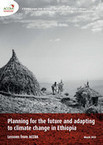
This briefing paper discusses ACCRA's activities in promoting pro-poor and participatory climate change adaptation and disaster risk reduction in planning processes. It argues that policymakers face difficult trade-offs in planning for a changing and uncertain future. Yet many development actors continue to plan for the near-term, with little room for manoeuvre or contingency. The paper focuses specifically on one specific characteristic of adaptive capacity in order to help decision makers and planners to better prepare themselves for the future: Flexible and Forward-Looking Decision Making (FFDM).
The second of three books in IFPRI's climate change in Africa series, East African Agriculture and Climate Change: A Comprehensive Analysis examines the food security threats facing 10 of the countries that make up east and central Africa - Burundi, Democratic Republic of Congo, Eritrea, Kenya, Madagascar, Rwanda, Sudan, Tanzania, and Uganda - and explores how climate change will increase the efforts needed to achieve sustainable food security throughout the region. East Africa's populations is expected to grow at least through mid-century. The region will also see income growth. Both will put increased pressure on the natural resources needed to produce food, and climate change makes the challenges greater. East Africa is already experiencing rising temperatures, shifting precipitation patterns, and increasing extreme events. Without attention to adaptation, the poor will suffer...
Smriti Vidyarthi hosts panelists from the NGO sector as well as government representatives as they talk about the challenges and opportunities that communities in the horn of Africa live with in the face of hazards such as droughts and floods will there ever be a lasting solution?
This guide draws on the experience of CDKN’s programmes on climate-related disaster risk management (DRM) within the context of climate compatible development. It explores why mainstreaming DRM into development policy has had widely varying results between countries. In doing so, this guide attempts to delve beneath the surface of mainstreaming and identify the ways forward for integrating short- and long-term considerations for disaster risk reduction in important development sectors.
This glossary summarises the agreement on peril classifications and hazard definitions by the IRDR programme's Disaster Loss (DATA) Project Working Group. This new and revised framework is implementable by loss databases with either a high level of hazard aggregation that do not distinguish specific perils, as well as databases that use perils (hurricane, tsunami, earthquake) rather than the more general categories. In this way, the classification serves the needs of multiple types of loss databases often managed for very different purposes. This harmonised peril classification system and definitions serves the international disaster risk reduction community and contributes to the Hyogo Framework for Action (HFA) in regard to improving information on key hazards and their impacts.
This report describes the concept and methodology of the composite Index For Risk Management (InfoRM) which identifies the countries at a high risk of humanitarian crisis and are more likely to require international assistance. The InfoRM model envisages three dimensions of risk: hazards & exposure, vulnerability and lack of coping capacity. This report argues that InfoRM index is a helpful tool for an objective allocation of resources for disaster management as well as for coordinating actions focused on anticipating, mitigating, and preparing for humanitarian emergencies.
...for the first time in Africa, an insurance policy that combines an Islamic-compliant financial instrument with innovative use of satellite imagery is compensating Muslim pastoralists for drought-induced losses suffered in Kenya’s northeastern Wajir County, where livestock are valued at Ksh46 billion (USD550 million).
Thirty women and 71 men in arid and semi-arid Wajir are the first beneficiaries of livestock insurance that conforms to the Islamic concept of takaful, in which risks are shared among a group of participants. Through a contract called tabbaru (donation), participants make contributions to a risk fund. In the case of a payout, which happened today, the fund makes payments commensurate with the contributions received.
The pilot program is paying approximately Ksh500,000 (USD5,800) for losses suffered to their herds of sheep, goat, cattle and camels during the long dry season that typically ends in March.
The herds were insured last August by Takaful Insurance of Africa (TIA) with an Index-Based Livestock Insurance (IBLI) product, branded as Index-Based Livestock Takaful (IBLT).
IBLI uses satellite imagery—measuring the conditions of grazing lands—that is fed into an algorithm that predicts livestock loses. Predictions beyond the 15-percent level trigger indemnity payments. Drought conditions in much of Wajir County have surpassed the index trigger and active contract holders in these areas were compensated today....
...ILRI works in collaboration with a wide array of partners in this program that include the government of the Republic of Kenya, Cornell University and the Index Insurance Innovation Initiative (I4), among many others.
ILRI and partners want to see livestock insurance available throughout
LRI researchers note that making livestock insurance commercially viable in East Africa will require catalyzing a critical mass of informed demand. They acknowledge this will be a challenge in a region where many herders occupy vast remote areas where communication and transport are difficult. But some experts believe the potential to protect pastoralists from drought and help them improve their herds justifies support from governments and donors, just as agriculture insurance is often subsidized in many countries across the globe...
The International Fund for Agricultural Development’s (IFAD's) Adaptation for Smallholder Agriculture Programme (ASAP) has won a 2013 Momentum for Change Lighthouse Activities award.
This award recognises IFAD’s innovative work in using climate finance to support climate change adaptation activities that deliver social and economic benefits to smallholder farmers...
...ASAP will help 8 million smallholder farmers to expand their options in a rapidly changing climate and in doing so is transforming IFAD’s operations. In the year since its launch, IFAD’s ASAP has become the largest global financing source dedicated to supporting the adaptation of poor smallholder farmers to climate change.
...he difficulty of predicting local effects of climate change makes a compelling case for preventing it.
This week the Intergovernmental Panel on Climate Change (IPCC) released a major report focused on what actions might or could be taken to adapt to climate change. It attempts to describe who and what is especially vulnerable to climate change, and gives an overview of ways some are adapting.
The report makes clear that specific estimates of how climate change will affect places, people, and things are very uncertain. Brought down to a local level, climate change could go in either direction—there are risks that a given area could get drier or wetter, or suffer floods or droughts, or both. This uncertainty makes efforts to prevent climate change even more important...
...What the report does provide is some documentation of adaptation in action—what different regions, cities, sectors, and groups are doing to adapt—concluding that there is a growing body of experience from which to learn.
However, perhaps the greatest truth in the report is in the following statement:
“Adaptation is place and context specific, with no single approach for reducing risks appropriate across all settings (high confidence). Effective risk reduction and adaptation strategies consider the dynamics of vulnerability and exposure and their linkages with socioeconomic processes, sustainable development, and climate change.”
Overall, the report provides, in my judgment, a compelling case for more serious mitigation efforts—the topic of the next IPCC report, to come out later this month.
John Reilly is the co-director of the MIT Joint Program on the Science and Policy of Global Change.
UNISDR today welcomed the outcome of East Africa’s Second Drought Resilience Summit as an important contribution to next month’s Africa Regional Platform for Disaster Risk Reduction and preparing for a future in which climate change will amplify existing stress on water availability in Africa...
...Organized by the Inter-Governmental Authority on Development (IGAD), the Second IGAD Drought Disaster Resilience and Sustainability Initiative (IDDRSI) General Assembly and Ministerial Meeting took place last week in Kampala, Uganda, and was focused on “investing differently” to end drought emergencies.
Initiated after the humanitarian crisis triggered by the 2008-2011 droughts, IDDRSI has spurred significant progress both at regional and national levels in the following IGAD member States: Djibouti, Ethiopia, Kenya, Somalia, South Sudan, Sudan and Uganda. Country programming papers have been developed and institutional structures are being put in place.
...They urged fast tracking of “institutionalization” of disaster risk reduction and management processes and calling for all investments in drought resilience to be informed by adequate risk information. UNISDR supported governments of Djibouti, Ethiopia, Kenya and Uganda to establish national disaster loss databases...
...A Resilience Analysis Unit has been established at IGAD Secretariat to enable joint analyses at country level. UNISDR will work with the newly launched IGAD-Info country-level database to ensure linkages with disaster loss databases in Djibouti, Ethiopia, Kenya and Uganda amidst recognition that “all investments in dry lands should be streamlined and coordinated, informed by adequate risk information.”
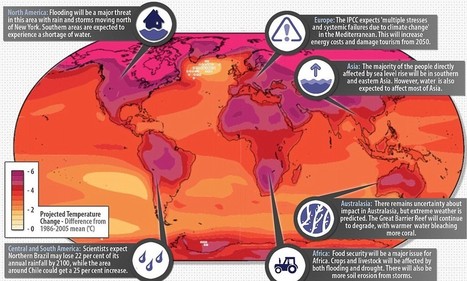
The United Nations' latest report on climate change contains plenty of dire warnings about the adverse impact "human interference with the climate system" is having on everything from sea levels to crop yields to violent conflicts. But the primary message of the study isn't, as John Kerry suggested on Sunday, for countries to collectively reduce greenhouse-gas emissions. Instead, the subtext appears to be this: Climate change is happening and will continue to happen for the foreseeable future. As a result, we need to adapt to a warming planet—to minimize the risks and maximize the benefits associated with increasing temperatures—rather than focusing solely on curbing warming in the first place. And it's businesses and local governments, rather than the international community, that can lead the way.
“The really big breakthrough in this report is the new idea of thinking about managing climate change,” Chris Field, the co-chair of the UN's Intergovernmental Panel on Climate Change (IPCC) study, said this week, adding that governments, companies, and communities are already experimenting with “climate-change adaptation.”...
...This year's IPCC report goes into great detail about how these strategies can work on every continent, identifying "key risks" and "adaptation prospects" that players—whether they be governments, businesses, or non-profits—should be prioritizing. (The World Resources Institute also has an excellent series of blog posts on the different roles that multinational corporations, small- and medium-sized businesses, and public-private partnerships can play here.)
In Africa, key risks revolve around insect-transmitted illnesses, clean-water availability, and agricultural productivity due to intensifying droughts. Terms such as "sustainable urban development," "agroforestry," and "diversifying livelihoods" pop up in the corresponding list of adaptation prospects. Central and South America face all of the above, too, though adaptation responses may focus more on equipping public-health services to fight the spread of vector-borne diseases...
International action to curb climate change must help poorer nations develop in a sustainable way that eases poverty and brings additional benefits such as better health and employment, aid and climate experts have said.
The comments came in response to Sunday's publication of the latest instalment in a series of scientific assessments from the Intergovernmental Panel on Climate Change (IPCC). This third report looked at options for reducing planet-warming emissions.
It is possible and affordable to limit the increase in the planet's mean temperature to 2 degrees Celsius above pre-industrial levels, the report said. "However, only major institutional and technological change will give a better-than-even chance that global warming will not exceed this threshold," the IPCC noted...
...INVOLVE DEVELOPING COUNTRIES
Aid groups argued that tackling climate change must not compromise the right of poorer countries to grow their economies. But with financial and technical support from the industrialised world, they should aim to develop in a less harmful way than wealthier states have done.
"Renewable energy, technology that uses energy efficiently and climate-friendly agriculture make it possible for countries to maintain - and improve - their standard of living without creating carbon emissions," said John Nduna, general secretary of the Swiss-based ACT Alliance, a coalition of more than 140 churches and affiliated organisations.
Sivan Kartha, a senior scientist for the Stockholm Environment Institute's U.S. Centre, said the latest IPCC report presented climate as part of the overarching development challenge...
...Mary Robinson, former president of Ireland, argued that the transition to a low-carbon global economy must "respect the right to development and not impact adversely on the most vulnerable".
Climate change has already had a powerful negative effect on agriculture and food security for the world’s most vulnerable, and that impact will get worse, according to agricultural experts responding to the latest Intergovernmental Panel on Climate Change (IPCC) report at a conference in London.
Pramod Aggrawal, an IPCC author and reviewer, said scientific data on agriculture over the last three decades shows that “indeed some impacts (are) already happening in terms of food security. It’s not a problem of the future anymore.”...
...By 2050, as food production falls and prices rise, “the adaptation options that we often talk about become more and more limited,” he said.
Jim Yong Kim, the president of the World Bank, predicted last week that “fights over water and food are going to be the most significant direct impacts of climate change in the next five to 10 years,” according to an interview with the Guardian newspaper...
...Many of the speakers at last week’s event said small farmers must be part of discussions about climate and food security as they are often among those most touched by the impacts of climate change, and they play an integral role in global agriculture systems.
By Richard Choularton, Head of WFP's Climate Resilience Unit
The warnings in the latest report from the Intergovernmental Panel on Climate Change are even more serious when you consider some of the other risks and mega-trends that the authors highlight. I refer to poverty and social inequality, for example, along with urbanization and the globalization of food systems.
For the most food insecure and vulnerable people - many of whom live in highly degraded environments that amplify even small climate shocks into food crises -- the new report is a stark reminder of a reality they are already facing.
Climate change is projected to slow down economic growth, erode food security, exacerbate poverty in most developing countries, and create new poverty traps in both developed and developing countries. The report provides high confidence that negative impacts of climate change on crop yields to date have been more common than positive impacts. Crop yields could decline by up to 2% per decade for the rest of this century...
Disproportionate effect on poor
Rural livelihoods will be particularly affected, through effects on water supply, food security and agricultural incomes, as well as shifts in production areas of food and non-food crops across the world. These things are expected to disproportionately affect the poor and marginalized in rural areas...
Disaster risk management
In addition to the potential impacts on climate change, the IPCC identifies progress on adaptation. However, while adaptation is increasingly being included in planning and policy processes, evidence of implementation of adaptation responses is more limited. Where action is being taken, the IPCC highlights that insurance programs, social protection measures, and disaster risk management may enhance long-term livelihood resilience among the poor and marginalized. Trade reform and investment can also improve market access for small-scale farmers...
Adaptation should not be seen as the “politically easy” option when governments are dealing with climate change, warns a top UN official.
Margareta Wahlström, the UN’s special representative for disaster risk reduction, said that the action required to prepare for the now inevitable impacts of a warmer world need to be “drastic”.
Her view challenges those of many sceptics, who have argued that adaptation should now be at the heart of climate change policy as the cheaper and easier way of tackling the problem. The alternative – a massive overhaul of the world’s energy systems – provides immense challenges economically, politically and socially...
...The UN’s latest blockbuster report by the Intergovernmental Panel on Climate Change (IPCC) on the state of climate science focused on the impacts of climate change, what the world can do to prepare for them – and what it can’t.
The report weighs heavily on a particular point: climate change will inevitably cause risks across all continents, and these need to be managed. It is a point that Wahlström has long been making herself.
“They’ve clearly said that the factors that drive climate change are on a path that are in some cases irreversible,” she explained. “The triggers that have been put in motion already require that we manage risk for a long time.”
See more at: http://www.rtcc.org/2014/04/07/adaptation-as-complicated-as-cutting-emissions-un-disasters-envoy/#sthash.gJVk7DPx.dpuf
This paper discusses the impact of climate change on under-nutrition and current efforts in reducing hunger. It addresses the call to climate negotiators, governments and donors to focus their attention on the consequences of climate change on under-nutrition, and commit urgently to help the most vulnerable to adapt to an increasingly unpredictable climate and world. Thus this paper draws the following recommendations: (1) increasing financial support for nutrition specific and sensitive interventions; (2) increasing funding devoted to adaptation in the most at-risk countries, prioritizing actions for the most vulnerable groups, households and individuals; (3) prioritizing adaptation programs that include well-defined food and nutrition security objectives.
This study shows that climate change and environmental degradation are causing pronounced negative effects on food, water and energy, with two distinctive features – gender and geographic inequality, where men, women and children are disproportionately affected and where some areas are more vulnerable and hit much harder than others. The study also reveals that the effects of climate change have a tendency of being accompanied by other human-induced impacts such as resource over-exploitation, which are already posing a major environmental challenge in Africa. These factors represent a major challenge in building climate change adaptation strategies.
This document presents the Working Group II (WGII) contribution to the IPCC Fifth Assessment Report (AR5). It details the impacts of climate change to date, the future risks from a changing climate, and the opportunities for effective action to reduce risks. A total of 309 coordinating lead authors, lead authors, and review editors, drawn from 70 countries, were selected to produce the report. They enlisted the help of 436 contributing authors, and a total of 1,729 expert and government reviewers.
The report concludes that responding to climate change involves making choices about risks in a changing world. The nature of the risks of climate change is increasingly clear, though climate change will also continue to produce surprises. The report identifies vulnerable people, industries, and ecosystems around the world. It finds that risk from a changing climate comes from vulnerability (lack of preparedness) and exposure (people or assets in harm’s way) overlapping with hazards (triggering climate events or trends). Each of these three components can be a target for smart actions to decrease risk.
This working paper explains how to increase the scale and impact of community-based adaptation (CBA). It argues that CBA is a viable way to build communities’ resilience to climate change, particularly those most vulnerable to its impacts. CBA puts them in the driving seat when it comes to designing and delivering adaptation options. However, until recently, analysis of the impacts beyond the immediate beneficiaries was not possible because not enough CBA projects had been implemented. As a result, most of the lessons about best practice have yet to be scaled out or included in wider development policies. Thus, the paper contributes initial reflections on where and how opportunities exist for scaling out CBA pilot projects.
Muslims in sub-Saharan Africa, who farm some of the least fertile land on the continent, have developed a training manual to encourage more sustainable farming practices among millions of African Muslims facing a threat to their food security from climate change.
The manual explains the practical aspects of conservation agriculture, which aims to achieve profits for farmers and sustained levels of production while conserving the environment.
Sub-Saharan Africa’s 248 million Muslims are particularly badly affected by climate change because most are farmers or rely on agriculture for their livelihoods, and the majority live in arid and semi-arid areas vulnerable to droughts and floods...
...The manual, entitled “Islamic farming: A tool for conservation agriculture”, integrates Koranic scriptures and Islamic teachings about caring for the Earth with practical training in conservation farming.
It is a collaboration between the Alliance of Religions and Conservation (ARC), a secular British charity that works with faith groups to help them develop environmental programmes, SUPKEM and the Muslim-led international organisation Global One 2015...
...According to Husna Ahmad, the chief executive of Global One 2015, the new manual, or toolkit, draws on the Islamic concept of “Rizq”, meaning livelihood, and outlines six “Ps” reflecting Islamic teachings: plan, prepare, plant, provide, protect and produce...
...The new manual, piloted in Kenya and Ethiopia, has been translated to Kiswahili, the national language of Kenya and one spoken and understood by most farmers.
The Second IGAD IDDRSI met from 24-27 March 2014, in Kampala, Uganda, and included the Drought Resilience Summit, which took place on 27 March. The outcomes of the Summit are expected to contribute to the Fifth Africa Regional Platform for Disaster Risk Reduction, meeting in Abuja, Nigeria, in May 2014. The Summit took place under the theme 'Ending Drought and Emergencies in the IGAD Region;' focused on “investing differently” to end drought emergencies; and helped prepare for a future in which climate change will amplify existing stress on water availability in Africa. The Summit resulted in a Declaration of the IGAD Summit of Heads of State and Government on Progress of the IDDRSI. The Summit was preceded by the Regional Drought Resilience Platform General Assembly and Steering Committee meeting.
During the meeting, participants presented on in-country progress, and urged fast tracking of “institutionalization” of DRR and management processes, as well as informing drought resilience investments by risk information. According to the UN International Strategy for Disaster Reduction (UNISDR), Ethiopia and Kenya have integrated their country programming on drought resilience into their long-term development plans, while, in Uganda, the main focal point for implementation of resilience programmes is the DRR Office. In addition, UNISDR has supported the establishment in Djibouti, Ethiopia, Kenya and Uganda of national disaster loss databases. Also, a Resilience Analysis Unit was established at the IGAD Secretariat to enable joint analyses at the country level.
...The news from the United Nations on the likely impacts of climate change is dire, especially for the poorest people on the planet.
There will likely be more floods, more droughts and more intense heatwaves, says the UN's Intergovernmental Panel on Climate Change.
As human emissions of greenhouse gases continue to rise, natural ecosystems come under extreme stress with "significant" knock-on effects for societies.
"Changes in the availability of food, fuel, medicine, construction materials and income are possible as these ecosystems are changed," says the report. But in the words of that great British band The Smiths, you can now stop me if you think you've heard this one before....
'No one will be untouched': Climate change will lead to war, famine and extreme weather, claims IPCC report.
Report said we have seen impacts of global warming on every continent
Experts warned people are ill prepared to cope with the dramatic changeIt predicted violent conflicts, food shortages and infrastructure damage
Extreme weather will increase poverty and damage animal and sea life
One of the report's contributors has accused the IPCC of being too ‘alarmist’ – and demanded his name be withdrawn
Key Points from IPCC Report
--Food shortages are expected to get worse:
The report claims that increases in crop yields have slowed over the last 40 years. Some studies now point to dramatic declines in some crops over the next 50 years – especially wheat and corn.
--Violent conflict may be triggered as a result:
Climate change will complicate and worsen existing global security problems, such as civil wars, strife between nations and refugees.
Fights over resources, like water and energy, hunger and extreme weather will all go into the mix to destabilise the world.
--The gap between the rich and the poor could widen:
Poor people are going to bear an unfair burden of climate change, the report said. Climate change is going to exacerbate existing inequalities, and it is going to make it harder for people to fight their way out of poverty.
--Everyone will be affected:
This, the report claims, is because there are limits to how far society can adapt to climate change. The only way is to cut emissions is act now and at the same time make plans to keep people out of harms' way when extreme weather strikes.
--Mitigating climate change is tough by achievable:
The report notes that research on the effects of climate change has doubled since the last report in 2007. The understanding about what needs to done to protect people from severe consequences has also improved dramatically.
To get content containing either thought or leadership enter:
To get content containing both thought and leadership enter:
To get content containing the expression thought leadership enter:
You can enter several keywords and you can refine them whenever you want. Our suggestion engine uses more signals but entering a few keywords here will rapidly give you great content to curate.


 Your new post is loading...