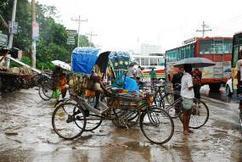
Tackling hunger is not only a question of producing more food in rural areas, but requires looking at why poor urban populations struggle to eat enough - a problem aggravated by climate change. [report from the International Institute for Environment and Development (IIED)]
Policies to improve food security in developing nations tend to focus on helping farmers in the countryside grow more food, and often neglect the causes of hunger in towns and cities...
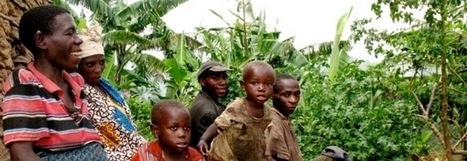
...For example, it cited a study showing that four out of five urban households were food insecure in 11 southern African cities. And in informal settlements in Kenya's capital, Nairobi, infant and under-five mortality rates have been found to be higher than in rural areas.
Poor urban households typically spend over half their earnings on food, and any fall in income or rise in food prices - as seen in 2007-2008 - hits hard, the paper said. People eat less or skip meals, and have to work longer hours to afford food...
...Social protection programmes such as Kenya's Hunger Safety Net, the Productive Safety Net Programme in Ethiopia and Bolsa Familia in Brazil have been successful in strengthening food security by providing more stable incomes, the paper noted. But such schemes are non-existent or insufficient in almost 80 percent of the world's poorest countries, and largely fail to reach those who live in urban slums and have no official address.
An award scheme to encourage climate change and environment reporting has been launched. An initiative of the Nairobi-based NGO Coalition Pan African Climate Justice Alliance, the “African Climate Change and Environmental Reporting (ACCER) Awards” will see Journalists from across Africa scoop lucrative Awards, with the top winner bagging prizes and sponsorship worth more than 1 million shillings (US$12,000).
Numerous UN reports confirm that Africa will suffer extreme environmental upheavals as a result of rising temperatures, rising sea levels, and variations in precipitation.
According to these reports, Sub-Saharan Africa, where 70 percent of the people are farmers, crop yields are expected to fall by 20 percent, arable land, 65 percent of which is already wrecked by degradation and drought, is expected to further decline, worsening already serious food shortages and intensifying hunger and malnutrition;As much as 40 percent of species’ habitats may be altogether destroyed; Rainfall is predicted to decline by 10 percent by 2050.
Africa, Asia and other developing nations will soon be able to track climate change adaptation and development thanks to a framework and tools specially designed by researchers working in these regions, the London-based International Institute for Environment and Development (IIED) said today.
The project is a collaboration and partnership between IIED and Adaptify and Garama 3C Ltd.
IIED spokesperson Mike Shanahan said in a statement that his organisation was engaging with governments of Ghana, Kenya, Mozambique, Nepal and Pakistan to test the framework and tools as means to evaluate a range of climate adaptation activities.
The framework and tools – known collectively as the Tracking Adaptation and Measuring Development (TAMD) Framework – were developed with funding from the UK’s Department of International Development.
The framework is described in a new paper that IIED publishes this week.
Here we introduce a set of research questions for each of these themes, along with a discussion of specific policy goals that would benefit from researchers’ tackling these questions:
1) Adaptation Success: How will we know when adaptation efforts are succeeding? How does near-term success support or undermine long-term success?
2) Critical Thresholds: What are the significant climate-related social and ecological thresholds that adaptation efforts can help society avoid? Can we identify leading indicators that warn us when we’re approaching such thresholds?
3) Adaptation Options: Are standard sets of adaptation options emerging that can be applied to a variety of places with common environmental contexts (e.g., drylands, coastal zones, urban areas, mountain areas) or economic sectors (e.g., agriculture, water services, transportation, tourism)?
4) Information Systems: What information can best support effective decision-making in the face of climate uncertainty? Which decision makers really need new information, and how should it be packaged so that they can use it effectively?
5) Institutions: Which institutions help communities build resilience at the local level? What enabling conditions at national and global levels help these institutions thrive?
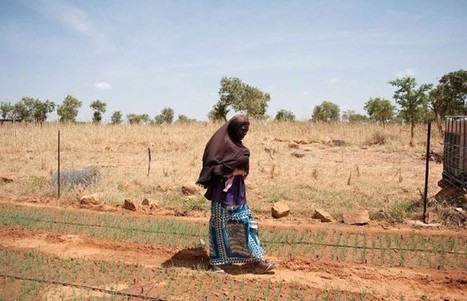
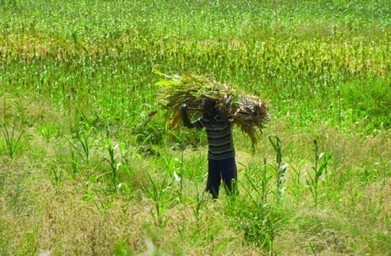
With multi-dimensional roles as mothers, providers and often heads-of-households, women in rural areas of Kenya are also most often the managers of local on-the-ground natural resources. This is especially true for Kenya’s women farmers because of their reliance on nature and nature-based income sources. Women farmers in rural Kenya often hold the key to food security in the region.
The majority of the world’s small-scale farmers are women. In fact women produce most of the world’s food. But climate change has made the risky business of farming all the more difficult. More frequent crop failures mean women work harder and families eat less.
The CGIAR Research Program on Climate Change, Agriculture and Food Security (CCAFS) is holding its annual science meeting, in Bodega Bay (California USA). This group of 70 or so people is Rethinking Science, Learning and Partnerships to Meet Development Outcomes: Reducing Poverty and Improving Food Security in the Context of Climate Change.
This CCAFS meeting is looking for ways to achieve better, bigger and faster impacts through engagement with a wide variety of communities. The participants see untapped potential in CGIAR and beyond for actors of diverse kinds to join forces in improving global food security in the light of climate change. They’re looking at innovative ways to democratize and co-create science for practical use. They hope to build on a legacy of social learning approaches and participatory work within CGIAR and to find ways to adapt these to address the complex challenges faced by hundreds of millions of small-scale food producers and sellers in developing countries.
Updates from the event are being shared on the CCAFS website and on Twitter (follow #2013CCSL).
Ethiopia, Kenya, Mozambique and Zimbabwe are addressing drought-adaptation and climate change through an ongoing UN Development Programme (UNDP) and Global Environment Facility (GEF) program, titled “Coping with Drought and Climate Change.” The three-year program aims to increase the use of drought-adaptation farming techniques and coping mechanisms and to facilitate sharing of experience and knowledge among the four countries.
The program trains farmers on how to implement drought-adaptation measures, including through using high-yield, drought-resistant seeds and employing early warning systems to predict the rainy season and to plan crop cycles. These strategies have increased crop yields and resulted in more stable crop yields during periods of erratic rainfall, according to UNDP. In Ethiopia, for example, where erratic rainfall patterns have increased vulnerability to climate-related shocks and increased food insecurity in already fragile communities, the introduction of drought-resistant seeds have increased farmers’ adaptive capacity and income and decreased reliance on food aid.
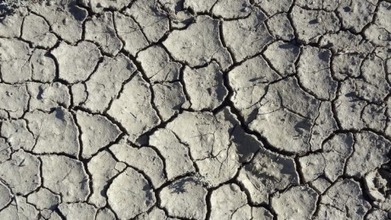
Droughts cause more deaths and displacement than floods or earthquakes, making them the world's most destructive natural hazard, FAO says
The four U.N. bodies that launched the "National Drought Management Policies Initiative" were the FAO, the WMO, the U.N. Convention to Combat Desertification and the U.N.-Water Decade Programme on Capacity Development.
The project aims to develop early warning systems, following the example of the U.S. National Integrated Drought Information System, and mitigation measures which might include helping farmers change their planting schedule to adapt to water shortages.
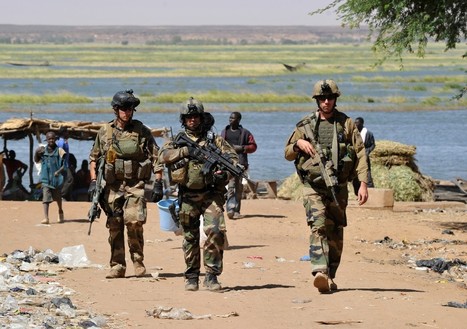
...But the north had been getting a whole lot more arid in recent years, thanks to factors like burning wood for fuel and greenhouse gas emissions from India and China. Much of Mali’s land is in the massive strip of land known as the Sahel, which was wracked by one of its increasingly severe droughts in the months leading up to last year’s coup d’état. As early as 2010, leading climate-aware observers began to warn of instability.
"...there isn’t a straightforward cause-effect relationship here...But when a government has a great deal of difficulty providing basic resources for its public...and when climate-exacerbated droughts make that situation worse, then the staying power of non-state actors—such as al-Qaida in the Islamic Maghreb—and sympathy for non-state actors can rise."
Between 2008-2011 years, the team produced the regular briefing, Joto Afrika (Swahili for 'Africa is feeling the heat'), a series of briefings and online resources reporting on climate change in sub-Saharan Africa. The briefs contained mainly African produced research with easy-to-understand findings.
The photo-audio story project was prompted by findings from an evaluation of Joto Afrika. In the evaluation survey, a range of specific examples of action were provided by readers, including the use of new technologies and approaches which had been adopted by community members as a result of a Joto Afrika case study or research article. Hence, these readers had gone beyond simply learning about climate change issues to practical application of that learning.
This process of learning-into-action demonstrates that communities are looking to both learn and engage with research findings. There are, however, obstacles to accessibility of research knowledge. Issues such as complex language and jargon limit the extent to which individuals can learn from research knowledge, reducing the potential of development research to lead to tangible improvements in peoples' lives.
Highlights--With hundreds of thousands of drought refugees from the Horn of Africa, Ethiopia’s rural communities struggle to provide stable crops during erratic rainfall. Thanks to a new project providing farming training, as well as drought-resistant seeds, many are increasing their crop yields.--100,000 Ethiopians are benefiting from the drought-adaptation project, a joint effort of UNDP and Ethiopia’s Ministry of Agriculture (with financing of US $995,000 from GEF).--In addition to providing high-yield, drought-resistant seeds, the program includes knowledge-sharing between participating countries and communities.
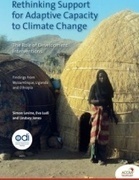
The Africa Climate Change Resilience Alliance (ACCRA) was established in 2009 with the aim of understanding how development interventions can contribute to adaptive capacity at the community and household level, and to inform the design and implementation of development planning by governments and non-governmental development partners to support adaptive capacity for climate change and other development pressures. This paper is based on an analysis of three country studies conducted by national research teams in eight research sites in Ethiopia, Uganda, and Mozambique for ACCRA. It describes the Local Adaptive Capacity framework developed for this project, its application during the research, and the evidence found about the impact of development interventions on the adaptive capacity of people and communities.
"Much of the threat of climate change on health results from our vulnerabilities to environmental change. These vulnerabilities are primarily associated with the poor, who are most dependent on the environment and least able to adapt to changes in these systems" ..."If we address current community health deficiencies now, climate change impacts are not likely to have such important and potentially devastating consequences in the future."
Climate change is a serious threat to crop productivity in regions that are already food insecure. We assessed the projected impacts of climate change on the yield of eight major crops in Africa and South Asia using a systematic review and meta-analysis of data in 52 original publications from an initial screen of 1144 studies. Here we show that the projected mean change in yield of all crops is -8% by the 2050s in both regions. Across Africa, mean yield changes of -17% (wheat), -5% (maize), -15% (sorghum) and -10% (millet) and across South Asia of -16% (maize) and -11% (sorghum) were estimated. No mean change in yield was detected for rice. The limited number of studies identified for cassava, sugarcane and yams precluded any opportunity to conduct a meta-analysis for these crops. Variation about the projected mean yield change for all crops was smaller in studies that used an ensemble of >3 climate (GCM) models. Conversely, complex simulation studies that used biophysical crop models showed the greatest variation in mean yield changes. Evidence of crop yield impact in Africa and South Asia is robust for wheat, maize, sorghum and millet, and either inconclusive, absent or contradictory for rice, cassava and sugarcane.
Human-induced climate change contributed to low rain levels in East Africa in 2011, making global warming one of the causes of Somalia's famine and the tens of thousands of deaths that followed, a new study has found.
It is the first time climate change was proven to be partially to blame for such a large humanitarian disaster, an aid group said Friday.
Three climate scientists with Britain's national weather service studied weather patterns in Somalia in 2010 and 2011 and found that yearly precipitation known as the short rains failed in late 2010 because of the natural effects of the weather pattern La Nina...
...Ethiopia and Kenya were also affected by the lack of rains in 2011, but aid agencies were able to work more easily in those countries than in war-ravaged Somalia, where the al-Qaida-linked Islamic extremist group al-Shabab refused to allow food aid into the wide areas under its control.
Still, the new research proves for the first time that climate change was one of the triggers for the drought, which was one of the causes of the famine, said Senait Gebregziabher, the Somalia country director for the aid group Oxfam.
Around 120 representatives from 60 Africa regional adaptation knowledge platforms and other organizations have boosted climate change adaptation efforts in Africa, one of the world's most vulnerable continents to shifting climactic conditions, by endorsing the Africa Adaptation Knowledge Network (AAKNet) as a key tool for creating a coordinated approach.
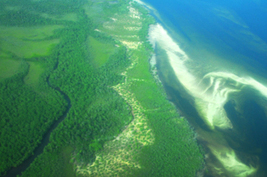
Despite the challenges, there are many examples of adaptation measures that are improving lives across the continent, such as a Global Environment Facility-funded project to restore mangroves in Djibouti that enhanced local income as it tackles coastal erosion.
At a meeting at the headquarters of UNEP in Nairobi, delegates adopted a declaration endorsing AAKNet, part of the UNEP-facilitated Global Adaptation Network, as the continental network responsible for spreading such practices through:
Coordinating, facilitating, harnessing and strengthening the exchange of information and knowledge;Building new alliances to enhance collaboration and innovation;Harmonizing and aggregating knowledge in useable packages tailored for addressing particular climate risks;Fostering and supporting strategic planning and policy processes;Building capacity to provide short, midterm and long-term solutions to climate change.
The network aims to support planning and implementation of climate change adaptation through sharing valuable knowledge and experiences with governments, regional authorities, and communities facing similar climate challenges, along the way overcoming such obstacles as fragmentation, lack of alignment of practices, insufficient understanding of end users and overlap.
For the first time, we have proof that climate change has led to a humanitarian disaster. The East African drought of 2011, which resulted in a famine that killed at least 50,000 people, was partly caused by human emissions of greenhouse gases.
Livestock farming is one of the most important subsectors of the agricultural economy of developing nations. In Africa, mobile livestock keeping (MLK), or pastoralism, is crucial for rural livelihoods and food security, especially in the arid zones of the continent. With rapid urbanization and population growth, the demand for livestock products far outstrips supply. Climate change will exacerbate the situation because it will affect livestock production systems, and vice versa. This paper reviews the complex interaction between MLK and climate change, and proposes strategies to help sustain MLK as a key feature of rural livelihoods in Africa.
It is much more cost-effective to prepare for drought than to react when the crisis hits, U.N. agencies are telling drought-prone nations at a Geneva conference
"Providing aid to people hit by a drought-related emergency can be up to eight times more expensive than the investment needed to prevent a crisis developing...Despite this, policy makers receiving early warnings about the onset of droughts are still not taking precautions to help them manage the problem...Despite our ability to predict drought, globally we still continue operating in crisis-management mode." [Luc Gnacadja, executive secretary of the U.N. Convention to Combat Desertification (UNCCD)]
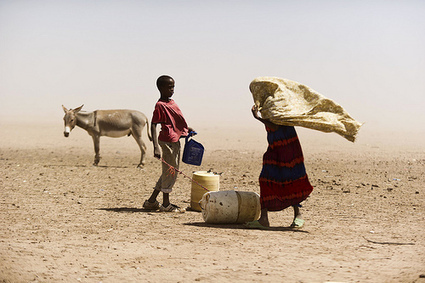
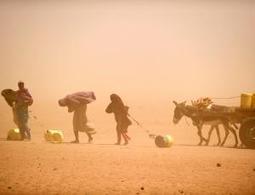
Droughts cause more deaths and displacement than cyclones, floods or earthquakes, making them the world's most destructive natural hazard, according to the U.N. Food and Agriculture Organisation (FAO). Since the 1970s, the land area affected by drought has doubled, with women, children and the elderly often paying the heaviest price.
...The FAO, the UNCCD and the World Meteorological Organisation (WMO) have organised the gathering to push governments in drought-prone countries to develop and adopt pro-active policies that will make them more resilient.
To get content containing either thought or leadership enter:
To get content containing both thought and leadership enter:
To get content containing the expression thought leadership enter:
You can enter several keywords and you can refine them whenever you want. Our suggestion engine uses more signals but entering a few keywords here will rapidly give you great content to curate.


 Your new post is loading...