

VIDEO -- ASEAN Day for Disaster Prevention and Mitigation]

Climate Change & DRR in East Africa
1.4K views |
+0 today

Climate Change, Climate Adaptation, Disaster Risk Reduction and Food Security in East, Central and the Horn of Africa
Curated by
Robin Landis
 Your new post is loading...
 Scoop.it! 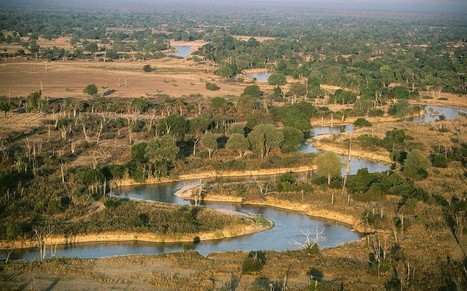
For private equity houses, pension funds and family offices, the sprawling farms of sub Saharan Africa are the new land of plenty. Supply is limited, due to patchy infrastructure and transport coverage, and the risks are high, but for those brave enough the long-term rewards could be bountiful. Investors such as Duxton, a private equity-type fund that was spun off from Deutsche Bank, SilverStreet, CVC and Altima Asset Management, have already ploughed money into Zambia, Tanzania and Kenya, where speculators can reap an income yield of 15pc to 20pc in five to seven years, in some cases. ....The African continent holds the world’s largest proportion of agricultural land, with 1.2m hectares and 94,500 farms, although a much smaller proportion is investable. “Sub Saharan Africa is the final frontier of commercial market development,” explains James Cairns, an international agent a property group Savills. “It gives investors the chance to buy in at a low entry price and pioneer the creation of new farmland and develop large- scale operations from an early stage.”.... 
Scoop.it!

The impacts of disasters on development, poverty and vulnerability have led to calls for improving disaster resilience – the capacity to cope with and adapt to shocks and stresses associated with natural hazards. What do we know about what can enable or constrain disaster resilience? This Topic Guide for policymakers and practitioners synthesises the evidence, approaches and lessons that emerge from the literature. About this Topic Guide
Scoop.it!
Climatic conditions in Kenya have seen radical shifts over the last few years. 'Normal' seasons have been characterised by harsh, erratic and extreme events. Dry seasons have become longer; temperatures have risen, while rains have fallen with abnormally high intensity - leaving a trail of destruction ranging from deaths to displacement. The changing weather patterns have bewildered many analysts in Kenya, who now say that the increasingly unpredictable weather patterns are likely to be a result of the climate change. Weather experts in Kenya are generally in agreement with researchers elsewhere who say that although the effects of climate change are going to impact most parts of the African continent, some regions will be hit much harder than others....
Scoop.it!

This publication provides an accessible guide to the lessons learned by the Chololo Ecovillage project, making a valuable and timely contribution to the growing body of knowledge and experience on climate change adaptation in Tanzania.
Scoop.it!
Secure Livelihoods Research Programme Consortium: Livelihoods, Basic Services, and Social Protection
The Feinstein International Center joined the Secure Livelihoods Research Consortium (SLRC) at its beginning in 2011, taking part in the Consortium’s work in investigating livelihoods, access to basic services, and social protection in fragile and conflict-affected states. Closely linked to earlier work undertaken by the Feinstein Center in livelihoods and food security, and combining insights from working in protracted conflict settings, this research is led by the Overseas Development Institute in London. The program of research is six years long, funded by the UK Department for International Development and Irish Aid. Research focuses on seven conflict-affected countries: UGANDA, SOUTH SUDAN, Afghanistan, Pakistan, Nepal, Sri Lanka, and the Democratic Republic of Congo. The Feinstein Center is leading on the SLRC work in Uganda and South Sudan. The research focuses on three interlinked thematic areas. The first seeks to generate better information about poverty and vulnerability in fragile and conflict-affected situations and an improved understanding of people’s and communities’ own responses to fragility and conflict. The second focuses on state capacity,, including an examination of existing state capacities for policy-making and service delivery. The third is the livelihoods and economic activity in conflict and recovery, including the role of aid agencies and non-governmental actors, their role in social protection, and how they relate to the state.
Scoop.it!
From
www

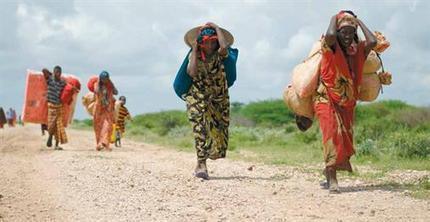
Between 2008 and 2012, 144 million people were forced to leave their homes by sudden-onset disasters around the world. The vast majority of them fled from floods, storms and wildfires and others effects of climate change. Most remain in their countries as internally displaced people, but many also flee across the borders to other countries.
Scoop.it!
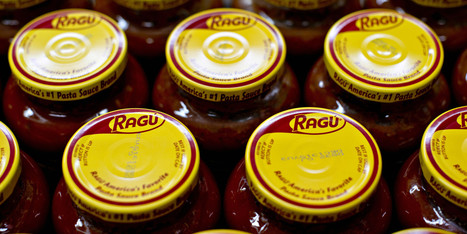
The food industry is part of the problem, but it can also clearly play an important role in being the solution. The 'Big 10' must as sector leaders act to on the one hand climate-proof their businesses but also climate-proof the future so there is enough food on the table today and tomorrow. ...Unilever says that it loses $415million a year because of extreme weather conditions that are worsening because of climate change. General Mills have also reported losing 62 days of production in the first fiscal quarter of 2014 alone. These two companies are among the 'Big 10' food and drink companies, along with Associated British Foods (ABF), Coca Cola, Danone, Kellogg's, Mars, Mondelez, Nestlé and PepsiCo. When it comes to climate change, some are way ahead of the others. Oxfam's report, Standing on the Sidelines, launched this week, shows how deforestation, nitrous oxide from the overuse of fertilizers, large scale land clearances, and other harmful production practices in the 'Big 10's' supply chains are exacerbating climate change and ironically putting the fight against hunger at risk. Together, the 'Big 10' emit 264 million tons of greenhouse gases - more than all of Scandinavia. If they were a country, their total emissions of 250 million tons would rank them as 25th worst polluter in the world. These emissions are contributing to a growing humanitarian catastrophe. By 2050, there could be 50 million more people made hungry because of climate change. More extreme and unpredictable weather is affecting food supplies, driving up food prices and causing more hunger and poverty. Oxfam estimates that the price of your bowl of Kellogg Corn Flakes could increase by up to 44% in the next 15 years because climate change could affect crops. Between them, the 'Big 10' generate £650million a day in revenues - the same as the world's lower income countries GDP (Gross Domestic Product). Coming together, they could become a powerful bloc, unleashing a force for good and helping to stop climate change making the poorest people hungry.... http://www.huffingtonpost.co.uk/ben-phillips/climate-change-and-food_b_5358325.html
Scoop.it!
....The joint meeting, which is to consider components being implemented by the Lake Victoria Basin Commission and the East Africa Community Secretariat and that is being attended by delegates from Burundi, Rwanda, Tanzania, Uganda and the host country, Kenya...
Scoop.it!
At the ‘Building Resilience for Food and Nutrition Security' conference organized by the International Food Policy Research Institute (IFPRI), its 2020 Vision Initiative and partners, participants called for the inclusion of a goal to eliminate hunger by 2025 in the post-2015 development agenda. The conference was the culmination of a two-year global consultation process meant to catalyze action on the incorporation of resilience into the post-2015 agenda and to improve investments and policies on strengthening resilience and food and nutrition security for all. The meeting also saw the introduction of the Food Security Climate Resilience Facility (FoodSECuRE) by Ertharin Cousin, Executive Director, the UN World Food Programme (WFP). The facility will reinforce community resilience by responding to forecast climate shocks before they occur... ...The conference discussed: impacts of increasing standardization on food system resilience; ‘nutrition-sensitive landscapes;' disproportionate effects of major shocks on poor and vulnerable communities; and investments to eliminate hunger and nutrition. Participants also addressed measuring resilience, including: collecting gender disaggregated data and more frequent data; using information and communication technologies (ICTs) to complement household survey data; and conducting environmental mapping and risk assessments.
Scoop.it!
VIDEO | In December next year a globally binding climate agreement will be negotiated in Paris. Africa cannot sit on the sidelines any longer as it will be impacted most severely by climate.
Scoop.it!

The growing global cost of natural disasters, including extreme weather events, has prompted the insurance sector to change how it operates.
|
Scoop.it!
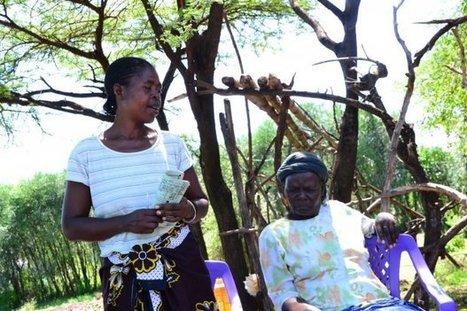
CARE Ethiopia will host the learning event together with CARE’s Adaptation Learning Programme (ALP), the CGIAR Climate Change Agriculture and Food Security programme (CCAFS) and the International Centre for Insect Physiology and Ecology (ICIPE). Location: International Livestock Research Institute (ILRI) complex, Addis Ababa, Ethiopia, 1-4 September 2014. Bringing together stakeholders from a diverse range of disciplines working with dryland communities across East and Southern Africa, the aim of the event is to facilitate learning from experiences and evidence on climate change adaptation, in particular CBA, and resilience. Participants will co-generate new insights on the links between CBA and achieving resilient development.
Scoop.it!

Hundreds of thousands of people are already migrating because of climate change, and countries urgently need adaption plans to resettle populations and avoid conflict, says a new report. Sea level rise, violent storms and more gradual disasters such as droughts will cause more unplanned mass population movements - either temporary or permanent - and governments need to manage this by planning in advance to protect vulnerable people. The report, by the United Nations University's Institute for Environment and Human Security, warns that unplanned movements will lead to conflict and insecurity. Governments need to act regionally to anticipate and facilitate the movement of people. Ideally, for the displaced families, this would mean providing access to land and housing. They would need financial services, health, education, water and sanitation. They would also need jobs and the ability to cover the costs of living and food security....
Scoop.it!
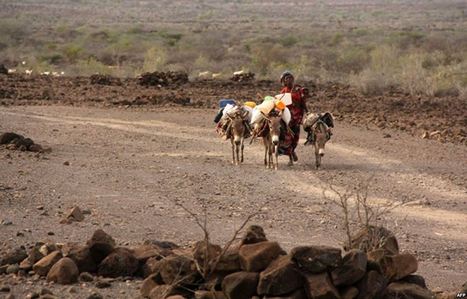
[Voice of America News] The United Nations has launched a two-year, multi-million-dollar appeal to help one-quarter-million people in the tiny East African country of Djibouti recover from several years of persistent, recurring drought. The U.N. seeks $74 million for 2014 to break out of the country’s ongoing cycle of crises...
Scoop.it!

The Food and Agriculture Organization of the UN (FAO) has released a booklet showcasing ten best practices from its climate smart agriculture (CSA) approach to the crop, fishery, forestry and livestock sectors. The report, titled ‘FAO success stories on CSA,' stresses the urgency of tackling climate change and safeguarding food security to boost farmers' resilience and adaptation to climate change and illustrates how rural communities are already transitioning to farming practices that are better suited to a warming world.
Scoop.it!
Katharine Downie, Coordinator for the Technical Consortium for Building Resilience in the Horn of Africa, ILRI, at the side event, "Measuring and Evaluating Resilience in Drylands of East Africa, IFPRI 202 Conference on Building Resilience for Food and Nutrition Security, May 15-17 2014 in Addis Ababa, Ethiopia.
Scoop.it!

From
www
Shifting to a "climate-smart" agriculture approach can not only help prevent food security crises but holds the promise of sparking economic and agricultural renewal in rural areas. This new publication highlights success stories in "climate-smart agriculture," stresses need to transition to new approach to food production.
Scoop.it!
From
cdkn
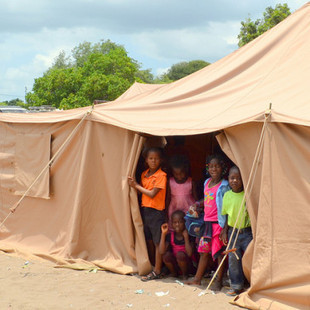
OPINION Tom Mitchell, Head of ODI’s Climate and Environment Programme and CDKN’s Strategic Advisor on Disaster Risk Management reports on a key meeting in Africa on the new international disasters framework. This article first appeared on Alertnet.
Scoop.it!
From extreme weather events to rising and highly volatile food prices, poor and vulnerable populations are subject to a bevy of shocks that threaten their basic food and nutrition security. In the face of global climate change and other recent food price spikes, it seems to many that such events are occurring more and more often. Yet are shocks, indeed, impacting populations with greater frequency and severity or is it a case of misperception? In their 2020 Conference Brief, Are Shocks Actually on The Rise? A Selective Review of Five Types of Shocks, authors Laura Zseleczky and Sivan Yosef take stock of five types of shocks—conflicts, natural disasters, climate change, food price volatility, and health crises—in the context of their impacts upon agriculture and food safety, as well as gauging their frequency and severity in recent decades.
Scoop.it!
SLIDES | Assessing the potential geographic shifts of a major staple crop, teff (Eragrostis tef) in Ethiopia as a result of climate change. More information about the project: http://www.abcic.org/index.php/programs/striga-resistance-in-sorghum-in-east-and-central-africa/effects-of-climate-change-on-teff-production-in-ethiopia
Scoop.it!
Countries need to shift to more sustainable food systems, stepping up action to mitigate and adapt to the effects of climate change, FAO Director-General José Graziano da Silva told participants at the seventh Forum on Agriculture in the Kingdom of Morocco. "Everything we do needs to take climate change into consideration," he stressed. "And the time is now. We cannot afford to wait." "Climate change has the potential to reconfigure the planet's food production scenario," Graziano da Silva said, adding that it reintroduced "an element of uncertainty" after decades in which hunger was caused more by a lack of access to the means to produce or purchase food, rather than insufficient supplies globally. "The world's poorest are particularly vulnerable," he said. "Not only do they have fewer means to react, but they also tend to live in already marginal production areas," where the impact of climate change in agricultural production is felt to an even greater extent. He pointed to the recent findings of the Intergovernmental Panel on Climate Change, which reflected these concerns and called for urgent action. The Director-General also spoke about family farming as a tool for rural development and stability, pointing out that the United Nations had declared 2014 the International Year of Family Farming... ...The Director-General and the Moroccan Ministers of Agriculture and Marine Fisheries and of the Economy and Finance signed an agreement to support food security projects elsewhere in Africa through the FAO South-South Cooperation (SSC) programme. The innovative agreement is the first under FAO's SSC initiative to combine government and private sector funds in this way.
|





