The recent US-Africa Leaders’ Summit was the background for a high-level session on “Resilience and Food Security in a Changing Climate” at the National Academy of Sciences in Washington, D.C.
The session convened top US and African leaders to discuss challenges in building climate change resilience and ensuring food security – and craft innovative solutions going forward. Representatives from the CGIAR Research Program on Climate Change, Agriculture and Food Security (CCAFS) were invited to attend the session....
...Climate change adaptation has often been viewed as a social undertaking but in reality this is not the case. A new report from the U.N. Environment Programme (UNEP), Keeping Track of Adaptation Action in Africa, shows that adaptation is a business with a quick turnover that can offer new ways of making a living.
Done correctly, climate adaptation techniques can improve income and social welfare, protect and restore ecosystems, and serve other economic sectors and wider groups in the community...
...The UNEP report marks a shift in the climate change narrative from that of doom and gloom, setting out what adaptation can achieve. This is especially important at a time when a very bleak and frightening picture of climate change impacts on African countries is emerging.
The findings of UNEP’s 2013 Africa Adaptation Gap Report highlighted key questions: What is being done in Africa to prepare for and respond to climate change? What should preparedness and response involve?
The U.S. Agency for International Development (USAID), the National Science Foundation (NSF), and the National Cancer Institute (NCI) today announce 46 new research projects that advance the scientific and technical capacity of both the United States and partner countries in critical areas of development.
The projects, spanning 23 countries, are funded through the Partnerships for Enhanced Engagement in Research (PEER) program, a joint initiative designed to foster collaborative global research. Through the competitively awarded program, USAID directly supports researchers in developing countries who work with U.S. government-funded researchers...
...These new awards total approximately $8.5 million, and allow scientists to collaborate on a variety of crucial research areas, such as maternal and child health, glacier retreat and water resource sustainability, biodiversity conservation, biogas production, drought and climate change mitigation, and pollution remediation.
Rebecca McNaught, Senior Climate Advisor for Red Cross Red Crescent Climate Centre argues that while women are vulnerable to climate change, they could play a vital role in reducing risk in their communities and nations.
...Many development agencies have noted that women tend to have lower rates of decision-making and participation in disaster management activities. Yet, they are often severely affected.
Women’s multiple roles as food producers and providers, as guardians of health and as carers mean that climate-related hazards such as drought and erratic rainfall can be a heavy burden. In other words, when women’s traditional gender roles combine with changing extremes and adverse climate trends, vulnerability deepens.
Recognising differences in women’s access to resources, education, legal protection, decision-making and power helps us understand how these inequalities can make them more vulnerable to the impacts of climate change....
....Programmes that include gender respond better to the needs of men and women; climate-smart programmes are no different, recognizing the different impacts of climate change on men and women as well as the relative disempowerment of women, and transforming the disadvantages they face.
The minimum standards for local climate-smart DRR, developed with CDKN support, have made an important contribution to national and local efforts to adapt to a changing climate and strengthen the resilience of communities.
The minimum standards are practical, achievable approaches to implementing climate-smart DRR. National actorscan use them to incorporate local community action on DRR into national climate change adaptation. Local actors and their counterparts in government and civil society can use them as a practical tool, integrating climate risks into their efforts to help communities reduce the impacts of extreme weather and disasters....
Integrating a gender approach in the new climate agreement will be vital to provide the legal base for promoting gender responsive climate action both at international and national level.
That will be necessary for the improvement of effectiveness of climate policies and its implementation, as both women and men can make considerable contributions to adaptation and mitigation and because climate change impacts women and men differently.
Climate change would actually increase the inequalities if no counter measures will be taken.
....At the U.S.-Africa Leaders Summit, the United States and African countries reaffirmed their shared commitment to tackling together the challenges of climate change and poverty and to partnering to build resilience to these kinds of shocks. They also stressed their commitment to promoting low-carbon economic development and clean energy access on the African continent. Components of this cooperative approach include the following:
The Global Resilience Partnership: At the Summit, USAID and the Rockefeller Foundation announced a $100 million Global Resilience Partnership to help protect the lives and livelihoods of the world’s most vulnerable people. Meaningful investments across sectors in preparedness, adaptation, and inclusive economic growth can help communities function better day-to-day and, when a crisis hits, realize a resilience dividend. The Partnership will focus its efforts in three regions with historically high vulnerability to recurrent shocks — the Sahel, Horn of Africa, and South and Southeast Asia — and build on work already being done by USAID, the Intergovernmental Authority on Development in East Africa, and Economic Community of West African States....
For example, in Ethiopia and Kenya, we have helped improve pastoralist populations’ resilience to climate variability and change by strengthening disaster early warning systems and improved responses to natural hazards....
....Building on these current efforts and identifying new opportunities the Resilience Partnership will operate through three global centers (including two in Africa) and will:
Increase the ability of people, communities, systems, and countries to forecast, manage, and adapt to a variety of risks, in part by fostering innovative resilience-building technologies and practices, such as index-based livestock and crop insurance and water harvesting.
Increase the capacity of critically important local, regional, and global institutions to build resilience.
Catalyze alliances across a broad range of private and public sector actors to leverage and scale resilience investments and innovations.
Working together to implement the Malabo Declaration: As part of the African Union’s Year of Agriculture and Food Security, leaders agreed in the Malabo Declaration to accelerate agricultural growth as the primary strategy to end poverty in Africa, to reduce vulnerability to climate and weather related risk, and to mainstream resilience and risk management. At the Summit [last week], the African Union shared its roadmap to implement the declaration, and the United States announced several opportunities to partner with African nations in support of these objectives....
The President’s Global Climate Change Initiative: The United States will continue to support African countries through the President’s Global Climate Change Initiative (GCCI), whose aim is to help developing countries build resilience to the effects of climate change and chart a course for low-emission development...
....The United States invests additional GCCI funding in Africa through multilateral funds and global programs, including the Least Developed Countries Fund, the Forest Carbon Partnership Facility, and the Pilot Program on Climate Resilience. This multilateral assistance leverages funding from other governments, development partners, and the private sector; makes capital investment in infrastructure; and provides a range of tailored financial products across a wide range of African countries....
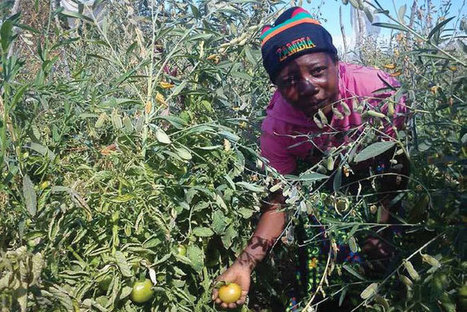
....You don’t have to be a climate change expert to know that temperature increases, precipitation changes, and extreme weather events are a real and growing threat. The farmers we work with in Africa, Asia and the Americas are experiencing it now: longer and more intense rains in Tanzania, increased flooding in Cambodia and higher temperatures in Central America, contributing to the devastating outbreak of coffee leaf rust. We may not be able to predict exactly which specific geographic areas or crops will be hit the worst by climate change over the next few decades, but we do know that smallholder farmers in developing nations will likely suffer the most.
This is precisely why it is imperative to take a “no regrets” approach to climate change when working with smallholders. This approach promotes adaptation and mitigation measures that have positive returns on productivity, profitability, environment, biodiversity, risk reduction and future adaptability. This is nothing new, but now is the time to actively pursue it, or we will have much bigger regrets later down the line.
The underlying principle here is that good agricultural practices, income, and climate adaptation and mitigation are all inextricably linked. Development practitioners must not only embrace this principle, but take concrete steps to put it into practice or global food security will continue to be threatened.
There are five key interventions that matter most.
First, promote good agricultural practices to increase incomes....
Second, implement adaptation methods that reduce loss risk from extreme weather events....
Third, incorporate a whole-farm integrated crop management approach....
Fourth, support research, development and adoption of new varieties...
Fifth, expand capacity in remote weather stations, disease modeling and index insurance systems. ...
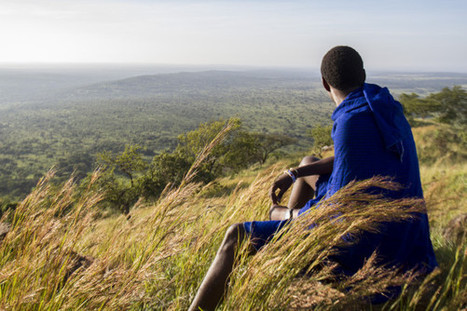
...A loss of water security can give families incentive to privatize grazing land and also (somewhat counter-intuitively) to start farms to supplement their livelihoods. In the poor soil and already uncertain climate of the Steppe, meager stalks of corn struggle towards the sun; want of income is quickly splitting the golden sea with stretches of attempted cultivation. Compartmentalizing the landscape means losing ecosystem function, connectivity and resilience, so small stochastic events like droughts are more likely to affect larger proportions of both livestock and wildlife, endangering the famed Maasai cattle herds and the lions they have shared the land with for so long.
The bottom line: The pastoral/wildlife system that is crucial to the functioning of the Maasai Steppe will collapse unless the land can be managed to maintain the movement of both livestock and wildlife....
What if a mobile phone app could save your life or prevent you from submerging your car on a flooded road? Technologists working through the Code for Resilience community have been developing just that sort of live-saving technology during a year-long initiative to increase the availability of locally relevant technologies that can strengthen community resilience to natural disasters.
Over 1,000 software and hardware developers participated in 11 hackathon events in nine countries: Bangladesh, Haiti, India, Indonesia, Japan, Pakistan, the Philippines, the United States, and Vietnam. Over a marathon weekend of creative brainstorming and rapid prototyping, they built tools to address a series of disaster resilience challenges that had been defined during community workshops and by the public....
The winning teams include:
Jakarta Flood Alert (from Indonesia) – This mobile app monitors 14 sluices for current water levels, change in the past six hours, and other measures. Users get the latest information about the sluices’ condition and the chances of upcoming floods in specific locations, which can be shared through social media to inform and prepare others in the area.
Nigechizu (from Japan) – Meaning “evacuation map,” this web-based tool digitizes collaborative maps which are drawn in community workshops to indicate evacuation times. The digital version allows for interaction to evaluate evacuation times for user-identified routes, propose alternative routes and support urban planners and disaster management authorities.
Quick Disaster (from Indonesia) – Built for wearable devices, this application performs a variety of functions to inform users about disasters. Using real-time location data, for instance, users receive a warning when they enter areas that are prone to particular disasters, and are shown evacuation routes when a disaster strikes.
...As simple as an app may seem, the collective effort in developing community initiatives to increase resilience to disasters helps to catalyze and leverage user-driven innovation. Such efforts help to address global development challenges while building sustainable relationships between entrepreneurs, private sector, multilaterals, universities, and the individuals who are affected by these development challenges.
...The FAO is also concerned about eastern Africa, where there is a serious risk of flooding if a strong El Niño develops in the next few months, and also about drought in the Sahel – the semi –arid transition zone between the Sahara in the north and the Sudanian savanah in the south – where the NGO Action Against Hunger is warning that 15 million people already face food insecurity....
The guide is organised into a set of modules, each representing important aspects of the successor to the existing Hyogo Framework for Action (HFA). By presenting evidence in the form of data, facts and summary messages, the modules highlight what should be covered by a new agreement.
There are seven modules:
• Making the case
• The architecture
• Financing
• Vulnerability and inclusion
• Climate change
• Conflict and fragility
• Stakeholders and leadership.
This document is intended as a living guide – a beta version. Not only does the production team welcome comments, corrections, ideas and recommendations, we also plan to add modules in the future based on demand and how the discussion unfolds. A module on transparency and accountability and one on the interface between a future framework for DRR and the Sustainable Development Goals (SDGs) are already planned for a future edition.
NASA scientists, including one of Indian-origin, have developed a new satellite than can predict the severity of droughts worldwide and help farmers maximise crop yield. Currently, there is no ground- or satellite-based global network monitoring soil moisture at a local level. Farmers, scientists and resource managers can place sensors in the ground, but these only provide spot measurements and are rare across some critical agricultural areas in Africa, Asia and Latin America ..
Climate change is a major challenge - and it sits among many other major challenges targeted by the post-2015 development goals. Biodiversity, health, education, energy and others influence and are influenced by climate change. So goals about them will also mean action on climate change.
Development goals that focus on the root causes of sustainability challenges bring people together; they also minimise the risk that goals will interfere with each other. But highlighting a single environmental driving factor such as climate change can be counterproductive.
Climate change action is usually separated into two categories, despite continual calls for merging them. The first is 'mitigation', which refers to reducing emissions and increasing the removal of greenhouse gases. The second is 'adaptation', which means reducing climate change's adverse impacts and exploiting its positive impacts.
Several of the currently proposed Sustainable Development Goals, outside of Goal 13 on climate change, already address both mitigation and adaptation....
There is a correlation between energy availability and poverty. Sustained economic development will be attained only when it is possible to offer decent living conditions to one-third of the world's population with an estimated 1.6 billion people living in the developing countries with no access to any type of commercial energy.
These people still depend on energy generated inefficiently by burning fuel wood, dung and plant wastes in devices using crude or primitive technologies.
Energy obtained under such harrowing conditions is expensive and insufficient to meet even basic human needs for nutrition, heat and lighting, with little or nothing left for productive uses that would offer a way out, helping breach the seemingly never ending cycle of poverty.
In rural areas, energy supplies are used mainly for cooking purposes, with only small portion allotted to food production, processing and conservation...
...For Rwanda, it is recognised that the current inadequate and expensive energy supply constitutes a limiting factor to sustained socio-economic transformation of the country...The Rwanda Development Board is currently strategising to mobilise local and foreign private businesses to invest into the energy sector to supplement public investments in areas ranging from hydro power and methane gas to solar energy, just to mention a few.
...In a new graphical report, Keeping Track of Adaptation Actions in Africa (KTAA) - Targeted Fiscal Stimulus Actions Making a Difference, UNEP details the implications of climate change, and provides examples of adaptation projects that range from forest ecosystem management to aquatics and agriculture.
The report describes sustainable examples of how countries in sub-Saharan Africa enhanced environmental and ecosystem resilience through the use of native plants and natural infrastructure, land plans and rainwater harvesting, among other examples.
The projects are integrated into national development policies which can strengthen and enhance the resilience communities against the impacts of climate change, while also contributing to the realization of the anti-poverty targets known as the Millennium Development Goals (MDGs), according to the report authors....
The UN has released an initial draft of a proposed disaster risk reduction treaty.
Set to be signed off in 2015, the same year that the UN could agree a new climate change package and set of Sustainable Development Goals (SDG), the voluntary disaster risk reduction framework will be key in designing future responses to climate impacts.
The so-called “pre-zero” draft published by the United Nations International Strategy for Disaster Reduction (UNISDR) will undergo numerous incarnations before it is signed in March 2015 in Sendai, Japan, with an intensive schedule of consultations taking place between now and then to prepare the final document.
Currently it remains unclear how the disasters risk reduction framework will complement the UN’s climate and SDG agendas....
...The disaster risk reduction framework is being negotiated as a replacement for the Hyogo Framework for Action, which runs from 2005-2015.
Unlike the UN’s conflict-ridden climate deal, the framework for disaster risk reduction is expected to pass without much difficulty, largely due to its voluntary and regional nature.
This means the UN is likely to have a strategy in place to deal with the worst disasters caused by climate change, regardless of whether governments are able to sign an effective climate deal in Paris, 2015.
Collection of electronic poster submissions from the Knowledge Fair component of the 2020 Conference on "Building Resilience for Food and Nutrition Security," May 15-17, 2014 in Addis Ababa, Ethiopia.
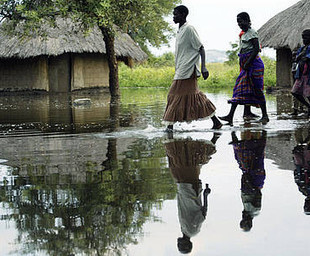
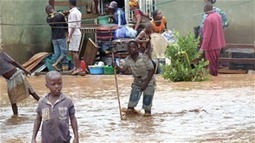
Thousands of people displaced by floods and a mudslide in the Burundian capital Bujumbura and surrounding areas in February 2014 need more help to reconstruct their homes and livelihoods, aid workers say....
...The government says it needs 166,236 iron sheets to help reconstruct houses for 7,556 vulnerable households...
...Heavy rain triggered mudslides and 3,800 homes were either swept away or partially destroyed, leaving 180 people injured and up 70 dead. The floods affected Kinama, Kamenge, Buterere, Ngagara, and Kanyosha and the rural communes of of Mutimbuzi and Isale. Up to 20,000 people were displaced....
...In May, the African Development Bank donated US$1 million to the Burundian government to help flood victims.
Tabou Abdallah Manirakiza, Burundian minister of finance and economic development planning, announced at the time that the government would use the money to reconstruct schools, sanitation facilities, irrigation and agricultural infrastructure and also to restore health centres in the flood-stricken areas of Kinama, Kamenge and Buterere, and buy school equipment, including benches, chairs and desks.
Some aid groups like Caritas say they plan to provide small loans, a banking system for the poor or revolving loans, an education fund for children, rebuild at least 100 small houses, and contribute towards natural disaster risk reduction.
Facing climate change and nine billion mouths to feed by 2050, experts shared their thoughts on the future of food security.
In a recent live chat, a panel of experts joined readers online to discuss the future of sustainable agriculture in the face of changing weather driven by climate change and increasing competition for food. Here are 10 things we learned:
1. We shouldn't just "accept" climate change...
2. We don't need to "accept" a world with 9.6 billion people by 2050...
3. Switching crops is the future...
4. Research breakthroughs need more investment...
5. Cultivating trees on farms can boost crop yields...
6. Small-scale farmers are vital to domestic food security...
7. Urban farms suit tomatoes, not cows...
8. Meat is off the menu...
9. The definition of a "good" farmer is culturally complex...
An impending drought could hit the Horn of Africa due to irregular rainfall caused by significant moisture deficit, a climatic early warning report says.
The report by the UN Food and Agriculture Organization (FAO)’s Global Information and Early Warning System, in collaboration with the European Commission’s Joint Research Centre (JRC), predicts a high risk of drought in key agricultural regions of Ethiopia, Kenya, Somalia and Tanzania in the coming months.
According to the report which was released this month (3 June), the rainy season in 2014 deviated from normal patterns since January with unusual rainfall occurring during the dry season while the rainy season only had above average rainfall in some areas...
....But the report also predicts increased likelihood of El Niño — a periodic warming and cooling of the Pacific Ocean with its effect around the globe — which could lead to above average rains from October 2014 to March 2015, possibly resulting in favourable conditions for planting new crops. It notes that these conditions might hamper harvesting of the main cereal crops and destroy livestock.
As farmers move toward growing crops designed to meet growing world demand for food and stand up to tougher climate conditions, they may inadvertently be worsening malnutrition, scientists say....
...With the advent of climate change, experts say that many staple food crops with sufficient micronutrients are becoming susceptible, paving the way for changes in crops and diets. The problem is that the world is not coping well with such changes, said José Graziano da Silva, director-general for the U.N. Food and Agriculture Organisation (FAO).
In a news article published on the FAO website, Graziano da Silva said that while 870 million people suffer from hunger, there are also over half a billion who are obese and susceptible to non-communicable diseases. One of the reasons for the ill health is because scientists are developing new crops including those that are genetically modified primarily to produce bigger crops and to survive tough climatic conditions.
This has led to a situation where a growing number of people have sufficient food to eat, but suffer from nutritional deficiencies that lead to health problems....
...In Rwanda, for example, efforts by the government and organisations to improve food security have filled bellies but studies suggest one in three Rwandans is anaemic, a problem particularly widespread among women and children. HarvestPlus estimates that 38 percent of children under five and 17 percent of women in Rwanda suffer from iron deficiency, the main cause of anaemia.
Breeding new varieties of staple foods laced with important micronutrients could ease the problem, scientists say....
The financial agreement...is part of the EU’s seven-year development spending strategy for Kenya...
...the funding prioritises the expansion of Nairobi’s public transport infrastructure to fight congestion, increase food production and improve drought management systems, and support stronger governance...
...EU’s future support for transport infrastructure is in addition to work that is starting this month (June) on 27 kilometres of EU-funded road links, footpaths and cycle ways in the capital.
Over the next six years, the Sh22.5 billion-development funding will build on the existing work carried out by the EU increase food production and reduce the impact of drought, particularly in arid areas.
The Livestock Information Knowledge System (LINKS) is an online platform that uses global positioning system (GPS) technology, text messaging and web-based computer analysis, providing information to pastoralists via mobile phones or the internet....
....Livestock prices and volumes are collected through interviews with traders at the peak of the market day. The monitors also collect data on animal breeds, classes (categorised according to age) and grades (categorised according to size).
Average prices for each are then calculated, along with the total volumes of livestock by animal kind. The data is coded and sent to the LINKS database using SMS and email, or posted directly on the web.
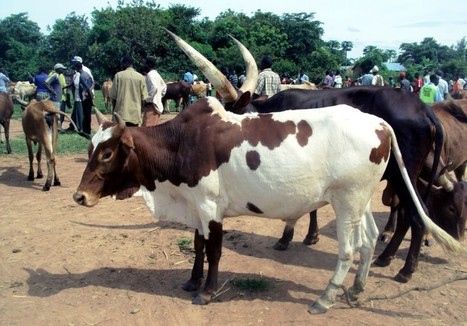
In many markets across East Africa, livestock are bought and sold on the basis of visual assessment of the animal’s body condition rather than weight. But under the LINKS grading system, they are put in uniform breed groups to reflect price differences based on frame size, muscle and weight....
....When information is requested by livestock keepers or traders, they input a specific code assigned to each market that prompts a response with the data for the given market and region. A shorthand SMS text coding system was devised to accommodate the limited number of characters permitted in a single SMS.
Similar systems are operating in Kenya and Ethiopia, whereby pastoralists who have traditionally relied on middlemen to get market information can now retrieve it directly via their mobile phones.
To get content containing either thought or leadership enter:
To get content containing both thought and leadership enter:
To get content containing the expression thought leadership enter:
You can enter several keywords and you can refine them whenever you want. Our suggestion engine uses more signals but entering a few keywords here will rapidly give you great content to curate.


 Your new post is loading...