Climate Change & DRR in East Africa
1.4K views | +0 today
 
Rescooped by Robin Landis from Organic Farming
onto Climate Change & DRR in East Africa
March 12, 2013 5:36 AM
Scoop.it!

Making friends with climate change

SOURCE:  THE GUARDIAN


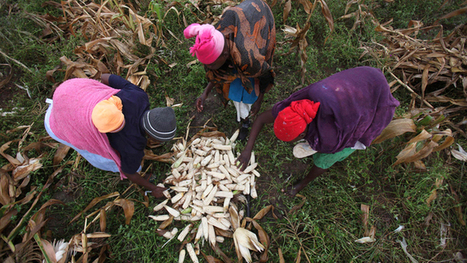
About 80 percent of Tanzanians are farmers most of whom are small-scale, who struggle to meet their basic needs and are thus likely not happy with their trade.


Even when the weather is kind enough to provide them with the amount of rainfall they need to produce food and cash crops, the joy is short-lived because the timing of the following rainy season might be unpredictable, the amount of precipitation might go down and, in any case, the conventional farming method most of them still use does not guarantee them a good crop. The situation is further complicated by emerging challenges such as climate change, which has not only strained agricultural water supply but also reduced soil fertility through prolonged dry seasons and flash floods, among other things.


However, Sharji Shaaban Khamis of Bungo Village in Zanzibar’s Kusini Region is among few small farmers who are generally happy with the fruits of their sweat, thanks to engaging in alternative farming method, organic farming, which has seen him beat the challenges brought about by changing weather patterns and earn enough money to meet the needs of his family.

From his seven-hectare farm, Khamis gets a profit of about 800,000/- per month, which is in excess of vegetables, fruits and other farm products the family consumes from the farm.


“This farm is the lifeline of my family; we get all our needs from here. I have managed to build a good house, I have a car and I meet the needs of all my four children who attend school,” he tells a group of journalists who visited him in order to learn about organic farming activities in the Isles.


Asked about how he is coping up with the effects of climate change which has greatly affected small-scale farmers, Khamis said he has no problem with current climatic changes. “I hear people complaining about climate change but I have no problem with changing weather patterns. I cope very well with these changes and I can say we are friends,” he explains with a chuckle.


He added, ”During the rainy season I collect water in the well and at the same time grow maize, cassava and pumpkins. When the dry season comes I grow vegetables and harvest fruits, and this is actually the time when I make money because the vegetables and fruits command a good market in the local tourist hotels . I have enough water to meet all my needs during the dry season and I am not bothered by climate change,” he says.


His practice of organic farming begins with conserving the fertility of soil on his farm. He told the journalists that he has long abandoned the “slash and burn” type of farming and all crop residues is made into compost and used as manure. He also makes manure from green grass which is also plenty on the farm. This method, he says, preserves soil fertility and allows organism to produce more nutrients needed by crop plants. To treat the soil and make it more porous, Khamis mixes it with “coconut dust” produced by grinding coconut husks into fine particles. This is then mixed with soil where a seedling is planted.


“Experts in organic farming have told us to mix the soil with sand, but experience has shown that sometimes the sand sticks to the soil and doesn’t allow in much air. The coconut dust has produced better results than sand; that is why we have decided to use it. After all it is freely available on the farm and we incur no financial costs in producing it,” he clarifies.


In a bid to balance the consumption of soil nutrients by plants on the farm, Khamis engages in plant rotation whereby an area planted with tomatoes this season will be planted with beans or another crop the next season. This ensures that no single nutrient is exhausted from the soil and it gives such nutrients time to rejuvenate and so balance the availability of nutrients in the soil.


When it comes to planting the seedlings, this farmer ensures that they are planted in rows, keeping the seedlings equidistant from one another. He says that this method ensures that each plant gets the amount of nutrients it requires and there is no “scrambling for food” among the plants as each of them has access to what it needs. “Contrary to the conventional method of planting seedlings haphazardly, this method helps the farmer to attend to the crop more carefully and leads to increased crop productivity,” Khamis said.

Besides harvesting rainwater, Khamis also uses efficiently the water that is available for agriculture. One way of ensuring this is the use of drip irrigation which he says ensures that water is delivered to the plant and not anywhere else where it could be wasted. With most of the soil covered by mulch and plants, it has high capacity to retain moisture and this reduces the amount of water used for irrigation.


Protecting crops from pests is another challenge that both organic and conventional farmers have to face. For those who grow fruits like Khamis, they have to deal with birds which blemish pawpaws, bananas and other fruits and so make them rejected by high-end markets. Here again, a natural way of dealing with the pests is employed.


“Crows are a big menace here because they peck paw paws and bananas just when they start to ripen. Any fruits with blemishes are rejected by tourist hotels which are the main buyers of our products. To deal with the problem, we don’t harvest any fruits on the boundary of the farm and leave these to the birds. By doing so we keep them off the main crop on the farm because they will only attack the fruits on the periphery,” says Khamis’ brother Shabaan, adding that the method is good for both farmers and birds because at the end of the day they both get what they want.


“The important thing here is to maintain and manage soil, water, plants and animals as well as conserve and use water efficiently in order to harvest a good crop. So at the end of the day you deal with climate change and ensure abundant supply of food,” Khamis said.


At a recent discussion with journalists, an expert from Tanzania Organic Agriculture Movement (TOAM) Mike Farrley said that climate change has already severely affected agriculture in Africa and many people who depend on it have their lives in jeopardy. This, he says, calls for urgent need for adaptation in the sector, with organic farming providing one of the options.


“Organic farming preserves and restores soil organic matter, maintains soil structure and improves water holding capacity and thus enabling it to maintain productivity in the event of drought and irregular rainy seasons. This adaptive quality is very important for the agricultural sector in Africa, a continent which is very vulnerable to the effects of climate change,” he explains.


Beyond increased productivity, organic farming increases biodiversity by using trees and diverse crops, intercropping and crop rotations, all of which help to reduce pest outbreaks, severity of plant and animal diseases thereby increasing the production of high quality agricultural produce. It also encourages the use of local and indigenous farmer’s knowledge and blends this with modern science techniques. The use of drip irrigation, planting in rows and various methods of soil treatment are some of the scientific knowledge that blends well indigenous knowledge to make organic farming a success.

According to the Intergovernmental Panel on Climate Change (IPCC), agriculture accounts for about 12 percent of global greenhouse gas (GHG) emissions, a figure which is expected to rise given the continued practice or conventional methods of agriculture. The slash-and-burn method, cultivation of peat land and expansion of farms into woodlands and forests all account for increased global greenhouse gas emissions.


“Organic agriculture can significantly reduce carbon dioxide emissions and increase the capacity of nature to mitigate climate change and sequestrate significant quantities of atmospheric carbon dioxide, especially in the soil. The current estimate is that organic agriculture has potential to sequester up to the equivalent of 32 percent of all man-made greenhouse gas emissions,” says Farrley, adding that in organic agriculture less fossil energy is used since soil fertility is maintained through farm internal inputs such as organic manure, legume production and wide crop rotation while the energy-demanding chemical fertilizers and plant protection agents are prohibited.


The Food and Agricultural Organisation (FAO) strongly promotes organic farming because organic farming systems have a strong potential for building resilient food systems in the face of uncertainties, through farm diversification and building soil fertility with organic matter.


“In developing countries, organic farming systems achieve equal or even higher yields compared to the current conventional practices, which translate into a potentially important option for food security and sustainable livelihoods for the rural poor in terms of climate change. Certified organic products fetch higher incomes for farmers than other options and can thus promote climate-friendly farming practices. ” says the organizations in one of its statements issued in 2010.


Prof Willy Makundi, Director of the (proposed) Kilimanjaro International Climate Change Centre says that organic farming is one of the adaptation routes that can be used by farmers. This type of agriculture uses organic fertilizers and organic crop and yield protection.” Organic fertilizers such as manure, mulching and compost are good for the soil amendment as well as moisture preservation, while having little or no net greenhouse gas (GHG) emissions,” he notes.


He adds,” Given the fact that key adverse effects of climate change are high temperature and low precipitation, any agricultural amendment that enhances soil moisture retention and moderates soil temperature is good for adaptation. Some organic farming that involves conservation agriculture also reduces soil erosion.”


Prof Makundi who is also a Climate Change Advisor to the Government of Rwanda highlights the contrast to conventional agriculture that uses chemical fertilizers and pesticides. He says that inorganic fertilizers such as ammonia sulphate emit large amounts of greenhouse gases, especially nitrous oxide and other oxides of nitrogen. “When these are substituted by organic fertilizers the farmer reduces the atmospheric concentration of greenhouse gases that cause global warming. It is however noteworthy that extensive large scale agricultural production is not possible (or not competitive) using organic fertilizers,” he explains.


Speaking about reducing greenhouse gas emissions from the agricultural sector, he says that there are various response measures to reduce emissions from agriculture and animal husbandry depending on the mode of emission. “The two key greenhouse gases from agriculture are methane (CH4) from enteric fermentation in livestock (bovines) such as cattle and from decomposition of animal waste in the form of slurry; and nitrous oxide (N2O) and oxides of nitrogen (NOXs) arising from the use of fertilizers.”


Methane emission can be reduced by applying appropriate animal husbandry techniques including amendment of animal feed, increasing the efficiency of animal products such as meat and milk per animal and capture and utilization of methane from animal waste for energy production (biogas). Other methods are reducing the use of inorganic fertilizers as well as the use of conservation agriculture to reduce carbon emissions from soil erosion. “Conservation agriculture includes practices such as terracing, mulching and minimum tillage,” he says.


Prof Pius Yanda, Chair of the Mwalimu Julius Nyerere Professorial Chair In Environment and Climate Change at the University of Dar es Salaam concurs that organic farming is one of the best ways to adapt to climate change. “Here we are talking about small farmers who are most affected by the impacts of climate change. For them, organic farming helps their farms to maintain the capacity to retain water and so become not susceptible to prolonged dry seasons or even drought. And since they use fertilizer made from natural ingredients such as crop residue and compost, soil fertility is maintained and due to intercropping and crop rotation, organic farming promotes sustainable agriculture,” he said.


According to Prof Yanda, chemical fertilizers and pesticides contribute to greenhouse gas emissions “and with expansion of agricultural land that goes with conventional farming methods, the agriculture sector is likely to contribute more to global greenhouse gas emissions. Organic farming cuts down emissions from soil because it uses natural ingredients to make fertilizer, it protects natural vegetation and soil cover and focuses on raising crop production without expansion of land.”


He says that current trends in food markets also promote organic farming because such products fetch very high prices. This encourages more farmers to turn to this alternative farming method and abandon the traditional farming method of using chemical fertilizers and pesticides and expanding farms all of which eventually accelerate climate change.


However, Prof Yanda said that organic farming is not very popular among large scale farmers, particularly in developing countries because of the work involved. “Preparation of compost and soil treatment, for example, are tedious processes for large-scale farming. Some commercial farmers prefer to grow only one crop in an area instead of mixing several crops or engaging in agroforestry and this has made organic farming unpopular among some large-scale commercial farmers,” he said, adding that the intensity of climate change effects and market forces will in the long run force these farmers to undertake organic farming.

 
Via Giri Kumar
No comment yet.
Climate Change & DRR in East Africa
Climate Change, Climate Adaptation, Disaster Risk Reduction and Food Security in East, Central and the Horn of Africa
Curated by Robin Landis
Your new post is loading...
Scooped by Robin Landis
November 19, 2014 2:41 AM
Scoop.it!

A call to rethink the dearth of women landowners in Africa

A call to rethink the dearth of women landowners in Africa | Climate Change & DRR in East Africa | Scoop.it
Displacement, climate change and entrenched abuse block the support women need to enter the agriculture sector, and to be able own land.


A call has been made to the 54 member countries of the African Union (AU) Commission to increase the number of women who own land to 30% by promoting land policies that would address this issue within the next 10 years.


Speakers at last week’s land policy conference hosted at the AU headquarters in Addis Ababa noted that 60% of land in Africa remains uncultivated. With Africa’s population projected to double in 2050, the situation could prove to be dire for millions of families.

No comment yet.
Scooped by Robin Landis
November 13, 2014 4:01 AM
Scoop.it!

KENYA | The Emerging Power of Giving in Africa

KENYA | The Emerging Power of Giving in Africa | Climate Change & DRR in East Africa | Scoop.it

...Kenya provides a number of important examples of the power of giving.

By July 2011, at least 3.75 million people in the northern part of Kenya were threatened with starvation because of drought. More than 385,000 children below the age of five in 13 districts suffered from acute malnutrition.


In response to this situation, the "Kenyans for Kenya" initiative was launched on July 27, 2011. Spearheaded by leading business and media entities and the Kenya Red Cross Society (KRCS), the aim was to raise Ksh500 million in four weeks for relief efforts. The campaign exceeded all expectations and raised more than Ksh1 billion ($10.5 million); 760,000 Kenyans made a contribution.


The challenge is to replicate and translate the experience of initiatives like this one into ongoing and proactive giving interventions, which not only generate significant resources for good causes, but also nurture public understanding of the issues of concern and contribute to a broad-based giving culture....

No comment yet.
Scooped by Robin Landis
November 13, 2014 3:32 AM
Scoop.it!

SOMALIA | Leading African Activist Fatma Jibril Announced as Winner of Top Global Environmental Prize

SOMALIA | Leading African Activist Fatma Jibril Announced as Winner of Top Global Environmental Prize | Climate Change & DRR in East Africa | Scoop.it

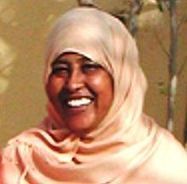
Fatima Jibrell, one of Africa’s leading environmental activists was announced Friday as the first Somali to win the UN’s top environmental accolade, the Champion of the Earth award. Stirred by the devastation caused by the civil war in Somalia, Jibrell founded the Horn of Africa Relief and Development Organization in 1991, now known as Adeso – a non-profit organization operating in South Sudan, Somalia and Northern Kenya – to bring environmental and social justice to war-torn regions and communities.

No comment yet.
Scooped by Robin Landis
November 13, 2014 3:27 AM
Scoop.it!

Fighting climate change? Don't ignore poor nations' creativity

Fighting climate change? Don't ignore poor nations' creativity | Climate Change & DRR in East Africa | Scoop.it

Analysts are right to assess the level of national preparedness to climate change -- but well-intentioned efforts to rank countries can inadvertently sow hopelessness among those considered to be ill-prepared.


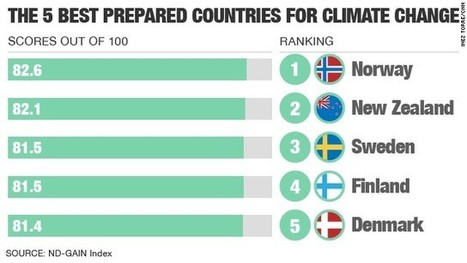
A recent University of Notre Dame Global Adaptation Index (ND-GAI) ranks Norway, New Zealand, Sweden, Finland and Denmark as the world's best prepared nations. At the bottom of the adaptation index lie Democratic Republic of Congo (DRC), Central African Republic, Eritrea, Burundi and lastly Chad.

No comment yet.
Scooped by Robin Landis
November 4, 2014 9:37 AM
Scoop.it!

Africa: Continent Urged to Use Its Low Carbon Economy

Africa: Continent Urged to Use Its Low Carbon Economy | Climate Change & DRR in East Africa | Scoop.it

By leveraging knowledge about climate change, through adopting improved agriculture technologies and using water and energy more effectively, Africa can accelerate its march towards sustainable development.


Policy and development practitioners say Africa is at a development crossroads and argue that the continent -- increasingly an attractive destination for economic and agriculture investment -- should use the window of opportunity presented by a low carbon economy to implement new knowledge and information to transform the challenges posed by climate change into opportunities for social development.

No comment yet.
Scooped by Robin Landis
October 13, 2014 7:22 AM
Scoop.it!

25 Devastating Effects Of Climate Change - Business Insider Australia

25 Devastating Effects Of Climate Change - Business Insider Australia | Climate Change & DRR in East Africa | Scoop.it

The world is getting warmer and that’s already causing disasters that will devastate lives and cost hundreds of billions of dollars.


Those problems are only getting worse, as shown by recent reports from the United Nation’s Intergovernmental Panel On Climate Change (IPCC) and the White House, among others.


The greenhouse gas emissions that drive warming “now substantially exceed the highest concentrations recorded in ice cores during the past 800,000 years,” the IPCC said. Atmospheric carbon dioxide levels, which primarily come from the burning of fossil fuels, have risen 40% since preindustrial times.


Last month, world leaders convened at the UN Climate Summit 2014 to discuss plans to reduce carbon emissions — though there were some notable absences. Most attendees recognised that failure to address these issues could spell terrible consequences for people all over the world. We’ve gathered some of those terrible consequences of climate change below.


Unless otherwise noted, each effect assumes a temperature rise of 2 degrees Celsius (3.6 F) by 2100, a number the IPCC has suggested we are “more likely than not” to exceed, and a sea level rise of 0.5 meters (1.5 feet) by 2100, about the average of all the IPCC’s most recent climate scenarios. This is a conservative estimate — other studies predict significantly more sea level rise.

No comment yet.
Scooped by Robin Landis
October 3, 2014 6:30 AM
Scoop.it!

UN initiative pushes financial reporting of disaster risk stress-tests - Artemis.bm (blog)


The United Nations Climate Summit, held in New York this week, has seen the unveiling of a coalition convened to examine how to embed climate and disaster risk stress testing within banking and securities regulation, investment and accounting practices.

This is the ‘encoding’ of disaster risk and resilience within the financial markets that has been a mantra of insurance and reinsurance broker Willis Group, a key participant in the UN-led initiatives facilitating the development of a post-2015 framework for disaster risk reduction.

The activities which seek to embed disaster risk and resilience within the financial markets of the world, including the disclosure of disaster exposures and accounting for both the negative, caused by exposure to disaster risk, as well as the positive, of response and resilience, are all part of the work which comes under the banner of the Hyogo Framework....


No comment yet.
Scooped by Robin Landis
October 3, 2014 6:19 AM
Scoop.it!

Africa: U.S. Launches Alliance for Climate Smart Agriculture

This blog post by Secretary of State John Kerry, Secretary of Agriculture Tom Vilsack and USAID Administrator Rajiv Shah was originally published on the State Department website on September 24.


...By 2050, the world's population is expected to reach 9 billion people. Feeding them will require at least a 60 percent increase in agricultural production. There is no greater challenge to meeting this need than climate change. It poses a range of unprecedented threats to the livelihoods of the world's most vulnerable people and to the very planet that sustains us. In order to ensure that hundreds of millions of people are not born into a debilitating cycle of under-nutrition and hunger, we must address the urgent threat that climate change poses.


That's why today we're announcing the launch of the Global Alliance for Climate-Smart Agriculture. The idea was born eight months ago, when an international delegation of leaders -- including many from the USDA, the State Department, and USAID -- met in South Africa for the Global Conference on Climate Change, Food Security, and Agriculture. There, we charted a more sustainable path to food security -- one that preserves the environment while driving broad-based economic growth....

No comment yet.
Scooped by Robin Landis
October 3, 2014 5:52 AM
Scoop.it!

Focus on Gender: The dire impact of crises on women

Focus on Gender: The dire impact of crises on women | Climate Change & DRR in East Africa | Scoop.it
The UN’s ‘pre-zero draft’ of the post-2015 framework for disaster-risk reduction calls for a marriage of science and community-level expertise. The final framework will set out what various sectors can do to reduce risks from catastrophes after the current framework expires in 2015. According to the draft, scientific and technical capacity will be useful for managing disaster data and assessing peoples’ vulnerability to hazards related to climate, geology and water, while the leadership, capacities and resources of local communities are considered essential for disaster risk reduction. [1]What is missing from the draft is recognition of the significant differences in how male and female victims experience disasters.
No comment yet.
Scooped by Robin Landis
September 24, 2014 12:01 PM
Scoop.it!

KENYA | Drought-Hit Kenyan Farmers Bank On Goats As New Currency

Faced with increasingly scorching heat and drought that have lasted two years in Kitui County in Eastern Kenya, a community banking group has moved their investments to a new climate-resilient currency: goats.


The small-scale farmers, who contribute funds to a savings pool and are eligible for small loans from it, aimed to use the funds to improve their farms and boost their harvests of hardy crops like pigeon pea

No comment yet.
Scooped by Robin Landis
September 24, 2014 11:13 AM
Scoop.it!

Study: Education and health spending compromised by climate change

Study: Education and health spending compromised by climate change | Climate Change & DRR in East Africa | Scoop.it

Impoverished states have had to divert large chunks of their budget to adapt to climate change and run the risk of crowding out spending on health and education, a new report suggests.


Between 2008 and 2011, Ethiopia committed 14% of its national budget to climate change, or nearly half of the national spending on primary education. Meanwhile, Tanzania spent 5%, which is almost two-thirds of its health spending, according to the report by the Overseas Development Institute (ODI).


Ethiopia, Tanzania and Uganda, the three countries featured in the report, are heavily dependent on rain-fed agriculture, and have all experienced higher temperatures and reductions of water sources consistent with climate change. All have invested heavily to adapt their farming and cities in the absence of promised international aid, said Neil Bird, a climate researcher at ODI who wrote the report.

No comment yet.
Scooped by Robin Landis
September 10, 2014 5:57 AM
Scoop.it!

Natural Defence Against Un-Natural Disaster | Blog

BLOG by Paul Venton,Specialist in disaster risk reduction


Every year storms, floods, droughts and other extreme events affect hundreds of millions of people around the world, with economic losses estimated at $100 billion. These all-too familiar scenes of loss and destruction are referred to as 'natural disasters'; however, I've come to recognize that this is a stunning misnomer. The phrase implies that nature causes the disaster, when humans are often the main culprits. In fact, rather than being thought of as the cause of disasters, nature should be better appreciated as a critical part of the remedy to them.


Natural Defence Against Un-Natural Disaster Huffington Post I believe these efforts to embed ecosystem-based disaster-risk reduction and climate-change adaptation in economic-development decision making must be supported by business leaders and the...


This post is part of a month-long series produced by The Huffington Post in conjunction with a variety of events being held in September recognizing the threats posed by climate change. Those events include the UN's Climate Summit 2014 (to be held Sept. 23, 2014, at UN headquarters in New York) and Climate Week NYC (Sept. 22-28, 2014, throughout New York City). To see all the posts in the series, read here.

No comment yet.
Scooped by Robin Landis
September 10, 2014 2:25 AM
Scoop.it!

Building Resilience in the Face of Climate Change and Weather Shocks

Building Resilience in the Face of Climate Change and Weather Shocks | Climate Change & DRR in East Africa | Scoop.it
Building Resilience in the Face of Climate Change and Weather ShocksInternational Food Policy Research Institute Thursday, September 11, 2014 from 12:15 PM to 1:45 PM (EDT)Washington, DC

Moderated by: Dan Glickman

Panelists: Shenggen Fan, IFPRI

Rachel Kyte, The World Bank

John McDermott, CGIAR Research Program on Agriculture for Nutrition and Health, IFPRI

Cynthia Rosenzweig, Goddard Institute for Space Studies at Columbia University


Organized by IFPRI and the Chicago Council on Global Affairs
As the food system grows more fragile, climate change and increasingly volatile weather are reducing agricultural productivity globally.  There is an urgent need for strategies to build resilience for the world’s farmers to adapt to these changing conditions.  Building on the resilience themes  presented in two recent conferences, the IFPRI 2020 Conference on Building Resilience for Food and Nutrition Security and the Chicago Council Symposium on Advancing Global Food Security in the Face of Weather Volatility and Climate Change, this panel will examine the key issues that must be on the international agenda over the next year.  In anticipation of the upcoming UN Climate Summit and preparation of the Sustainable Development Goals, panelists will highlight important issues that need to be brought to poliymakers’ attention.


Watch live: http://www.ifpri.org/event/building-resilience-face-climate-change-and-weather-shocks.

No comment yet.
Scooped by Robin Landis
November 17, 2014 5:16 AM
Scoop.it!

KENYA | Farmers urged to save rainwater to tackle food insecurity

Agriculture is the main economic activity for the more than 80 percent of the population in Kenya, with rural households drawing direct livelihoods from it.


Unfortunately, the small-scale farmers continue to solely depend on rain to carry out their farming activities, a reliability which has resulted to crop failures, thereby endangering household food security.

No comment yet.
Scooped by Robin Landis
November 13, 2014 3:34 AM
Scoop.it!

As Climate Change Threatens Food Production, Countries Fight Back by Arming Farmers with Information

As Climate Change Threatens Food Production, Countries Fight Back by Arming Farmers with Information | Climate Change & DRR in East Africa | Scoop.it

New study documents surge in “climate services” in Africa and South Asia that allow farmers to see their fields in the future tense and adapt to changes.

No comment yet.
Scooped by Robin Landis
November 13, 2014 3:30 AM
Scoop.it!

Study ties conflict risk in sub-Saharan Africa to climate change, economics, geography


A massive new University of Colorado Boulder study indicates there is a statistical link between hotter temperatures generated by climate change and the risk of armed conflicts in sub-Saharan Africa.


CU-Boulder Professor John O'Loughlin led a research team that assessed more than 78,000 armed conflicts between 1980 and 2012 in the Sahel region of Africa - a semi-arid belt just south of the Saharan Desert that spans about 3,000 miles and more than a dozen countries from the Atlantic to the Indian oceans.


The team was looking for links between armed conflicts and temperature and rainfall anomalies, as well as assessing other causes of violence in the Sahel. "We found a clear signal that higher temperatures in the Sahel over time does increase the risk of conflict," O'Loughlin said.

No comment yet.
Scooped by Robin Landis
November 13, 2014 3:26 AM
Scoop.it!

Equal access to resources and power for food security in the face of climate change

Equal access to resources and power for food security in the face of climate change | Climate Change & DRR in East Africa | Scoop.it
No comment yet.
Scooped by Robin Landis
November 4, 2014 3:27 AM
Scoop.it!

Climate change and food insecurity multiplying risks in 32 countries

Climate change and food insecurity multiplying risks in 32 countries | Climate Change & DRR in East Africa | Scoop.it

Climate change and food insecurity are amplifying the risks of conflict and civil unrest in 32 countries, including the emerging markets of Bangladesh, ETHIOPIA, India, Nigeria and the Philippines, according to the seventh annual Climate Change and Environmental Risk Atlas (CCERA) released by global risk analytics company Maplecroft.


The Atlas, which provides comparable risk data for 198 countries across 26 separate issues, identifies Bangladesh as the country most at risk, followed by Sierra Leone, South Sudan, Nigeria, Chad, Haiti, Ethiopia, Philippines, Central African Republic and Eritrea.

No comment yet.
Scooped by Robin Landis
October 3, 2014 6:41 AM
Scoop.it!

Africa's trade under a changing climate

Africa's trade under a changing climate | Climate Change & DRR in East Africa | Scoop.it

The devastating effects of climate change are already being felt across the planet, including in Africa. The 2011 drought-induced famine in the Horn of Africa affected more than 10 million people, claimed 257,000 lives and cost over $1 billion in damages. The recent Africa Adaptation Gap report by the UN Environment Programme warns that climate change could reduce total crop yields in sub-Saharan Africa by as much as 20% by 2070. Worse still, it could begin to affect Africa’s trade potential. For example, a projected sea-level rise in Tanzania of 70 centimeters by 2070 could devastate the port city of Dar es Salaam, its largest and richest city and a major player in East Africa trade, and cost the country about $10 billion in property damages and related losses. Environmentalists warn that rising sea levels can cause severe flooding, submerge land and destroy coastal ecosystems...

No comment yet.
Scooped by Robin Landis
October 3, 2014 6:20 AM
Scoop.it!

Resilience Planning - Some Do's and Don'ts

Resilience Planning - Some Do's and Don'ts | Climate Change & DRR in East Africa | Scoop.it

Among the topics being discussed at the 2014 World Climate Week in New York City (22-26 September), are financing resilient cities, corporate actions for resilience, the ways data can support resilience moves, and women's leadership in resilience planning.


IRIN looks at some of the successes, failures and pitfalls in resilience planning.

No comment yet.
Scooped by Robin Landis
October 3, 2014 6:15 AM
Scoop.it!

TANZANIA | Support to strengthen policies on climate change and food security

TANZANIA | Support to strengthen policies on climate change and food security | Climate Change & DRR in East Africa | Scoop.it

An initiative to enhance the capacity of the Tanzania Government to develop and implement policies on climate change adaptation in relation to food security in the country was launched at the end of last week, in Dar es Salaam.


The four-year project, Policy Action for Climate Change Adaptation (PACCA), is led by the International Institute of Tropical Agriculture (IITA) and funded by the CGIAR Research Program on Climate Change, Agriculture and Food Security (CCAFS). It is being implemented in both Uganda  and Tanzania. In Tanzania the project will be implemented in partnership with the Environmental Management Unit (EMU) of the Ministry of Agriculture, Food Security and Cooperatives.

No comment yet.
Scooped by Robin Landis
October 3, 2014 5:50 AM
Scoop.it!

New tool to predict impact of climate change

Scientists have combined genetic analyses with new modelling approaches to help identify how well balsam trees are adapted to handle climate change.
No comment yet.
Scooped by Robin Landis
September 24, 2014 11:53 AM
Scoop.it!

Humanitarianism and climate change: Let's rethink the future

Humanitarianism and climate change: Let's rethink the future | Climate Change & DRR in East Africa | Scoop.it

The 2016 World Humanitarian Summit in Istanbul is an opportunity to rethink the way we plan for and respond to humanitarian crises. We need to acknowledge that not many humanitarian crises have purely humanitarian solutions. To meet the humanitarian challenges in the decades to come, we must put disaster and conflict-affected people in the driver’s seat.

No comment yet.
Scooped by Robin Landis
September 19, 2014 1:26 AM
Scoop.it!

Drought-Hit Horn of Africa UN, IGAD Appeal for Humanitarian Aid

Drought-Hit Horn of Africa UN, IGAD Appeal for Humanitarian Aid | Climate Change & DRR in East Africa | Scoop.it
“Diplomat News Network Drought-Hit Horn of Africa UN, IGAD Appeal for Humanitarian Aid AllAfrica.com The UN and East Africa's regional community on Monday, appealed to the international community to move swiftly and avert a looming humanitarian...”
No comment yet.
Scooped by Robin Landis
September 10, 2014 5:54 AM
Scoop.it!

KENYA | Adequate climate data stations lacking

Kenya lacks adequate weather recording stations, according to the 2014 African Agriculture Status report.


Dr. James Kinyangi, a lead author of the report, says there is extremely low coverage by existing weather stations, leading to limited provision of accurate data.


"There is also poor use of historic data that could help inform decision making. Many countries in Africa have national metrological departments, but the agro-meteorological division constitutes the minor part of any MET services," says Kinyangi, noting that there is also a disconnect in communicating relevant information to farmers.


Kinyangi added that for climate data, you need long-term data,and few weather stations are actively tracking and reporting this information...

No comment yet.