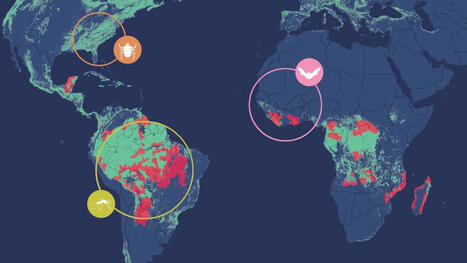
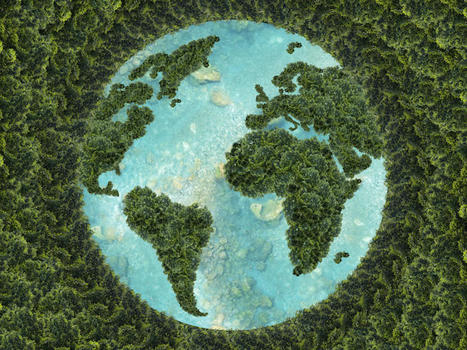
What if I told you that 𝗿𝗲𝘀𝘁𝗼𝗿𝗶𝗻𝗴 𝗳𝗼𝗿𝗲𝘀𝘁𝘀 𝗰𝗼𝘂𝗹𝗱 𝗮𝗹𝘀𝗼 𝗽𝗿𝗼𝘁𝗲𝗰𝘁 𝗮𝗴𝗮𝗶𝗻𝘀𝘁 𝗱𝗶𝘀𝗲𝗮𝘀𝗲?😯 After COVID-19, many of us became more aware of how zoonotic diseases- those that jump from animals to humans- can upend the world. But the link between human health and forest health runs deeper than most of us realize. Nearly half of all infectious diseases today are zoonotic in origin. And here’s the important part: 𝘄𝗵𝗲𝗻 𝘄𝗲 𝗱𝗲𝘀𝘁𝗿𝗼𝘆 𝗳𝗼𝗿𝗲𝘀𝘁𝘀, 𝘄𝗲 𝗱𝗼𝗻’𝘁 𝗷𝘂𝘀𝘁 𝗹𝗼𝘀𝗲 𝘁𝗿𝗲𝗲𝘀- 𝘄𝗲 𝗶𝗻𝗰𝗿𝗲𝗮𝘀𝗲 𝘁𝗵𝗲 𝗰𝗵𝗮𝗻𝗰𝗲 𝗼𝗳 𝘃𝗶𝗿𝘂𝘀𝗲𝘀 𝘀𝗽𝗶𝗹𝗹𝗶𝗻𝗴 𝗼𝘃𝗲𝗿. Source: https://lnkd.in/dPSnj8dd
Food Tank is rounding up 21 podcasts that take listeners on a journey of food and agriculture systems around the world. These shows highlight the efforts of food producers, reflect on how eaters’ earliest memories in the kitchen shaped who they became today, and offer solutions for sustainable ocean management. Whether you’re looking for a true-crime story, an engaging interview with food policy champions, or trying to navigate the latest health and wellness fads, there’s a show for everyone.
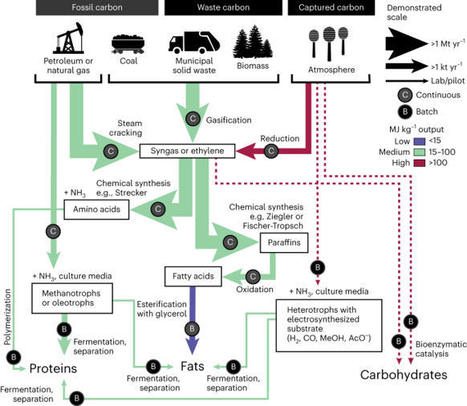
Efforts to make food systems more sustainable have emphasized reducing adverse environmental impacts of agriculture. In contrast, chemical and biological processes that could produce food without agriculture have received comparatively little attention or resources. Although there is a possibility that someday a wide array of attractive foods could be produced chemosynthetically, here we show that dietary fats could be synthesized with <0.8 g CO2-eq kcal−1, which is much less than the >1.5 g CO2-eq kcal−1 now emitted to produce palm oil in Brazil or Indonesia.
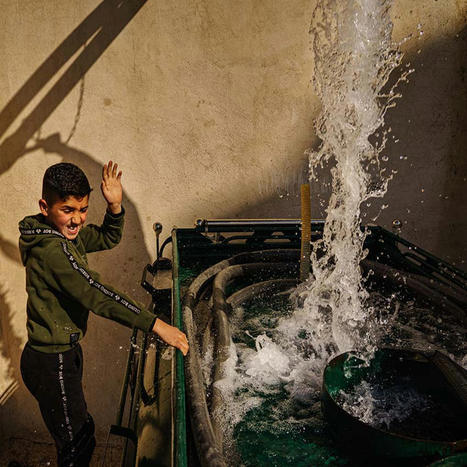
A dire water shortage in Jordan has helped create a local black market for the precious resource, a study in Nature Sustainability reveals. Tap water is only available for a few hours a day in much of the country, and water outages are frequent in several cities
The official SXSW "All Things Food" Summit, presented by Food Tank, Huston-Tillotson University, and Driscoll's and streaming live from Austin, features 50+ luminary speakers—including chefs, policymakers, farmers, business leaders, food systems advocates—panel conversations, a theatrical performance, and more!
Currently, 80% of America’s energy supply comes from fossil fuels. During the combustion process, the elements release greenhouse gases into the environment. These gases alter the atmosphere’s composition. The planet relies on a strategic atmospheric consistency to produce and regulate specific surface temperatures supporting the global ecosystem. As the composition changes, Earth struggles to maintain life-sufficient conditions.
Reverting agricultural land to a wild state in a world still plagued by hunger and anticipating another two billion mouths to feed also raises the spectre of food shortages.
With sustainable and plant-based diets becoming more normalised, attention has been given to food waste and how to reduce its impact on the environment; the handling of food and its associated greenhouse gas emissions are not far behind those of the energy and transportation industries. According to the Food and Agriculture Organization of the UN (FAO), if food waste were a country, it would be the 3rd-largest contributor of carbon emissions, after the US and China. In terms of area, food waste would be as big as India and Canada combined. These figures are staggering considering that 11% of the global population is undernourished.
Fair trade standards should become watchdogs instead of the benchmark for sustainability, argues the recently appointed head of sustainable commodities NGO Solidaridad. Jeroen Douglas, executive director of Solidaridad, says organisations like Fairtrade and Rainforest Alliance should push for regulation and price transparency in commodity markets, but shouldn’t be the reference for sustainability.
Communities in northern Morocco are vulnerable to increasing water scarcity and food insecurity. Context specific adaptation options thus need to be identified to sustain livelihoods and agroecosystems in this region, and increase the resilience of vulnerable smallholders, and their farming systems, to undesired effects of social-ecological change. This study took a knowledge-based systems approach to explore whether and how tree-based (i.e., agroforestry) options could contribute to meeting these adaptation needs.
A new review led by Yale researchers highlights the olive tree’s unique role in connecting human, animal, and environmental health — a living model of the “One Health” approach to sustainability.
Following a scathing appraisal of the industry, renowned ecologist, author, and research professor Carl Safina explains his views on contemporary aquaculture, and outlines changes he believes necessary for it to attain true sustainability.
Thirty-three enterprises have been selected in southern Italy to participate in the training course provided by the SOFIGREEN project, which aims to strengthen the sustainability of processes and activities of beneficiary enterprises, improving their ability to attract investment for the green transition also by expanding partnership networks.
The enterprises come from a variety of production sectors, from social agriculture to culture to sustainable logistics.
Below is an overview of the selected enterprises, broken down by geographic area.
The Regenerative Agriculture Summit Europe aims to bring the food and textiles industries together to facilitate peer-to-peer sharing and discussions around how the industry can come together and collaborate to create the unity that is needed to drive progress. The event will facilitate and accelerate the adoption of regenerative practices within supply chains, and provide key insights to inform corporate strategies and develop frameworks to measure impact in a clear, transparent, and unified manner, to effectively achieve sustainability goals.
The Middle East region is facing a unique set of natural, operational, political, economic and social challenges in their efforts to adopt sustainability.
Despite high ambitions to make farming greener, progress in the EU sustainable agriculture is stalling, according to a new Organisation for Economic Co-operation and Development (OECD), which calls to tie the bloc’s extensive farming subsidies more strongly to measurable outcomes.
Kick off 2022 with these 20 books recommended by Food These 20 books focus on food systems, urban foodways and policy, climate resilience for the future, histories that illuminate the creation of our food system, and more:
Professor Louise Fresco used the prestigious City Food Lecture in London to argue in favour of the shift towards flexitarian and reductionist diets. But she warned against doing away with meat consumption altogether. Eating meat will be an important part of a sustainable food system, said the leading Dutch scientist and academic Professor Louise Fresco.
“The most destructive object on the planet,” writes Julian Cribb in this alarming assessment of our food future, is “the human jawbone. It is presently devouring the Earth – and that is not a wise strategy for our long-term survival”. Our rapacious desire to consume has caused wars, built empires, permanently changed the Earth’s ecosystem, and is now pushing humanity towards a cliff edge. Climate change, environmental degradation, unsustainable growth, and industrialised agriculture are part of a toxic cocktail that means “the world faces the greatest threat to global food supply in all of human history”.
Our current economies are running the largest Ponzi scheme ever. We are using the Earth’s future resources to power our current economies. Currently, humanity consumes the planet’s natural resources more quickly than Earth can replenish them. Debt balloons and eventually bursts. Humanity’s ecological debt shows up as carbon in the atmosphere, collapsing fish stocks, shrinking forests, eroding soils, and depleting groundwater.
To get content containing either thought or leadership enter:
To get content containing both thought and leadership enter:
To get content containing the expression thought leadership enter:
You can enter several keywords and you can refine them whenever you want. Our suggestion engine uses more signals but entering a few keywords here will rapidly give you great content to curate.


 Your new post is loading...