Your new post is loading...

|
Scooped by
DD
June 16, 2014 5:07 AM
|
Zara owner Inditex, the world's largest fashion retailer, plans to join China's fast-growing Tmall online marketplace to strengthen its position in a country that is already its second biggest by store numbers behind Spain.
Tmall is run by Chinese e-commerce giant Alibaba, which last year handled more than 1.5 trillion yuan ($240 billion) of transactions for 231 million active users across its three main Chinese online marketplaces - more than Amazon and eBay Inc combined.
Tmall offers virtual store fronts to merchants who set their own prices and handle their own logistics for nearly everything but payments. Other Western brands to join TMall recently include Britain's Burberry and ASOS.
Read more here...
|
|
Scooped by
DD
June 6, 2014 9:31 AM
|
Weibo launched Weibo Payment less than half a year ago. Today Weibo Payment announced to open up to “every user”, either business or individual, at the end of this month. Users, however, need to apply and no details on approval rules have been disclosed today.
It will make Weibo, according to the company, a “social commerce platform” that “enables every Weibo user to provide their followers and other users with commercial offerings. ”
Read more here...
|
|
Scooped by
DD
June 3, 2014 11:13 AM
|
|
|
Scooped by
DD
June 2, 2014 5:26 AM
|
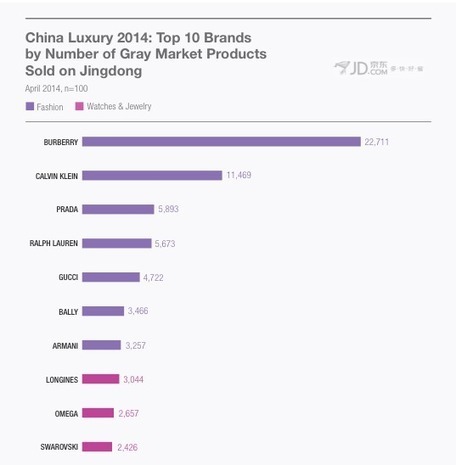
From sketchy tariff-free items smuggled into the country to blatant counterfeits, China’s e-commerce sphere is full of questionable “gray-market” goods when it comes to luxury. With the potential to dilute a brand’s image and harm sales, companies are taking the issue seriously and have recently been finding several new ways to combat the problem.
The main channels for online gray-market sales are currently on China’s largest e-tail marketplaces, which include Alibaba’s C2C Taobao and B2C Tmall, as well as competitor Jingdong. Gray-market goods take the form of daigou sales, which include items purchased abroad and smuggled into the country to avoid high tariffs, and counterfeits—which sellers will often claim are real in order to sell for a higher price.
Read more here...
|
|
Scooped by
DD
June 2, 2014 5:19 AM
|
While some global luxury brands are at the top of their game when it comes to their digital marketing strategy in China, the vast majority still need to master some essential skills in order to keep up. A recent report on digital luxury marketing in China by L2 Think Tank found that some brands, such as Chow Tai Fook, Tommy Hilfiger, and Coach, have excellent digital strategies in China, but the majority of them fall short when it comes to even the most simple features. L2 found that 74 percent of luxury brands are considered either “feeble” or “challenged” in their China digital strategies. As a result, we’ve compiled a list of five of the most basic issues luxury brands should remember when building up a digital plan in order to remain competitive with an incredibly tech-savvy group of consumers.
Read more...
|
|
Scooped by
DD
May 28, 2014 4:59 AM
|
China messaging app WeChat has been a source of tension in China. Just today, the government announced a renewal of its crackdown on app accounts that “disseminate negative or harmful information to the public…hurting public interest,” according to a Reuters source close to the campaign. Most individual users should be free to continue their use, as the crackdown will focus on accounts that have the ability to “communicate widely and mobilize society.” In addition to being a social tool for disseminating social and political thought among its 355 million users, WeChat has been a space for brands to communicate and cultivate their fan base. The platform recently launched Weigouwu, which offers in-app WeChat payments and integrates China Yelp equivalent Dianping. 47% of brands in L2’s Digital IQ Index®: Luxury – China are active on WeChat, but most are reluctant to experiment with the platform’s full capabilities. None of the prestige brand accounts promote links to third-party retailers. Chow Tai Fook is the only brand to connect to Weigouwu and just 6% link WeChat accounts to loyalty programs. Less than a third use geolocators to direct users to nearby stores and less than a fifth provide live chat.
Read more here...
|
|
Scooped by
DD
May 26, 2014 5:08 AM
|
Youku Tudou which is often viewed as a Chinese version of YouTube, has revealed that its mobile daily video views have surpassed 400 million. What’s more, the revenue earned from mobile sources has passed 30 percent of Youku Tudou’s total sales to date.
For comparison’s sake, YouTube says that over six billion hours of video are watched each month on its platform, with mobile making up almost 40 percent of the global watch time.
Youku Tudou is China’s largest online video site with more than 450 million users, formed after a billion dollar merger in 2012. With more people in China skipping the desktop experience and coming online via their smartphones, the video site has been invested in increasing the quality of their videos on mobile. Last year, it announced a collaboration with chip giant Qualcomm, which would allow viewers access to higher quality videos on the site when using most devices powered by Qualcomm Snapdragon processors.
The video site says that it intends to use recent funding from e-commerce giant Alibaba, which sunk $1.2 billion into it last month, to quicken the pace of its “expansion into new business opportunities.” It didn’t elaborate further, but Youku Tudou recently unveiled a platform to let fans connect directly with celebrities, and we can probably expect to see more of such initiatives that seek to deepen engagement with its users.
|
|
Scooped by
DD
May 20, 2014 5:30 AM
|
Germany’s Montblanc, maker of writing instruments and watches, is aiming to increase engagement among Chinese consumers through an in-application game on social network WeChat.
With approximately 396 million active users per month, WeChat is seen as a gateway to interacting with Chinese consumers on mobile. Montblanc’s game, “Daban,” is being hailed as an unprecedented move by a luxury brand as it goes beyond the traditional touchpoints used on the social channel.
“On top of the messaging features, WeChat provides brands with more and more interesting ways to engage with consumers, making it a compelling mobile communication/CRM tool,” said Pablo Mauron, general manager China at Digital Luxury Group, Shanghai. “Contrary to Weibo, WeChat is a ‘closed’ social network where only users’ peers can follow one’s activity; thus giving Chinese netizens more privacy and allowing them to control their image. Read more...
|
|
Scooped by
DD
May 19, 2014 5:09 AM
|
This week, Alibaba Group signed a Memorandum of Understanding (MOU) with the French government to help French companies access millions of Chinese consumers via Tmall. The three-year agreement will give French companies quick and easy access to the Tmall platform, as well as exclusive services such as online marketing, promotion, and platform support. Alongside the agreement, Tmall has agreed to promote French brands with the “Elegant France” campaign. More than 30 French brands active on Tmall – Evian, L’Oreal, Biotherm, le coq sportif, Lacoste, and others – will participate. French brands such as Lancôme have launched China-specific social media campaigns that tap into the French culture. Examples are the Le French Chic campaign, which promoted a low-key or “French” makeup routine, and the Happy Lancôme New Year video with imagery from historic Paris in a video made for the holiday.
France is not the first European country to sign an MOU with Alibaba. Just six months ago, in December, Alibaba chairman Jack Ma partnered with British Prime Minister David Cameron to invite more UK companies to take advantage of Alibaba-owned platforms like Tmall and introduce British products to Chinese consumers. Since then, Burberry and ASOS have launched official Tmall accounts and we can expect a number of French brands to do the same.
|
|
Scooped by
DD
May 14, 2014 5:14 AM
|
Alibaba is taking a tougher line against counterfeit items sold on its online marketplaces as the Chinese e-commerce giant heads towards a U.S. stock listing that could be the world's biggest technology company IPO. Some security experts say the Chinese group's stricter standards on piracy and fake goods may even surpass those ofAmazon.com Inc and eBay Inc.
|
|
Scooped by
DD
May 12, 2014 5:16 AM
|
With its massive U.S. IPO filing announced today, Chinese e-commerce giant Alibaba is the hot topic of discussion for both Silicon Valley and Wall Street. Although the site’s enormous e-commerce success over the years has come from its mass-market oriented sales, the global luxury industry should also be paying close attention for several key reasons.
The owner of the gigantic C2C site Taobao and B2C e-tailer Tmall filed what is expected to become the largest IPO the United States has ever had. With a $1 billion placeholder amount, it could raise up to $20 billion—surpassing Facebook’s $16 billion—according to an estimation by Bloomberg. To put the sheer size of Alibaba in perspective, it has more sales than Amazon and eBay combined. As investors are abuzz about the risks and rewards of buying shares and the tech world speculates over the possibilities for future acquisitions, Alibaba’s global e-commerce domination is also set to make waves in the luxury sphere. Not only does the company process an enormous amount of China’s e-commerce transactions—an estimated 50 percent of all parcels delivered in the country come from Taobao and Tmall—but its recent focus on courting luxury brands to attract Western investors is likely to have a major impact on the future of luxury e-commerce in China.
More...
|
|
Scooped by
DD
May 12, 2014 5:13 AM
|
A roundup of ongoing Mother’s Day digital campaigns on China’s social media, featuring Furla, Ted Baker, Chow Tai Fook, Guerlain, and Sephora.
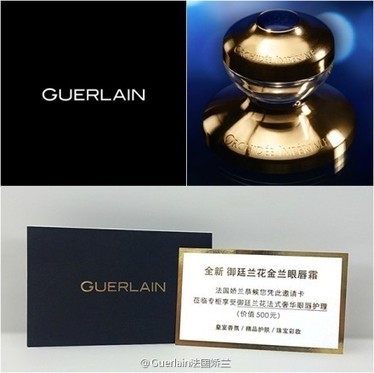
Guerlain French luxury skincare and cosmetics house Guerlain has launched a Weibo campaign featuring its Orchidée Impériale product line. Now through May 11, those who retweet and write a post to show their love to their mothers on Weibo will have an opportunity to win an Orchidée Impériale skincare session (valued at RMB 500 yuan) as a Mother’s Day gift. More...
|
|
Scooped by
DD
May 7, 2014 8:52 AM
|
This afternoon Alibaba filed for its hotly anticipated IPO, detailing its recent financial performance, including revenue for the first nine months of its fiscal year 2013 of $6.51 billion and net income of $2.85 billion for the same period.
Alibaba intends to sell around 12 percent of its shares, according to sources, which means that the IPO could bring in around $20 billion. That would value Alibaba at more than $165 billion. The company’s F-1 document indicates that it could raise $1 billion in the IPO. The final figure, TechCrunch understands, will be far, far higher.
(At that price, Yahoo’s 24 percent stake in Alibaba is worth $39.84 billion. Marissa Mayer’s upcoming talk at TechCrunch Disrupt NY just got more interesting.)
The company grew its top line from a full fiscal-year revenue of $5.55 billion, and net income for that year of $1.39 billion. The company ended December 2013 with $7.8 billion in cash and equivalents. The company has a total of 8 million sellers on its platform.
|
|
|
Scooped by
DD
June 9, 2014 5:09 AM
|
A roundup of ongoing digital campaigns on China’s social media, featuring DKNY, Kate Spade, Shiseido, Coach, and Swarovski.
DKNY
Time flies for New York fashion brand DKNY as it celebrates its 25th anniversary with a luxury timepiece giveaway on Weibo. From June 4-10, fans have the opportunity to vote for their favorite watch, and one person will win the anniversary timepiece. Three other participants will also win a DKNY tote bag.
Read more here...
|
|
Scooped by
DD
June 4, 2014 4:15 AM
|
E-commerce sites such as eBay (EBAY) and Amazon.com (AMZN) arose when they did for a reason. The Internet first had to be invented, of course, and become a part of everyday life. They needed another thing, however: an efficient, reliable, nationwide system for delivering the stuff people ordered, in as little as a day, if requested. And in the U.S., that existed in the form of FedEx (FDX), United Parcel Service (UPS), and the U.S. Postal Service.
One of the challenges for Chinese e-commerce companies—Alibaba being the largest—is that this isn’t yet the case in China. While some consolidation has come lately, the Chinese shipping industry is still fragmented into lots of small companies that ferociously compete to undercut each other on price, and timeliness and package care often suffer.
Read more here...
|
|
Rescooped by
DD
from ECOMMERCE
June 2, 2014 6:07 AM
|
China’s Ministry of Commerce released today its official estimate of 2013 online retail sales, confirming what many already suspected: Chinese consumers now buy more online than do their U.S. counterparts.
Online retail sales in China in 2013 totaled 1.85 trillion yuan ($296.57 billion) in 2013, representing 41.2% growth from 2012—triple the growth rate of overall retail sales in China, according to the Ministry of Commerce. China’s online shopping total is 13.0% more than 2013 U.S. e-retail sales of $262.51 billion, which grew 16.9% in 2013, according to the U.S. Department of Commerce.
Read more here...
|
|
Scooped by
DD
June 4, 2014 10:57 AM
|
Wechat is now offering a new payment service. Offline stores could soon use a customized POS machine that completed with Wechat payment, could allow its users to buy an offline (physical) product through an online payment service.
How does it works? When buying something in a physical store, the merchants types the total amount in the WeiPOS machine that will then generate a QR code. The consumer will scan this code using WeChat and will be redirected to Wechat payment to confirm the transaction.
The 1000 yuan POS machine named WeiPOS is released by WeiPass, Tencent’s mobile e-commerce solution provider and will be given for free to merchants. The service will charge a commission rate for each transaction but it is said that this cost will be lower than UnionPay’s.
Read more here...
|
|
Scooped by
DD
May 30, 2014 6:09 AM
|
WeChat, or Weixin, launched today the long-awaited system for businesses to set up stores within the ecosystem. The store is named WeChat Little Store.
Store owners will be able to upload and manage items, manage orders and shelves, among others. A purchase protection program is also available for filing and settling complaints. Managing the store, according to the instruction, seems easy and sellers will have a dashboard to manage orders, check out notifications or read metrics.
The payment process is, of course, supported by WeChat Payment, a one-click mobile payment solution developed by Tencent’s online payments service Tenpay.
Read more here...
|
|
Scooped by
DD
May 26, 2014 5:10 AM
|
China has 450 million online video viewers, more than any other country and 80% of the internet-connected population. They watch 5.7 billion hours of video per month, and their number is expected to reach 700 million in 2014, making online video a great tool for brands to reach Chinese consumers. Our Digital IQ Index®: Luxury - China found a few facts about China’s online video-viewing habits that can help luxury brands best reach them. Here are a few: Youku is wining video. Besides being the most popular destination for video, the platform yields on average 390,000 views for the most popular brand videos, four times that of Leshi, Tudou, Sina Weibo and Sohu. Mini-movies are the most preferred form of content, followed by ads. and ads to tutorials.Even though mini-movies make up 4% of the most viewed videos, they account for 629,000 views, which is more than any other video category. Nine of the ten most-viewed videos are mini-movies and television commercials. Youku’s most popular video was from Burberry. The most viewed video on Youku was the Burberry Trench vide for the Autumn/Winter 2013 campaign starring British couple Sienna Miller and Tom Sturridge in iconic trench coats. The video gathered more than 27,303,254 views, close to five times the second most-viewed video, Louis Vuitton’s mini-movie “L’invitation au Voyage.” Most English-language videos are not translated to Chinese, but those that do have slightly higher views. Only 15% of most popular global videos have been translated to Chinese, and 40% are global videos without Chinese subtitles. Global videos have twice the views of local ones, suggesting foreign content has appeal.
|
|
Scooped by
DD
May 26, 2014 5:06 AM
|
Chinese brands have been more open to direct e-commerce and adoption of third-party platforms such as Tmall. Chow Tai Fook and Chow Sang Sang are among the 13% of brands that offer direct-to-consumer e-commerce, and four of the five Chinese brands in the Index (Bao Bao Wan, Chow Sang Sang, Chow Tai Fook, and Lukfook) sell directly on Tmall. In short, all of the local brands in the study offer direct e-commerce or at least link to a third-party e-tailer (in the case of Qeelin). Yet, Chow Tai Fook stands out with a user mobile and online experience. It is also the only jewelry brand to offer in-store pickup, and one of four brands to host its China site locally. (Sites hosted abroad can have load times up to three seconds.) It is also one of five sites to offer free shipping. Being a domestic brand does give Chow Tai Fook an edge over foreign brands. For example, our report shows domestic Index brands are stronger on Sina Weibo. However, its embrace of e-commerce and convenience offering could be a guide to foreign luxury brands looking to pave their way in China.
|
|
Scooped by
DD
May 19, 2014 9:29 AM
|
Luxury brands occasionally struggle to present Chinese consumers with a seamless Web experience due to the country’s tight Internet rules. Slower load times on brand Web sites, especially when concerning ecommerce, can quickly lead to abandoned pages and carts. For luxury brands that want to tap the immense ecommerce potential in China, shoring up fundamental Internet problems is the first step.
“But it’s particularly an issue for luxury brands,” he said. “Imagine you are selling a fast car that claims it can go from zero to 100 kilometers in four seconds and costs $100,000, and your Web site loads in 10 seconds. What kind of message does this send? Read more...
|
|
Scooped by
DD
May 16, 2014 3:48 AM
|
Xiaomi tablet will be produced by NVIDIA. The 16G version is sold for RMB1499 (less than $250) and the 32G one for RMB 1699 (less than $280) — both are less expensive than a Xiaomi flagship smartphone.
The company said their goal is to make the best Android tablet. Lei Jun, CEO of Xiaomi, addressed gaming when explaining what they mean by a good Android tablet. It could be a good selling point as gaming is one of the most popular and profitable mobile app categories in China, and bigger screens with devices like tablets make gaming experience so much better.
|
|
Scooped by
DD
May 13, 2014 4:43 AM
|
Burberry opened its first official Tmall store in April, becoming the first foreign luxury brand with an official presence on the third-party retailer. Until then, prestige brands had avoided the site (known for a persistent gray market) for fear of diluting their caché. Burberry’s opening of a Tmall storefront was considered a bold attempt to have more control over that market. The reception was strong. In the first few hours, 1,500 fans reposted the news of Burberry’s opening on Sina Weibo. In 18 days, Tmall sold more than 132 products. But 32 of the pieces have already been returned, resulting in a 26.4% return rate far higher than the 7.2% average for similar items sold on Tmall. So far, fragrances make up the majority of the Tmall store sales, the rest being polo shirts, jeans, and pants. The store recorded no sales of higher-priced items such as purses and trench coats.
More...
|
|
Scooped by
DD
May 12, 2014 5:15 AM
|
Chinese cosmetics e-tailer Jumei joined the bandwagon of Chinese online merchants with U.S. IPOs by announcing its filing on April 11. Jumei’s successful “batch sales” model in China has attracted investments from American venture capital company Sequoia, and it announced it will raise up to $400 million but did not disclose which exchange it will be listed on.
This puts Jumei in the ranks of other Chinese online company giants with plans to be listed on American exchanges. E-commerce giant Alibaba Group, competitor JD.com, and Chinese micro-blogging service Sina Weibo have all turned in their filings. Just as Chinese companies are eager to expand into American exchanges, U.S. venture capital firms are recognizing their potential, and aremore than happy to invest in them.
|
|
Scooped by
DD
May 12, 2014 5:05 AM
|
Alibaba has been called the "Amazon of China," and if you compare the two companies' mission statements, they generally say the same thing. Amazon: "to be Earth’s most customer-centric company for four primary customer sets: consumers, sellers, enterprises, and content creators." Alibaba: "to make it easy to do business anywhere." But Alibaba, an online shopping giant that also has a computing-resources business similar to Amazon Web Services, is more sprawling. Its Taobao Marketplace, a massive retail and auction site, is similar to EBay, and Alibaba is trying to regain a stake in its Alipay affiliate, an online payment system like PayPal. The company even has its own mobile operating system.
Alibaba also owns 48 percent of its shipping affiliate China Smart Logistics Network, which aims to provide 24-hour delivery anywhere in China in the next decade. The company touted its logistics prowess by highlighting how it handled 156 million shipments generated on its Singles' Day promotion in 2013 compared with a daily average of 13.7 million packages. Alibaba's other investments include messaging app TangoMe and ride-sharing service Lyft. More...
|