Your new post is loading...

|
Scooped by
DD
August 11, 2016 11:40 AM
|
With bricks-and-mortar sales continuing to decline, social selling is poised to alter the current retail model by facilitating purchases seamlessly through branded communication.
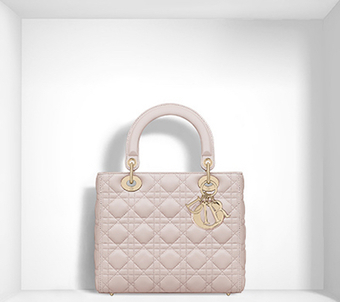
French atelier Christian Dior recently tried its hand at social selling by offering its followers on Chinese messaging and social application WeChat the opportunity to purchase a limited-edition handbag directly through a post. While not alone in its WeChat efforts, Dior has become the first luxury house to sell a high-end handbag through the app, showing its potential for direct-to-consumer sales.
|
|
Scooped by
DD
August 1, 2016 5:42 AM
|
ONE OF TECH’S fiercest rivalries is ending. Uber, the biggest ride-hailing company in the world, is set to merge its business in China with Didi Chuxing, the homegrown ride-hailing favorite in the world’s most populous country, according to multiple reports.
More specifically, Didi will buy Uber China, Uber’s Chinese branch, acquiring all its operations. Uber will exit the country, though Uber will continue to oversee its own app. After the merger, Didi will be worth $35 billion, a significant lift in valuation even after the financial boost it got when Apple agreed to invest $1 billion back in May. (It’s unclear for now how Apple’s investment in Didi fits into the larger deal.) Meanwhile, Uber China investors will get a 20 percent stake in Didi Chuxing. News of the deal was first reported by Bloomberg on Sunday night.
|
|
Scooped by
DD
July 28, 2016 3:55 AM
|
The Chinese government is targeting 38 trillion yuan ($5.7 trillion) in e-commerce per year by 2020, and a near doubling that again to 67 trillion yuan by 2025.
|
|
Scooped by
DD
July 18, 2016 4:55 AM
|
Chinese e-commerce giant Alibaba has announced plans to incorporate virtual reality (VR) into its online marketplaces, according to Internet Retailer.
The e-tailer plans to use the technology to simulate the experience of shopping in a physical store at home. The consumer will have to use his or her own VR device, such as a VR helmet or VR glasses, and will use a remote to navigate the digital store. Alibaba plans to launch a trial version of the technology in one of its online stores by the end of July 2016, with ambitions to roll it out by the end of the year.
|
|
Scooped by
DD
June 27, 2016 3:56 AM
|
Uber China is repositioning itself as an all-in-one solution for transportation, food and entertainment. At TechCrunch Shanghai, Uber China VP of Operations and Regional General Manager of Central China Kate Wang showed off Uber’s new vision for China — one that includes two new offerings, UberLIFE and Uber + Travel, which will roll out across China this year.
All-in-one solutions are something the Chinese market demands. That’s what WeChat, the hot messaging app that sees 697 million active users worldwide every month, is all about. In addition to messaging, the app offers voice and video calling, payments, shopping, games and more. It seems that Uber, which has been blocked on WeChat, is taking a page or several from WeChat’s playbook. It’s worth noting that WeChat is owned by Tencent, which is an investor in Uber’s biggest rival, Didi Chuxing, formerly known as Didi Kuaidi.
|
|
Scooped by
DD
June 15, 2016 3:58 AM
|
Chinese e-commerce giant Alibaba Group Holding Ltd said on Tuesday it expects to nearly double its transaction volumes by 2020, signalling it still expects rampant growth as executive chairman Jack Ma pledged to intensify a crackdown on fake goods.
At an investor conference at its headquarters in Hangzhou, Zhejiang province, Alibaba said it expects to record 6 trillion yuan (£641.54 billion) in gross merchandise volume (GMV) in fiscal 2020, nearly double 3.09 trillion yuan in fiscal 2016.
|
|
Scooped by
DD
May 30, 2016 12:42 PM
|
In 2011, a respected anti-counterfeiting coalition in Washington escalated its fight against the Chinese e-commerce giant Alibaba, saying its websites served as a 24-hour market "for counterfeiters and pirates" and should be blacklisted.
Fast forward to 2016. The same lobbying group, the International Anti-Counterfeiting Coalition, reversed its position. Alibaba had become "one of our strongest partners." The group welcomed Alibaba as a member and invited its celebrated founder, Jack Ma, to be the keynote speaker at its spring conference in Orlando, Florida.
|
|
Scooped by
DD
May 23, 2016 12:05 PM
|
China’s Internet giant Tencent has been expanding its international reach in areas like games and advertising, and as part of that, the company is picking up its dealmaking in Europe. The Wall Street Journal is reporting that the owner of the popular WeChat messaging platform is in early talks to buy a majority stake in Supercell — the mobile gaming phenomenon based out of Finland that is behind Clash of Clans — from current majority shareholder Softbank.
On top of this, in the coming weeks, TechCrunch has learned that Tencent plans to announce marketing and advertising partnerships with French ad giant Publicis and luxury goods conglomerate LVMH.
|
|
Scooped by
DD
May 13, 2016 4:14 AM
|
Apple made the bombshell announcement today that it has invested $1 billion in China’s top ride hailing app. Didi Chuxing (formerly called Didi Kuaidi) is often described in U.S. media as Uber’s Chinese rival, but it already dominates the market by far. The companyclaims it fulfilled one billion rides last year and holds 87 percent of the country’s private ride-hailing market.
In an interview with Reuters, Apple CEO Tim Cook said, “We are making the investment for a number of strategic reasons, including a chance to learn more about certain segments of the China market. Of course, we believe it will deliver a strong return for our invested capital as well.”
|
|
Scooped by
DD
May 11, 2016 4:43 AM
|
When it comes to luxury brands’ digital presence in China, not all strategies are created equal, according to a new report by digital intelligence firm L2. While many high-end fashion, watch, jewelry, and leather goods companies are lagging at attracting Chinese followers and online shoppers, the firm finds that Hong Kong jeweler Chow Tai Fook is China’s most digitally competent brand in 2016.
The “Digital IQ Index” ranking of 107 luxury brands in China finds that Burberry, Coach, and Cartier have the second, third, and fourth best China digital strategies after Chow Tai Fook, respectively. Calculated with a methodology that analyzes brands’ websites, e-commerce, digital marketing, social media, and mobile presence, the report finds that the majority of brands have “average” or worse China digital strategies, with more than three in five brands classified as digitally “challenged” or “feeble.”
|
|
Scooped by
DD
May 11, 2016 4:25 AM
|
Alibaba Group Holding Ltd's online shopping platform Taobao is tightening controls on the sales of luxury goods, requiring sellers to show proof of authenticity, as it fights sales of fake items on one of China's top online platforms.
|
|
Scooped by
DD
May 3, 2016 12:08 PM
|
If there were ever an unexpected rival to the endless purse collections of Hollywood celebrities like Victoria Beckham or Kim Kardashian, it would be that of Tao Liang. Known by his devoted online fans as “Mr. Bags,” the 23-year-old Columbia University graduate is a prolific blogger on China’s top social media platforms, WeChat and Weibo, with a single mission: to share his handbag world to the masses.
He writes for more than 1.28 million followers on Weibo and WeChat altogether—enough to attract Fendi to invite him to their fashion shows and for Stella McCartney, Galeries Lafayette, and other big brands and department stores to collaborate with him. His posts are lengthy, informing the shopping-hungry Chinese nouveau riche with his almost encyclopedic knowledge on the latest trends and hottest styles.
|
|
Scooped by
DD
April 25, 2016 5:18 AM
|
Among sectors in the luxury industry active on WeChat, the one that seems to have seen the most early adopters of the messaging app and its technology updates is beauty, and a new report by digital intelligence firm L2 details which brands are showing the most digital prowess.
The “Beauty China: WeChat” report finds that the app is mainly used as a “branding platform” for this sector as brands take advantage of its programming features. With 73 percent of beauty labels relying on four-post-a-month service accounts (rather than subscription, which allows one a day), this sector is particularly active with a focus on new campaigns to encourage user engagement.
|
|
|
Scooped by
DD
August 8, 2016 6:06 AM
|
France's Christian Dior has become the first luxury brand to sell top-end bags on WeChat, the most popular messaging and social network in China, offering its iconic Lady Dior bag on the platform.
On Monday, the designer brand posted its limited edition small Lady Dior for the upcoming Qixi, or Chinese Valentine's Day, which falls on Aug 9 this year. Dior aimed to sell the bag between Monday and Thursday, but the bag sold out online on Tuesday.
|
|
Scooped by
DD
July 28, 2016 11:08 AM
|
China took a big step forward today after it announced national guidelines to make ride-hailing services like Uber and Didi Chuxing legal in the country from November.
Drivers from both services and others like Yidao Yongche, majority owned by big-spending LeEco, have operated in fuzzy areas, with police arresting drivers and impounding cars on a seemingly inconsistent basis in China. (As a non-Mandarin speaker, having police stop your Uber or Didi is a truly worrying experience that I’ve lived through.) These rules are still to be adopted by regional and local officials across China, but this is most definitively a step in the right direction for ride-hailing operators.
|
|
Scooped by
DD
July 19, 2016 5:14 AM
|
After a difficult 2016 for Alibaba when it comes to its reputation regarding counterfeit goods, the company is once again on a PR offensive to convince brands that it’s making a genuine effort to fight fakes.
During its first Rights Holders Collaboration Summit in Hangzhou on June 30, the Chinese e-commerce giant launched the “Intellectual Property Joint-Force System,” which will give brands the opportunity to confirm intellectual property violations found by Alibaba. Under the new system, participating brands will be assigned to a dedicated online portal with an Alibaba account manager.
|
|
Scooped by
DD
July 12, 2016 9:40 AM
|
WeChat and Weibo no doubt top the priority lists of most brands when it comes to digital marketing in China, but these popular social media platforms aren’t exhaustive in the world of Chinese apps, especially when it comes to visual branding. Michael Kors knew this when it collaborated with In, a photo-sharing app that lets its users decorate their pictures with stickers, and other big-name luxury brands have benefited from the photo-tagging capabilities of apps like Nice. Of course, the West’s major photo-sharing social network, Instagram, has been blocked by China’s Great Firewall for about a year and a half, and while there are plenty of key Chinese influencers who are still active on the platform, Instagram’s Chinese competitors have a much larger user base for international marketers to tap.
|
|
Scooped by
DD
June 23, 2016 6:11 AM
|
Haoyu Shen is too dignified to characterise it as a ‘war.’ Seldom do company leaders use that sort of language outside the boardroom and the chief executive of JD Mall is no exception. In a recent conversation with BoF, Shen directed more than a few barbed comments at an unspecified ‘competitor’ but he wouldn’t be drawn on naming his key adversary on the virtual battlefield. No need. Anyone familiar with China’s vast e-commerce market knows that the two armies facing off are JD Mall and Alibaba’s Tmall.
Both are general merchandise B2C e-commerce platforms, selling everything from furniture to food to fashion. And both operate on an epic scale. Tmall, which hosts storefronts for major brands, including Burberry and Zara, positions itself as China’s largest online marketplace. According to iResearch China, Tmall’s market share of the B2C online shopping website market is over 50 percent, while JD.com’s share is less than half of this. However, JD.com claims the crown as the country’s largest online direct sales company and has been making an aggressive push to attract more international fashion brands to its stable.
|
|
Scooped by
DD
June 1, 2016 4:02 AM
|
Luxury brands are putting more resources into China’s booming mobile app WeChat, where they can sell products directly to more than 600 million users. That’s no surprise. According to Bain & Company’s 2016 survey of nearly 1,500 Chinese consumers, 60 percent identified WeChat and Weibo as their online source for information on luxury goods.
Here’s how Burberry, Coach and Chanel are using WeChat.
|
|
Scooped by
DD
May 30, 2016 12:39 PM
|
While the number of luxury brands on WeChat has grown by 87 percent over that past two years, the industry still has much work to do when it comes to reaching Chinese consumers.
According to L2’s recently released China luxury “Digital IQ Index,” 92 percent of global luxury brands now have a WeChat account, marking a dramatic surge since 2014, when only around half of all brands had joined the platform. The massively popular mobile messaging app is now on par with Weibo, which features accounts for 94 percent of luxury brands.
|
|
Scooped by
DD
May 20, 2016 4:04 AM
|
Samsung announced today that it has cemented a deal that will make Alipay, China’s largest online payments platform, available through Samsung Pay.
The partnership, made between Samsung Electronics and Ant Financial, the Alibaba financial tech affiliate that owns Alipay, is important because Alipay is one of the most formidable rivals mobile payments like Samsung Pay and Apple Pay face as they tackle the Chinese market.
|
|
Scooped by
DD
May 11, 2016 4:45 AM
|
As mobile commerce continues to grow in China, Chinese consumers are increasingly using WeChat to make “impulse” purchases, according to McKinsey’s recently released iConsumer China 2016 survey.
The survey finds that the percentage of WeChat users making purchases on the platform has more than doubled in the past year, rising from 15 percent in 2015 to 31 percent in 2016. Their top channel for purchase on the app is through JD.com, which takes up 32 percent of purchases, while moments and groups, links to other apps, and public accounts take up 22 to 23 percent each.
|
|
Scooped by
DD
May 11, 2016 4:42 AM
|
Demand for wine e-commerce is already significant in China—in 2015, the number of bottles sold on JD.com doubled from the previous year to 22 million. The e-commerce giant launched wine sales five years ago and currently sells imported wines from 12 different countries, including France, Australia, Chile, Spain, Italy, and the United States. Demand for Australian wine is particularly strong, as JD.com’s president of the Fast-Moving Consumer Goods Business Unit Carol Fung says that “Penfolds has long been one of the top selling brands on JD.com."
|
|
Scooped by
DD
May 4, 2016 4:51 AM
|
Asia Pacific leads the global digital infrastructure as home to half of the world’s mobile phone subscribers and the largest number of wireless Internet connections. However, the region also has historically attracted less than one-third of global mobile marketing spend — making its role in the digital economy largely underrepresented amongst its Western counterparts.
The potential for that role to change was galvanized by a late-2014 Google survey, which highlighted that mobile penetration in Asia was far greater than any other region in the world, even surpassing computer use, thus ushering in Asia’s “mobile-first” consumer.
As we approach the 10-year anniversary of the smartphone era, are there further lessons to be gleaned from Asia’s mobile-first economy?
|
|
Scooped by
DD
April 25, 2016 5:20 AM
|
Tencent officially launched Enterprise WeChat/Weixin this morning, positions as a tool for office communications and collaborations.
Enterprise WeChat, still under internal testing last month, currently supports iOS, Android, Mac, and Windows PCs.
|