Your new post is loading...

|
Scooped by
DD
August 6, 2014 6:35 AM
|
Online shopping in China is making waves as it achieved a new milestone—tremendous growth helped e-commerce achieve 10.1 percent of total retail transactions in the country in Q2 this year. Using data from Chinese market research firm iResearch, China internet business news site China Internet Watch reported that total transactions from China’s online shopping market reached 628.76 billion yuan (US$101.58 billion). This includes a combination of business-to-consumer (B2C) and consumer-to-consumer (C2C) transactions. This is the first time online shopping has crossed the 10 percent threshold of total transactions, and the rate is expected to rise in the coming years.
|
|
Scooped by
DD
July 25, 2014 8:35 AM
|
New applications of the Internet could account for up to 22 percent of China’s GDP growth through 2025. A McKinsey Global Institute article.
|
|
Scooped by
DD
July 24, 2014 5:05 AM
|
For luxury brands on the lookout for the next big cities for growth in the next decade, a new McKinsey report finds that China is still the place to be.
According to the consultancy’s recent paper called “The glittering power of cities for luxury growth,” six out of seven new cities that will be added to its list of the top urban centers for luxury growth between now and 2025 are located in China. These include not only Hong Kong and first-tier Beijing, Shanghai, Guangzhou, and Shenzhen on the mainland, but also the lower-tier Tianjin and Chongqing.
|
|
Scooped by
DD
July 23, 2014 4:58 AM
|
British label Mulberry is reaching out to Chinese consumers by creating a larger digital presence on regional social media channels.
A little over a year ago Mulberry joined Weibo and recently created an account on WeChat to connect with Chinese consumers. The use of international social media accounts will likely bring the brand global awareness and increased clientele.
|
|
Scooped by
DD
July 16, 2014 4:09 AM
|
Nielsen, the media and commerce measurement company, has inked a deal with China’s Alibaba Group to give manufacturers and brands a better understanding of online shopping habits inside the world’s largest nation.
The deal will allow Nielsen to access information about the shopper profiles and habits of Chinese shoppers on Alibaba e-commerce sites such as Taobao and Tmall. By combining that information with shopping data Nielsen already gathers from Chinese brick-and-mortar stores, the company believes it is creating a more holistic view of sales numbers, shopper profiles and shopping trends across both online and offline commerce in China.
|
|
Scooped by
DD
July 11, 2014 4:15 AM
|
Luxury in China is still growing—especially in the online sphere. The figures speak for themselves: China’s luxury e-commerce market is estimated to grow to about US$7 billion (45.3 billion yuan) by 2015.
|
|
Scooped by
DD
July 7, 2014 6:23 AM
|
A roundup of recent and ongoing digital campaigns on China’s social media, featuring Lane Crawford, Porsche, W Hotel, De Beers, and IWC.
Read more here...
|
|
Rescooped by
DD
from OMNICHANNEL
July 2, 2014 3:28 AM
|
While Amazon’s revenues of $74.4 billion dwarf Alibaba’s $8.4 billion, transactions on Alibaba’s online sites, at $248 billion last year, were about two and half times bigger than Amazon’s.
Because of the two companies have different business models, they have difference approaches toward omni-channel logistics. Amazon has been stealing market share from traditional retailers for years; consequently Amazon competes against the omni-channel initiatives of retailers.
Alibaba is also a competitor to retailers in China, especially in Tier 1 cities. But China is underserved by the retail sector. Consequently, there is more room for collaboration between China’s e-commerce behemoth and retailers.
|
|
Scooped by
DD
June 30, 2014 4:43 AM
|
For China’s international shoppers, who reportedly make 27 percent of all tax-free purchases in the world, buying overseas just became easier. Swiss tourism shopping tax refund company Global Blue announced yesterday its collaboration with Chinese e-commerce giant Alibaba’s payment system Alipay, allowing shoppers to receive value-added tax (VAT) refunds directly into their Alipay accounts.
According to Global Blue data, travelers from China are the biggest spenders in Europe, spending an average of 10,773 euros ($14,670) per trip. Global Blue’s partnership with Alipay will allow Chinese tourists to avoid the hassle of having to fill out forms to claim VAT back at tax-refund kiosks when they shop at Global Blue partners, as the card with their details does that for them. Shoppers will receive a pre-completed tax-refund form upon purchase, which when turned in and processed, will allow the refund to be deposited into their Alipay accounts.
Read more here...
|
|
Scooped by
DD
June 24, 2014 5:14 AM
|
China mobile search advertising only represented 13.1% of total search advertising click share, according to Marin Software’s latest annual report.
As the data only covers Google Mobile which has low market share in China’s search market, the absolute value of the findings are not so useful; the trend can still be referred to.
Read more here...
|
|
Scooped by
DD
June 24, 2014 5:03 AM
|
Ever since Alibaba’s mega U.S. IPO announcement, the world has been paying extra-close attention to China’s e-commerce industry. While Alibaba is the clear front runner in the race so far, its stellar performance belies a slowing Chinese economic growth. In addition, its ties to China’s troubled and opaque finance industry has left industry experts wondering if Alibaba can hold on to its crown, especially after it lost market share to rivals in China last year.
In the episode of Thoughtful China embedded above, Yu Gang, co-founder and chairman of Chinese e-tailer Yihaodian, Jeff Sprakin, head of Asia at e-commerce exhibitions organization IRCE, Alex Misseri, senior vice president at digital agency Razorfish, Patrick Deloy, executive director at e-commerce consultancy Bluecom Solutions, and Porter Erisman, director of Crocodile in the Yangtzeweigh in on the current state of e-commerce in China and who’s ahead in the competition.
Watch the video here...
|
|
Scooped by
DD
June 16, 2014 9:02 AM
|
In a concerted push to convince more premium brands to join B2C e-commerce site Tmall, online retail behemoth Alibaba is courting both companies and the governments of countries famous for luxury goods. After a recent deal with France, the company has now moved onto Italy in hopes that labels such as Gucci and Prada may someday open their own official online shops on the site.
According to a report today in Women’s Wear Daily, the company has just signed a three-year memorandum of understanding (MOU) with Italy’s Ministry of Economic Development stating that Alibaba will help Italian companies set up shop on Tmall and its other online platforms. According to the terms of the agreement, Alibaba will provide express enrollment, promotional and marketing support to Italian brands, and a tailored Tmall marketing campaign to mark the start of the new agreement. Alibaba also said that it will collaborate with Italian brands on B2B platform Alibaba.com, online payment system Alipay, and logistics company China Smart Logistics.
Read more here...
|
|
Scooped by
DD
June 16, 2014 6:14 AM
|
Chinese Internet Company Alibaba Group Holdings Ltd. has launched 11Main.com, an online store for U.S. customers. The announcement was received with a degree of alarm by the media, referring to Alibaba’s landing in the States as “Amazon.com’s D-Day,” an immense threat to the company. But let’s clear the air; who is this newcomer and how is its offering unique?
Indeed, Amazon is currently the top-of-mind retailer for online goods and many are convinced the extension of Alibaba into the U.S. market will shake the foundations of Amazon’s dominance in the sector. According to BBC News, the total value of goods sold on Alibaba’s platform last year exceeded that of Amazon and eBay combined. However, analysts predict it may be difficult for Alibaba to break into the crowded online shopping scene in the U.S., where products rise in popularity through customer ratings and expensive marketing pushes.
Read more here...
|
|
|
Scooped by
DD
July 30, 2014 5:02 AM
|
Luxury and premium brands that have entered the Chinese market have done so by establishing a physical presence in China. Observers of economic trends have periodically published their insights that support the aggressive pace of Chinese urbanization and, consequently, the increased number of opportunities for brands to get established there.
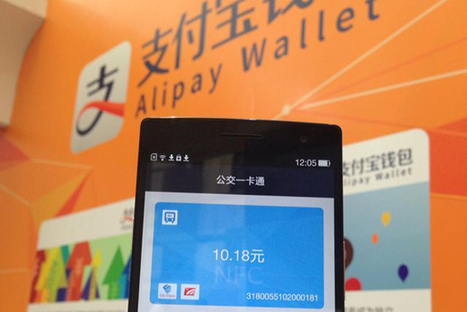
To cater to the needs of the modern Chinese consumer, Alibaba has launched a series of consumer services under the name of Alipay, including Alipay Wallet, which have trained the Chinese in online and mobile shopping without the need of credit cards, with speed and efficiency. Alipay has established a large network of regular online shoppers.
Considering these facts, an unprecedented opportunity has revealed itself for Western brands to reach Chinese consumers who are tech-savvy, enthusiastic online or mobile shoppers, Western brand-minded and whose needs remain largely unmet.
|
|
Scooped by
DD
July 24, 2014 5:18 AM
|
The addition of “brand tags” onto users’ pictures on social networking isn’t exactly a new idea—apps such as Pinco and Nice were built around such features for users to place tags on what they’re wearing. Despite their popularity, neither of those apps were linked to any shopping platforms. Enter e-tailer giant Tmall, who rolled out its version of social networking replete with its own brand-tagging capabilities. Named “FUN” (fan’r, 范儿 in Chinese) it allows users to upload photos of themselves and place brand tags on them. Tapping on these tags brings users to a brand page, where the brand’s product page can be accessed.
|
|
Scooped by
DD
July 24, 2014 4:39 AM
|
As individual companies adopt web technologies, they gain the ability to streamline everything from product development and supply-chain management to sales, marketing, and customer interactions.
Increasing digitization is forcing companies across all industries to rethink their operations and become more customer-centric. Owners and CEOs will have to be deeply engaged as they make decisions that can radically affect how their companies do business.
|
|
Scooped by
DD
July 22, 2014 6:26 AM
|
|
|
Scooped by
DD
July 15, 2014 6:10 AM
|
Thanks to rampant safety and counterfeit scandals, Chinese customers are one of the world’s most distrustful consumer groups when it comes to their attitudes about brands. To make sure they’re educated about brands, they have turned to many specialized websites with user reviews as well as their experience of a brand’s products—and luxury goods have not been left out.
|
|
Scooped by
DD
July 9, 2014 5:38 AM
|
WeChat, China's popular messaging app, said it launched a new service in mainland China whereby companies that have verified WeChat accounts with more than 100,000 followers can pay fees to place ads on other companies’ official pages.
The ads are not distributed as instant messages; they appear at the bottom of corporate pages. Advertisers can specify their target viewers based on gender, age, location and even areas of personal interests, according to Tencent.
|
|
Scooped by
DD
July 7, 2014 6:08 AM
|
Net recently brought the latest trends in wearables to the forefront at two recent China tech events: the GMIC conference in Beijing and the GSMA Mobile Asia Expo, where the very first 360Fashion & Tech Runway Show that took place on June 13.
Featuring the latest trends in the integration of the fashion and technology industries, the runway event showcased presentations by global and Chinese designers using techniques such as 3D scanning and 3D printing, in addition to the rapidly developing wearables market.
In order to gain more insights about the potential for wearable technology in China, Jing Daily interviewed both Net and Sonny Vu, the CEO of Misfit Wearables, who introduced the company’s Shine activity tracker at GMIC.
|
|
Scooped by
DD
June 30, 2014 8:50 AM
|
In 2013, 23.97 million Internet-connected TV sets were sold in China, according to the latest report released by Chinese research firm iResearch. The Internet-connected TV sets include both smart TVs installed with an operating system and traditional TVs that can get connected to Internet-enabled devices and display the contents from those devices.
There have been a many content providers of online videos, games and other apps, and smart TVs and other devices such as set-top box in China. iResearch estimates that Internet-enabled TVs as a percentage will continue to grow as the household broadband penetration rate is increasing and device makers are heavily promoting their products.
Read more here...
|
|
Scooped by
DD
June 30, 2014 4:29 AM
|
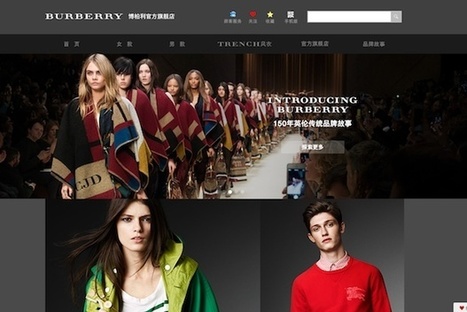
Is Tmall appropriate for prestige brands? L2 Head of Research Maureen Mullen explores that question in this new video. Tmall has gotten a lot of press lately, and rightfully so. Tmall.com and Taobao.com conduct more transactions than Amazon and eBay combined. Furthermore, Burberry’s opening of a Tmall store was a big win for the site. Burberry opened the Tmall store for the same reasons it opened the Amazon store, to clean up the gray market. Mullen said Burberry’s move was notable because fashion brands have yet to embrace Tmall. Lacoste is the only fashion brand with a presence on Tmall. Beauty brands, however, have been more open to Tmall than Amazon. Estée Lauder, Clinique, and Clarins have opened stores on the platform, and APAC prestige beauty brands (originating in Korea and China) have been selling on Tmall for years, but have not opened direct to consumer stores.
Watch the video here...
|
|
Scooped by
DD
June 24, 2014 5:06 AM
|
WeChat released a new Chinese version for iOS today. The major change is in My Wallet, under My Bank Account, that now you can (1) make payments with “pocket money” in the Wallet without typing a password and (2) transfer money to your WeChat contacts. Users can deposit money from their bank accounts into the My Wallet.
Now WeChat Payment is another step closer to Alipay which also allows users to deposit money into the online account for online shopping, transferring money between users or buy other online products or services. About one year ago Alipay launched Yuebao, a mutual fund that encourages users to buy with their money sitting in the Alipay accounts. The mutual fund quickly gained much traction that made THFund the second largest mutual fund company in the total assets under management in China in half a year.
Read more here...
|
|
Scooped by
DD
June 20, 2014 9:26 AM
|
Working with the agency Curiosity China, the Mercedes-Benz arena leveraged an all-new marketing and CRM concept based on the messaging app WeChat. Taking into account the specific habits of Chinese mobile users, the idea of the campaign was to create a premium customer experience before, during, and after the shows to increase daily communication between fans and sponsors.
“The digitalization of large-scale arenas is the future of our industry. Mercedes-Benz Arena is committed to enhancing the event experience for fans and bringing more value to our sponsors, and development of the WeChat platform through partnership with Curiosity China is a major step in the right direction,” said Michael Enoch, the general manager of Mercedes-Benz Arena.
Read more here...
|
|
Scooped by
DD
June 16, 2014 9:00 AM
|
A roundup of ongoing digital campaigns on China’s social media, featuring Maybelline, Tag Heuer, Clinique, Guerlain, and Glamour Sales.
Tag Heuer It’s time for World Cup fever, and luxury watchmaker Tag Heuer is joining in on the excitement. In a WeChat campaign from June 10 to June 26, fans can visit Tag Heuer’s flagship or retail stores, scan a QR code, and then input a guess as to how many goals the company’s new brand ambassador Cristiano Ronaldo will score at this year’s World Cup. Three winners will receive a golden soccer ball autographed by Ronaldo himself.
Read more here...
|