Buzz e-sante
248.3K views | +4 today
Buzz e-sante
Le média du digital santé
Curated by Rémy TESTON
Your new post is loading...
Rescooped by Rémy TESTON from Digital Health
March 5, 2014 1:12 PM
Scoop.it!

Two Gamers Aim To Transform Hospital Performance Evaluation

Two Gamers Aim To Transform Hospital Performance Evaluation | Buzz e-sante | Scoop.it
Key evidence suggests that as hospital systems in the US reach a crisis point – involving the transition to value-based purchasing and tying Medicare and Medicaid dollars to performance – quality of care must improve. In many ways hospital employees have become the most important piece of the puzzle to improve efficiency, lower costs and improve outcomes. Disengaged employees in the US who turnover, for example, are estimated to cost as much as $11 billion annually due to lost productivity and poor results. As hospital leadership faces a new domain of uncertainty and demands, and must use innovative technologies to better understand and improve engagement and performance of employees, two gamers think they have the answer: real-time evaluation, fun gaming interaction and a culture of positive reinforcement. The team at AMPT Health is gambling that their new SaaS solution will revolutionize performance evaluation.

Via Alex Butler
malek's curator insight, March 4, 2014 9:20 AM

Time will tell whether services that focus on positive psychology and game mechanics – are compatible with industries that rely heavily on compliance through protocol.

Sandra Davidson's curator insight, March 5, 2014 12:36 PM

Gamification to boost workplace efficiency and productivity? Interesting concept, but I think the right culture  has to be in place for this to be successful. Fascinating. 

Scooped by Rémy TESTON
March 4, 2014 3:55 PM
Scoop.it!

Cancer colorectal : début de la campagne Mars bleu

Cancer colorectal : début de la campagne Mars bleu | Buzz e-sante | Scoop.it
Cancer colorectal : début de la campagne de dépistage Mars bleu 2014A l’occasion de Mars bleu, mois de mobilisation contre le cancer colorectal, le ministère des Affaires sociales et de la Santé et l’Institut national du cancer (INCa) relancent leur dispositif d’information. Objectif : inciter les femmes et les hommes à participer dès 50 ans au programme de dépistage organisé mais aussi les personnes présentant un risque particulier, à parler du dépistage avec leur médecin.
No comment yet.
Scooped by Rémy TESTON
March 4, 2014 12:29 PM
Scoop.it!

Survey: 70 percent of clinicians use mobile devices to view patient information | mobihealthnews

Survey: 70 percent of clinicians use mobile devices to view patient information | mobihealthnews | Buzz e-sante | Scoop.it
No comment yet.
Scooped by Rémy TESTON
March 4, 2014 3:57 AM
Scoop.it!

Bloguer son cancer

Bloguer son cancer | Buzz e-sante | Scoop.it
À partir d’exemples tirés de blogues personnels sur le cancer, les auteurs de...
No comment yet.
Scooped by Rémy TESTON
March 3, 2014 4:05 PM
Scoop.it!

AXA Seed Factory va investir dans les start-ups spécialisées en médecine et silver economy

AXA Seed Factory va investir dans les start-ups spécialisées en médecine et silver economy | Buzz e-sante | Scoop.it
 Les projets ont jusqu'au 30 juin pour se faire connaître. Le fonds d'investissement AXA Seed Factory souhaite se renforcer…
No comment yet.
Rescooped by Rémy TESTON from Télémédecine & e-Santé
March 3, 2014 10:04 AM
Scoop.it!

e-santé : Quel avenir pour la télémédecine ?

e-santé : Quel avenir pour la télémédecine ? | Buzz e-sante | Scoop.it

Via Clinique PASTEUR
No comment yet.
Rescooped by Rémy TESTON from PHARMA : COMPRENDRE LES TRANSFORMATIONS, ÉCLAIRER LES STRATÉGIES
March 2, 2014 12:57 PM
Scoop.it!

Classement NetObserver des sites santé - Harris Interactive France #hcsmeufr

Classement NetObserver des sites santé - Harris Interactive France #hcsmeufr | Buzz e-sante | Scoop.it

Via Lionel Reichardt / le Pharmageek
No comment yet.
Rescooped by Rémy TESTON from Santé, eSanté, mSanté, santé numérique, Quantified Self et télémédecine... Toute l'actualité sur la santé de demain (en français)
March 2, 2014 8:11 AM
Scoop.it!

Combattre le strabisme grâce à l'Oculus Rift | Sante-Digitale.fr

Combattre le strabisme grâce à l'Oculus Rift | Sante-Digitale.fr | Buzz e-sante | Scoop.it
Sur Sante-Digitale.fr, nous avons pour habitude de vous présenter toutes les nouvelles technologies pouvant être utilisées dans le domaine de la e-santé.

Via Celine Sportisse
No comment yet.
Scooped by Rémy TESTON
March 1, 2014 11:39 AM
Scoop.it!

Les médias et Internet, accélérateurs d’anxiété face à une éventuelle maladie

Les médias et Internet, accélérateurs d’anxiété face à une éventuelle maladie | Buzz e-sante | Scoop.it
48% des Français déclarent qu’il leur arrive d’avoir peur d’être atteints d’une maladie en entendant parler dans les médias, 43% sur un site web d'information
No comment yet.
Scooped by Rémy TESTON
March 1, 2014 11:21 AM
Scoop.it!

La télémédecine pour prévenir l’AVC

La télémédecine pour prévenir l’AVC | Buzz e-sante | Scoop.it
Dans le Limousin, la télécardiologie est une réalité. En 2011, le Dr Patrick Dary, cardiologue dans la Haute-Vienne s’est lancé dans un ambitieux projet de suivi à distance de patients à risques cardiovasculaires. Trois ans plus tard, son étude ...
No comment yet.
Scooped by Rémy TESTON
March 1, 2014 2:57 AM
Scoop.it!

Top physician information sources by mobile device

Top physician information sources by mobile device | Buzz e-sante | Scoop.it
Top physician information sources by mobile device
No comment yet.
Scooped by Rémy TESTON
March 1, 2014 2:56 AM
Scoop.it!

3-D printers make human tissue in push to create livers

3-D printers make human tissue in push to create livers | Buzz e-sante | Scoop.it

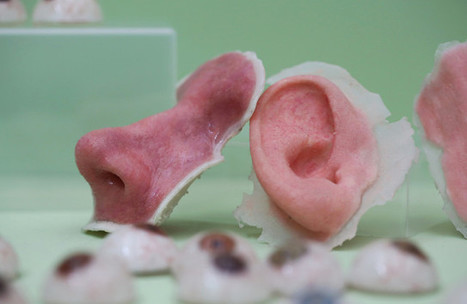
3-D printing used to construct everything from art to toys to spare parts for the space station may one day produce human organs at a hospital near you.


The 20-year-old technology uses liquid materials that become hard as they print out three-dimensional objects in layers, based on a digital model. Current medical uses are in dentistry, for hard-material crowns, caps and bridges, as well as prosthetics. Last year, a 3-D printer was used to create a structure from moldable polymer that replaced more than 75 percent of a patient’s skull.


Now, Organovo Holdings Inc. is using 3-D printers to create living tissue that may one day look and act like a human liver, able to cleanse the body of toxins. Drugmakers and cosmetic companies already plan to use 3-D printed human tissue to test new products. Eventually, the technology may help reduce organ shortages and cut transplant rejections as patients receive new organs constructed from their own cells.

No comment yet.
Scooped by Rémy TESTON
February 28, 2014 5:29 AM
Scoop.it!

Le quantified-self : explications et problématiques

Le quantified-self : explications et problématiques | Buzz e-sante | Scoop.it
Prêt pour lire cet article faisant référence à 1 pratique émergente et 3 problématiques associées ? Vous lirez en 4 minutes et 50 secondes les 982 mots qui le composent ce qui vous permettra de combler 10% de temps de réflexion journalier nécessaire à votre bien être. Bienvenue dans le Quantified-Self...
No comment yet.
Scooped by Rémy TESTON
March 5, 2014 3:27 AM
Scoop.it!

Archos se lance dans la santé connectée

Archos se lance dans la santé connectée | Buzz e-sante | Scoop.it
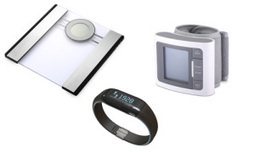
La société française spécialisée dans le mobile Archos se positionne sur le marché du Quantified self avec le lancement de plusieurs objets connectés. Découverte. Très présente sur le marché du mob...
No comment yet.
Scooped by Rémy TESTON
March 4, 2014 3:54 PM
Scoop.it!

Objets connectés : une cigarette électronique "intelligente" vendue à la Fnac

Objets connectés : une cigarette électronique "intelligente" vendue à la Fnac | Buzz e-sante | Scoop.it
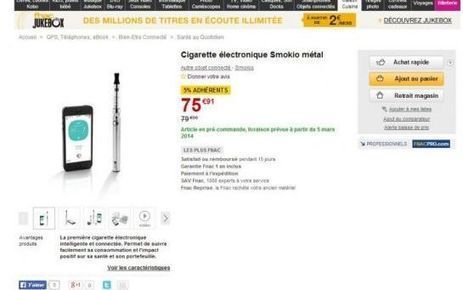
(AFP) - Le fabricant de cigarettes électroniques "intelligentes" et connectées, Smokio, a annoncé lundi avoir conclu un partenariat avec la Fnac,...
No comment yet.
Scooped by Rémy TESTON
March 4, 2014 5:22 AM
Scoop.it!

Hébergement sécurisé de données e-santé : Claranet rachète le Français Grita

Hébergement sécurisé de données e-santé : Claranet rachète le Français Grita | Buzz e-sante | Scoop.it
L'entreprise dispose de l'agrémente "hébergeur de données de santé". Spécialisé dans les réseaux et l'hébergement d'applications, Claranet…
No comment yet.
Scooped by Rémy TESTON
March 4, 2014 3:42 AM
Scoop.it!

Vaximum : suivi vaccinal sur mobile par Pfizer

Vaximum : suivi vaccinal sur mobile par Pfizer | Buzz e-sante | Scoop.it
Pour accompagner le suivi des vaccinations de vos enfants, le laboratoire Pfizer lance l'application mobile Vaximum. Découverte. Pour gérer le suivi et les rappels des vaccinations des enfants jusq...
No comment yet.
Scooped by Rémy TESTON
March 3, 2014 12:35 PM
Scoop.it!

Ne manquons pas le tournant de l'e-santé en France !

Ne manquons pas le tournant de l'e-santé en France ! | Buzz e-sante | Scoop.it
SANTÉ - Si nous voulons réussir le développement de l'e-santé dans notre pays, c'est un véritable tableau de bord de la santé qu'il faut savoir créer, un tableau de bord personnalisé qui rassemble toutes les données et aborde le champ de la prévention.
No comment yet.
Scooped by Rémy TESTON
March 3, 2014 3:04 AM
Scoop.it!

Le meilleur du digital santé - Février 2014

Le meilleur du digital santé - Février 2014 | Buzz e-sante | Scoop.it
Découvrez les dernières nouveautés du digital santé francophone au cours du mois de février 2014. Nouveaux sites, blogs, contenus et campagnes web A la rencontre de Loic Etienne et de e-docteur Pie...
No comment yet.
Rescooped by Rémy TESTON from Social Media and Healthcare
March 2, 2014 8:13 AM
Scoop.it!

How should hospital PR Engage journalists with social media

How should hospital PR Engage journalists with social media | Buzz e-sante | Scoop.it

It is generally accepted that journalists prefer hospital PR folks to contact them on Twitter, rather than by phone or email, forcing them to make their pitch, sell the story and save time. But how true is this? And to what extent has social media transformed the way healthcare media relations do their job?

Text 100, conducted a survey in 2012, that helps us to understand how social media affects the way journalists do their jobs and whether it impacts on the way hospital PR professionals should engage with them.

Major findings ::

Corporate blogs were the most useful social media channelOn average a journalist will use 3 different social media channels every time they research a story86% journalists use Twitter for work and 85% welcome PR contact through their Twitter profilesLinkedIn is used to find industry experts to interview and 84% journalists are happy to be approached via LinkedInWikipedia is cited as a useful resource for background dataSurprisingly, journalists still rely heavily on press releases for news storiesMore journalists said that PR contact was welcome via phone calls and emails than through any of their social channels

Although 40% of journalists use a Facebook account to manage their professional relationships, it is one of the least useful channels with only 42% of media welcoming contact via it


Via Plus91
No comment yet.
Scooped by Rémy TESTON
March 2, 2014 4:10 AM
Scoop.it!

Healint : le médical comme labo du Quantified Self - Digital Business News

Healint : le médical comme labo du Quantified Self - Digital Business News | Buzz e-sante | Scoop.it
Traquer des données en temps réel et recevoir des alertes directement sur son téléphone, notamment lorsque l'on est atteint de maladies cardio-vasculaire, c'est ce que propose Healint. Aux commandes de cette société, on retrouve François Cadiou. "Le téléphone répond à des questions qui sont habituellement réservées à un médecin" explique ce français expatrié à Singapour. De passage à Paris, François Cadiou à répondu aux questions de Digital Business News...
No comment yet.
Scooped by Rémy TESTON
March 1, 2014 11:23 AM
Scoop.it!

dmdPost - La e-santé bouscule le rôle du médecin

dmdPost - La e-santé bouscule le rôle du médecin | Buzz e-sante | Scoop.it
Lancée en 2009, Santécréa, basée à Lyon, accompagne les acteurs de la santé dans la mise au point de programmes d’éducation thérapeutique. La société...
No comment yet.
Rescooped by Rémy TESTON from ON QUANTIFIEDSELF, MHEALTH & CONTECTED DEVICES....
March 1, 2014 11:19 AM
Scoop.it!

Télémédecine : l'offre de solutions ne couvre que la moitié des spécialités médicales #hcsmeufr


PARIS, 25 février 2014 (TICsanté) – Sur les 31 spécialités médicales reconnues au Journal officiel, 16 font l'objet de réponses possibles par la télémédecine, relève la société Linkidoc dans son Observatoire des solutions de télémédecine.La société Linkidoc, spécialisée en conseil en déploiement de programmes de télémédecine, a analysé les 150 outils technologiques accessibles en France référencés dans son moteur de recherche Link-e-doc. 65 fournisseurs (entreprises, établissements de santé ou associations de patients) y sont représentés. Ce ratio "démontre que ces derniers ont encore peu diversifié leur offre en télémédecine", note le rapport publié le 19 février.

L'analyse des solutions montre que seulement 16 spécialités médicales sont représentées, sur les 31 reconnues au Journal officiel. Un tiers des solutions concernent la médecine générale et plus de 10% touchent plusieurs spécialités (solutions de visioconférence ou d'échange de données médicales). C'est donc près de la moitié des applications qui n'est pas spécifique à une spécialité. Cette répartition s'explique par "une volonté de toucher un panel de clients le plus large possible dans un marché encore émergent", analyse Linkidoc.

Un tiers des solutions spécialisées sont dédiées à la cardiologie, loin devant la pneumologie et l'endocrinologie. "Les grandes absentes concernent la médecine invasive (analyses biomédicales, chirurgie...)", observe la société. Elle note que "ce domaine est voué à se développer, par exemple avec la mise sur le marché prochaine de solutions de bras robotisés permettant d'opérer à distance".

Concernant le type d'acte que permettent ces dispositifs, la téléconsultation arrive en tête (45%), suivie de la télésurveillance (40%). La téléassistance et téléexpertise sont peu représentées, notamment parce qu'elles s'appuient généralement sur des solutions 100% informatiques, plutôt que sur les solutions matérielles que référence link-e-doc.

La répartition des différents types de solutions est "assez équilibrée". Les appareils de mesure, chariots de mesure, applications mobiles/web et box communicants représentent la majorité des solutions disponibles. Les tablettes et logiciels restent assez rares. Cette forte présence des chariots et des applications montre que "la mobilité est prépondérante", souligne Linkidoc.

"Beaucoup de ces solutions montrent aussi une volonté de polyvalence pour pouvoir répondre à plusieurs problématiques de santé", comme les cabines de téléconsultation ou les box récupérant les données médicales du patient.

L'étude montre aussi que les entreprises françaises qui portent ces solutions peinent à se développer. "Beaucoup restent à l'état de start-up en quête de levées de fonds pour subsister", note le rapport, qui pointe "une difficulté à développer des modèles économiques pérennes". Cet état de fait risque de leur être préjudiciable lorsque des sociétés étrangères décideront d'investir le marché français. /mb
Source: http://www.ticsante.com/story.php?story=1773#ixzz2ud8HeKu6


Via dbtmobile, IHEALTHLABS EUROPE
No comment yet.
Scooped by Rémy TESTON
March 1, 2014 2:57 AM
Scoop.it!

Doctors, patients, and computer screens

Doctors, patients, and computer screens | Buzz e-sante | Scoop.it

Dr. David Blumenthal believes that “given its huge public health, research, safety and quality advantages, the digitization of health information is inevitable,” and he predicts that voice recognition and systems that enable patients and medical assistants to enter more data will transfer much of physicians’ digital burden.


Blumenthal also implied something that had occurred to me but that I’d preferred not to think about: part of my problem with computers is my age. Though I’m no Luddite, my younger colleagues are less troubled by screens than I am.


“For physicians of a certain generation,” Blumenthal told me tactfully, the current status of computers in medicine is “a painful interlude in an important historic process.”

No comment yet.
Rescooped by Rémy TESTON from Social Media and Healthcare
February 28, 2014 4:43 PM
Scoop.it!

HEALTHCARE PROVIDERS ARE USING SOCIAL MEDIA TO ENGAGE PATIENTS, COLLABORATE WITH EACH OTHER

HEALTHCARE PROVIDERS ARE USING SOCIAL MEDIA TO ENGAGE PATIENTS, COLLABORATE WITH EACH OTHER | Buzz e-sante | Scoop.it

It’s beginning to happen, slowly, but surely. Social media use in healthcare is beginning to scratch the surface.

The UCLA Health System live-tweets brain surgery, including short video clips to reduce future patients’ fear of a procedure. Johns Hopkins uses Facebook to generate a 21-fold increase of people who registered themselves as an organ donor in a single day. Texas Health Resources in Arlington is using social mediainternally and externally, for knowledge-sharing, team building, education, and employee recruitment. Out of the organization’s 21,500 employees, 3,500 are active social media users.

This is just a small sampling of how healthcare organizations, specifically leading providers, are beginning to embrace what many, and some likely still, dismiss as a passing fancy. For many, the use ofsocial media is no longer just being passed off as a marketing effort. Leading providers are even integrating it into clinical operations and overall efforts to improve patient engagement. Others are using it to collaborate with others to better navigate the tricky, regulatory waters upon which IT leaders in healthcare are facing.

An April 2012 report from PricewaterhouseCoopers’ (PwC) Health Research Institute (HRI) found that 60 percent of consumers would trust health information posted on social media by their doctors, 55 percent would trust a hospital, and 56 percent would trust a nurse. The same study found that one-third of all consumers use social media for healthcare information. Since then, social media in healthcare has only grown and many say it will continue to grow.

“[Social media] is too much of a natural process—because people use this stuff everyday in all aspects of their lives—it’s only natural that it will [continue] to make the jump to healthcare itself. When you can order a plane ticket, order a pizza, and deposit your paycheck from a phone, you’re going to want to access your health records, schedule a doctor visit, get your lab results, and you are going to want to ask a health question,” says Jeff Livingston, M.D., a physician at MacArthur Obstetrics, Gynecology, and Infertility in Irving, Texas.

Jeff Livingston, M.D.

A PATIENT ENGAGEMENT TOOL

Livingston has spearheaded the organization’s avid social media efforts, connecting with patients through these mediums, for approximately 10 years. This dates back to the days when he would go on MySpace and answer questions from his young patient demographic about their pregnancy concerns. One look on the MacArthur Ob/Gyn social networking sites and the fruits of his labor will be in clear view—numerous likes, retweets, questions and comments, and overall, engaged patients.

His strategy differs from many larger organizations. Doctors, not the marketing people, are the ones using the networks. “Finding a doctor who likes a particular network is so important to success,” Livingston says. Recently, one of Livingston’s doctors took over the organization’s Pinterest page and was able to gain more than 100 followers on the network overnight.  “This is not about practice marketing. This is a tool to engage patients in their health.”

MacArthur also focuses hyper-locally, looking to serve the patients of the Irving area and their concerns. To Livingston, this is how the organization can build effective, intimate relationships with their patients through social media.

For bigger hospital provider organizations, such as Mount Sinai Health System, a seven-hospital system based in New York City, the hyper-local concept might not fly as well when serving a city of eight million. Still, the organization, which has been recognized for being one of the friendliest hospitals for social media in the U.S., works to ensure there is a meaningful connection with patients.

To do this, John Ambrose, the social media director at Mount Sinai, says his team meets with physicians, nurses, and department heads multiple times per week. They’re mining for information on what patients want to learn about and will create campaigns based on that research.  In that vein, it promoted a free skin cancer screening on Facebook and had a line out the door at the dermatology department.

“It’s really about word of mouth, speaking to the doctors, speaking to the nurses. These are the people who are sitting with the patients every single day and know what these patients need, and from that, we can create meaningful campaigns,” Ambrose says. In addition to this, Mount Sinai has created 50 or so social media channels, many of which are specifically for a certain disease population.

CONCERNS WITH HIPAA

Many on the provider side have shied away from connecting from patients altogether, citing concerns with potential violations of the Health Insurance Portability and Accountability Act of 1996 (HIPAA). The Philadelphia-based American College of Physicians (ACP) has provided an official series of ethical guidelines for physicians using social media and other electronic means of communication. The guidelines advise them to keep a distance from patients on the networks and schedule an appointment if they are approached through electronic means for clinical advice.

“I encourage physicians to not even use Facebook and areas where they put personal content in there, because of the (potential) for miscommunication. We are observed and we have a certain standard to act professionally, and sometimes that filter is not there to enable us to do that appropriately,” says David Fleming, M.D., the President-elect of the ACP, and served on ACP’s Ethics, Professionalism and Human Rights Committee. “Sometimes things can slip out on a Facebook post, a tweet, a blog. Suddenly, you have private information from patients, it may have been put out there innocently or educationally…but there it is.”

David Fleming, M.D.

When it comes to interacting with patients digitally, Fleming advises providers to use a secure patient portal. He also says digital tools should be used to strengthen and enhance face-to-face relationships.

Ultimately, Fleming says providers need to establish guidelines for social media and other forms of digital communication with patients.  Others in the industry are instead focusing social media efforts on provider-to-provider communications.

Drex DeFord, the one-time CIO of Steward Health Care, the Boston-based integrated health system and chairman of the board of the Ann Arbor, Mich.-based College of Healthcare Information Management Executives (CHIME), shifted to the vendor side in 2013, accepting a job as CEO of the Seattle-based Next Wave Connect. Next Wave is a social media platform that allows healthcare professionals to collaborate internally and externally, in a private or open setting.  It relies on advisory council experts, community advisors, and community managers to contribute to conversations and facilitate collaboration.

Drex DeFord

To DeFord, these elements are where the value of social networking for healthcare providers can come into play. “I think the ability to create real and persistent collaboration over time is a real opportunity for healthcare that isn’t offered in any other way today,” he says.

DeFord says there is a real opportunity for growth in social media for healthcare providers and patients, as soon as they recognize this collaborative potential, and not just see the medium as a “time waster.” This includes, he says, taking patient-generated data from social apps and feeding it into clinical portals. “Figuring out ways to use social to make people healthier is really something that will become a reality, and is a reality today, but will come more commonplace in the coming years,” he says.


Via Plus91
No comment yet.