La e-santé peut elle tuer? c'est la question que pose Robin Cook dans son roman "prescription mortelle" - santé mobile, quantifiedself, connected devices...

 Your new post is loading...
 Scoop.it! La e-santé peut elle tuer? c'est la question que pose Robin Cook dans son roman "prescription mortelle" - santé mobile, quantifiedself, connected devices... 
No comment yet.
Sign up to comment
Scoop.it!

En France, les nombreux investissements engagés en faveur de l’adoption du dossier patient pourraient bien transformer le paysage médical en permettant aux professionnels de santé comme aux patients un accès immédiat au compte rendu d’hospitalisation et en améliorant la sécurité et la transparence, avec pour effet positif la réduction du nombre d’erreurs, et une recherche médicale stimulée. Via Celine Sportisse
Scoop.it!

Le site 1001pharmacies.com dresse un état des lieux de la vente en ligne de médicaments en Europe. Résultats en infographie. 1001pharmacies.com, un des leaders des produits de pharmacie et paraphar...

Les Médias en Chantier www.lmc.today's comment,
August 22, 2014 2:25 AM
Voilà une infographie intéressante qui démontre à quel point le système distributif de la TRES coûteuse et désormais parfaitement inutile pharmacie est obsolète.
La disparition des pharmacies est ce qui peut arriver de mieux pour la Sécu. Ce modèle est clairement anachronique. Les pharmacies sont récentes, elles sont apparues avec l'émergence des médicaments chimiques. Mais elles répondaient à un besoin. Non seulement internet n'existait pas, mais, surtout, les pharmaciens faisaient leurs propres médications. La pharmacie était un laboratoire pharmaceutique. Désormais, ce ne sont plus que des épiceries à médicaments protégées par un verrouillage économique serré et absurde. Les médicaments standard doivent être vendus en supermarché (qui doivent avoir l'obligation de disposer d'un pharmacien durant l'intégralité des heures d'ouverture) et sur internet. Quand à moi, je commande mes médicaments non remboursés sur internet depuis longtemps...et je ne me préoccupe pas de savoir s'ils sont autorisés en France ou non, ce qui n'est rien d'autre qu'une énième arnaque pour protéger le marché du médicament, ou s'il est sur ordonnance. Je veux un médicament, j'achète, point! Et si je ne peux pas l'obtenir sur un site de pharmacie en ligne...je vais sur un autre. Comme je le dis depuis longtemps, les médecins et les pharmaciens ont tout à gagner à cesser de lutter pour leurs petites prérogatives. L'époque où ils représentaient l'élite intellectuelle est terminée, ils sont désormais des travailleurs éduqués comme les autres. Et ce splendide graphique est plus qu'éloquent quand au sort qui leur est réservé. Pour les pharmacies, je propose que la Sécu dérembourse 20% du prix du médicament en pharmacie. Ainsi, les clients qui veulent absolument acheter à leur pharmacien, paient de leur poche le coût de ce système distributif obsolète.
Scoop.it!

Cela fait des années que la firme américaine Google investit dans la recherche médicale et se paye les meilleurs scientifiques du monde. Le géant d'Internet a décidé il y a peu d'investir dans le stockage et l'analyse du génome humain. Google X Lab : un délire de milliardaire ou bien le laboratoire d'un futur ultra-technologique ? Via Jerome Leleu
Scoop.it!

Un fonds d'investissement de 50 millions de dollars consacrés à la création d'entreprises et de technologies innovantes dans le domaine de la santé numérique Via Philippe Marchal, lopez sarah, Romain DEFOY

Romain DEFOY's curator insight,
August 19, 2014 5:02 AM
Cela passe tout d'abord par l'annonce le 28 Mai d'un fond de 50 millions de dollars dédié à l'accélération de l'innovation en santé numérique. Ces fonds seront utilisés pour soutenir des entreprises innovantes proposant des solutions matérielles et logicielles ouvertes qui permettront d'accélérer le développement de capteurs avancés, des algorithmes et la collecte et l'analyse des données .
Scoop.it!

En cas de dépression sévère résistant aux antidépresseurs, une étude réalisée sur un petit groupe de seniors suggère que la stimulation intellectuelle par des jeux vidéo, pourrait offrir une alternative intéressante.
Romain DEFOY's curator insight,
August 19, 2014 4:27 AM
Etant donné le très petit nombre de seniors inclus dans l’étude, il est trop tôt pour affirmer que des jeux vidéo, ont réellement un effet antidépresseur et les auteurs admettent eux-mêmes que d’autres études seraient nécessaires pour le confirmer.
Scoop.it!

The organizer of a medical meeting in Milan recently made an appeal (tongue-in-cheek, it would appear) to attendees to avoid status updates and mindless backchannel banter. The social side of any c... Via Isabelle Delignière-Léglise
Scoop.it!

Le laboratoire Pierre Fabre Dermatologie a lancé il y a quelques jours un nouveau site web consacré à l'acné sévère : acne-severe.com. Découverte. Pour répondre aux interrogations des patients et p...
Scoop.it!

"Doctors too are more willing to raise concerns about their colleagues. The challenge for the GMC and other organisations is to make sure that anyone who has a concern or complaint can find their way to the right organisation to deal with it.” Via Plus91
Scoop.it!

In today’s technological savvy world, it is not enough for a physician to rely on referrals or word of mouth to build a patient base. Running a private practice is a business, just like any other, and marketing is a key part of creating a connection not only with potential patients, but also with networking partners and collaborates. Consider some ways a physician can leverage online tools to expand his or her reach. Hospital Websites Becker’s Hospital Review points out a website is a critical business tool for hospitals. The relationship between a medical facility and a physician is symbiotic. Doctors can use this to their advantage when planning marketing strategies. The “Find-a-Doctor” database allows you to become part of the hospital community. You should check regularly to ensure your name appears in the hospital directory. Consider creating listings under the doctor’s name and name of the practice to increase the odds of a hit, too. Physicians can use the hospital website to gain exposure in other ways, as well. Query the hospital administrator about guest blogging or writing an article for the newsletter. Volunteer for a social media Q and A. The more people who see your name in connection with the hospital, the better. Ask about paid ads either online or as part of the newsletter, too. Directories Add your name and practice to online databases such as Healthgrades.com or ZocDoc.com. These sites target searches to connect patients with physicians in their area. While you are at it, add a posting to business directories, as well. Google MyBusiness, for example, puts your name and practice on local maps. Other options include: Yellow PagesMD.comYelpFoursquareSocial Media Becker’s also states that patients between the ages of 18 and 24 rely on information from social media sites. Leveraging this form of communication will increase your access to lifelong patients and emerging families. Facebook and Twitter are obvious choices, but expand your social media horizons to include video options. Film short discussions on current health care issues and post them to your YouTube channel. For example, a quick blurb about controlling blood pressure through diet or summer eating habits provides helpful information on a topic you can cover quickly. Ecommerce University suggests that videos under two minutes get the most views on YouTube. Tip: If the video is shorter in length, transcribe the video in the notes section for better SEO results. Once you have videos uploaded, use your other social media and website assets to promote them. You can embed a video directly onto the practice’s Facebook page. Create discussion groups or a video blog with a comments section on the website to talk about current issues covered in the videos, too. The more personal you make it, the stronger the impact. Don’t lose sight of the big picture when planning your marketing campaigns. The goal is to connect. Doctors can leverage a number of online tools to make that happen. Improving communication options though patient portals, dedicated social media pages and videos are practical, cost-effective approaches to physician marketing.
Via Plus91
Scoop.it!

This year in the U.S. and Canada, 75 million of 600 million appointments with general practitioners will involve electronic visits, or eVisits, according to new research from Deloitte.
Via Philippe Marchal
Scoop.it!

Physicians today often find themselves asking, "Who has time for social media?" Since most providers are focused on the chaos of reimbursements, busy practices and healthcare reform, it's no wonder that social media time is not a high priority. But if you’ve been paying attention to society, business, and commerce over the last few years, you would know that social media has developed a very effective purpose in helping professionals communicate, engage in professional development and build meaningful reputations in their fields. Social media is also a very effective way for physicians to manage their online reputations, which has become more and more important in today’s competitive healthcare marketplace. Many physicians will argue that engaging in social media could be beneficial, but also brings about a certain amount of risk. Dr. John Mandrola negates this argument in hisMedCity News article titled, Doctors and Social Media: It’s Time To Embrace Change. Dr. Mandrola sees the “risk” argument as a confining attitude that many physicians often take – keeping them trapped in the same outdated rituals that have perpetuated the healthcare industry for years. “In the hyper-connected world of 2014, medical professionals have reached a fork in the road. One path is a road well traveled. On this familiar route, we continue to keep our heads down, stay in the weeds, out of trouble. Don’t wiggle; don’t rock the boat; check the boxes; fill out the forms and accept what comes. Don’t dare engage in the online conversation. Choosing this path is like not treating a disease: less ownership confers less personal risk.” Dr. Russel Faust provides five great reasons in his Whitepaper, Social Media Guide for Docs, 12 Tips For Beginners. You will gain market share– yes, it will help grow your practice!You will be recognized as an authority in your area of practice (which will also growyour practice).You will be better connected with your patients: compliance with your diagnostic and treatment regimens will improve (healthier patients, reduced readmissions).Your patients will arrive to appointments better- educated, and take less time: it will streamline your work flow!Your patients will be less needy outside of your clinic: they will require less time on the phone with you and your nurses.
Via Plus91
|
Scoop.it!

Ce second article sur l’observance fait le point sur les outils modernes qui se développent pour encourager votre prise de médicaments au quotidien et faciliter la gestion de votre polyarthrite rhumatoïde. Des applications smartphone en nombre. Plusieurs applications ont vu le jour, souvent à l’initiative de différentes institutions ou des groupements de pharmaciens. … Via Lionel Reichardt / le Pharmageek, Celine Sportisse
Scoop.it!

Le laboratoire Boehringer-Ingelheim a lancé il y a quelques semaines une nouvelle version de sa plateforme d'échanges et d'informations destinée aux professionnels de santé : Cardiocity. Présentati...
Scoop.it!

Remedy is a Google Glass application that enables patients to see specialists faster, through the eyes of a physician.
Scoop.it!
Face à toutes les applications d'e-santé présentées par Emmanuel Viale, Principal Executive des Tech Labs d'Accenture, à Sophia Antipolis, l'avocat Alain Ben... Via Festival Communication Santé
Scoop.it!

Certains assureurs français prennent le pli des objets connectés en proposant des contrats moins chers aux personnes aux "comportements vertueux", selon les données collectées. Bientôt une contrainte ?
Scoop.it!

Le laboratoire Astrazeneca propose une nouvelle application destinée aux professionnels de santé pour faciliter l'accompagnement des patients présentant un syndrome coronaire aigu : Virtual Coro. P...

Le Lab Marketing Digital's curator insight,
August 19, 2014 4:32 AM
Pour faciliter l’information et l’accompagnement des patients qui ont présenté un syndrome coronaire aigu, le laboratoire Astrazeneca a lancé l’application mobile Virtual Coro. Cette application destinée aux professionnels de santé propose différentes fonctionnalités :

Amel Attalah's curator insight,
January 7, 2024 4:38 AM
Dispositif de mesure de dépôt de plaque d’athérosclérose révolution ou non ?
Scoop.it!

While shared medical appointments offer patients with like conditions the ability to support and learn from one another in person, emerging social media platforms can offer similar benefits from a distance. What's more, medical practices that embrace this trend can achieve better patient engagement while delivering a strong marketing message, according to an articlefrom Gastroenterology & Endoscopy News. In the GI arena, examples of Facebook-like sites that allow patients and organizations to connect include RA Connection, GI Connection and Chronology.Cancer Connect is another popular online community, with the Dana-Farber Cancer Institute, Memorial Sloan-Kettering Cancer Center and Fred Hutchinson Cancer Research Center among the institutions that use the site to offer patients and families additional support. In addition, the site offers healthcare organizations unique branding opportunities. "On a practice's website, Cancer Connect is part of the patients' experience as it relates to that particular institution, an approach that may improve patient retention, increase patient referrals and enhance patient satisfaction," Charles Weaver, M.D., an oncologist and founder of Cancer Connect, told attendees at the 2014 GI Roundtable.
And while social media and the way healthcare organizations use it continues to evolve, experts contend that it's a mistake for providers to not get involved. "Historically, we've focused on the intervention, but patients want us to connect with them before they arrive at the clinic or hospital," M. Bridget Duffy, M.D., chief medical officer at Vocera Communications, said at the conference. "They want us to understand their preferences; they want a personalized plan and a path to their well-being; and they want a connectivity after they leave."
Via Plus91
Scoop.it!
Premier site français d’information en continu sur les technologies de l’information et de la communication (TIC, NTIC) dans la santé - TIC santé
Scoop.it!

La prévention s'adapte aux réseaux sociaux. De la mastectomie très médiatique d'Angelina Jolie aux photos partagées des malades, la sensibilisation s'adapte aux nouveaux usages d'Internet.
Scoop.it!
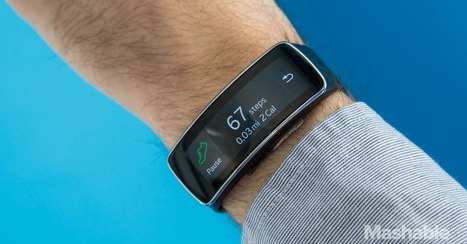
Intel is teaming up with the Michael J. Fox Foundation to put a dent in Parkinson's disease with wearable technology and big data. Via Alex Butler
Scoop.it!

While Proteus Digital Health received the largest investment in the first half of 2014 as well as the first half of 2013, last year Proteus raised $62.5 million, but this year, announced in two separate SEC filings, Proteus raised $172 million. Similarly, while last year, the top ten digital health investments brought in a total of $252.5 million, this year, the top ten investments totaled $553 million. Via Marc Phippen
Romain DEFOY's curator insight,
August 19, 2014 4:54 AM
1. Proteus Digital Health raises $172 million 2. NantHealth raises $135 million : NantHealth offers a cloud-based, clinical decision support platform used by at least 250 hospitals 3. Doximity raises $54 million: San Mateo-based medical communications platform and physician referral engine 4. Voalte raises $36 million: Sarasota, Florida-based Voalte, which offers a suite of smartphone-based communication tools to nurses and other hospital caregivers, 5. Voluntis raises $29 million: Paris, France-based Voluntis, a developer of companion apps for medical devices,
Scoop.it!

Valencelle développe PerformTek, une technologie de mesure des données physiques et de santé à partir d'objets connectés tels que des écouteurs audio placés dans l'oreille.
|