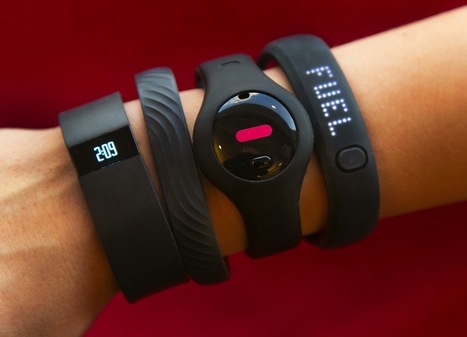

Parmi les 180 propositions du rapport Lemoine, 14 concernent la santé. Le but, réduire les dépenses et faciliter l'accès aux médecins.

 Your new post is loading...
 Scoop.it! Parmi les 180 propositions du rapport Lemoine, 14 concernent la santé. Le but, réduire les dépenses et faciliter l'accès aux médecins. 
No comment yet.
Sign up to comment
Scoop.it!

Régulièrement, je vous propose de partir à la rencontre d'un acteur du digital santé en France. Ce mois-ci, partons à la rencontre d’Olivier Vela-Gomez, président de la jeune start up Doklog.fr. Bo...
Scoop.it!

If you’re among the ranks of doctors who are still unsure of the value of social media, it appears you’re not alone. According to a June survey of doctors by MedData Group, 44% of respondents said they don’t use social media for professional purposes. Not LinkedIn, not Facebook, not even online physician or patient communities. That’s a lot of doctors who are MIA on what is not only the most powerful communication platform ever invented but also a market research tool bar none. As originally delineated by Joan Lewis of Procter & Gamble, and adapted here for the medibeauty market, here are 5 reasons why using social media for market research makes sense: The infinite survey: Unlike surveys and questionnaires, which are limited by size and participants’ interest, social media provides a lens into the needs, desires and behaviors of tens of millions of people. Real-time insights: How long do breast implants last? Does Botox help reduce under-eye bags? CoolSculpting vs. Laser Lipolysis? Every day, people go online to ask questions about the aesthetic issues that concern them right now. Focus your marketing on their concerns and they’re more likely to pay attention to it. (Being a doctor who actually answers their questions is even better.) Reveal unmet needs: Social media can help doctors address alternative use-cases. Earlier this year, for example, researchers at the University of Michigan analyzed tweets that referenced migraines. Although not the intended goal, the results offer potentially useful information for Botox providers. In their own words: Social media provides an excellent platform to gauge customer satisfaction. Encouraged and embraced by others like them, patients reveal their true feelings about providers, procedures and whether or not they achieved their personal aesthetic goals. More for Less: Learning about consumers through traditional marketing research is expensive. By comparison, social media is a bargain: Utilizing free or inexpensive monitoring tools, the “cost” is essentially limited to the staff time required to monitor and analyze the results. Doctor Takeaway When aesthetic consumers talk, smart doctors listen Beyond the obvious value of exposing your practice to millions of potential patients, social media serves a secondary, but equally valuable purpose: It offers a steady stream of insights into what aesthetic consumers are thinking right now, which makes it the ideal platform for patient-centered marketing. Doctors who embrace the concept and participate in the conversation essentially become empowered providers. If you don’t — if you’re one of the aforementioned 44%, that is — just remember that 56% of your competitors already are. Via Plus91
Scoop.it!

Acteurs : Axa France, qui a déjà investi près de 100 M€ depuis 2012 pour adapter son offre et son organisation aux nouveaux usages en... Contexte Axa France, Transformation digitale, investissement, Internet - Presse en ligne Argus de l'Assurance
Scoop.it!
Scoop.it!
CCM Benchmark Institut a publié sa dernière étude consacrée à la Silver Economie intitulée
Scoop.it!

Hacking Health et Alsace Digitale organise la 2ème édition du Hacking Health Camp en France en mars 2015. Buzz e-Santé est partenaire de cet évènement. Découverte. Hacking Health Camp est un évènem...
Scoop.it!

L'INPES, (Institut National de Prévention et d'Education pour la Santé) lance cette semaine un nouveau label concernant les aides à distance en santé.
Scoop.it!

Oracle a annoncé un outil destiné aux départements RH. Sous la forme d’un module complémentaire au logiciel Human Capital Management Cloud, il permet aux entreprises de suivre les activités physiques des employés et de superviser leur bien-être.
Scoop.it!

Le Cercle des Décideurs Numérique & Santé publie la 3ème édition de son indice de confiance de la e-Santé en France en partenariat avec Care Insight, Laumacom, DSIH et Ticsante.com. Découverte ...
Scoop.it!

Nous avions parlé dans mes précédents articles de l’impact de la révision des directives « Dispositif médical » sur la qualification juridique des applications de m-santé. Aujourd’hui, je vous propose d’aborder une autre question induite par la digitalisation des DM, celle de la place des stores.
|
Scoop.it!

Researchers have found that social physician networks may be more influential than traditional medical journals. Data from a new survey showed that doctors who are connected to influential colleagues and pass information via social networks are more likely to adopt new treatments and procedures. Innovative practice adoption The assay had previously been reported in medical journals as an effective way to diagnose bacterial infections and sepsis, but had not been adopted at the hospital. When the method was promoted internally by a few influential physicians, staff quickly adopted the practice. "The traditional [adoption] model is [that] a study is published in a journal and discussed at medical conferences, and then doctors in that field [are] supposed to integrate that into their clinical practice," said Curtis Weiss, M.D., lead author of the study. "The problem with that is doctors are busy and do not always read the journals or go to those conferences." The researchers concluded that peer recommendations about new procedures could speed adoption and help to increase quality of patient care around the country. Digital networking Experts believe that these sites can be beneficial, as physicians are able to exchange information and opinions with peers around the globe. "Members have access to [more than] 35 percent of the U.S. physician population to engage in discussion on any healthcare topic in an open, collaborative environment," Jon Michaeli, senior vice president of the physician-only online community Sermo, told InformationWeek. In order to protect sensitive information, these physician networking sites address healthcare privacy and security mandates. This is a desirable alternative to unsecure websites like Facebook or LinkedIn, and the benefits of these websites will likely spur further adoption by industry professionals.
Via Plus91

Stephanie Barsch's curator insight,
November 14, 2014 1:57 PM
Building on Carolyn's idea about social media changing the way stakeholders communicate, interface, and most importantly, innovate....
Scoop.it!

S'il a été démontré que les jeux vidéos peuvent être à l'origine de méthodes de soin appliqués à la maladie aussi bien physique que psychologique, la restauration de la confiance en soi s'inscrit dans ce mouvement.
Scoop.it!

E-santé : l'âge de maturité ? / Health 2.0 Europe - morceaux choisis
Scoop.it!

Du 21 octobre au 21 novembre prochain, l’Association Valentin Haüy au service des aveugles et des malvoyants propose aux internautes de vivre une expérience inédite : « 5 jours dans le noir » ! Pré...
Scoop.it!

The digital domain is an excellent platform for communication. And if professionals across several industries are getting connected then why should professionals from the healthcare industry lag behind? They too can share their views with everyone. However, healthcare professionals don’t get as many liberties when it comes to the virtual arena as they need to maintain a code of conduct while posting. So whether you wish to share public health information, promote your own health facility services or brands or even answer a generic medical question, you will have to tread the path of social media very carefully. It may be a valuable resource but it can also backfire when you’re into healthcare if used inappropriately. If you don’t wish to lose your healthcare or medical job, or don’t want to be reprimanded because of misleading posts on Facebook, Instagram or Twitter or any medical social networking site, follow the useful tips listed below – 1. Understand Your Employer's Social Media Policy The prevalence of social media has been spreading in all directions and fields. In today’s technologically-advanced era, all healthcare employers and hospitals have their own social media presence. And in order to protect that presence they have set up social media policies. Considering your employers have done the needful, make sure you get acquainted with those policies and understand them well. You can contact the Human Resource department and request the HR professionals to provide you with a copy of the rulebook. You may ask questions to clear all your doubts, if any. If your facility has employed a social media manager, use the opportunity and learn how to establish a strong presence on the social domain without endangering your job. When used responsibly, social media can boost your image and visibility as an expert in the field. You can also become a valuable resource to the patient community. Sharing ideas and receiving comments will also help you learn from other people in your network. Thus, it is important for a medical professional to learn how to socially share ideas in a safe and acceptable manner. 2. Learn About HIPAA The Health Information Portability and Accountability Act (HIPAA) safeguards the health information of patients. It prevents personal information from going into the hands of wrong entities. This compliance with HIPAA is an important part of a healthcare professional's career, especially when it involves social media. One of the main mistakes made by healthcare workers in the virtual world is that they may include identifiable information about their patients in the posts they share. Even if you don’t disclose the name of the patient it doesn’t mean that s/he can’t be identified. If you must post something related to the medical scenario, remember to keep it very vague and general. Do not relate it to the cases you handle at work, else it would be considered as violation of HIPAA. 3. Think Before You Act Healthcare profession demands you to be both sensible and sensitive. Once you disclose something on the social media, you won’t be able to undo it. Even if you decide to delete that post, it is possible that someone has already seen it and the purpose of deleting has now been defeated. The power of digital access is riskier than you may realize. Your revelation could have offended someone and they may have taken a screenshot of your post for posterity. Therefore, always keep in mind that your posts have the power to impact lives, both positively and negatively. And being in the healthcare profession, you are responsible for saving lives and spreading happiness, not upsetting your patients and their families. So next time you are going to write on a wall, remember how you would feel if your shortcomings or ailments were discussed publicly. 4. If Ever In Doubt, Leave It Out If you have to devote too much time for deciding whether you should or shouldn’t share something on the social network, it would be wise to leave it out. Intuition and uncertainty are good parameters for making you realize that what you have in mind should be kept in the mind and not made public for the world after all, at least when it comes to the internet which is the strongest and most unforgiving medium on today’s date. And with healthcare set to invest significantly in technology, health content and records are moving on to clouds and digital devices, which means you wouldn’t want to mess up your social reputation. So go for the gut feeling and if still unsure, confirm with another healthcare professional by seeking his/her opinion. Your conduct may not violate the HIPAA, but it could still be inappropriate as per your organizational policies. Don’t give your employer any reason for which they may have to discipline you. 5. Follow Respectable Healthcare Veterans On Social Media There are several reputed healthcare professionals who are veterans in their field of work, while also being experts at managing social media. You should look up to one of these pioneers and learn how to maintain a balance of sharing informative and educational health-related information. Their deportment will teach you how to convey messages without over-stepping your boundaries, without violating any acts or without revealing any private information. You may also join networks and follow healthcare facilities, like The Mayo Clinic facility whose staff leads the way in the arena of health care social media. MCCSM or Mayo Clinic Center for Social Media is a pioneering effort and has set up a website plus social media network providing a wealth of knowledge regarding the best industry practices related to health. Hope the above tips are useful for all you healthcare professionals. Good luck with social networking.
Via Plus91
Scoop.it!

SANTÉ - En permettant un suivi en temps réel du parcours du patient, de l'évolution de sa maladie et de ses traitements, le numérique a bouleversé la prise en charge du malade et permet à l'hôpital de s...
Scoop.it!

Facebook (NASDAQ: FB ) could soon follow Apple (NASDAQ: AAPL ) ,Samsung (NASDAQOTH: SSNLF ) , and Google (NASDAQ: GOOG ) (NASDAQ: GOOGL ) into the healthcare field. According to a recent Reuters report, the company is experimenting with online support communities for patients and mulling the development of personal health and fitness apps. This isn’t the first time Facebook has expressed its interest in the healthcare field. In 2012, the company asked users to specify their organ donor status, which caused average daily online organ donor registrations in the U.S. to soar from 616 to 13,054, according to theAmerican Journal of Transplantation. When Facebook acquired virtual reality headset maker Oculus VR for $2 billion earlier this year, CEO Mark Zuckerberg cited telehealth (virtual doctors’ appointments) as a possible use for the technology. Although Facebook’s support groups and mobile apps are still in the early planning stages, it’s fascinating to consider how the company could redefine “social healthcare” with its 1.3 billion monthly active users. The business of social healthcare Back in 2008, Google launched Google Health, an ambitious effort to connect fragmented electronic health records, or EHRs, into a single personal health record, or PHR. That effort was abandoned in 2011 after the service failed to achieve mass adoption among doctors and patients. Last November, Google launched Helpouts, an “expert marketplace” which can help connect patients to doctors via video connections. Meanwhile, smaller companies like Doximity and Personiform are emulating Facebook andTwitter‘s (NYSE: TWTR ) networking models to connect doctors and patients to one another. Doximity, which had nearly 300,000 members as of January 2014, allows physicians to connect to each other and share patient data in a HIPAA-compliant manner. Doximity’s iOS app. Source: iTunes Personiform’s Project Medyear connects patients and physicians by merging Twitter hashtags with Google+ circles. Patients can actively share their health problems and symptoms on the network with hashtags, which helps them connect with strangers with the same ailment. To protect their privacy, Medyear uses Google+ circles to form “CareRings”, which control exactly who sees their health information. Physicians can join also the network to connect with their patients. WebMD (NASDAQ: WBMD ) , which offers support groups via its online communities, lets physicians use its Medscape mobile app to send medical information to patients who use WebMD’s mobile app. Last October, the company acquired Avado, a developer of cloud-based patient relationship management tools, to enhance this system. Considering all the activity that’s going on in this field, it makes a lot of sense for Facebook to experiment with using its sprawling social connections to link patients and physicians to each other. The business of preventative care apps Apple, Google, and Samsung are all getting ready to capitalize on that growth. Apple recently launched HealthKit, its unified dashboard for iOS health apps and wearables. Google will soon respond with Google Fit, a similar platform which notably lacks HealthKit’s integration with EHRs. Samsung has S Health, another similar dashboard for Samsung phones and Gear smart watches. These platforms are all designed with the expectation that sales of smart watches will soar. Current forecasts mostly back that belief — for example, research firm ON World believes that smart-watch shipments will surge from less than 4 million in 2013 to 330 million by 2018. With these unified healthcare platforms and devices taking over smartphones, it would be wise for Facebook to offer health-tracking features to its 1.07 billion mobile monthly mobile users, who generated 62% of the company’s advertising revenue last quarter. The Foolish takeaway Facebook’s constant shifting privacy settings, its dependence on targeted advertising for revenue, and its controversial “emotional manipulation” experiment could all hurt Facebook’s chances at evolving into a trusted healthcare network or developer of health-tracking apps. Last year, Reason-Rupe’s survey of over 1,000 American adults revealed that 61% did “not trust Facebook at all” for protecting their personal information and privacy. Becoming a private social network for patients and doctors is a smart next step for the social network, but we should remember that Facebook couldn’t compete against LinkedIn(NYSE:LNKD ) for a simple reason — the former was a place for personal posts, while the latter hosted professional profiles. We could see the same problem with asking patients to share health information on Facebook — its reputation as a casual social network could prevent it from ever being taken seriously as a healthcare platform. Leo Sun owns shares of Apple and Facebook. The Motley Fool recommends Apple, Facebook, Google (A shares), Google (C shares), LinkedIn, and Twitter. The Motley Fool owns shares of Apple, Facebook, Google (A shares), Google (C shares), LinkedIn, and Twitter. Try any of our Foolish newsletter services free for 30 days. We Fools may not all hold the same opinions, but we all believe that considering a diverse range of insights makes us better investors. The Motley Fool has a disclosure policy.
Via Plus91

Laurent FLOURET's curator insight,
November 10, 2014 11:34 AM
Yes.. BUT "Becoming a private social network for patients and doctors is a smart next step for the social network, but we should remember that Facebook couldn’t compete against LinkedIn for a simple reason — the former was a place for personal posts, while the latter hosted professional profiles. We could see the same problem with asking patients to share health information on Facebook — its reputation as a casual social network could prevent it from ever being taken seriously as a healthcare platform." 
Leo J. Bogee III's curator insight,
November 10, 2014 12:22 PM
With 1.3 billion monthly active users, Oculus VR acquisition and telehealth on the verizon this will be change how healthcare companies market online.
Scoop.it!

La société Smartsanté lance un nouveau service d'évaluation et de suivi du risque cardiovasculaire : Cardiosens. Présentation. Le risque cardiovasculaire concerne tout le monde, il est la 1ère caus...
Scoop.it!
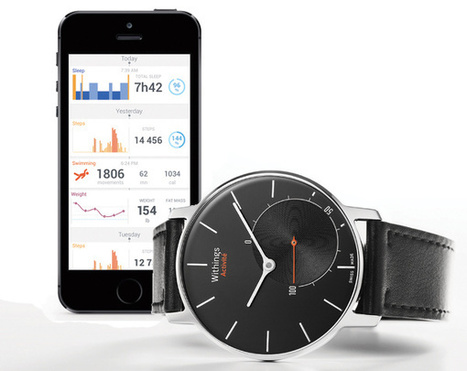
Withings a annoncé ce vendredi que sa montre connectée, baptisée Activité, était dorénavant disponible en France, après quelques mois d’une lo...
Scoop.it!

Des applications pour mesurer ses paramètres vitaux, en passant par des outils médicaux connectés, la technologie s’immisce de plus en plus entre patient et médecin.
Scoop.it!

L'Assurance maladie va lancer un site de coaching santé qui proposera aux assurés des conseils pratiques, validés par «une équipe d'experts professionnels reconnus»...
Scoop.it!

L'étude de CCM Benchmark Institute sur "Les seniors et les nouvelles technologies" identifie les tendances qui se dégagent en matière de surf, téléchargement d'applications ou m-commerce.
|