Your new post is loading...

|
Rescooped by
Rémy TESTON
from Digital Health
May 5, 2015 3:31 PM
|
From fitness trackers to smart watches, the trend in gear is tracking and customization. Once a status symbol for fitness-focused folks and tech geeks, wearable tech has become ubiquitous, as has the underlying concept of using passively tracked information for personal benefit. But in sporting the new connected accessories, there's a fine line between looking sophisticated and helplessly nerdy. Fashion is as important to men as it is women—and the majority surveyed by Men's Health said they'd think twice before donning a connected coat.
Via Alex Butler
|
|
Scooped by
Rémy TESTON
May 5, 2015 3:09 PM
|
Les progrès de la connaissance en chimie, des technologies émergentes et de la miniaturisation vont donner naissance aux systèmes intelligents de demain, impactant profondément notre futur. Entretien avec Stéphane Sarrade, chef du département de physico-chimie au CEA Saclay, cofondateur de la start-up Inovalor, et auteur du livre "De la Joconde aux tests ADN, jusqu'où ira la chimie ?", publié aux éditions Le Pommier.
|
|
Scooped by
Rémy TESTON
May 5, 2015 3:07 AM
|
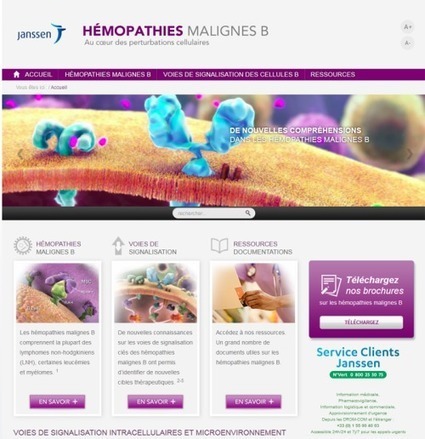
Le laboratoire Janssen lance un nouveau site web à destination des professionnels de santé pour tout savoir sur les hémopathies malignes : hemopathies-malignes-B.fr. Présentation. Les hémopathies m...
|
|
Rescooped by
Rémy TESTON
from Social Media and Healthcare
May 5, 2015 1:48 AM
|
The report, which is based on data from 14 pharma companies taken over a three-month peroid, found the average number of tweets by has gone up by 530 per cent since 2013 while Twitter followers have increased by nearly 300 per cent.
The study, 'Connecting the dots: Which Pharma Companies are Succeeding in the Social Media Space?', also showed that companies that keep their social networks fresh with regular updates have the highest interaction from the community and their followers. Boehringer Ingelheim, Bayer, Novartis and Merck, stood out as as the best performing companies in terms of being active on their social network profiles and encouraging large numbers of users to engage with them.
Rebecca Canvin, social media manager at Ogilvy Healthworld, said: "We know that some pharma companies have been cautious in their approach to social media, but our report clearly demonstrates a dramatic and successful increase in activity. Social media has changed the way pharma companies communicate – it allows them to build corporate reputation and engage in genuine, meaningful conversations with audiences. For companies who want to stand out from the crowd it’s time to be brave, get personal, educate and integrate social media into their wider marketing strategy." The report recommends that pharma companies should be prepared to have honest conversations about their brands by developing strategies and identifying potential scenarios where they can respond as quickly as possible to their followers.
The report also suggests that companies should aim to have a clear set of engagement guidelines to help manage difficult questions.
Via Plus91
|
|
Scooped by
Rémy TESTON
May 4, 2015 6:57 AM
|
Généthon, le laboratoire de l’AFM-Téléthon, a été désigné lauréat du Concours Mondial de l’Innovation 2030 (phase 2). Un prix qui vient récompenser son expertise et son leadership dans le domaine de la thérapie génique pour le développement d’un procédé de production industrielle de vecteurs de thérapie génique.
|
|
Scooped by
Rémy TESTON
May 3, 2015 5:15 AM
|
The mobile healthcare market is expected to continue growing over the coming years.
|
|
Rescooped by
Rémy TESTON
from Digital Health
May 2, 2015 4:17 AM
|
In an interesting find by iFixit — the company known for breaking apart popular gadgets to study their internals — the Apple Watch was found to have the ability to measure blood oxygen saturation. Traditionally we measure blood oxygen saturation using a sensor we attach to your finger, earlobe, or forehead. This is the plastic sensor that your physician might connect to your index finger when your vital signs are being taken before a visit.
Via Alex Butler
|
|
Rescooped by
Rémy TESTON
from Digital Health
May 1, 2015 2:27 AM
|
The mobile health market is making headway and many industries around the world are stopping to take notice. At the CARTES SECURE CONNEXIONS AMERICA 2015 taking place at the Walter E. Washington Convention Center in Washington, DC next month, mHealth will be one of the topics discussed in great detail, according to a press release from events organizer COMEXPOSIUM Group.
It is revolutionary that mobile communications technology like tablets, smartphones, and laptops can all lead to better follow-up care and healthcare diagnostics or treatments. Mobile applications like fitness trackers can also be incorporated in preventing disease.
Via Alex Butler
|
|
Rescooped by
Rémy TESTON
from Social Media and Healthcare
May 1, 2015 2:24 AM
|
HOSPITALS and healthcare service providers worldwide are focusing on using data to improve efficiency and provide better medical care to patients.
Innovations such as centralised record-keeping systems allow clinics and hospital networks to access and share treatment records such as diagnoses, treatment plans, scans and test results, so that doctors can better assess each case.
Data is also utilised in hospital administration to schedule equipment maintenance and upkeep, plan staff schedules, etc.
Hospitals also tap on patient satisfaction survey data to improve quality of service and track the progress of current initiatives.
The amount of data being gathered and shared within a hospital can be massive. Hospitals need to properly understand and interpret their data in order to make effective decisions that can improve quality of care and best manage resources.
Here is how you can leverage on the four top trends in healthcare data analysis today:
1) Implement dashboards on hospital floors
Hospitals want to provide patients with a positive experience, and offering efficient and effective care is crucial. One way to improve patient experience is minimising waiting time, and making effective use of time during the patient’s stay or visit to a hospital.
Hospitals can optimise the flow of patients through their hospital systems by providing select staff – doctors, nurses, administrators and shift coordinators – with secure access to dashboards.
These dashboards can offer the staff with access to real-time data, number of patients coming in through A&E (accidents and emergencies), waiting time at triage, bed availability in the wards, and the queue at the pharmacy.
These dashboards can also be assigned based on user profiles so that assignment or role-based views can be set. This helps to provide useful information to the right staff and manage appropriate access to private health information.
All this real-time information allows hospital staff to determine bottlenecks and assign resources accordingly to reduce waiting times.
These dashboards can also give doctors or nurses secure access to a patient’s information, allowing them to quickly assess the patient and make better informed decisions, and make treatment plans based on the patient’s medical history.
2) Finding a ‘single source of truth’ Data collected across the hospital can come from multiple sources. For example, a hospital’s financial data may be on sitting in one platform while its medical inventory data on another.
This means that hospital staff will need to access different platforms in order to access the information.
It would be much more effective if hospitals are to adopt a single business intelligence and data analytics solution that allows users to blend the data coming from different sources.
This way, they can merge the data and conclude at a ‘single source of truth.’ This approach allows all key decision-makers to base their decisions on a centralised platform where all crucial information is available.
The standardisation also means that staff need only be trained on the use of business intelligence tool.
Additionally, it is important for hospitals to choose a platform that is easy to learn and use, as staff will have varying skill level and technological competency.
3) Centre on the patient
Taking a patient-centered view can help doctors and medical care professionals to better coordinate care. This leads to reduced costs, improved quality of care and better outcomes.
One way to do this is to provide staff with a visual dashboard that can offer fast insights into a patient’s previous treatment records and medical history. Data analytics tools can also be used to provide medical staff with information on similar cases, treatment plans and outcomes, or any other information that can help them determine the best course of action.
Such a system would require a business intelligence solution that can access disparate data, often from varying sources, without writing back to the original source.
Medical data can be complex and varied. Imagine accessing data like CT scans, MRIs, X-rays, prescription medicine, blood test results, surgery outcomes, etc. all from a single system.
It is important to select an analytics tool that can quickly absorb high-level information, while also providing the option of accessing more detailed data.
4) Embrace healthcare’s social side Social medicine is the new frontier in healthcare. Today, patients are increasingly expecting to interact with their care providers on their social platform of choice.
For healthcare service providers, social media is another channel where they need to pay attention to if they want to enhance patient experience. It is also a cost-effective way to help improve patients’ experience and their impression of the hospital.
Social media is especially useful for behavioural health applications, such as encouraging people to lead an active lifestyle and keep to healthy diet habits.
For example, the Singapore General Hospital (SGH) and other hospitals in Singapore have been actively encouraging people to lead a healthy lifestyle, promoting healthcare forums that they are organising, etc. on their Facebook pages.
Interactions over social media can offer healthcare service providers with valuable data that helps them gain insights into patients and the public’s health concerns and challenges.
Healthcare service providers can tap on social media to conduct surveys, get feedback, and better understand their target audience. They can then use this information to schedule relevant posts or tweets to address specific issues or queries.
Healthcare service providers can select an analytics solution that can link to social media data with transactional data already stored in the system to identify the most influential channels. The solution should be able to aggregate and extract data when it makes sense for more efficient analysis.
A flexible tool with a robust roadmap and strong commitment to improvement is also important as social media landscape is probably one of the fastest changing one, and a popular platform today may be abandoned by users in a matter of months.
The right analytics tool also means one that can adapt to change fast.
Data-based approach
The use of data analytics will become even more prevalent in the healthcare industry as service providers continue to drive towards efficient operations, patient satisfaction and quality care.
It is important for hospitals to select suitable data analytic platforms that can best suit their requirements.
Effective use of data analytics tools means empowering caregivers. It also means taking a data-backed, fact based approach to medical and patient care. - See more at: https://www.digitalnewsasia.com/insights/four-top-trends-in-healthcare-data-analysis#sthash.eztUzClL.dpuf
Via Plus91
Yvanie CAILLE, Fondatrice et Directrice de RENALOO interviendra le Mercredi 20 mai à 11h00 lors de la conférence sur la Santé connectée: une opportunité bénéfique pour l'organisation des soins.
Via Paris Healthcare Week
|
|
Rescooped by
Rémy TESTON
from Digital Health
April 30, 2015 3:27 AM
|
As the Apple Watch begins to find its way into the hands of consumers, it’s also becoming clearer that there’s a lot of interest in the health features of the device. On April 24th, the day the Apple Watch began shipping, MobiHealthNews found 264 Apple Watch apps related to health or fitness in the Apple AppStore, including apps from Humana, Cerner, the Mayo Clinic, athenahealth, and Walgreens, to name just a few.
Although a majority were fitness and workout apps, we found 13 apps related to medication adherence, 15 apps specifically for doctors or patients, 12 hydration tracking apps, and 13 apps for tracking fertility and/or pregnancy. And that was just on day one.
We’re also learning more about the sensors in the device. The big (and often misinterpreted) news about Apple Watch’s health features is that they were not what they could have been. The Wall Street Journal broke the story that Apple initially planned a much more ambitious health device, but concerns around accuracy and regulation stymied those plans.
Via Alex Butler
|
|
Scooped by
Rémy TESTON
April 30, 2015 3:18 AM
|
Dans le cadre de la nouvelle édition de l’Université d’été de la e-santé, une nouvelle édition des Trophées de la e-santé est organisée. Présentation. Organisée par Castres-Mazamet Technopole et le...
|
|
Scooped by
Rémy TESTON
April 29, 2015 11:41 AM
|
Les personnes souffrant de trypophonie, la peur des motifs à trous, se sont plaint du design du nouveau produit lancé par le géant américain Apple.
|
|
|
Scooped by
Rémy TESTON
May 5, 2015 3:14 PM
|
AXA France est le 1er assureur à proposer, dans ses contrats santé, un service de Téléconsultation médicale. Il permet l’accès à des médecins généralistes pour une consultation médicale par téléphone. Ce service est accessible sur l’ensemble du territoire français.
|
|
Scooped by
Rémy TESTON
May 5, 2015 3:07 PM
|
La promesse d’un accompagnement personnalisé pousse vos patients à égrener des données de toutes sortes au fil des applications mobiles ou
|
|
Rescooped by
Rémy TESTON
from Pharma Hub
May 5, 2015 1:49 AM
|
Selon une étude de l’Institut Montaigne, les objets connectées et le Big Data pourraient générer jusqu’à 74 milliards d’euros d'ici 2020, soit 3,6% du PIB
Via Philippe Marchal
|
|
Rescooped by
Rémy TESTON
from Santé
May 4, 2015 7:38 AM
|
TOAP Run est un serious game dédié à l’innovation des traitements sur les troubles de la marche et de l’équilibre chez les patients atteints notamment de la
Via Espace Sentein
|
|
Scooped by
Rémy TESTON
May 4, 2015 3:00 AM
|
La société suisse Vigilant a mis au point dispositif de suivi du taux de glycémie et des injections depuis le smartphone : Bee. Découverte. Aujourd’hui, le nombre de diabétiques ne cesse d’augmente...
|
|
Rescooped by
Rémy TESTON
from Social Media and Healthcare
May 2, 2015 4:18 AM
|
Pediatric Rheumatologist and thought leader Dr. Paul Rosen—a regular contributor to our blog—talks doctor-to-doctor about why pediatricians and other providers should care about, and connect with, the “mommy bloggers.”
Who are the mommy bloggers? Every pediatrician across the country—as well as family physicians and other specialists—should be asking themselves this question…and consider the benefits of engaging with their influential voice in healthcare. Some have frowned on the term “mommy blogger,” but despite the discussion about phraseology, mommy blogger has become the term with staying power to describe women who write on social media and advocate for their families. I first discovered mommy blogs when I was researching the topic of physician burnout. I found several blogs from women physicians. These blogs poignantly discussed the challenges of raising a family while practicing medicine. But on a broader scale, mommy blogs are established in every major city in the country. Larger cities have several blogs that address a variety of topics including, but not exclusive to, women’s issues, work-life balance and parenting. Many also feature a sales component where products are recommended. The blogs share useful information about the local community including: education, entertainment, health issues and consumer goods. Some of the blogs have a specific demographic or geography such as parents who work, homemakers, parents in the city or parents in the suburbs. In many cases their interests align with the goals of pediatricians: raising happy and healthy children. One mommy blog, Hulafrog, with a national network, polled their followers to understand their demographics: 96% women83% between the age of 25-4494% have between 1 and 3 kids69% work full or part time86% have a college degree or higher92% are on Facebook66% on Pinterest Why should pediatricians care? The answer is that these bloggers have considerable influence with their readers—often a highly desirable target audience. While some blogs have 100 followers, others have more than 20,000. The bloggers are mothers who are engaged with their local communities. They are socially active, Internet savvy, and curate a tribal knowledge regarding the best community resources to raise children. Pediatricians are also engaged with their communities. Pediatricians and other medical specialists seek to arm families with the best strategies to treat diseases, help children grow up healthy, and prevent disease, trauma, and injury. Pediatricians typically reach one family at a time. Mommy bloggers can reach thousands of families overnight. With alignment of a common goal to keep families healthy and create healthy communities, should not the world of pediatrics and the mommy blogosphere come together to advance child well -being? The mommy bloggers are a diverse group of educated, digitally connected, engaged parents. They are focused on their child’s health care needs and can have broad influence within a community. What could be achieved if the pediatric community and the blogosphere came together to promote child health? What if there was ongoing feedback between the two groups to help transform pediatric medicine and make it more user friendly? Perhaps, this group of networked moms could teach those of us in pediatrics and family medicine how to better engage with our patients and families and spread health education in a way that is scalable. Paul Rosen, MD
Via Plus91
|
|
Scooped by
Rémy TESTON
May 1, 2015 3:04 AM
|
Le Comité Français de Lutte contre l’HyperTension artérielle (CFLHTA) lance un nouveau site web pour sensibiliser le grand public à la prise en charge de l'hypertension : hypertension-webtv.fr. Pré...
|
|
Rescooped by
Rémy TESTON
from Hopital 2.0
May 1, 2015 2:26 AM
|
Interoperability describes the extent to which systems and devices can exchange data, and interpret that shared data.
Via Chanfimao
|
|
Rescooped by
Rémy TESTON
from SeriousGame.be
April 30, 2015 5:28 AM
|
Binge runner, un serious game de prévention de l’alcoolisation massive
Via Yasmine Kasbi
|
|
Scooped by
Rémy TESTON
April 30, 2015 5:26 AM
|
Avec le SmartBand, son bracelet-montre connecté, Microsoft proposait jusqu’alors une alternative à la concurrence féroce sur le marché de la santé connectée.
|
|
Rescooped by
Rémy TESTON
from Social Media and Healthcare
April 30, 2015 3:27 AM
|
Consumers are changing the healthcare game—and hospitals need to be nimble, developing strategies that simultaneously meet the consumer and regulatory demands of healthcare reform. Psychographic segmentation allows healthcare organizations to classify patient groups by shared motivations and attitudes towards wellness to create more effective approaches to patient engagement. And now, according to a recent University of Pennsylvania study, social media may help hospitals predict, and thereby better manage, chronic disease within the community. How Much Can 140 Characters Tell Us? Not everyone who is sick visits the doctor or a hospital. Yet in recent years, researchers have been able to more accurately and quickly predict flu outbreaks because data reported by healthcare providers is being complemented by healthcare consumers who google their symptoms or tweet about their illness. An article in Emergency Management magazine earlier this year quoted HealthMap co-founder John Brownstein who said, “There are real opportunities for using this data that is scattered across the Web in news, blogs, chat rooms and social media. We’re focused on collecting all that information using data scraping, machine learning and other processes and combining it into one platform that will enable clinicians, public health practitioners and consumers to see what’s happening.” He’s not alone in his assessment. Ming-Hsiang Tsou, a professor at San Diego State University, published a study titled, “The Complex Relationship of Realspace Events and Messages in Cyberspace: Case Study of Influenza and Pertussis Using Tweets.” Tsou’s research team aggregated user tweets near 11 different cities across the country, then compared the social buzz mentioning flu or whooping cough-like symptoms to national flu data. According to Tsou, “The correlation between the weekly flu tweets versus the national flu data was almost 86 percent.” Results were even better when Twitter® data was compared with the more precise data available on a local level. Gaining a Deeper Understanding of Healthcare Consumers The University of Pennsylvania study, which was just published in Psychological Science, suggests that social platforms like Twitter may act as “a dashboard indicator of a community’s psychological well-being and can predict rates of heart disease.” In addition to risk factors like low income and smoking, anger, stress and fatigue can all exacerbate cardiovascular conditions—and tweets are ripe with these emotions, as well as more positive ones. Semantic analysis of two years’ worth of tweets allowed the researchers to identify commonly used emotional language, as well as word clusters related to behaviors or attitudes, which can be used to filter tweets and predict where negative emotions may play a role in the prevalence of chronic diseases. Researchers at Johns Hopkins are also using algorithms to monitor Twitter posts to gather mental health data ranging from depression and bi-polar disorder for a joint study on post-traumatic stress disorder with the U.S. Naval Surface Warfare Center. A press release from the University of Pennsylvania similarly noted that social media data could become “an invaluable public health tool if able to be tied to real-world outcomes.” Of course, tying the data to real-world outcomes is where it gets complicated. Apart from the privacy issues that must be addressed, healthcare providers are well-acquainted with the difficulties of moving from insight to . The first problem? Patients do not want to be engaged with their chronic conditions; they want to be engaged in their lives. Hospitals need to understand what motivates individuals rather than taking a generic approach to a population segment based on a diagnosis or demographics. The proprietary psychographic segmentation model developed by c2b solutions classifies healthcare consumers based on unique features, such as their propensity to be self-motivated versus needing direction regarding healthcare. The model also shows which psychographic segments are most likely to use – or not use -- social networking sites. Of the five psychographic segments identified by c2b solutions, Willful Endurers are statistically less likely (95% confidence) than the other four segments to participate in a social networking app or website. Willful Endurers are also the most reactive and disengaged segment when it comes to health and wellness, and struggle with many health conditions. The implication is that social media may actually under-estimate community health issues and may not be a sufficient outreach tool for many healthcare consumers who need care. However, for other psychographic segments that are regular participants in social media, apps and sites like Twitter and Facebook are critical resources. Hospitals may find, as a Boston Globe editorial suggested that, “Twitter is, apparently, the quiet therapist to whom we reveal much more that we realize. As such, it could be a valuable public-health tool.” But without deep insights into what will motivate individuals to engage with healthcare providers, social media data alone will not improve patient outcomes. Want to explore how psychographic segmentation can complement social media and mHealth as a means to engage and motivate healthcare consumers? Check out our white paper on patient activation or contact c2b solutions to learn more. - See more at: http://insights.c2bsolutions.com/blog/twitter-md-using-social-media-to-track-health-risk#sthash.Y5nFQhde.dpuf
Via Plus91
|
|
Scooped by
Rémy TESTON
April 29, 2015 11:42 AM
|
Harmonie Mutuelle a établi un partenariat avec l’application Betterise, cofondée par Michel Cymes, pour proposer à ses souscripteurs une solution de e-santé.
|