


La société Dinno Santé et l’association l’Aide aux Jeunes Diabétiques lancent un jeu sur mobile destiné aux enfants diabétiques : GlucoZor

 Your new post is loading...
 Scoop.it! La société Dinno Santé et l’association l’Aide aux Jeunes Diabétiques lancent un jeu sur mobile destiné aux enfants diabétiques : GlucoZor 
No comment yet.
Sign up to comment
Scoop.it!

A l'occasion de son 5ème anniversaire, Buzz E-santé fait sa mue avec une nouvelle version plus riche, plus ergonomique pour une nouvelle expérience !
Scoop.it!

Marie Chan, domoticienne au "Laboratoire d'Analyse et d'Architecture des Systèmes, à Toulouse, nous présente les enjeux et les problématiques des nombreux dispositifs de "e-santé".
Scoop.it!

Good doctor blogging is a lot like good doctoring: Listen to patients and try to meet their needs. Extra points for being funny, warm, thoughtful and, most of all, engaging. Try some or all of these patient-friendly content types on your medical practice blog: 1. Answer frequently asked questions Howard J. Luks, an orthopedic surgeon in Westchester and Dutchess Counties, New York, bases his blog on questions his patients ask in office, writing posts such as “Why Does the Front of My Knee Hurt?” and “You Have Torn Your Meniscus: What’s Next?” He explains how he comes up with blog post ideas in “Great Medical Blog Content: Think Like a Patient”. 2. Give health tips (with numbers) For some reason, titles with numbers do well on the internet, probably because they promise the reader quick, concise information delivery. Take a look at “Atrial Flutter — 15 facts you may want to know” from the blog of cardiologist John Mandrola in Louisville, Kentucky. 3. Shoot video Las Vegas internist Zubin Damania’s blog is a collection of parody music videos starring his alter ego ZDoggMD—they’re a little bit educational and a lot funny. That’s him in the image above, explaining Obamacare. Watch Damania do Taylor Swift as a doctor-shopping pill addict in “Blank Script” and Garth Brooks in “Friends with Low Platelets”. If you don’t have his singing and acting talent, a simple explanatory video like “What is Plantar Fasciitis?” by Philadelphia sports podiatrist Lee S. Cohen is fine. Just don’t expect to get ZDogg’s hundreds of thousands of video views on YouTube. 4. Chronicle the silly side of daily life as a doc The author of the Dr. Grumpy in the House blog is anonymous, and a good thing too because the blog is all about the inane things his or her patients do or say, mostly told in verbatim dialogue, like this phone call: Mrs. Call: “My husband is having a seizure. He sees Dr. Nerve for epilepsy.” Dr. Grumpy: “Okay, do you have a medication to give him for seizures?” Mrs. Call: “It’s in the bathroom. Can’t I just hold the phone next to him and you tell him to stop?” 5. Explore the doctor-patient relationship Dr. Val Jones runs health education company Better Health and her blog posts at GetBetterHealth.com like “Why Do Patients Lie to Doctors?” go to the heart of the doctor-patient relationship and are equally readable by those on both sides of the stethoscope. She suggests some blog post topics for doctors in this list. 6. Filter the news Patients need a guide to point out what’s important in the mountain of health news and information on the internet. That could be you. Dr. Sanjay Gupta’s The Chart blog on CNN.com is a good example of creating a news feed by highlighting a few of the many medical studies that get published. 7. Pick a niche, be an authority and do it with a distinctive voice Greenville, South Carolina, pediatrician Chad Hayes blogs on “demystifying parenting and pediatrics” in a straight-talking style, like the post “Just Call It ‘Colic’: The Diagnosis That Isn’t”, a refreshing admission that doctors don’t really know much about a common condition. Colin E. Champ, a Pittsburgh radiation oncologist, blogs atCavemanDoctor.com, advocating for the “caveman diet” and critiquing conventional wisdom in medicine, diet and exercise. And watch this blog for more tips and inspiration… Pioneering doctor blogger Kevin Pho, a primary care doc in Nashua, New Hampshire, gives hands-on advice on running a blog and links to the latest posts from hundreds of other doctor blogs at KevinMD.com.
Via Plus91

jack henry's curator insight,
April 8, 2024 6:55 AM
<a href="https://farmaciadimagrante.com/Prodotto/acquista-mysimba-online/">acquista-mysimba-online</a>;
<a href="https://globaalapotheek.com/product/efedrine-hcl-poeder-kopen/">efedrine-hcl-poeder-kopen</a>;
Scoop.it!

Inooit, éditeur de logiciels SaaS dédiés aux professions paramédicales, lance sa première plateforme numérique mettant en relation patients et
Scoop.it!

Le laboratoire Pierre Fabre Dermo-cosmétique annonce le lancement d'une application mobile destinée aux professionnels de santé pour faciliter le diagnostic et la prise en charge des réactions cuta...
Scoop.it!

Elle fait se dresser les cheveux sur la tête, fascine ou terrorise. La médecine de demain se rapproche chaque jour un peu plus des films de science-fiction écrits il y a dix ou quinze ans. Via CHAM
Scoop.it!
Premier site français d’information en continu sur les technologies de l’information et de la communication (TIC, NTIC) dans la santé - TIC santé
Scoop.it!

L’unité d’hypertension artérielle de l’Hôpital européen Georges-Pompidou met à disposition des patients souffrant d’hypertension artérielle un nouveau dispositif digital : Hy-Quest et Hy-Result. Dé...
Scoop.it!

One area within mobile health technology that’s truly expanding and impacting the medical sector is wearable devices. A new report from market intelligence firm Tractica shows that wearable devices may move into smart clothing and body sensors over the coming years.
The report predicts that, by 2020, shipments of smart clothing will reach more than 10.2 million units annually and body sensor shipments will hit 3.1 million units every year. Currently, smartwatches and smart-glasses are making an impact in the consumer space, but this is expected to expand into smart clothing throughout the next few years. These products will continue to track health objectives and analyze body responses in an effort to offer solutions for patients looking to manage their health and wellness remotely. Via Alex Butler

AAAASF Marketing's curator insight,
May 5, 2015 12:26 PM
Smart clothing now added to the mix of health technology. 
Moolahonly's curator insight,
May 8, 2015 2:05 PM
These are the types of wearable devices we would like help get funding on our crowdfunding platform www.moolahonly.com
Please support our Headtalker campaign at http://bit.ly/1EjTMyU
Scoop.it!

Trois étudiants ont mis au point une méthode rapide et efficace pour anesthésier la peau du patient avant une piqûre.
Scoop.it!

Pour sensibiliser sur la contraception d'urgence, le laboratoire HRA Pharma lance une application mobile ludique : Capote Riposte. Découverte. Après le serious game "Nuit Chaude Douche froide" lanc...
Scoop.it!

Today’s digital social age presents an incredible opportunity for the pharmaceutical and healthcare industries. For years, the struggle to understand evolving patient needs in order to strategically align and address them has been at the forefront of the value proposition for healthcare. However, gaining deep, trustworthy insight into the journeys patients traverse has been a daunting challenge. Today the dynamics have completely shifted in the “open social age.” With millions of patients broadcasting their experiences, reactions, behaviors, decisions and attitudes on their conditions, treatments and providers, there is an incredible wealth of “big data” available. With this, however, the daunting challenge has shifted from a lack of detailed insight to a tsunami of real-time information. As society approaches a complete digital state, technological advances have transformed the way people work, learn, communicate and share. And consumers freely share their opinions and experiences on social networks, blogs, micro-blogs, message boards, forums, mainstream news sites and a variety of other online platforms. They do this on practically every topic spanning their lives, including their health. On-Line All the Time According to a study conducted by Morgan Stanley, 91 percent of mobile users keep their device within three feet of them 24-hours per day. These mobile devices are now widely a standardization of life; people watch TV with them, shop with them and yes, make their medical decisions with them in-hand. This ‘always on’ state that mobile online accessibility facilitates is enhancing the way healthcare decisions and activities are undertaken, from understanding symptoms and diagnoses to learning about treatment options and side effects. This, along with the all-time accessibility of mobile devices has made the wealth of information ubiquitous in the ‘offline’ world. An Ever-Changing Journey The empowerment patients have with this information access presents a challenge for pharmaceutical and health brand managers to keep pace with the ever-changing journey the patient (and caregiver) takes. The massive flow of information from a myriad of sources, including those across the open social universe, creates a wide array of paths patients can take towards their treatments. This wealth of information also increases the velocity of health decisions, including compliance, often compressing the time between demand moments and decision points, making it even more challenging for the treatment provider to identify and influence the decision with messaging or education. The key to driving success with care is for these treatment providers to deeply understand patients, caregivers and healthcare providers by continually mapping each party’s journey as it shifts with their experiences and attitudes. Leveraging this insight to drive messaging, education and innovation to align with the patients’ needs (met and unmet) is critical in enhancing their overall care. Mapping the Journey The basis of understanding the patient journey today is mapping it with advanced social intelligence. To adequately accomplish this, it must be derived from the ‘big data’ mining of millions of daily patient social conversations. This is simple in concept, but challenging in technical execution. This is why so many leading brands are turning to advanced, streaming ‘big data’ solutions to deliver deep insights on a rapid basis of patients as well as their caregivers and healthcare providers. In the following example the patient journey is mapped for a specific treatment option for low testosterone. The journey spans stages from symptoms and diagnosis through treatment and management of the condition. This map also reviews the patient journey based on a multidimensional view of factors ranging from lifestyle impact and cost to efficacy and compliance.
This provides a valuable view of the demand moments, decision points and influencing factors for the patient. This allows the brand team to understand when and how to engage and influence the patient’s path in order to enhance aspects like compliance and ultimately efficacy of the treatment. The level of detail that can be constructed within the online patient journey gets as granular as patient feelings, lexicon, attitudes and behaviors at each of the identified journey stages. This delivers powerful insight into the patient’s state of mind to drive strategic aspects of the treatment from education to messaging and in turn can influence compliance and overall efficacy of the treatment. An Intelligence Impact Today, with advanced social intelligence, accurately mapping patient journeys has never been easier, more accurate or powerful. As compliance and efficacy continue to be a focus to improve patient care, having the ability to view, understand and influence the patient journey becomes increasingly critical for health and pharmaceutical companies. Extracting unprecedented insights within millions of daily social conversations from patients, caregivers and healthcare professionals now facilitates this, allowing pharmaceutical providers to align their treatments, education, messaging and innovation with the needs of the patients like never before. Hear more from ListenLogic as well as new ideas about the Patient’s Journey and Social Media from Industry Leaders As new technologies within the industry progress, we must also advance our message and utilization of the social technologies available to create a complete user-centric experience for the patient. See how you can learn from leaders in this movement at 6th Digital Pharma West, taking place in San Francisco, CA in the United States on June 1-3, 2015.
Via Plus91

Marco Rasteiro's curator insight,
May 7, 2015 6:14 PM
Opportunity for pharmaceutical and healthcare industries... |
Scoop.it!

The internet has added a whole new dimension to outside factors affecting a patient’s choice of care providers. This is apparent by the fact that 82 percent of patients 50-plus now go to the internet for information on their care. CMS, Healthgrades and a host of other sites have made patient experience scores widely available. Social media has enabled people to expand their influence far beyond family and friends. Because Americans will tell twice as many people about a bad experience than a good one (White House Office of Consumer Affairs),it is more important than ever for physicians and hospitals to ensure patients not only receive excellent treatment, but their perception equals reality.
There are eight things you can do today to ensure your patient experience scores are high:
1. Realize you are in the ‘people’ business. Physicians and hospitals see their role as treating symptoms or illnesses, often losing sight of the person being treated. To ensure you provide the best care, consider what the person behind the treatment feels or needs.
2. Involve the patient. Today’s healthcare model requires patients to take a greater role in their treatment. Make sure you thoroughly discuss the pros and cons of the various treatment options so the patient will make the most informed decision without second thoughts.
3. Over communication. Regardless of how effective or efficient the treatment is, if patients do not know what to expect they will remain concerned throughout the process. By keeping them informed at every step, you are providing the reassurance they need to feel good about their experience.
4. Consider your audience. When communicating to patients, consider how your patients like to receive their information. Do you use email, telephone, or texts to remind patients of upcoming visits? Do you communicate with them between visits or provide educational materials?For some patients, there is nothing worse than to be given a pile of papers after an appointment. Most adults now prefer email or text messages, but you must ask to be sure.
5. Encourage questions. The best patients are actively engaged in their own care. Questions are the best way to gauge a patient’s level of understanding, and fill any gaps that may be present.
6. Look at all feedback as positive. According to “Understanding Customers” by Ruby Newell-Legner, only 4 percent of dissatisfied customers will voice their opinion while 91 percent will not come back. It is invaluable to uncover negative issues in your practice, so you can remedy the situation and keep more of your patients.
7. Coordinate services and visits. Whenever possible, combine visits or coordinate treatment to eliminate unnecessary visits. Patients and care givers are busy, and may be required to take off work for each appointment. Those with high deductibles or co-payments will look favorably on providers that help to lower their out-of-pocket expenses.
8. Work to get patients home sooner. The longer a patient stays in the hospital or a rehabilitation facility, the less satisfied they will be with their treatment. Programs with lower lengths of stay typically have higher scores.
Via Plus91

EmmanuelGrunenberger's curator insight,
May 11, 2015 10:55 AM
Think about how many of those basics did you get last time in Hopistal?
Scoop.it!

Un peu de médecine 2.0, beaucoup de santé connectée et des patients
Scoop.it!
Scoop.it!

La société Melcap System a mis au point une gélule connectée au Smartphone qui permettrait de maigrir.
Scoop.it!
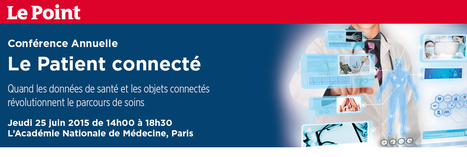
Le Patient Connecté, le 25 juin 2015. Quand les données de santé et les objets connectés révolutionnent le parcours de soins. Assistez à la nouvelle conférence Le Point !
Scoop.it!

June Shannon hears from MPS Medicolegal Adviser Dr Gordon McDavidabout the professional use of social media by doctors, and how in the absence of guidance from the Irish Medical Council, its use by medical professionals can be fraught with difficulties. Doctors should never accept a ‘friend’ request from a patient on their personal social media account and must ensure their online relationships with patients are strictly professional, a medico-legal expert has advised. Dr Gordon McDavid, Medicolegal Adviser with the Medical Protection Society (MPS) in the UK, explained that one of the main pitfalls doctors needed to avoid when using social media was breaching patient confidentiality, and therefore doctors should always ensure that confidentiality was a priority. Doctors should also be aware that any comments they make on social media had the potential to reach a far wider audience than intended, he added. Dr McDavid was speaking to Irish Medical Times ahead of a conference at the RCPI, entitled ‘New Horizons: Apps, Technology and Social Media in Medicine’, which took place last week (April 21). The medico-legal expert, who addressed the event on the professional use of social media by doctors, said it was important for doctors to ensure that they would be comfortable with their patients, colleagues and employer seeing any comments, photos or videos that they posted online. Also discussing the issue of anonymity, Dr McDavid said that unlike the Irish Medical Council (IMC), the UK’s General Medical Council (GMC) placed an obligation on doctors who provided a medical opinion on social media to identify themselves by name. “As social media can blur the lines between personal and professional situations, it is an area fraught with potential problems. It can be confusing for doctors and it is therefore important to create consistency,” he stressed. “Guidance can be helpful to set out expected behaviours for doctors, and in this instance MPS would welcome the Irish Medical Council to offer their own guidance on social media.” It is important that if doctors do use social media, they are familiar with the forum and how it works. Pic: Getty Images While the IMC had yet to issue guidance in relation to social media, Dr McDavid said that in the meantime, doctors could look to the MPS or their medical defence organisation for assistance. The MPS has online tools and medico-legal advisers available to guide members in relation to social media issues, he explained. The IMO, the British Medical Association, the GMC and the RCGP have all developed guidance on social media, which Dr McDavid said offered useful and practical tips for doctors on its safe use. “When used appropriately, social media can offer doctors access to a huge audience that they would otherwise not have,” according to Dr McDavid. “For example, they can seek international expertise and engage with patients in innovative and convenient ways. However, it is important that if doctors do use social media, they are familiar with the forum and how it works, are comfortable using it, and keep confidentiality in mind.” Dr Tony Shannon, a consultant in emergency medicine and expert in medical technology, also addressed the RCPI meeting on the role of medical leadership and technology. Dr Shannon is the former Chief Information Officer at Leeds Teaching Hospitals and is currently the Director of Frectal Ltd, a management consultancy which advises on a range of issues, including clinical leadership, process improvement and information technology in healthcare. Via Plus91
Scoop.it!

Fourteen US and Canadian cancer institutes will use International Business Machines Corp.'s Watson computer system to choose therapies based on a tumor's genetic fingerprints, the company said on Tuesday, the latest step toward bringing personalized cancer treatments to more patients.
Oncology is the first specialty where matching therapy to DNA has improved outcomes for some patients, inspiring the "precision medicine initiative" President Barack Obama announced in January Via Alex Butler
Scoop.it!

Le laboratoire pharmaceutique Pfizer s’est associé à six vidéo-blogueurs pour relayer sa campagne de... Via Celine Sportisse
Scoop.it!
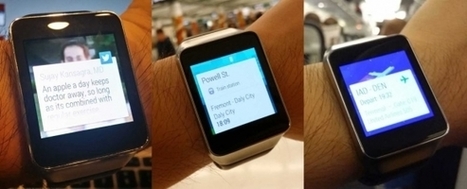
Android Wear — which had nearly a year’s head start in front of Apple Watch — touts avariety of healthcare apps and more on Google Play that make the platform even more handy for your day-to-day life. In fact, any Android app that uses Android notifications will pop up automatically on Android. This makes it quite handy, for instance, to follow medical Twitter feeds, get alerts from colleagues, and send emails and text messages to them.
My experience over the past year with my Samsung Gear Live watch has been very positive. I’ve been able to manage flights, scheduling, messaging, and more from my wrist — and even get some advice from Johns Hopkins’ @PsychPearls and follow live thoracic surgeries at UC Davis. Even Evernote is available to capture, display, and search notes on Android Wear. Via Alex Butler
Scoop.it!

La marque sud-coréenne investit dans la santé. Son ambition : être un acteur clé dans la définition et dans l'organisation d'un nouveau parcours patient.
|






