Buzz e-sante
248.4K views | +7 today
Buzz e-sante
Le média du digital santé
Curated by Rémy TESTON
Your new post is loading...
Scooped by Rémy TESTON
May 31, 2015 5:11 AM
Scoop.it!

La santé connectée, priorité des contrôles de la Cnil en 2015

La santé connectée, priorité des contrôles de la Cnil en 2015 | Buzz e-sante | Scoop.it
Ces dispositifs suscitent de nombreuses interrogations quant à l’information et au consentement des utilisateurs.
No comment yet.
Rescooped by Rémy TESTON from Social Media and Healthcare
May 30, 2015 1:09 PM
Scoop.it!

HIV in the Internet Age

HIV in the Internet Age | Buzz e-sante | Scoop.it

Hooking up has never been easier. For those who want to avoid the crowded, boozy bar scene, finding a sexual partner is just a click away online. One popular site for such cyber-assisted trysts is Craigslist, which has an entire section dedicated to “casual encounters,” categorized by who’s looking for whom. Also, a number of new smartphone apps have hit the market recently, bringing no-strings-attached sex to the palm of one’s hand.

With sex so much easier to come by, many researchers and activists have raised concerns about technology increasing the spread of sexually transmitted diseases, such as HIV/AIDS. Social-networking technologies seem especially popular among gay and bisexual men, particularly African Americans and Latinos, some of the most at-risk populations for HIV/AIDS in the United States. Some epidemiological studies have found correlations between the use of such technologies and rates of HIV infection. One study that made headlines earlier this year, for example, found that the appearance of Craigslist in a given region was associated with a 15.9 percent increase in HIV incidence, and that more than 6,000 new cases of HIV infection could likely be attributed to the site each year (MIS Quarterly, December 2014).

“The take-away message is that in the age of social media, new social routes of HIV transmission are possible,” study coauthor Jason Chan, now at the University of Minnesota, told The Scientist in an e-mail. “On the users’ end, the adage ‘buyers beware’ is still very applicable in this context. . . . It would be fruitful for health-care practitioners and academics to look into these new avenues to uncover areas that are in need of intervention.”

But the relationship between social-networking technologies and HIV risk is not straightforward. First of all, it is still unclear whether the correlations that have been documented between such technologies and HIV incidence are indicative of causality, notes Ian Holloway, a social behavioral scientist at the University of California, Los Angeles’s Center for HIV Intervention, Prevention, and Treatment Services. Perhaps the technologies are increasing HIV risk, or perhaps they are simply attracting those who tend to engage in sexually risky behaviors. “Really, the question of whether it’s selection or influence that’s contributing to greater HIV risk behavior among guys who use these platforms is unknown,” says Holloway. “There haven’t been good longitudinal studies to tease out which of those mechanisms is in place.”

In the age of social media, new social routes of HIV transmission are possible.

—Jason Chan, University of Minnesota

Another consideration is what types of sexual behaviors tend to result from Internet hookups. UCLA’s Sean Young, a faculty leader of the new UC Institute for Prediction Technology, and his colleagues have found, for example, that men who find male sexual partners on social-networking sites are more likely to have oral sex, which carries a much lower chance of disease transmission (PLOS ONE, 8:e62271, 2013). “If it’s easier to find people to have sex with, then it definitely increases your risk for HIV just by having a larger number of sexual partners,” Young says. “[But] that increase in sexual partners may be mitigated . . . by a change in sexual-risk behaviors, like oral sex compared to unprotected anal sex.”

People looking for sexual partners online may also be able to lessen their risk of infection by having access to information they wouldn’t necessarily have about someone they met in a bar. Many technologies geared specifically to arranging sexual encounters even provide users with an opportunity to indicate their HIV status. If honestly reported, this can result in sero-sorting, allowing people to choose a sexual partner who matches their own HIV status. “You have to have a sero-discordant sexual act in order to transmit a new case of HIV,” says behavioral health scientist Kathryn Muessig of the Gillings School of Global Public Health at the University of North Carolina at Chapel Hill. “If both people accurately know their status, it could reduce risk.”

Independent of how social-networking sites influence sexual-risk behaviors, there is evidence that these technologies are effective at spreading HIV/AIDS awareness, prevention measures, and even HIV testing. For example, the Harnessing Online Peer Education (HOPE) study, led by Young, found that people who joined Facebook intervention groups, in which peer leaders moderated discussions about HIV testing and infection prevention, were about three times more likely to request a home-based HIV testing kit than those in Facebook groups that received only general health information (Am J Public Health, 104:1707-12, 2014). Upon reading of their success, researchers in Peru contacted Young to implement a Facebook-based intervention program there, and got very similar results, with participants three times more likely to get tested for HIV. (Lancet HIV, 2:e27-32, 2015). Young and his colleagues are now gearing up to test this social media–based intervention strategy in a five-year randomized controlled trial.

So has social media helped or hurt the HIV community? According to Simon Rosser, director of the HIV/STI Intervention and Prevention Studies (HIPS) Program at the University of Minnesota School of Public Health, that’s the wrong question to ask. “Something as complex as new technology and media, it’s like asking the question, ‘Is the Internet good or bad?’ It’s just too simplistic a question when framed that way,” says Rosser. On the other hand, “asking what are the effects of the Internet, how is it changing society, and what are the benefits and risks inherent in it is very, very helpful, even critical.”

- See more at: http://www.the-scientist.com/?articles.view/articleNo/42784/title/HIV-in-the-Internet-Age/#sthash.ENFAgjj1.dpuf


Via Plus91
No comment yet.
Scooped by Rémy TESTON
May 29, 2015 5:20 AM
Scoop.it!

L'abus de Tinder peut nuire à la santé

L'abus de Tinder peut nuire à la santé | Buzz e-sante | Scoop.it
Aux Etats-Unis, un département de santé fait le lien entre l'usage croissant d'appli mobiles de rencontres et l'augmentation des cas de maladies sexuellement transmissibles.
No comment yet.
Scooped by Rémy TESTON
May 28, 2015 4:31 PM
Scoop.it!

Quels objets connectés au service de la fertilité, e-sante.fr

Quels objets connectés au service de la fertilité, e-sante.fr | Buzz e-sante | Scoop.it
Vous souhaitez mettre un bébé en route et l’impatience vous guette déjà ? Les applications et les objets connectés pour suivre au jour le jour l’évolution de votre fertilité sont peut-être pour vous. Que faut-il savoir sur la fertilité connectée et sur les accessoires disponibles dans ce domaine ?
No comment yet.
Rescooped by Rémy TESTON from Digital Health
May 28, 2015 1:23 PM
Scoop.it!

Mango Health uses Google Fit to add activity, blood pressure, weight tracking s

Mango Health uses Google Fit to add activity, blood pressure, weight tracking s | Buzz e-sante | Scoop.it
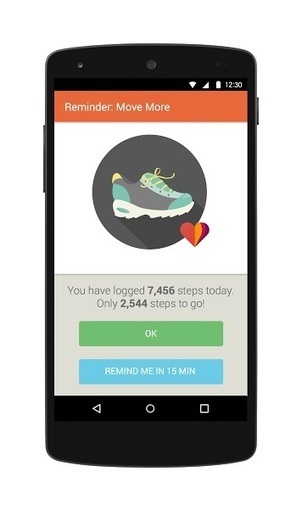
Gamified medication adherence app maker Mango Health is moving beyond medications, using a new Google Fit integration to add tracking of blood pressure and weight, as well as activity tracking, into its app, the company announced today.

“From a patient or consumer’s perspective in the app, it leverages the existing paradigm around reminders, which we think is a very effective way to begin encouraging patient populations in other forms of even more proactive health,” CEO Jason Oberfest told MobiHealthNews. “So whether it’s recording blood pressure regularly, or moving regularly, monitoring glucose regularly, whatever the case may be, it was a very logical extension for the app.”

Via Alex Butler
No comment yet.
Scooped by Rémy TESTON
May 28, 2015 1:19 PM
Scoop.it!

Santé mobile : les Français de plus en plus séduits par les applications médicales

Santé mobile : les Français de plus en plus séduits par les applications médicales | Buzz e-sante | Scoop.it
No comment yet.
Scooped by Rémy TESTON
May 28, 2015 1:44 AM
Scoop.it!

Objets connectés, homme augmenté et transhumanité

Objets connectés, homme augmenté et transhumanité | Buzz e-sante | Scoop.it
Mélangeons objets connectés et biotechnologie : obtiendrons-nous une recette miracle pour l’homme du futur, ou un cocktail toxique ?
No comment yet.
Scooped by Rémy TESTON
May 27, 2015 3:05 AM
Scoop.it!

L'Annuaire Médico-Social sur mobile ! - Buzz-esanté

L'Annuaire Médico-Social sur mobile ! - Buzz-esanté | Buzz e-sante | Scoop.it
Le laboratoire Sanofi lance une version mobile de son Annuaire Médico-Social, outil pour faciliter le parcours de soins des patients partout en France
No comment yet.
Scooped by Rémy TESTON
May 26, 2015 1:36 PM
Scoop.it!

Un Avatar médical chez vous ? - Club Digital Santé

Un Avatar médical chez vous ? - Club Digital Santé | Buzz e-sante | Scoop.it
Carte blanche à Denise Silber, organisatrice du Congrès Doctors 2.0 & You et Directrice de l'agence Basil Stratégies : un avatar médical chez vous ?
No comment yet.
Scooped by Rémy TESTON
May 26, 2015 3:02 AM
Scoop.it!

LEO Pharma lance le site web oncothrombose - Buzz-esanté

LEO Pharma lance le site web oncothrombose - Buzz-esanté | Buzz e-sante | Scoop.it
Le laboratoire LEO Pharma lance un nouveau site web dédié aux patients atteints de cancer et aux professionnels de santé : oncothrombose.fr.
No comment yet.
Rescooped by Rémy TESTON from Digital Health
May 25, 2015 4:38 AM
Scoop.it!

Can Smartphones Become The New Stethoscopes? Expert Insights Into The Future Of Mobile Health

Can Smartphones Become The New Stethoscopes? Expert Insights Into The Future Of Mobile Health | Buzz e-sante | Scoop.it

One of the hottest topics for speculation in healthcare today is the unrealized potential for mobile health -- defined as technologies that use mobile devices, apps or telehealth to connect patients and physicians -- to transform the way healthcare is sought and delivered. Two-thirds of Americans own a smartphone, and companies are eager to tap this widespread technology for the benefit of patients, doctors and hospitals. But expert say it's not yet obvious how exactly mobile services might be leveraged in the bureucratic world of healthcare with its highly sensitive privacy issues.


Via Alex Butler
No comment yet.
Scooped by Rémy TESTON
May 24, 2015 5:42 AM
Scoop.it!

Santé : voici le palmarès des métiers où l'on bouge le moins

Santé : voici le palmarès des métiers où l'on bouge le moins | Buzz e-sante | Scoop.it
Le terme d'actif pour désigner les personnes qui travaillent n'a jamais été autant usurpé ! C'est la conclusion qui saute aux yeux à la lecture...
No comment yet.
Scooped by Rémy TESTON
May 23, 2015 12:12 PM
Scoop.it!

Santé et numérique : big data et bracelets connectés au coeur des débats

Santé et numérique : big data et bracelets connectés au coeur des débats | Buzz e-sante | Scoop.it
No comment yet.
Scooped by Rémy TESTON
May 30, 2015 1:15 PM
Scoop.it!

[Enquête] Vers une relation médecin / patient connectée ?

[Enquête] Vers une relation médecin / patient connectée ? | Buzz e-sante | Scoop.it
De nombreux débats éclatent autour de la santé connectée, nous sommes donc allés à la rencontre des médecins pour connaître leurs avis.
No comment yet.
Rescooped by Rémy TESTON from E-patients, e-patients 2.0
May 30, 2015 1:08 PM
Scoop.it!

L'e-santé, bonne ou mauvaise idée pour les enfants ?

L'e-santé, bonne ou mauvaise idée pour les enfants ? | Buzz e-sante | Scoop.it
Les appareils connectés sont-ils bien pour les enfants ? Des chercheurs australiens souhaitent connaître l'impact de ces dispositifs.

Via Festival Communication Santé
No comment yet.
Scooped by Rémy TESTON
May 29, 2015 3:54 AM
Scoop.it!

Congrès PharmaCompliance Paris le 23 juin - Buzz-esanté

Congrès PharmaCompliance Paris le 23 juin - Buzz-esanté | Buzz e-sante | Scoop.it
Le premier congrès dédié à l’éthique et la compliance santé sera organisé le 23 juin prochain à Paris : PharmaCompliance. Buzz E-santé est partenaire de cet évènement. Présentation. En partenariat avec l’AFAR (Association Française des Affaires Réglementaires) et le CEDHYS (Club des Directeurs des Systèmes d’Information des Sciences de la Vie), EuroHealthNet (PharmaSuccess) et Market iT …
No comment yet.
Scooped by Rémy TESTON
May 28, 2015 3:11 PM
Scoop.it!

« Le succès de l’innovation en e-santé sera dans l’exécution »

« Le succès de l’innovation en e-santé sera dans l’exécution » | Buzz e-sante | Scoop.it
Denise Silber a lancé l’événement Doctors 2.0 & You en juin 2011 avec le double objectif d’attirer le médecin vers le numérique et de donner une place à la parole des patients. Ce positionnement original vient de se traduire par son adhésion à la charte Patients included. La 5e édition de Doctors 2.0 se prépare, pour les 4 et 5 Juin prochains, Cité Universitaire, à Paris.
No comment yet.
Scooped by Rémy TESTON
May 28, 2015 1:22 PM
Scoop.it!

Qu'est-ce qu'innover dans la santé ? - Futur en Seine 2015

Qu'est-ce qu'innover dans la santé ? - Futur en Seine 2015 | Buzz e-sante | Scoop.it
Qu’est-ce qu’innover dans la santé ? Co-construire ensemble, avec et pour les patients. Un événement organisé par Sanofi.   Sanofi organise une table ronde autour du thème « Qu’est-ce qu’innover en santé ? Co-construire ensemble, avec et pour les patients». Il s’agira de mettre en lumière les contraintes et les attentes des différentes parties prenantes en matière …
No comment yet.
Scooped by Rémy TESTON
May 28, 2015 2:54 AM
Scoop.it!

Envoi d'ordonnance par mobile avec Pharminfo - Buzz-esanté

Envoi d'ordonnance par mobile avec Pharminfo - Buzz-esanté | Buzz e-sante | Scoop.it
Le groupe Kozea élargit son offre de service aux pharmaciens avec le lancement de l’application mobile Pharminfo
No comment yet.
Scooped by Rémy TESTON
May 27, 2015 7:25 AM
Scoop.it!

Étude Santé Connectée 2015 : des médecins peu connectés. » MédecinGeek

Étude Santé Connectée 2015 : des médecins peu connectés. » MédecinGeek | Buzz e-sante | Scoop.it
No comment yet.
Scooped by Rémy TESTON
May 26, 2015 3:03 PM
Scoop.it!

Expérience de cyberattaque réussie sur un robot de chirurgie : le secteur de la santé est-il suffisamment protégé ?

Expérience de cyberattaque réussie sur un robot de chirurgie : le secteur de la santé est-il suffisamment protégé ? | Buzz e-sante | Scoop.it
Dans le cadre de cette expérience, ils ont réussi à prendre le contrôle d’un robot d’intervention chirurgicale, à intercepter les ordres...
No comment yet.
Scooped by Rémy TESTON
May 26, 2015 1:01 PM
Scoop.it!

Le digital : un enjeu majeur du marketing de la santé - Markentive

Le digital : un enjeu majeur du marketing de la santé - Markentive | Buzz e-sante | Scoop.it
Le secteur de la santé est en plein boom digital et il est crucial pour les entreprises du domaine de sérieusement reconsidérer leur stratégie digitale
No comment yet.
Scooped by Rémy TESTON
May 25, 2015 4:41 AM
Scoop.it!

Biocodex lance le site controlearthrose - Buzz-esanté

Biocodex lance le site controlearthrose - Buzz-esanté | Buzz e-sante | Scoop.it
Pour accompagner les professionnels de santé dans la prise en charge de l'arthrose, le laboratoire Biocodex lance le site controlearthrose.com
Anne-Lise Leroy's comment, May 26, 2015 8:34 AM
L'update sur la home précise "dernière mise à jour 30/12/2014", est-ce un re-lancement ? (où le temps d'avoir l'aval des autorités de santé peut-être ?)
Scooped by Rémy TESTON
May 24, 2015 5:43 AM
Scoop.it!

Des prothèses bioniques que les amputés commandent par la pensée

Des prothèses bioniques que les amputés commandent par la pensée | Buzz e-sante | Scoop.it
C'est une première : deux handicapés contrôlent et commandent au quotidien leur prothèse de jambe bionique comme n'importe quel membre...
No comment yet.
Scooped by Rémy TESTON
May 23, 2015 12:14 PM
Scoop.it!

Axel Kahn : « le savoir est pouvoir » ou l’enjeu des données à l’ère de la santé connectée | L'Atelier : Accelerating Business

Axel Kahn : « le savoir est pouvoir » ou l’enjeu des données à l’ère de la santé connectée | L'Atelier : Accelerating Business | Buzz e-sante | Scoop.it
Quelle éthique pour la médecine de demain ? Le professeur Axel Kahn revient sur les problèmes que peuvent poser santé connectée, robotique, neuroscience et plateformes participatives.
Jerome Leleu's curator insight, May 26, 2015 1:29 AM

ajouter votre perspicacité ...