


La startup Sano Intelligence annonce avoir levé plus de 10 millions de dollars pour développer son capteur de santé connectée permettant de mesurer son taux de glucose ainsi que d'autres constantes vitales.

 Your new post is loading...
 Scoop.it! La startup Sano Intelligence annonce avoir levé plus de 10 millions de dollars pour développer son capteur de santé connectée permettant de mesurer son taux de glucose ainsi que d'autres constantes vitales. 
No comment yet.
Sign up to comment
Scoop.it!

Comme nous vous vous intéressez à la santé sur le web ? Voici quelques sites à suivre absolument !
Scoop.it!

Un nouveau party game, composé d'une douzaine de mini jeux, a été lancé sur mobile pour sensibiliser les adolescents avec humour à leur santé : Corpus Gang
Scoop.it!

L'Agence de la Biomédecine lance une campagne de sensibilisation sur le don d'organes pour vaincre les idées reçues
Scoop.it!

Commandé en octobre 2014 par le Premier ministre, un rapport du Conseil national du numérique (CNNum) devra inspirer la stratégie du gouvernement sur
Scoop.it!
Les projets se succèdent pour aider les personnes âgées grâce à la réalité virtuelle. Mais la technologie fait encore face à de gros obstacles.

Ascelliance Retraite's curator insight,
June 23, 2015 3:04 AM
Il existe encore un fossé entre la domotique et les besoins des personnes âgées
Scoop.it!

Pour sensibiliser le grand public au rôle de la pharma, ses métiers, ses activités, le Leem lance la campagne digitale « le Visage du médicament »
Scoop.it!

Les Laboratoires, start-up, entreprises et associations technologiques françaises n’arrêtent pas le progrès ! En France, nos gars développent des technolog
Scoop.it!
Directrice de recherche à l’École supérieure d’informatique électronique automatique (ESIEA), Evelyne Klinger nous détaille les nouveaux enjeux de la réalité virtuelle dans le monde médical à l’heure où de plus en plus de projets naissent.

CIP /ACL au coeur de la distribution de la santé's curator insight,
June 20, 2015 4:17 AM
#PHARMA #INNOVATION #TECHNO
Scoop.it!

Les nouvelles technologies ont déjà bouleversé les habitudes des entreprises, qui ont recours au numérique pour améliorer leurs performances, ou tout simplement pour gagner du temps. Via Festival Communication Santé
CIP /ACL au coeur de la distribution de la santé's curator insight,
June 22, 2015 1:15 AM
#PHARMA #DIGITAL
Scoop.it!
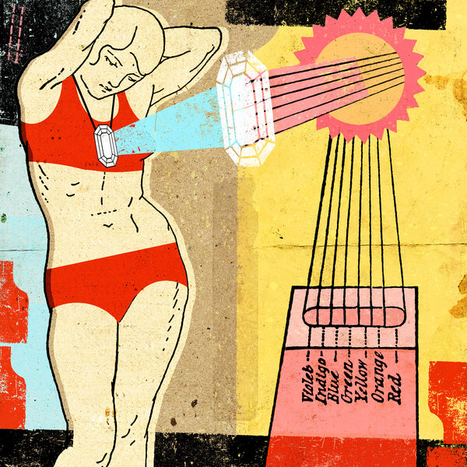
Could new technology succeed where years of public health messages, doctor warnings and nagging moms have failed — to keep us safe from too much sun?We have all heard about the devastating effects of ultraviolet radiation. It burns, ages, wrinkles, and can even cause cancer. There are 3.5 million cases of skin cancer in the United States each year, yet fewer than one third of people use sunscreen regularly, according to a May report released by the Centers for Disease Control and Prevention. Via Alex Butler
Scoop.it!

Le CESSIM a publié les résultats de son baromètre annuel sur les usages digitaux des professionnels de santé. Focus sur les oncologues en infographie
|
Scoop.it!

Many healthcare facilities struggle with how to use social media in an effective manner. Concerns about HIPAA regulations and patient privacy prevent many from even attempting to develop a presence across social media platforms. However, social media is a powerful tool and should be used by all healthcare organizations, especially hospital networks looking to bring in new patients and retain current patients. Reaching patients in their day-to-day lives can be difficult, but it’s important to make sure that your hospital network is top-of-mind when they need it. Social media allows you to provide valuable, educational information in a medium where most people are active and are looking for thoughtful, healthcare-related information. Follow our five social media tips for hospital networks to help grow your social media presence and make the most of your time online. 1. Use the 70/20/10 rule. 70 percent of your posts should be thought leadership. They should be written to share information with your audience, while providing thoughtful commentary on current issues. Reposting others’ content should comprise about 20 percent of your posts. Only 10 percent of your posts should directly promote your hospitals and their services. 2. Give public health announcements. This could be as simple as “Flu season is starting. Make sure you get your flu shot today.” If the public comes to recognize you as a key source for health news updates, your hospital will be the one they look towards when they have a real health emergency. Plus, it’s great to get people in the mindset of looking to you for guidance and/or information, in the event that there is a critical public health emergency, such as an Ebola outbreak. 3. Promote new service offerings. We all love new things, so use social media to promote any new service offerings your hospital network has available. Perhaps it’s a new prenatal genetic counseling program or state-of-the-art electrocardiogram – photos or a video in these types of posts will make them even better. 4. Link to interesting articles & industry research. Medical research can be a confusing topic for many people, and to make matters worse, there’s a lot of misinformation on the Internet. Help your audience by linking to relevant and interesting articles and research pieces. Be sure to provide useful commentary on what the article is about and why it is important. By promoting yourself as a thought leader, you will build trust with patients and they’ll look to you for advice and guidance when they have a health issue. 5. Shine a light on any award-winning doctors and staff. Your staff is the heart of your organization. Many people choose a hospital based on the caliber of the medical staff and related information they can find about them. Recognize any outstanding staff members or award-winning doctors and nurses on social media. This will help personalize your organization as well as establish you as a leader in medicine. - See more at: http://thinkpyxl.com/blog/5-social-media-tips-hospital-networks#sthash.44nX0z80.dpuf
Via Plus91
Scoop.it!

La 26ème édition du Festival de la Communication Santé se déroulera les 27 & 28 novembre 2015 à Deauville
Scoop.it!

Indéniablement un des secteurs en plus grosse mutation, la santé est un des domaines privilégiés des start-up. Elles sont nombreuses à s’attaquer aux maladies chroniques, notamment la gestion du diabète.
Scoop.it!

The Cleveland Clinic is deploying a telemedicine service tapping mobile devices to provide patients a virtual consultation within minutes.The MyCare Online offering by Cleveland Clinic costs $49 per care interaction and requires either a smartphone, iPad or PC and a free app, according to the Cleveland Plain Dealer. The service, which connects patients with a physician or nurse, is focused on helping users dealing with minor health issues such as rashes, the cold or the flu.Such mHealth services increasingly are being embraced by providers for a slew of reasons, from cost savings to improved care quality. For instance, as FierceMobileHealthcare has reported, UnitedHealthcare is partnering with Doctor On Demand, American Well and Optum to expand virtual healthcare services to a network of care physicians that will be accessible 24/7 via mobile devices atablets. Via Alex Butler
Scoop.it!
Captation et gestion des data, médecine à distance, organes imprimés, homme augmenté... Quand tout bouge dans la santé, les métiers suivent le mouvement. Des m… Via Esposito Christelle
Scoop.it!
La start-up Augmedix a mis au point un système permettant au médecin de se focaliser entièrement sur son patient tandis qu’un assistant gère l’administratif à distance.
Scoop.it!

A truly connected healthcare ecosystem will take longer to develop than most predict and it's not yet proven the Apple Watch will be the groundbreaking device that will change the mHealth industry, according to David Lee Scher, M.D. However, the health consultant still says digital tech will have a huge impact on healthcare. Via Alex Butler

Lionel Reichardt / le Pharmageek's curator insight,
June 20, 2015 1:20 PM
Les objets connectés dédiés à la santé et au bien-être se multiplient.. colliers, bracelet, vêtements, puces, patchs, montres.. toutes les formes pour un impact encore à évaluer. La montre d'Apple est elle un succès ? des ventes records en quelques semaines avec 3 millions de montres vendues aux USA et 15 à 30 millions attendues pour la première année de vente..mais quelle place peut elle prendre dans la santé? ouvre t elle la voie à un nouveau marché de la e santé? Validation, évaluation, labellisation.. autant de besoins qui apparaissent face à cette déferlante et qui permettront de distinguer l bon grain de l'ivraie. 
Laurent FLOURET's curator insight,
June 22, 2015 8:53 AM
And that is why I "invested" in one this WE... Not so much what it can do now, but what it will do!
Scoop.it!

Phénomène assez fréquent chez les personnes âgées, l’incontinence peut également toucher les plus jeunes. Mais mis à part le port d’une couche ou l’opération chirurgicale, peu de solutions s’offren...
Scoop.it!

For three nights this Spring, an unusual set of fireworks exploded across the social media landscape with implications for public discussions of health, particularly for health care professionals whose work includes crafting messages for patients. An estimated 746 doctors joined in a twitter chat with the hashtag #cancerfilm in an extended conversation with more than 500 self-described patients, as well as about 12,000 other people who didn't fit either of those labels (but fit 13 other categories.) This three-night, multiplayer dialogue began March 31 and created an "unprecedented" event according to one data junkie, Audun Utengen, of Symplur, LLC. Utengen runs the site www.symplur.com, which provides analytics on healthcare related hashtags. The jury is still out on whether others will imitate this episode of what is called the "second screen" phenomena in health care. Sports and music fans already tweet comments to each other while athletes and musicians are performing. "Did you see that goal?" But what happened on the three consecutive nights – beginning March 31, was a formal invitation by the US National Cancer Institute (and 18 partner research organizations) for the public to "comment" while watching a public television documentary entitled, "The Emperor of All Maladies," about cancer. "This opens up a whole new area for conversation in health care," Utengen said in an interview. "This was an explosion of people talking about a disease." Emperor was a six-hour major television event on the US Public Broadcasting System, PBS, presented by documentary filmmaker Ken Burns, in partnership with WETA, based on the 2010 Pulitzer Prize-winning book by Siddhartha Mukherjee. Cancer – in the documentary – was portrayed in lethal reality, complete with historic explanations of mistaken ideas and misguided treatments and days when wards full of children faced almost certain death. Some of those on Twitter literally wrote "I'm turning it off now" because they said it was too difficult to watch. Utengen himself, whose family has been touched by pancreatic cancer, said it was not easy to see some images. But the authenticity pleased some of the patients watching, who tweeted things like, "That's exactly how I felt during chemotherapy" or "I remember losing my hair." For those who wish to study it, the entire transcript of #cancerfilm is available here. You must scroll to the bottom to set parameters for the time section you wish to read. One social scientist who has been studying social media said parsing the importance from of an event like this is a statistical nightmare. Devin Gaffney is a doctoral student at Northeastern University in Boston, who has studied social media's role in political uprisings, for example. He said linking "online" conversation to offline behavior for #cancerfilm is tricky. "I think very likely there is a real link there – attention online will likely lead to some degree of attention (and donations, and attitudinal shifts, and improved science literacy), but I don't think it happens in a way that we can directly quantifiably measure." Surveys done months later might be able to pick up an impact, he explained. During #cancerfilm some researchers posted inspiration and resolve, and even humility when facing new discoveries. Big pharmaceutical companies, including Bristol-Myers Squibb and Celgene, were also tweeting. They were joined by research institutes, such as Memorial Sloan-Kettering and University of California at San Francisco, UCSF. Some of the tweeting provided information on therapies that were discussed inside the documentary itself. Early days of rad/surg Onc remind me of current days of genomics/targeted therapy – so much to learn! #cancerfilm — Alok Khorana (@aakonc) March 31, 2015 We're comparing blood samples of #breastcancer patients pre&post surgery looking for mutated DNA (or absence) #CancerFilm #CancerSmart #bcsm — Sloan Kettering (@sloan_kettering) April 2, 2015 The presence of research institutes tweeting about themselves drew this sharp rebuke from journalist and science communications expert Paul Raeburn. #CancerFilm stream full of institutions trying to reap some PR benefits from the documentary. Embarrassing. — Paul Raeburn (@praeburn) March 31, 2015 Other critics of the conversation pointed to a lack of discussion of prevention, and what some called too much hype about new avenues of treatment, especially immunotherapy. Peter Garrett is the director of communications for NCI, and he saw the six hours of the documentary as an opportunity for outreach. The film was a rare platform for putting information about cancer into the stream of discussion exactly while questions emerged for the audience watching, he explained in a phone interview. While Utengen praised the NCI for planning and hard work before the event, Garrett said it didn't take much work to prepare. Utengen counted 35 federal agencies tweeting during the event, with the National Institutes of Health, or NIH, as the leader.
In this illustration, you can see breast-cancer researcher Dr. Attai at the near “center” of a conversation network known as #bcsm. Visualization from MDigitalLife (MDigitalLife.com).
A platform for online patient health care communities Media relations expert Greg Mathews believes the social media explosion of #cancerfilm will inspire others to attempt to re-create it. "Anyone who saw the impact that #cancerfilm had on the online health ecosystem is going to be building on that model – it was phenomenally successful," he wrote in an email. Mathews works for W20 Group, a marketing consulting company based in Austin, Texas, that publishes detailed reports on social media in health care. Their "Social Oncology Report," based on 2014 data was published in May. What made the explosion of conversation so big, Matthews said, was the fertile ground already plowed by the myriad health-care patient communities on twitter. These communities fueled the second-screen event, because they already had online fluency about cancer, he said. If you aren't familiar, these are communities often run by patients where people gather weekly to talk about diseases during a certain time slot. Two very active chats are #lcsm and #bcsm. Lung Cancer Social Media (lcsm) includes both doctors and patients and is frequently co-moderated by Seattle patient Janet Freeman-Daily. The breast cancer social media chat was co-founded by a surgeon, Deanna Attai of Burbank, Calif. In network mapping done by researchers of social media, Freeman-Daily and Attai, appear "central" to discussions in their respective disease areas.
During the May conference of the Association of Clinical Oncologists in Chicago, doctors presented research about how some of these hashtags may operate in influencing patient decision-making, but the research is not published yet. What Mathews finds interesting is how "chat" communities are changing and becoming more diverse, including patients, providers, advocates, researchers and health policy wonks. His company tracks what he calls more than 500,000 "online identities" related to health care internationally. For his clients, which can include physicians, hospitals, pharmaceutical companies and others, he gathers analytics on how their target audiences behave online, and where the clients may reach a given audience with a message. "I get the point of critics," he explained, who see health-care social media as just one more place for marketing of products, devices and branding institutions. "I understand the skepticism. But we know that emotion is a big part of health, and hope is one of the most powerful emotions." Hope is a frequent theme of disease-related discussions. Freeman-Daily, for example, is one of the most prominent patient influencers on social media about lung cancer. Her message is: even if you are diagnosed with advanced cancer and given very few treatment options, there may be a clinical trial you could enter. In her own case, she is currently not showing any evidence of disease, after finding a trial specifically aimed at her cancer's genomic signature and receiving chemotherapy though a Colorado laboratory. She is also fighting stigma (as she explains in video link) that she blames on people mistakenly believing this cancer is only suffered by those who are smokers. An estimated 10-15 percent of lung cancer is diagnosed in "never smokers." One of Freeman-Daily's comments during #cancerfilm reflected some of what Mathews observed. Hope is precious. For researchers, #cancer clinical trials are science. For patients, trials are treatment. Trials are hope. #CancerFilm — Janet Freeman-Daily (@JFreemanDaily) April 1, 2015 Nobody seems able to explain what the explosion of conversation could yield in terms of a permanent impact. But the fireworks leave a lingering smoke behind. Someone may learn how to read the signal in that noise. Explore further: Twitter the right prescription for sharing health research, study says
Via Plus91
Scoop.it!
As an introduction, I gave a series of short lectures on the Use of Social Media on Healthcare among medical students of Cebu Doctors University College of Med… Via Plus91
Scoop.it!

After an initial diagnosis, diabetes sufferers often experience a period of shock when they learn that everything has to change. Turkish mobile operator, Turkcell, and agency R/GA London have created an app to make adjusting to the necessary life changes much easier.
Instead of trying to persuade sufferers to adopt entirely new habits, tools and behaviors to monitor the condition, "healthmetre" deploys Instragram, a tool many people already use and taps into behaviors that people already have.
R/GA designed healthmetre to be a more human way to manage diabetes and help patients develop new, more healthy habits in a way that feels natural and thereby, helping them reach a level of consistency.
The idea is to make using the app as simple as possible, helping people stay motivated, complying with treatment and keeping the lines of communication with medical staff open.
Diabetes is an increasing problem across the world and Turkey has been particularly affected. The most recent statistics (2014) from the International Diabetes Federation show that Turkey has the highest rate of the illness in Europe, with an incidence of 14.7%, much higher than countries like, for example, the U.K. (5.4%) or mid-ranked Germany (7.9%).
The results of the 18-month trial are highly encouraging. Treatment compliance increased by 54%. Blood sugar levels decreased by 27% and complication forecasts decreased by 37%. more at http://www.fastcocreate.com/3047389/a-new-app-to-make-life-easier-for-diabetics-using-instagram
Via nrip
|






