


Les applications destinés aux particuliers pour l'aide à l'autodiagnostic et à la prise de décision semblent peu fiables, selon une étude...

 Your new post is loading...
 Scoop.it! Les applications destinés aux particuliers pour l'aide à l'autodiagnostic et à la prise de décision semblent peu fiables, selon une étude... 
No comment yet.
Sign up to comment
Scoop.it!

I WOKE UP with a vague sense of dread on Sunday. I’d been on vacation for two weeks, my life totally, blissfully on pause. But I was back, and felt … well, I’m not exactly sure. Anxious? Overwhelmed? Maybe I was just hungry.Normally I would push those feelings aside and go about my day. Classic repression. But I’d recently been given Moodnotes, an app that asks you to record your emotions using the simplest of interfaces: A digital face. And so I gave, let’s call him Mr. Face, the deepest of frowns. The background turned slate grey to match my mood, and I clicked save.“What’s happening at the moment?” the app asked like a worried friend. I typed that I had just returned from vacation and was feeling uncertain about the week ahead. It prompted me to select my feelings (anxious, bored, guilty), then asked if I was falling into a “thinking trap,” therapist parlance for a knee-jerk way of reacting to certain situations. Via Alex Butler

Richard Platt's curator insight,
August 7, 2015 3:07 PM
The app draws on cognitive behavioral therapy, a form of psychotherapy that draws connections between how we perceive situations and the emotions we feel about them. If you can identify negative thinking patterns, the idea goes, you can change those habits and thus the way you behave and ultimately feel. “Your feelings are actually signaling specific types of thoughts,” Dorian says. “And much like road signs, you wouldn’t just blast through stop signs and red lights; you’d stop to consider what they’re asking of you. You can think of feeling states similarly.” - The app walks users through a series of actions, which serve as those road signs. These actions, which begin with manipulating Mr. Face, become progressively more introspective as you progress through the app. “A lot of the heart of doing good cognitive behavioral therapy is being able to thoughtfully and artfully sequence a series of questions to enable people to make their own discoveries,” Erhardt says. The app might ask if you identify thinking traps and afterward follow up by asking if you might be able to think about the situation in a different light. - With few exceptions, the app doesn’t force-feed you pre-selected sentiments. Instead it asks you to stop and think about how you’re really feeling, then type that into a text box. “That was one of the more interesting design challenges,” says Alana Wood, a designer at Ustwo. “Normally we design applications to be as cognitively light as possible—this one is very heavy in terms of cognitive effort.” But it’s this intentional struggle that leads to insight and learning, Dorian says. “Sometimes there’s no substitute for eating your fruits and vegetables.” In other words, using Moodnotes is supposed to feel uncomfortable, at least to an extent.
Scoop.it!

De la consultation à distance à la surveillance à domicile, en passant par un hall opératoire et l'enfant conçu hors utérus, bienvenue en 2026... Via Renaloo
Scoop.it!
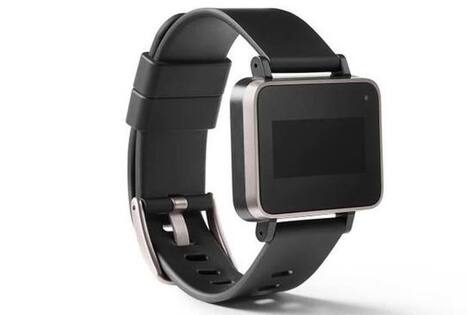
Le 3 février 2015, le Conseil national de l'ordre des médecins (Cnom) dévoilait son livre blanc sur la santé connectée : "Il est grand temps que les médecins se mettent à l'heure du numérique" déclarait son auteur, le docteur Jacques Lucas.
Scoop.it!

Entrepreneurs are giving the healthcare industry a much-needed injection of innovation. Enthusiasm for new ideas and solutions in healthcare is clear from the 200 percent growth in funding for digital health companies between 2010 and 2014.Digital health companies received a record-breaking $4.1 billion in funding in 2014, and more than $600 million in the first quarter of 2015. Many innovators have dramatically changed the healthcare landscape with solutions that are making patient care less expensive and more accessible, integrated and engaging. The potential for improved care is exciting, yet the plethora of healthcare ideas going to market comes with risks. Via Alex Butler
Scoop.it!

La Black Hat Conference se tient actuellement aux Etats-Unis. Un rendez vous annuel pour discuter et prévenir les futures attaques des cybercriminels.
Scoop.it!

With the wide influx of mobile health applications pushed into the market today, it is often difficult to know which apps are useful, accurate, and beneficial among the consumer segment. Since the Food and Drug Administration (FDA) has had little influence in moving forward regulations and policies among mobile health applications, this leaves patients and other consumers more confused than ever before when it comes to deciding which apps are best for them.Luckily, researchers from the Harvard Medical School published a study in the July issue of The British Medical Journal (BMJ), according to a press release from the mobile health app company DocResponse. The study was called “Evaluation of symptom checkers for self-diagnosis and triage: audit study” and determined that DocResponse is the most accurate diagnostic or symptom checker app out of a large range of mobile health applications on the market. Via Alex Butler
Scoop.it!

Where brands posts says a lot about how much they value a given social media channel, and how much effort they’re willing to put into it. With that said, let’s take a look at the global posting leaderboard for children’s hospitals to see which networks they’re putting their time and effort into. Check out the Posts Leaderboard, below. First, note the average of all these brands in the gray row. Twitter is clearly the network getting the most activity. Facebook is a solid second, and YouTube and Google Plus are both at the lower end of the spectrum, likely due to video being a more complex format to publish in, and Google Plus being a network brands still aren’t clear on the value of. You can also see that while the posting volume varies from brand to brand, most of them follow the same order of Twitter first and Facebook second.
Posting is an interesting look at the activity, although it’s certainly not the end of the story. A logical next metric would be to see what levels of engagement the brands are getting from their content on each network. So below are the engagement totals for each brand, by network. These are the total public engagements generated by the posts in each network. When looking at the average, it presents a very different picture of where the real action is on the social media landscape for these children’s hospitals. Here, Facebook’s dominance is clear. And equally interesting is that for every brand with an Instagram account, that account has generated more engagements than the Twitter account for that same brand.
What type of content is working for these brands? Let’s take a look at the most viral content on Facebook, Twitter and Instagram. At the very center are the posts with the highest share rate. I’ve adjusted the sliders to show only topics posted at least 4 times that month, and appeared on 3 separate brand pages to angle it towards more general industry topics. You can see a lot around the idea of high school and graduation. The hospitals are selecting topics that are both timely and local, as that’s where a large share of their business comes from.
Via Plus91
Scoop.it!

VIDÉO - Gadgets ou enjeu du futur? Les objets connectés n'en finissent plus de se faire attendre. Pour patienter, voici une sélection de pièces d'habillement, du plus rocambolesque au plus prometteur.
Scoop.it!

C’est une étude assez inquiétante qui vient d’être publiée par le groupe d’informatique HP. Sur 10 montres connectées analysées (leurs noms n’ont pas été communiqués), toutes ont présenté des défaillances plus ou moins importantes dans la protection des données de leur utilisateur. Des protection des données insuffisantes L’étude pointe du doigt la trop grande facilité
Scoop.it!

A report to help the business community understand what the wearable technology industry is capable of, where it’s heading and what customers want.
Scoop.it!

A couple of new reports from across the pond illustrate the ways doctors and patients are thinking about digital health in England, as well as in France and Germany. A new report from PushDoctor, a UK telemedicine company, shows that 58 percent of UK citizens surveyed have used some kind of health or wellness technology. And a report from healthcare marketing group Ipsos Health shows that 72 percent of the 131 primary care doctors interviewed in the UK, Germany, and France have already used or recommended at least one form of digital health technology with their patients.According to the PushDoctor report, 22.8 percent of patients use a smartphone, tablet, or computer to monitor exercise levels, 17 percent use such a device to establish BMI, 16.9 percent measure heart rate, 15.2 percent establish daily diet and calorie intake, 12.9 percent monitor sleep quality, and 5.1 percent share symptoms on social media to solicit friends’ opinions. Via Alex Butler
Scoop.it!

Avec la prothèse Iko Creative Prosthetic System, les enfants en situation de handicap peuvent fixer des robots ou des vaisseaux spatiaux Lego au bout de leur bras artificiel. Ce nouvel appareil, compatible avec les jouets de la marque danoise, interagit avec les jouets grâce à une unité centrale programmable et à une série de capteurs. Développé par le designer colombien Carlos Arturo Torres, il a remporté début juillet le design awards remis par le site spécialisé dans la conception industrielle Core 77.

SergePPlourde's curator insight,
July 28, 2015 9:42 AM
I love it when I see stories like this, where technologies enable people to go beyond their handicap |
Scoop.it!

Predictive analytics and Watson cognitive computing are expected to transform care management services for patients with chronic disease.
Scoop.it!

Le géant américain de l’informatique vient d’annoncer son intention d’acquérir Merge Healthcare, un spécialiste de l’imagerie médicale. Montant de la transaction : un milliard de dollars, soit environ 916 millions d’euros.
Scoop.it!

La vidéo est aujourd’hui le média le plus plébiscité par les internautes à travers le monde. Découverte de nombreuses initiatives dans la santé.
Scoop.it!

Social media is everywhere. All industries incorporate social media as a way to reach customers, clients and patients, and healthcare is no exception. Not only is social media a smart way to reach out, but also to engage and keep costs down. It’s an affordable, easy way to market and keep patients informed and happy. Let’s look at some of the ways hospitals, clinics and providers use social media to provide great service and disseminate information all while keeping costs down. They include: • Many healthcare providers have moved to scheduling and billing on their websites. It not only provides a convenience factor for both patients and providers, but also a financial savings by cutting paper and mailing costs. • Blogs provide an excellent source of information. These can be included on the website. From general information on your practice to specific information on treatments, it’s an easy way for patients to get some information either before an appointment or as follow up. • Social media such as Facebook and Twitter provide a venue for interaction and engagement with patients where they can leave reviews and feedback, as well as ask general questions. • YouTube is an excellent platform where doctors and providers can share information about the practice and specific conditions. More and more patients of all ages are logging onto YouTube for this very reason. Take the Time to Research As the article, “5 tips for simplifying your healthcare RCM” looks at; you may find just the information that applies to your specific healthcare situation. That can include: • Use social media to help you out as well – Connect with other healthcare providers and learn what they are doing in the social media world. Some of their methods may work for you. • Do it the right way – Be consistent with your social media, but don’t abuse it. Be careful of both too many posts and also of leaving your social sites alone for too long. Social Media Should Be in Your Strategy Social media is an integral part of any marketing strategy, and for those in the medical profession, it can provide a smart source of information. Patients are always seeking more information, and often after an appointment is when the questions arise. Social media is a great use for this, saving time, money and even worry from patients. It can also be a great time-saver with access to forms, scheduling and billing. If you haven’t already employed social media, it’s probably a great time to start.
Via Plus91
Scoop.it!

Le laboratoire Boehringer Ingelheim lance une nouvelle version de son site web dédié à l’Accident Vasculaire Cérébral (AVC) : Stop AVC
Scoop.it!

From
recode

While most other industries have enjoyed a decades-long marriage with the Internet, in health care, we’re still in the “getting to know you” phase, working to establish a level of trust. Understandably, there are major concerns in our industry surrounding data integrity, both in and outside of the firewall.Even as health care and the Internet continue their awkward slow dance (Jonathan Bush of Athenahealth likes to poke fun, with respect to health care, “that Internet thing is going to be big!”), the Internet of Things is already upon us. And while almost all (physicians are on the fence about the worth of some of the data and their ability to be present with it) appreciate the IoT’s tremendous promise in health care toward enabling a digital health revolution and the future of care delivery, as an industry, we must get the security piece right. Via Alex Butler
Scoop.it!

KEY TAKEAWAY: 30% of social media users prefer social care to phoning customer service and this is happening across age groups and income brackets: 17% of people older than 55 prefer social media over the telephone for service, and nearly half of people earning more than $200k per year prefer social media over live interactions for customer service. So how can pharma companies increase their ROI thru social media when the FDA has punted on social media marketing guidelines?
First, let’s remember that the most successful social media interactions are personal, genuine, and relevant. This means that pharma needs dedicated social media people who understand what they can and can’t do. It also means that taking some risk at the expense of engaging people who are tired of being seen as just another nameless patient.
According to Harvard Business Review the key steps to engaging people on social media are; Gather and track the right information. Social media is in effect a massive focus group that can provide intelligence about brand perception, services, competitors, and potentially disruptive trends. It’s easy to be overwhelmed by it all, so companies should prioritize gathering social data that indicate trigger events. These signal the moment when patients are more open to, asking for or filling an Rx for your product. Put in place processes to act on the insights. Some 72% of people who comment on a brand on Twitter expect an answer within an hour. Pharma has to develop guidelines for how to act when a particular event occurs. For example, someone asking about side effects for a particular drug could be directed to your safety page on your website while others questions can be answered within current FDA guidelines.
Measure your engagement. You can easily use web metrics to measure traffic from your social media interactions using specific URL’s or even coupons with special redemption codes. Pharma DTC marketers cannot continue to talk TO patients they have to be willing to take some risk to engage them and help them choose treatments. Yes, there is a risk, but that risk can be managed by using people who understand social media and pharma guidelines.
Via Plus91
Scoop.it!

Score another one for advocates of team-based care and for the power of social media. Via Richard Meyer
Scoop.it!

59% of healthcare organizations are either behind schedule with their digital health strategy or have no digital health strategy currently in place. Via Richard Meyer
Scoop.it!

Les hackathons, challenges ou ateliers en e-santé fleurissent, mais sont-ils utiles ? Via Celine Sportisse

Mehdi MARZOUK's curator insight,
July 31, 2015 9:15 AM
Un article pedagogique sur les sessions d'innovation collaboratives qui permettent aux entreprises de travailler autrement et de connaître des startups même lorsque les résultats directs ne sont pas au rendez-vous
Scoop.it!

L’Institut Gustave Roussy poursuit sa transformation digitale avec le lancement d'une nouvelle version de son site web gustaveroussy.fr
Scoop.it!
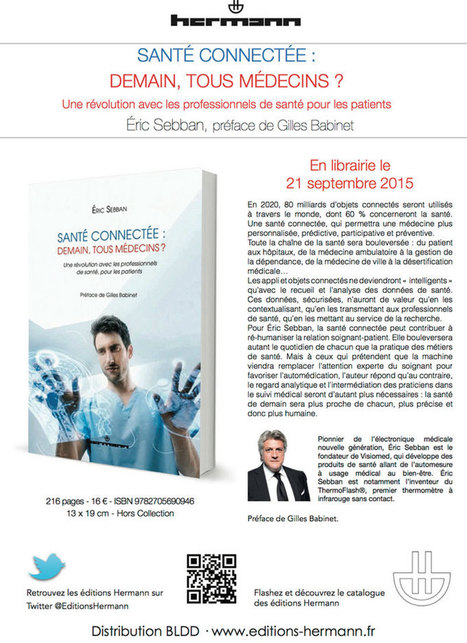
Publication de "Santé connectée : demain, tous médecins ? Une révolution avec les professionnels de santé, pour les patients"

J-L Navarro's curator insight,
July 30, 2015 5:48 AM
Tous médecins ? Non, sûrement pas (et c'est peut-être préférable !) mais tous plus attentifs à notre capital santé et celui de nos proches. |





