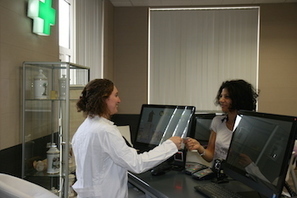
Le Club Digital Santé est heureux de s'associer au premier challenge d’innovation en ligne ouvert aux étudiants : le Challenge E-pocrate

 Your new post is loading...
 Scoop.it! Le Club Digital Santé est heureux de s'associer au premier challenge d’innovation en ligne ouvert aux étudiants : le Challenge E-pocrate 
No comment yet.
Sign up to comment
Scoop.it!
Scoop.it!

Le dossier médical partagé revient sur le devant de la scène à l'occasion des 70 ans de la Sécu. Le système devrait être déployé d'ici deux ans sur tout le territoire.
Scoop.it!

Apple announced its watchOS 2 on September 9. One of the major selling points behind the Apple Watch has always been combining the smartwatch idea alongside health and fitness tracking. Is this selling point panning out? What technological trends are seen in the healthcare industry and mobile devices — and are they really making a difference for doctors and patients? Via Alex Butler
Scoop.it!

La transformation digitale est en marche, dans les entreprises comme dans les administrations.
Scoop.it!

La résistance aux antibiotiques est aujourd’hui l’une des grandes menaces de santé publique, partout dans le monde.Pour Nosobio, l’objectif est de répondre à ce besoin médical urgent, avec des solutions développées pour mieux diagnostiquer, prévenir et guérir les infections nosocomiales.
Scoop.it!

L’Institut national de prévention et d’éducation pour la santé (INPES), a lancé une application mobile pour mieux faire connaître Tabac Info Service.
Scoop.it!

There is a shift happening in the world of healthcare digital marketing. It's been happening for a while but it seems that very soon it will reach what Malcolm Gladwell refers to as the "tipping point" for healthcare marketers. The "tipping point" is defined as a point at which an issue, idea, product, etc... crosses a certain threshhold and gains significant momentum. At MD Connect, we believe this to be the case with content marketing in healthcare. "Custom content spending on production and distribution rose to 43.9 billion, the second highest amount to be recorded." - Publishing Executive One of the reasons for the continued growth in the healthcare industry is that content marketing is cost-efficient. The strategy as a whole is measurable, scalable, and easy to implement. When compared to other possible marketing options, content marketing has proven to be a more acceptable form of marketing to patients. Patients desire educational resources as they search the internet to determine their condition. As more and more CMO's and CEO’s start to realize this, it will only continue to tip the scale of popularity towards this marketing strategy in healthcare. "Per dollar spent, content marketing generates 3 times as many leads as traditional marketing" - Leaders West While the content marketing industry as a whole is clearly on the upswing, you can be more effective if you drill down one step further. If you’re looking to pinpoint the most effective area of content marketing, it's blogging. Blogging is the most effective content strategy for increasing traffic and leads to your website and one of the easiest strategies to implement. If you aren’t using blogs as a healthcare marketing strategy yet, you should strongly consider adopting it quickly. "Companies with active blogs report that they receive 97% more leads" - Content Plus With Google's recent algorithm updates over the past few years we've seen a major decline in what's known as "black hat" Search Engine Optimization tactics. Black hat tactics include: keyword stuffing, the use of link farms, and the creation of "spammy" blog content and comments. Google has made it impossible to cheat their algorithm and businesses have begun to realize that there are no shortcuts. Quality SEO, and in particular quality content creation, has become one of the necessary foundations of a digital marketing strategy if you want to compete in the healthcare industry.
Via Plus91
Scoop.it!

Depuis le 30 septembre 2015, l’Assurance Maladie a mis en ligne sur son site, une cartographie des pathologies et des dépenses réalisée à partir des données de près de 57 millions de bénéficiaires du régime général (sections locales mutualistes comprises).
Scoop.it!

Les textiles du futur au service de la santé - H+ Magazine http://t.co/t68csJ6yeC via @humanoides_FR Via Festival Communication Santé
Scoop.it!

CLUB DIGITAL SANTE : 5 ans...et tous dedans ! #hcsmeufr
Scoop.it!

A recent study published by the Journal of Medical Internet Researchfound that 94 percent of hospitals have a Facebook page, 99 percent have Foursquare (now called Swarm) check-ins and 51 percent have a Twitter account. But those impressive numbers mask another reality: most healthcare organizations are not yet using social media in sophisticated ways. They are largely using only the best-known platforms, and their use of those platforms is rudimentary. UBM Tech recently partnered with Dell Services to survey 410 healthcare professionals to explore the use of social media in their organizations. According to the survey, 51 percent of the respondentsbelieve there is plenty of room to improve their organization’s social media efforts, while only 17 percent believe their organization’s existing social media platform is “very effective.” Also, those hospitals or health systems or organizations aren’t meeting their own high hopes. In the study, 71 percent of respondents expected improved brand recognition, however only 59 percent actually experienced it; 57 percent expected greater consumer engagement, while only 44 percent actually experienced greater engagement. The survey also found that 73 percent of healthcare organizations do not offer social media training for employees, and less than 20 percent have engaged a social media consultant. If organizations aren’t satisfied with results, and if they see lots of room for improvement, why aren’t they investing more in their efforts? It could go back to the common misperception that social media is “free.” It isn’t. While there is no fee to use many of these social media platforms, the salary costs associated with a social media staff and mature strategy can be significant. The organization incurs these costs for the hours the staff spends monitoring social networks, interacting with consumers, creating a social media strategy and managing governance of that strategy. And those hours can add up to a lot of money over the course of a year. While most healthcare organizations seem to have accepted the idea that social media is important (99 percent have some sort of social media presence) and are spending staff time on it, few have made the leap to investing in the tools and executive support needed to use social media effectively. There is a telling corollary between the number of those who have invested in training and consultation (27 percent and less than 20 percent respectively) and the number that feel their efforts are “very effective” (17 percent). Ultimately, healthcare organizations are already spending a lot of money using those “free” social media platforms, and most will see incremental benefits as they gain more experience. But those organizations that make wise investments in training and consulting services will be quicker to devise a solid plan and back it with a budget and be able to show an ROI. Those are the organizations that will see an effective response to their efforts, including greater consumer and patient engagement, wider brand recognition and a competitive edge. In December 2014, UBM Tech conducted an online survey on behalf of Dell Services exploring the use of social media in the healthcare industry. The data set is comprised of 410 respondents at healthcare organizations with a social media presence. Experts say that in order for any organization to be successful at social media, it needs to begin by defining a strategy. Dell has earned a reputation for having one of the most successful social media programs in the world, and its consultants regularly offer advice to firms in many different industries. Dell Social Media Services experts recommend that healthcare organizations follow five steps in setting up their social media strategy: Establish governance and assign responsibility for social media activities. Integrate social media use throughout every aspect of the organization; it’s not just a function of the marketing department. Monitor and post to social media outlets regularly. Integrate your social media data with other data streams and apply analytics. Disseminate the data you obtain through your social media efforts to the people who can use that data in decision-making and operations.
Via Plus91
|
Scoop.it!

A partir de ce 1er octobre, le Ruban de l'Espoir entame sa 8ème édition de sensibilisation au cancer du sein. Découverte.
Scoop.it!

Lancement du premier challenge d’innovation en ligne ouvert aux étudiants : le Challenge E-pocrate.
Scoop.it!

’Association Cyclamed lance une application mobile pour permettre de gérer au quotidien les médicaments de sa pharmacie : « Mon armoire à pharmacie »
Scoop.it!

In this technology-driven time, it would be impossible to think that your employers would want you to stay away from social media use. With that being said, there are certain pros and cons of social media usage that you need to be aware of. You should strive to make good judgment calls when commenting, posting, and sharing via social media sites. Social media offers many benefits when it comes to professional development and maintaining relationships that, 30 years ago, would have been much more difficult. However, as with anything, with the good, comes to bad. Here are the most relevant pros and cons of social media for professionals, or those of you about to enter the professional world.
The Pros and Cons of Social Media:
The Pros of Social MediaThe Cons of Social Media1. Social media has the ability to spread information faster than ever before.1. Social media has the ability to spread misinformation faster than ever before.2. Government agencies can use social media to track and catch criminals.2. Users are exposed to privacy intrusions by government agencies and corporate entities.3. Social media stimulates debate and the spread of educational information.3. Social media is a huge distraction for students who manage time poorly.4. Social media improves relationships that otherwise would be difficult to maintain.4. Social media can lead to stressed offline relationships.5. Social media helps to empower women in the workplace.5. Social media pushes people to waste their time.6. Social media sites help employers fill positions and job-seekers find work.6. Social media can harm job security and employment prospects.7. Being active in social media can improve quality of life and reduce health problems.7. Social media usage is correlated with personality and brain disorders, such as the inability to hold in-person conversations.8. Social media facilitates face-to-face conversations.8. Social media causes more people to spend less time holding face-to-face conversations.9. Social media helps with economic growth.9. Social networking sites harm employee productivity.10. Social media helps seniors feel more connected to society.10. Social networking sites promote sexting.11. Social media allows for quick and easy dissemination of public health and safety information from reputable source.11. Social media encourages amateur advice and self-diagnosis of health problems.12. Social media spreads academic research to a wider audience.12. Social media enables cheating on school assignments and exams.13. Universities and colleges use social media to recruit and retain students.13. Social media use can harm a students’ chances of college admission.14. Social media posts cannot be deleted and information can have unintended consequences.15. Social networking users are more vulnerable to security attacks. Source: http://socialnetworking.procon.org/
Whether you know it or not, you represent your hospital/clinic and the nursing profession as a whole with every single post, photo, or share you submit on Facebook, Twitter, or Instagram. The key is to learn the tricks and tips that will help you keep your posts respectful, clean, and appropriate for everyone.
The Dos and Don’ts of Social Media:
The Dos of Social MediaThe Don’ts of Social Media1. Be proud of your profession. Whether you’re at work or not, you’re a representative of your field and your employer.1. Don’t violate HIPPA! Take patient privacy very seriously and do not post anything that would violate it. Stay familiar with the privacy rights of your patients.2. Share good news and information about your employer and profession.2. Avoid using hashtags and other identifiers that would tag you, your coworkers, or your employer to compromising photos or posts.3. Speak highly of your employers new developments and accomplishments.3. Never bash your employer or patients on social media. This is a good way to get overlooked for that promotion or outright lose your job.4. Keep in mind that social media is a very public forum and is representative of your and your life.4. Don’t click the “post” or “tweet” button if you have any reservations. If it feels even a little wrong, it probably is.
As a healthcare professional you have to remember that you are a steward of the people and have a ton of vulnerable patient’s most personal information at your disposal. It is easy to get caught up in using social media as a therapeutic outlet, but don’t forget that people trust you and nobody wants their embarrassing stories blasted on the internet even–if it is anonymous. Trust your gut and never post anything online that you don’t want haunting you forever because once it’s published it will never totally be gone. Via Plus91
Scoop.it!
Une jeune étudiante londonienne de l'université de Goldsmiths a pris l'initiative de créer un gant permettant de traduire le langage des signes en un texte écrit.
Scoop.it!

Premier site français d’information en continu sur les technologies de l’information et de la communication (TIC, NTIC) dans la santé - TIC santé
Scoop.it!

ention the phrase “patient engagement,” and you’ll probably see puzzled looks and glazed expressions. Why are clinicians, executives and other leaders so confused, and what’s being done to solve the mystery? First, a few days ago the U.S. Food and Drug Administration announced the formation of the Patient Engagement Advisory Committee. The panel will advise the FDA commissioner on a range of issues such as the use and regulation of medical devices. The FDA’s blog says the group will focus on improving communication of benefits and risks, along with integrating patient perspectives into the regulatory process. The post opens with an interesting observation: Although it may seem odd in retrospect, the development of new technologies intended to improve In addition to government leaders, other stakeholders are working to improve patient engagement. This infographic from Healthcare Intelligence Network offers communicators ideas on how to adapt technology to your outreach efforts. Those include: Access to medical records online Email marketing Health apps Virtual doctor visits
Via Plus91
Scoop.it!

(AFP) - 30% des plus de 65 ans ne sortent pas de chez eux pendant 24 heures d'affilée: une étude publiée mercredi recommande de s'appuyer sur le...
Scoop.it!

Voici 10 technologies expérimentales ou futuristes qui pourraient considérablement changer le futur de la médecine moderne. La santé connectée assistera à la
Scoop.it!
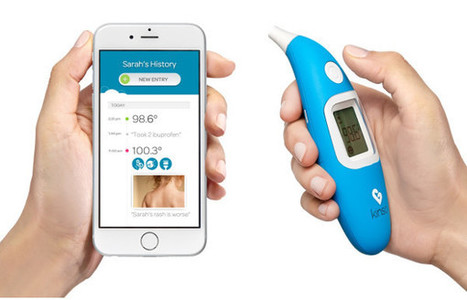
Le fabricant de thermomètre intelligent Kinsa lance un nouveau thermomètre médical connecté : le Smart Ear Thermometer.
Scoop.it!

L’Institut Curie lance la 3ème édition de la Marche des Lumières pour collecter des dons au profit de la recherche contre le cancer. Vous aussi participez !
Scoop.it!

Deuxième volet du baromètre sur la perception des pharmaciens sur les applications mobile avec Direct Medica, Le Moniteur des Pharmacies et Medappcare.
|