


Montana based biotech firm Blue Marble Biomaterials will develop “exclusive, novel natural ingredients” for flavors and fragrances giant Firmenich under a new exclusive partnership.


 Your new post is loading...
 Scoop.it!
Montana based biotech firm Blue Marble Biomaterials will develop “exclusive, novel natural ingredients” for flavors and fragrances giant Firmenich under a new exclusive partnership.

No comment yet.
Sign up to comment
Scoop.it!
Researchers are working on a way to create a battery inspired by the electric eel. This bio-compatible battery can be flexible, transparent and completel
Scoop.it!

Researchers at Cal Tech and KIT have developed thin-film solar cells that mimic the wings of the rose butterfly that gather light two times more efficiently than traditional solar cells; and a modular, all-in-one water sourcing and management system to help urban food producers collect, filter, store and distribute atmospheric moisture, inspired by cribellate orb weaver spider webs, has won the 2017 Biomimicry Global Design Challenge.
Scoop.it!

Continental's Bee Autonomous vehicle defines the future of commuting.
Scoop.it!

"A really weird, really tiny animal — the microscopic tardigrade — is the inspiration behind a new material that could improve the efficiency of things like LED lights to solar cells. The material under investigation is glass, and tardigrades (sometimes known as "water bears" or "moss piglets") know a thing or two about glass. These water-dwelling critters, which look like tiny blimps with pudgy bodies and eight stubby legs, are capable of shedding almost all of the water in their cells when exposed to extreme conditions, such as heat, cold or even the vacuum of space." Via Miguel Prazeres
Scoop.it!

Life is network based. Millions of years of evolution have allowed the natural world to develop what can be argued to be the most tried, tested and optimized protocols in existence: biological networks. The ability for Internet of Things (IoT) market stakeholders to interpret and effectively apply principles derived from the study of biological networks will lead to increased asset and resource productivity, as well as greater system resilience. Via Miguel Prazeres
Scoop.it!
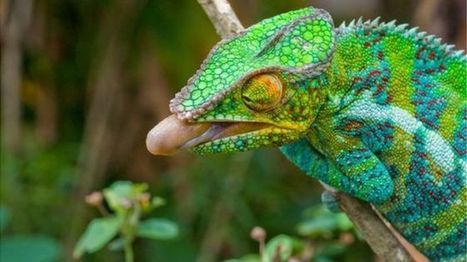
"Scientists have built a mathematical model to explain the secrets of the chameleon's extraordinary tongue. It took more than 20 equations to capture mathematically how the reptile's tongue unravels at very high speed to snare insects. The model explains the mechanics of the animal's tongue and the inherent energy build-up and rapid release. British researchers say the insights will be useful in biomimetics - copying from nature in engineering and design." Via Miguel Prazeres
Scoop.it!

A biological material that has existed for millions of years may find new applications in modern electronics. A team of scientists from UC Santa Cruz, the University of Washington, and the Benaroya Research Institute at Virginia Mason discovered that shark “jelly” is the highest proton conductive biological substance ever found, according to GizMag. In plain English, that means the material is extremely good at detecting weak electrical signals from great distances away — something that scientists and engineers believe could be useful in future sensor design. Via Miguel Prazeres
Scoop.it!

From
qz

2Protective clothing is critical to the health and safety of workers who handle hazardous chemicals. A new fabric coating promises to not only neutralize toxins, but also to heal tears and holes on its own while the clothes go through the laundry. The coating, developed by a team of researchers from Penn State and Drexel University, is derived from proteins that make up the rings of teeth on squid suckers." Via Miguel Prazeres
Scoop.it!

A tree's leaf, a blade of grass, a single algal cell: all make fuel from the simple combination of water, sunlight and carbon dioxide through photosynthesis. Now scientists say they have replicated—and improved on—that trick with their own “bionic leaf.” Via Miguel Prazeres
Scoop.it!

"Spider silk is well-known for its unusual combination of being both lightweight and extremely strong—in some cases, stronger than steel. Due to these properties, researchers have been developing spider-silk-inspired materials for potential applications such as durable yet lightweight clothing, bullet-proof vests, and parachutes. But so far, the acoustic properties of spider webs have not yet been explored. Now in a new study, a team of researchers from Italy, France and the UK has designed an acoustic metamaterial (which is a material made of periodically repeating structures) influenced by the intricate spider web architecture of the golden silk orb-weaver, also called the Nephila spider." Photo details: An orb-weaving spider (Nephila clavipes), by Ianaré Sévi [CC BY 3.0], via Wikimedia Commons. Via Miguel Prazeres
Scoop.it!
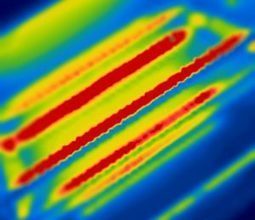
Like all injection molding processes, HARBEC heats solid plastic until it liquefies, presses the molten plastic into the cavity of a mold, and waits for the part to cool before ejecting it. This series of steps—melt, press, cool, eject—is called a cycle. When thousands or even millions of parts are being manufactured for a customer, the duration of each cycle is critical, and HARBEC knew that the cooling step was adding up to significant time and energy costs. Via Miguel Prazeres
Scoop.it!

"[The new] 454’s wheels feature a lumpy rim profile, called SawTooth, that Zipp claims delivers unrivaled stability in crosswinds while also improving aerodynamics. For the 454, Zipp looked to humpback whales and, specifically, the lumps on the leading edges of their pectoral fins. Called tubercles, these protrusions make humpbacks more agile by keeping water attached to their flippers when they turn. In the same way that a plane can stall when air separates from the wing during high-speed maneuvers, uncontrolled turbulence over a whale’s flipper makes turning more difficult. Tubercles keep the water attached as it flows past. Zipp says its SawTooth tubercles, which the company calls “Hyperfoils,” make deep-section rims more stable in crosswinds by forcing air to slip around and off the rims in a much more predictable manner. Via Miguel Prazeres
|
Scoop.it!

Sustainable isn’t a word often used to describe the cruise industry, but Peace Boat — an NGO working to promote peace, human rights, sustainable development and respect for the environment — has unveiled a new ship worthy of the descriptor. Designed in partnership with Oliver Design, Ecoship will aim to bring sustainability to the high seas starting in 2020.
Scoop.it!
What has always fascinated me about biologists is their tendency for keen observation. This ability to see beyond the obvious is the foundation for a successfu…
Scoop.it!

What is the framework by which to outline our values, structures, and behaviors regarding the ocean, fresh water, and all the benefits of natur
Scoop.it!

Filters can be found all around us, from our cars to our coffee makers. But they have one universal quality: they get clogged eventually. But a 3D printed solution could be just around the corner, as the Professor of Biology and ichthyologist Laurie Sanderson from the College of William and Mary has a patent pending for a bio-inspired alternative. Learning from the mouth structure of filter-feeding fish (using 3D printed models), she has developed a new mechanism that prevents filter clogging by trapping particles in vortices in the fluids. Via Miguel Prazeres
Scoop.it!

From
phys
Looking for skis to maximize the fun as you hurtle down the slopes? The ideal ski can withstand high levels of pressure in turns yet also be easy to maneuver. These two features usually require two different types of skis: the rigid skis preferred by expert skiers or the flexible ones that intermediate skiers opt for. But a new type of ski offers a two-in-one solution thanks to a design based on turtle scales. Via Miguel Prazeres
Scoop.it!
Comparable to some other animals on our planet, bats use other methods instead sight in order to navigate or hunt. They are able to “see” in the dark by sending out sound waves that bounce back to the bats’ ears from objects such as fruit on trees and flying insect prey. The echolocation or biosonar is currently a simpler way for robots to perceive shapes than pattern recognition programs and is much more applicable in areas without the needed light. Via Miguel Prazeres
Scoop.it!

"Coconut palms can grow as high as 30m, and when the ripe fruits fall to the ground their walls must protect them from splitting open. To protect the internal seed, coconuts have a structure of three layers which allow them to withstand heavy impacts. The university’s Plant Biomechanics Group believes this specialised structure could be applied in architecture, and has been working with civil engineers and material scientists to develop this idea as part of a programme called Biological Design and Integrative Structures. [...] The group found that the ladder-like design of vessels in the coconut’s inner endocarp layer “dissipates energy via crack deflection," meaning newly-developed cracks created by an impact don't run directly through the hard shell, but are diverted and stop before the crack separates the fruit. " Via Miguel Prazeres
Scoop.it!

From
phys
"IBM scientists have created randomly spiking neurons using phase-change materials to store and process data. This demonstration marks a significant step forward in the development of energy-efficient, ultra-dense integrated neuromorphic technologies for applications in cognitive computing. Inspired by the way the biological brain functions, scientists have theorized for decades that it should be possible to imitate the versatile computational capabilities of large populations of neurons. However, doing so at densities and with a power budget that would be comparable to those seen in biology has been a significant challenge, until now." Via Miguel Prazeres
Scoop.it!

"It only takes a brief journey down a B road during the summer months to end up with a car looking like it has driven through a plague of insects. Amplify this effect by the power of a space shuttle wingspan and bug remnants can result in a significant increase in drag. The problem is that when an insect hits an aircraft at speed its mass ruptures and undergoes some chemical changes which make it stickier. Flying through a swarm of insects leads to an accumulation of debris on the leading edge of wings which creates drag and increases fuel consumption. NASA researchers, in collaboration with engineers at Langley and Boeing, studied the microscopically-rough texture of lotus leaves in order to understand how the surface is so effective at repelling dirt, dust and water." Via Miguel Prazeres
Scoop.it!

"The team of architects Maryan Fazel and Belinda Ercan, from Iran and Germany, respectively, have won first prize in the competition for the design of the Moscow Circus School launched by the Architectural Competition Concours d’Architecture (AC-CA). Via Miguel Prazeres
Scoop.it!
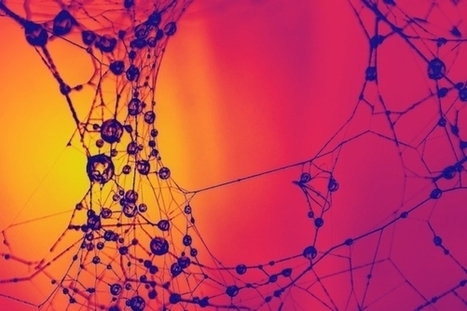
"A brain-inspired computing component provides the most faithful emulation yet of connections among neurons in the human brain, researchers say. The so-called memristor, an electrical component whose resistance relies on how much charge has passed through it in the past, mimics the way calcium ions behave at the junction between two neurons in the human brain, the study said. That junction is known as a synapse. The researchers said the new device could lead to significant advances in brain-inspired—or neuromorphic—computers, which could be much better at perceptual and learning tasks than traditional computers, as well as far more energy efficient." Via Miguel Prazeres
|





