Your new post is loading...

|
Scooped by
Georges-Edouard DIAS
January 6, 2018 1:58 PM
|
UTOPIANISM RESTS UPON a single, fundamental truth: that we can be better than we were before. But what if we can’t? What if we’re stuck in a loop, slave to new innovations that only amplify hate, human flaw, and social fragility? In the techno-dystopian wheelhouse that is Charlie Brooker’s darkly imaginative anthology series, Black Mirror, that is often the case at hand.
In Brooker’s inverted paradise, proximity comes at a price. What one is willing to give up for it—either to create the gulf or to clear it—is the source of all the sad chaos that outlines his futurescape. His stories are of a world in the throes of madness—be it dread brought on by devices that govern human emotion (“Nosedive”; “The Entire History of You”) or the mayhem that arises out of one’s inability to access, or sustain, a particular social standing (“The National Anthem”; “Shut Up and Dance”). What at first feels like a twisted fairytale slowly unravels into a vision of the quotidian, as if Brooker is saying: our emerging reality is much more unnerving than pure fiction.
For all its technological sprawl, Black Mirror is a show about the flesh and bone of human suffering: the different ways individuals hurt and grieve, the way human innovation expands the distance between people, communities, and ideologies. It’s not solely a matter of distance, but also of what one is willing to do to bridge that distance, that causes the series’ small, fertile tragedies. In some ways, this is Brooker’s central thesis. Humans get into trouble not when we make progress, but when we try to overcome humanity by treating emotion and spirit like science—the quest to articulate and optimize the ineffable.
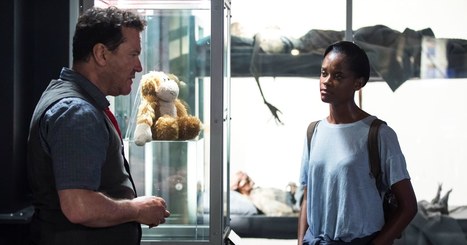
Black Mirror’s true utopianism, though, has always been presenting a fairly multicultural future without comment, and with “Black Museum,” season 4’s final episode, all of Brooker’s work—and the question of proximity—coalesces into one of his finest visual, narrative, and thematic treats yet. With even more daring, its ending invites a reading that’s not so obvious to everyone.
|
|
Scooped by
Georges-Edouard DIAS
January 4, 2018 5:57 AM
|
Elon Musk a des allures de Shiva des entrepreneurs : à la tête de SpaceX, Tesla, Neuralink, The Boring Project ou encore derrière l'idée de l'Hyperloop, le Néo-Américain est entré récemment dans le Top 10 des entrepreneurs les plus admirés chez l'oncle Sam.
En 2018, ce natif de Pretoria, en Afrique du Sud, devrait encore faire parler de lui avec deux lancements d'envergure. Dès ce mois-ci, avec le premier décollage de la Falcon Heavy . Du haut de ses 70 mètres et avec près de 64 tonnes de capacité, elle sera l'une des plus grosses fusées jamais lancées depuis 1972 et la fusée Saturne V, qui avait servi à la mission Apollo 11. Objectif : l'orbite martienne, avec à son bord une Tesla jouant « Space Oddity », le tube de David Bowie. Fantasque mais réaliste, le fondateur de PayPal a d'ores et déjà prévenu qu'un échec était à prévoir.
Des touristes sur la Lune
Mais le jeu en vaut la chandelle. D'ici à la fin de l'année, Elon Musk veut proposer, grâce à cette même fusée, son premier vol touristique dans l'espace. Direction la Lune, avec à bord deux passagers fortunés.
Dans le domaine spatial, SpaceX est devenu, en quinze ans d'existence, la première entreprise du secteur. Avec 18 lancers en 2017 dont 14 avec des fusées réutilisées, rien ne semble pouvoir arrêter le « serial entrepreneur », malgré ses rêves démesurés.
|
|
Scooped by
Georges-Edouard DIAS
January 3, 2018 6:08 PM
|
La Chine est sur le point de devenir un leader mondial du numérique, mais le développement de ce secteur est aussi générateur de risques dans ce pays.
L'économie numérique de la Chine a de plus en plus de poids. Elle représente 42% du commerce électronique mondial, les payements par téléphone mobile y sont 11 fois plus nombreux qu'aux Etats-Unis, et elle regrouperait le tiers des meilleures start-up high tech de la planète. Pourtant de nombreux défis l'attendent.
Elle va sûrement poursuivre les progrès dans cette voie grâce à son écosystème riche d'innovateurs, à l'Etat et aux régulateurs favorables à la technique et grâce à son immense marché.
Elle compte 731 millions d'utilisateurs d'internet, surpassant ainsi le nombre total d'internautes européens et américains.
Tous ces éléments laissent entrevoir une croissance rapide du marché de la technologie financière (FinTech) chinoise. Selon Goldman Sachs, entre 2016 et 2020, les payements électroniques par l'intermédiaire d'un tiers prestataire feront un bond de 1900 à 4600 milliards de dollars, le crédit accordé par des organismes non traditionnels passera de 156 à 764 milliards de dollars et le montant des actifs gérés en ligne passera de 8300 à 11900 milliards.
Par ailleurs la Chine accélère son investissement dans l'intelligence artificielle. Dans son rapport Artificial Intelligence : Implications for China , McKinsey estime que l'intelligence artificielle (AI) pourrait ajouter entre 0,8 et 1,4 point de pourcentage au taux de croissance du PIB chinois, en fonction du rythme de son adoption. Début décembre, Fei-Fei Li (elle est née en Chine), responsable scientifique du 'cloud computing' chez Google, a ouvert à Pékin un centre d'intelligence artificielle, Google AI China.
Néanmoins la Chine a encore un long chemin à parcourir. Selon une autre étude de McKinsey, Digital China : Powering the Economy to Global Competitiveness (La Chine numérique : préparer l'économie à la concurrence mondiale), la numérisation des USA est 4,9 fois supérieure à celle de la Chine.
|
|
Scooped by
Georges-Edouard DIAS
January 3, 2018 6:03 PM
|
Founders Fund, le fonds d'investissement en capital-risque de Peter Thiel, a acquis plus de 15 millions de dollars en bitcoin, a révélé mardi le « Wall Street Journal ».
Selon Bloomberg , le fonds d'investissement de Peter Thiel aurait commencé à investir dès 2012, quand le bitcoin commençait tout juste à être populaire. Il valait à l'époque moins de 13 dollars, et il cote aujourd'hui près de 15.000 dollars. La plus-value potentielle se compte donc en centaines de millions de dollars, mais on ne sait si l'entrepreneur américain, né en Allemagne, a vendu ses titres.
+1.000 dollars en deux heures
C'est la première fois qu'un investisseur d'envergure, figure de la Silicon Valley, se lance massivement et aussi tôt dans l'achat de bitcoins : peu d'investisseurs classiques l'ont fait dès le début.
L'annonce de cette nouvelle a fait réagir positivement le marché du bitcoin. Le cours de la cryptomonnaie s'est envolé hier, sa valeur gagnant en deux heures 1.000 dollars, passant de 14.000 à 15.000 dollars.
|
|
Scooped by
Georges-Edouard DIAS
December 31, 2017 8:56 AM
|
The subscription box industry seemed to hit fever pitch in 2017, with offerings for seemingly every product category. Here are three things retailers should keep in mind when entering the space.
No. 1: Market Share Battle
As more players enter the subscription box space, the market is becoming even more fragmented. In January 2017, the top 10 subscription sites represented 67% of traffic to Hitwise’s custom study of sites. By contrast, the top 10 players in January 2015 represented 83% of total visits, according to John Fetto, senior analyst at Hitwise. And in yet another sign that it’s getting harder to stand out and sustain consumers’ initial box enthusiasm, industrywide subscription sites traffic also has slowed, including a 3% drop in September.
No. 2: Data, Data, Data
One of the thrills of getting a subscription box is essentially liking some—if not all—of the contents within it. In fact, there’s nothing more frustrating than getting a box of things you don’t want or need. To achieve that level of personalization, data is essential. Just look at Stitch Fix. The online personal stylist clothing box service has posted operating income in each of the past three years. The number of its active clients has jumped nearly 10 times to 2.19 million as of July 29, with a repeat rate of 86%. The secret sauce behind that growth? Stitch Fix’s team of some 3,400 mostly part-time stylists and its team of over 75 data scientists who together study more than 85 meaningful data points its customers willingly provide to come up with the best personalized box offerings.
No. 3: A New Avenue
As many traditional brick-and-mortar retailers struggle with declining traffic and store closings, some brands have been expanding their own direct-to-consumer ecommerce sales. Recently, JCPenney—which is struggling amid a consumer shift away from mall shopping—teamed up with Bombfell, a men’s subscription box service, to offer curated boxes to its Big & Tall customers. Meanwhile, Hasbro Inc., maker of Monopoly and Cranium board games, became the first major toy company to enter the subscription box space and introduce its own game box. The move could not only help Hasbro increase sales—at a time when kids have many mobile gaming options—but also help the company lessen its dependence on the key holiday quarter.
|
|
Scooped by
Georges-Edouard DIAS
December 30, 2017 2:27 PM
|
Les analystes reprochent à l'iPhone X son prix élevé et l'absence de grande innovation technologique. - Ng Han Guan/AP/SIPA
Miné par son prix élevé et des innovations jugées mineures, le smartphone d'Apple devrait se vendre moins bien que prévu début 2018.
En cette période de Noël, Apple n'est pas à la fête. Après avoir placé de grands espoirs dans l'iPhone X, le dernier modèle du best-seller de la firme à la pomme, les investisseurs commencent en effet à douter.
Lundi, le quotidien taïwanais « Economic Daily News », cité par l'agence Bloomberg, affirmait qu'Apple allait réduire drastiquement ses prévisions de ventes d'iPhone X pour le premier trimestre : 30 millions d'unités seulement, contre 50 millions attendus jusqu'alors.
Selon le journal, le principal centre de fabrication de l'iPhone X à Zhengzhou, en Chine, enregistre d'ores et déjà une baisse d'activité et a cessé de recruter des travailleurs. Des informations qu'Apple refuse de commenter.
Mais plusieurs analystes ont également abaissé leurs projections de ventes d'iPhone X pour le premier trimestre de l'année prochaine, soulignant que les clients semblent rebutés par le prix élevé du smartphone . Mardi, l'action d'Apple perdait 2,8 % à l'ouverture de Wall Street, entraînant certains de ses fournisseurs (Broadcom, Skyworks, Micron...).
La veille, l'analyste de Sinolink Securities Co., Zhang Bin, expliquait dans un rapport, que les ventes de l'iPhone X au premier trimestre pourraient passer sous la barre des 35 millions, soit 10 millions de moins que ses précédentes estimations.
« Maintenant que la première vague de livraisons est passée, le prix élevé de l'iPhone X pourrait affaiblir la demande », précise l'analyste chinois, également inquiet de la lenteur de la production.
|
|
Scooped by
Georges-Edouard DIAS
December 26, 2017 5:59 PM
|
« Malgré quelques contretemps temporaires liés à la démonétisation de l'économie et l'introduction d'un nouvel impôt sur les biens et les services, l'économie indienne a rattrapé celles de la France et du Royaume-Uni et les aura dépassées toutes les deux en 2018 pour devenir la cinquième plus importante économie mondiale mesurée en dollar », a commenté Douglas McWilliams, vice-président du Cebr. En octobre, lors de la publication des perspectives économiques mondiales du Fonds monétaire international (FMI), ses économistes ont prévu une croissance de 7,4 % en Inde l'an prochain contre 1,2 % en France et 1,4 % outre-Manche. Avec cet écart de performance déjà constaté en 2017 et en 2016, le produit national brut (PNB) indien n'a cessé de gonfler. En 2015 (derniers chiffres disponibles), la Banque mondiale pointait un PNB indien à 2.088 milliards de dollars, juste derrière le Royaume-Uni (2.846 milliards) et la France (2.708 milliards).
Les Etats-Unis détrônés par la Chine
Selon les projections du Cebr, vers 2032, l'économie indienne devrait se hisser au troisième rang mondial. Entre-temps, la Chine aura détrôné les Etats-Unis en tant que première puissance économique mondiale. Le Japon et l'Allemagne occuperaient respectivement la quatrième et la cinquième place.
La France encore dans les dix premiers
L'économie française ferait encore partie des dix premiers de la classe, en neuvième position derrière le Brésil (sixième), le Royaume-Uni (septième) et la Corée du Sud (huitième). Le Canada et l'Italie, membres du G7, seraient relégués à la douzième et à la treizième place, et doublés par l'Indonésie. Comme le souligne le rapport, les économies asiatiques excellent avec les entrées attendues de Taïwan, de la Thailande, des Philippines et du Pakistan parmi les vingt premières économies de la planète.
|
|
Scooped by
Georges-Edouard DIAS
December 26, 2017 3:42 AM
|
What Google Said About Fred
Illyes was interviewed about Fred at Brighton SEO 2017. What follows is a transcript:
Interviewer: Let’s talk about Fred.
Gary Illyes: Who?
Interviewer: You are the person that created Fred. So Fred is basically an algo that…
Gary Illyes: It’s not one algo, it’s all the algos.
Interviewer: So you can confirm it’s not a single algo – it’s a whole umbrella of a bunch of different changes and updates that everyone has just kind of put under this umbrella of “Fred”.
Gary Illyes: Right, so the story behind Fred is that basically I’m an asshole on Twitter. And I’m also very sarcastic which is usually a very bad combination. And Barry Schwartz, because who else, was asking me about some update that we did to the search algorithm.
And I don’t know if you know, but in average we do three or two to three updates to the search algorithm, ranking algorithm every single day. So usually our response to Barry is that sure, it’s very likely there was an update. But that day I felt even more sarcastic than I actually am, and I had to tell him that.
Oh, he was begging me practically for a name for the algorithm or update, because he likes Panda or Penguin and what’s the new one. Pork, owl, shit like that. And I just told him that, you know what, from now on every single update that we make – unless we say otherwise – will be called Fred; every single one of them.
Interviewer: So now we’re in a perpetual state of Freds?
Gary Illyes: Correct. Basically every single update that we make is a Fred. I don’t like, or I was sarcastic because I don’t like that people are focusing on this.
Every single update that we make is around quality of the site or general quality, perceived quality of the site, content and the links or whatever. All these are in the Webmaster Guidelines. When there’s something that is not in line with our Webmaster Guidelines, or we change an algorithm that modifies the Webmaster Guidelines, then we update the Webmaster Guidelines as well.
Or we publish something like a Penguin algorithm, or work with journalists like you to publish, throw them something like they did with Panda.
Interviewer: So for all these one to two updates a day, when webmasters go on and see their rankings go up or down, how many of those changes are actually actionable? Can webmasters actually take something away from that, or is it just under the generic and for the quality of your site?
Gary Illyes: I would say that for the vast majority, and I’m talking about probably over 95%, 98% of the launches are not actionable for webmasters. And that’s because we may change, for example, which keywords from the page we pick up because we see, let’s say, that people in a certain region put up the content differently and we want to adapt to that.
[…]
Basically, if you publish high quality content that is highly cited on the Internet – and I’m not talking about just links, but also mentions on social networks and people talking about your branding, crap like that.
[audience laughter]
Then, I shouldn’t have said that right? Then you are doing great. And fluctuations will always happen to your traffic. We can’t help that; it would be really weird if there wasn’t fluctuation, because that would mean we don’t change, we don’t improve our search results anymore.
Note: This transcript has been lightly edited by author for clarity.
|
|
Scooped by
Georges-Edouard DIAS
December 22, 2017 1:53 PM
|
Online shopping won't grow forever, says Unibail boss creating malls giant
SYDNEY/PARIS (Reuters) - Online shopping has its limits and physical stores will never go out of fashion, says the CEO of Unibail-Rodamco which is betting $16 billion on buying Westfield to create a global mall giant.
The deal comes at a time when the traditional retail sector and shopping centers are under pressure to reinvent themselves in the face of fierce online competition led by Amazon.
However, Unibail-Rodamco Chief Executive Christophe Cuvillier predicted online shopping would peak at 20 percent of global retail spending, up from 8-10 percent now, although he did not give a timeframe.
“Internet will grow but internet cannot do everything. It’s very difficult to be profitable on the internet, particularly pure-play online retailers,” he told journalists on a call on Thursday.
"retailers need physical presence,” he added, noting that largely online companies like Apple, Nespresso, Tesla and even Amazon had opened bricks-and-mortar stores.
Franco-Dutch group Unibail’s planned acquisition of Westfield will create a stronger competitor for the world’s biggest commercial property owner Simon Property Group, one with 104 centers and more than 1.2 billion visitors a year.
The deal gives Europe-focused Unibail, which owns Les 4 Temps and Forum des Halles in Paris and has centers spreading from Helsinki to Valencia, exposure to Britain, the United States and Italy, countries where Westfield operates 35 malls.
The acquisition is part of Unibail’s strategy of increasingly focusing on high-end “destination” malls in landmark locations and Westfield would bring shopping centers in big cities like London, New York and San Francisco, which offer customers a wide range of restaurants, bars and entertainment.
Unibail could replicate some of Westfield’s services at its other centers around Europe, including staging events like concerts and hosting pop-up shops, according to a source familiar with the matter.
|
|
Scooped by
Georges-Edouard DIAS
December 22, 2017 1:37 PM
|
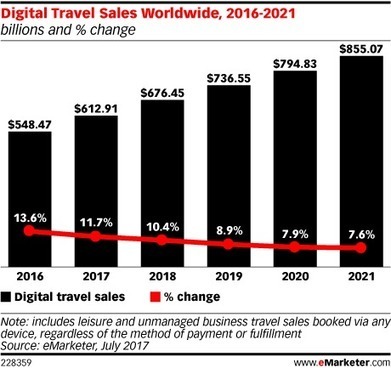
In terms of reach, TripAdvisor is the leading digital travel platform in most countries covered by eMarketer. Though predominantly a travel review site, TripAdvisor also offers metasearch services, making it an important tool for trip research and planning.
Meanwhile, interest in the sharing economy for accommodation services like Airbnb is growing, though most travelers worldwide have yet to use them. Sharing transportation services like Uber and other ride-hailing apps have made greater headway, partly due to their lower barrier to entry.
|
|
Scooped by
Georges-Edouard DIAS
December 22, 2017 1:26 PM
|
La cryptomonnaie est passée en dessous des 11.000 dollars ce vendredi sur certaines plateformes, alors qu'elle valait encore 18.000 dollars en début de semaine.
C'est un véritable krach. Le cours du bitcoin s'effondre ce vendredi partout dans le monde et vient de passer en dessous des 11.000 dollars sur certaines plateformes, notamment en Asie. Le 19 décembre, la monnaie virtuelle valait 18.000 dollars et les analystes la voyaient encore grimper à 20.000 dollars, avant qu'une première chute ne survienne.
Depuis ce matin, bitcoin a perdu plus de 5.000 dollars, soit une chute de 45 %, selon des données compilées par l'agence Bloomberg. A ce niveau, le bitcoin, qui a déjà connu quatre krachs depuis son lancement en 2009, retrouve sa valorisation du début du mois de décembre.
|
|
Scooped by
Georges-Edouard DIAS
December 22, 2017 11:52 AM
|
Who’s feeling lucky enough to replace him? Eric Schmidt is leaving his role as executive chairman for Alphabet, Google’s parent company, though he’ll remain on the board and serve as a technical adviser. Alphabet also owns YouTube, Nest and Waymo. Google was founded in 1998 and Schmidt joined as CEO in 2001, moving to head of Alphabet when the company was restructured in 2015. Aside from Schmidt saying “the time is right,” little’s been said about the reason for the change. Alphabet’s expected to replace him with a non-executive chair.
|
|
Scooped by
Georges-Edouard DIAS
December 20, 2017 5:26 PM
|
For many brands, whether direct-to-consumer online or brick-and-mortar retailers, Amazon is the Grinch that stole Christmas.
That’s because Amazon keeps eating chunks of whatever business it’s in. And this year, it has been using big shopping events such as American Thanksgiving through Cyber Monday, when it sold record amounts of its own-brand Alexa, Kindle and Fire brands—and they’re just the biggest of Amazon’s expanding family of private brands that it has produced and sells on its own channels.
Indeed, this entire holiday season is being used to boost its private label brands, stoking fears as it diverts consumers away from other brands much as Walmart, Target and other retailers are doing in their websites and stores.
Ever-savvier in self-promotion, Amazon is highlighting its fashion portal and exclusive apparel labels with a limited edition collaboration with Calvin Klein in a co-branded pop-up store in that’s running through the holiday season in New York until December 31st.
The growth of Amazon’s private labels may feel like a lump of coal in some brands’ stockings. Amazon has sold $300 million in private label goods so far this year, a 12% increase over 2016, according to a report by One Click Retail.
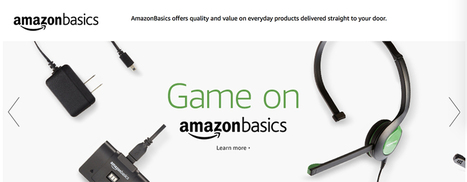
Its value-conscious AmazonBasics brand, which offers more than 1,500 products, accounted for nearly 85% of its private label sales so far in 2017, while its apparel and baby care brands are up 90% year-over-year vs. 2016.
While that’s a mere sliver of Amazon global sales, now closing in on $300 billion a year, with 20% annual growth—the company’s private label forays into all manner of new categories are keeping retailers and brands up at night.
AmazonBasics launched in 2009 primarily as an electronics category, selling phone-charging cables and the like, but it has since expanded to include many other types of “basics” for the home, ranging from bedding to knife sets.
Amazon quietly operates several dozen private label brands, including a women’s clothing line called Lark & Ro, which—despite being quietly introduced early last year—has generated about $5 million in sales this year, according to One Click. Oprah Winfrey even included a Lark & Ro cashmere sweater as her debut Amazon private-label fashion pick on her 2017 holiday “Favorite Things” shopping list on the site.
Other popular Amazon-owned brands: The Lovely Tote Co. (purses), The Fix (shoes and accessories), Amazon Elements (baby wipes, vitamins and supplements), and the Rivet line of home furnishings.
Amazon’s private label initiatives are extending abroad, as well, including to Europe this year, which now offers Mama Bear baby wipes and Presto! paper towels, and India, where its private label smartphones are competing with home-grown rival Flipkart.
None of that is to mention how Amazon is beginning to harness its acquisition of Whole Foods Markets this year and is gearing up sales of about 2,000 of the chain’s private-label 365 brand products.
The threat to brands from Amazon is so much bigger than from conventional competitors in part because Amazon has control over massive amounts of customer data and also an ability to eat profit losses for an extended period of time, according to Digiday.com.
“Right now, Amazon is throwing a lot at the wall to see what sticks,” Cooper Smith, the Amazon research lead at L2, told Digiday. “They haven’t taken a targeted approach to apparel yet, instead opting to test different things to see where they can compete and where they want to compete. If they put their mind to it, not only can they offer items at a huge discount to bigger player brands, but they can get things to market super quickly.”
Among fashion brands, one of the biggest concerns is that Amazon is tapping for its private labels some of the same suppliers used by the pricier marques whose goods Amazon also sells.
“The hot-button issue for fashion brands is private-label encroachment from Amazon brands,” Smith said. “Amazon is investing heavily in its private-label brands, and they’re working with a lot of the same suppliers who work with the fashion brands they sell.”
|
|
|
Scooped by
Georges-Edouard DIAS
January 4, 2018 5:57 AM
|
Amazon’s Alexa offers more than 25,000 skills—the set of actions that serve as applications for voice technology. Yet Domino’s is one of a relatively small number of brands that has seized the opportunity to enter your home by creating a skill of its own. Now that Amazon Echoes and Google Homes are in kitchens and living rooms across the country, they open a window into user behavior that marketers previously only dreamt of. But brands’ efforts to engage consumers directly via voice have been scattershot. The list of those that have tried is sparse: some banks; a couple of fast food chains; a few beauty companies; retailers here and there. Building a marketing plan for Alexa has been a risky venture. That’s because, when it comes to our virtual assistants, no one knows what the hell is going on.
But if 2017 was the year that Alexa hit the mainstream, 2018 will be the year that advertisers begin to take her seriously by investing time and money in figuring out how to make use of her. The shift toward a screenless, voice-first future has been slow and awkward. Without a playbook on how exactly to employ this technology, brands have been paralyzed. But the staying power of voice technologies is now universally accepted, and their ubiquity no longer belongs to a far-off future.
A few brands have already begun to infiltrate the space. On Alexa, you can order your regular Starbucks drink, call an Uber, or check the balance of your Capital One account. But soon competition will mount, the wheels will begin to turn, and the experimentation that’s already begun will spread, writ large, throughout the industry.
|
|
Scooped by
Georges-Edouard DIAS
January 4, 2018 5:57 AM
|
La star des cryptomonnaies, le Bitcoin, a volé de record en record en 2017, faisant craindre l'éclatement d'une « bulle spéculative ». Mais c'est une monnaie virtuelle plus discrète, le Ripple, qui a enregistré les meilleures performances l'an dernier, d'après le site américain Quartz .
La valeur de la devise virtuelle, aussi connue sous le nom de XRP, a augmenté d'environ 36.000 % en un an : alors qu'elle valait seulement 0,0064 dollars au 1er janvier 2017, elle vaut désormais 2,34 dollars.
En comparaison, un Bitcoin vaut considérablement plus qu'un Ripple (la devise virtuelle est allée jusqu'à frôler les 20.000 dollars en décembre) mais sa valeur n'a progressé « que » d'environ 1.400 % en un an.
|
|
Scooped by
Georges-Edouard DIAS
January 3, 2018 6:04 PM
|
Ant Financial fait les frais des tensions sino-américaines. Pékin réclame un « environnement équitable ».
Près d'un an après son offensive sur le marché américain du transfert d'argent , Alibaba jette l'éponge. Les autorités américaines se sont en effet opposées mardi au rachat de MoneyGram par Ant Financial, le bras financier du géant chinois du e-commerce.
Ant Financial et MoneyGram ont annoncé dans un communiqué commun qu'ils renonçaient à ce rapprochement à 1,2 milliard de dollars (près de 1 milliard d'euros), « faute d'avoir obtenu l'approbation obligatoire du Comité sur les investissements étrangers aux Etats-Unis (CFIUS) ».
Préoccupations pour la sécurité nationale
Ce dernier se prononce sur les opérations transfrontalières susceptibles de poser un risque pour la sécurité nationale. Selon des informations de presse, les autorités américaines auraient exprimé des inquiétudes sur la sécurité des données personnelles pouvant servir à identifier des citoyens américains ainsi que sur le contrôle des transactions vis-à-vis du blanchiment d'argent et du financement du terrorisme.
« Malgré nos efforts incessants pour travailler de manière constructive avec le gouvernement américain, il est maintenant devenu clair que le CFIUS n'autorisera pas cette fusion », a déclaré Alex Holmes, le directeur général de MoneyGram. Les deux groupes ont néanmoins dit vouloir poursuivre des « coopérations stratégiques », notamment sur divers marchés asiatiques.
|
|
Scooped by
Georges-Edouard DIAS
January 3, 2018 6:02 PM
|
Le groupe de Seattle a expédié en 2017 plus de 5 milliards de colis aux abonnés de son service Prime.
Comme les colis envoyés aux clients, le message est bien reçu par les acteurs de l'e-commerce. L'abonnement annuel et le nombre de livraisons illimité constituent la formule gagnante d'Amazon et de ses concurrents. Le géant de Seattle a révélé le 2 janvier avoir expédié « plus de 5 milliards de produits en 2017 avec Prime ». Le chiffre recouvre à la fois les abonnements pour une livraison le même jour, à J + 1 et à J + 2. Le communiqué publié indique qu'il y a eu l'an passé plus de nouveaux abonnés à Prime que les années précédentes. Le PDG, Jeff Bezos, a évoqué « des dizaines de millions » de nouveaux souscripteurs.
100 millions de références
Le service, qui coûte 99 dollars par an aux Etats-Unis et 49 euros en France, a été étendu au Mexique, aux Pays-Bas, au Luxembourg et à Singapour. Il dessert désormais 16 pays. Selon une estimation du Consumer Intelligence Research Partners publié mi-2017, Amazon comptait 85 millions d'abonnés Prime outre-Atlantique en 2016, en hausse de 35 % par rapport à 2015. Pour nourrir cette progression, le cybermarchand a étendu l'offre accessible aux livraisons couvertes par Prime. Plus de 100 millions de références sont disponibles à J + 2, contre 50 millions auparavant. Le service en un jour ou le jour même est rendu dans 8.000 villes américaines et la livraison en deux heures dans 30 grandes agglomérations.
|
|
Scooped by
Georges-Edouard DIAS
December 31, 2017 8:53 AM
|
Un Siri pour mieux collaborer au sein du groupe.
« Il est temps de réinventer la façon dont nous travaillons ensemble » dixit Arthur Sadoun, nouveau président de Publicis Groupe. Partant de ce désir, Publicis Groupe a annoncé mardi 20 juin, l’arrivée prochaine d’une plateforme basée sur l’intelligence artificielle et le machine learning. Baptisée Marcel en l’honneur de Marcel Bleustein Blanchet, fondateur de Publicis, ce nouvel assistant vocal va permettre aux 80 000 employés du groupe de mieux collaborer, d’identifier les tendances porteuses et les experts référents dans les entités de ce groupe présent dans 130 pays. Cette technologie élaborée par Sapient, un réseau racheté en 2015 par Publicis Groupes, aura pour but d’accélérer la transformation digitale des annonceurs à travers le monde, « Marcel est une autre étape importante dans notre ambition pour devenir une plateforme au service de nos clients » précise Arthur Sadoun.
Ce projet inédit à cette échelle confirme la volonté de Publicis Groupe de servir ses clients grâce à des moyens créatifs mais aussi technologiques, plus personnalisés et autonomes. Celle-ci s’inscrit d’ailleurs dans la vision que Maurice Levy, ancien PDG de Publicis Groupe a mis en place en 2015 : Power Of One – toutes les capacités de Publicis Groupe à la portée de chacun de ses clients de façon simple, souple et efficace. La 1ère version opérationnelle de Marcel est annoncée pour l’édition 2018 de Viva Technology.
|
|
Scooped by
Georges-Edouard DIAS
December 30, 2017 2:24 PM
|
“2017 has been an amazing year for robotics,” says roboticist Sebastian Thrun, a pioneer of the self-driving car. “Why 2017? Why did it take us so long?”
Well, it was a confluence of factors, namely the cheapening of sophisticated hardware combined with better brains. “In the past, in robotics we had not-so-smart software with hardware that would break all the time, and that's not a good product," Thrun says. "It's only recently that both computers have become smart enough and that robot hardware has become reliable enough that the very first products start to emerge.”
Perhaps the biggest leap in hardware has been sensor technology. To build a robot you don’t have to babysit, you need it to sense its environment, and to sense its environment it needs a range of sensors. Not just with cameras, but with lasers that build a 3-D map of the robot’s surroundings. These kinds of components have gotten both far more powerful and far cheaper.
“I kind of talk about this finally being the golden age of robotics, and that means that for the first time in the last 12 months or so you see robots really becoming prolific,” says Ben Wolff, CEO of Sarcos Robotics, which makes the most bonkers robot arms you’ve ever seen. “And I think it's because we're finally at that crossover point, where the cost has come down of components while the capability of the components has increased sufficiently.”
|
|
Scooped by
Georges-Edouard DIAS
December 26, 2017 5:57 PM
|
How exactly will ads be served to consumers using such services?
New data from Invoca might provide some insight into the answer.
The call tracking and analytics firm surveyed US voice-enabled speaker owners, asking them what factors would make them willing to listen to ads delivered through their devices.
Three in 10 said they would entertain ads via voice assistants if they were simply asked if they wanted to hear one before it played. In addition, 28% were open to ads if they got to choose the brands doing the advertising.
|
|
Scooped by
Georges-Edouard DIAS
December 25, 2017 6:42 PM
|
A YEAR AGO, Chinese smartphone maker Xiaomi (sha-oh-me) had fallen from the world’s most valuable unicorn to a “unicorpse.” Sales plunged in 2016, pushing the company from first to fifth place among China’s smartphone makers. No firm had ever come back from a wound that severe in the trench warfare of the global smartphone business.
Today, Xiaomi is being called a “Chinese phoenix.” The company has grown so fast in the past year that research firm Strategy Analytics says Xiaomi could overtake Oppo, Huawei, and Apple in the next year to become the world’s second-largest smartphone vendor, behind Samsung. Executives are reportedly considering an IPO in 2018, which could be among the highest-valued ever.
The comeback has made Xiaomi a poster child for China’s entrepreneurial dynamism. More than 10,000 new businesses are started every day in China — that’s seven Chinese startups born each minute. In the US, by contrast, startup formation has fallen 36 percent in the last 10 years, to roughly 1,000 per day. No longer a nation of “copycats,” China today leads the US in key technology sectors such as mobile payments, and is increasingly competitive in advanced microchips, and artificial intelligence. Xiaomi is one of the best exemplars of this entrepreneurial vigor.
What accounts for the company’s unprecedented turnaround? Is Xiaomi’s renewed success sustainable, or will it wither under the relentless margin pressures of the phone business? And can Xiaomi do what no homegrown Chinese phone maker has done — successfully crack the US market?
To find the answers to these questions, we have to go back to Xiaomi’s 2015-2016 debacle, which saw smartphone sales decline to a rumored 41 million in 2016, from a reported 70 million a year earlier. Xiaomi’s billionaire founder Lei Jun — sometimes called “the Steve Jobs of China” — blamed the slump on supply-chain problems associated with the company’s rapid growth. This forced Xiaomi to retreat from several overseas markets, including Brazil and Indonesia. There were organizational problems as well, prompting the restructuring of the smartphone hardware, R&D, supply chain, and quality-management teams. But perhaps the biggest source of Xiaomi’s troubles was its exclusive reliance on online sales, which left it unable to reach millions of less tech-savvy customers in China’s smaller cities and rural areas. Rivals Oppo and Vivo capitalized on Xiaomi’s absence by cementing sales partnerships with retailers in those areas.
In a classic case of “turning a bad thing into a good thing,” however, Xiaomi used its near-fatal stumble to fashion a radical new business model. With sales rebounding, and the company expanding globally, it’s worth examining the inner workings of that unusual model, and how it helped to power the company’s remarkable resurgence.
|
|
Scooped by
Georges-Edouard DIAS
December 22, 2017 1:48 PM
|
Le groupe avait déjà levé plus de 5,5 milliards de dollars en avril. En faisant alors la start-up la mieux valorisée d'Asie.
Parée à conquérir l'Europe, Didi Chuxing, principale application chinoise de réservation de véhicules avec chauffeur, fait le plein. La société a ainsi annoncé avoir levé plus de 4 milliards de dollars pour financer son expansion après s'être lancée notamment à Paris ou à Londres en annonçant un partenariat avec l'estonien Taxify.
Didi, qui avait forcé en 2016 son concurrent américain Uber à mettre un genou à terre en rachetant ses activités en Chine, avait déjà levé en avril plus de 5,5 milliards de dollars. Ce qui en avait fait la start-up la mieux valorisée d'Asie.
Intelligence artificielle et voitures connectées
Créée à Pékin en 2012, l'application de réservation de taxi a déjà largement tissé sa toile en Chine. La nouvelle levée de fonds servira donc à financer son expansion mais pas seulement. Didi veut accélérer dans l'intelligence artificielle et dans le développement de réseaux de recharge de véhicules électriques ainsi qu'à l'international.
En mars, Didi a ouvert dans la Silicon Valley, sur les terres d'Uber, un laboratoire de recherche consacré aux applications de l'intelligence artificielle à la conduite autonome.
En octobre, la société a conclu un accord avec le constructeur suédois de voitures électriques Nevs (ex-Saab, passé sous pavillon chinois) afin de mettre au point un modèle optimisé pour les flottes de véhicules de transport avec chauffeur (VTC). Didi n'a pas précisé quelles entités avaient participé à la nouvelle levée de fonds, indiquant seulement qu'il s'agit « d'institutions chinoises et étrangères ».
|
|
Scooped by
Georges-Edouard DIAS
December 22, 2017 1:30 PM
|
Le gouvernement vient de rafraichir le site France.fr. Avec l’aide de cette vitrine de l’art de vivre à la française, le ministère de l’Europe et des Affaires étrangères et Atout France, agence en charge de la promotion du tourisme vers la France, espèrent accueillir 100 millions de touristes en France d’ici 2020.
2 millions ont été investis pour promouvoir les atouts touristiques de l’Hexagone. Le site a été créé en 2015 par Laurent Fabius, alors ministre des Affaires étrangères chargé du dossier du Tourisme, afin de remplacer la plateforme rendezvousenfrance.com. Au cours du premier trimestre 2018, les contenus du site seront traduits en 14 langues, dont le chinois, le russe, le suédois ou encore le coréen.
|
|
Scooped by
Georges-Edouard DIAS
December 22, 2017 12:56 PM
|
La banque d'affaires américaine est en train de mettre sur pied une équipe dédiée aux cryptomonnaies. Elle devrait être opérationnelle d'ici à juin 2018, selon Bloomberg.
Ce n'est plus qu'une question de mois. La banque américaine Goldman Sachs, réputée pour son ingéniosité financière, est en train de mettre en place une équipe dédiée à l'achat et à la vente de cryptomonnaies, notamment le bitcoin, selon une information de Bloomberg.
La banque dirigée par Lloyd Blankfein se donne six mois pour rendre l'équipe de traders officiellement opérationnelle - soit d'ici à juin 2018 -, même si son lancement pourrait intervenir un peu avant. « Nous explorons la meilleure façon de servir nos clients », a déclaré jeudi Michael DuVally, un porte-parole de la banque new-yorkaise.
|
|
Scooped by
Georges-Edouard DIAS
December 20, 2017 5:28 PM
|
Brands choose to interrupt and buy attention vs. create content that’s good enough to earn attention. Brands have used middlemen in the process of connecting the brand and its content—say a banner ad—to the consumer. The industry has become bloated with more and more middlemen that take a large slice in between and perform some function.
The advertising industry looks at the blockchain’s ability to create an immutable audit trail and says, “This is what we need now so we can have more transparency in the industry and understand where our money goes and what happens between us and the user.” Organizations like Mad Network are exploring this area.
One version of the future is that the advertising industry will try to use the blockchain to remove fraud and end up with a solution to a problem that no longer exists—the traditional advertising architecture will simply become irrelevant, because it will all be blocked by a browser like Brave in the end.
|