Your new post is loading...

|
Scooped by
Georges-Edouard DIAS
July 27, 2018 6:27 PM
|
According to eMarketer forecasts, the gap between US first-party sales on Amazon and third-party sales is widening. In 2017, direct sales grew 20.9% to reach $70.40 billion. By 2019, that total will climb to $95.08 billion. By comparison, marketplace sales jumped 41.4% to $129.45 billion last year. And marketplace sales are expected to log growth topping 30% this year and next.
Amazon is famously close-mouthed about the performance of many of its units, and marketplace sales is no exception. In his annual letter to shareholders in April 2018, founder Jeff Bezos said that more than 300,000 small businesses in the US started selling on Amazon in 2017. He added that customers worldwide ordered more than 40 million items from marketplace sellers on Prime Day 2017, a 60% increase over Prime Day 2016.
Digital shoppers like marketplaces because they can buy from multiple brands with one transaction. There is also a perception that marketplaces have better prices because of the ability to comparison shop. According to "The eMarketer Ecommerce Insights Survey," conducted in June 2018 by Bizrate Insights, 41.5% of US internet users had purchased via an online marketplace in the past 30 days.
|
|
Scooped by
Georges-Edouard DIAS
July 26, 2018 4:50 AM
|
Gillian Hayes, a professor who works on human-computer interaction at University of California at Irvine, said the Plataine project and plugging Google’s AI services into Glass play to the strengths of the controversial hardware. Hayes previously had tested the consumer version of the app as a way to help autistic people navigate social situations. “Spaces like manufacturing floors, where there’s no social norm saying it’s not OK to use this, are the spaces where I think it will do really well,” she added.
Improvements to voice interfaces and image recognition since Glass first appeared—and disappeared—could help give the device a second wind. “Image and voice recognition technology getting better will make wearable devices more functional,” Hayes said.
|
|
Scooped by
Georges-Edouard DIAS
July 25, 2018 1:03 PM
|
Le nombre de trajets des nouveaux clients a augmenté de 15 % depuis qu'ils ont le choix entre le vélo électrique et la voiture dans leur application Uber. Le nombre de courses avec chauffeur a, en revanche, reculé de 10 %, et même de 15 % pendant les heures de pointe.
« Ce partenariat (avec Jump, NDLR) a un impact positif sur les villes, notamment en matière de bouchons et d'émissions de carbone », se réjouit Andrew Salzberg, en charge du programme de recherche sur les transports chez le géant des VTC.
Satisfait de son programme pilote à San Francisco, Uber a fait l'acquisition de la start-up de vélos électriques en avril pour un montant estimé à 200 millions de dollars, selon une source citée par Techcrunch .
Il reste cependant à voir si l'exemple de la ville de la Silicon Valley se vérifiera sur la longue durée et, surtout, si ces résultats se reproduiront dans les autres villes où Jump est disponible (Austin, Chicago, Washington, Santa Cruz, Sacramento, Providence et bientôt New York).
Uber mise aussi sur les trottinettes
Soucieux de conserver une longueur d'avance dans la bataille de la mobilité urbaine, Uber a également investi dans la start-up Lime , présente dans 70 villes, dont Paris depuis la fin juin .
En un an d'existence, cette jeune pousse valorisée 1,1 milliard de dollars assure avoir déjà enregistré 6 millions de trajets avec ses vélos et trottinettes électriques en free floating (libre service sans bornes). Dans son premier rapport annuel , Lime estime qu'utiliser ses véhicules en complément des transports en commun coûte 80 % moins cher en moyenne que de posséder sa propre voiture
|
|
Scooped by
Georges-Edouard DIAS
July 25, 2018 12:50 PM
|
The aviation industry is already deep into the challenge. In May, Boeing-owned Aurora Flight Sciences’s unmanned cargo delivery system, installed in an old Bell UH-1H helicopter, completed the first autonomous mission, bringing gas, water, and medical supplies to Marines in California. Lockheed Martin has been developing its K-MAX unmanned helicopter since 2007, beginning with remote-controlled and semi-autonomous versions that made supply deliveries in Afghanistan between 2011 and 2014.
Sikorsky’s version is the Matrix Technology system, which it’s been testing since 2013 aboard the Sikorsky Autonomy Research Aircraft (SARA) testbed that Ward pilots, an adapted version of the company’s S-76 commercial helicopter. Its most basic functionality includes flying traffic patterns around airports and tracking moving objects on the water for approaches and landings.
More impressively, SARA has completed a 30-mile autonomous flight with takeoff, cruise, and landing—including landing-site evaluation and selection—all done by computer. That was enough to get it to the final phase of Darpa’s Aircrew Labor In-Cockpit Automation System (ALIAS) program, which seeks a system that will reduce crew requirements for existing aircraft. The company is also in the process of modifying two UH-60 Black Hawk helicopters with Matrix, to offer the Army “optionally-piloted” options for the aircraft. It will demonstrate these over the coming year.
|
|
Scooped by
Georges-Edouard DIAS
July 25, 2018 12:45 PM
|
Digital has offered great opportunity, but also great challenges. A few years ago, Scott Brinker (creator of the chief marketing technologist blog) described technology growth as exponential while organisational change remained logarithmic.
In simple terms, this means that technology development occurs faster than we can implement it. Organisations simply cannot change their processes or culture fast enough to take on the benefits of new technology.
The more brands’ technology stacks expand, the more people become involved in purchase decisions. Marketers have an incredible selection of channels and tools available to them but can they take advantage of them? Their companies aren’t set up to make the best use of them, nor do marketers themselves have the skills to use them. Ninety-five per cent of marketing leaders report being negatively impacted by the lack of qualified talent in the digital marketing space, according to data from TEKsystems Digital.
So while opportunities presented by new channels and real-time technology have defined the past decade, it appears that marketers and their brands have not adapted fast enough to fully benefit.
Scale vs consolidation of power
The growth in digital media and automation offers scale and growth but the rise of GAFA (Google, Apple, Facebook, Amazon) has consolidated immense scale and power in a few companies. These companies control the majority of advertising spend and eyeballs, and have immense data on consumers. Google and Facebook alone collected 63% of all US advertising spend in 2017. Marketers have access to a global audience in a way that would have been impossible just a decade before, but the relationship with them is often held by GAFA. This means marketers are at risk of losing their connection to the audience on these platforms when an algorithm is changed. In February this year, publisher LittleThings shut down just weeks after Facebook implemented a news feed change, citing lost visibility for its content.
For marketers, GAFA offer targeted advertising and audience profiling at a scale never seen before, but the flipside of this is that the access to this audience and the tools involved are owned by just a few, increasingly powerful organisations.
Media reach vs social reach
As Google, Amazon and Facebook have achieved such enormous global scale, our relationship with information has also changed. Consumers no longer look only to traditional media sources for their information. Huge numbers absorb information through Twitter and Facebook rather than The Times or The Mirror.
While the term ‘social influencer’ might make you cringe and think of pouting Instagram models, it’s big business. Digital influencers represented the largest majority group that brands have worked with for endorsement and commercial opportunities in 2017, according to Celebrity Intelligence’s Age of Influence report. For every £1 spent on a talent-led campaign, brands are getting an average of £17.21 back, meaning it’s an ROI that seems more attractive than many traditional advertising options.
Will contradictions and complications define the next decade of marketing? In a world where nothing stays the same, we have to embrace the hope that it will get better.
However, although new types of information and influencer may give marketers more ways to reach consumers than ever before, consumer trust is declining. Outside of a traditional media environment, attention-grabbing, shareable content can work better than accurate or unbiased information.
While media brands are legally responsible for their content, the unregulated social space has allowed fake news to thrive. Seventy-nine per cent of respondents to a Morning Consult study admitted they had at least once started to read a story before realising it was fake news.
In some senses, fake news is a triumph of marketing over facts. Fake news works on the principle that people are more engaged by an emotional message they want to believe than anything else. But it’s also unregulated, often untrue and damages consumer trust in what they see online, which is bad news for marketers.
Audience vs context
Let’s not forget programmatic buying and automation. Again, an enormous contradiction for marketers. The promise of programmatic is the ability to scale your advertising and find the right audience, wherever they may be. It focuses on finding the right people but not on the context of the information.
Although marketers have benefitted enormously from automation, the brand safety issues seen over the past couple of years show that context still matters. Hamish Nicklin, chief revenue officer at The Guardian, gave me the best example of the value of context a couple of years ago at an event: he joked that if Rolex just wanted eyeballs, it should probably advertise in a man’s urinal in a bar in The City of London.
Of course, Nicklin continued, Rolex would never do this because the context is so wrong. Rolex needs context to maintain its luxury positioning. It can’t be seen advertising in a urinal, regardless of the volume of affluent men it might reach. His point was that context always matters.
Personal vs personalisation
As technology allows for greater personalisation, this offers an opportunity for one-to-one relationships. In its purest form, personalisation is about opening up customer-centric conversations. Nearly half of those in the millennial age group expect to see brands present customised offers for them; the figure is nearly a third for UK adults as a whole, according to American Express research.
However, the contradiction here is that consumers are not consistent. They want personalisation when it improves the experience for them, but should it only benefit marketers they have little interest. As many as 63% said they wanted to see less targeted advertising in the future in a recent Reuters survey, while just 9% wanted more.
Will contradictions and complications define the next decade of marketing? The great American journalist Sydney J Harris said: “Our dilemma is that we hate change and love it at the same time; what we really want is for things to remain the same but get better.” In a world where nothing stays the same, we have to embrace the hope that it will get better.
|
|
Scooped by
Georges-Edouard DIAS
July 25, 2018 12:32 PM
|
Le géant de la grande distribution promet déjà une énergie garantie « verte » et « la moins chère du marché ».
Leclerc est-il en mesure de venir bouleverser le marché de la distribution d'électricité ? A en croire son patron, Michel-Edouard Leclerc, oui. Sur son blog personnel « De quoi je me mel », le dirigeant confirme, ce lundi, que l'enseigne « se lance bien dans l'énergie aux particuliers ».
Son offre sera « verte » et « la moins chère du marché, y compris par rapport à celle des nouveaux arrivants » et devrait permettre de créer jusqu'à « 200 emplois nets en France », promet-il déjà. Sans entrer dans les détails, présentés officiellement en septembre, il annonce viser « trois millions de clients d'ici 2025, soit 10 % du marché ».
« Dans le paysage énergétique actuel, c'est une vraie interpellation », constate Myriam Maestroni, fondatrice de la plateforme « payermoinscherlenergie.fr » Selon elle, « Leclerc arrive au bon moment. Les clients sont plus ouverts aux nouvelles offres. »
|
|
Scooped by
Georges-Edouard DIAS
July 25, 2018 9:42 AM
|
Here's what seven experts have to say about Alphabet shares hitting all-time highs
16 Hours Ago | 02:34
Wall Street is buzzing over Alphabet’s blowout June quarter financial results.
Analysts are growing more confident over the prospects for many of Alphabet’s emerging businesses, including YouTube, autonomous cars and cloud computing.
The internet giant reported better-than-expected second-quarter earnings Monday. It posted adjusted earnings per share of $11.75 versus the Wall Street consensus of $9.59 for the quarter.
Alphabet shares closed up 3.9 percent Tuesday, after hitting a new all-time high earlier in the day.
J.P. Morgan reiterated its overweight rating for Alphabet shares, citing the firm’s optimism over the company’s artificial intelligence prowess.
“Alphabet delivered strong top line results, again proving that its increased investments are paying off,” J.P. Morgan analyst Doug Anmuth said in a note to clients Tuesday. “Investments in machine learning & AI are driving innovation throughout Alphabet’s businesses, including mobile search, cloud, Google Home, Assistant, Waymo, etc.”
|
|
Scooped by
Georges-Edouard DIAS
July 24, 2018 4:33 AM
|
L’Oréal CMO Stéphane Bérubé is the perhaps the most notable marketer to go public within the pages of Marketing Week. Who can forget his fabulous interview last year where proclaimed “we need to stop talking about digital – it’s all part of marketing”.
There is increasing evidence that Bérubé is at the vanguard of a shift towards common sense and a more nuanced view of marketing.
As another example, after an astonishing rise in popularity, Google Trends now shows a drop in interest in digital marketing for the first time in this country. If Google is to be believed we reached “peak-digital” at the end of 2017 and it’s been declining ever since. A trend that is also born out in American data too.
There are, lest we forget, three very good reasons why the term digital marketing should and eventually will disappear up its own ISDN slot.
Everything is digital
The whole notion of using the prefix ‘digital’ is entirely nonsensical if you stop and think about it for more than about thirty seconds. When I get to my class on marketing communications I always begin by asking my students to give me the names of non-digital tools to help frame the difference. And as they volunteer the usual suspects I let the mental marketing samurai that lurks within loose for a few violent seconds and cut their suggestions to tatters.
“Newspapers” some poor bastard in the front row ventures and I pounce! More than a third of the circulation revenues for The New York Times and almost half of its advertising income now derive from its digital editions.
The newspaper’s digital paywall business is growing as fast as Facebook and faster than Google. Sounds pretty digital to me.
“Outdoor” another hopeless lemming shouts out. Over half of all British outdoor advertising is now digital making out of home literally more digital than traditional.
So is radio, which, as of Q1 this year, saw digital platforms deliver more listened minutes than traditional broadcast in this country for the first time. TV broadcasts have been 100% digital since 2012.
Nicholas Negroponte, another MIT all-star, predicted all this 20 years ago. “Like air and drinking water,” he told a sceptical Wired magazine in 1998, “being digital will be noticed only by its absence, not its presence”.
It was the late great Douglas Adams who described Negroponte as someone who “writes about the future with the authority of someone who has spent a great deal of time there”. So perhaps no-one should be surprised that his prediction is becoming business reality before our eyes.
|
|
Scooped by
Georges-Edouard DIAS
July 24, 2018 4:28 AM
|
Unilever CEO: Brands are stupid not to be forerunners on purpose
The FMCG giant’s Q2 results are down year on year but Polman says innovation, investing in premium business and direct to consumer are all factors in why the company is “on track”.
Unilever CEO, Paul Polman, says that businesses would be “stupid” not to lead on purpose-driven products and campaigns and those who don’t “won’t make it”.
Speaking on a media call this morning (19 July) following the company’s quarterly results, he explained: “In all our launches purpose is becoming more important. If you look at plastics, consumers led that. You would be stupid to not be a forerunner [on the need to be responsible].
“If you’re not a desired employer brand or your employees are unhappy and your innovations aren’t relevant you won’t make it.”
He was also adamant that sustainability would stay at the core of the business, no matter who his successor is, adding: “It’s bigger than one person. It’s so ingrained in our business model now.”
Polman cited a waterless toilet cleaner and a growing vegan ice cream business as innovations that are responding to consumer-led trends on health and climate change.
The FMCG giant reported lacklustre results with a fall in pre-tax profits for the first half of 2018 to €3.2bn (£2.85bn), down from €3.3bn (£2.94bn) for the same period in 2017.
Polman said the business has driven growth through a mixture of “strong innovation”, selling its spreads business and investing in beauty and personal care. Unilever will continue to focus on its “prestige” businesses, especially in personal beauty and skincare, and will continue to follow trends in organic, vegan and ‘natural’ products.
Premium beauty in particular is driving growth, with Polman saying he is pleased with acquisitions in this area and development of brands such as Hourglass, REN and Dermologica.
He explained: “We have built quite quickly a formidable beauty and personal care business from €12bn to €22bn a lot of which has been organic and prestige brands. These brands will de facto stay smaller so you need multiple, but they are an important drivers of business.”
The threat of direct to consumer
Taking a question from Marketing Week on Unilever’s approach to direct-to-consumer, Polman said: “Every shopping journey now has a digital component. If you look at ecommerce, we have grown that at a 60% to 70% rate, well ever the 30% to 40% rate that the trend is growing.”
The company acquired direct-to-consumer shaving brand Dollar Shave Club in 2016, which launched in the UK this year.
“We’ve learnt a lot from Dollar Shave Club. We’ve been able to take that knowledge and expand it to other parts of the business like our premium tea business, T2,” Polman added.
He added direct-to-consumer worked well for “prestige business” such as beauty and health and although it is growing direct-to-consumer it is only doing so “where it’s sensible will always have it next to our other channels.”
Polman also noted: “The company is changing our innovation programmes quite significantly with bigger global innovations as well as putting out local innovation such as our premium shower gels.”
He also explained that Unilever is digitising operation model and “embracing AI to engage with consumers”. The company uses Amazon Alexa to give recipes for its cooking products and instructions.
|
|
Scooped by
Georges-Edouard DIAS
July 12, 2018 4:04 AM
|
They also want AI to be more human-like, according to a May 2018 Capgemini survey of internet users worldwide. Nearly two-thirds (64%) of respondents expressed this sentiment, though slightly more (66%) wanted to be made aware that they were having AI-enabled interactions. It appears consumers want AI to be human enough to provide genuine help without treading into "uncanny valley" territory.
Levels of comfort with AI correlated to those who are “AI-aware”: the 73% of internet users who said they were aware that they had interacted with a chatbot or virtual assistant via a smartphone or speaker. When asked about a hypothetical scenario about car shopping using a virtual assistant to provide financing options based on criteria like credit history and income, 51% of AI-aware consumers would be fine with this, compared with 44% overall.
Not surprisingly, consumers had higher preference for human interaction over an AI interaction when making a high-consideration purchase. Nearly half would want to interact only with a human when buying something expensive like a home or an item with emotional significance like a wedding ring, while fewer (30%) had this preference when purchasing something more mundane like toothpaste. A mix of human and AI help was preferred for both purchase types, with a majority (54%) liking this hybrid for low-consideration items.
|
|
Scooped by
Georges-Edouard DIAS
July 12, 2018 3:37 AM
|
Les deux entreprises viennent d'annoncer leur fusion, leur permettant de devenir le leader européen de la prise de rendez-vous médicaux en ligne.
Mariage estival dans l'e-santé ! L'entreprise franco-allemande « Doctolib » vient d'acquérir son principal concurrent, la start-up française « MonDocteur », jusqu'ici détenue par ses trois fondateurs et Lagardère Active. Grâce à cette fusion, les deux sociétés deviennent ainsi le service de prise de rendez-vous médicaux en ligne leader en Europe.
Ce qui, en chiffre, se traduit par près de vingt millions de visites de patients chaque mois et 55.000 praticiens utilisateurs. Et avec cette acquisition, la croissance déjà exponentielle de « Doctolib » ne devrait pas faiblir.
L'objectif d'ici la fin de l'année est d'atteindre 80.000 professionnels de santé inscrits en France et en Allemagne. Car c'est bien là le nerf de la guerre. Pour améliorer son service et élargir son offre, « Doctolib » a besoin de capter de plus en plus de praticiens, et notamment dans les hôpitaux publics. Pour l'instant, seuls l'APHP, le CHU de Rouen et celui de Nancy sont partenaires de la plateforme en France.
Un modèle économique très simple
Mais ce n'est pas la seule raison. « Doctolib » se rémunère seulement sur les abonnements payés par les praticiens. Ces derniers versent la somme mensuelle de 109 euros, sans durée d'engagement, pour être inscrits sur la plateforme en ligne.
|
|
Scooped by
Georges-Edouard DIAS
July 12, 2018 3:15 AM
|
Le montant des recettes engrangées depuis le lancement en 2008 est un secret bien gardé à Cupertino. Mais l'App Store aurait permis à l'écosystème de générer près de 130 milliards de dollars, selon un rapport du site spécialisé App Annie. Une somme sur laquelle Apple récupère 30 %, via une commission prélevée aux développeurs d'application (15 % pour certains d'entre eux).
Facebook en tête
Le site américain a aussi réalisé un classement des applications les plus téléchargées, et celles qui rapportent le plus à leurs développeurs, sans toutefois délivrer des éléments sur les volumes associés. Le site Tech Crunch affirme toutefois que Facebook, en tête du classement des applications les plus téléchargés, représente 700 millions de téléchargements entre juillet 2010 et mai 2018.
|
|
Scooped by
Georges-Edouard DIAS
July 10, 2018 4:24 AM
|
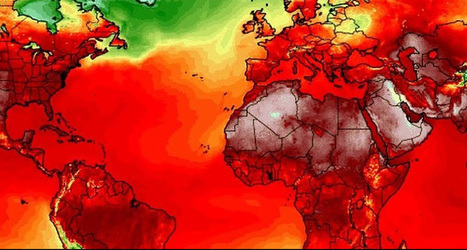
La semaine dernière, la Terre a établi des records de température. Il fait chaud, très chaud, partout, et le phénomène semble ne pas vouloir s’arrêter. Chacun ressent cette surchauffe anormale, de nombreux morts sont déclarés dans plusieurs endroits du monde, certaines régions atteignent le seuil du supportable avec plus de 50°C. Le climat ne cesse de se rappeler à notre attention mais les mesures pour calmer cette fièvre sont insuffisantes quand elles ne sont pas inexistantes voire contraires au bon sens. Notre planète souffre et même le Pape s’en est ému en convoquant un synode extraordinaire sur la question.
La plupart des stations météo de l’hémisphère nord ont enregistré ces dernières semaines, des températures battant tous les records. Des dômes de chaleur se sont installés, provoquant des températures étouffantes. Au Canada, en Irlande, et jusqu’au Moyen-Orient, la couleur des cartes météo est passée au rouge vif.
La chaleur a touché des régions comme la Sibérie, région peu habituée à battre des records de température. « C’est absolument incroyable, et vraiment l’une des vagues de chaleur les plus intenses que j’ai vu aussi loin au nord » explique le météorologue Nick Humphrey. Aucune de ces hautes températures, prises isolément, ne peut être attribuée au réchauffement climatique. Mais collectivement, elles correspondent aux extrêmes que l’on peut s’attendre à observer avec l’augmentation du réchauffement global ».
Au Canada, la ville de Denver a vu le thermomètre grimper à 40.5°C le 28 juin. En Irlande et en Ecosse des températures supérieures à 32° ont affolé les bulletins météo. Plus à l’Est, en Arménie, la barre des 42 ° a été dépassée.
D’après un décompte effectué par le Washington Post, depuis environ un an, tous les records tombent, les uns après les autres. En avril, le Pakistan a enregistré la température la plus chaude jamais observée sur Terre (50,2 Celsius).
Dallas n'avait jamais atteint 32° en novembre, mais elle l'avait fait trois fois en quatre jours en 2017.
Fin octobre 2017, les températures ont dépassé les 42° dans le sud de la Californie, le temps le plus chaud jamais enregistré si tard dans la saison aux États-Unis.
Le 1er septembre 2017, San Francisco a atteint 41.1°, fracassant sa température la plus chaude de tous les temps.
Fin juillet 2017, Shanghai a enregistré sa température la plus élevée de l'histoire, 40,9° Celsius.
A la mi-juillet, l'Espagne a enregistré sa température la plus élevée lorsque l'aéroport de Cordoue (au sud) a atteint 46,9°.
Fin juin 2017, Ahvaz, en Iran, a atteint 53,7° Celsius) - la température la plus chaude de tous les temps dans ce pays.
Fin mai 2017, la ville occidentale de Turbat au Pakistan a atteint 53,5°, enregistrant la température la plus élevée de tous les temps dans ce pays et la température record du monde pour le mois de mai, selon l’agence météo Masters.
Les climatosceptiques pourront toujours dire qu’il fait chaud parce que nous sommes en été et que tout cela est parfaitement normal, inutile de nous inquiéter et de nous faire peur. Il n’en demeure pas moins que c’est la synchronicité et l’ubiquité de tous ces enregistrements climatiques extrêmes qui devraient nous alerter. Le réchauffement climatique fait son œuvre, à nos dépens.
Le Pape lui-même s’en est inquiété et a réuni à Rome, ces 5 et 6 juillet, une conférence de haut niveau sur le changement climatique. « Il y a un réel danger pour que nous laissions aux générations futures seulement des décombres, des déserts et des déchets. » a-t-il déclaré. Un discours bref mais sonnant comme un tocsin aux oreilles de la communauté internationale endormie, aux yeux du souverain Pontife, face à la montée des périls climatiques.
|
|
|
Scooped by
Georges-Edouard DIAS
July 27, 2018 6:04 PM
|
The application of brand purpose does not invalidate the existing, long held rules of brand positioning. It does not represent an addition to positioning strategy either. If you want to get brand purpose to work you must accept that it will need to pass the three traditional, very tricky tests of brand positioning.
First, I want to position on what the customer wants rather than what I can do well or differently from others. I also want to position on something I can immediately deliver. Finally, I want to be able to deliver what customers want in a way that is different or distinctive or superior or simply better than my competitors.
This old model – the ‘three Cs’ of customer, company and competition – remains the acid test of positioning. I want a position that will be what my target customer wants, and which my company can deliver better or differently or more distinctively than my competitors. It’s not that the three Cs dispel the need for brand purpose but they do provide a stern, rigorous test of whether purpose provides the strategic muster to get the branding job done.
There are companies that have used brand purpose to great effect. I’d put Unilever at the very top of that very short list, for example.
|
|
Scooped by
Georges-Edouard DIAS
July 25, 2018 1:16 PM
|
A CryptoKitty digital artwork incorporated into a sculpture that recently sold for $140,000 at a charity auction in New York.CreditCryptoKitties How does one invest in art without going through the complications of buying and owning an actual artwork?
That is the question behind financial products for investors attracted by soaring art prices but intimidated by the complexity and opacity of the market. It is why art funds were all the rage in the early 2000s, and why new variations continue to emerge.
At the same time, entrepreneurs are trying to iron out the archaic inefficiencies of the art world with new types of financial products, particularly the secure ledgers of blockchain. While the technology is best known as the basis of cryptocurrencies like Bitcoin, its promise of transparency could transform sectors like banking and insurance and, some say, art.
“More transparency equals more trust, more trust equals more transactions, more transactions equals stronger markets,” Anne Bracegirdle, a specialist in the photographs department at Christie’s, said on Tuesday at the auction house’s first Art & Tech Summit, dedicated to exploring blockchain.
According to Ms. Bracegirdle, blockchain’s decentralized record-keeping could create a “more welcoming art ecosystem” in which collectors and professionals routinely verify the authenticity, provenance and ownership of artworks on an industrywide registry securely situated in the cloud.
Hers was one of the more utopian visions put forward by the roughly 30 panelists at Christie’s daylong conference, however. There was plenty of skepticism on offer.
Sébastien Genco, a blockchain specialist at the auditing and financial services company Deloitte, said the percentage of global investment in this technology that related to art represented “almost nothing.”
Mr. Genco, in his talk at the Christie’s event, titled “Why the Art World Wasn’t Ready for Blockchain,” cited the art world’s slow embrace of technology, limited collaboration, lack of trust in a process that is not fully understood, and costs as some of the reasons blockchain had yet to have a significant impact on the art trade. But that could change, he said. “We just need to educate people.”
As the Christie’s event progressed, a clearer picture emerged of what blockchain could and could not (yet) do for the art world. The technology’s potential for verifying provenance, authenticity and ownership was widely cited by speakers and attendees.
“I see the benefit for my clients in terms of reliability of information,” said Harco van den Oever, chief executive of Overstone, a London-based company providing specialist services to banks that issue art-secured loans. “Blockchain is a secure database. I can’t rely on a piece of paper.”
And blockchain has already proved to be a game-changer in one important area of growth, according to those at the Christie’s event: art in digital forms.
“Digital art is a computer file that can be reproduced and redistributed infinitely. Where’s the resale value?” John Zettler, president of Rare Art Labs, a company building a platform for cryptocurrency art sales, said at the event. Blockchain’s proof-of-ownership technology, combined with blockchain-based cryptocurrencies such as Ethereum, have resulted in the “invention of scarcity” and a stronger market for digital art, he said.
Peter Brant, a seasoned collector who is part of the management team for a new art investment fund, with his wife, Stephanie SeymourCreditMax Lakner/BFA, via Shutterstock
Sales that attest to the viability of this market include the equivalent of $14,000 for one of the 10,000 characters created by the New York-based CryptoPunks, with proof of ownership stored on the Ethereum blockchain. There are also CryptoKitties, tradable virtual felines that have attracted more than 250,000 registered users and more than $25 million in transactions.
For other art and technology experts, “tokenization” — using the value of an artwork to underpin tradable digital tokens — is the way forward. “Blockchain represents a huge opportunity for the size of the market,” said Niccolò Filippo Veneri Savoia, founder of Look Lateral, a start-up looking to generate cryptocurrency trading in fractions of artworks.
“I see more transactions,” added Mr. Savoia, who pointed out that tokens representing a percentage of an artwork could be sold several times a year. “The crypto world will bring huge liquidity.”
But the challenge for tokenization ventures such as Look Lateral is finding works of art of sufficient quality to hold their value after being exposed to fractional trading. The art market puts a premium on “blue chip” works that have not been overtraded, and these tend to be bought by wealthy individuals, not by fintech start-ups.
With so much attention focused on such technological endeavors, the emergence of a new fund might seem like a blast from the art finance past. But that’s what we have in the recently and very discreetly introduced UTA Brant Fine Art Fund, devised by the seasoned New York collector Peter Brant and the United Talent Agency in Los Angeles.
The fund aims to invest $250 million in “best-in-class” postwar and contemporary works, according to the prospectus, using the expertise of a management team that consists of Mr. Brant; Jim Berkus, a co-founder of the talent agency, who is also a collector; and Joshua Roth, who leads the agency’s fine arts division. It has a target hold period of five to seven years, the prospectus says, and the minimum investment is $1 million.
Image
The United Talent Agency, which has started an art fund, also recently opened an art space in Los Angeles.CreditUnited Talent Agency
Noah Horowitz, in his 2011 primer, “Art of the Deal: Contemporary Art in a Global Financial Market,” listed 36 funds that had been introduced since 2000, of which at least 20 had folded by the end of 2009. High-profile failures, such as Fernwood Art Investments in the United States and the Osian Art Fund in India, rattled confidence in the model of fixed-term art investing, and few newcomers have been entering the sector.
|
|
Scooped by
Georges-Edouard DIAS
July 25, 2018 1:03 PM
|
Whistler is a hungry place. It wants anyone and everyone who will have it. The folk behind the scenes, the ones crafting the Whistler experience for guests, take advantage of every opportunity to reach untapped audiences.
For those not so into adventure sports, the Peak 2 Peak gondolas take you from the peak of Whistler Mountain to the peak of Blackcomb; both boast restaurants with stunning views. One even has a Nintendo gaming lounge in the basement (perhaps for people who hate beautiful views). For the more artistically inclined, the new chief curator at the Audain Art Museum is launching a “guerrilla marketing campaign” to draw visitors to the museum’s upcoming pop art exhibit.
When developers realized that the snowplowing at the peak created massive, 40-foot-tall snow walls, they made it an attraction for hikers. This summer, under the direction of Rob McSkimming, the vice president of business development for Vail Resorts, a 425-foot suspension bridge at Whistler’s peak will offer yet another way to take in the views.
Whistler is the travel equivalent of an overeager student-council nominee passing out brownies and buttons to anyone who might vote for her. But this come-one-come-all, please-like-me vibe is also what makes it a place where you can find adaptive sports programming, a ski-themed LGBTQ pride festival and the birthplace of Pride House, and a one-of-a-kind collaborative cultural center of the Lil’wat and Squamish nations. As Nelson calls it, Whistler might be considered “an adult version of Disneyland” — where everyone is invited.
|
|
Scooped by
Georges-Edouard DIAS
July 25, 2018 12:47 PM
|
Situé à Los Angeles, ce concept-store tente de séduire les joggeurs qui surfent sur la Toile et les amateurs d’articles très « tendances » qu'on peut choisir, tester ou retirer sur place, sans perdre une minute.
Faire ses courses en coup de vent pour ne manquer de rien lors de son jogging hebdomadaire. Nike vient d’ouvrir à Los Angeles un nouveau concept-store dédié aux adeptes du running qui aiment faire du « lèche-vitrine » sur la Toile avant d’essayer les articles qui ont retenu leur intention. Situé au numéro 8552 de Melrose Avenue, l’artère qui relie Santa Monica Boulevard à Beverly Hills en passant par Hollywood, ce magasin de 370m2 n’est pas un flagship luxueux et tape-à-l’œil mais un point de vente pratique dans lequel les sportifs peuvent faire leurs achats sans perdre une seconde. Véritable commerce de proximité, ce « convenience store » répond à tous les nouveaux codes du retail…
Il a tout d’abord été conçu pour être une extension du site marchand de la marque au Swoosh. L’équipementier américain se sert ainsi des données récoltées sur ses sites et auprès des membres de Nike Plus pour définir les lignes de produits qui sont proposées dans la boutique. Le groupe a notamment remarqué que les habitants de l’ouest de Los Angeles appréciaient tout particulièrement les chaussures au style rétro Nike Cortez. Sa boutique de Melrose Avenue propose donc depuis son ouverture, le 12 juillet, une gamme complète de cette collection qui sent bon les années 70. Toutes les deux semaines, une bonne partie des articles présentés dans les rayons sera changée. Et un quart des chaussures mises en vente seront, elles aussi, modifiées deux fois par mois, un rythme trois fois plus rapide que dans un magasin traditionnel de la marque née dans l’Oregon. Au fond de la boutique, l’espace « 365 favoris » contient, lui, les best-sellers de la griffe qui sont proposés tout au long de l’année.
Des services destinés aux membres de Nike Plus
Les membres de Nike Plus peuvent, pour leur part, retirer les sneakers commandés sur la Toile dans une armoire à casiers qu’ils ouvrent en scannant un message reçu sur l’application qu’ils ont téléchargée sur leur smartphone. Les « GM » de Nike peuvent, aussi, gagner des petits cadeaux comme une paire de chaussettes en scannant leur « member pass » devant un écran situé sur un distributeur automatique. Pour connaître les caractéristiques d’un article ou sa disponibilité dans les stocks de la boutique, les consommateurs n’ont qu’à scanner avec leur téléphone son code barre dans les rayons. Pour retirer un produit acheté sur la Toile, l’échanger ou le retourner, les joggeurs pressés peuvent également utiliser le comptoir « Curb Service » proposé à cet effet.
Les Swoosh Text permettent, quant à eux, de communiquer par SMS avec des conseillers de Nike. Les sportifs amateurs qui connaissent mal la marque peuvent, de leur côté, participer à des sessions « Express » durant lesquelles un vendeur leur explique pendant une trentaine de minutes les spécificités de tel ou tel article. Au centre du magasin, le « Sneaker Bar » est, comme son nom l’indique, un espace équipé d’un comptoir et de quatre tabourets derrière lequel les curieux peuvent discuter des différentes chaussures qu’ils pourront regarder et toucher comme bon leur semble. Tandis que la « Dynamic Fit Zone » permet d’essayer les produits et de faire quelques foulées sur un tapis de course afin de faire son choix entre plusieurs paires de running.
Quadrature du cercle
Le géant américain considère cette boutique comme un laboratoire afin de tester en conditions réelles ses nouveaux concepts en matière de shopping. Ses études ont montré que ses clients souhaitaient désormais faire leurs courses le plus rapidement possible. Aujourd’hui, le retail traditionnel et l’e-commerce sont deux mondes imbriqués l’un dans l’autre. La plupart des consommateurs surfent sur la Toile avant de choisir un article. Si quelques-uns veulent se faire livrer à la maison certains produits, ils préfèrent aller dans un point de vente pour toucher et essayer d’autres références. Les habitués savent ce qu’ils recherchent et ne souhaitent pas perdre une minute pour retirer leurs achats alors que les novices et les indécis ont besoin de conseils avant de faire leurs choix.
Nike tente à Melrose Avenue de concilier ces attentes souvent contradictoires en proposant une gamme de services divers et variés. Le retail ressemble aujourd’hui à une véritable quadrature du cercle que les distributeurs cherchent à résoudre chacun à leur manière. Le premier qui trouvera la botte secrète touchera le gros lot. Nike tente sa chance à Los Angeles. Les prochains mois diront si son exemple est probant ou non…
|
|
Scooped by
Georges-Edouard DIAS
July 25, 2018 12:32 PM
|
Entre 2014 et 2018, Facebook a ainsi largement misé sur les drones solaires Aquila , qui n'ont finalement pas convaincu. Mais le géant n'a pas voulu choisir entre les différentes technologies. Comme le révèle Wired, Facebook a discuté de son projet de satellites avec la FCC dès 2016. Tout en avançant masqué : l'entreprise qui réalisera le projet est officiellement « PointView Tech LLC ». En réalité, une filiale du géant américain.
Les satellites pour connecter le monde, un secteur surchargé
Avec ce passage aux satellites, Facebook rejoint un secteur déjà surchargé. SpaceX, OneWeb, LeoSat, Inmarsat, IridiumNext ou encore Virgin Orbit... tous sont à des stades plus ou moins avancés pour constituer chacun une constellation de plusieurs centaines de satellites en orbite basse.
Le fait d'être plus proche de la Terre devrait permettre d'assurer une connexion Internet très rapide (100 gigabits/seconde), 10 fois plus que les satellites géostationnaires actuels. Cependant, le fait d'être en orbite rapprochée demande de gros investissements en termes d'infrastructures (antennes relais au sol, équipement des satellites) ainsi que pour construire et lancer des centaines, voire un millier de satellites.
Pour l'heure, SpaceX et OneWeb semblent les plus avancés, mais tout reste à faire dans un secteur qui devra prouver sa rentabilité. La solution pourrait également se trouver dans d'autres moyens, comme les ballons. Une solution mise en avant par Alphabet et son projet Loon.
|
|
Scooped by
Georges-Edouard DIAS
July 25, 2018 9:54 AM
|
According to eMarketer's latest forecast, Amazon's ecommerce share of food and beverage sales in the US will reach 31.8% in 2018. Only auto and parts will capture a lower share. And with $4.75 billion in sales, food and beverage will also rank last by product category. However, food and beverage will post sales growth of 40.1% this year, tops among all categories.
Amazon isn't alone in trying to crack online grocery sales. Walmart has come on strong, Target hasn't dropped out of the running and traditional supermarkets, Kroger in particular, have been investing heavily.
Same-day delivery is proving to be a battlefield in the online grocery sector. Despite so-so interest in receiving packages in mere hours for other categories, a majority of US internet users (64%) would be interested in same-day delivery of groceries, and 19% have tried it. Amazon has been offering "free" two-hour delivery for Whole Foods orders of $35 or more via its Prime Now service in select cities and has plans for a nationwide rollout by the end of 2018.
One of the biggest stumbling blocks to selling groceries online has nothing to do with delivery or prices, though. People simply like to see, touch and smell food for themselves, which is why Whole Foods has widened Amazon's playing field.
Fresh food isn't what shoppers buy most on Amazon. According to One Click Retail, beverages have dominated Amazon's share of grocery sales. In Q2 2018, sales of cold beverages grew 36% year over year to reach around $140 million, while coffee sales grew 40% to $135 million. Coffee pods were four of Amazon's top five grocery items sold.
How Amazon is going to leverage Whole Foods' brick-and-mortar presence is still evolving. Things happen so rapidly that it's easy to forget that Amazon started offering 10% off sale items at Whole Foods for Prime members just two months ago. Amazon cross-marketed further on Prime Day, giving $10 credits to use during the 36-hour event to Prime members who spent $10 or more at Whole foods from July 11 to July 17.
|
|
Scooped by
Georges-Edouard DIAS
July 25, 2018 6:46 AM
|
C’est bien la preuve que l’amende record infligée par l’antitrust européen (pour abus de position dominante de son système d’exploitation Android) est indolore pour Alphabet. La maison mère de Google publiait hier soir ses résultats financiers pour le deuxième trimestre et, comme ils sont « exceptionnels », comme qualifiés par Christian Parisot, chef économiste chez Aurel BGC, l’action progresse de 5% dans lespremiers échanges à Wall Street, à 1.275 dollars, un nouveau record.
En Bourse, Alphabet, avec ses 880 milliards de dollars sur la balance, pèse à nouveau autant qu’Amazon (sachant qu’avant le mois de mars de cette année, Alphabet avait toujours pesé plus qu’Amazon)… Enfin, un peu moins, l’action Amazon gagnant près de 2% ce mardi, à deux jours de la publication par le géant du e-commerce de ses comptes trimestriels.
Mais, tout de même, Alphabet revient dans la course pour le titre de poids lourd de la cote mondiale, Apple, qui n’a plus signé de record depuis juin, étant peu à peu rattrapé par ses deux poursuivants. Microsoft, avec ses 830 milliards de dollars de capitalisation, est un peu plus distancé malgré, la semaine dernière, l’envolée du titre avec une poussée historique à 108,2 dollars en séance, suivant la publication des chiffres du quatrième trimestre de son exercice décalé 2017-2018, mêlant à la fois un bénéfice supérieur aux attentes et un tableau des anticipations meilleur que celui que les marchés attendaient.
Plus que le PIB de 90% des pays de la planète
Parmi les Gafam (Google, Apple, Facebook, Amazon et Microsoft), il n’y a que Facebook qui reste loin des 800 milliards de dollars de capitalisation (610 milliards hier, séance durant laquelle l’action a visité de nouveaux sommets). Demain, le réseau social rendra à son tour sa copie trimestrielle ; les chiffres de la publicité sur mobile seront tout particulièrement surveillés. Chez Google, la croissance des revenus publicitaires, grâce à la forte progression du volume des liens sponsorisés, explique grandement la hausse de plus de 25% du chiffre d’affaires aux deuxième trimestre (+21% aux Etats-Unis, +26% pour la région Europe-Moyen-Orient-Afrique, +36% en Asie).
Globalement, pour les Gafam, les analystes tablent cette année sur une croissance élevée de 21% (+19% l’an dernier). Le chiffre d’affaires annuel chez Microsoft a atteint, pour la première fois, les 100 milliards de dollars (+14%) au cours de l’exercice passé. Les cinq plus grosses entreprises cotées au monde pèsent plus, si l’on combine leurs chiffres d’affaires sur un an, que 90% des pays de la planète par la mesure de leur PIB. Cette croissance a évidemment un coût (plus de dépenses de R&D, de dépenses en capital, des tarifs moins chers que les « concurrents »…), avec des effets potentiels sur la marges. N’empêche qu’Alphabet a su faire grimper sa marge bénéficiaire au deuxième trimestre, rassurant les investisseurs sur la maîtrise de ses coûts. La hausse en matière d'acquisition du trafic (ce que paie Google pour attirer les internautes vers son moteur de recherche) a ralenti pour la première fois en trois ans.
|
|
Scooped by
Georges-Edouard DIAS
July 24, 2018 4:32 AM
|
According to a June 2018 survey by mobile agency Fetch, the majority of US internet users subscribe to a video service (71%). That figure drops dramatically for other categories, including retail-focused ones. For example, 18% said they subscribe to a fashion and beauty subscription service, while 10% used a grocery service.
The data suggests that even though there is a wide gap in purchasing items other than media via subscription, there is still widespread interest in grocery services and fashion and beauty boxes. Close to a third of the survey respondents said they are investigating services like Amazon Fresh and Blue Apron, and 29% are looking into companies like Birchbox, StitchFix and Dollar Shave Club. Fewer than 10% are currently trialing a retail subscription service.
While the survey found widespread use of mobile devices, app usage in the retail categories was fairly low. For groceries, just 12% of respondents had downloaded a related app. That figure was 16% for beauty and fashion. This isn't very surprising since food and clothing can't be consumed via mobile the way news or music can. Still, it presents an opportunity for retail brands to engage and personalize the shopping experience.
Media subscription services also presumably have an advantage in that their content may well be consumed daily. Retail categories tend to be used less frequently: Most respondents said they used them at least once per month, but not weekly. Consumers also spend more on them; 25% spend $40+ monthly on grocery services, while 15% spend that much on beauty and fashion services. Only 5% spend in that range on video, for example. There is a greater upside for retail services, especially since the category is relatively underpenetrated.
|
|
Scooped by
Georges-Edouard DIAS
July 12, 2018 4:05 AM
|
Some brands have found success by providing offline experiences. Blome, a watchmaker founded in 1947, recently embraced digital commerce, and is now an official online reseller for 15 international luxury brands. Benefits for customers include a dedicated staff of watchmakers and “masters,” rapid delivery of purchases, and free delivery and returns. Customers purchasing a watch worth more than €10,000 ($11,276) get special perks, as explained on its website: “Upon request, particular watches are proudly and personally explained, fitted and finally handed over to you by one of our watchmaker masters. Therefore, we like to invite you to spend a splendid shopping weekend on the Königsallee [in Düsseldorf], including an overnight stay in a suite at the Intercontinental Hotel. Your watch is celebratorily given to you in our workshop. Alternatively, we gladly send watch and master to your home in Germany.”
With such a formula, any absence of tangible luxury in the digital purchase process is more than overcome by the pleasure of the after-purchase experience—effectively reversing the sequence of events if consumers buy in a luxury brand’s physical store.
|
|
Scooped by
Georges-Edouard DIAS
July 12, 2018 3:52 AM
|
Le capitalisme manque de projets. Les entreprises rendent l'argent aux actionnaires plutôt que de l'investir là où il serait utile de le faire. Seule la transition écologique pourrait le rassasier.
Le capitalisme se mord la queue. Faute de projet, il en vient à dévorer son capital. Ce qui représente une vraie menace sur l'avenir, car le capitalisme porte une formidable efficacité économique. Nous lui devons largement la fabuleuse progression des conditions de vie depuis deux siècles. Même ses contempteurs les plus féroces, comme le sociologue suisse Jean Ziegler , le concèdent.
Le capitalisme a pourtant devant lui un magnifique chantier. Mais il ne pourra s'en emparer tout seul. Il devra être sauvé par ses ennemis, comme il l'a déjà été à plusieurs reprises dans le passé.
Pente naturelle : l'accumulation
Commençons par nous entendre sur les mots, car nous sommes ici dans le moulin à fantasmes. L'essayiste anarchiste Pierre-Joseph Proudhon a donné une définition limpide du capitalisme il y a plus d'un siècle et demi : « régime économique et social dans lequel le capital comme source de revenus n'appartient généralement pas à ceux qui l'utilisent dans leur propre travail. »
L'historien Fernand Braudel a ensuite dissipé la confusion fréquente entre économie de marché, espace de concurrence (où la pente est la « baisse tendancielle du taux de profit » pointée par Karl Marx), et le capitalisme, « étage supérieur » dominé par des monopoles (où la pente naturelle est l'accumulation, aussi pointée par Marx et mise en évidence récemment par les travaux de Thomas Piketty).
Excès de pouvoir
Si le capitalisme est redoutablement puissant, c'est parce qu'il permet d'accumuler du capital, et que ce capital est ensuite investi là où il est le plus efficace - machines, infrastructures de transport, recherche, etc. Il est tellement puissant qu'il ne peut pas exister sans opposants - Etat, syndicats, intellectuels. « Sans cette présence de contrepouvoirs, le capitalisme disparaîtrait dans son excès de pouvoir, par les déséquilibres de revenus, les pertes de production et les révolutions qui en découleraient », explique Sébastien Groyer, qui est à la fois philosophe et capital-risqueur, dans sa thèse passionnante .
Or, aujourd'hui, le capitalisme a perdu le nord. Il ne sait plus où aller. Pour être plus précis, les acteurs du capitalisme - dirigeants d'entreprise et grands investisseurs - ne savent plus quoi faire des masses d'argent qu'ils font circuler. Ils n'ont plus de grands projets. Du coup, cet argent revient aux actionnaires. Au lieu de lever de l'argent en émettant de nouvelles actions pour financer leur essor, les entreprises rachètent leurs vieilles actions. A lui seul, le géant du numérique Apple a annoncé un « buy back » de 100 milliards de dollars .
Entreprise sans projets
Les partisans de cette étrange pratique avancent deux arguments pour la justifier. D'abord, quand les taux d'intérêt sont bas, une entreprise dégage davantage de rentabilité en empruntant pour racheter des actions. C'est parfaitement exact. Mais elle pourrait espérer encore plus de profits si elle avait de beaux projets à financer.
Ensuite, il vaut mieux qu'une entreprise sans projets rende l'argent à ses actionnaires, mieux placés qu'elle pour détecter des innovations prometteuses. C'est à nouveau exact... sauf que les actionnaires qui reçoivent cet argent ne semblent pas le replacer dans d'autres firmes. Ils préfèrent notamment gonfler les bulles immobilières qui se forment un peu partout.
Nanifié par la loi de Moore
La révolution numérique aurait bien sûr dû constituer une magnifique opportunité d'investissements. Dans sa campagne pour l'élection présidentielle de 1992, Bill Clinton faisait d'ailleurs miroiter un ambitieux projet d'« autoroutes de l'information ». Mais ce projet a absorbé trop peu d'argent. Il est devenu une banale modernisation des réseaux de télécommunications. Au-delà, l'impact économique et financier des technologies de l'information a été nanifié par la terrible loi de Moore qui divise par 1.000 tous les dix ans le prix de la brique de base de cette révolution, la puce électronique.
Or le capitalisme n'a jamais été aussi efficace que pour mobiliser d'énormes sommes d'argent destinées à financer des projets colossaux. Expéditions maritimes vers les nouveaux mondes au XVIe siècle, villes et réseaux de chemins de fer à partir du XIXe, infrastructures (électricité, routes, télécommunications) et grandes usines de la production de masse au XXe... Aujourd'hui, rien ne semble à la hauteur. Le numérique coûte trop peu cher. La révolution suivante, celle de la biologie, semble atteinte par le même virus - le prix du séquençage du génome humain a été divisé par 10.000 en dix ans .
Croissance insoutenable
Rien... sauf le plus formidable défi de l'histoire de l'humanité : le sauvetage de la planète. On le sait au moins depuis le rapport du Club de Rome publié en 1972, la croissance financée par deux siècles de capitalisme est insoutenable dans le temps. Trop gourmande en ressources non renouvelables. Trop menaçante pour l'équilibre biologique et climatique qui a permis l'éclosion de la vie et l'épanouissement de l'espèce humaine. Seul le capitalisme est assez puissant pour financer la transition écologique et énergétique. Seule l'écologie est assez ambitieuse pour donner un nouveau projet au capitalisme.
Mais le capitalisme est incapable de faire ce basculement tout seul. Comme toujours, il a besoin de normes, d'impulsions, de contraintes pour réussir. Cette fois-ci, il lui faudra en plus un nouvel ingrédient, car la survie de la planète n'est pas un revenu qui peut profiter à quelques-uns. C'est un bien commun. nous devrons donc créer de nouveaux canaux financiers, un autre partage des risques et des revenus. Finalement, ça tombe bien : la propriété la plus fascinante du capitalisme, c'est sa capacité à se réinventer.
Jean-Marc Vittori
|
|
Scooped by
Georges-Edouard DIAS
July 12, 2018 3:35 AM
|
There is a great lowball question that you can use on anyone interviewing for a marketing role.
Ask the candidate to imagine a leading tennis brand is looking for a new marketing manager. Two candidates make it to the final interview. The first is an ex-tennis pro who has spent the last 10 years in the lower reaches of the top 500 players and knows the game intimately. The second is a marketing manager from a soup company keen on a new challenge but with no experience of the game or prior interest in tennis.
Who is the best candidate?
You can argue that the tennis pro has an innate and extensive knowledge of the game and that makes her the ideal candidate. But you can also use that experience against her. She is a pro, not a normal customer, and her deeper and more widespread knowledge of the game might stop her empathising and ultimately converting amateurs to buy into the tennis brand.
Similarly, the soup marketer’s inability to tell one end of the racket from the other can be used as a strong argument against hiring him. But, then again, taking someone with no knowledge of tennis forces that person to study the market more carefully and removes a lot of the over-confidence and innate biases that prior experience often brings
|
|
Scooped by
Georges-Edouard DIAS
July 12, 2018 2:55 AM
|
he Air France-KLM group is an innovation pioneer when it comes to using cutting-edge technology to enhance the customer experience. Consider the socially aware Spencer robot at Amsterdam’s Schiphol airport; the Happy Flow single biometric token trials; its development of electronic smart Care tags and tracking devices; and its use of artificial intelligence to create automated customer service channels and transform its operations.
Now KLM Royal Dutch Airlines wants to bring its cutting-edge tech to the airport experience to make the journey easier before during one of the most stressful times of the journey—before and after getting on a plane.
|