Your new post is loading...

|
Scooped by
Gilbert C FAURE
Today, 1:33 PM
|
"Le véritable défi épistémologique du XXIe siècle n'est pas de lutter contre la désinformation, mais de maintenir et améliorer nos meilleures normes et institutions épistémiques."
Les croyances humaines ne sont pas toujours fondées sur la vérité. En effet, comprendre pourquoi certaines personnes parviennent parfois à adopter des croyances exactes est bien plus complexe que de simplement se demander pourquoi elles croient des choses fausses.
🌍 Les sociétés modernes, avec leurs institutions complexes, permettent une production de connaissances fiables. Mais ce système est fragile et repose sur des normes qui ne sont pas innées. Si ces institutions faiblissent, l'ignorance et les erreurs reviendront rapidement.
🔎 La vérité n'est pas évidente. Nous vivons dans un monde où la médiation sociale, les biais cognitifs et les intérêts personnels influencent nos perceptions et nos croyances. Pourtant, dans un monde aussi influencé par l’information et la confiance, il est surprenant que nous arrivions parfois à des conclusions justes.
🧠 Nous devons revoir notre approche de l'épistémologie sociale. Au lieu de considérer la désinformation comme un phénomène isolé, il est plus pertinent de comprendre que la recherche de la vérité est une exception fragile et rare dans l’histoire de l'humanité.
Passionnant article de Dan Williams, Dr en philosophie.
Résumé assisté par IA
#connaissance #épistémologie #vérité #société #désinformation #science
https://lnkd.in/eaptfNfA
|
|
Scooped by
Gilbert C FAURE
Today, 4:48 AM
|
Did you know that in almost all cases, measles resolves on its own?
Usually only rest and hydration are necessary. If treatment is needed the options include high-dose vitamin A, immune globulin, and the antiviral medication, ribavirin.
For more measles facts visit picdata.org/measles
#vaccines | 12 comments on LinkedIn
|
|
Scooped by
Gilbert C FAURE
Today, 4:47 AM
|
66 % des personnes interrogées lors d’une enquête Ipsos ont cru à une fake news. Pourtant, la majorité d’entre nous croyons être capables de faire le tri entre le vrai et le faux.
𝗟𝗮 𝗱𝗲́𝘀𝗶𝗻𝗳𝗼𝗿𝗺𝗮𝘁𝗶𝗼𝗻 𝗻𝗲 𝘁𝗼𝘂𝗰𝗵𝗲 𝗽𝗮𝘀 𝗾𝘂’𝘂𝗻𝗲 𝗺𝗶𝗻𝗼𝗿𝗶𝘁𝗲́.
𝗘𝘁 𝗰’𝗲𝘀𝘁 𝘂𝗻 𝘃𝗿𝗮𝗶 𝗽𝗿𝗼𝗯𝗹𝗲̀𝗺𝗲 𝗱𝗲 𝘀𝗮𝗻𝘁𝗲́ 𝗽𝘂𝗯𝗹𝗶𝗾𝘂𝗲.
Pendant longtemps, on a voulu croire que les fake news ne concernaient qu’une petite frange de la population : les “mal informés”, les “anti-science”, les “extrêmes”.
C’est rassurant… mais c’est faux.
Ce que je constate, et que beaucoup d’experts ont confirmé lors de la mission menée pour le ministère de la Santé, c’est que 𝗹𝗮 𝗱𝗲́𝘀𝗶𝗻𝗳𝗼𝗿𝗺𝗮𝘁𝗶𝗼𝗻 𝘁𝗼𝘂𝗰𝗵𝗲 𝘁𝗼𝘂𝘁 𝗹𝗲 𝗺𝗼𝗻𝗱𝗲 :
le grand public, les parents, les jeunes, et même les professionnels de santé.
Pas parce qu’ils manquent d’intelligence.
Mais parce que 𝗹’𝗶𝗻𝗳𝗼𝗿𝗺𝗮𝘁𝗶𝗼𝗻 𝗳𝗶𝗮𝗯𝗹𝗲 𝗲𝘀𝘁 𝘀𝗼𝘂𝘃𝗲𝗻𝘁 𝗽𝗹𝘂𝘀 𝗱𝗶𝗳𝗳𝗶𝗰𝗶𝗹𝗲 𝗱’𝗮𝗰𝗰𝗲̀𝘀 𝗾𝘂𝗲 𝗹𝗮 𝘃𝗲𝗿𝘀𝗶𝗼𝗻 𝘀𝗶𝗺𝗽𝗹𝗶𝗳𝗶𝗲́𝗲, 𝗲́𝗺𝗼𝘁𝗶𝗼𝗻𝗻𝗲𝗹𝗹𝗲 𝗲𝘁 𝘃𝗶𝗿𝗮𝗹𝗶𝘀𝗲́𝗲.
La réalité, c’est qu’il existe aujourd’hui un 𝗺𝗮𝗶𝗹𝗹𝗼𝗻 𝗺𝗮𝗻𝗾𝘂𝗮𝗻𝘁 𝗲𝗻𝘁𝗿𝗲 𝗹𝗲𝘀 𝗲𝘅𝗽𝗲𝗿𝘁𝘀 𝗲𝘁 𝗹𝗲 𝗽𝘂𝗯𝗹𝗶𝗰 :
- les rapports des autorités (HAS, ANSES…) sont très techniques, parfois difficiles même pour les soignants ;
- les médias généralistes simplifient parfois trop vite, au risque de déformer ;
- la communication scientifique institutionnelle manque souvent de lisibilité ;
- et pendant ce temps, la désinformation, elle, est rapide, claire, émotionnelle… donc efficace.
Le résultat se voit partout : inquiétudes infondées, mythes persistants, incompréhensions, perte de confiance.
C’est précisément ce vide que j’essaie de combler à mon échelle : 𝘁𝗿𝗮𝗱𝘂𝗶𝗿𝗲 𝗹𝗮 𝘀𝗰𝗶𝗲𝗻𝗰𝗲 𝘀𝗮𝗻𝘀 𝗹𝗮 𝘁𝗿𝗮𝗵𝗶𝗿, répondre aux questions réelles des gens, donner des repères fiables, et expliquer sans infantiliser.
Mais personne ne peut faire ce travail seul.
La lutte contre la désinformation n’est pas un sujet “annexe”. C’est un enjeu de santé publique majeur, qui nécessite 𝗱𝗲𝘀 𝘀𝘁𝗿𝗮𝘁𝗲́𝗴𝗶𝗲𝘀 𝗰𝗼𝗼𝗿𝗱𝗼𝗻𝗻𝗲́𝗲𝘀, de la formation, et une vraie prise en compte des besoins du public.
Plus on sera nombreux à travailler ensemble, chercheurs, institutions, communicants, soignants, plus on aura d’impact.
Et surtout : plus on redonnera confiance.
Alors, en 2026, je continue ce combat contre la désinformation. Avec rigueur, mais pas sans humour. Vous me rejoignez ?
|
|
Scooped by
Gilbert C FAURE
Today, 4:44 AM
|
|
|
Scooped by
Gilbert C FAURE
Today, 3:44 AM
|
Public opinion and trust declining. Questions about his management methods.
|
|
Scooped by
Gilbert C FAURE
Today, 3:37 AM
|
|
|
Scooped by
Gilbert C FAURE
Today, 2:26 AM
|
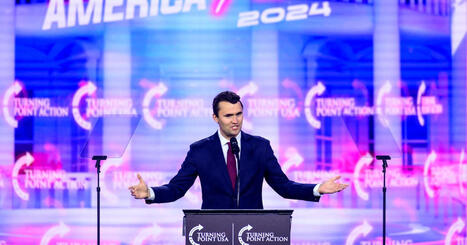
Kirk was struggling to organize AmericaFest—and his successors aren’t faring much better.
|
|
Scooped by
Gilbert C FAURE
December 25, 1:42 PM
|
|
|
Scooped by
Gilbert C FAURE
December 25, 1:40 PM
|
|
|
Scooped by
Gilbert C FAURE
December 25, 1:37 PM
|
|
|
Scooped by
Gilbert C FAURE
December 25, 1:14 PM
|
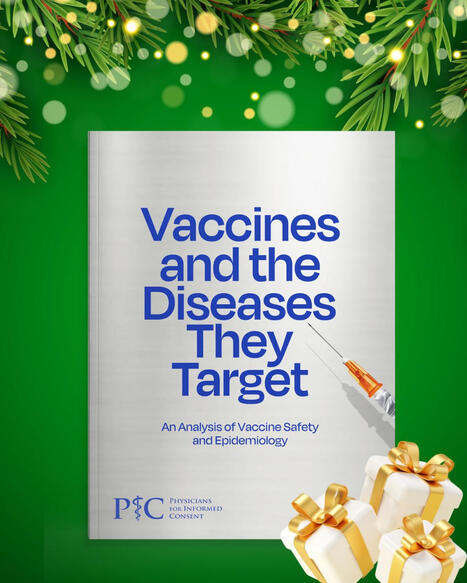
Season’s greetings from Physicians for Informed Consent. This season, we’re sharing a resource created for families who value clear, well-referenced health information. Vaccines and the Diseases They Target brings referenced safety and epidemiology data together in one place.
Explore the Silver Booklet: picdata.org/silver-booklet
#seasonsgreetings #silverbooklet
|
|
Scooped by
Gilbert C FAURE
December 25, 1:13 PM
|
Here are the numbers. The sick and the dead. All premeditated by #Trump, #Vought, #RFKJr. And the hardest hit--people who live in red states, where their governors will just help the suffering along rather than stand with their own constituents. https://lnkd.in/eUUrRryC
|
|
Scooped by
Gilbert C FAURE
December 25, 1:10 PM
|
"It is really, really tricky, and it puts journalists like you and I in a really tough spot because there's actually been a fair amount of research showing that repeating, you know, disinformation, misinformation, often reinforces people's belief in that misinformation, even when it's repeated in the context of debunking it. So, you know, as reporters, it definitely puts us in a bind. We can't just ignore what's happening, especially when now it's coming from official federal agencies and - you know, who are creating official government policy.
But the implications, they're real. They have real-life implications. You know, vaccination rates in the U.S. had already been falling, causing, you know, resurgences of some really dangerous diseases that people really hadn't thought about much anymore, like measles and whooping cough. So anything that undermines confidence in vaccines and increases hesitancy, you know, can make - end up people getting really sick and even dying."
https://lnkd.in/gu4yw9ZR
|
|
|
Scooped by
Gilbert C FAURE
Today, 1:27 PM
|
It Examining the complex interplay between natural immunity, vaccine efficacy, and public health mandates, it dissect prevailing disinformation to establish a clear, evidence-based understanding of individual and collective protection. It is clarifying how scientific consensus informs policy, separating fact from pervasive misinformation.
|
|
Scooped by
Gilbert C FAURE
Today, 4:48 AM
|
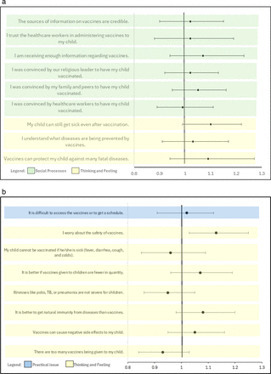
Accurate data on vaccine coverage AND the social and behavioural drivers of vaccination are needed to develop targeted interventions to improve uptake - we need to understand the what, where and why!💡
A study in three regions of the Philippines in 2023 to measure parent reported uptake & identify drivers of childhood vaccination suggests that improved service accessibility, education of healthcare workers on vaccine safety and effectiveness and tailored messaging about the benefits of vaccination could improve uptake, using a multisectoral approach & integration of immunisation service delivery with other primary healthcare programmes 👇
This work is already informing policy & was supported by DFAT and the #australianregionalimmunisationalliance National Centre for Immunisation Research and Surveillance (NCIRS) with thanks to our incredible teams from Murdoch Children's Research Institute (MCRI) University of the Philippines Kirby Institute, UNSW Sydney led by Paulyn Jean Acacio-Claro 👏 Jessica Kaufman, PhD
|
|
Scooped by
Gilbert C FAURE
Today, 4:46 AM
|
|
|
Scooped by
Gilbert C FAURE
Today, 3:45 AM
|
📌 Trust is like health – you truly notice it only when it disappears. Trust is the fabric that holds societies together. How do we nurture it? How do we move beyond institutional trust toward distributed trust — an ecosystem where scientists, research funders, media, policymakers, and citizens work together?
Last week, during the one-day conference “Strengthening Public Trust in Science” hosted by ANR, the French National Research Agency and Science Europe, Dr Sylvie Briand and I had the privilege of engaging with stakeholders committed to these questions.
Some key Takeaways:
✔ Public trust in science is fragile yet essential for evidence-based policymaking. While overall trust remains high, signs of erosion are visible across disciplines.
✔ Science is an iterative process, not a set of facts - communicating about the nature of 'scientification' is critical.
✔ Scientists provide evidence, not advice. Science offers one critical perspective among many - alongside economic, social, cultural, and political considerations - that policymakers weigh when shaping decisions.
✔ Citizen and participatory engagement is reshaping science, bringing diverse experiences and knowledge sources into the conversation.
Let's keep the dialogue going!
Mohamed Elsonbaty Ramadan , MSc Claire Giry Lidia Borrell-Damian Agata Gurzawska Rebecca Veitch Didier Pourquery Romain Huret Francisco Javier Moreno Fuentes Emelie de Jong Jerry Sheehan Karen Fabbri Carthage Smith Tina D Purnat Marie Bombin Gerardo Zamora Thidar Pyone Rita Tawile Safaa Nofal Aziza Nasirova Catherine Daribi Adam Strobeyko Adam Talsma Tim Nguyen Ioana Ghiga Tim Corrigan Catherine BERTRAND-FERRANDIS Sarah Hess Charlotte Germain-Aubrey Supriyaa Bezbaruah, PhD Arianna Flores Corral Michelle Hahn-Baker Dharmaveer Shetty Hon. Keith Martin MD, PC
|
|
Scooped by
Gilbert C FAURE
Today, 3:40 AM
|
|
|
Scooped by
Gilbert C FAURE
Today, 3:37 AM
|
|
|
Scooped by
Gilbert C FAURE
December 25, 1:48 PM
|
Casey Husser, MD makes an interesting point here. One that Robert Malone does not seem to fully grasp. Like if when at ER in an emergency situation a parent would substitute his own ideas to the expertise of the treating physician. No, you want at any time the experience and expertise of a trained doctor, not that of pseudo-fake experts that are pushing misinformation on vaccines. Decision is shared for consent but not for facts and science. If individuals would be making decision, patients would die all the time. It is the doctor`s knowledge, expertise and experience that keeps you alive at such time. On another point socialism is the greater good for all. America is a socialist country as well, but sadly only for the greater good of the richest elites. This must change.
|
|
Scooped by
Gilbert C FAURE
December 25, 1:41 PM
|
|
|
Scooped by
Gilbert C FAURE
December 25, 1:38 PM
|
|
|
Scooped by
Gilbert C FAURE
December 25, 1:15 PM
|
"In China, it's called the 100-day cough. In the United States, it's whooping cough, a nod to the gasping sound babies and young children make when trying to catch their breath during a fit of coughing. Technically, it's pertussis, a highly contagious bacterial infection that is surging across the country right now.
That is bad news for babies.
Pertussis is particularly dangerous to infants, who are at high risk of hospitalization and death if they are infected. Around a third of babies under six months old infected with whooping cough in 2024 were hospitalized. Dr. Jason Bowling, professor and interim chief of the Division of Infectious Diseases at UT Health San Antonio and director of hospital epidemiology at University Health, said there are also long-term complications associated with the disease.
"This coughing is from inflammation, and when you have a lot of inflammation causing bad coughing spells, you worry about some residual scarring from prolonged inflammation," Bowling said, "Which is why, particularly in infants, it could affect their development as they get older." Lung scarring from pertussis could increase risks for asthma and COPD later in life.
Infant deaths from pertussis in 2025 have been reported in Kentucky, Mississippi, Louisiana, South Dakota, Idaho, and Oregon. Dr. Bowling said there are several reasons for this deadly surge. Among them, he said, is that vaccination rates have declined."
https://lnkd.in/gfjV3UQj
|
|
Scooped by
Gilbert C FAURE
December 25, 1:14 PM
|
This Christmas: are you seeing family or loved ones who might have fallen prey to pseudoscience or health misinformation?
Find some tips in this toolkit to enable you to build trust, find common ground, challenge strongly held beliefs, and replace ideology with evidence.
Read the full details here:
🔗 https://lnkd.in/exkJTikD
Merry Christmas everyone 🎄
#scientist #health #wellness #christmas
|
|
Scooped by
Gilbert C FAURE
December 25, 1:12 PM
|
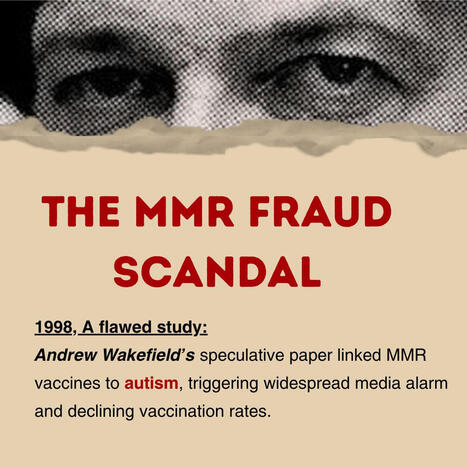
Misinformation shapes public behaviour for generations.
The recent concerns around paracetamol in pregnancy reminded me of the MMR vaccine scandal.
A single paper published in 1998, later retracted and proven fraudulent, changed parental behaviour across the UK in a way we are still dealing with today.
MMR uptake fell sharply.
In some regions it dropped below 80 per cent.
And we have still not consistently reached the 95 per cent coverage needed for herd immunity.
You can see the impact clearly in 2025.
In Bradford, only around 81.5 per cent of five-year-olds have received both doses.
Other areas show similar patterns.
These gaps increase the risk of outbreaks in communities that can least afford them.
I often think about what this moment meant for parents at the time.
I was a young mother when the story broke.
Even as a clinician, with training and experience, I found myself hesitating.
The coverage was intense.
The worry was widespread.
And it is important to acknowledge that feeling.
Expertise does not remove emotion.
So I went back to the primary research.
The methods were flawed.
The sample was tiny.
The conclusions did not hold.
Once you read the data, the fear does not stand up.
But most parents do not have the time, support or headspace to go through the evidence in that way.
They rely on what they see, hear and trust in the moment.
And that is how misinformation becomes embedded for decades.
It shapes conversations.
It influences family decisions.
It creates doubts that linger long after the science is settled.
We still see the consequences in maternal vaccination today.
Women decline vaccines because of information they have come across online, often repeated without context or updated evidence.
The concerns are understandable.
The impact on safety is significant.
If we want to support families, we have to start with honesty.
Acknowledge the fear.
Give space for questions.
Offer clear information without judgment.
Trust is built in conversations, not corrections.
How has misinformation shaped decisions in your own life or family?
I would be interested to hear your experiences. | 20 comments on LinkedIn
|