


LIMA, Peru -- Archaeologists studying a small site at Peru's main sports center have dug up eight skeletons dating from at least 700 years ago and three others twice that old.

 Your new post is loading...
 Scoop.it! LIMA, Peru -- Archaeologists studying a small site at Peru's main sports center have dug up eight skeletons dating from at least 700 years ago and three others twice that old. 
No comment yet.
Sign up to comment
Scoop.it!
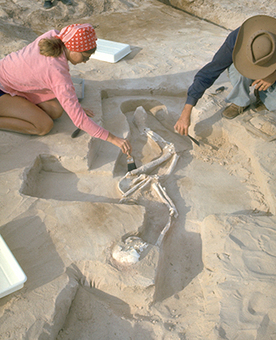
ON FEBRUARY 26, 1974, a young geologist managed to stretch Australian history by 20,000-odd years when he found 40,000-year-old human remains buried in a dry lake bed in south-western New South Wales.
Scoop.it!

Little do London tube passengers know as they travel through the maze of the underworld, what may lie just on the other side of a wall. In the late 1950s, the Notting Hill tube station underwent a major overhaul when the old lifts that transported passengers to and from the train platforms were abandoned and replaced with modern escalators. The passageways to the lifts were sealed off too and everything within them was subsequently frozen in time.
David Connolly's insight:
what an amazing find
Scoop.it!

Engineer and writer Don Lancaster noticed the network of contours snaking along mesas and hillsides while trekking through the Arizona desert. Could they be ancient "hanging canals?"
Two things you might not expect to find if you visit the foothills of Mount Graham in eastern Arizona: 1) An elaborate network of "hanging canals" likely built nearly a thousand years ago on steep mesas by long-forgotten ancients. 2) An endearingly eccentric electrical engineer and author who, long before he started trying to solve the archaeological mystery, helped pioneer the world of personal computers. Nevertheless, on a sunny morning, Don Lancaster wrestles his four-wheel-drive SUV over ruts and boulders into the bajada above the Gila River Valley. His voice rising with excitement, the bearded 73-year-old urges passengers to hold tight and keep their eyes on the slope of a nearby butte. "Right around this corner," he promises. "You won't miss it. One of the most spectacular of the hanging canals.... As far as I know, what we have here is unique in the Southwest -- and could be in the world."
Scoop.it!

David Connolly's insight:
And it is inded a lovely place
Scoop.it!

Catholic guilt first put the British off the idea of eating horses almost 1,500 years ago, archaeologists have concluded. A new study of the eating habits of the Anglo Saxons suggests that they may have developed a strong distaste for horsemeat because they saw it as a “pagan” food. The findings, published in the Oxford Journal of Archaeology, could help explain the level of revulsion at the recent revelations that consumers have been eating horsemeat uwittingly. Evidence from animal bones found at settlement sites across England shows that horses appear to have been eaten on special occasions in the early Anglo Saxon period.
Scoop.it!

Buteman Bute welcomes Glasgow archaeology students Buteman Paul, who was the archaeology project manager for the Discover Bute Landscape Partnership Scheme throughout the lifespan of the project from 2008 to 2012, said: “One of the key objectives...
David Connolly's insight:
Hello Bute! nice one
Scoop.it!

PEOPLE can brush their teeth as much as they like, but our mouths will never be as healthy as those of our ancient ancestors.
David Connolly's insight:
Smile!
Scoop.it!

By: Alison Damick, Columbia University, and Ahmad Lash, The Department of Antiquities of Jordan Azraq, an oasis village in the northeastern Jordanian steppe, sits on the crossroads of the highways connecting Jordan to Saudi Arabia and Iraq [Fig 1]. Its remarkable archaeological record reflects millennia of human activity; the first recorded human occupation in the Azraq Basin dates to more than 300,000 years ago. Including prehistoric, Roman, Byzantine, and early and middle Islamic sites, the 13,000 km² basin area currently hosts a total of 157 documented archaeological sites. A great concern of recent years has been how to effectively protect those sites from the various threats they face, including environmental degradation and erosion, increased vehicle traffic, construction projects and looting. Co-emergent with this concern is the increasing interest among archaeologists in the close relationship between the contemporary world of which archaeological practice is a part and the narrative of the past that is produced from its activities. In 2008, the Azraq Community Archaeology Program (ACAP) was initiated to address these issues. We’d like to use this brief presentation of our experiences with the project to raise some of the issues we’ve encountered in practice and in theory, as launching pads for further discussion.
David Connolly's insight:
Something very close to our hearts#
Scoop.it!

A mosaic featuring an Eros figure fishing on horse has been found in the southern province of Adana’s Yumurtalık district. The half fish-half horse Eros, which is called Hippocampus in Greek mythology, is claimed to be the one and only such mosaic in the world.
Scoop.it!

MacArthur Elementary School sits right by an archaeological site along the Vestal Parkway. So when Nina Versaggi was enlisted to check the property for remnants of prehistoric settlements — part of the process in the potential rebuilding of the flood-ravaged school — she assumed there would be something there. Versaggi, the director of Binghamton University’s Public Archaeology Facility, was right. “We found hundreds of byproducts of toolmaking,” she said. “But no actual tools.”
David Connolly's insight:
What a good story.
Scoop.it!

Archaeological Survey of India makes discovery during restoration work at Pranaveswara temple in Talagunda While the copper plates, datable to the 12 century CE, belong to the Kalachurya dynasty, the gold coins were issued by the Ganga rulers, who held sway in the State from the 4th century CE to the 12 century CE.
Scoop.it!
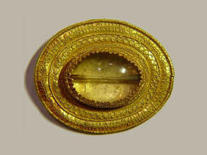
Among their finds are two bronze helmets, discovered on the surface of the necropolis. One helmet (found in fragments and restored) has relief carvings of curled sheep horns while the other has ridges, zigzags and other odd shapes.
David Connolly's insight:
Super cool find. Though is it me... I am more intersted in the people
|
Scoop.it!

In some locations around the world major cultural heritage sites are being left to deteriorate and in many instances the communities surrounding them are living far below the poverty line. As a result local communities see these sites as opportunities to loot, graze animals or to grow crops on in an attempt to provide themselves and their family with the essentials. While we may want to preserve these archaeological sites for future generations to study and enjoy, how can we tell people not to economically exploit them without somehow providing a viable alternative? The Sustainable Preservation Initiative’s (SPI) concept answers this question by empowering local entrepreneurs and providing transformative economic opportunities. Investing in locally-created and owned businesses whose financial success is tied to the preservation of the site, SPI helps preserve cultural heritage and alleviates poverty in the surrounding communities.
Scoop.it!

The letters nagged at me like a persistent hint from the past. I’d first encountered them among my father’s papers as I researched my book, The Man Who Thought Like a Ship. They pertained to a ship model he’d built in the 1950s of an ancient Egyptian vessel. The model left home before I was born, and everyone, my father included, assumed it had been discarded long ago. I’d only ever seen it in pictures.
David Connolly's insight:
Amazing new article!
Scoop.it!

Caithness, in the far northern mainland of Scotland is well known for its spectacular archaeology but a recent LiDAR survey carried in the north of the county has allowed the opportunity to glimpse the wider, hidden landscapes that are less easily appreciated. This survey is beginning to rewrite the history of northern mainland Scotland. In response to a requirement to record the landscape surrounding the nationally significant cluster of Neolithic chambered cairns at Hill of Shebster, Baillie Windfarm Ltd. commissioned AOC Archaeology Group to carry out a LiDAR survey, the result was stunning and they decided to create a new website to let people explore the ancient landscape hidden beneath fields and woodland in north-west Caithness.
Scoop.it!

The Kaska or Kaskians were a tribe of the Pontus, northern Anatolia (today's Turkey), around the Kizil Irmak river mouth, bordering on and constantly harrasing the Hittite empire.
David Connolly's insight:
Another good insight into another culture I had never heard of before.

Shannon Bench's curator insight,
October 24, 2013 8:03 PM
I should beat them up for attacking my precious Hittites.
Scoop.it!

At some moment a few years after Jesus Christ died but before the second century began, someone made a brick on the island that would become the cornerstone of Great Britain. The area was controlled by Rome then, and known as Britannia and as the brick lay green, awaiting the kiln, a cat walked across the wet clay and left its footprints before wandering off to do something else. The clay was fired, the prints fixed, and the brick itself presumably became a piece of a building or road. Two thousand years later, a Sonoma State master's student named Kristin Converse was poking around the holdings of the Fort Vancouver National Historic Site in Washington state. She was writing her thesis on the business and technology of brickmaking in Portlandia (known more formally as the Willamette Valley). A brick caught her eye. It was part of an odd group that was not of local origin. In one corner, there were the footprints of a cat. Where had this cat lived?
David Connolly's insight:
I love these sort of stories!
Scoop.it!

As Stonehenge gears up for winter, we wanted to let you know we're making good progress with the new galleries and visitor centre at Airman's Corner. In late 2013, work will have been completed and we'll be busy preparing for the opening.
Scoop.it!

A new archaeological find in the Orkney Islands off the northern tip of Scotland could have connections to Neolithic religion.
David Connolly's insight:
One of the best sites in the world :)
Scoop.it!

Archaeologists in Rotterdam have found an old shoe stuffed with 477 silver coins during excavations behind the town hall. Archaeologists say they have never before found a shoe filled with money, which ranges in dates from 1472 to 1592. On theory is that the owner of the shoe hid it under floorboards to protect it during the 80 Years War (1568-1648).
David Connolly's insight:
better than banknotes in a sock!
Scoop.it!

A new study examining upper Palaeolithic burial practices in Eurasia shows the burial practices varied widely, as some graves were filled with a large number of personal and ritual items while the vast majority were fairly simple.
David Connolly's insight:
The nub of it is that Neanderthal and Early human burials are in general similar in their simple nature - dig hole - bury. and as we have so few, the stand out examples (often from later periods, skew the perception.
Scoop.it!

For centuries, the Knights of Malta and the Ottomans were enemies. The knights have just celebrated their 900th If any of you happened to be watching “euronews” just three days before Pope Benedict XVI announced his resignation, you might have seen a long procession of men wearing black cloaks with white Maltese crosses slowly moving into the St. Peter’s Basilica for a meeting with the pope. These were today’s Knights of Malta, officially the Order of Malta, the Sovereign Military Hospitaller Order of St. John of Jerusalem of Rhodes and of Malta.
The occasion was the 900th anniversary of the presentation of the Papal decree in 1113, which gave the order official status, although it was founded 60 years before that. Seeing them conjured up memories of the kingdom of Jerusalem, the Saracens and Saladin, Cyprus, Rhodes and finally the Battle of La Valletta on the island of Malta where some 30,000 Ottoman soldiers met their deaths in 1565.
David Connolly's insight:
a fascinating story
Scoop.it!

The story started in January 2011, when Paige Glenen and Katie Urban made an incredible discovery in storage rooms at the Museum of Ontario Archaeology. The pair found box after box of artefacts labelled simply as “Old World Roman.”
David Connolly's insight:
WOW!!
Scoop.it!

"The 'material studies' part of the CIAMS name reflects a renewed engagement with the material world," Manning explained. "Many of the fundamental challenges of our time -- climate change, social inequality, gun control -- not to mention values we hold regarding aesthetics and behaviors -- all emerge out of centuries and even millennia of human interaction with the vast world of material objects."
|





