Your new post is loading...

|
Scooped by
Alfredo Calderón
January 22, 2016 12:03 PM
|
Who would think that a video game could revolutionize the teaching of 21st century skills. I recently had the opportunity to visit a New York Inner City School and witness the most extraordinary te...
|
|
Scooped by
Alfredo Calderón
January 22, 2016 7:25 AM
|
Too many classroom discussions are still dominated by teacher talk. This post offers nine simple suggestions for increasing the impact of class discussions.
|
|
Scooped by
Alfredo Calderón
January 21, 2016 7:15 AM
|
While the classic school carnival features beanbag tosses and balloon pops, the one at Sal Khan's independent school included a makerspace booth to raise awareness for the Saltmarsh Harvest Mouse, a food stand booth raising money to donate to a local environmental non-profit and a test-your-brain booth to teach people about California endangered species.
Why the MOOC hype could still be real; and the power of pairing with analytics and big data.
Via Elizabeth E Charles
|
|
Scooped by
Alfredo Calderón
January 18, 2016 7:32 AM
|
¿Y si el problema de la escuela no es cómo enseñar más matemáticas, más lengua o más inglés, repetir curso o no? ¿Y si se trata de un problema de raíz, de que la escuela, tal y como está concebida, dividida y fragmentada por edades y por materias estancas, no funciona, con sus exámenes que…
|
|
Scooped by
Alfredo Calderón
January 18, 2016 6:47 AM
|
Problemas y ejercicios resueltos de física básica para ciencias, ingenieria y otros estudios técnicos. Primer grupo de enunciados
|
|
Rescooped by
Alfredo Calderón
from Learning & Mind & Brain
January 18, 2016 5:27 AM
|
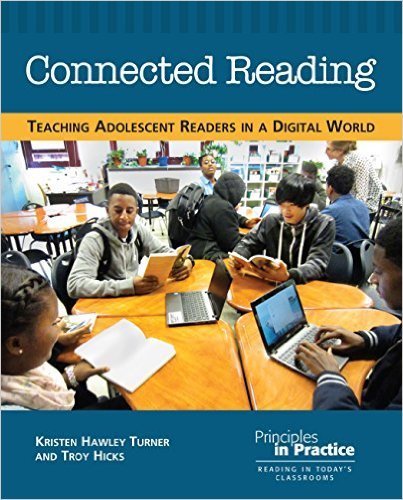
Welcome to the companion wiki for our upcoming NCTE book, Connected Reading: Teaching Adolescent Readers in a Digital World. You will find here links to resources that are mentioned in the book, as well as additional tools to help you and your students develop their skills of Connected Reading. We hope that you will share your ideas with others on the "In the Classroom," "Reading List," and "Useful Tools" pages.
Via Jim Lerman, Miloš Bajčetić
|
|
Scooped by
Alfredo Calderón
January 17, 2016 2:53 PM
|
It's about time we retire these statements, all of which I hear teachers say too often to students: You must not be working hard enough. Is that really the only reason? It sounds instantly interrogatory and condescending, especially if they ARE trying. Maybe they don't understand things in your teaching style. Maybe they don't understand…
Via juandoming
|
|
Scooped by
Alfredo Calderón
January 16, 2016 5:33 AM
|
Quick Rubric is an online tool that lets users easily create rubrics. Teachers can create a free account and design their own rubrics on the web.
|
|
Scooped by
Alfredo Calderón
January 16, 2016 4:28 AM
|
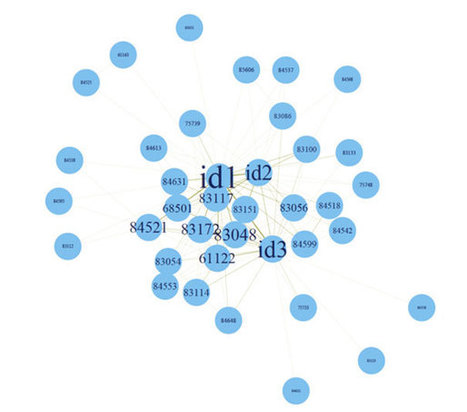
Online fora have become not only one of the most popular communication tools in e-learning environments, but also one of the key factors of the learning process, especially in distance learning, as they can provide to the students involved, motivation for collaboration in order to achieve a common goal. The purpose of this study is to analyse data related to the participation of postgraduate students in the online forum of their course at the Hellenic Open University. The content of the messages posted is analysed by using text mining techniques, while the network through which the students interact is processed through social network analysis techniques. Furthermore, sentiment analysis and opinion mining is applied on the same dataset. Our aim is to study students’ attitude towards the course and its features, as well as to model their sentiment behaviour over time, and finally to detect if and how this affected their overall performance. The combined knowledge attained from the aforementioned techniques can provide tutors with practical and valuable information for the structure and the content of the students’ exchanged messages, the patterns of interaction among them, the trend of sentiment polarity during the course, so as to improve the educational process
|
|
Rescooped by
Alfredo Calderón
from Learning & Mind & Brain
January 15, 2016 6:28 AM
|
Class participation tools can facilitate student engagement with each other, the subject content and the lecturer. They enable students to interact in large lectures by answering questions, leading to an improved understanding of the content. Class participation tools also gives the student a voice and an opportunity to share their opinions and contribute to the session – ideal for those quieter students who are not often heard in large teaching spaces (many tools enable anonymised responses).
Class participation tools can also be used to get feedback on your own teaching, for example the session you have just delivered. They could be used for mid-modules evaluations. In this blog post, we will look at five class participation tools being used at York St John University. Each have their pros and cons, so it’s important that you select the right tool for the job.
Via Miloš Bajčetić
|
|
Scooped by
Alfredo Calderón
January 11, 2016 8:25 AM
|
|
|
|
Scooped by
Alfredo Calderón
January 22, 2016 7:29 AM
|
Students perform poorly in our courses for a variety of reasons. Here are some ideas on the type of feedback that best helps them turn things around.
Here's 100 Engineering Projects For Kids to get that them excited about construction, design, electronics, and more.
Via John Evans
|
|
Scooped by
Alfredo Calderón
January 21, 2016 7:10 AM
|
|
|
Scooped by
Alfredo Calderón
January 19, 2016 6:37 AM
|
Reflexiones sobre la educación que estamos dando a nuestros hijos y como nos afecta la tecnología en ella. Analizamos los pro y contra de los juegos tecnológicos
|
|
Scooped by
Alfredo Calderón
January 18, 2016 7:09 AM
|
|
|
Scooped by
Alfredo Calderón
January 18, 2016 6:06 AM
|
|
|
Scooped by
Alfredo Calderón
January 18, 2016 5:26 AM
|
|
|
Scooped by
Alfredo Calderón
January 17, 2016 5:50 AM
|
Neurologist and teacher Judy Willis shares three simple techniques to help teachers build resilience in their students
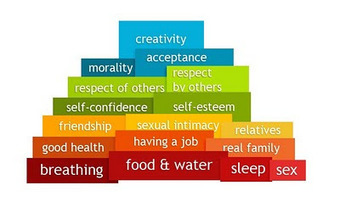
Bienestares el conjunto de factores que facilitan satisfacer a un individuo sus necesidades, tanto físicas, sociales como psicológicas.Maslow, a través de su célebre pirámide, reagrupó las necesidades fundamentales en cinco categorías: fisiológicas, de seguridad, sociales, de estima y de realización. Su análisis va más allá de una simple clasificación y postula la existencia de una jerarquía entre las necesidades. Las necesidades de orden inferior (las básicas), una vez satisfechas, dejan aparecer las necesidades de clase superior. Es decir, que se observaría una evolución en las necesidades que, pasando de un objetivo prioritario de supervivencia, se iría hacia unos objetivos más cualitativos de estilo y de calidad de vida.
Via Ricard Lloria
|
|
Scooped by
Alfredo Calderón
January 15, 2016 6:32 AM
|
Nothing puts a grey cloud over your day quite like the realization that your Moodle has been hacked. If this has never happened to you, I truly hope that it never does. Beyond any real financial or…
|
|
Scooped by
Alfredo Calderón
January 15, 2016 6:11 AM
|
Wondering how to get to know your Online Learners? Check this article to find out 10 key questions to ask to get to know your Online Learners.
|


 Scoop.it!