Your new post is loading...

|
Scooped by
Alfredo Calderón
January 9, 2015 4:35 AM
|
What are Open Educational Resources? The generally accepted definition is that "Open Educational Resources (OER) are teaching and learning materials that are freely available online for everyone to use, whether you are an instructor, student or self-learner. Examples of OER include: full courses, course modules, syllabi, lectures, homework assignments, quizzes, lab and classroom activities, pedagogical materials, games, simulations, and many more resources contained in digital media collections from around the world." Resource Links This list is by no means comprehensive and should you know of a resource that does not appear in our list and you think it should, please contact the Copyright Office and tell us about it!
|
|
Rescooped by
Alfredo Calderón
from #TRIC para los de LETRAS
January 8, 2015 5:10 PM
|
Cada vez que comienza un año, se libera un montón de obras culturales y pasan a ser de dominio público. Si nos ceñimos a la legislación de la mayoría de los países europeos nos encontramos con un plazo de 70 años desde la muerte de su autor. 2015 va ser un gran año en este sentido por la cantidad (y calidad) que engrosan esta lista.
Via Gumersindo Fernández, Javier Sánchez Bolado, Sonia C. Alonso
|
|
Scooped by
Alfredo Calderón
January 8, 2015 6:25 AM
|
Competency-based education programs are an alternative way for learners to gain the skills employers want from employees.
|
|
Scooped by
Alfredo Calderón
January 8, 2015 6:15 AM
|
BOSTON, Jan. 7, 2015 /PRNewswire/ -- Students, like all people, have a voice, but they don't...
|
|
Rescooped by
Alfredo Calderón
from Learning & Mind & Brain
January 8, 2015 5:48 AM
|
Highlighting professional development experience increases an individual’s chances of being noticed for new career opportunities.
Particular certifications that deliver certain skills may be of interest to employers trying to fill specific organizational skills gaps.
Via Miloš Bajčetić
|
|
Scooped by
Alfredo Calderón
January 8, 2015 5:31 AM
|
A brief guide of Youtube channels with helpful resources, ideal for Moodle users.
|
|
Scooped by
Alfredo Calderón
January 8, 2015 5:28 AM
|
|
|
Scooped by
Alfredo Calderón
January 8, 2015 5:25 AM
|
I’ve been rereading some of the research on student self-assessment and thinking about how students develop these skills. They are important in college, all but essential in most professions, but they’re rarely taught explicitly. We assume (or hope) they’re the kind of skills student can pick up on their own, even though most of us see evidence to the contrary. Many students, especially beginning ones, routinely overestimate their ability and underestimate the difficulty of course content. How often did I hear this comment about my courses: “A communication course? Gotta be a piece of cake. I’ve been talking since I was 3.”
|
|
Scooped by
Alfredo Calderón
January 6, 2015 8:07 PM
|
By 2015, 25 million post-secondary students in the United States will be taking classes online. And as that happens, the number of students who take classes exclusively on physical campuses will plummet, from 14.4 million in 2010 to just 4.1 … Continue reading →
|
|
Scooped by
Alfredo Calderón
January 6, 2015 10:09 AM
|
|
|
Scooped by
Alfredo Calderón
January 6, 2015 8:19 AM
|
Poll finds gains from connectivity outweigh the losses
|
|
Scooped by
Alfredo Calderón
January 6, 2015 7:25 AM
|
|
|
Scooped by
Alfredo Calderón
January 6, 2015 7:23 AM
|
Business leaders call on K-12 and higher education institutions to graduate students with the skills demanded by the marketplace.
|
|
|
Rescooped by
Alfredo Calderón
from Educación a Distancia y TIC
January 9, 2015 4:33 AM
|
If you don’t know what kind of story you want to tell, you probably won’t tell a good one. Get to know these four basic story types for eLearning.
Via LGA
|
|
Scooped by
Alfredo Calderón
January 8, 2015 5:09 PM
|
WOODLAND PARK, N.J., Jan. 7, 2015 (GLOBE NEWSWIRE) -- For the second consecutive year, Berkeley College has been ranked among the Best Colleges for Online Bachelor's Degree Programs by U.S. News & World Report. Berkeley College was ranked in the Top 100 schools nationwide, rising to No. 87 in online education.
|
|
Scooped by
Alfredo Calderón
January 8, 2015 6:21 AM
|
In a recent Endpoint piece, we briefly described our experiences with students in our classes creating their own assessment content, in the form of multiple choice questions (MCQs), using PeerWise, a freely available online tool. This article describes our experiences further, in the context of a JISC-funded Assessment and Feedback project grant, addresses issues of question quality and presents the case - and resources - for developing an online community of practice around the PeerWise system.
|
|
Scooped by
Alfredo Calderón
January 8, 2015 6:12 AM
|
KineMaster es un extraordinario editor de vídeos para dispositivos con Android. Ya no necesitas el PC para componer vídeos profesionales fácilmente.
|
|
Scooped by
Alfredo Calderón
January 8, 2015 5:39 AM
|
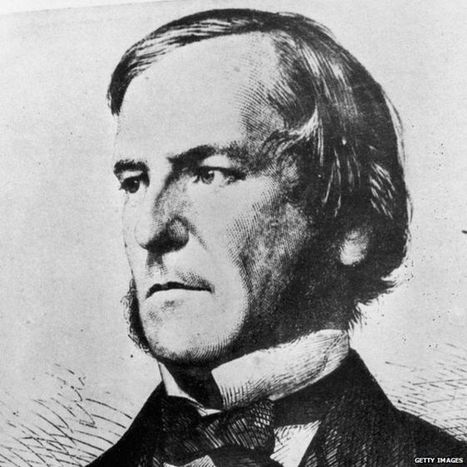
Los ladrillos con los que se construye la programación hoy en día, es decir, las instrucciones que se le dan a un sistema informático, están basadas en un sistema lógico que inventó un inglés hace más de siglo y medio.
Via LGA, Labtic.Unipe
|
|
Rescooped by
Alfredo Calderón
from APRENDIZAJE
January 8, 2015 5:26 AM
|
|
|
Scooped by
Alfredo Calderón
January 8, 2015 5:21 AM
|
|
|
Rescooped by
Alfredo Calderón
from Informática Educativa y TIC
January 6, 2015 10:09 AM
|
Cuenta el divulgador Bill Bryson en su obra Una breve historia de casi todo que, cuando era niño, en los años 50, contempló con asombro una ilustración de su libro de ciencias, un libro “maltratado, detestado, un mamotreto deprimente”.
Via Fernando de la Cruz Naranjo Grisales
|
|
Rescooped by
Alfredo Calderón
from Educación, TIC y ecología
January 6, 2015 8:20 AM
|
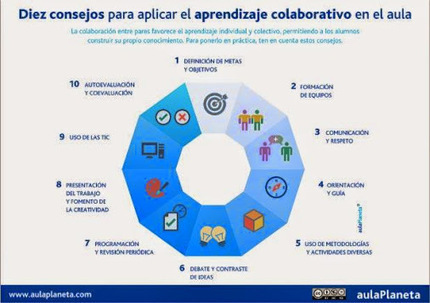
Consejos para aplicar el aprendizaje colaborativo en el aula: http://ow.ly/DKlKM #educación #TIC - Net-Learning - Soluciones para E-learning: Google+
Via Ramon Aragon
|
|
Scooped by
Alfredo Calderón
January 6, 2015 7:47 AM
|
Major technological advances, like the printing press or the Internet, create economic volatility. This in turn changes the existing social contract. A common assumption for the past century has been that with education and effort, you can get a job and earn a decent wage. This is no longer the norm.
Consider that some or all of your current work will be automated in the next five years, probably to be replaced by software. As with agriculture last century, fewer people are needed to do manufacturing, information, or service work today. We are entering a post-job economy. Our careers will be shorter as our lives get longer. Companies are no longer the stable source of employment they once were.
|
|
Rescooped by
Alfredo Calderón
from Learning & Mind & Brain
January 6, 2015 7:24 AM
|
The most famous result of using the MOOC platforms instead of the traditional LMSs is that the online courses offered in MOOC platforms are far easier to audit and can be audited for free. (Most of the hype around MOOCs has focused on this free auditing difference.) But this realization highlights the fact that MOOC platforms are themselves LMSs with a single differentiating feature set (enabling free auditing). And actually these free auditing features are no longer differentiators. The fact that there was really only a delta of one feature between traditional LMSs and MOOC platforms explains why so many traditional LMS providers were able to begin playing in the MOOC space so quickly (c.f. Canvas Network and Blackboard CourseSites).
It also highlights the fact that, because they are LMSs that add a single feature, MOOC platforms are simply next generation data silos. I say next generation data silos, but this really understates their ruthless efficiency. By making auditing online courses easy and free, they exponentially expand their ability to attract and capture student data, which will remain in the silo. (You might almost think of MOOCs as honeypots for education.)
But for my money, the most under-discussed result of using the MOOC platforms is the way that the branding of MOOCs is inverted from the branding of traditional online courses. In a traditional online course, the lead brand is the institution, followed by the faculty member, with little or no consideration for the LMS the course is offered in.
By contrast, with MOOCs the lead brand is the LMS – you’re taking a course on Coursera! It happens to be offered by MIT. And there is probably a list of “Course Staff” buried at the bottom of the About the Course page.
This brand inversion, which places the platform ahead of the institution or the “course staff” (we don’t use the word “faculty” any more), points to a disturbing trend.
Via Miloš Bajčetić
|