Aprendiendo a Distancia
110.4K views | +5 today
Aprendiendo a Distancia
Colaborando para una mejor educación en línea para adelantar la evolución de la enseñanza y aprendizaje usando la tecnología y pedagogía como estrategias.
Your new post is loading...
Scooped by Alfredo Calderón
February 12, 2015 4:53 PM
Scoop.it!

Por qué hacer las Presentaciones con Google Slides

Por qué hacer las Presentaciones con Google Slides | Aprendiendo a Distancia | Scoop.it

La principal virtud de las Aplicaciones de Google es su capacidad de llevar a cabo un trabajo colaborativo, tal y como comentamos para Drawings, haciendo Infografías, documentos de texto, ect. así como la posibilidad de integrarlos en el resto de Apps de la familia y, Google Slides no se queda atrás en este aspecto.

No comment yet.
Scooped by Alfredo Calderón
February 12, 2015 4:50 PM
Scoop.it!

Social Media Campaign Strategy: What to do Before, After and During a Campaign

Social Media Campaign Strategy: What to do Before, After and During a Campaign | Aprendiendo a Distancia | Scoop.it
Launching social media campaigns can be tricky. Learn how to launch a social media campaign from the beginning to end in this blog post.
No comment yet.
Scooped by Alfredo Calderón
February 12, 2015 6:06 AM
Scoop.it!

Teaching Empathy: Are We Teaching Content or Students?

Teaching Empathy: Are We Teaching Content or Students? | Aprendiendo a Distancia | Scoop.it
Teaching empathy is about teaching students, not content -- how they feel about the incoming knowledge will ultimately determine how useful it is to them.
No comment yet.
Scooped by Alfredo Calderón
February 12, 2015 5:49 AM
Scoop.it!

ProQuest Document View - The effect of social presence in virtual high school

The overall purpose of this study was to see whether social presence in online learning is related to student satisfaction at the high school level and to investigate whether certain activities can be effective in increasing students' social presence and satisfaction and thus retention rates. The study was divided into two parts: the purpose of the first part of the research was to extend findings by Gunawardena and Zittle (1997) into the high school setting, and the second part compared several activities to investigate which of them were the most effective in enhancing social presence.


A survey examining social presence and satisfaction and discussion board coding were the instruments used for Part 1. Part 2 utilized data from the same social presence and satisfaction survey, along with an additional survey examining perceived social presence per activity, an instructor survey, course activity/contact log data, and student retention/drop-out data.


Three schools participated in the study, with a total of 40 instructors, 18 courses, and 277 students represented in Part 1; 727 discussion board postings by 105 students are analyzed in Part 2. Pearson's correlation, linear regression, and binary logistic regression were performed for data analysis. Schools were analyzed separately for the Part 2 analysis, as one school provided student-specific contact log data and the other two provided course-specific activity data.


The results show that certain activities, namely personalized introductions, sending of official documents, notes, and course announcements, are strong predictors of high social presence. Students who had high social presence in personalized introductions and real-time web conferencing activities also had high social presence in the course overall. None of the specific activities tested was distinguished as a predictor of satisfaction. However, perceived social presence in certain activities, namely the personalized introduction, orientation activity, and use of web 2.0 tools, was a predictor of satisfaction. High social presence on team projects predicted low satisfaction.


Sending frequent notes was shown to be a strong predictor of retention. Lastly, the results showed that high social presence in discussion board activities predicted a high retention rate.


This research is intended to inform the design of online high school courses. The results provide data on what activities impact social presence, satisfaction, and retention, and the discussion in the conclusion will provide some reflections on how to effectively implement courses with integrated social presence.

No comment yet.
Scooped by Alfredo Calderón
February 12, 2015 5:38 AM
Scoop.it!

3 Things I learned from completing 60 MOOCs in 10 Months - e-Learning Feeds

3 Things I learned from completing 60 MOOCs in 10 Months - e-Learning Feeds | Aprendiendo a Distancia | Scoop.it
In January 2014 I started my first Massive Open Online Course (MOOC) after reading a blogpost on Poets & Quants. I did not know back then …
No comment yet.
Scooped by Alfredo Calderón
February 10, 2015 4:09 PM
Scoop.it!

Grade Level: Tracking Online Education in the United States, 2014 - OLC

Grade Level: Tracking Online Education in the United States, 2014 - OLC | Aprendiendo a Distancia | Scoop.it
Grade Level:Tracking Online Education in the United States is the twelfth annual report on the state of online learning in U.S. higher education. The 2014 Survey of Online Learning conducted by the Babson Survey Research Group and co-sponsored by the Online Read More >
No comment yet.
Scooped by Alfredo Calderón
February 10, 2015 3:53 PM
Scoop.it!

Creating Color-Blind Accessible Figures – ProfHacker - Blogs - The Chronicle of Higher Education

Creating Color-Blind Accessible Figures – ProfHacker - Blogs - The Chronicle of Higher Education | Aprendiendo a Distancia | Scoop.it

There is tremendous variation in how individuals perceive and distinguish colors. These differences can be due to color vision deficiency or color blindness, as well as other medical conditions affecting the eyes or brain. Other factors such as device display settings, corrective lenses, and environmental lighting conditions can also affect the perception of color differences.


The most common congenital forms of color blindness are deuteranopia and protanopia, the inability to distinguish red and green. Tritanopia causes difficulty in distinguishing blue and yellow. However, these simplified descriptions barely begin to address the ways many different colors (and their lighter/darker variations) are perceived by those with color blindness.

No comment yet.
Scooped by Alfredo Calderón
February 10, 2015 6:52 AM
Scoop.it!

Los documentales sobre educación alternativa triunfan en YouTube

Los documentales sobre educación alternativa triunfan en YouTube | Aprendiendo a Distancia | Scoop.it
Documentales como Enséñame pero bonito , Entre maestros o La educación prohibida , que cuestionan la educación actual, triunfan en YouTube
No comment yet.
Rescooped by Alfredo Calderón from iPads, MakerEd and More in Education
February 10, 2015 6:10 AM
Scoop.it!

How to create and share an iCloud calendar on the iPad | iPad Insight

How to create and share an iCloud calendar on the iPad | iPad Insight | Aprendiendo a Distancia | Scoop.it
With iOS 8 Apple introduced Family Sharing. This feature might not be for everyone, but when used appropriately it's a great way to share a common calendar.

Via John Evans
Scooped by Alfredo Calderón
February 10, 2015 6:02 AM
Scoop.it!

Defining 'Evidence of Learning' @insidehighered

Defining 'Evidence of Learning' @insidehighered | Aprendiendo a Distancia | Scoop.it

An investment banking and consulting firm focused on education, Tyton Partners, is issuing a report today that attempts to create a framework for measuring "evidence of learning." The research, which the Bill and Melinda Gates Foundation funded, seeks to take a holistic approach to defining the "body of knowledge, skills and experience" people achieve in both formal and informal activities throughout their lifetime. Tyton, which until this month was Education Growth Advisors, also released a second report on the "supplier ecosystem" that surrounds related markets, such as accreditation services, portfolio platforms and assessment services.

No comment yet.
Scooped by Alfredo Calderón
February 10, 2015 5:19 AM
Scoop.it!

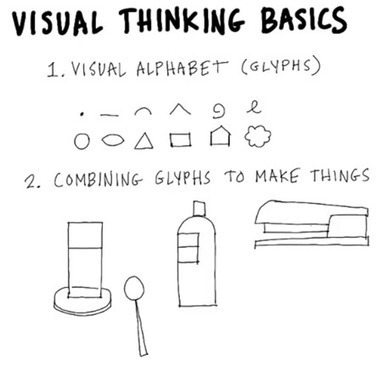
Essential Guide to Visual Thinking for E-Learning

Essential Guide to Visual Thinking for E-Learning | Aprendiendo a Distancia | Scoop.it
 
Here are two common challenges when building online training courses: knowing what content needs to be in the course and then having the right visuals to support the learning of that content.
No comment yet.
Scooped by Alfredo Calderón
February 10, 2015 4:43 AM
Scoop.it!

Blended and Online Assessment Taxonomy Infographic - e-Learning Infographics

Blended and Online Assessment Taxonomy Infographic - e-Learning Infographics | Aprendiendo a Distancia | Scoop.it
The Blended and Online Assessment Taxonomy Infographic presents types of activities and grading and feedback criteria to help you plan better assessments.
No comment yet.
Scooped by Alfredo Calderón
February 10, 2015 4:31 AM
Scoop.it!

MOOCs Treat All Learners the Same

MOOCs Treat All Learners the Same | Aprendiendo a Distancia | Scoop.it

All learners are different. They come from different backgrounds and have different levels of prior knowledge. They have different learning styles and preferences, different needs and different questions. For education to be effective and engaging, it needs to be adaptable for the needs of individual learners. MOOCs treat all learners the same, and a one-size-fits-all approach works just as well for education as it does for clothing, which is not well at all.

This is probably my favorite objection to MOOCs, perhaps because it is the one (aside from low completion rates) that has gotten the most attention. The basis of this argument is that “massive” courses can never work because they don’t take into account the needs of individuals. In fact, I (and many others) believe that MOOCs are able to support individual learners even better than traditional instructional formats.

No comment yet.
Scooped by Alfredo Calderón
February 12, 2015 4:51 PM
Scoop.it!

Take-Away From the Gates Report on Faculty | College Ready Writing @insidehighered

Take-Away From the Gates Report on Faculty | College Ready Writing @insidehighered | Aprendiendo a Distancia | Scoop.it

The Gates Foundation just released a really interesting report on Faculty Trends (PDF). The focus of the report, based on a robust amount of survey data and informed by a solid review of the literature, is professors’ adoption of technology in their teaching and what motivates them to adopt new approaches to their teaching. It’s a really informative report, especially from a faculty development perspective.

No comment yet.
Scooped by Alfredo Calderón
February 12, 2015 4:49 PM
Scoop.it!

Did higher education get these trends right? - eCampus News

Did higher education get these trends right? - eCampus News | Aprendiendo a Distancia | Scoop.it
The NMC has released its 2015 Higher Education Horizon Report, which charts the 5-year horizon for the impact of emerging technology and trends.
No comment yet.
Scooped by Alfredo Calderón
February 12, 2015 5:54 AM
Scoop.it!

Gamification in Education

No comment yet.
Rescooped by Alfredo Calderón from 21st Century Learning and Teaching
February 12, 2015 5:40 AM
Scoop.it!

How To Find Openly Licensed Educational Resources You Can Use [Infographic] | OER

How To Find Openly Licensed Educational Resources You Can Use [Infographic] | OER | Aprendiendo a Distancia | Scoop.it
Most of us turn to the internet when we are looking for resources to use for a presentation, report or article. The internet holds the key to so many robust resources.

Yet how many of these resources can you legally use for free? How many of them can you adapt?

That’s where Open Educational Resources (OER) can help. Here’s an infographic from the Center for Open Educational Resources and Language Learning (at the University of Texas at Austin) that can help.


Learn more:


- http://www.scoop.it/t/21st-century-learning-and-teaching/?tag=OER


Via Gust MEES
Suzanne's curator insight, February 17, 2015 5:02 AM

Every language teacher and student should contribute to make this a powerful resource concept. Language is an instrument; use it, take care of it, share it.

Dean Mantz's curator insight, February 18, 2015 11:15 AM

Thanks to @Dennis T OConnor for sharing this infographic on finding and identifying open source education resources.  

Iolanda Bueno de Camargo Cortelazzo's curator insight, February 19, 2015 12:00 PM

Bastante úteis estas informações para professores e gestores educacionais.

Scooped by Alfredo Calderón
February 11, 2015 5:03 PM
Scoop.it!

NMC Horizon Report > 2015 Higher Education Edition

NMC Horizon Report > 2015 Higher Education Edition | Aprendiendo a Distancia | Scoop.it

The NMC Horizon Report > 2015 Higher Education Edition is a collaborative effort between the NMC and the EDUCAUSE Learning Initiative (ELI). This 12th edition describes annual findings from the NMC Horizon Project, an ongoing research project designed to identify and describe emerging technologies likely to have an impact on learning, teaching, and creative inquiry in education. Six key trends, six significant challenges, and six important developments in educational technology are identified across three adoption horizons over the next one to five years, giving campus leaders and practitioners a valuable guide for strategic technology planning. The report aims to provide these leaders with more in-depth insight into how the trends and challenges are accelerating and impeding the adoption of educational technology, along with their implications for policy, leadership and practice. View the work that produced the report at www.horizon.wiki.nmc.org.

No comment yet.
Scooped by Alfredo Calderón
February 10, 2015 3:55 PM
Scoop.it!

Ideas y herramientas para crear y utilizar videos educativos en clase -aulaPlaneta

Ideas y herramientas para crear y utilizar videos educativos en clase -aulaPlaneta | Aprendiendo a Distancia | Scoop.it
Te damos algunas ideas para utilizar videos en el aula y recopilamos las mejores herramientas TIC para que realices tus propias creaciones.
No comment yet.
Rescooped by Alfredo Calderón from Education 2.0 & 3.0
February 10, 2015 6:56 AM
Scoop.it!

Tests are not the only problem

Tests are not the only problem | Aprendiendo a Distancia | Scoop.it
Video source
In this video Noam Chomsky explains the problems with assessment: The way they are misused, misaligned, and misappropriate.

Via Yashy Tohsaku
No comment yet.
Scooped by Alfredo Calderón
February 10, 2015 6:11 AM
Scoop.it!

Write a Science Opera

Write a Science Opera | Aprendiendo a Distancia | Scoop.it
Write a Science Opera (WASO) is a creative professional development approach to inquiry-based music and science education in which pupils of different ages, supported by teachers, opera artists and sc
No comment yet.
Scooped by Alfredo Calderón
February 10, 2015 6:07 AM
Scoop.it!

5 Tools to Extract Images From PDF Files

5 Tools to Extract Images From PDF Files | Aprendiendo a Distancia | Scoop.it
If you have a PDF file full of images, you may want to have those images converted to JPG files or PNG files. This would, for example, make it easier to get those images printed, or altered by an image editing program. If you Google this issue, you will find many options, quite a lot…
No comment yet.
Scooped by Alfredo Calderón
February 10, 2015 6:01 AM
Scoop.it!

20 blogs para la asignatura de Ciencias Naturales - Educación 3.0

20 blogs para la asignatura de Ciencias Naturales - Educación 3.0 | Aprendiendo a Distancia | Scoop.it
Recopilación de diferentes blogs para la asignatura de Conocimiento del Medio en Primaria, Secundaria y Bachillerato.
No comment yet.
Scooped by Alfredo Calderón
February 10, 2015 4:58 AM
Scoop.it!

Listening: The Most Difficult Skill to Teach [PDF]

No comment yet.
Scooped by Alfredo Calderón
February 10, 2015 4:33 AM
Scoop.it!

MOOCs Aren’t Interactive, So There’s No Real Learning Taking Place

MOOCs Aren’t Interactive, So There’s No Real Learning Taking Place | Aprendiendo a Distancia | Scoop.it
No comment yet.