 Your new post is loading...

|
Scooped by
Gust MEES
March 4, 2016 2:13 PM
|
When Apple’s Worldwide Developer Certificate expired in February it caused problems for some developers, but another major problem that’s going to affect more people has just surfaced: it breaks OS X installers.
If you’ve created an OS X installation CD or downloaded an installer it won’t work anymore because it can’t be verified with Apple. To get it going again, you need to re-download the entire installer and create a new CD, which is an utter hassle. Learn more: http://www.scoop.it/t/apple-mac-ios4-ipad-iphone-and-in-security
|
|
Rescooped by
Gust MEES
from 21st Century Learning and Teaching
February 14, 2016 6:50 PM
|
Many of OS X’s most popular apps were recently revealed to be vulnerable to man-in-the-middle (MiTM) attacks.
The vulnerability specifically targets those that use Sparkle — a third-party software update framework — and unencrypted HTTP connections.
A security engineer from Vulnsec, known as Radek, said the vulnerability works on both El Capitan and its predecessor, Yosemite.
The total number of apps affected isn’t known, but Radek did estimate the number to be “huge.” Some of those confirmed as vulnerable are:
Camtasia 2 (v2.10.4)
DuetDisplay (v1.5.2.4)
uTorrent (v1.8.7)
Sketch (v3.5.1)
Additionally, security researcher Jonathan Zdziarski told Ars Technica that the ‘Hopper’ reverse engineering tool and ‘DXO Optics Pro’ are also susceptible.
Learn more:
http://www.scoop.it/t/apple-mac-ios4-ipad-iphone-and-in-security
|
|
Scooped by
Gust MEES
February 5, 2016 6:28 PM
|
Anyone who has been using computers for any length of time should (hopefully) be aware of the endless ritual of updating Adobe Flash against security vulnerabilities. Even if you don't run Flash on your computer, you've surely seen the many headlines in the tech media over the years of the importance of keeping Adobe Flash (and its Acrobat PDF Reader stablemate) updated to protect against malicious attack.
So, what better way to trick someone into having their computer infected than by disguising it as an actual Adobe Flash update?
That's precisely what criminals are doing now, in their attempts to infect Apple Mac users with scareware.
Learn more:
http://www.scoop.it/t/apple-mac-ios4-ipad-iphone-and-in-security
|
|
Scooped by
Gust MEES
December 15, 2015 9:09 AM
|
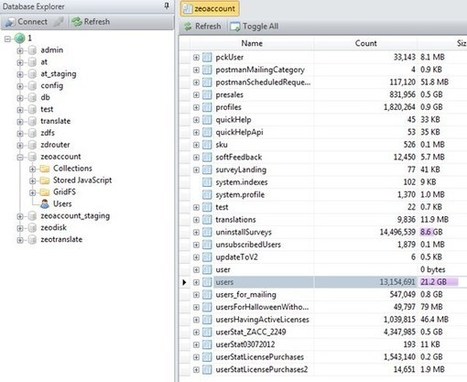
Researcher Chris Vickery stumbled across over 13 million sensitive account details related to MacKeeper, after using the Shodan search engine to hunt for database servers left open to the internet, that required no authentication.
Sure enough, Vickery's search found four different IP addresses of servers belonging to Kromtech.
And on those servers, Vickery found over 20GB of MacKeeper user data - including names, email addresses, phone numbers, IP addresses, software licenses, system information and users' hashed passwords.
Learn more:
http://www.scoop.it/t/apple-mac-ios4-ipad-iphone-and-in-security
|
|
Scooped by
Gust MEES
November 7, 2015 6:23 PM
|
A new threat research report conducted by Bit9+ Carbon Black’s research team found that in 2015, there was 948 malware instances. The number of OS X malware samples this year is five times greater than in 2010-2014 combined — where there was only 180 malware instances over a four-year period. Based on observations in a 10-week analysis: the research team anticipates MAC OS X malware to surge in the coming months.
Learn more / En savoir plus / Mehr erfahren:
http://www.scoop.it/t/apple-mac-ios4-ipad-iphone-and-in-security
|
|
Rescooped by
Gust MEES
from 21st Century Learning and Teaching
September 23, 2015 11:37 AM
|
|
|
Scooped by
Gust MEES
September 4, 2015 9:20 PM
|
En faille critique viens d'être dévoilée, et cette fois c'est le système Mac OS X qui est concerné.
Le Trousseau d'accès ( Keychain) de Mac OS X souffre actuellement d'une faille qui permettrait à des pirates de récupérer l'intégralité des mots de passe y étant stockés. Ce qui se présente ainsi comme un espace sécurisé permettant de stocker ses accès devient une véritable boite de pandore.
En savoir plus / Mehr erfahren / Learn more:
http://www.scoop.it/t/apple-mac-ios4-ipad-iphone-and-in-security
|
|
Scooped by
Gust MEES
August 5, 2015 1:27 PM
|
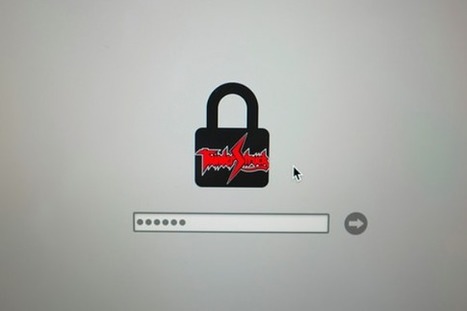
This zero-day exploit dubbed Thunderstrike 2 targets your Mac’s firmware thanks to an attached Thunderbolt accessory, such as an Ethernet adaptor or an external hard drive. After receiving the code via a phishing email or a malicious web site, malware code could look for connected Thunderbolt accessories and flash their option ROMs.
If you reboot your Mac with this infected Thunderbolt accessory plugged in, the EFI will execute the option ROM before booting OS X. As this option ROM has been infected, it will execute malicious code infecting the EFI itself. For example, it could simply make your Mac’s firmware refuse to boot OS X, turning your Mac into a useless machine. And if your firmware is compromised, there is no way to boot OS X, update the firmware and remove the malicious code.
The best part of this zero-day vulnerability is that your Thunderbolt accessory remains infected. If you plug your Ethernet adaptor into a new Mac, this Mac will get infected as well when it reboots. It’s not as harmful as malware that spreads through the Internet, but it could make some serious damage in an office environment for example.
Image credit (posted on Facebook) <===> http://www.pcworld.com/article/2955707/security/macs-can-be-remotely-infected-with-firmware-malware-that-remains-after-reformatting.html
Mehr erfahren / En savoir plus / Learn more:
http://www.scoop.it/t/apple-mac-ios4-ipad-iphone-and-in-security
http://www.scoop.it/t/apple-mac-ios4-ipad-iphone-and-in-security/?tag=Thunderstrike
|
|
Scooped by
Gust MEES
August 5, 2015 11:09 AM
|
One door closes, another one opens
Apple introduced security patches in OS X 10.10.2, released at the end of January 2015, in an attempt to shut off the Thunderstrike hole.
Unfortunately, it seems that Apple didn't close all the doors.
Hudson, together with two other researchers named Xeno Kovah and Corey Kallenberg, have figured out Thunderstrike 2, which they'll be showing off at Black Hat USA 2015 and Def Con, two security events taking place back-to-back this week in Las Vegas.
They've actually gone one step further with Thunderstrike 2.
As well as using a booby-trapped Thunderbolt Option ROM to modify your Mac's firmware, they've figured out how to include a virus in the modified firmware code.
Their virus will, in turn, attempt to modify the firmware of Thunderbolt devices you insert from then on, thus turning them into carriers of the firmware booby trap, too.
With a touch of techie humour, they've dubbed their firmware-borne virus a "firmworm".
Thunderbolt devices, of course, include removable hard disks...
...in an echo of Stuxnet, the virus that used USB devices to travel between computers on physically separate networks.
Unfortunately, while USB disks carrying Stuxnet could be purged altogether by overwriting them from inside your operating system, infectious Thunderbolt devices can't be cleaned up, or even detected, in that way.
Mehr erfahren / En savoir plus / Learn more:
http://www.scoop.it/t/apple-mac-ios4-ipad-iphone-and-in-security
http://www.scoop.it/t/apple-mac-ios4-ipad-iphone-and-in-security/?tag=Thunderstrike
|
|
Scooped by
Gust MEES
August 4, 2015 7:47 AM
|
A new bug in the latest, fully patched version of OS X is being exploited by hackers. The vulnerability allows attackers to install malware on a Mac without needing any system passwords.
Hot on the heels of the world’s first firmware worm for Mac, Ars Techinca reports that a bug first identified last week is now being exploited in the wild by hackers. The issue is a result of a new error-logging feature in OS X, which can be exploited by nefarious developers to create files with root privileges that can sit anywhere in the OS X file system.
Learn more:
http://www.scoop.it/t/apple-mac-ios4-ipad-iphone-and-in-security
|
|
Scooped by
Gust MEES
August 4, 2015 3:23 AM
|
|
|
Scooped by
Gust MEES
August 3, 2015 3:36 PM
|
|
|
|
Scooped by
Gust MEES
March 1, 2016 8:27 PM
|
|
|
Scooped by
Gust MEES
February 19, 2016 7:20 PM
|
|
|
Scooped by
Gust MEES
February 10, 2016 10:28 AM
|
A security engineer has recently discovered a serious vulnerability in Sparkle, the widely used open source software update framework for Mac applications, that could be exploited by attackers to mount a man-in-the-middle attack and ultimately take control of the computer if they are located on the same network.
Since it inception in 2006, Sparkle slowly became the de-facto standard for OS X application updates. It is used by many, many popular applicationsincluding Evernote, Coda, VLC Media Player, Slack, and TeamViewer (to name a few), but not all these apps are vulnerable to this attack.
That's because the flaw can be exploited only if the app using the vulnerable version of Sparkle also uses HTTP to receive updates.
"The vulnerability is not in code signing itself. It exists due to the functionality provided by the WebKit view that allows JavaScript execution and the ability to modify unencrypted HTTP traffic (XML response)," explained the researcher, who goes by the name of Radek.
Learn more / En savoir plus / Mehr erfahren:
http://www.scoop.it/t/apple-mac-ios4-ipad-iphone-and-in-security
|
|
Rescooped by
Gust MEES
from 21st Century Learning and Teaching
January 1, 2016 5:13 PM
|
|
|
Scooped by
Gust MEES
December 9, 2015 10:46 AM
|
Après Microsoft qui a publié un Patch Tuesday bien fourni en correctifs critiques, c’est au tour d’Apple de mener un grande vague de mises à jour de sécurité sur plusieurs produits. Les OS de la firme de Cupertino sont bien évidement aux premières loges.
Différentes versions de Mac OS X sont concernées : OS X El Capitan 10.11.2, OS X Yosemite 10.10.5, et Mavericks 10.9.5. Au total, la Security Update 2015-008 corrige 54 vulnérabilités dans des services et des composants tel qu’App Sandbox, Bluetooth, Compression, Configuration Profiles, CoreGraphics, CoreMedia Playback, EFI, File Bookmark, Hypervisor, ImageIO, Intel Graphics Driver, IOAcceleratorFamily, IOHIDFamily, IOKit SCSI, Kernel, Keychain Access, OpenGL, Sandbox, Security, etc. A noter que la moitié des failles découvertes sont critiques, car elles peuvent permettre à des pirates d’exécuter du code arbitraire à distance.
Learn more / Mehr erfahren / En savoir plus :
http://www.scoop.it/t/apple-mac-ios4-ipad-iphone-and-in-security/?tag=Patch+Tuesday+made+in+Apple
http://www.scoop.it/t/apple-mac-ios4-ipad-iphone-and-in-security
|
|
Scooped by
Gust MEES
November 4, 2015 8:45 AM
|
“For years, Mac users have watched their PC-using counterparts struggle with cyber-attacks, while enjoying the relative immunity that their hardware provides from malware. This view is becoming increasingly outdated; our research shows that Mac users should be just as worried,” argued Bit9 + Carbon Black Emea MD, David Flower.
“With 45 per cent of businesses now offering Macs as an option to staff, our research should be seen as a timely reminder that every device on the network is a potential target—businesses can’t just rely on a clearly outdated perception of invulnerability.”
Mac malware is set to accelerate over the coming months after having its most prolific year ever so far in 2015, according to new research from endpoint security firm Bit9 + Carbon Black.
After an analysis of the year so far, the vendor concluded that five times more Mac malware appeared in 2015 than the previous five years combined.
Learn more / En savoir plus / Mehr erfahren:
http://www.scoop.it/t/apple-mac-ios4-ipad-iphone-and-in-security
|
|
Scooped by
Gust MEES
September 5, 2015 8:03 AM
|
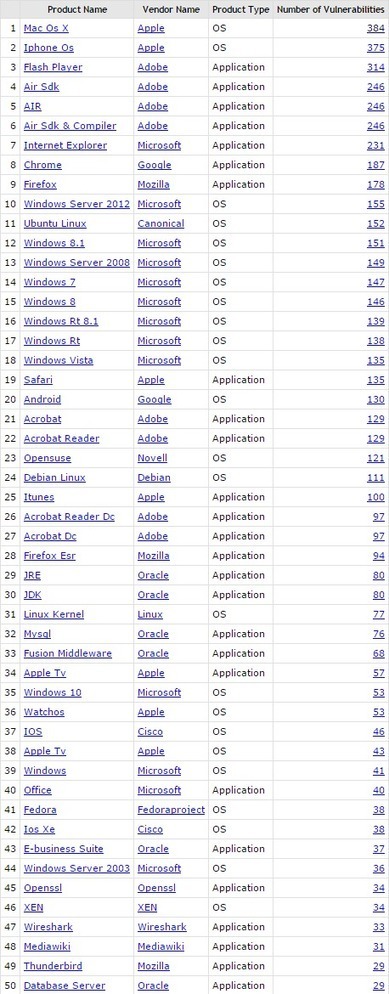
SÉCURITÉ - On dit souvent qu'un Mac est plus sécurisé qu'un ordinateur sous Windows. Sauf qu'il n'en est rien: en 2014, le nombre de failles de sécurité découvertes sur Mac OS était bien supérieur à celles découvertes sur le système d'exploitation de Microsoft. Et la dernière en date accessible aux pirates fait froid dans le dos: avec une simple photo, il est possible de se faire voler tous ses mots de passe.
C'est en effet ce qu'ont découvert deux développeurs, Antoine Vincent Jebara et Raja Rahbani, rapporte 01Net. Le fautif? Keychain, le gestionnaire de mot de passe de Mac OS X. C'est lors de tests sur leur propre logiciel de gestion de mots de passe, MyKi, qu'ils se sont aperçus du problème.
En tapant quelques lignes de commande dans l'opérateur de commandes, il est possible d'accéder à toutes les informations stockées par Keychain... sans avoir besoin de rentrer le mot de passe principal. En effet, seule une petite fenêtre s'affiche, qui demande à l'utilisateur de cliquer sur "autoriser".
En savoir plus / Mehr erfahren / Learn more:
http://www.scoop.it/t/apple-mac-ios4-ipad-iphone-and-in-security
|
|
Scooped by
Gust MEES
August 7, 2015 9:29 AM
|
Les conférences Black Hat battent leur plein à Las Vegas, et les chercheurs en sécurité informatique qui se pressent durant ce raout n’ont pas manqué de pointer du doigt les vulnérabilités qui touchent les produits d’Apple : Thunderstrike 2 et dyld (qui serabouché avec OS X 10.10.5) ont occupé les gazettes cette semaine, tandis que d’autres failles sont annoncées.
Patrick Wardle, directeur de recherche pour Synack, a levé le voile sur plusieurs faiblesses d’OS X. Gatekeeper tout d’abord : ce système qui, une fois activé, n’installe que les logiciels dument signés peut être contourné. En utilisant des bibliothèques dynamiques qui injectent du code vérolé dans des applications pourtant identifiées comme sûres, il est possible d’infecter un Mac.
Plus généralement, il estime que développer un malware pour OS X est facile et qu’Apple devrait mettre en place une véritable stratégie pour la sécurité de ses produits, même s’il reconnait que des efforts sont faits en ce sens. La popularité toujours plus forte des Mac et des appareils iOS oblige le constructeur à en faire plus, les plateformes d’Apple étant apparues sur le radar des malandrins du code.
Image credit (posted on Facebook) <===> http://www.pcworld.com/article/2955707/security/macs-can-be-remotely-infected-with-firmware-malware-that-remains-after-reformatting.html
Mehr erfahren / En savoir plus / Learn more:
http://www.scoop.it/t/apple-mac-ios4-ipad-iphone-and-in-security
http://www.scoop.it/t/apple-mac-ios4-ipad-iphone-and-in-security/?tag=Thunderstrike
|
|
Scooped by
Gust MEES
August 5, 2015 12:58 PM
|
|
|
Scooped by
Gust MEES
August 5, 2015 7:31 AM
|
Thunderstrike 2, un ver qui s’immisce au niveau firmware, et un autre bug permettant de contourner les privilèges d’utilisateurs, mettre à mal la réputation de la pomme.
Depuis des années, le Mac a toujours été perçu comme une plateforme relativement à l’abri des virus. Cette étanchéité s’explique par la combinaison de ses parts de marchés, minimes lorsqu’on les compare à celles des PC propulsés par Windows, et de la fiabilité d’OS X, qui traditionnellement comprend moins de failles de sécurité que le système d’exploitation de Microsoft.
Toutefois, la réputation des produits Apple en prend pour son rhume cette semaine, alors que deux vulnérabilités liées au Mac font les manchettes.
Si l’une demeure non exploitée pour l’instant, l’autre menace déjà la sécurité de millions d’ordinateurs.
Mehr erfahren / En savoir plus / Learn more:
http://www.scoop.it/t/apple-mac-ios4-ipad-iphone-and-in-security
http://www.scoop.it/t/apple-mac-ios4-ipad-iphone-and-in-security/?tag=Thunderstrike
|
|
Scooped by
Gust MEES
August 4, 2015 7:12 AM
|
Last month, security researcher Stefan Esser published details and proof-of-concept code of a zero-day vulnerability in OS X Yosemite that could allow a hacker to easily escalate their privileges, and take complete control over Mac computers.
Esser chose not to contact Apple about the DYLD_PRINT_TO_FILE vulnerability - which remains currently unpatched in OS X Yosemite, despite it curiously being fixed in the beta version of the next iteration of OS X, El Capitan.
Now, security firm Malwarebytes has discovered an in-the-wild attack exploiting the vulnerability, where root permission is gained on the computer without a password being needed.
Learn more:
http://www.scoop.it/t/apple-mac-ios4-ipad-iphone-and-in-security
|
|
Scooped by
Gust MEES
August 4, 2015 3:18 AM
|
Researchers created Thunderstrike 2 firmware malware that could remotely infect Apple computers and remain even if a user were to wipe the hard drive and reinstall OS X.
When companies claim their products are unhackable or invulnerable, it must be like waving a red flag in front of bulls as it practically dares security researchers to prove otherwise. Apple previously claimed that Macs were not vulnerable to the same firmware flaws that could backdoor PCs, so researchers proved they could remotely infect Macs with a firmware worm that is so tough to detect and to get rid of that they suggested it presents a toss your Mac in the trash situation.
Firmware runs when you first boot a machine; it launches the operating system. For Apple computers, the firmware is called the extensible firmware interface (EFI). Most people believe Apple products are superior when it comes to security, but the researchers want to “make it clear that any time you hear about EFI firmware attacks, it’s pretty much all x86 [computers].” Attackers need only a few seconds to remotely infect Mac firmware. Macs infected with Thunderstrike 2 would remain infected even if a user were to wipe the hard drive and reinstall the OS, as that doesn’t fix a firmware infection.
Learn more:
http://www.scoop.it/t/apple-mac-ios4-ipad-iphone-and-in-security
http://www.scoop.it/t/apple-mac-ios4-ipad-iphone-and-in-security/?tag=Thunderstrike
|


























Learn more:
http://www.scoop.it/t/apple-mac-ios4-ipad-iphone-and-in-security