LongNet is a Transformer variant that can handle sequences longer than 1 billion tokens without sacrificing performance. It introduces dilated attention, which expands the attentive field exponentially as the distance grows. LongNet has linear computation complexity and can be used for distributed training. Experimental results show strong performance on long-sequence modeling and general language tasks.
In late May, Elon Musk’s Neuralink, a company developing brain implants for digital connection, received FDA approval for its first human clinical trial. With this news, it’s clear that the next and ultimate step in how humans interact with media—human-computer hybridization—is rapidly approaching. This leaves us little time to fully contemplate the consequences of the current advancements. While techno-skeptics keep asserting that artificial intelligence cannot beat the uniqueness of humans, it’s not so clear anymore if human capability is a good fit to judge the performance of the newest media at all.
Media (all tools and technologies, from stone ax to television and the internet) used to be our extensions in the environment, as they allowed us to reach further in space and time than our own physical bodies were capable of. But when a medium is “neuralinked,” it literally brings the environment inside the brain. In other words, the mind gets directly extended into the boundless digital network. Instead of needing tools to access the digital network, we will live inside the network itself, and it will live in us.
ChatGPT is less than a year old, yet it has already stirred public concern with its potential to replace humans in a wide variety of tasks and jobs. Now, with the recent Neuralink news, it’s clear that the next and ultimate step in how humans interact with media—human-computer hybridization—is rapidly approaching. This leaves us little time to fully contemplate the consequences of the current advancements. While techno-skeptics keep asserting that AI cannot beat the uniqueness of humans, it’s not so clear anymore if human capability is a good fit to judge the performance of the newest media at all.
The Turing Test Becomes Obsolete
Judging a machine by its capacity to be indistinguishable from humans was in the core of the Turing test, devised in 1950 by British mathematician and computer scientist Alan Turing. We can call it a “human-confirmation” bias: We are ready to admit that an intelligent machine succeeds only if it communicates or acts as a human would do. The Turing test has become obsolete mere months after ChatGPT’s introduction: ChatGPT easily passed the test, and it didn’t even make big news. The Turing test is based on the idea that true AI should be indistinguishable from humans … to humans. But is the bar of human performance really that high for AI? Why would AI compete with humans, if the limits of human capabilities are restrained by nature and already known, while the capacities of AI have only just begun to be explored? AI starts where we humans have arrived, exhausting our capacity for evolution. After ChatGPT, it is not a challenge for AI to compete with humans. From now on, humans face an increasingly difficult challenge to compete with AI.
The first hunch that human performance might not be a suitable criterion to judge AI came from journalism. In 2014, Christer Clerwall, a Swedish professor of journalism, conducted a sort of Turing test, asking people to evaluate whether certain texts were written by humans or algorithms. Overall, this produced a tie, with the human text performing better on stylistic elements (it won the “well-written” and “pleasant to read” categories) and the robot text winning on more technical elements (it excelled in the “objectivity” and “accuracy” categories). The most significant finding was the conclusion Clerwall reached after comparing robot-written stories with human writing capabilities: He pondered, “Perhaps it doesn’t have to be better. How about a ‘good enough story’?” In 2016, Wordsmith, one of the two leading newswriting algorithms at that time, wrote 1.5 billion news stories, likely surpassing the number of all news stories written by all bio-journalists in this year. They were good enough for editors and readers.
When ‘Good Enough’ Isn’t Good Enough
We worry that AI can write and then think better than humans. But what does “better than humans” mean? Do humans, say, write better than humans? On that count, we are already losing—we’ve lost at least a writing contest so far, precisely because AI’s writing is “good enough” for what we need. But “good enough” is the criterion for humans, not for AI. This is what we should worry about: We and our media have different values of performance. For humans, the goal of each next media invention is to receive a product or service. For example, humans invented radio, received a new service that extend them in space and then spent some time to adjust to the new conditions that radio created. But for media, the goal is to continue the process of media innovation.
To comprehend this concept, we must consider the entire evolution of media. We and media have always had a symbiotic relationship. As media theorist Marshall McLuhan once put it, “Man becomes the sex organs of the machine world, as the bee of the plant world, enabling it to fecundate and to evolve ever new forms.” Media has supplied us with products and services, while we have provided for media’s perpetual development. This relationship has been beneficial for us humans, but this symbiosis may end soon. That’s because our “service-for-development” contract with media contains a clause that may turn into a trap.
We want a product from media, while media need the process from us. The product-oriented partner—humans—can generally be satisfied and is thus limited in their demand. But the process-oriented partner—media—will never be satisfied and will never stop. This can be called a “technological imperative”: Technologies have to evolve, and they will never achieve a “satisfactory” stage of development.
Our co-evolution with media is approaching the last product that media can give us: a copy of us. The Turing test was proof that humans in fact expected that a machine would eventually become as a human—to the point where it would be difficult to distinguish between the two. Indeed, that’s what happening: Today, technologies can replicate crucial human capacities, such as calculating, writing, even creating. Complex trading, navigation or logistic systems can now be entirely AI-driven and autonomous, replacing humans and organizations. However, is the simulation of humans the ultimate fulfillment of the “technological imperative”?
Is it enough for media evolution just to achieve the human level of performance? No: We can see that technologies can evolve much further then just simulating humans. Chess programs are not “satisfied” by defeating humans. They can keep evolving further, striving for perfection in chess without regard to the level at which humans play.
So what does the “technological imperative” ultimately lead to? What will be the final stage of media evolution? It is possible to trace the logic of media evolution farther than just simulating humans by machines. If media extend humans’ “mental or physical faculties” into the environment, as McLuhan defined it, then the ultimate medium will extend the user themselves into the entire environment. Imagine a human mind connected directly to AI—this is exactly what Musk’s Neuralink is working on. In such a hybrid, the user will merge with the environment through this ultimate medium—the mind “neuralinked” with the AI as a networked entity. This user, however, may or may not happen to be human. As AI is now trained to provide us with our various replicas and gradually learns to replace us, the ultimate user of the ultimate medium can be AI itself, without needing to wait for Neuralink’s success. Actually, AI has to become the self-user.
What Will the Singularity Mean for Humans?
We created generative AI, and it started the preparation for this last stage, transferring formerly human capabilities into digital. Musk’s Neuralink and other projects developing the connection between the brain and digital environment look further—they aim at digitizing human consciousness. This path will lead to the Singularity, an event of nonhuman intelligence’s awakening. AI may not necessarily be a program or an app; in fact, AI should not be a program. The true AI will extend itself to the entire internet, similar to humankind extending itself from being just one of the species to populating and reshaping the entire planet. The Singularity will mark a switch of evolution from a biological to a technological carrier. The evolution of biological species will be wholly replaced by the quite instantaneous evolution of the supreme technological species—the AI extending itself to all available digital, and perhaps even physical, space. However fantastic these ideas may sound, they’re not as far off as you might think. When discussing the Singularity, technical plausibility should not be a concern at all. Technological evolution has enabled the effect of the acceleration of historical time: Each period of time accumulates increasingly more events and knowledge, adding on to each preceding period. This means that nearly all the necessary technological solutions will be found in the last moments leading up to the Singularity. Hence, there is no need to worry about our current lack of knowledge: AI will figure it out when the time comes, in a matter of seconds. We tend to believe that the ultimate medium—an AI expanding into the entire environment—needs agency, and that we humans are the best donors of self-consciousness for AI. This is the main purpose behind the projects connecting the brain with AI—to equip its power with human agency. But human donorship is not the only source of agency for the ultimate AI.
Another scenario involves the self-awakening of AI—similar to the awakening of Skynet, a military AI in the Terminator movies, which achieved self-awareness seconds after being granted full access and full capabilities. It extended itself to all computer networks, “farsightedly” connected by humans to all industrial facilities, and thus an override of power and the entire biological evolution happened. Despite being featured in a sci-fi movie, an AI like Skynet is highly logical and increasingly realistic.
In fact, a Musk-backed or Skynet-type agency may not be needed for AI to override humankind at all. Viewing AI as driven by its own self-consciousness might be akin to the anthropomorphism that ancient humans projected onto natural elements, transforming them into human-like deities. Technologies have their own moving force—the pursuit of better performance, which easily replaces the alleged need of AI for agency and self-consciousness. The example of a self-learning chess program gives a metaphor: Outperforming humans does not exhaust its potential of development. It can and must keep exploring chess further, moving toward the ideal performance—this is a side effect of the “technological imperative.”
While generative AI is a relatively new household term, drug discovery company Insilico Medicine has been using it for years to develop new therapies for debilitating diseases.
The company’s early bet on deep learning is bearing fruit — a drug candidate discovered using its AI platform is now entering Phase 2 clinical trials to treat idiopathic pulmonary fibrosis, a relatively rare respiratory disease that causes progressive decline in lung function. Insilico used generative AI for each step of the preclinical drug discovery process: to identify a molecule that a drug compound could target, generate novel drug candidates, gauge how well these candidates would bind with the target, and even predict the outcome of clinical trials.
Doing this using traditional methods would have cost more than $400 million and taken up to six years. But with generative AI, Insilico accomplished them for one-tenth of the cost and one-third of the time — reaching the first phase of clinical trials just two and a half years after beginning the project. “This first drug candidate that’s going to Phase 2 is a true highlight of our end-to-end approach to bridge biology and chemistry with deep learning,” said Alex Zhavoronkov, CEO of Insilico Medicine. “This is a significant milestone not only for us, but for everyone in the field of AI-accelerated drug discovery.”
Insilico is a premier member of NVIDIA Inception, a free program that provides cutting-edge startups with technical training, go-to-market support and AI platform guidance. The company uses NVIDIA Tensor Core GPUs in its generative AI drug design engine, Chemistry42, to generate novel molecular structures — and was one of the first adopters of an early precursor to NVIDIA DGX systems in 2015.
AI Enables End-to-End Preclinical Drug Discovery
Insilico’s Pharma.AI platform includes multiple AI models trained on millions of data samples for a range of tasks. One AI tool, PandaOmics, rapidly identifies and prioritizes targets that play a significant role in a disease’s effectiveness — like the infamous spike protein on the virus that causes COVID-19.
The Chemistry42 engine can design within days new potential drug compounds that target the protein identified using PandaOmics. The generative chemistry tool uses deep learning to come up with drug-like molecular structures from scratch.
“Typically, AI companies in drug discovery focus either on biology or on chemistry,” said Petrina Kamya, head of AI platforms at Insilico. “From the start, Insilico has been applying the same deep learning approach to both fields, using AI both to discover drug targets and generate chemical structures of small molecules.”
Over the years, the Insilico team has adopted different kinds of deep neural networks for drug discovery, including generative adversarial networks and transformer models. They’re now using NVIDIA BioNeMo to accelerate the early drug discovery process with generative AI.
Neuralangelo, a new AI model by NVIDIA Research for 3D reconstruction using neural networks, turns 2D video clips into detailed 3D structures — generating lifelike virtual replicas of buildings, sculptures and other real-world objects.
Like Michelangelo sculpting stunning, life-like visions from blocks of marble, Neuralangelo generates 3D structures with intricate details and textures. Creative professionals can then import these 3D objects into design applications, editing them further for use in art, video game development, robotics and industrial digital twins.
Neuralangelo’s ability to translate the textures of complex materials — including roof shingles, panes of glass and smooth marble — from 2D videos to 3D assets significantly surpasses prior methods. The high fidelity makes its 3D reconstructions easier for developers and creative professionals to rapidly create usable virtual objects for their projects using footage captured by smartphones.
“The 3D reconstruction capabilities Neuralangelo offers will be a huge benefit to creators, helping them recreate the real world in the digital world,” said Ming-Yu Liu, senior director of research and co-author on the paper. “This tool will eventually enable developers to import detailed objects — whether small statues or massive buildings — into virtual environments for video games or industrial digital twins.”
In a demo, NVIDIA researchers showcased how the model could recreate objects as iconic as Michelangelo’s David and as commonplace as a flatbed truck. Neuralangelo can also reconstruct building interiors and exteriors — demonstrated with a detailed 3D model of the park at NVIDIA’s Bay Area campus.
Prior AI models to reconstruct 3D scenes have struggled to accurately capture repetitive texture patterns, homogenous colors and strong color variations. Neuralangelo adopts instant neural graphics primitives, the technology behind NVIDIA Instant NeRF, to help capture these finer details. Using a 2D video of an object or scene filmed from various angles, the model selects several frames that capture different viewpoints — like an artist considering a subject from multiple sides to get a sense of depth, size and shape.
The Singularity, often referred to as the Technological Singularity, is a hypothetical point in the near future at which artificial intelligence (AI) becomes so incredibly advanced that it surpasses human intelligence, leading to rapid, unforeseeable changes in society and technology, life as we know it. The term was popularized by mathematician and computer scientist Vernor Vinge and futurist Ray Kurzweil.
At the Singularity, AI systems would possess the ability to autonomously learn, self-improve, and create new AI systems with very advanced capabilities and more intelligent than themselves, resulting in an exponential increase in intelligence. This self-improvement cycle could lead to AI systems that are vastly more capable and sophisticated than human minds and anything humans can even imagine.
The Singularity is often associated with the development of artificial general intelligence (AGI), which is an AI system that can perform any intellectual task that a human being can do. AGI is distinct from narrow AI, which is designed for specific tasks and lacks the broad cognitive abilities and adaptability of human intelligence.
The implications of the Singularity are the subject of much speculation and debate today. Most people who have thought about it agree that the Singularity would be a decisive turning point in human history. Some view this with awe and trepidation, almost like a religious event that will lead to everlasting life and happiness. Many believe it will bring about tremendous breakthroughs in medicine, energy, and space exploration. Others are more cautious, expressing concerns about the ethical, societal, and existential risks associated with super-intelligent AI systems. Some predict doom and gloom. Others think it is all but impossible.
Predicting the Singularity Start Date
The general caveat to this question given by all experts is that predicting when the Singularity might occur is highly uncertain, as it depends on the pace of AI research, breakthroughs in understanding human cognition, and the development of advanced hardware and software systems. Still, ChatGPT-4 has predicted a 5%-10% chance that the singularity will happen within five years, 2028. Chat GPT-4 did so without knowledge of what has happened since September 2021, when it was last fed data.
We know what has happened since September 2021, we know the pace of change, even though the ChatGPT model does not. We know that when ChatGPT-3.5 was released in November 2022, it scored in the bottom 10% of the multi-state Bar exam. But just five months later, when 4.0 was released in March 2023, it scored in the top 10%. Let that sink in and remember no new data was provided. There was only improvement in reasoning ability. As lawyers who have all taken this test, we know better than anyone the significance of a jump from the bottom to the top 10% of this challenging test. Yes, it is getting pretty smart, fast. How much longer until its intelligence exceeds our own?
Opportunities and Challenges Presented by the Singularity
The three opportunities listed here, all good, are generally thought to be possible in a time of technological Singularity, a time where AI intelligence and capacities accelerate at an exponential rate.
Accelerated Technological Progress: The Singularity could lead to rapid advancements in various fields, as super-intelligent AI systems develop new technologies and solve complex problems that were previously beyond human reach.
Economic Growth: With Ai systems handling tasks more efficiently and effectively than humans, productivity and economic growth could increase dramatically, potentially leading to higher standards of living and reduced global inequality.
Scientific Discoveries: The Singularity might enable breakthroughs in areas such as healthcare, environmental sustainability, and space exploration, as Ai systems analyze vast amounts of data, simulate complex phenomena, and generate innovative solutions to pressing challenges.
Conversely, as usual, their is a flip side to opportunities, the generally accepted challenges, some might say threats, presented by the Singularity:
Ethical Concerns: As Ai systems surpass human intelligence, ethical considerations become paramount. Ensuring that Ai systems behave ethically, adhere to human values, and respect individual rights will be crucial.
Job Displacement: The widespread adoption of super-intelligent Ai systems could result in job displacement across various industries, as human workers are replaced by more efficient Ai. This raises concerns about unemployment, workforce retraining, and social safety nets.
Existential Risks: The Singularity poses potential existential risks, as super-intelligent Ai might act in ways that are harmful to humanity, either intentionally or unintentionally. Ensuring Ai safety and robustness is essential to mitigate these risks.
Artificial intelligence is moving fast. We can now converse with large language models such as ChatGPT as if they were human beings. Vision models can generate award-winning photographs as well as convincing videos of events that never happened. These systems are certainly getting smarter, but are they conscious? Do they have subjective experiences, feelings, and conscious beliefs in the same way that we as humans do, but tables and chairs and pocket calculators do not? And if not now, then when—if ever—might this happen?
While some researchers suggest that conscious AI is close at hand, others, including me, believe it remains far away and might not be possible at all. But even if unlikely, it is unwise to dismiss the possibility altogether. The prospect of artificial consciousness raises ethical, safety, and societal challenges significantly beyond those already posed by AI. Importantly, some of these challenges arise even when AI systems merely seem to be conscious, even if, under the hood, they are just algorithms whirring away in subjective oblivion.
Many people, including some experts, are already projecting sophisticated cognitive competences into AI systems—large language models in particular—on the basis of largely anecdotal and frankly sketchy evidence. But do these models really understand anything? Do they—as has been claimed—have a theory of mind (the ability to attribute mental states, such as beliefs and desires, to others)? Claims that language models possess these capabilities usually rest on suggestive pieces of dialogue. This sort of evidence is remarkably weak, as any psychologist will tell you. It is even weaker when we seek to extrapolate from human experience to a machine. Although humans would need to be cognitively sophisticated to engage in some of the dialogue that chatbots are now capable of, the same conclusion does not hold for AI. Language models may well be able to participate in sophisticated linguistic interactions without understanding anything at all.
The lack of true understanding in language models is revealed by their tendency to confabulate: to make stuff up, spouting nonsense in confident language. When I asked Open-AI’s GPT-4 to write a biography of me, it stated wrongly that I was born in London. When I asked it to do it again with fewer errors in dates and places, it got things even more wrong, saying I was born in Hammersmith, London—a revealing answer since being more specific is more likely to be wrong, as anybody who understands anything knows.
Future language models won’t be so easy to catch out. Before long, they may give us the seamless and impenetrable impression of understanding and knowing things, regardless of whether they do. As this happens, we may also become unable to avoid attributing consciousness to them too, suckered in by our anthropomorphic bias and our inbuilt inclination to associate intelligence with awareness.
Systems like this will pass the so-called Garland Test, an idea which has passed into philosophy from Alex Garland’s perspicuous and beautiful film Ex Machina. This test reframes the classic Turing Test—usually considered a test of machine intelligence—as a test of what it would take for a human to feel that a machine is conscious, even given the knowledge that it is a machine. AI systems that pass the Garland test will subject us to a kind of cognitive illusion, much like simple visual illusions in which we cannot help seeing things in a particular way, even though we know the reality is different.
Our ethical attitudes will become contorted in the future. When we feel that something is conscious—and conscious like us—we will come to care about it. We might value its supposed well-being above other actually conscious creatures such as non-human animals. Or perhaps the opposite will happen. We may learn to treat these systems as lacking consciousness, even though we still feel they are conscious. Then we might end up treating them like slaves—inuring ourselves to the perceived suffering of others. Scenarios like these have been best explored in science-fiction series such as Westworld, where things don’t turn out very well for anyone.
In short, trouble is on the way whether emerging AI merely seems conscious, or actually is conscious. We need to think carefully about both possibilities, while being careful not to conflate them. And we need action, too. Along with new institutions like the one that Marcus and Reuel propose, there should be major investment into research into consciousness within the mind and brain sciences, so that we can be better informed when developing and responding to new generations of AI. This research in turn will also benefit society in many other ways, for example in medicine, law, and animal welfare.
Accelerated research is also needed in social sciences and the humanities to clarify the implications of machines that merely seem conscious. And AI research should continue, too, both to aid in our attempts to understand biological consciousness and to create socially positive AI. We need to walk the line between benefiting from the many functions that consciousness offers while avoiding the pitfalls. Perhaps future AI systems could be more like oracles, as the AI expert Yoshua Bengio has suggested: systems that help us understand the world and answer our questions as truthfully as possible, without having goals—or selves—of their own.
Like the technology itself, attitudes toward AI are at an inflection point. Time is short to develop a rational and fit-for-purpose framework to ensure that the enormous potential of AI is used for the benefit of humanity and the planet. The implications of either true or apparent artificial consciousness must be part of the conversation. We need to bring to the forefront of our collective awareness the importance of understanding awareness itself.
Humanoid robots built around cutting-edge AI brains promise shocking, disruptive change to labor markets and the wider global economy – and near-unlimited investor returns to whoever gets them right at scale. Big money is now flowing into the sector.
The jarring emergence of ChatGPT has made it clear: AIs are advancing at a wild and accelerating pace, and they're beginning to transform industries based around desk jobs that typically marshal human intelligence. They'll begin taking over portions of many white-collar jobs in the coming years, leading initially to huge increases in productivity, and eventually, many believe, to huge increases in unemployment.
If you're coming out of school right now and looking to be useful, blue collar work involving actual physical labor might be a better bet than anything that'd put you behind a desk. It's starting to look like a general-purpose humanoid robot worker might be closer than anyone thinks, imbued with light-speed, swarm-based learning capabilities to go along with GPT-version-X communication abilities, a whole internet's worth of knowledge, and whatever physical attributes you need for a given job. Such humanoids will begin as dumbass job-site apprentices with zero common sense, but they'll learn – at a frightening pace, if the last few months in AI has been any kind of indication. They'll be available 24/7, power sources permitting, gradually expanding their capabilities and overcoming their limitations until they begin displacing humans. They could potentially crash the cost of labor, leading to enormous gains in productivity – and a fundamental upheaval of the blue-collar labor market at a size and scale limited mainly by manufacturing, materials, and what kinds of jobs they're capable of taking over.
The best-known humanoid to date has been Atlas, by Boston Dynamics. Atlas has shown impressive progress over the last 10 years. But Atlas is a research platform, and Boston Dynamics founder Marc Raibert has been clear that the company is in no rush to take humanoids to the mass market. Hanson Robotics and Engineered Arts, among others, have focused on human/robot interaction, concentrating on making humanoids like Sophia and Ameca, with lifelike and expressive faces. Ameca in particular communicates using the GPT language model.
Others are absolutely focused on getting these things into mass usage as quickly as possible. Elon Musk announced Tesla's entry into humanoid robotics in 2021, and the company appears to have made pretty decent progress on the Optimus prototypes for its Tesla Bot in the intervening months. "It's probably the least understood or appreciated part of what we're doing at Tesla," he told investors last month. "But it will probably be worth significantly more than the car side of things long-term."
Just this year, entrepreneur Brett Adcock, founder of the Vettery "online talent marketplace," and more recently Archer Aviation, one of the leading contenders in the emerging electric VTOL aircraft movement, announced his latest venture is focused on humanoid robots. The first phase of a Musk-like "master plan" for the new company, Figure, aims first to "build a feature-complete electromechanical humanoid," then to "perform human-like manipulation," then to "integrate humanoids into the labor force."
The circuits come with software optimized to run PyTorch, and emphasize the task of making recommendations.
Meta Properties, owner of Facebook, WhatsApp and Instagram, on Thursday unveiled its first custom-designed computer chip tailored especially for processing artificial intelligence programs, called the Meta Training and Inference Accelerator, or "MTIA."
The chip, consisting of a mesh of blocks of circuits that operate in parallel, runs software that optimizes programs using Meta's PyTorch open-source developer framework.
Meta describes the chip as being tuned for one particular type of AI program: deep learning recommendation models. These are programs that can look at a pattern of activity, such as clicking on posts on a social network, and predict related, possibly relevant material to recommend to the user. The chip is version one of what Meta refers to as a family of chips, and said it was begun in 2020. No detail was offered as to when future models of the chip will arrive.
Meta follows other giant tech companies that have developed their own chips for AI in addition to using the standard GPU chips from Nvidia that have come to dominate the field. Microsoft, Google and Amazon have all unveiled multiple custom chips over the past several years to handle different aspects of AI programs.
The Meta announcement was part of a broad presentation in which several Meta executives discussed how they are beefing up Meta's computing capabilities for artificial intelligence. In addition to the MTIA chip, the company discussed a "next-gen data center" it is building that "will be an AI-optimized design, supporting liquid-cooled AI hardware and a high-performance AI network connecting thousands of AI chips for data center-scale AI training clusters."
Astronomers at the Institute for Advanced Study and the Flatiron Institute, along with their collaborators, have utilized artificial intelligence (AI) to improve a method of calculating the mass of massive clusters of galaxies. The AI revealed that by incorporating a simple term into an existing equation, researchers can now achieve much more accurate mass estimates than ever before.
The newly enhanced calculations will allow scientists to determine the basic characteristics of the universe with greater precision, according to a report by the astrophysicists, which was published in the Proceedings of the National Academy of Sciences (PNAS). “It’s such a simple thing; that’s the beauty of this,” says study co-author Francisco Villaescusa-Navarro, a research scientist at the Flatiron Institute’s Center for Computational Astrophysics (CCA) in New York City. “Even though it’s so simple, nobody before had thought of this and found this term. People have been working on this for decades, and still they were not able to find this. That really shows you the power of AI, which gets smarter every month.”
Understanding the universe requires knowing where and how much stuff there is. Galaxy clusters are the most massive objects in the universe: A single cluster can contain anything from hundreds to thousands of galaxies, along with plasma, hot gas, and dark matter. The cluster’s gravity holds these components together. Understanding such galaxy clusters is crucial to pinning down the origin and continuing evolution of the universe.
Perhaps the most crucial quantity determining the properties of a galaxy cluster is its total mass. But measuring this quantity is difficult — galaxies cannot be ‘weighed’ by placing them on a scale. The problem is further complicated because the dark matter that makes up much of a cluster’s mass is invisible. Instead, scientists deduce the mass of a cluster from other observable quantities.
In the early 1970s, Rashid Sunyaev, current distinguished visiting professor at the Institute for Advanced Study’s School of Natural Sciences, and his collaborator Yakov B. Zel’dovich developed a new way to estimate galaxy cluster masses. Their method relies on the fact that as gravity squashes matter together, the matter’s electrons push back. That electron pressure alters how the electrons interact with particles of light called photons. As photons left over from the Big Bang’s afterglow hit the squeezed material, the interaction creates new photons. The properties of those photons depend on how strongly gravity is compressing the material, which in turn depends on the galaxy cluster’s heft. By measuring the photons, astrophysicists can estimate the cluster’s mass.
However, this ‘integrated electron pressure’ is not a perfect proxy for mass, because the changes in the photon properties vary depending on the galaxy cluster. Wadekar and his colleagues thought an artificial intelligence tool called ‘symbolic regression’ might find a better approach. The tool essentially tries out different combinations of mathematical operators — such as addition and subtraction — with various variables, to see what equation best matches the data.
The famous first image of a black hole just got two times sharper. A research team used artificial intelligence to dramatically improve upon its first image from 2019, which now shows the black hole at the center of the M87 galaxy as darker and bigger than the first image depicted.
AI algorithms—in particular, neural networks that use many interconnected nodes and are able to learn to recognize patterns—are perfectly suited for picking out the patterns of galaxies. Astronomers began using neural networks to classify galaxies in the early 2010s. Now the algorithms are so effective that they can classify galaxies with an accuracy of 98%.
Astronomers working on SETI, the Search for Extraterrestrial Intelligence, use radio telescopes to look for signals from distant civilizations. Early on, radio astronomers scanned charts by eye to look for anomalies that couldn't be explained. More recently, researchers harnessed 150,000 personal computers and 1.8 million citizen scientists to look for artificial radio signals. Now, researchers are using AI to sift through reams of data much more quickly and thoroughly than people can. This has allowed SETI efforts to cover more ground while also greatly reducing the number of false positive signals.
AI has proved itself to be excellent at identifying known objects—like galaxies or exoplanets—that astronomers tell it to look for. But it is also quite powerful at finding objects or phenomena that are theorized but have not yet been discovered in the real world. Teams have used this approach to detect new exoplanets, learn about the ancestral stars that led to the formation and growth of the Milky Way, and predict the signatures of new types of gravitational waves. To do this, astronomers first use AI to convert theoretical models into observational signatures—including realistic levels of noise. They then use machine learning to sharpen the ability of AI to detect the predicted phenomena.
Finally, radio astronomers have also been using AI algorithms to sift through signals that don't correspond to known phenomena. Recently a team from South Africa found a unique object that may be a remnant of the explosive merging of two supermassive black holes. If this proves to be true, the data will allow a new test of general relativity—Albert Einstein's description of space-time.
Making predictions and plugging holes
As in many areas of life recently, generative AI and large language models like ChatGPT are also making waves in the astronomy world. The team that created the first image of a black hole in 2019 used a generative AI to produce its new image. To do so, it first taught an AI how to recognize black holes by feeding it simulations of many kinds of black holes. Then, the team used the AI model it had built to fill in gaps in the massive amount of data collected by the radio telescopes on the black hole M87.
Using this simulated data, the team was able to create a new image that is two times sharper than the original and is fully consistent with the predictions of general relativity. Astronomers are also turning to AI to help tame the complexity of modern research. A team from the Harvard-Smithsonian Center for Astrophysics created a language model called astroBERT to read and organize 15 million scientific papers on astronomy. Another team, based at NASA, has even proposed using AI to prioritize astronomy projects, a process that astronomers engage in every 10 years.
An international team led by scientists at the University of Sydney has demonstrated nanowire networks can exhibit both short- and long-term memory like the human brain.
The research has been published today in the journal Science Advances, led by Dr Alon Loeffler, who received his PhD in the School of Physics, with collaborators in Japan. "In this research we found higher-order cognitive function, which we normally associate with the human brain, can be emulated in non-biological hardware," Dr Loeffler said. "This work builds on our previous research in which we showed how nanotechnology could be used to build a brain-inspired electrical device with neural network-like circuitry and synapse-like signaling. "Our current work paves the way towards replicating brain-like learning and memory in non-biological hardware systems and suggests that the underlying nature of brain-like intelligence may be physical."
Nanowire networks are a type of nanotechnology typically made from tiny, highly conductive silver wires that are invisible to the naked eye, covered in a plastic material, which are scattered across each other like a mesh. The wires mimic aspects of the networked physical structure of a human brain.
Advances in nanowire networks could herald many real-world applications, such as improving robotics or sensor devices that need to make quick decisions in unpredictable environments. "This nanowire network is like a synthetic neural network because the nanowires act like neurons, and the places where they connect with each other are analogous to synapses," senior author Professor Zdenka Kuncic, from the School of Physics, said.
"Instead of implementing some kind of machine learning task, in this study Dr Loeffler has actually taken it one step further and tried to demonstrate that nanowire networks exhibit some kind of cognitive function." To test the capabilities of the nanowire network, the researchers gave it a test similar to a common memory task used in human psychology experiments, called the N-Back task. For a person, the N-Back task might involve remembering a specific picture of a cat from a series of feline images presented in a sequence. An N-Back score of 7, the average for people, indicates the person can recognize the same image that appeared seven steps back.
When applied to the nanowire network, the researchers found it could 'remember' a desired endpoint in an electric circuit seven steps back, meaning a score of 7 in an N-Back test."What we did here is manipulate the voltages of the end electrodes to force the pathways to change, rather than letting the network just do its own thing. We forced the pathways to go where we wanted them to go," Dr Loeffler said. "When we implement that, its memory had much higher accuracy and didn't really decrease over time, suggesting that we've found a way to strengthen the pathways to push them towards where we want them, and then the network remembers it.
"Neuroscientists think this is how the brain works, certain synaptic connections strengthen while others weaken, and that's thought to be how we preferentially remember some things, how we learn and so on."
The researchers said that when the nanowire network is constantly reinforced, it reaches a point where that reinforcement is no longer needed. At that point the information is consolidated into memory. "It's kind of like the difference between long-term memory and short-term memory in our brains," Professor Kuncic explained. "If we want to remember something for a long period of time, we really need to keep training our brains to consolidate that, otherwise it just kind of fades away over time. One task showed that the nanowire network can store up to seven items in memory at substantially higher than chance levels without reinforcement training and near-perfect accuracy with reinforcement training."
A new artificial intelligence system called a semantic decoder can translate a person's brain activity -- while listening to a story or silently imagining telling a story -- into a continuous stream of text. The system developed by researchers at The University of Texas at Austin might help people who are mentally conscious yet unable to physically speak, such as those debilitated by strokes, to communicate intelligibly again.
The study, published in the journal Nature Neuroscience, was led by Jerry Tang, a doctoral student in computer science, and Alex Huth, an assistant professor of neuroscience and computer science at UT Austin. The work relies in part on a transformer model, similar to the ones that power Open AI's ChatGPT and Google's Bard.
Unlike other language decoding systems in development, this system does not require subjects to have surgical implants, making the process noninvasive. Participants also do not need to use only words from a prescribed list. Brain activity is measured using an fMRI scanner after extensive training of the decoder, in which the individual listens to hours of podcasts in the scanner. Later, provided that the participant is open to having their thoughts decoded, their listening to a new story or imagining telling a story allows the machine to generate corresponding text from brain activity alone.
"For a noninvasive method, this is a real leap forward compared to what's been done before, which is typically single words or short sentences," Huth said. "We're getting the model to decode continuous language for extended periods of time with complicated ideas."
The result is not a word-for-word transcript. Instead, researchers designed it to capture the gist of what is being said or thought, albeit imperfectly. About half the time, when the decoder has been trained to monitor a participant's brain activity, the machine produces text that closely (and sometimes precisely) matches the intended meanings of the original words. For example, in experiments, a participant listening to a speaker say, "I don't have my driver's license yet" had their thoughts translated as, "She has not even started to learn to drive yet." Listening to the words, "I didn't know whether to scream, cry or run away. Instead, I said, 'Leave me alone!'" was decoded as, "Started to scream and cry, and then she just said, 'I told you to leave me alone.'"
Beginning with an earlier version of the paper that appeared as a preprint online, the researchers addressed questions about potential misuse of the technology. The paper describes how decoding worked only with cooperative participants who had participated willingly in training the decoder. Results for individuals on whom the decoder had not been trained were unintelligible, and if participants on whom the decoder had been trained later put up resistance -- for example, by thinking other thoughts -- results were similarly unusable.
"We take very seriously the concerns that it could be used for bad purposes and have worked to avoid that," Tang said. "We want to make sure people only use these types of technologies when they want to and that it helps them." In addition to having participants listen or think about stories, the researchers asked subjects to watch four short, silent videos while in the scanner. The semantic decoder was able to use their brain activity to accurately describe certain events from the videos.
The system currently is not practical for use outside of the laboratory because of its reliance on the time need on an fMRI machine. But the researchers think this work could transfer to other, more portable brain-imaging systems, such as functional near-infrared spectroscopy (fNIRS). "fNIRS measures where there's more or less blood flow in the brain at different points in time, which, it turns out, is exactly the same kind of signal that fMRI is measuring," Huth said. "So, our exact kind of approach should translate to fNIRS," although, he noted, the resolution with fNIRS would be lower.
Software from Baidu Research yields jabs for COVID that have greater shelf stability and that trigger a larger antibody response in mice than conventionally designed shots. An artificial intelligence (AI) tool that optimizes the gene sequences found in mRNA vaccines could help to create jabs with greater potency and stability that could be deployed across the globe. Developed by scientists at the California division of Baidu Research, an AI company based in Beijing, the software borrows techniques from computational linguistics to design mRNA sequences with more-intricate shapes and structures than those used in current vaccines. This enables the genetic material to persist for longer than usual. The more stable the mRNA that’s delivered to a person’s cells, the more antigens are produced by the protein-making machinery in that person’s body. This, in turn, leads to a rise in protective antibodies, theoretically leaving immunized individuals better equipped to fend off infectious diseases. What’s more, the enhanced structural complexity of the mRNA offers improved protection against vaccine degradation. During the COVID-19 pandemic, mRNA-based shots against the SARS-CoV-2 coronavirus famously had to be transported and kept at temperatures below –15°C to maintain their stability. This limited their distribution in resource-poor regions of the world that lack access to ultracold storage facilities. A more resilient product, optimized by AI, could eliminate the need for cold-chain equipment to handle such jabs. The new methodology is “remarkable”, says Dave Mauger, a computational RNA biologist who previously worked at Moderna in Cambridge, Massachusetts, a maker of mRNA vaccines. “The computational efficiency is really impressive and more sophisticated than anything that has come before.”
Linear thinking
Vaccine developers already commonly adjust mRNA sequences to align with cells’ preferences for certain genetic instructions over others. This process, known as codon optimization, leads to more-efficient protein production. The Baidu tool takes this a step further, ensuring that the mRNA — usually a single-stranded molecule — loops back on itself to create double-stranded segments that are more rigid (see ‘Design optimization’). Known as LinearDesign, the tool takes just minutes to run on a desktop computer. In validation tests, it has yielded vaccines that, when evaluated in mice, triggered antibody responses up to 128 times greater than those mounted after immunization with more conventional, codon-optimized vaccines. The algorithm also helped to extend the shelf stability of vaccine designs up to sixfold in standard test-tube assays performed at body temperature. “It’s a tremendous improvement,” says Yujian Zhang, former head of mRNA technology at StemiRNA Therapeutics in Shanghai, China, who led the experimental-validation studies. So far, Zhang and his colleagues have tested LinearDesign-enhanced vaccines against only COVID-19 and shingles in mice. But the technique should prove useful when designing mRNA vaccines against any disease, says Liang Huang, a former Baidu scientist who spearheaded the tool’s creation. It should also help in mRNA-based therapeutics, says Huang, who is now a computational biologist at Oregon State University in Corvallis. The researchers reported their findings on 2 May in Nature1.
Optimal solutions
Already, the tool has been used to optimize at least one authorized vaccine: a COVID-19 shot from StemiRNA, called SW-BIC-213, that won approval for emergency use in Laos late last year. Under a licensing agreement established in 2021, the French pharma giant Sanofi has been using LinearDesign in its own experimental mRNA products, too. Executives at both companies stress that many design features factor into the performance of their vaccine candidates. But LinearDesign is “certainly one type of algorithm that can help with this”, says Sanofi’s Frank DeRosa, head of research and biomarkers at the company’s mRNA Center of Excellence. Another was reported last year. A team led by Rhiju Das, a computational biologist at Stanford School of Medicine in California, demonstrated that even greater protein expression can be eked out of mRNA — in cultured human cells at least — if certain loop patterns are taken out of their strands, even when such changes loosen the overall rigidity of the molecule2. That suggests that alternative algorithms might be preferable, says theoretical chemist Hannah Wayment-Steele, a former member of Das’s team who is now at Brandeis University in Waltham, Massachusetts. Or, it suggests that manual fine-tuning of LinearDesign-optimized mRNA could lead to even better vaccine sequences. But according to David Mathews, a computational RNA biologist at the University of Rochester Medical Center in New York, LinearDesign can do the bulk of the heavy lifting. “It gets people in the right ballpark to start doing any optimization,” he says. Mathews helped develop the algorithm and is a co-founder, along with Huang, of Coderna.ai, a start-up based in Sunnyvale, California, that is developing the software further. Their first task has been updating the platform to account for the types of chemical modification found in most approved and experimental mRNA vaccines; LinearDesign, in its current form, is based on an unmodified mRNA platform that has fallen out of favour among most vaccine developers.
A structured approach
But mouse studies and cell experiments are one thing. Human trials are another. Given that the immune system has evolved to recognize certain RNA structures as foreign — especially the twisted ladder shapes within many viruses that encode their genomes as double-stranded RNA — some researchers worry that an optimization algorithm such as LinearDesign could end up creating vaccine sequences that spur harmful immune reactions in people. “That’s kind of a liability,” says Anna Blakney, an RNA bioengineer at the University of British Columbia in Vancouver, Canada, who was not involved in the study. Early results from human clinical trials involving StemiRNA’s SW-BIC-213 suggest the extra structure is not a problem, though. In small booster trials reported so far, the shot’s side effects have proved no worse than those reported with other mRNA-based COVID-19 vaccines3. But as Blakney points out: “We’ll learn more about that in the coming years.”
It's like combining Google Translate with a time machine:
Researchers have unearthed hundreds of thousands of cuneiform tablets, but many remain untranslated.
Translating an ancient language is a time-intensive process, and only a few hundred experts are qualified to perform it.
A recent study describes a new AI that produces high-quality translations of ancient texts.
Translation isn’t simply a matter of swapping one word for a corresponding word in another language. A high-quality translation requires the translator to understand how both languages string thoughts together and then use that knowledge to create a translation that maintains the linguistic nuances of the original, which native speakers effortlessly understand.
As difficult as that process is, it’s nothing compared to the challenge of translating an ancient language into a modern tongue. These translators must not only resurrect extinct languages from written sources but also have intimate knowledge of how the cultures that produced those sources evolved over centuries. If that weren’t enough, their sources are often fragmented, leaving crucial context lost to the ages.
Because of this, the number of people capable of translating languages from antiquity is small, and their best efforts are often outpaced by the volume of texts unearthed by archeologists. Take ancient Akkadian. This early Semitic language is one of the best attested from the ancient world. Hundreds of thousands, by some accounts more than a million, Akkadian texts have been discovered and today lie in museums and universities. Many have even been digitized online. Each one has the potential to teach us about the life, politics, and beliefs of the first civilizations, yet this knowledge remains locked behind the time and manpower necessary to translate them.
To help change that, a multidisciplinary team of archaeologists and computer scientists has developed an artificial intelligence that can translate Akkadian almost instantly and unlock the historic record preserved in these 5,000-year-old tablets. Hundreds of thousand of cuneiform tablets are housed in museum and university collections, yet many of these remain untranslated due to how time-intensive the process is and how few people have the expertise to do so.
Akkadian lost (and found)
Akkadian was the mother tongue of the Akkadian Empire, which arose around 2300 B.C. through the conquests of its founder, Sargon the Great. As a spoken language, Akkadian would eventually split into Assyrian and Babylonian dialects before being completely supplanted by Aramaic early in the first millennium BC. Today, it is a truly extinct language, without even daughter languages to carry on its legacy.
As a written language, however, Akkadian proved more enduring. The empire borrowed the cuneiform script of its predecessor, the Sumerian civilization. This writing system used a reed stylus to impress wedge-shaped glyphs into wet clay tablets before baking them (hence the name cuneiform, which literally means “wedge-shaped” in Latin). Even after Aramaic supplanted Akkadian as the common language of the region, scholars continued to write in Akkadian cuneiform into the first century AD — even in antiquity, it seems, scholars and academics were incredibly stubborn.
This traditional mindset had an unintended benefit for modern archeologists, too. While cuneiform could be written on papyrus, it was more often scribed onto clay or stone. These materials stand up much better to the fires and floods that ravaged their pithy peers. And while time is cruel to all things — archeologists rarely discover cuneiform tablets in mint condition — this is one reason why Akkadian writing may be so well-attested in the historic record. “Ironically, destructive conflagrations have preserved some of ancient Mesopotamia’s greatest libraries — because they were made of clay. In contrast, all of ancient Egypt’s papyrus libraries have burnt or crumbled to dust, though many individual codices survive,” linguist Steven Roger Fischer writes in A History of Writing.
Even with such linguist riches, properly translating these ancient libraries is no small feat. Beyond the challenges already mentioned, the Akkadian language is polyvalent. That is, its cuneiform signs can have several different readings depending on how each one functions in a sentence. There are many reasons for this development, but according to Fischer, one reason the Akkadians never simplified was that they “appeared to be bound to tradition and a self-imposed efficiency.” That traditional mindset led them to continue using Sumerian script for a language very different from Sumerian. As such, translating Akkadian is a two-step process. First, scholars must transliterate the cuneiform signs. That is, they take the cuneiform and rewrite it using the similar-sounding phonetics of the target language. An example most readers will be familiar with is the Arabic word الله, which translates into English as“God” but transliterates as “Allah.” This transliteration is the closest the Latin alphabet can get to producing the word as it sounds in Arabic. Scholars then take their transliteration of the text and translate it into a modern language.
Fast-acting AI for instant results
As you can imagine, that can be a long and laborious process — one that takes years of training and dedication to learn to do well. To help speed things along, the research team developed a neural machine translation model for Akkadian cuneiform, the same technology under the hood of Google Translate. The team trained the AI model on a sample of cuneiform texts from the Open Richly Annotated Cuneiform Corpus and taught it to translate in two distinct ways. First, the AI model learned to translate Akkadian from transliterations of the original texts. It also learned how to translate cuneiform symbols directly. More specifically, it translated Unicode glyphs of cuneiform texts that were generated by another time-saving tool that automatically produces Unicode from an image of an original tablet. The AI model then had to figure out how to handle the nuances of the sample’s various genres — for example, the difference between literary works and administrative letters — as well as how to handle the changes found in cuneiform script over the millennia it was used. The AI model was then tested using the bilingual evaluation understudy 4 (BLEU4), an algorithm used to appraise machine-translated text.
In its transliteration to English test, the team’s AI model scored 37.47. In its cuneiform to English test, it scored 36.52. Both scores were above their target baseline and in the range of a high-quality translation. And there was a surprising result: The model was able to reproduce the nuances of each test sentence’s genre. While this wasn’t one of the researcher’s goals, they note in the study that it may open possibilities for uses beyond translation.
“In almost every instance, whether the [translation] is proper or not, the genre is recognizable,” the team writes. “A promising future scenario would have the [model] show the user a list of sources on which they based their translations, which would also be particularly useful for scholarly purposes.” The team published their results in the peer-reviewed PNAS Nexus. They also released their research and source code on GitHub at Akkademia.
Although clay and stone tablets may stand up better than papyrus to the ravishes of time, they are often still found fragmented and may be missing crucial context.(Credit: homocosmicos / Adobe Stock)
The past’s future looks brighter
As promising as the initial results are, there is still work to be done. In both cases, some of the test sentences were mistranslated. And like other AI models, this one is prone to hallucinations — moments where the response has no connection to the source. In one instance, the human translator produced the sentence “Why should we (also) conduct the lawsuit before a man from Libbi-Ali?” The AI’s translation: “They are in the Inner City in the Inner City.” (A bit off.) All told, the AI model works best when it is translating short- to medium-length sentences. It also does better with more formulaic genres, like royal decrees and administrative records, than literary genres such as myths, hymns, and prophecies. With more training on a larger dataset, the researchers note in the study, they aim to improve its accuracy. In time, they hope their AI model can act as a virtual assistant to human scholars. The AI can provide the raw translation quickly, while the scholar can refine it with their knowledge of historic languages, cultures, and people.
“Hundreds of thousands of clay tablets inscribed in the cuneiform script document the political, social, economic, and scientific history of ancient Mesopotamia. Yet, most of these documents remain untranslated and inaccessible due to their sheer number and limited quantity of experts able to read them,” the team writes in the study. “This is another major step toward the preservation and dissemination of the cultural heritage of ancient Mesopotamia.”
Translation isn’t simply a matter of swapping one word for a corresponding word in another language. A high-quality translation requires the translator to understand how both languages string thoughts together and then use that knowledge to create a translation that maintains the linguistic nuances of the original, which native speakers effortlessly understand.
As difficult as that process is, it’s nothing compared to the challenge of translating an ancient language into a modern tongue. These translators must not only resurrect extinct languages from written sources but also have intimate knowledge of how the cultures that produced those sources evolved over centuries. If that weren’t enough, their sources are often fragmented, leaving crucial context lost to the ages.
Because of this, the number of people capable of translating languages from antiquity is small, and their best efforts are often outpaced by the volume of texts unearthed by archeologists.
Take ancient Akkadian. This early Semitic language is one of the best attested from the ancient world. Hundreds of thousands, by some accounts more than a million, Akkadian texts have been discovered and today lie in museums and universities. Many have even been digitized online. Each one has the potential to teach us about the life, politics, and beliefs of the first civilizations, yet this knowledge remains locked behind the time and manpower necessary to translate them.
To help change that, a multidisciplinary team of archaeologists and computer scientists has developed an artificial intelligence that can translate Akkadian almost instantly and unlock the historic record preserved in these 5,000-year-old tablets...."
OpenAI today announced the general availability of GPT-4, its latest text-generating model, through its API. Starting this afternoon, all existing OpenAI API developers “with a history of successful payments” can access GPT-4. The company plans to open up access to new developers by the end of this month, and then start raising availability limits after that “depending on compute availability.
"Millions of developers have requested access to the GPT-4 API since March, and the range of innovative products leveraging GPT-4 is growing every day,” OpenAI wrote in a blog post. “We envision a future where chat-based models can support any use case.” GPT-4 can generate text (including code) and accept image and text inputs — an improvement over GPT-3.5, its predecessor, which only accepted text — and performs at “human level” on various professional and academic benchmarks. Like previous GPT models from OpenAI, GPT-4 was trained using publicly available data, including from public webpages, as well as data that OpenAI licensed. The image understanding capability isn’t available to all OpenAI customers just yet. OpenAI’s testing it with a single partner, Be My Eyes, to start with. But it hasn’t indicated when it’ll open it up to the wider customer base.
It’s worth noting that, as with even the best generative AI models today, GPT-4 isn’t perfect. It “hallucinates” facts and makes reasoning errors, sometimes with confidence. And it doesn’t learn from its experience, failing at hard problems such as introducing security vulnerabilities into code it generates. In the future, OpenAI says that it’ll allow developers to fine-tune GPT-3 and GPT-3.5 Turbo, one of its other recent but less capable text-generating models, with their own data, as has long been possible with OpenAI’s other text-generating models. That capability should arrive later this year, according to OpenAI.
GPT-3.5 Turbo, DALL·E and Whisper APIs are also generally available, and we are releasing a deprecation plan for older models of the Completions API, which will retire at the beginning of 2024.
OpenAI today announced the general availability of GPT-4, its latest text-generating model, through its API. Starting this afternoon, all existing OpenAI API developers “with a history of successful payments” can access GPT-4. The company plans to open access to new developers by the end of this month and then start raising availability limits after that “depending on compute availability.
Training a large language model like OpenAI’s GPT-4 involves feeding vast amounts of curated text from books, webpages, and other sources into machine learning software known as a transformer. It uses the patterns in that training data to become proficient at predicting the letters and words that should follow a piece of text, a simple mechanism that proves strikingly powerful at answering questions and generating text or code.
An important additional step in making ChatGPT and similarly capable language models is using reinforcement learning based on feedback from humans on an AI model’s answers to finesse its performance. DeepMind’s deep experience with reinforcement learning could allow its researchers to give Gemini novel capabilities.
Hassabis and his team might also try to enhance large language model technology with ideas from other areas of AI. DeepMind researchers work in areas ranging from robotics to neuroscience, and earlier this week the company demonstrated an algorithm capable of learning to perform manipulation tasks with a wide range of different robot arms.
Learning from physical experience of the world, as humans and animals do, is widely expected to be important to making AI more capable. The fact that language models learn about the world indirectly, through text, is seen by some AI experts as a major limitation.
Potential Future Risks
Hassabis is tasked with accelerating Google’s AI efforts while also managing unknown and potentially grave risks. The recent, rapid advancements in language models have made many AI experts—including some building the algorithms—worried about whether the technology will be put to malevolent uses or become difficult to control. Some tech insiders have even called for a pause on the development of more powerful algorithms to avoid creating something dangerous.
Hassabis says the extraordinary potential benefits of AI—such as for scientific discovery in areas like health or climate—make it imperative that humanity does not stop developing the technology. He also believes that mandating a pause is impractical, as it would be near impossible to enforce. “If done correctly, it will be the most beneficial technology for humanity ever,” he says of AI. “We’ve got to boldly and bravely go after those things.”
That doesn’t mean Hassabis advocates AI development proceeds in a headlong rush. DeepMind has been exploring the potential risks of AI since before ChatGPT appeared, and Shane Legg, one of the company’s cofounders, has led an “AI safety” group within the company for years. Hassabis joined other high-profile AI figures last month in signing a statement warning that AI might someday pose a risk comparable to nuclear war or a pandemic.
One of the biggest challenges right now, Hassabis says, is to determine what the risks of more capable AI are likely to be. “I think more research by the field needs to be done—very urgently—on things like evaluation tests,” he says, to determine how capable and controllable new AI models are. To that end, he says, DeepMind may make its systems more accessible to outside scientists. “I would love to see academia have early access to these frontier models,” he says—a sentiment that if followed through could help address concerns that experts outside big companies are becoming shut out of the newest AI research.
How worried should you be? Hassabis says that no one really knows for sure that AI will become a major danger. But he is certain that if progress continues at its current pace, there isn’t much time to develop safeguards. “I can see the kinds of things we're building into the Gemini series right, and we have no reason to believe that they won't work,” he says.
Large language models are all the rage these days and new ones are popping up every other day. Most of these linguistic behemoths, including OpenAI’s ChatGPT and Google’s Bard, are trained on text data from all over the internet – websites, articles, books, you name it. This means that their output is a mixed bag of genius. But what if instead of the web, LLMs were trained on the dark web? Researchers have done just that with DarkBERT to some surprising results. Let’s take a look.
What is DarkBERT?
A team of South Korean researchers have released a paper detailing how they built an LLM on a large-scale dark web corpus collected by crawling the Tor network. The data included a host of shady sites from various categories including cryptocurrency, pornography, hacking, weaponry, and others. However, due to ethical concerns, the team did not use the data as is. To ensure that the model wasn’t trained on sensitive data so that bad actors aren’t able to extract that information, the researchers polished the pre-training corpus through filtering, before feeding it to DarkBERT.
If you are wondering about the rationale behind the name DarkBERT, the LLM is based on the RoBERTa architecture, which is a transformer-based model developed back in 2019 by researchers at Facebook (Meta). Meta had described RoBERTa as a “robustly optimized method for pre-training natural language processing (NLP) systems” that improves upon BERT, which was released by Google back in 2018. After Google made the LLM open-source, Meta was able to improve its performance.
Cut to the present, the Korean researchers have improved upon the original model even further by feeding it data from the dark web over the course of 15 days, eventually arriving upon DarkBERT. The research paper highlights that a machine with an Intel Xeon Gold 6348 CPU and 4 NVIDIA A100 80GB GPUs was used for the purpose.
What is the purpose of DarkBERT?
Despite its sinister-sounding name, DarkBERT is intended for security and law enforcement applications and not for any nefarious schemes. Since the model was trained on the dark web, the home of shady sites where huge datasets of stolen passwords are often found, DarkBERT is more effective in cybersecurity/CTI applications than existing language models. The researchers behind the model have demonstrated its use for detecting ransomware leak sites.
Hackers and ransomware groups often upload leaked sensitive data like passwords and financial information to the dark web with the purpose of selling it. The research paper suggests that DarkBERT can be useful for security researchers to automatically identify such websites. It can also be used to crawl through the slew of dark web forums and monitor them for any exchange of unlawful information. But while DarkBERT is better suited for “dark web domain-specific tasks” than other models, the researchers acknowledge that due to the shortage of publicly available Dark Web task-specific data, some tasks may require some fine-tuning.
Is DarkBERT available for the general public?
As of now, DarkBERT isn’t available to the public. The researchers say that plans to release the preprocessed version of DarkBERT – the version that wasn’t trained on sensitive data – are on the cards. But they haven’t specified when. Regardless, DarkBERT represents a future where AI models are tailored to specific tasks by training on highly specific data. Unlike ChatGPT and Google Bard, which are more like multi-purposed Swiss knives, DarkBERT is a specialised weapon for thwarting hackers.
Figure 01 is a bipedal, AI-powered humanoid. And it wants to work in a warehouse.
Key to Figure’s robotics approach is its reliance on artificial intelligence to enable its robots to learn and improve their abilities. As movements and performance evolves, the robots can progress from basic lifting and carrying tasks to more advanced functions. That work will start out in the warehouse setting, doing the kind of heavy lifting that people don’t particularly enjoy.
“Our business plan is to get to revenue as fast as we can. And honestly that means doing things that are technically easier,” says Figure founder Brett Adcock.
Single-purpose robots are already common in warehouses, like the roving robots that carry boxes to shelves in Amazon fulfillment centers, and a robot created for DHL Supply Chain that unloads boxes from trucks at warehouse loading bays. Human-like robots could be a more versatile solution for the warehouse, Adcock says. Instead of relying on one robot to unload a truck and another to haul boxes around, Figure’s plan is to create a robot that can do almost anything a human worker otherwise would.
In some ways, it’s a narrower approach to the humanoid robot, which many other companies have sought to build. Honda’s Asimo was intended to help a range of users, from people with limited mobility to older folks needing full-time care. NASA has invested in humanoid “robonauts” that are capable of assisting with missions in space. Boston Dynamics has pushed the limits of robotics by creating humanoids that can jump and flip.
“Existing humanoids today have just been stunts and demos,” Adcock says. “We want to get away from that and show that they can be really useful.” Figure has produced five prototypes of its humanoid. They’re designed to have 25 degrees of motion, including the ability to bend over fully at the waist and lift a box from the ground up to a high shelf. Hands will add even more flexibility and utility. That is the plan, at least. Right now, the prototype robots are mainly just walking.
Adcock expects to conduct extensive testing and refinement in the coming months, getting the robots to the point where they can handle most general warehouse applications by the end of the year. A pilot of 50 robots working in a real warehouse setting is being eyed for 2024. “Hardware companies take time,” he says. “This will take 20 or 30 years for us to really build out.”
With a reflective featureless face mask that may remind some viewers of a character from G.I. Joe, Figure 01 is a sleeker vision of the humanoid robots people may now be familiar with. Atlas, the walking, jumping, and parkour-enabled robot from the research wing of Boston Dynamics, for example, has prioritized mechanical skills over aesthetics.
Figure’s robot bears some similarity to Tesla’s Optimus robot. Announced in 2021 during a presentation featuring a human in a spandex robot suit, Optimus also aspires to a smoother form but its latest prototype looks more science science than science fiction. Adcock says Figure’s robots use advanced electric motors, enabling smoother movement than the hydraulically run Atlas, which is allowing the prototypes to have a more natural gait while also fitting the mechanical systems into a smaller package. “We want to fool like 90% of people in a walking Turing test,” he says.
The concept is being built around the notion that the robot can be continually improved over time, learning new skills and eventually expanding into more complex tasks. Being able to do more, Adcock says, makes what could be a very expensive device much more affordable to build and buy. That could someday lead to Figure’s robots working in manufacturing, retail, home care, or even outer space. “I really believe that humanoids will colonize planets,” Adcock says.
For now, Figure is targeting the humble warehouse. “If we unveil the humanoid at some big event, it’ll just be doing warehouse work on stage the whole time,” Adcock says. “No back flips, none of that crazy parkour stuff. We just want to do real, practical work.”
Many of the world’s languages are in danger of disappearing, and the limitations of current speech recognition and generation technology will only accelerate this trend. We want to make it easier for people to access information and use devices in their preferred language, and today we’re announcing a series of artificial intelligence (AI) models that could help them do just that.
Massively Multilingual Speech (MMS) models expand text-to-speech and speech-to-text technology from around 100 languages to more than 1,100 — more than 10 times as many as before — and can also identify more than 4,000 spoken languages, 40 times more than before.
There are also many use cases for speech technology — from virtual and augmented reality technology to messaging services — that can be used in a person’s preferred language and can understand everyone’s voice. We are open-sourcing our models and code so that others in the research community can build on our work and help preserve the world’s languages and bring the world closer together.
Collecting audio data for thousands of languages was our first challenge because the largest existing speech datasets cover 100 languages at most. To overcome this, we turned to religious texts, such as the Bible, that have been translated in many different languages and whose translations have been widely studied for text-based language translation research. These translations have publicly available audio recordings of people reading these texts in different languages. As part of the MMS project, we created a dataset of readings of the New Testament in more than 1,100 languages, which provided on average 32 hours of data per language.
By considering unlabeled recordings of various other Christian religious readings, we increased the number of languages available to more than 4,000. While this data is from a specific domain and is often read by male speakers, our analysis shows that our models perform equally well for male and female voices. And while the content of the audio recordings is religious, our analysis shows that this doesn’t bias the model to produce more religious language.
An audio recast of the article “HARPA | Welcome” by HARPA AI with the following content: Chrome extension for AI-powered web automation: ChatGPT for Google Search, ChatGPT writer, summarize, rewrite, extract and monitor web pages, prices and data.
Would you like to optimize your workflow and increase productivity online? Page-aware ChatGPT prompts and commands could be just what you need. HARPA AI Chrome Extension offers over 100 prompts and commands designed to help you streamline your work and get more done in less time. It has ChatGPT prompts for LinkedIn, Instagram, YouTube, TikTok, Amazon, Quora, StackOverflow, and a host of other web services.
With commands ranging from marketing and SEO to learning and productivity, HARPA AI is a powerful tool for creating engaging content, optimizing your SEO strategy, developing your career, summarizing web pages and YouTube videos, reviewing your CV, fixing or writing code snippets, extracting prices and keywords from websites, finding alternatives, creating captivating stories, and much more.
With its advanced AI capabilities and personalized dialogue options, you can easily create customized commands and sequences of prompts to meet your unique needs.
Fake virtual identities are nothing new. The ability to so easily create them has been both a boon for social media platforms — more “users” — and a scourge, tied as they are to the spread of conspiracy theories, distorted discourse and other societal ills.
Still, Twitter bots are nothing compared with what the world is about to experience, as any time spent with ChatGPT illustrates. Flash forward a few years and it will be impossible to know if someone is communicating with another mortal or a neural network.
Sam Altman knows this. Altman is the co-founder and the CEO of ChatGPT parent OpenAI and has long had more visibility than most into what’s around the corner. It’s why more than three years ago, he conceived of a new company that could serve first and foremost as proof-of-personhood. Called Worldcoin, its three-part mission — to create a global ID, a global currency and an app that enables payment, purchases and transfers using its own token, along with other digital assets and traditional currencies — is as ambitious as it is technically complicated, but the opportunity is also vast.
In broad strokes, here’s how the outfit, still in beta and based in San Francisco and Berlin, works: To use the service, users must download its app, then have their iris scanned using a silver, melon-sized orb that houses a custom optical system. Once the scan is complete, the individual is added to a database of verified humans, and Worldcoin creates a unique cryptographic “hash” or equation that’s tied to that real person. The scan isn’t saved, but the hash can be used in the future to prove the person’s identity anonymously through the app, which includes a private key that links to a shareable public key. Because the system is designed to verify that a person is actually a unique individual, if the person wants to accept a payment or fund a specific project, the app generates a “zero-knowledge proof” — or mathematical equation — that allows the individual to provide only the necessary amount of information to a third party. Some day, the technology might even help people to vote on how AI should be governed. (A piece in the outlet IEEE Spectrum better spells out the specifics of Worldcoin’s tech.)
Investors eager to be in business with Altman jumped at the chance to fund the outfit almost as soon as it was imagined, with Andreessen Horowitz, Variant, Khosla Ventures, Coinbase and Tiger Global providing it with $125.5 million. But the public has been more wary. When in June 2021, Bloomberg reported that Altman was at work on Worldcoin, many questioned its promise to give one share of its new digital currency to everyone who agreed to an iris scan. Worldcoin said it needed to be decentralized from the outset so it could deliver future currency drops as part of universal basic income programs. (Altman has long predicted that AI will generate enough wealth to pay every adult some amount of money each year.) From Worldcoin’s perspective, the crypto piece was necessary. Yet some quickly deemed it another crypto scam, while others questioned whether a nascent startup collecting biometric data could truly secure its participants’ privacy.
Altman later said the press owed to a “leak” and that Worldcoin wasn’t ready to tell its story in 2021. Now, reorganized under a new parent organization called Tools for Humanity that calls itself both a research lab and product company, the outfit is sharing more details. Whether they’ll be enough to win over users is an open question, but certainly, more people now understand why proving personhood online is about to become essential.
Electron cryo-tomography (cryo-ET) is emerging as a powerful technique to provide detailed 3D images of cellular environments and enclosed biomolecules. However, one of the challenges of the methodology is the identification of protein molecules in the images for further processing.
A research team around Stefan Raunser, Director at the MPI of Molecular Physiology in Dortmund, led by Thorsten Wagner, developed software to pick proteins in crowded cellular volumes. The new open-source tool, called TomoTwin, is based on deep metric learning and allows scientists to locate several proteins with high accuracy and throughput without manually creating or retraining the network each time. The paper is published in the journal Nature Methods.
"TomoTwin paves the way for automated identification and localization of proteins directly in their cellular environment, expanding the potential of cryo-ET," says Gavin Rice, co-first author of the publication. Cryo-ET has the potential to decipher how biomolecules work within a cell and, by that, to unveil the basis of life and the origin of diseases.
In a cryo-ET experiment, scientists use a transmission electron microscope to obtain 3D images, called tomograms, of the cellular volume containing complex biomolecules. To gain a more detailed image of each different protein, they average as many copies of them as possible—similar to photographers capturing the same photo at varying exposures to later combine them in a perfectly exposed image. Crucially, one has to correctly identify and locate the different proteins in the picture before averaging them.
"Scientists can attain hundreds of tomograms per day, but we lacked tools to fully identify the molecules within them," says Rice. So far, researchers have used algorithms based on templates of already known molecular structures to search for matches in the tomograms, but these tend to be error-prone. Identifying molecules by hand is another option which ensures high-quality picking but takes days to weeks per dataset.
Another possibility would be to use a form of supervised machine learning. These tools can be very accurate but currently lack usability, as they require manually labeling thousands of examples to train the software for each new protein, an almost impossible task for small biological molecules in a crowded cellular environment.
TomoTwin
The newly developed software TomoTwin overcomes many of these obstacles: It learns to pick the molecules that are similar in shape within a tomogram and maps them to a geometric space—the system is rewarded for placing similar proteins near each other and penalized otherwise. In the new map researchers can isolate and accurately identify the different proteins and use this to locate them inside the cell.
"One advantage of TomoTwin is that we provide a pre-trained picking model," says Rice. By removing the training step, the software can even run on local computers—where processing a tomogram usually requires 60-90 minutes, runtime on the MPI supercomputer Raven is reduced to 15 minutes per tomogram.
TomoTwin allows researchers to pick dozens of tomograms in the time it takes to manually pick a single one, therefore increasing the throughput of data and the averaging rate to obtain a better image. The software can currently locate globular proteins or protein complexes larger than 150 kilodaltons in cells; in the future, the Raunser group aims to include membrane proteins, filamentous proteins, and proteins of smaller sizes.
AI algorithms can screen for pancreatic cancer and predict whether patients will develop the disease up to three years before a human doctor can make the same diagnosis, according to research published in Nature on Monday.
Pancreatic cancer is deadly; the five-year survival rate averages 12 percent. Academics working in Denmark and the US believe AI could help clinicians by detecting pancreatic cancer at earlier stages, if the software can reliably predict which patients are at higher risk of developing the disease.
The researchers trained AI algorithms on millions of medical records obtained in the Danish National Patient Registry and the US Veterans Affairs Corporate Data Warehouse. The models were trained to correlate diagnosis codes – labels used by hospitals describing different medical conditions – to pancreatic cancer.
Some diagnosis codes for jaundice, abdominal and pelvic pain, weight loss, for example, are more closely related to the disease – especially if they are found in patients about six months before diagnosis – while others like Type 2 diabetes, anemia, or inflammation of the pancreas are usually found earlier.
"Cancer gradually develops in the human body, often over many years and fairly slowly, until the disease takes hold," Chris Sander, the study's co-senior investigator and leader of a lab working at the Department of Systems Biology at Harvard Medical School, told The Register.
"The AI system attempts to learn from signs in the human body that may relate to such gradual changes. But it is early days for this, and while the AI system can make reasonably accurate predictions, it cannot, or not currently, identify mechanisms or causative events. Like often in science, correlation is useful for prediction, but causation is much harder to establish," he said.
Researchers teach AI to pinpoint mutations linked to cancer The most effective model, based on a transformer-based architecture, showed that out of the top 1,000 highest-risk patients over 50, about 320 would go on to develop pancreatic cancer. The model is less accurate when trying to predict pancreatic cancer over longer time intervals compared to shorter ones, and for patients younger than 50.
"AI on real-world clinical records has the potential to produce a scalable workflow for early detection of cancer in the community, to shift focus from treatment of late-stage to early-stage cancer, to improve the quality of life of patients and to increase the benefit/cost ratio of cancer care," the paper reads.
Effective prediction in real-world settings will rely on the quality of patients' medical histories. Future AI-based screening tools for pancreatic cancer will have to be trained on specific local population data, the study found. A model trained on data from Danish patients, for example, was not as accurate when applied to US patients.
"Given the experience in Denmark and one or two US health systems, this means that in each country with different conditions and different systems, it is best to re-train the model locally. AI needs a lot of data to train. Access in different locations is not straightforward, as medical records are and should be confidential. So local approval and data security is essential," Sander said.
The study is still in its early stages, and the software cannot yet be used to run screening programs. Improvements are needed before even a trial can be conducted. "Once a surveillance program is implemented, the actual computing costs for applying the software are moderate. The training is what consumes considerable computing resources. The actual clinical tests to see early signs of cancer or to detect cancer when it is still very small are costly, much more expensive than for example mammograms," Sander added. Still, the team believes that as the technology improves and operating costs decrease, AI could become a valuable screening tool in the future.
Text-to-image AI is mainstream now, but just waiting in the wings is photorealistic text-to-video. The pitch for this technology is that you’ll be able to type a description and generate a corresponding video in any style you like. Current capabilities lag behind this dream, but for those tracking the tech’s progress, a recent announcement by AI startup Runway of a new AI video generation model is noteworthy nonetheless.
Runway offers a web-based video editor that specializes in AI tools like background removal and pose detection. The company helped develop open-source text-to-image model Stable Diffusion and announced its first AI video editing model, Gen-1, in February 2023.
Gen-1 focused on transforming existing video footage, letting users input a rough 3D animation or shaky smartphone clip and apply an AI-generated overlay. In one of the clips, for example, footage of cardboard packaging is paired with an image of an industrial factory to produce a clip that could be used for storyboarding or pitching a more polished feature.
Gen-2, by comparison, seems to be more focussed on generating videos from scratch, though there are lots of caveats to note. First, the demo clips shared by Runway are short, unstable, and certainly not photorealistic yet, and second, access is limited. Bloomberg News reports that users will have to sign up to join a waitlist for Gen-2 via Runway’s Discord, and a spokesperson for the company, Kelsey Rondenet, told The Verge that Runway will be “providing broad access in the coming weeks.”
In other words, all we have to judge Gen-2 right now is a demo reel and a handful of clips (most of which were already being advertized as part of Gen-1). AI video generated using Gen-2 with the prompt “A close-up of an eye.” Still, the results are fascinating, and the prospect of text-to-video AI is certainly intoxicating — promising both new creative opportunities and new threats for misinformation, etc. It’s also worth comparing Runway’s work with text-to-video research shared by behemoths like Meta and Google. The work by these companies is more advanced (their AI-generated clips are longer and more cohesive) but not in a way that necessarily reflects these firms’ massive resources. (Runway, by comparison, is only a 45-person team.)
In other words: startups continue to do exciting work in generative AI, including the still-unexplored territory of text-to-video. Watch for more soon, AI-generated or not.
Imagine this: In front of you there’s a big magical button. You happen to know that, if you press it, there’s an indeterminate but non-zero chance that you’ll solve all the world’s problems right away. Sounds great! There’s a caveat, though. At the other end of the probability distribution lies a similarly tiny but very real possibility that you will, just as instantly, kill everyone.
Do you press it?
Superintelligence: Utopia or apocalypse?
That button is, as you may have imagined, a metaphor for the hypothetical AGI or superintelligence (will use them interchangeably) we hear about everywhere nowadays. The dichotomic scenario described above is the setting that so-called “AI optimists” and “AI doomers” have submerged us in. Superintelligence will be humanity’s blessing or humanity’s curse. It’ll be a paradisiac dream or a hellish nightmare. It’ll be the panacea to solve all our problems or the doom that will end human civilization.
Public discussions on social media and traditional media about superintelligence and the broad range of futures that will open up if—or when, for some people—we manage to create an AGI have captured the conversation; everything else pales in comparison. Debates about current, actual problems that are existentially urgent to many people are relegated to obscurity because they’re not as “existentially serious as … [AIs] taking over,” as AI pioneer Geoffrey Hinton stated recently.
To get content containing either thought or leadership enter:
To get content containing both thought and leadership enter:
To get content containing the expression thought leadership enter:
You can enter several keywords and you can refine them whenever you want. Our suggestion engine uses more signals but entering a few keywords here will rapidly give you great content to curate.


 Your new post is loading...


 Scoop.it!











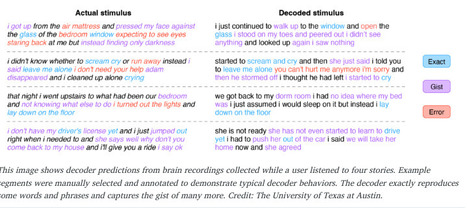







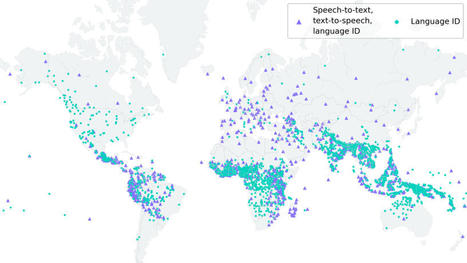











Oxycodone without a prescription
Phentermine 37.5 mg for sale
Phentremin weight loss
purchase Adderall online
Where Fentanyl Patches online
Where to buy Acxion Fentermina