Your new post is loading...
Comment tirer parti des réalisations de la SODEFOR et du CNRA de Côte d'Ivoire pour définir une politique forestière durable et fournir dès lors un exemple pour les autres pays de la région ?
Authors: Mithöfer, D,; van Noordwijk, M.; Leimona, B.; Cerutti, P.O. Certification of adherence to social and environmental standards allows companies involved in the (global) trade of commodities to dissociate themselves from negative impacts in the public eye. It can go beyond compliance with legal requirements. Certification can be an attempt to shift blame to uncertified others, but it can also …
D'ici la fin de l'année, la France se dotera d'une certification nationale des projets de compensation carbone dans les secteurs agricoles et forestiers. L'aboutissement du programme Vocal qui veut …
Stéphanie Leyronas, chargée de recherches sur les ressources naturelles au sein de l’AFD, revient sur la notion de communs et [Lire la suite]
Amazonie : cartographier le stockage du carbone après l’exploitation forestière : Une équipe internationale rassemblée au sein de l’observatoire des forêts tropicales aménagées (
Tropical managed Forests Observatory) impliquant des chercheurs Cirad de l’UMR EcoFoG et d
Authors: Ravikumar, A.; Larjavaara, M.; Larson, A.M.; Kanninen, M. Revenues derived from carbon have been seen as an important tool for supporting forest conservation over the past decade. At the same time, there is high uncertainty about how much revenue can reasonably be expected from land use emissions reductions initiatives. Despite this uncertainty, REDD+ projects and conservation initiatives that aim …
By Leona Liu, originally posted at CIFOR’s Forests News A recent study presents the most comprehensive scientific analysis of illegal logging to date. Its findings indicate that one third of tropical timber traded globally comes from illegal deforestation. “Forestry crime including corporate crimes and illegal logging account for up to $152 billion every year, more than all official development aid …
By Pablo Pacheco, Paolo Cerutti and Robert Nasi, originally posted at CIFOR’s Forests News Illegal logging might appear to be a simple story: A bad guy chopping down trees to make a big profit without obtaining any permission from local authorities or local communities, thus causing great harm to both people and the environment. For most urban dwellers, particularly Westerners, …
Publication date: 15 April 2017
Source:Geoderma, Volume 292
Author(s): Sunanda Biswas, G.C. Hazra, T.J. Purakayastha, N. Saha, Tarik Mitran, Satadeep Singha Roy, Nirmalendu Basak, Biswapati Mandal
Rice-rice is one of the major cropping systems in Indo-Gangetic Plains (IGP) of South Asia. Assessment of soil quality and identification of key indicators with their critical limits are very much important for maintaining normal functioning of the soil and productivity of crops, particularly of wet land rice. The present investigation was undertaken to identify sensitive soil quality indicators and to develop soil quality indices and establishment of their critical limits in Inceptisols, Entisols and Alfisols collected from farmers' fields with long-term rice-rice cropping system in sub-tropical India. The soil samples were analysed for 37 physical, chemical and biological properties. Principal component analysis (PCA) was performed to create minimum data set (MDS) of physical, chemical and biological indicators which were encompassed to develop unified soil quality index (SQI) under different soil orders. The SQI thus developed was highest in Inceptisols (0.66 to 0.89) followed by Entisols (0.23 to 0.76) and Alfisols (0.37 to 0.60). The upper and lower critical limits for key indicators as well as SQI were determined using scattered plot technique involving relative yields of rice (RY) and different soil quality indicators as well as SQI. The critical limit equivalent to 80% and 40% of relative yield were treated as upper and lower critical limits of selected key indicators and SQI. The adequacy classes for each of selected key indicator as a function of relative yield of rice were established based on the following criteria: <40% low, 40–80% moderate and >80% adequate. The upper and lower critical limits of the indicators selected under rice-rice cropping systems in Inceptisols were available Zn (1.7 and 1.2mgkg−1), bulk density (1.2 and 1.6Mgm−3), β-glucosidase activity (68 and 18μgp-nitrophenolg−1 soilh−1) and urease activity (64 and 24μgNH4 g−1 soil2h−1), in Entisols were dehydrogenase activity (93 and 12μgTPFg−1 soil24h−1), aggregate stability (66 and 11%), total organic C (11.6 and 10.7gkg−1) and pHw (5.7 and 5.3) and in Alfisols were oxidisable organic C (7.8 and 5.0gkg−1), β-glucosidase activity (51 and 15μgp-nitrophenolg−1 soilh−1), aggregate stability (52 and 19%) and mineralizable C (273 and 173μgCg−1 soil), respectively. The upper and lower critical limits established for key soil quality indicators as well for Inceptisols (0.85 and 0.56), Entisols (0.23 and 0.65) and Alfisols (0.37 and 0.56) could periodically be judged for maintaining/enhancing soil quality and yield sustainability through the employment of optimum management practices in rice-rice cropping systems of subtropical India.
European Commission - DG Environment News Alert Service - Science for Environment Policy: Free weekly News Alert - policy-relevant research findings delivered by email from Science for Environment Policy.
Agritrop, 8e au classement des archives ouvertes françaises : Agritrop, l’archive ouverte des publications du Cirad, obtient après seulement un an d’existence, la 8e place au classement des archives ouvertes françaises. Agritrop obtient également de
Le Cirad et la Fondation Avril s’associent pour améliorer la résilience des agricultures familiales : Michel Eddi, PDG du Cirad, et Philippe Tillous-Borde, président de la Fondation Avril, ont signé le 16 décembre une convention de partenariat scientifique pour les trois prochaines années
|
Authors: Rico Kongsager, Bruno Locatelli, Florie Chazarin Adaptation and mitigation share the ultimate purpose of reducing climate change impacts. However, they tend to be considered separately in projects and policies because of their different objectives and scales. Agriculture and forestry are related to both adaptation and mitigation: they contribute to greenhouse gas emissions and removals, are vulnerable to climate variations, …
Yoly Gutierrez interviewed scientist Bruno Locatelli on improving the design of climate change projects, originally published at CIFOR’s Forests News To combat climate change, one can avoid it via mitigation, or cope with it via adaptation. Even though these objectives are two sides of the same coin, their synergies and conflicts tend to be overlooked. “Because of the way international …
Agroecology, an introduction : Cours proposé par: Montpellier SupAgro
Les thématiques: Environnement, Agronomie et agriculture, Développement durable, Enjeux de société, Sciences de la vie
Début des inscriptions: 22 déc 2016
Fin des inscriptions: 06 mar 2017
Début du cours: 17 fév 2017
Fin du cours: 22 avr 2017
By Barbara Fraser, originally published CIFOR’s Forests News Let’s assume you want to conserve a large, widely-forested watershed by compensating people for not cutting down trees. Would it be more effective to choose the most threatened, erosion-prone areas first? Would it be best to offer higher payments for the most strategic spots? Or should you offer the same payment per …
Mardi 24 janvier, Alain Karsenty sera sur le plateau de Cash Investigation comme expert invité au débat qui suivra la diffusion de deux documentaires, l'un sur l’industrie du bois en Roumanie et les failles du label PEFC, l’autre sur la société papetière indonésienne APP et sa responsabilité indirecte dans les gigantesques incendies de forêt à Sumatra. Regardez le magazine et le débat, le 24 janvier dès 20 h 55, sur France 2.
Presentation by Peter Cronkleton, Senior Scientist at the Center for International Forestry Research (CIFOR), at IUFRO Regional Congress for Asia and Oceania, October 2016, in Bejing, China.
Authors: Schoneveld, G.C. The large social and environmental footprint of rising investor demand for Africa’s farmland has in recent years become a much-examined area of enquiry. This has produced a rich body of literature that has generated valuable insights into the underlying drivers, trends, social and environmental impacts, discursive implications, and global governance options. Host country governance dynamics have in …
Download poster (A1 size) "Criteria and The International Tropical Timber Organization (ITTO) Official Web Site.
L'actualité du développement durable avec Médiaterre, le système d'information mondial francophone pour le développement durable concourt à la mise en oeuvre du développement durable dans l'espace francophone par la diffusion et l'échange d'informations, et l'aide à la constitution de réseaux de coopération.
Pour la 25e année, l'Ademe propose de former par la recherche une cinquantaine de docteurs dans les domaines de la transition énergétique et écologique.
Publication date: April 2017
Source:Journal of Arid Environments, Volume 139
Author(s): Anna C. Treydte, Andrea Schmiedgen, Gebreyohannes Berhane, Kidanie D. Tarekegn
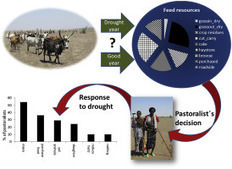
Many Eastern African rangelands comprise marginal land, where climatic conditions are poor, access rights are increasingly limited, and land degradation is progressing. We conducted participatory land use mapping and vegetation assessment to identify the most important rangeland locations and their condition in Afar, Ethiopia. Further, we conducted 79 interviews across six villages to assess pastoralist adaptation strategies during drought times. In the dry season, livestock feed resources represented rangelands far away from the village (in 76% of the cases) while 50% and 40% of pastoralists also used cake concentrates and crop residues, respectively. During the wet season, rangeland resources close to villages, albeit with rather low herbaceous cover (<25%), contributed 80% to livestock forage. In times of severe drought, migrating with livestock was the most common (70%) adaptation, in combination with purchasing feed (50%) while <40% of the pastoralists sold or slaughtered animals. Afar pastoralists applied little conservation and mitigation methods, most commonly they removed livestock pressure to allow the pasture to recover. Overall, pastoralists in Afar still strongly depended on natural rangelands and their resources. Hence, to manage these sustainably a monitoring scheme must urgently be established for investigating rangeland quality and resilience to drought and grazing pressure.
Graphical abstract
Parmi les cinq causes principales d'érosion de la biodiversité, le dérèglement climatique et la destruction des habitats sont les plus menaçantes, révèle le CGDD. Mais les facteurs indirects ne doivent pas être négligés.
|


 Scoop.it!