21st Century Learning and Teaching
791.6K views | +1 today
21st Century Learning and Teaching
Related articles to 21st Century Learning and Teaching as also tools...
Curated by Gust MEES
Your new post is loading...

Popular Tags

Current selected tag: 'Learning 2 Learn'. Clear
Scooped by Gust MEES
March 12, 2018 10:41 AM
Scoop.it!

Making an Arduino Touch Sensitive LED Sign | #Maker #MakerED #MakerSpaces #Coding #PracTICE #LEARNingByDoing

Making an Arduino Touch Sensitive LED Sign | #Maker #MakerED #MakerSpaces #Coding #PracTICE #LEARNingByDoing | 21st Century Learning and Teaching | Scoop.it

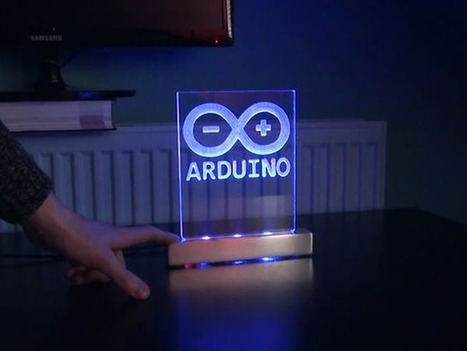
An Arduino logo engraved in acrylic with a touch sensitive aluminum LED stand.


Learn more / En savoir plus / Mehr erfahren:


https://www.scoop.it/t/21st-century-learning-and-teaching/?&tag=ARDUINO


Gust MEES's insight:

An Arduino logo engraved in acrylic with a touch sensitive aluminum LED stand.


Learn more / En savoir plus / Mehr erfahren:


https://www.scoop.it/t/21st-century-learning-and-teaching/?&tag=ARDUINO


No comment yet.
Scooped by Gust MEES
March 16, 2018 12:08 PM
Scoop.it!

How Blockchain Will Transform Credentialing (and Education)

How Blockchain Will Transform Credentialing (and Education) | 21st Century Learning and Teaching | Scoop.it

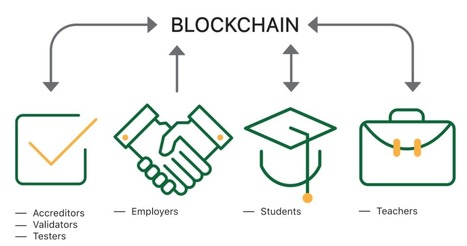
According to a new report by the Joint Research Centre (JRC), the European Commission’s science and knowledge service, Blockchain will end paper based certificates, automate the award, recognition and transfer of credits, increase learner ownership and control over their own data, reduce institutional data costs and risk–but only if open standards are adopted.


Learn more / En savoir plus / Mehr erfahren:


https://www.scoop.it/t/21st-century-learning-and-teaching/?&tag=blockchain


Gust MEES's insight:

According to a new report by the Joint Research Centre (JRC), the European Commission’s science and knowledge service, Blockchain will end paper based certificates, automate the award, recognition and transfer of credits, increase learner ownership and control over their own data, reduce institutional data costs and risk–but only if open standards are adopted.


Learn more / En savoir plus / Mehr erfahren:


https://www.scoop.it/t/21st-century-learning-and-teaching/?&tag=blockchain


davidconover's curator insight, March 20, 2018 1:32 PM
Here is an excellent report on How Blockchain Will Transform Credentialing (and Education). This hyperledger will change your district. Who will create and grant these certifications? #ibm, #blockchain, #IBMchampion, #weteachcs. #IBMcode, #edtech
 
Joann David's curator insight, March 23, 2018 10:23 AM
The evolution of eportfolios and career management
Scooped by Gust MEES
March 7, 2018 8:42 AM
Scoop.it!

The 5 Big Problems With Blockchain Everyone Should Be Aware Of | #ICT

The 5 Big Problems With Blockchain Everyone Should Be Aware Of | #ICT | 21st Century Learning and Teaching | Scoop.it

Blockchain is often touted as a world-changing technology and in many ways, it is. However, it isn’t necessarily the cure-all panacea for the world’s problems that many evangelists would have you believe.

Here’s a breakdown of some of the issues with blockchain that anyone thinking of using it should understand. Starting with perhaps the biggest…

Blockchain has an environmental cost


At least, the way it is being used today, it does. Blockchain relies on encryption to provide its security as well as establish consensus over a distributed network. This essentially means that, in order to “prove” that a user has permission to write to the chain, complex algorithms must be run, which in turn require large amounts of computing power. Of course, this comes at a cost. Taking the most widely known and used blockchain as an example – Bitcoin – last year it was claimed that the computing power required to keep the network running consumes as much energy as was used by 159 of the world’s nations.

Yes, Bitcoin’s blockchain is a hugely valuable network – with a current market capacity at the time of writing of over $170 billion – so sophisticated and computationally intense security is essential. Smaller scale blockchains – such as those that an organization may deploy internally to securely monitor and record business activity – would consume a fraction of that. Nevertheless, it’s an important consideration and the environmental implications as well as the energy costs can’t be ignored.

Lack of regulation creates a risky environment


Read more in the article...


Learn more / En savoir plus / Mehr erfahren:


https://www.scoop.it/t/21st-century-learning-and-teaching/?&tag=blockchain


Gust MEES's insight:

Blockchain is often touted as a world-changing technology and in many ways, it is. However, it isn’t necessarily the cure-all panacea for the world’s problems that many evangelists would have you believe.

Here’s a breakdown of some of the issues with blockchain that anyone thinking of using it should understand. Starting with perhaps the biggest…

Blockchain has an environmental cost


At least, the way it is being used today, it does. Blockchain relies on encryption to provide its security as well as establish consensus over a distributed network. This essentially means that, in order to “prove” that a user has permission to write to the chain, complex algorithms must be run, which in turn require large amounts of computing power. Of course, this comes at a cost. Taking the most widely known and used blockchain as an example – Bitcoin – last year it was claimed that the computing power required to keep the network running consumes as much energy as was used by 159 of the world’s nations.

Yes, Bitcoin’s blockchain is a hugely valuable network – with a current market capacity at the time of writing of over $170 billion – so sophisticated and computationally intense security is essential. Smaller scale blockchains – such as those that an organization may deploy internally to securely monitor and record business activity – would consume a fraction of that. Nevertheless, it’s an important consideration and the environmental implications as well as the energy costs can’t be ignored.

Lack of regulation creates a risky environment


Read more in the article...


Learn more / En savoir plus / Mehr erfahren:


https://www.scoop.it/t/21st-century-learning-and-teaching/?&tag=blockchain


No comment yet.
Scooped by Gust MEES
March 5, 2018 4:39 AM
Scoop.it!

Content curation: your best bet if you're looking to save time and money | #Curation #Socialmedia

Content curation: your best bet if you're looking to save time and money | #Curation #Socialmedia | 21st Century Learning and Teaching | Scoop.it

Content curation builds trust and credibility for your brand because it keeps customers informed. Your curation efforts educate and engage customers, providing them with a valuable service—which they will appreciate because it relieves them of the need to source content on their own.


Learn more / En savoir plus / Mehr erfahren:


https://gustmees.wordpress.com/?s=curation


https://www.scoop.it/t/21st-century-learning-and-teaching/?&tag=Curation


Gust MEES's insight:

Content curation builds trust and credibility for your brand because it keeps customers informed. Your curation efforts educate and engage customers, providing them with a valuable service—which they will appreciate because it relieves them of the need to source content on their own.


Learn more / En savoir plus / Mehr erfahren:


https://gustmees.wordpress.com/?s=curation


https://www.scoop.it/t/21st-century-learning-and-teaching/?&tag=Curation


No comment yet.
Scooped by Gust MEES
March 4, 2018 7:06 AM
Scoop.it!

The one crucial skill our education system is missing | #Empathy #EmotionalIntelligence

The one crucial skill our education system is missing | #Empathy #EmotionalIntelligence | 21st Century Learning and Teaching | Scoop.it

From Blade Runner to I, Robot, the big screens of Hollywood have predicted the rise of the machine. Automated intelligences will wait our tables and drive our cabs. They will serve us by performing menial tasks. But fact is now surpassing fiction. Automation has moved beyond the factory assembly line as computers are diagnosing illnesses, providing legal counsel, and make financial and political decisions. And if artificial intelligence really is faster, smarter and more reliable, what are we left with?

The answer is precisely that element which makes us less efficient and slower. Our humanity. But rather than being seen as a weakness, this is actually our strongest suit. It’s one we need to empower, because studies show that as the world becomes increasingly automated, computerised and digitalised, we are losing the very skills that define us as human. Just when we need them the most.

Our empathy is something that computers will always struggle to emulate. We need to celebrate what makes us different from even the smartest of the machines. While the future belongs to those who are able to navigate this increasingly digitalised world of ours, the choicest spoils will fall to those who can combine technological fluency with emotional intelligence.


Learn more / En savoir plus / Mehr erfahren:


https://www.scoop.it/t/21st-century-learning-and-teaching/?&tag=Empathy


https://www.scoop.it/t/21st-century-learning-and-teaching/?&tag=Emotional+intelligence


Gust MEES's insight:

From Blade Runner to I, Robot, the big screens of Hollywood have predicted the rise of the machine. Automated intelligences will wait our tables and drive our cabs. They will serve us by performing menial tasks. But fact is now surpassing fiction. Automation has moved beyond the factory assembly line as computers are diagnosing illnesses, providing legal counsel, and make financial and political decisions. And if artificial intelligence really is faster, smarter and more reliable, what are we left with?

The answer is precisely that element which makes us less efficient and slower. Our humanity. But rather than being seen as a weakness, this is actually our strongest suit. It’s one we need to empower, because studies show that as the world becomes increasingly automated, computerised and digitalised, we are losing the very skills that define us as human. Just when we need them the most.

Our empathy is something that computers will always struggle to emulate. We need to celebrate what makes us different from even the smartest of the machines. While the future belongs to those who are able to navigate this increasingly digitalised world of ours, the choicest spoils will fall to those who can combine technological fluency with emotional intelligence.


Learn more / En savoir plus / Mehr erfahren:


https://www.scoop.it/t/21st-century-learning-and-teaching/?&tag=Empathy


https://www.scoop.it/t/21st-century-learning-and-teaching/?&tag=Emotional+intelligence


Sirpa Vellonen-Myllylä's curator insight, March 11, 2018 9:37 AM

Finally I can see this topic emerge in public discussion about education - something I've been privately preaching about. 

Felipe Rincon's curator insight, March 14, 2018 8:22 PM
It is very interesting the way in which this article emphasizes the importance of empathy and the other characteristics belonging to the human being in our society, also how that characteristics distance us from machines. I think that the implementation of methodologies that take into consideration this aspects in education in general will contribute to the comprehensive citizens education. The appropriate combination of technological fluency with emotional intelligence should be one of the goals in modern education
Patrice McDonough's curator insight, March 15, 2018 11:49 AM
Who knew our humanity would be buried under the weight of automated intelligences.  Overtaking #EmotionalIntelligence!!
Scooped by Gust MEES
March 2, 2018 12:39 PM
Scoop.it!

Jarrod Dicker on what the blockchain can do for news | #Press #Journalism #Curation #ContentCuration

Jarrod Dicker on what the blockchain can do for news | #Press #Journalism #Curation #ContentCuration | 21st Century Learning and Teaching | Scoop.it

Trending: Yes, there’s a crisis of trust in journalism. But it’s inside newsrooms, too.

That isn’t why Dicker is interested in it, however. Much like Civil, a blockchain-based media platform that wants to use the technology for journalism, Dicker sees Po.et as a way of using blockchain to empower individual content creators—not just journalists or news organizations, but anyone who creates words or images or music or video for almost any purpose, including advertisers and brands. In effect, he says Po.et is trying to build an open-source, blockchain-based licensing system for content.

To try to understand a bit more about what this means, and why Dicker decided to throw in the towel on a promising career at a traditional media entity, I spoke with him recently by phone. What follows is a transcript of some of that discussion, edited for length and clarity.


Learn more / En savoir plus / Mehr erfahren:


https://www.scoop.it/t/21st-century-learning-and-teaching/?&tag=Curation


https://www.scoop.it/t/21st-century-learning-and-teaching/?&tag=Content+curation


https://www.scoop.it/t/21st-century-learning-and-teaching/?&tag=press


Gust MEES's insight:

Trending: Yes, there’s a crisis of trust in journalism. But it’s inside newsrooms, too.

That isn’t why Dicker is interested in it, however. Much like Civil, a blockchain-based media platform that wants to use the technology for journalism, Dicker sees Po.et as a way of using blockchain to empower individual content creators—not just journalists or news organizations, but anyone who creates words or images or music or video for almost any purpose, including advertisers and brands. In effect, he says Po.et is trying to build an open-source, blockchain-based licensing system for content.

To try to understand a bit more about what this means, and why Dicker decided to throw in the towel on a promising career at a traditional media entity, I spoke with him recently by phone. What follows is a transcript of some of that discussion, edited for length and clarity.


Learn more / En savoir plus / Mehr erfahren:


https://www.scoop.it/t/21st-century-learning-and-teaching/?&tag=Curation


https://www.scoop.it/t/21st-century-learning-and-teaching/?&tag=Content+curation


https://www.scoop.it/t/21st-century-learning-and-teaching/?&tag=press


No comment yet.
Scooped by Gust MEES
March 1, 2018 12:50 PM
Scoop.it!

Hackster.io - The community dedicated to learning hardware | #Maker #MakerED #MakerSpaces #PracTICE #LEARNingByDoing #Creativity

Hackster.io - The community dedicated to learning hardware | #Maker #MakerED #MakerSpaces #PracTICE #LEARNingByDoing #Creativity | 21st Century Learning and Teaching | Scoop.it

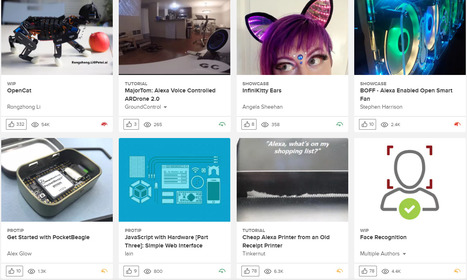
Learn to design, create, and program electronics
11,116 open-source project tutorials shared by 408,637 developers


Learn more / En savoir plus / Mehr erfahren:


https://gustmees.wordpress.com/?s=maker


https://www.scoop.it/t/21st-century-learning-and-teaching/?&tag=makerspace


Gust MEES's insight:

Learn to design, create, and program electronics
11,116 open-source project tutorials shared by 408,637 developers


Learn more / En savoir plus / Mehr erfahren:


https://gustmees.wordpress.com/?s=maker


https://www.scoop.it/t/21st-century-learning-and-teaching/?&tag=makerspace


No comment yet.
Scooped by Gust MEES
March 1, 2018 11:03 AM
Scoop.it!

La litéracie en curation de données | #SocialMedia #IntelligenceCollective

La litéracie en curation de données | #SocialMedia #IntelligenceCollective | 21st Century Learning and Teaching | Scoop.it

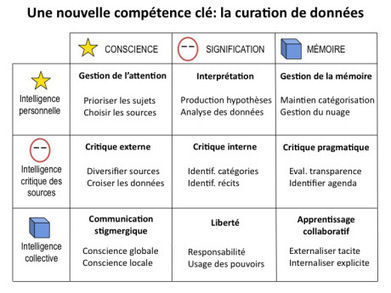
FIGURE 1 J'ai montré dans un post précédent, l'importance contemporaine de la curation collaborative de données.  Les compétences dans ce domaine sont au coeur de la nouvelle litéracie algorithmique.


La figure 1 présente ces compétences de manière systématique et, ce faisant, elle met en ordre les savoir-faire intellectuels et pratiques tout comme les « savoir-être » éthiques…


Learn more / En savoir plus / Mehr erfahren:


https://www.scoop.it/t/21st-century-learning-and-teaching/?&tag=Curation


https://www.scoop.it/t/21st-century-learning-and-teaching/?&tag=Intelligence+collective


Gust MEES's insight:

FIGURE 1 J'ai montré dans un post précédent, l'importance contemporaine de la curation collaborative de données.  Les compétences dans ce domaine sont au coeur de la nouvelle litéracie algorithmique.


La figure 1 présente ces compétences de manière systématique et, ce faisant, elle met en ordre les savoir-faire intellectuels et pratiques tout comme les « savoir-être » éthiques…


Learn more / En savoir plus / Mehr erfahren:


https://www.scoop.it/t/21st-century-learning-and-teaching/?&tag=Curation


https://www.scoop.it/t/21st-century-learning-and-teaching/?&tag=Intelligence+collective


No comment yet.
Scooped by Gust MEES
March 1, 2018 10:03 AM
Scoop.it!

Exploring Curation as a core competency in digital and media literacy education | #SocialMedia #PLN #PKM #LEARNing2LEARN

Exploring Curation as a core competency in digital and media literacy education | #SocialMedia #PLN #PKM #LEARNing2LEARN | 21st Century Learning and Teaching | Scoop.it

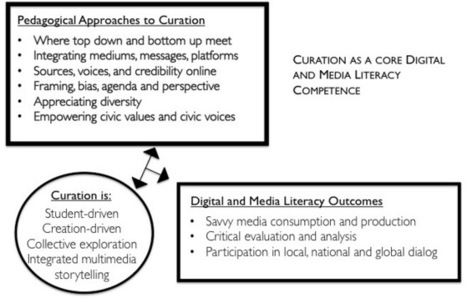
In today’s hypermedia landscape, youth and young adults are increasingly using social media platforms, online aggregators and mobile applications for daily information use. Communication educators, armed with a host of free, easy-to-use online tools, have the ability to create dynamic approaches to teaching and learning about information and communication flow online. In this paper we explore the concept of curation as a student- and creation-driven pedagogical tool to enhance digital and media literacy education.


We present a theoretical justification for curation and present six key ways that curation can be used to teach about critical thinking, analysis and expression online. We utilize a case study of the digital curation platform Storify to explore how curation works in the classroom, and present a framework that integrates curation pedagogy into core media literacy education learning outcomes.


Learn more / En savoir plus / Mehr erfahren:


https://gustmees.wordpress.com/?s=curation


https://globaleducationandsocialmedia.wordpress.com/2014/01/19/pkm-personal-professional-knowledge-management/


Gust MEES's insight:

In today’s hypermedia landscape, youth and young adults are increasingly using social media platforms, online aggregators and mobile applications for daily information use. Communication educators, armed with a host of free, easy-to-use online tools, have the ability to create dynamic approaches to teaching and learning about information and communication flow online. In this paper we explore the concept of curation as a student- and creation-driven pedagogical tool to enhance digital and media literacy education.


We present a theoretical justification for curation and present six key ways that curation can be used to teach about critical thinking, analysis and expression online. We utilize a case study of the digital curation platform Storify to explore how curation works in the classroom, and present a framework that integrates curation pedagogy into core media literacy education learning outcomes.


Learn more / En savoir plus / Mehr erfahren:


https://gustmees.wordpress.com/?s=curation


https://globaleducationandsocialmedia.wordpress.com/2014/01/19/pkm-personal-professional-knowledge-management/


No comment yet.
Scooped by Gust MEES
February 26, 2018 10:20 AM
Scoop.it!

The 5th ‘C’ of 21st Century Skills? Try Computational Thinking (Not Coding) | #ModernEDU #ModernLEARNing #ModernSociety #STEM

The 5th ‘C’ of 21st Century Skills? Try Computational Thinking (Not Coding) | #ModernEDU #ModernLEARNing #ModernSociety #STEM | 21st Century Learning and Teaching | Scoop.it
There is growing recognition in the education systems around the globe that being able to problem-solve computationally—that is, to think logically and algorithmically, and use computational tools for creating artifacts including models and data visualizations—is rapidly becoming a prerequisite competency for all fields.

In 2012, the U.K. national curriculum began introducing computer science (CS) to all students. Singapore, as part of its “Smart Nation” initiative, has labeled developing CT as a “national capability.” Other countries, from Finland to South Korea, China to Australia and New Zealand, have launched large-scale efforts to introduce CT in schools, as either a part of new CS curricula or integrated into existing subjects. Here in the U.S., former President Barack Obama called on all K-12 students to be equipped with CT skills as part of an “Computer Science for All” initiative in 2016. Most emergent efforts in the US involving CT are currently part of CS curricula, although CT is increasingly seeing integration into STEM (especially science) learning.


Learn more / En savoir plus / Mehr erfahren:


https://www.scoop.it/t/21st-century-learning-and-teaching/?&tag=Computational+Thinking


Sharon Berman's curator insight, February 26, 2018 4:01 PM
Interesting perspective - great to see that CT can be associated with learning areas other than STEM.
Vivalist's curator insight, March 1, 2018 10:21 AM
Computational Thinking (CT) is "the thought processes involved in understanding a problem and expressing its solutions in such a way that a computer can potentially carry out the solution."

Toys such as the recently Kickstarted Turing Tumble do just this: introduce kids to the notion of algorithms.

It's a very powerful field of studies for kids and grown-ups alike, because it helps understanding what's behind the curtains when it comes to computation.

It teaches how to divide a big problem into bunch of smaller ones that are easier to solve - and this is a solid skill to own.
Angela's curator insight, July 12, 2019 10:20 AM
Multiple representations of computational thinking may encourage those with math anxiety to make  connections between the processes to how they see and solve the world. Not one right way to see and solve  even though there may be one right answer. 
Scooped by Gust MEES
February 23, 2018 12:25 PM
Scoop.it!

Arduino Tutorial - Touch Screen TFT LCD Tutorial | #Coding #Maker #MakerED #MakerSpaces #LEARNingByDoing #PracTICE

Arduino Tutorial - Touch Screen TFT LCD Tutorial | #Coding #Maker #MakerED #MakerSpaces #LEARNingByDoing #PracTICE | 21st Century Learning and Teaching | Scoop.it

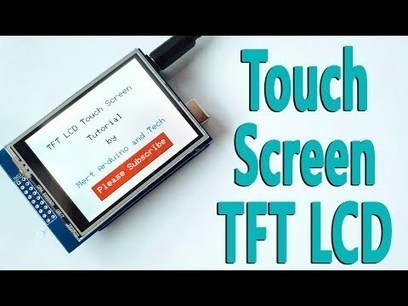
In this tutorial we will learn how to programming the TFT LCD Touch Screen. I used 2.8" TFT Touch Display ILI9325 Module and Arduino Uno for this tutorial.


The topics we will view in this tutorial, Required Libraries, Add Text, Text Color, Font Size, Print Text, Create Button, Button Click, Add Frame, Draw Rectangle and Background Color. 


Learn more / En savoir plus / Mehr erfahren:


https://www.scoop.it/t/21st-century-learning-and-teaching/?&tag=ARDUINO


https://www.scoop.it/t/21st-century-learning-and-teaching/?&tag=TFT+Display+with+buttons


Gust MEES's insight:

In this tutorial we will learn how to programming the TFT LCD Touch Screen. I used 2.8" TFT Touch Display ILI9325 Module and Arduino Uno for this tutorial.


The topics we will view in this tutorial, Required Libraries, Add Text, Text Color, Font Size, Print Text, Create Button, Button Click, Add Frame, Draw Rectangle and Background Color. 


Learn more / En savoir plus / Mehr erfahren:


https://www.scoop.it/t/21st-century-learning-and-teaching/?&tag=ARDUINO


https://www.scoop.it/t/21st-century-learning-and-teaching/?&tag=TFT+Display+with+buttons


No comment yet.
Scooped by Gust MEES
February 22, 2018 4:23 PM
Scoop.it!

Comment j’utilise les médias sociaux dans mes cours à l’université | #SocialMedia #PierreLÉVY #ModernPedagogy #ModernLEARNing #Curation #Blogs #PLN #PKM #IntelligenceCollective #Communication

Comment j’utilise les médias sociaux dans mes cours à l’université | #SocialMedia #PierreLÉVY #ModernPedagogy #ModernLEARNing #Curation #Blogs #PLN #PKM #IntelligenceCollective #Communication | 21st Century Learning and Teaching | Scoop.it

Pierre Lévy Professeur à l’Université d’Ottawa. Ce travail est la pré-impression d’un article dans le numéro 58 de RED. Il sera publié en tant que contribution d’invité, dans le genre «histoire personnelle comme recherche éducative» (Personal History as Educational Research).   Cet article n’a d’autre but que de raconter mon expérience...


Learn more / En savoir plus / Mehr erfahren:


https://gustmees.wordpress.com/?s=curation


https://gustmees.wordpress.com/?s=blogging


https://globaleducationandsocialmedia.wordpress.com/2014/01/19/pkm-personal-professional-knowledge-management/


Gust MEES's insight:

Pierre Lévy Professeur à l’Université d’Ottawa. Ce travail est la pré-impression d’un article dans le numéro 58 de RED. Il sera publié en tant que contribution d’invité, dans le genre «histoire personnelle comme recherche éducative» (Personal History as Educational Research).   Cet article n’a d’autre but que de raconter mon expérience...


Learn more / En savoir plus / Mehr erfahren:


https://gustmees.wordpress.com/?s=curation


https://gustmees.wordpress.com/?s=blogging


https://globaleducationandsocialmedia.wordpress.com/2014/01/19/pkm-personal-professional-knowledge-management/


Yasmina BADE's curator insight, February 22, 2018 5:18 PM
Share your insight
Scooped by Gust MEES
February 22, 2018 8:25 AM
Scoop.it!

javl/image2cpp | image2cpp is a simple tool to change images into byte arrays to use with (monochrome) displays suchs as OLEDs | #Coding #Arduino #Maker #MakerED #MakerSpaces

javl/image2cpp | image2cpp is a simple tool to change images into byte arrays to use with (monochrome) displays suchs as OLEDs | #Coding #Arduino #Maker #MakerED #MakerSpaces | 21st Century Learning and Teaching | Scoop.it

image2cpp is a simple tool to change images into byte arrays to use with (monochrome) displays suchs as OLEDs, like those from Adafruit or Sparkfun.


While searching for a way to generate these arrays, I mostly found links to a piece of Windows software. Both the flakey results and the hassle of having to boot a virtual machine just to convert an image lead to me writing this pure html + javascript solution.

Alternatively you can also enter a byte array as input to turn it back into an image. This might be useful for debugging, or when you want to write the byte array yourself. I don't know.

Running the tool

You don't need any special dependencies / internet connection; all the necessary parts sit in a single .html file. So just open this index.html page in a (recent) browser to run the tool.


Or you can use the online version at:  


http://javl.github.io/image2cpp/


Learn more / En savoir plus / Mehr erfahren:


https://www.scoop.it/t/21st-century-learning-and-teaching/?&tag=ARDUINO


BTW: Above shown image is my "MAUSI", which was the "Mascot" for my Cyber-Security courses in Luxembourg EDUcation in 2003-2007. Those courses were mandatory for students up from 12 years old (7èmes).


Learn more about Cyber-Security in Luxembourg (Europe):


https://gustmees.wordpress.com/2017/11/22/luxembourg-and-cyber-security-how-did-it-start/


Gust MEES's insight:

image2cpp is a simple tool to change images into byte arrays to use with (monochrome) displays suchs as OLEDs, like those from Adafruit or Sparkfun.


While searching for a way to generate these arrays, I mostly found links to a piece of Windows software. Both the flakey results and the hassle of having to boot a virtual machine just to convert an image lead to me writing this pure html + javascript solution.

Alternatively you can also enter a byte array as input to turn it back into an image. This might be useful for debugging, or when you want to write the byte array yourself. I don't know.

Running the tool

You don't need any special dependencies / internet connection; all the necessary parts sit in a single .html file. So just open this index.html page in a (recent) browser to run the tool.


Or you can use the online version at:  


http://javl.github.io/image2cpp/


Learn more / En savoir plus / Mehr erfahren:


https://www.scoop.it/t/21st-century-learning-and-teaching/?&tag=ARDUINO


BTW: Above shown image is my "MAUSI", which was the "Mascot" for my Cyber-Security courses in Luxembourg EDUcation in 2003-2007. Those courses were mandatory for students up from 12 years old (7èmes).


Learn more about Cyber-Security in Luxembourg (Europe):


https://gustmees.wordpress.com/2017/11/22/luxembourg-and-cyber-security-how-did-it-start/


No comment yet.
Scooped by Gust MEES
March 11, 2018 1:49 PM
Scoop.it!

The classroom of the future, according to the world’s best teachers | #ModernEDUcation #ModernLEARNing

The classroom of the future, according to the world’s best teachers | #ModernEDUcation #ModernLEARNing | 21st Century Learning and Teaching | Scoop.it

The classroom of the future, according to the world’s best teachers

By Global Teacher Prize | March 2nd 2018

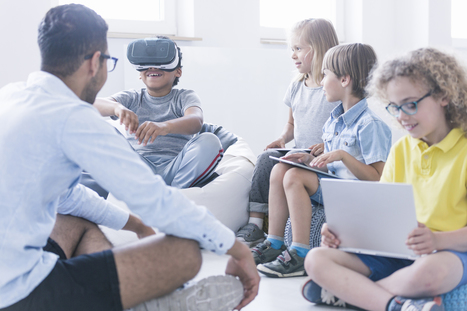
In many parts of the world, today’s classrooms are almost unrecognisable compared to those of a decade ago.

Technology is changing the way students learn and teachers teach. From interactive white boards replacing chalk boards to tablets replacing desktop computers, schools are becoming increasingly digital.

Looking ahead to 2030, greater internet connectivity and smarter technologies promise to radically reshape the classroom of the future.

We asked the Global Teacher Prize 2018 Finalists to share their views on how they feel the classroom will change in the coming decade, and what this means for the role of the teacher.

What do you think will be the biggest difference between the classroom of 2030 and the classroom of today?

Many of our Finalists predict that the trend of young people effectively teaching themselves will continue.


Learn more / En savoir plus / Mehr erfahren:


https://www.scoop.it/t/21st-century-learning-and-teaching/


Gust MEES's insight:

The classroom of the future, according to the world’s best teachers

By Global Teacher Prize | March 2nd 2018

In many parts of the world, today’s classrooms are almost unrecognisable compared to those of a decade ago.

Technology is changing the way students learn and teachers teach. From interactive white boards replacing chalk boards to tablets replacing desktop computers, schools are becoming increasingly digital.

Looking ahead to 2030, greater internet connectivity and smarter technologies promise to radically reshape the classroom of the future.

We asked the Global Teacher Prize 2018 Finalists to share their views on how they feel the classroom will change in the coming decade, and what this means for the role of the teacher.

What do you think will be the biggest difference between the classroom of 2030 and the classroom of today?

Many of our Finalists predict that the trend of young people effectively teaching themselves will continue.


Learn more / En savoir plus / Mehr erfahren:


https://www.scoop.it/t/21st-century-learning-and-teaching/


Pablo Peñalver's curator insight, March 13, 2018 4:20 AM

The classroom of the future, according to the world’s best teachers

By Global Teacher Prize | March 2nd 2018

In many parts of the world, today’s classrooms are almost unrecognisable compared to those of a decade ago.

Technology is changing the way students learn and teachers teach. From interactive white boards replacing chalk boards to tablets replacing desktop computers, schools are becoming increasingly digital.

Looking ahead to 2030, greater internet connectivity and smarter technologies promise to radically reshape the classroom of the future.

We asked the Global Teacher Prize 2018 Finalists to share their views on how they feel the classroom will change in the coming decade, and what this means for the role of the teacher.

What do you think will be the biggest difference between the classroom of 2030 and the classroom of today?

Many of our Finalists predict that the trend of young people effectively teaching themselves will continue.


Learn more / En savoir plus / Mehr erfahren:


https://www.scoop.it/t/21st-century-learning-and-teaching/


Scooped by Gust MEES
March 7, 2018 9:07 AM
Scoop.it!

We Need to Modernize Education. The Clock Is Ticking | #ModernEDU #ModernLEARNing #LEARNing2LEARN

We Need to Modernize Education. The Clock Is Ticking | #ModernEDU #ModernLEARNing #LEARNing2LEARN | 21st Century Learning and Teaching | Scoop.it

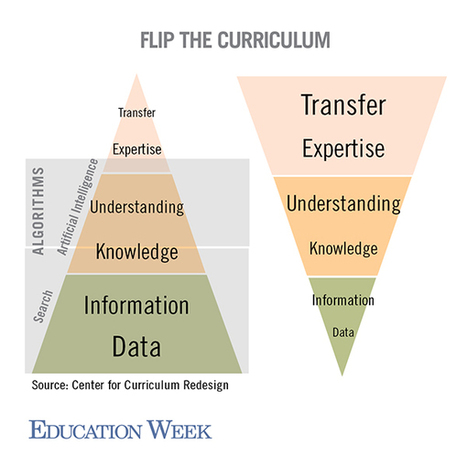
Flipping the curriculum could help us meet the demands of the artificial-intelligence era

Technologies such as artificial intelligence, robotics, and biotech are redefining what it means to be human—and employable.

Jobs are disappearing as automation replaces the need for people. New occupations are emerging that demand competencies that can transfer across the multiple assignments workers will experience in their lives. The disappearance of global boundaries presents opportunities—and risks—for all workers.

These changes demand a significant, ambitious evolution in how we prepare students for their future in a world that's increasingly volatile, uncertain, complex, and ambiguous. We need a relevant and modernized education.


Learn more / En savoir plus / Mehr erfahren:


https://www.scoop.it/t/21st-century-learning-and-teaching/?&tag=modern-education


Gust MEES's insight:

Flipping the curriculum could help us meet the demands of the artificial-intelligence era

Technologies such as artificial intelligence, robotics, and biotech are redefining what it means to be human—and employable.

Jobs are disappearing as automation replaces the need for people. New occupations are emerging that demand competencies that can transfer across the multiple assignments workers will experience in their lives. The disappearance of global boundaries presents opportunities—and risks—for all workers.

These changes demand a significant, ambitious evolution in how we prepare students for their future in a world that's increasingly volatile, uncertain, complex, and ambiguous. We need a relevant and modernized education.


Learn more / En savoir plus / Mehr erfahren:


https://www.scoop.it/t/21st-century-learning-and-teaching/?&tag=modern-education


laustenreed's curator insight, March 8, 2018 3:48 PM

Looking into the future Of Distance Education. Is this reality?

Chong Jiaxuan's comment, March 9, 2018 9:58 AM
According to the article, education now focusses more on information and data, followed by understanding and knowledge, and in last place, transfer of expertise. However, in the future, when artificial intelligence becomes common, education needs to focus on transfer of expertise before everything else. I feel that this is rather true. Knowledge of events and subjects might give you a boost in your career, but what is more important is the skills to learn, which is the transfer of expertise. Education needs to shift in order to meet this demand of skills needed in the future.
Julián David Cano's curator insight, March 20, 2018 7:14 PM
It can be evidenced that a lot of aspects of education continue being as traditional as always. Nevertheless, I must highlight that nowadays people are becoming aware about the importance of incorporating technology into the classrooms. Although people are becoming aware, taking advantage of technology to improve the learning process is still a challenge.

This article is really interesting due to the fact that it provides specific examples of skills needed in this century, and that can be achieved through the use of technological devices. Also, this article made me think about my role as a future teacher and the responsibility to start making little changes into the classrooms in order to improve education and contribute positive aspects to it. it is clear that the article makes a direct relationship about technology and education, and how to prepare students to deal with the 21st century skills.
Scooped by Gust MEES
March 7, 2018 7:56 AM
Scoop.it!

Pledge Viewer | Digital Skills and Jobs Coalition | #EU #Europe

Pledge Viewer | Digital Skills and Jobs Coalition | #EU #Europe | 21st Century Learning and Teaching | Scoop.it

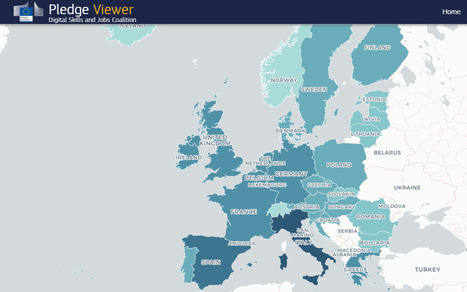
This website collects information about the progress of the pledges in the context of the Digital Skills and Jobs Coalition.

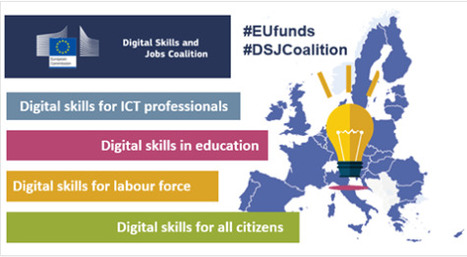
The Digital Skills and Jobs Coalition brings together Member States, companies, social partners, non-profit organisations and education providers who take action to tackle the lack of digital skills in Europe.

Member States can support cooperation among different actors in their country by bringing them together in national Digital Skills and Jobs Coalitions. Find the list of active national coalitions with correspondent contact details here.

For more information see the about page. For additional information, please use the contact page.


Learn more / En savoir plus / Mehr erfahren:


https://www.scoop.it/t/21st-century-learning-and-teaching/?&tag=EU


Gust MEES's insight:

This website collects information about the progress of the pledges in the context of the Digital Skills and Jobs Coalition.

The Digital Skills and Jobs Coalition brings together Member States, companies, social partners, non-profit organisations and education providers who take action to tackle the lack of digital skills in Europe.

Member States can support cooperation among different actors in their country by bringing them together in national Digital Skills and Jobs Coalitions. Find the list of active national coalitions with correspondent contact details here.

For more information see the about page. For additional information, please use the contact page.


Learn more / En savoir plus / Mehr erfahren:


https://www.scoop.it/t/21st-century-learning-and-teaching/?&tag=EU


Oskar Almazan's curator insight, March 7, 2018 8:56 AM
This website collects information about the progress of the pledges in the context of the Digital Skills and Jobs Coalition. The Digital Skills and Jobs Coalition brings together Member States, companies, social partners, non-profit organisations and education providers who take action to tackle the lack of digital skills in Europe. Member States can support cooperation among different actors in their country by bringing them together in national Digital Skills and Jobs Coalitions. Find the list of active national coalitions with correspondent contact details here.
Scooped by Gust MEES
March 4, 2018 11:01 AM
Scoop.it!

Content curation: the complete guide to leverage third-party content | #Curation #SocialMedia #LEARNing2LEARN

Content curation: the complete guide to leverage third-party content | #Curation #SocialMedia #LEARNing2LEARN | 21st Century Learning and Teaching | Scoop.it

Content curation. Most marketers are familiar with the practice of sharing other people’s content on social networks. There are other curated content formats.


Learn more / En savoir plus / Mehr erfahren:


https://gustmees.wordpress.com/?s=curation


https://www.scoop.it/t/21st-century-learning-and-teaching/?&tag=Curation


Gust MEES's insight:

Content curation. Most marketers are familiar with the practice of sharing other people’s content on social networks. There are other curated content formats.


Learn more / En savoir plus / Mehr erfahren:


https://gustmees.wordpress.com/?s=curation


https://www.scoop.it/t/21st-century-learning-and-teaching/?&tag=Curation


No comment yet.
Scooped by Gust MEES
March 3, 2018 4:25 AM
Scoop.it!

Arduino Projects with DIY Step by Step Tutorials

Arduino Projects with DIY Step by Step Tutorials | 21st Century Learning and Teaching | Scoop.it

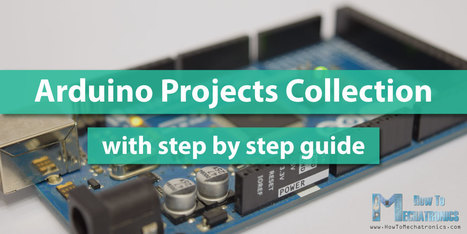
Each of the following DIY Arduino projects is covered with detailed step by step tutorial on how to do it yourself and includes circuit schematics, source codes and videos.

This collection of Arduino Projects features:

Wireless control
Automation
Motors control
Robotics
LEDs
and more.


Learn more / En savoir plus / Mehr erfahren:


https://www.scoop.it/t/21st-century-learning-and-teaching/?&tag=makerspace


https://www.scoop.it/t/21st-century-learning-and-teaching/?&tag=ARDUINO


Gust MEES's insight:

Each of the following DIY Arduino projects is covered with detailed step by step tutorial on how to do it yourself and includes circuit schematics, source codes and videos.

This collection of Arduino Projects features:

Wireless control
Automation
Motors control
Robotics
LEDs
and more.


Learn more / En savoir plus / Mehr erfahren:


https://www.scoop.it/t/21st-century-learning-and-teaching/?&tag=makerspace


https://www.scoop.it/t/21st-century-learning-and-teaching/?&tag=ARDUINO


No comment yet.
Scooped by Gust MEES
March 2, 2018 4:42 AM
Scoop.it!

This 3D Printed Arduino-Based Hexapod Robot Can Bust a Move! | #3DPrinting #Maker #MakerED #MakerSpaces #Coding #Vorpal #Creativity #3DPrinting

This 3D Printed Arduino-Based Hexapod Robot Can Bust a Move! | #3DPrinting #Maker #MakerED #MakerSpaces #Coding #Vorpal #Creativity #3DPrinting | 21st Century Learning and Teaching | Scoop.it

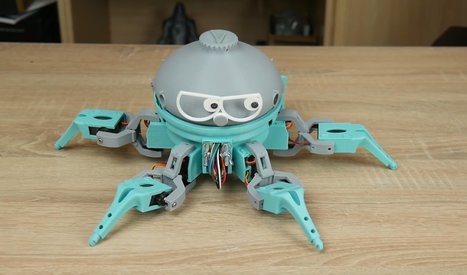
I have often mentioned the wisdom of robot maker and Make: contributor I-Wei Huang who says that you can get away with a lot in a robot creation if you make it cute, characterful, and funny. This comes across in spades with Vorpal, a 3D-printable hexapod with real character and presence. You’ll laugh, you’ll cry, you’ll fall in love.


Learn more / En savoir plus / Mehr erfahren:


https://www.scoop.it/t/21st-century-learning-and-teaching/?&tag=makerspace


https://www.scoop.it/t/21st-century-learning-and-teaching/?&tag=ARDUINO


Gust MEES's insight:

I have often mentioned the wisdom of robot maker and Make: contributor I-Wei Huang who says that you can get away with a lot in a robot creation if you make it cute, characterful, and funny. This comes across in spades with Vorpal, a 3D-printable hexapod with real character and presence. You’ll laugh, you’ll cry, you’ll fall in love.


Learn more / En savoir plus / Mehr erfahren:


https://www.scoop.it/t/21st-century-learning-and-teaching/?&tag=makerspace


https://www.scoop.it/t/21st-century-learning-and-teaching/?&tag=ARDUINO


No comment yet.
Scooped by Gust MEES
March 1, 2018 11:25 AM
Scoop.it!

European Social Fund - European Commission | #DigitalSkills #DQ #ModernSociety 

European Social Fund - European Commission | #DigitalSkills #DQ #ModernSociety  | 21st Century Learning and Teaching | Scoop.it

European Commission 


The European Social Fund

Each year the ESF helps millions of Europeans improve their lives by learning new skills and finding better jobs. Learn about the ESF: what it does, how it helps and who benefits.


Learn more / En savoir plus / Mehr erfahren:


https://www.scoop.it/t/21st-century-learning-and-teaching/?&tag=EU


Gust MEES's insight:

European Commission 


The European Social Fund

Each year the ESF helps millions of Europeans improve their lives by learning new skills and finding better jobs. Learn about the ESF: what it does, how it helps and who benefits.


Learn more / En savoir plus / Mehr erfahren:


https://www.scoop.it/t/21st-century-learning-and-teaching/?&tag=EU


Pablo Peñalver's curator insight, March 1, 2018 6:39 PM

European Commission 


The European Social Fund

Each year the ESF helps millions of Europeans improve their lives by learning new skills and finding better jobs. Learn about the ESF: what it does, how it helps and who benefits.


Learn more / En savoir plus / Mehr erfahren:


https://www.scoop.it/t/21st-century-learning-and-teaching/?&tag=EU


Scooped by Gust MEES
March 1, 2018 10:40 AM
Scoop.it!

Content intelligence: a new step in the Scoop.it journey | #Curation #ContentCuration #ContentStrategy #ContentMarketing #BigData #AI

Content intelligence: a new step in the Scoop.it journey | #Curation #ContentCuration #ContentStrategy #ContentMarketing #BigData #AI | 21st Century Learning and Teaching | Scoop.it

Everyday, there are 4 million blog posts, 100,000 news articles and 500,000 hours of video published on the Internet. A wealth of information and knowledge. A wealth of information and knowledge that is lost for most companies, at least for the most part.

Lost?

Step 1: content curation
Not entirely. Thanks to content curation technology, the Web can now be filtered. With content curation tools and platforms such as Scoop.it (among others of course), we can use more or less sophisticated ways to filter this huge amount of content that is published daily to zoom in on what matters to us. Good content curation technology is essential. It saves people a huge amount of time looking for content to share for marketing purposes or information that helps their organization make better decisions. And perhaps as importantly, without these filters, we would just be able to search – not discover. We would still find answers to what we don’t know but we wouldn’t know what we don’t know.

But until recently, all the solutions we’ve offered to deal with information overload – ours included – have revolved around the same basic idea: more – or more sophisticated – filters.


Learn more / En savoir plus / Mehr erfahren:


https://www.scoop.it/t/21st-century-learning-and-teaching/?&tag=Curation


Gust MEES's insight:

Everyday, there are 4 million blog posts, 100,000 news articles and 500,000 hours of video published on the Internet. A wealth of information and knowledge. A wealth of information and knowledge that is lost for most companies, at least for the most part.

Lost?

Step 1: content curation
Not entirely. Thanks to content curation technology, the Web can now be filtered. With content curation tools and platforms such as Scoop.it (among others of course), we can use more or less sophisticated ways to filter this huge amount of content that is published daily to zoom in on what matters to us. Good content curation technology is essential. It saves people a huge amount of time looking for content to share for marketing purposes or information that helps their organization make better decisions. And perhaps as importantly, without these filters, we would just be able to search – not discover. We would still find answers to what we don’t know but we wouldn’t know what we don’t know.

But until recently, all the solutions we’ve offered to deal with information overload – ours included – have revolved around the same basic idea: more – or more sophisticated – filters.


Learn more / En savoir plus / Mehr erfahren:


https://www.scoop.it/t/21st-century-learning-and-teaching/?&tag=Curation


No comment yet.
Scooped by Gust MEES
March 1, 2018 9:19 AM
Scoop.it!

Considering Community: Communities of practice as vital tools for knowledge management | #PKM #LEARNing2LEARN

Considering Community: Communities of practice as vital tools for knowledge management | #PKM #LEARNing2LEARN | 21st Century Learning and Teaching | Scoop.it

Considering Community: Communities of practice as vital tools for knowledge management


Social in silico includes a series of occasional posts focused on community management tips and related information. I’m tagging these Considering Community and you can find all the posts in the series here. 

Previously on this blog, I’ve reflected on the different types of community that I’ve observed within science and specifically in the first cohort of the community engagement fellowship program that I run at AAAS. I identified four initial broad types of scientific communities – from professional associations to communities of practice. I’m currently delving deeper into communities of practice and am enjoying reading “Cultivating communities of practice” by Etienne Wenger, Richard McDermott and William M. Snyder.

Communities of practice and coffee – breaking down those silos one latte at a time…

What’s a community of practice – and what does it have to do with knowledge management?
A community of practice is a group of people who gather to learn more about a topic together and in doing so deepen their knowledge and expertise. The group may not have a specifically defined goal, but rather meet regularly to continually refine what they know about a subject. As such, communities of practice are key to knowledge management.

Wenger et al list 5 ways in which communities of practice are key to how we manage knowledge...


Learn more / En savoir plus / Mehr erfahren:


https://globaleducationandsocialmedia.wordpress.com/2014/01/19/pkm-personal-professional-knowledge-management/


Gust MEES's insight:

Considering Community: Communities of practice as vital tools for knowledge management


Social in silico includes a series of occasional posts focused on community management tips and related information. I’m tagging these Considering Community and you can find all the posts in the series here. 

Previously on this blog, I’ve reflected on the different types of community that I’ve observed within science and specifically in the first cohort of the community engagement fellowship program that I run at AAAS. I identified four initial broad types of scientific communities – from professional associations to communities of practice. I’m currently delving deeper into communities of practice and am enjoying reading “Cultivating communities of practice” by Etienne Wenger, Richard McDermott and William M. Snyder.

Communities of practice and coffee – breaking down those silos one latte at a time…

What’s a community of practice – and what does it have to do with knowledge management?
A community of practice is a group of people who gather to learn more about a topic together and in doing so deepen their knowledge and expertise. The group may not have a specifically defined goal, but rather meet regularly to continually refine what they know about a subject. As such, communities of practice are key to knowledge management.

Wenger et al list 5 ways in which communities of practice are key to how we manage knowledge...


Learn more / En savoir plus / Mehr erfahren:


https://globaleducationandsocialmedia.wordpress.com/2014/01/19/pkm-personal-professional-knowledge-management/


No comment yet.
Scooped by Gust MEES
February 24, 2018 8:27 AM
Scoop.it!

7 skills your child needs to survive the changing world of work | #ModernEDU #ModernLEARNing

7 skills your child needs to survive the changing world of work | #ModernEDU #ModernLEARNing | 21st Century Learning and Teaching | Scoop.it

Education may be the passport to the future, but for all the good teaching out there, it would seem that schools are failing to impart some of the most important life skills, according to one educational expert.

Dr. Tony Wagner, co-director of Harvard's Change Leadership Group, argues that today’s school children are facing a “global achievement gap”, which is the gap between what even the best schools are teaching and the skills young people need to learn.

This has been exacerbated by two colliding trends: firstly, the global shift from an industrial economy to a knowledge economy, and secondly, the way in which today’s school children – brought up with the internet – are motivated to learn.

In his book The Global Achievement Gap, Wagner identifies seven core competencies every child needs in order to survive in the coming world of work.

1. Critical thinking and problem-solving


2. Collaboration across networks and leading by influence


3. Agility and adaptability


4. Initiative and entrepreneurialism


5. Effective oral and written communication


6. Accessing and analysing information


7. Curiosity and imagination


Learn more / En savoir plus / Mehr erfahren:


https://gustmees.wordpress.com


Gust MEES's insight:

Education may be the passport to the future, but for all the good teaching out there, it would seem that schools are failing to impart some of the most important life skills, according to one educational expert.

Dr. Tony Wagner, co-director of Harvard's Change Leadership Group, argues that today’s school children are facing a “global achievement gap”, which is the gap between what even the best schools are teaching and the skills young people need to learn.

This has been exacerbated by two colliding trends: firstly, the global shift from an industrial economy to a knowledge economy, and secondly, the way in which today’s school children – brought up with the internet – are motivated to learn.

In his book The Global Achievement Gap, Wagner identifies seven core competencies every child needs in order to survive in the coming world of work.

1. Critical thinking and problem-solving


2. Collaboration across networks and leading by influence


3. Agility and adaptability


4. Initiative and entrepreneurialism


5. Effective oral and written communication


6. Accessing and analysing information


7. Curiosity and imagination


Learn more / En savoir plus / Mehr erfahren:


https://gustmees.wordpress.com


Kim Flintoff's curator insight, February 24, 2018 9:02 PM
In his book The Global Achievement Gap, Wagner identifies seven core competencies every child needs in order to survive in the coming world of work. 1. Critical thinking and problem-solving 2. Collaboration across networks and leading by influence 3. Agility and adaptability 4. Initiative and entrepreneurialism 5. Effective oral and written communication 6. Accessing and analysing information 7. Curiosity and imagination
Koen Mattheeuws's curator insight, February 25, 2018 5:07 AM
Share your insight
Pablo Peñalver's curator insight, March 2, 2018 1:17 AM

Education may be the passport to the future, but for all the good teaching out there, it would seem that schools are failing to impart some of the most important life skills, according to one educational expert.

Dr. Tony Wagner, co-director of Harvard's Change Leadership Group, argues that today’s school children are facing a “global achievement gap”, which is the gap between what even the best schools are teaching and the skills young people need to learn.

This has been exacerbated by two colliding trends: firstly, the global shift from an industrial economy to a knowledge economy, and secondly, the way in which today’s school children – brought up with the internet – are motivated to learn.

In his book The Global Achievement Gap, Wagner identifies seven core competencies every child needs in order to survive in the coming world of work.

1. Critical thinking and problem-solving


2. Collaboration across networks and leading by influence


3. Agility and adaptability


4. Initiative and entrepreneurialism


5. Effective oral and written communication


6. Accessing and analysing information


7. Curiosity and imagination


Learn more / En savoir plus / Mehr erfahren:


https://gustmees.wordpress.com


Scooped by Gust MEES
February 22, 2018 7:42 PM
Scoop.it!

Drawing a Bitmap in #Coding with #Arduino for OLED and LCD Displays| userreference · olikraus/u8glib Wiki 

Drawing a Bitmap in #Coding with #Arduino for OLED and LCD Displays| userreference · olikraus/u8glib Wiki  | 21st Century Learning and Teaching | Scoop.it

u8glib - Arduino Monochrom Graphics Library for LCDs and OLEDs


Learn more / En savoir plus / Mehr erfahren:


https://www.scoop.it/t/21st-century-learning-and-teaching/?&tag=ARDUINO


Gust MEES's insight:

u8glib - Arduino Monochrom Graphics Library for LCDs and OLEDs


Learn more / En savoir plus / Mehr erfahren:


https://www.scoop.it/t/21st-century-learning-and-teaching/?&tag=ARDUINO


No comment yet.
Scooped by Gust MEES
February 22, 2018 3:22 PM
Scoop.it!

Makerspace gesucht im deutschsprachigen Raum? Diese Karte hilft weiter | #Luxembourg #Europe #InteractiveMap

Makerspace gesucht im deutschsprachigen Raum? Diese Karte hilft weiter | #Luxembourg #Europe #InteractiveMap | 21st Century Learning and Teaching | Scoop.it

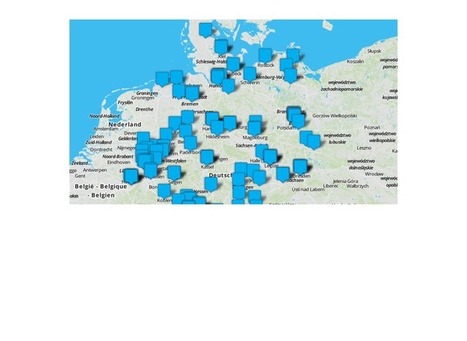
Sie suchen Hilfe beim Selbstbau, Zugang zu 3D-Drucker, Lasercutter oder anderen Maschinen? In Fablabs, Makerspaces und offenen Werkstätten wird Ihnen geholfen. Die Makerspacekarte zeigt Ihnen, wo Sie in Ihrer Nähe Unterstützung finden.

Auch wer gerne allein im stillen Kämmerlein werkelt, darf sich Maker nennen. Oft macht es aber gemeinsam mehr Spaß. Im deutschsprachigen Raum gibt es aktuell über 200 Orte, an denen sich die Maker-Community trifft. Diese haben wir in einer Online-Karte zusammengefasst, damit Sie einfach mal nachschauen können, wo in Ihrer Region oder Stadt Gleichgesinnte zusammenkommen.

Von der Grundausstattung mit Werkzeug bis zur Open-Source-Software: alles Wichtige zum Einstieg ins Elektronik-Basteln vermittelt das Make-Sonderheft "Richtig loslegen".

In der Karte finden Sie Makerspaces, Hackerspaces, FabLabs, offene Werkstätten und andere vergleichbare Orte für Maker. Jeder dieser Treffpunkte ist anders ausgestattet und organisiert und setzt unterschiedliche Schwerpunkte. Vom Einraum-Hackspace mit Couch und 3D-Drucker bis zum geförderten Riesen-FabLab mit Dutzenden Profi-Maschinen ist alles dabei.


Learn more / En savoir plus / Mehr erfahren:


https://www.scoop.it/t/21st-century-learning-and-teaching/?&tag=makerspace


https://gustmees.wordpress.com/?s=makerspaces+luxembourg


Gust MEES's insight:

Sie suchen Hilfe beim Selbstbau, Zugang zu 3D-Drucker, Lasercutter oder anderen Maschinen? In Fablabs, Makerspaces und offenen Werkstätten wird Ihnen geholfen. Die Makerspacekarte zeigt Ihnen, wo Sie in Ihrer Nähe Unterstützung finden.

Auch wer gerne allein im stillen Kämmerlein werkelt, darf sich Maker nennen. Oft macht es aber gemeinsam mehr Spaß. Im deutschsprachigen Raum gibt es aktuell über 200 Orte, an denen sich die Maker-Community trifft. Diese haben wir in einer Online-Karte zusammengefasst, damit Sie einfach mal nachschauen können, wo in Ihrer Region oder Stadt Gleichgesinnte zusammenkommen.

Von der Grundausstattung mit Werkzeug bis zur Open-Source-Software: alles Wichtige zum Einstieg ins Elektronik-Basteln vermittelt das Make-Sonderheft "Richtig loslegen".

In der Karte finden Sie Makerspaces, Hackerspaces, FabLabs, offene Werkstätten und andere vergleichbare Orte für Maker. Jeder dieser Treffpunkte ist anders ausgestattet und organisiert und setzt unterschiedliche Schwerpunkte. Vom Einraum-Hackspace mit Couch und 3D-Drucker bis zum geförderten Riesen-FabLab mit Dutzenden Profi-Maschinen ist alles dabei.


Learn more / En savoir plus / Mehr erfahren:


https://www.scoop.it/t/21st-century-learning-and-teaching/?&tag=makerspace


https://gustmees.wordpress.com/?s=makerspaces+luxembourg


No comment yet.