 Your new post is loading...

|
Scooped by
Gust MEES
October 6, 2016 8:19 AM
|
Teaching students good learning strategies would ensure that they know how to acquire new knowledge, which leads to improved learning outcomes, writes lead author Helen Askell-Williams of Flinders University in Adelaide, Australia. And studies bear this out. Askell-Williams cites as one example a recent finding by PISA, the Programme for International Student Assessment, which administers academic proficiency tests to students around the globe, and place American students in the mediocre middle. “Students who use appropriate strategies to understand and remember what they read, such as underlining important parts of the texts or discussing what they read with other people, perform at least 73 points higher in the PISA assessment—that is, one full proficiency level or nearly two full school years—than students who use these strategies the least,” the PISA report reads. Learn more / En savoir plus / Mehr erfahren: https://gustmees.wordpress.com/2014/10/03/design-the-learning-of-your-learners-students-ideas/ https://gustmees.wordpress.com/2015/07/19/learning-path-for-professional-21st-century-learning-by-ict-practice/
|
|
Rescooped by
Gust MEES
from Educational Technology News
October 5, 2016 10:43 AM
|
In this article, PulseLearning explores the possibilities of 3D learning and the opportunities it can bring to the corporate training landscape.
Via EDTECH@UTRGV
|
|
Scooped by
Gust MEES
October 3, 2016 6:01 PM
|
|
|
Scooped by
Gust MEES
October 3, 2016 9:26 AM
|
The term “new normal” is the lingo used to describe drastic change in doing something or life after a major event. The change is usually
quick and immediate. It alters one’s approach to something or way of life. In the educational world a slower transition is happening that will create a new normal. That change agent is social media. Social media has been around for some time but its practical use is relatively new to edu
cators. As I engage more and more educators in the use of social media for educational purposes I hear a lot of the same questions. Learn more / En savoir plus / Mehr erfahren: http://www.scoop.it/t/social-media-and-its-influence
|
|
Scooped by
Gust MEES
October 3, 2016 7:44 AM
|
makerspace exchange platform This website will provide information about all makerspaces operating in Luxembourg. To contact each one of them, please refer to the Menu on top! Learn more / En savoir plus / Mehr erfahren:
|
|
Scooped by
Gust MEES
October 1, 2016 3:18 PM
|
|
|
Scooped by
Gust MEES
October 1, 2016 4:37 AM
|
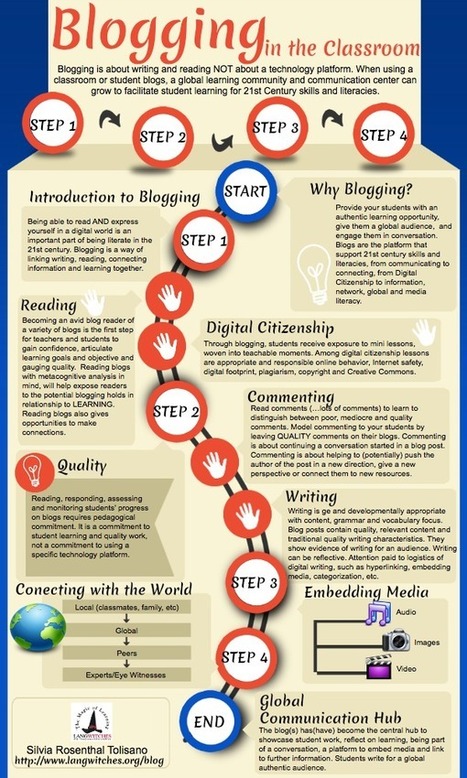
In an earlier post here in Educational Technology and Mobile Learning, we argued that setting up a class virtual space in the cloud is an indispensable task for today's teachers. This space can preferably be a website, a blog, or a wiki or, if possible, all of them. The educational benefits of having such a space for students include: - Improve students writing skills through posting and commenting
- Helps students have a voice
- Promote the notion of independent and personalized learning
- Promote a spirit of collaboration among students
- Engage parents in the learning taking place in the classroom
- Connect with students from other schools and exchange with them learning experiences.
Learn more / En savoir plus / Mehr erfahren: https://gustmees.wordpress.com/2016/09/22/blogs-tips-and-tricks/
|
|
Scooped by
Gust MEES
September 29, 2016 5:49 AM
|
Makerspaces, app pour les langues ou cours de coding font désormais partie de l’arsenal pédagogique. Laboratoire d’idées adossé au ministère, le Script est une des têtes pensantes de ces chantiers. Doté de missions croissantes, il entame une réorganisation en septembre et étoffe ses équipes. Sous le slogan «Digital4Education», l’Éducation nationale luxembourgeoise a entrepris de concentrer son approche en matière de nouvelles technologies. Divisée en cinq pôles «digitaux» (Peer, Citizen, Entrepreneur, Worker et Learner), la stratégie publique veut aider ses jeunes ressortissants à se familiariser avec l’outil informatique à toutes les étapes de leur vie. On y trouve de la sensibilisation à la cybersécurité, des makerspaces où les lycéens sont libres d’expérimenter avec des imprimantes 3D, un accès gratuit à la suite MS Office pour les professeurs,ou encore des salles de cours digitales. Derrière de nombreux concepts d’apprentissage se trouve bien souvent le Script, ou Service de coordination de la recherche et de l’innovation pédagogique et technologique, adossé au ministère de l’Éducation. «Nous devons et nous souhaitons être à l’avant-poste de la révolution numérique», introduit Luc Weis, directeur du Script depuis septembre 2015, lui-même ancien enseignant. «L’éducation ne fonctionne pas en vase clos. Si elle ne peut pas prendre tous les virages technologiques, elle doit refléter la société qui l’entoure.» Learn more / En savoir plus / Mehr erfahren: https://gustmees.wordpress.com/2016/04/05/luxembourg-education-interviews-1-the-luxembourg-edu-system/ https://gustmees.wordpress.com/2016/04/05/luxembourg-education-interviews-5-creativity-and-maker-spaces-beecreative/
|
|
Scooped by
Gust MEES
September 28, 2016 12:46 PM
|
|
|
Scooped by
Gust MEES
September 28, 2016 7:39 AM
|
|
|
Scooped by
Gust MEES
September 27, 2016 10:47 AM
|
|
|
Scooped by
Gust MEES
September 26, 2016 11:32 AM
|
|
|
Scooped by
Gust MEES
September 25, 2016 3:24 PM
|
Since its advent in 2009, bitcoin’s decentralized, broker-less and secure mechanism to send money across the world has steadily risen in popularity and adoption. Of equal — if not greater — importance is the blockchain, the technology that supports the cryptocurrency, the distributed ledger which enables trustless, peer-to-peer exchange of data. Every day, new companies and organizations, including big names such as Microsoft and Tesla, take strides toward or show interest in using cryptocurrency and blockchain to support their business. But the fame of blockchain has also given rise to two new challenges, namely that of interoperability and flexibility. There are now more than a score of blockchain-based currencies, each optimized for different purposes, with different exchange rates, verification and consensus mechanisms, performance, distribution function, block size limit and degree of anonymity. And none of these currencies are compatible with others, making it hard for users to transfer money between them. Learn more / En savoir plus / Mehr erfahren: http://www.scoop.it/t/21st-century-learning-and-teaching/?tag=blockchain
|
|
|
Scooped by
Gust MEES
October 5, 2016 2:55 PM
|
Teaching and improving soft skills—such as conscientiousness, adaptability and perseverance—can provide huge economic gains for young people, and should receive more attention from education policy makers, according to a new report from the Hamilton Project.
Soft skills, also known as noncognitive skills or foundational skills, are increasingly in demand in today’s economy. More Americans work in service-sector jobs that require human interaction, and automation and technology are replacing jobs involving routine tasks.
That’s given workers with strong soft skills a big advantage in the labor market, the group said in the paper, released Tuesday, that compiled existing research on various aspects of soft skills in the labor market. (The Hamilton Project is an economic policy arm of the Brookings Institution.) Learn more / En savoir plus / Mehr erfahren: http://www.scoop.it/t/21st-century-learning-and-teaching/?tag=Soft+Skills
|
|
Scooped by
Gust MEES
October 5, 2016 9:20 AM
|
Yahoo soll für US-Dienste neue Software geschrieben, sie hinter dem Rücken der eigenen Security-Abteilung installiert und damit alle Kundenmails gescannt haben. Juristische Gegenwehr gab es offenbar keine. Ob die Überwachung andauert, ist nicht bekannt. Learn more / En savoir plus / Mehr erfahren: http://www.scoop.it/t/securite-pc-et-internet/?tag=Yahoo...
|
|
Rescooped by
Gust MEES
from Effective Education
October 3, 2016 12:23 PM
|
Stop avoiding what scares you. You need to speak in public, but your knees buckle even before you reach the podium. You want to expand your network, but you’d rather swallow nails than make small talk with strangers. Speaking up in meetings would further your reputation at work, but you’re afraid of saying the wrong thing. Situations like these — ones that are important professionally, but personally terrifying — are, unfortunately, ubiquitous. An easy response to these situations is avoidance. Who wants to feel anxious when you don’t have to? But the problem, of course, is that these tasks aren’t just unpleasant; they’re also necessary. As we grow and learn in our jobs and in our careers, we’re constantly faced with situations where we need to adapt our behavior. It’s simply a reality of the world we work in today. And without the skill and courage to take the leap, we can miss out on important opportunities for advancement. How can we as professionals stop building our lives around avoiding these unpleasant, but professionally beneficial, tasks? Learn more / En savoir plus / Mehr erfahren: http://www.scoop.it/t/21st-century-learning-and-teaching/?tag=Growth+Mindset http://www.scoop.it/t/21st-century-learning-and-teaching/?tag=Comfort+Zone http://www.scoop.it/t/21st-century-learning-and-teaching/?tag=Character
Via Ariana Amorim, Kevin Watson, Mark E. Deschaine, PhD
|
|
Scooped by
Gust MEES
October 3, 2016 8:19 AM
|
|
|
Scooped by
Gust MEES
October 2, 2016 5:29 PM
|
The Virtual Guide to Entrepreneurial Learning is a practical and useful tool for teachers in primary, secondary and vocational schools that want to mainstream entrepreneurial education in teaching methods and learning processes they set up in classroom every day. The guide contains more than 100 tools and methods to support entrepreneurial teaching and learning, good practices and framework documents from 85 different schools in 10 countries. Learn more / En savoir plus / Mehr erfahren: http://www.scoop.it/t/21st-century-learning-and-teaching/?tag=Entrepreneurs
|
|
Scooped by
Gust MEES
October 1, 2016 1:38 PM
|
Das Web ist zwar weltweit - aber seine Anfänge liegen in den USA. Und deshalb hatten die USA bis zuletzt die Aufsicht über eine Kernfunktion: die Zuteilung von Namen und Adressen im Internet. Das ändert sich jetzt aber. Jan Bösche berichtet, warum. Für das Internet bricht ein neues Zeitalter an. Es geht um das zentrale Telefonbuch, betrieben von der Organisation ICANN. Sie verknüpft Nummern mit Internetadressen und verwaltet die Endungen wie .com oder .org. Bislang machte sie das im Auftrag der US-Regierung, nun ist sie unabhängig. Die US-Regierung arbeitet seit Jahren daran, ihren Einfluss auf das Internet zu reduzieren. Die Befürworter sagen, wenn sich Unternehmen, Verbände und Vereine um das Internet kümmern, garantiere das am besten seine Freiheit. Der US-Einfluss sei dabei hinderlich gewesen, so Strickling: "Leute, andere Regierungen nutzen diesen Vertrag als Argument: Wenn die USA das macht, wollen wir das auch." Tim Berners-Lee widersprach Cruz. Er entwickelte das World Wide Web, einen wichtigen Bestandteil des Internet, so wie wir es heute kennen. Berners-Lee ist Brite, das WWW entwickelte er in Genf. Er sagte, dass Internet funktioniere nur, wenn die Welt sich auf einheitliche Standards einige. Und das sei am Besten in der Hand von Freiwilligen, Unternehmen und der Zivilgesellschaft.
|
|
Scooped by
Gust MEES
September 29, 2016 10:36 AM
|
Die Lernplattform Udacity bietet ab Oktober 2016 ein neues Nanodegree-Programm an, in dem Nutzer Kurse zum Entwickeln von VR-Inhalten belegen können. Verwendet wird die Unity-Engine.
|
|
Scooped by
Gust MEES
September 29, 2016 1:45 AM
|
A COMMUNITY OF LEARNERS
Effective project-based learning is grounded in a strong learning community, one teachers create and must regularly foster. “Project-based learning requires kids to take risks and they aren’t going to take risks if they don’t trust you or each other,” Thomas said. She suggests teachers co-create a social contract with the class at the beginning of the year and make sure it is a living document that can grow and change. Every joke or put-down is a test of the teacher and she should stop everything to revisit the social contract and discuss violations. When kids are resisting a new kind of learning, it’s often because they feel unsafe.
“When we focus on the skills and dispositions at the beginning, the depth of the work is much greater. And [students] internalize the skills much more than when it’s a separate unit because it’s contextualized.”
“A lot of teachers don’t understand how important it is to build a learning community,” Thomas said. One of the best ways to do this is through meaningful work, but it’s also important at times to take a break from academics and just play together. A short game outside can refocus students and build trust and teamwork at the same time.
Learn more / En savoir plus / Mehr erfahren: http://www.scoop.it/t/21st-century-learning-and-teaching/?tag=PBL
|
|
Scooped by
Gust MEES
September 28, 2016 10:47 AM
|
. . YOU created your blog, WHAT to take care about now!? . SO, you created a blog; hopefully you did read my advice on my previous blog posts. Let us have a look back on those blog posts and finding out WHAT WE can do BETTER to have success in the internet blogging community:…
|
|
Scooped by
Gust MEES
September 28, 2016 3:41 AM
|
|
|
Rescooped by
Gust MEES
from Digital Delights - Digital Tribes
September 27, 2016 6:18 AM
|
Educated people should think causally rather than magically This leads to Deresiewicz’s second goal, “building a self,” which he explicates as follows: “it is only through the act of establishing communication between the mind and the heart, the mind and experience, that you become an individual, a unique being—a soul.” Perhaps I am emblematic of everything that is wrong with elite American education, but I have no idea how to get my students to build a self or become a soul. It isn’t taught in graduate school, and in the hundreds of faculty appointments and promotions I have participated in, we’ve never evaluated a candidate on how well he or she could accomplish it. I submit that if “building a self” is the goal of a university education, you’re going to be reading anguished articles about how the universities are failing at it for a long, long time. I think we can be more specific. It seems to me that educated people should know something about the 13-billion-year prehistory of our species and the basic laws governing the physical and living world, including our bodies and brains. They should grasp the timeline of human history from the dawn of agriculture to the present. They should be exposed to the diversity of human cultures, and the major systems of belief and value with which they have made sense of their lives. They should know about the formative events in human history, including the blunders we can hope not to repeat. They should understand the principles behind democratic governance and the rule of law. They should know how to appreciate works of fiction and art as sources of aesthetic pleasure and as impetuses to reflect on the human condition. On top of this knowledge, a liberal education should make certain habits of rationality second nature. Educated people should be able to express complex ideas in clear writing and speech. They should appreciate that objective knowledge is a precious commodity, and know how to distinguish vetted fact from superstition, rumor, and unexamined conventional wisdom. They should know how to reason logically and statistically, avoiding the fallacies and biases to which the untutored human mind is vulnerable. They should think causally rather than magically, and know what it takes to distinguish causation from correlation and coincidence. They should be acutely aware of human fallibility, most notably their own, and appreciate that people who disagree with them are not stupid or evil. Accordingly, they should appreciate the value of trying to change minds by persuasion rather than intimidation or demagoguery. Learn more / En savoir plus / Mehr erfahren: https://gustmees.wordpress.com/2015/07/19/learning-path-for-professional-21st-century-learning-by-ict-practice/
Via Ana Cristina Pratas
|
|
Scooped by
Gust MEES
September 25, 2016 3:40 PM
|
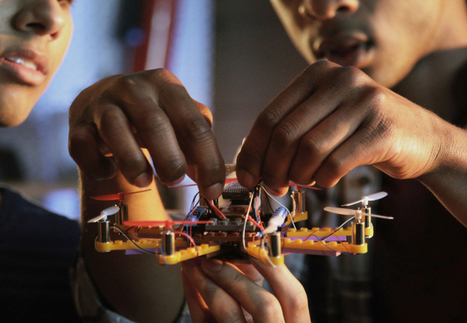
The San Francisco startup today began selling build-a-drone kits for kids age 14 and up comprised of: LEGO bricks, boom arms and motors that don’t require soldering, and other off the shelf and Flybrix-designed parts. Once assembled, Flybrix drones are lightweight and meant to be flown indoors. They can be operated with a Bluetooth flight control app for iOS or Android smartphones, or a manual flight controller purchased from the company. Flybrix drones are also, notably, “crash-friendly,” meaning they can be re-assembled time and again as kids experiment with their designs, and learn how to pilot them. Co-founders of the startup, Amir Hirsch, Robb Walters and Holly Kasun, want to get teens, or younger kids with adult supervision, interested in things like geometry, aerodynamics and electrical engineering. Learn more / En savoir plus / Mehr erfahren: http://www.scoop.it/t/21st-century-learning-and-teaching/?tag=LEGO https://gustmees.wordpress.com/2014/08/20/maker-space-a-new-trend-in-education-and-a-big-responsibility/
|


























En vez de enseñar cosas que ya están accesibles en las redes, las escuelas y universidades deberían practicar la diversidad de formatos de aprendicaje posibles. Ya no es tan importante formar personas intelectuales que sepan de memoria datos declarativos, sino profesionales que tengan capacidades para el aprendizaje autónomo. Hoy día es más importante tener la capacidad de desaprender lo innecesario y reaprender lo que es verdaderamente esencial en el siglo 21.