21st Century Learning and Teaching
792.5K views | +1 today
21st Century Learning and Teaching
Related articles to 21st Century Learning and Teaching as also tools...
Curated by Gust MEES
Your new post is loading...

Popular Tags

Current selected tag: '2016'. Clear
Scooped by Gust MEES
November 15, 2016 6:17 PM
Scoop.it!

Google wants to introduce VR to a million British schoolchildren | #VirtualReality

Google wants to introduce VR to a million British schoolchildren | #VirtualReality | 21st Century Learning and Teaching | Scoop.it
Google is convinced about the long-term of VR. The company is heavily pushing it through affordable hardware initiatives like Google Cardboard and Daydream. And now, Mountain View is bringing it to the classroom with the aim of introducing the concept to one million British schoolchildren.

In his first visit to the UK since landing the coveted role of Google CEO, Sundar Pichai has said that Mountain View will offer VR training and resources to teachers through its Google Expeditions program.


Learn more / En savoir plus / Mehr erfahren:


http://www.scoop.it/t/21st-century-innovative-technologies-and-developments/?tag=VR


http://www.scoop.it/t/21st-century-learning-and-teaching/?tag=VR


Gust MEES's insight:
Google is convinced about the long-term of VR. The company is heavily pushing it through affordable hardware initiatives like Google Cardboard and Daydream. And now, Mountain View is bringing it to the classroom with the aim of introducing the concept to one million British schoolchildren.

In his first visit to the UK since landing the coveted role of Google CEO, Sundar Pichai has said that Mountain View will offer VR training and resources to teachers through its Google Expeditions program.


Learn more / En savoir plus / Mehr erfahren:


http://www.scoop.it/t/21st-century-innovative-technologies-and-developments/?tag=VR


http://www.scoop.it/t/21st-century-learning-and-teaching/?tag=VR


Trinidad Marín's curator insight, November 18, 2016 9:54 AM
Siempre aprendiendo con las tecnologías.
Scooped by Gust MEES
November 15, 2016 4:42 PM
Scoop.it!

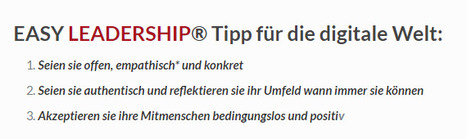
Digitalisierung braucht Veränderungsbereitschaft | #ICT #IKT #CHANGE #ModernEDU #LEADERship #eLEADERship

Digitalisierung braucht Veränderungsbereitschaft | #ICT #IKT #CHANGE #ModernEDU #LEADERship #eLEADERship | 21st Century Learning and Teaching | Scoop.it
Digitalisierung braucht Veränderungsbereitschaft

Der Begriff DIGITALISIERUNG polarisiert wie kaum ein anderer. Für die einen bietet sie enorme Chancen und für die anderen stellt sie ein großes Risiko dar. Neue Technologien sind der Hauptdarsteller der Digitalen Transformation, sie ermöglichen neue und/oder beschleunigen bestehende Geschäftsmodelle.

Die Bedürfnispyramide gewinnt im digitalen Zeitalter eine völlig neue Bedeutung. Die digitale Transformation treibt den sonst eher sicherheitsbedürftigen Menschen zur Pflichtveränderung mit ungewissem Ausgang.


Learn more / En savoir plus / Mehr erfahren:


https://gustmees.wordpress.com/2015/11/27/unlearning-the-old-relearning-learning-to-learn-howto/


https://gustmees.wordpress.com/2016/04/05/luxembourg-education-interviews-1-the-luxembourg-edu-system/


https://gustmees.wordpress.com/2013/05/25/so-whats-the-change-for-teachers-in-21st-century-education/


Gust MEES's insight:
Digitalisierung braucht Veränderungsbereitschaft

Der Begriff DIGITALISIERUNG polarisiert wie kaum ein anderer. Für die einen bietet sie enorme Chancen und für die anderen stellt sie ein großes Risiko dar. Neue Technologien sind der Hauptdarsteller der Digitalen Transformation, sie ermöglichen neue und/oder beschleunigen bestehende Geschäftsmodelle.

Die Bedürfnispyramide gewinnt im digitalen Zeitalter eine völlig neue Bedeutung. Die digitale Transformation treibt den sonst eher sicherheitsbedürftigen Menschen zur Pflichtveränderung mit ungewissem Ausgang.


Learn more / En savoir plus / Mehr erfahren:


https://gustmees.wordpress.com/2015/11/27/unlearning-the-old-relearning-learning-to-learn-howto/


https://gustmees.wordpress.com/2016/04/05/luxembourg-education-interviews-1-the-luxembourg-edu-system/


https://gustmees.wordpress.com/2013/05/25/so-whats-the-change-for-teachers-in-21st-century-education/


No comment yet.
Scooped by Gust MEES
November 14, 2016 9:08 PM
Scoop.it!

Wolfgang Schivelbusch über die Niederlage der Diplomatie | #Streitkultur #Tacheles #LEARNing2LEARN #Empathy

Wolfgang Schivelbusch über die Niederlage der Diplomatie | #Streitkultur #Tacheles #LEARNing2LEARN #Empathy | 21st Century Learning and Teaching | Scoop.it
Nach Trump und Brexit: Ist unser liberales System am Ende? Der Experte Wolfgang Schivelbusch ist überzeugt: Politik muss wieder mehr verbaler Boxring sein und nicht nur Schönsprech-Diplomatie.


Learn more / En savoir plus / Mehr erfahren:


http://www.scoop.it/t/21st-century-learning-and-teaching/?tag=Ethics


http://www.scoop.it/t/21st-century-learning-and-teaching/?tag=Empathy


http://www.scoop.it/t/luxembourg-europe/?tag=Streitkultur


http://www.scoop.it/t/21st-century-learning-and-teaching/?tag=Tacheles


Gust MEES's insight:
Nach Trump und Brexit: Ist unser liberales System am Ende? Der Experte Wolfgang Schivelbusch ist überzeugt: Politik muss wieder mehr verbaler Boxring sein und nicht nur Schönsprech-Diplomatie.


Learn more / En savoir plus / Mehr erfahren:


http://www.scoop.it/t/21st-century-learning-and-teaching/?tag=Ethics


http://www.scoop.it/t/21st-century-learning-and-teaching/?tag=Empathy


http://www.scoop.it/t/luxembourg-europe/?tag=Streitkultur


http://www.scoop.it/t/21st-century-learning-and-teaching/?tag=Tacheles


No comment yet.
Scooped by Gust MEES
November 14, 2016 12:59 PM
Scoop.it!

Reform des Unterrichts: Finnland schafft die Schulfächer ab | #PhenomenonBasedLEARNing 

Reform des Unterrichts: Finnland schafft die Schulfächer ab | #PhenomenonBasedLEARNing  | 21st Century Learning and Teaching | Scoop.it
Wir brauchen ein Konzept, dass ins 21. Jahrhundert passt."

Phänomene statt Fächer

Dieses Konzept, das Kyllonen mit ihren Kollegen entwickelt hat, sieht die völlige Abschaffung des bisherigen Fächerkanons bis zum Jahr 2020 vor. Stattdessen sollen die Schüler Ereignisse und Themen interdisziplinär bearbeiten - ein Ansatz, der an finnischen Schulen schon länger diskutiert wird. "Phänomen-Unterricht" nennen die Experten diese Form der Stoffvermittlung.

Ein Beispiel: Der Zweite Weltkrieg wird zukünftig in einem Projekt gleichzeitig aus historischer, geografischer und mathematischer Perspektive behandelt. Beim Thema "Arbeiten in einem Café" könnten Kenntnisse in Englisch und Wirtschaft sowie schriftliche und mündliche Kommunikationsfähigkeiten vermittelt werden.


Learn more / En savoir plus / Mehr erfahren:


http://www.scoop.it/t/21st-century-learning-and-teaching/?tag=Finland


http://www.scoop.it/t/21st-century-learning-and-teaching/?tag=Phenomenon+Based+Learning


Gust MEES's insight:
Wir brauchen ein Konzept, dass ins 21. Jahrhundert passt."

Phänomene statt Fächer

Dieses Konzept, das Kyllonen mit ihren Kollegen entwickelt hat, sieht die völlige Abschaffung des bisherigen Fächerkanons bis zum Jahr 2020 vor. Stattdessen sollen die Schüler Ereignisse und Themen interdisziplinär bearbeiten - ein Ansatz, der an finnischen Schulen schon länger diskutiert wird. "Phänomen-Unterricht" nennen die Experten diese Form der Stoffvermittlung.

Ein Beispiel: Der Zweite Weltkrieg wird zukünftig in einem Projekt gleichzeitig aus historischer, geografischer und mathematischer Perspektive behandelt. Beim Thema "Arbeiten in einem Café" könnten Kenntnisse in Englisch und Wirtschaft sowie schriftliche und mündliche Kommunikationsfähigkeiten vermittelt werden.


Learn more / En savoir plus / Mehr erfahren:


http://www.scoop.it/t/21st-century-learning-and-teaching/?tag=Finland


http://www.scoop.it/t/21st-century-learning-and-teaching/?tag=Phenomenon+Based+Learning


No comment yet.
Rescooped by Gust MEES from Curtin Global Challenges Teaching Resources
November 13, 2016 5:53 PM
Scoop.it!

Gaming for learning | #Gamification #Games #LEARNing2LEARN

Gaming for learning | #Gamification #Games #LEARNing2LEARN | 21st Century Learning and Teaching | Scoop.it
Serious gaming is growing in appeal across the education sector. This article explores gaming as a tool for learning, using the Aqua Republica Eco Challenge 2016 as an example.


Gaming as a tool for learning

Games have long been used for developing both skills and knowledge. As digital technologies continue to develop, the range of digital learning games also continues to grow, driving an area of learning called game-based learning. It’s not new, but it is using new digital tools and platforms – and there is an accompanying pedagogical shift from using games to motivate and engage students in learning to using ‘serious games’ as the basis for knowledge and skill development. ‘Gamification’ describes the process of applying game rules to a learning process.


Learn more / En savoir plus / Mehr erfahren:


http://www.scoop.it/t/21st-century-learning-and-teaching/?tag=Gamification


Via Kim Flintoff
Gust MEES's insight:
Serious gaming is growing in appeal across the education sector. This article explores gaming as a tool for learning, using the Aqua Republica Eco Challenge 2016 as an example.


Gaming as a tool for learning

Games have long been used for developing both skills and knowledge. As digital technologies continue to develop, the range of digital learning games also continues to grow, driving an area of learning called game-based learning. It’s not new, but it is using new digital tools and platforms – and there is an accompanying pedagogical shift from using games to motivate and engage students in learning to using ‘serious games’ as the basis for knowledge and skill development. ‘Gamification’ describes the process of applying game rules to a learning process.


Learn more / En savoir plus / Mehr erfahren:


http://www.scoop.it/t/21st-century-learning-and-teaching/?tag=Gamification


Kim Flintoff's curator insight, November 13, 2016 5:36 PM

Maybe we can look at an ANZ Water Challenge?  The Trans-Tasman Test in Water and Sustainability? @NZAquaRepublica

Scooped by Gust MEES
November 12, 2016 8:55 PM
Scoop.it!

Live and Learn | #LEARNing2LEARN #LifeLongLEARNing

Live and Learn | #LEARNing2LEARN #LifeLongLEARNing | 21st Century Learning and Teaching | Scoop.it
Live and Learn

The great thing about self-directed, sometimes called informal, learning is that you own it. You determine what you want to learn, establish when the learning will take place, and have the opportunity to tailor it to your personal needs. There’s no forced curriculum, there are no required exams, and there are absolutely no grades — except the ones you give yourself. Your only test is how much knowledge you’re able to soak in and apply to your professional and personal life.

The world is at your fingertips. All you have to do is open your eyes and ears and begin taking it all in. The fact is, learning is as much an attitude as it is an activity. As the Buddhist proverb says, “When the student is ready, the master appears.”

So, promise yourself to begin today. Open your mind to new horizons — energize yourself by connecting with the world around you — and promise yourself that you’ll strive for excellence. It’ll change your perspective, it’ll change your potential, and it’ll change your life.

As Vernon Howard once said, “Always walk through life as if you have something new to learn and you will.” Live and learn!


Learn more / En savoir plus / Mehr erfahren:


https://gustmees.wordpress.com/?s=coaching


https://www.scoop.it/t/21st-century-learning-and-teaching/?tag=Learning+2+Learn


https://www.scoop.it/t/21st-century-learning-and-teaching/?tag=Life-Long-Learning


https://gustmees.wordpress.com/2015/03/28/learning-to-learn-for-my-professional-development-i-did-it-my-way/


Gust MEES's insight:
Live and Learn

The great thing about self-directed, sometimes called informal, learning is that you own it. You determine what you want to learn, establish when the learning will take place, and have the opportunity to tailor it to your personal needs. There’s no forced curriculum, there are no required exams, and there are absolutely no grades — except the ones you give yourself. Your only test is how much knowledge you’re able to soak in and apply to your professional and personal life.

The world is at your fingertips. All you have to do is open your eyes and ears and begin taking it all in. The fact is, learning is as much an attitude as it is an activity. As the Buddhist proverb says, “When the student is ready, the master appears.”

So, promise yourself to begin today. Open your mind to new horizons — energize yourself by connecting with the world around you — and promise yourself that you’ll strive for excellence. It’ll change your perspective, it’ll change your potential, and it’ll change your life.

As Vernon Howard once said, “Always walk through life as if you have something new to learn and you will.” Live and learn!


Learn more / En savoir plus / Mehr erfahren:


https://gustmees.wordpress.com/?s=coaching


https://www.scoop.it/t/21st-century-learning-and-teaching/?tag=Learning+2+Learn


https://www.scoop.it/t/21st-century-learning-and-teaching/?tag=Life-Long-Learning


https://gustmees.wordpress.com/2015/03/28/learning-to-learn-for-my-professional-development-i-did-it-my-way/


No comment yet.
Scooped by Gust MEES
November 12, 2016 11:17 AM
Scoop.it!

Infographic of the Week: 27 Ways to Reflect on Your Teaching | #Reflecting

Infographic of the Week: 27 Ways to Reflect on Your Teaching | #Reflecting | 21st Century Learning and Teaching | Scoop.it
The beginning of a new year typically presents individuals with a designated time and opportunity to reflect upon the events of the past 365 days, to cherish the unforgettable moments, to learn from mistakes or disappointments, and most importantly, to set goals for the next chapter in this adventure we call life. In education, we call these types of behaviors “reflective practice”, or the manner in which teachers step back and evaluate the learning environment.


As in any other profession, we assess what was successful, what didn’t work as planned and/or what needs to be adjusted the next time—all in an effort to improve our craft.


Learn more / En savoir plus / Mehr erfahren:


http://www.scoop.it/t/21st-century-learning-and-teaching/?tag=reflection


https://gustmees.wordpress.com/2016/06/01/update-twitter-chats-what-to-do-better/


https://www.pinterest.com/swirlz42/mia-macmeekin/


Gust MEES's insight:
The beginning of a new year typically presents individuals with a designated time and opportunity to reflect upon the events of the past 365 days, to cherish the unforgettable moments, to learn from mistakes or disappointments, and most importantly, to set goals for the next chapter in this adventure we call life. In education, we call these types of behaviors “reflective practice”, or the manner in which teachers step back and evaluate the learning environment.


As in any other profession, we assess what was successful, what didn’t work as planned and/or what needs to be adjusted the next time—all in an effort to improve our craft.


Learn more / En savoir plus / Mehr erfahren:


http://www.scoop.it/t/21st-century-learning-and-teaching/?tag=reflection


https://gustmees.wordpress.com/2016/06/01/update-twitter-chats-what-to-do-better/


https://www.pinterest.com/swirlz42/mia-macmeekin/


Martha Bongiorno's curator insight, November 14, 2016 9:48 AM
With teachers ever increasing to-do list, it's not unheard of to put our reflections on the back burner. This is one of the most important parts of our profession, and we need to make time for it. Here are some ideas on how to reflect!
GwynethJones's curator insight, December 10, 2016 9:44 PM

It's important to take the time to REFLECT on your teaching practice. It's a good practice! And it's from @JoyceValenza. So it's gotta be good, right?

Scooped by Gust MEES
November 10, 2016 6:57 PM
Scoop.it!

What is Emotional Intelligence and Why Should We Teach it? | #EQ #SoftSkills #Empathy 

What is Emotional Intelligence and Why Should We Teach it? | #EQ #SoftSkills #Empathy  | 21st Century Learning and Teaching | Scoop.it

Harvard theorist Howard Gardner describes emotional intelligence as “the level of your ability to understand other people, what motivates them and how to work cooperatively with them.”  Emotional intelligence can be broken down into five major components.  When we look at each in turn it becomes easy to understand why EQ plays such a key role success.


Learn more / En savoir plus / Mehr erfahren:


http://www.scoop.it/t/21st-century-learning-and-teaching/?tag=Empathy


http://www.scoop.it/t/21st-century-learning-and-teaching/?tag=Soft+Skills


Gust MEES's insight:

Harvard theorist Howard Gardner describes emotional intelligence as “the level of your ability to understand other people, what motivates them and how to work cooperatively with them.”  Emotional intelligence can be broken down into five major components.  When we look at each in turn it becomes easy to understand why EQ plays such a key role success.


Learn more / En savoir plus / Mehr erfahren:


http://www.scoop.it/t/21st-century-learning-and-teaching/?tag=Empathy


http://www.scoop.it/t/21st-century-learning-and-teaching/?tag=Soft+Skills


Andreas Christodoulou's curator insight, November 11, 2016 4:04 PM

I thought maybe some of you guys would appreciate my article "Emotional Intelligence and Leadership: The Importance of Leading by Emotions". Hope this truly serves you: http://tiny.cc/LeadingwithEQ

Scooped by Gust MEES
November 10, 2016 12:33 PM
Scoop.it!

RETHINKING EDUcation |Towards a global common good? | UNESCO [#pdf] #ModernEDU 

RETHINKING EDUcation |Towards a global common good? | UNESCO [#pdf] #ModernEDU  | 21st Century Learning and Teaching | Scoop.it

Reaffirming a humanistic approach to education Education alone cannot hope to solve all development challenges, but a humanistic and holistic approach to education can and should contribute to achieving a new development model. In such a model, economic growth must be guided by environmental stewardship and by concern for peace, inclusion and social justice.


The ethical and moral principles of a humanistic approach to development stand against violence, intolerance, discrimination and exclusion. Regarding education and learning, it means going beyond narrow utilitarianism and economism to integrate the multiple dimensions of human existence.


This approach emphasizes the inclusion of people who are often subject to discrimination – women and girls, indigenous people, persons with disabilities, migrants, the elderly and people living in countries affected by conflict. It requires an open and flexible approach to learning that is both lifelong and life-wide: an approach that provides the opportunity for all to realize their potential for a sustainable future and a life of dignity.


This humanistic approach has implications for the definition of learning content and pedagogies, as well as for the role of teachers and other educators. It is even more relevant given the rapid development of new technologies, in particular digital technologies.


Learn more / En savoir plus / Mehr erfahren:


https://gustmees.wordpress.com/2015/11/27/unlearning-the-old-relearning-learning-to-learn-howto/


Gust MEES's insight:

Reaffirming a humanistic approach to education Education alone cannot hope to solve all development challenges, but a humanistic and holistic approach to education can and should contribute to achieving a new development model. In such a model, economic growth must be guided by environmental stewardship and by concern for peace, inclusion and social justice.


The ethical and moral principles of a humanistic approach to development stand against violence, intolerance, discrimination and exclusion. Regarding education and learning, it means going beyond narrow utilitarianism and economism to integrate the multiple dimensions of human existence.


This approach emphasizes the inclusion of people who are often subject to discrimination – women and girls, indigenous people, persons with disabilities, migrants, the elderly and people living in countries affected by conflict. It requires an open and flexible approach to learning that is both lifelong and life-wide: an approach that provides the opportunity for all to realize their potential for a sustainable future and a life of dignity.


This humanistic approach has implications for the definition of learning content and pedagogies, as well as for the role of teachers and other educators. It is even more relevant given the rapid development of new technologies, in particular digital technologies.


Learn more / En savoir plus / Mehr erfahren:


https://gustmees.wordpress.com/2015/11/27/unlearning-the-old-relearning-learning-to-learn-howto/


Geemik Maria Açucena Da Silva's curator insight, November 11, 2016 4:27 PM
"This humanistic approach has implications for the definition of learning content and pedagogies, as well as for the role of teachers and other educators. It is even more relevant given the rapid development of new technologies, in particular digital technologies."
Scooped by Gust MEES
November 8, 2016 8:41 PM
Scoop.it!

Image Deutschland im europäischen Ausland | Wie Europaer die Deutschen bewerten | #Identity #EU #Europe #Überlegen

Image Deutschland im europäischen Ausland | Wie Europaer die Deutschen bewerten | #Identity #EU #Europe #Überlegen | 21st Century Learning and Teaching | Scoop.it
Wie die Europäer die Deutschen bewerten - Studie der GfK


Gust MEES's insight:

Wie die Europäer die Deutschen bewerten - Studie der GfK


No comment yet.
Scooped by Gust MEES
November 7, 2016 8:34 PM
Scoop.it!

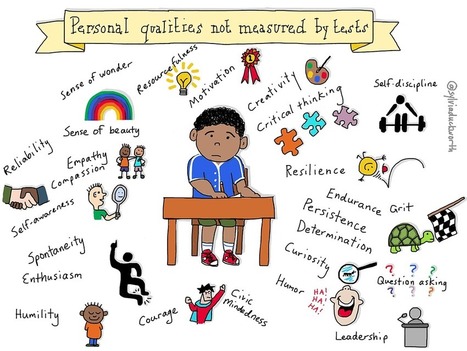
Can A Test Measure This? | #SoftSkills #Character #CriticalTHINKing #PersonalQualities

Can A Test Measure This? | #SoftSkills #Character #CriticalTHINKing #PersonalQualities | 21st Century Learning and Teaching | Scoop.it

Woe to the standardized test, bastard child of ed reform and a dated and industrialized approach learning. Damning evidence of the failure of our collective imagination to design ways to help children come to understand what’s worth understanding.


Learn more / En savoir plus / Mehr erfahren:


http://www.scoop.it/t/21st-century-learning-and-teaching/?tag=Soft+Skills


http://www.scoop.it/t/21st-century-learning-and-teaching/?tag=Character


Gust MEES's insight:

Woe to the standardized test, bastard child of ed reform and a dated and industrialized approach learning. Damning evidence of the failure of our collective imagination to design ways to help children come to understand what’s worth understanding.


Learn more / En savoir plus / Mehr erfahren:


http://www.scoop.it/t/21st-century-learning-and-teaching/?tag=Soft+Skills


http://www.scoop.it/t/21st-century-learning-and-teaching/?tag=Character


No comment yet.
Rescooped by Gust MEES from Education 2.0 & 3.0
November 7, 2016 7:34 PM
Scoop.it!

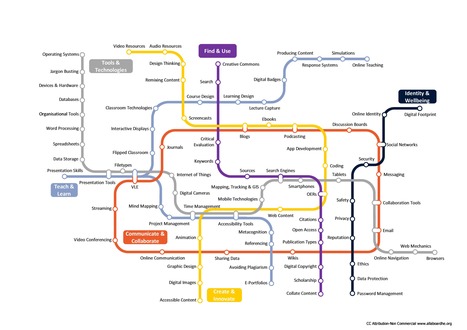
The Digital Skills Metro Map | #Design #LEARNing2LEARN #eSkills 

The Digital Skills Metro Map | #Design #LEARNing2LEARN #eSkills  | 21st Century Learning and Teaching | Scoop.it

All Aboard is rising to the challenge identified in the national Digital Roadmap of building our ‘digital capacity,’ not just in terms of infrastructure, but also in terms of people, their skills, their levels of confidence and their ability to critique and challenge pre-conceptions.


Learn more / En savoir plus / Mehr erfahren:


https://gustmees.wordpress.com/2014/10/03/design-the-learning-of-your-learners-students-ideas/


Via Nik Peachey, Yashy Tohsaku
Gust MEES's insight:

All Aboard is rising to the challenge identified in the national Digital Roadmap of building our ‘digital capacity,’ not just in terms of infrastructure, but also in terms of people, their skills, their levels of confidence and their ability to critique and challenge pre-conceptions.


Learn more / En savoir plus / Mehr erfahren:


https://gustmees.wordpress.com/2014/10/03/design-the-learning-of-your-learners-students-ideas/


Helen Wybrants's curator insight, November 12, 2016 4:32 AM
Getting embedded at last
Willem Kuypers's curator insight, November 14, 2016 5:02 AM
Idéé originale pour représenter les compétences digitales.
Daniel Collins's curator insight, January 18, 2017 12:02 AM
A really useful map of a range of digital skills necessary for higher education.
Scooped by Gust MEES
November 7, 2016 11:48 AM
Scoop.it!

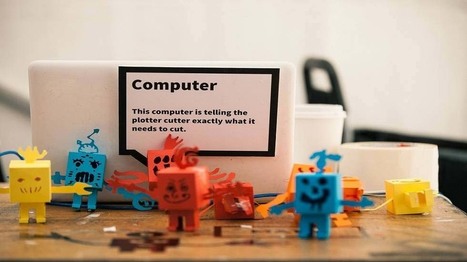
Why is the Maker Movement Important? + Great Tools & Resources | #MakerED #MakerSpaces #LEARNingByDoing #Creativity

Why is the Maker Movement Important? + Great Tools & Resources | #MakerED #MakerSpaces #LEARNingByDoing #Creativity | 21st Century Learning and Teaching | Scoop.it
Why is the Maker Movement Important for Academics? Maker Movements Tools & Resources.


Learn more / En savoir plus / Mehr erfahren:


http://www.scoop.it/t/21st-century-learning-and-teaching/?tag=Ideas+for+makerspaces


https://gustmees.wordpress.com/2014/08/20/maker-space-a-new-trend-in-education-and-a-big-responsibility/


https://gustmees.wordpress.com/2016/04/05/luxembourg-education-interviews-5-creativity-and-maker-spaces-beecreative/


https://gustmees.wordpress.com/2016/10/26/luxembourg-education-interviews-creativity-and-maker-spaces-maach3-ltettelbruck/


Gust MEES's insight:
Why is the Maker Movement Important for Academics? Maker Movements Tools & Resources.


Learn more / En savoir plus / Mehr erfahren:


http://www.scoop.it/t/21st-century-learning-and-teaching/?tag=Ideas+for+makerspaces


https://gustmees.wordpress.com/2014/08/20/maker-space-a-new-trend-in-education-and-a-big-responsibility/


https://gustmees.wordpress.com/2016/04/05/luxembourg-education-interviews-5-creativity-and-maker-spaces-beecreative/


https://gustmees.wordpress.com/2016/10/26/luxembourg-education-interviews-creativity-and-maker-spaces-maach3-ltettelbruck/


No comment yet.
Scooped by Gust MEES
November 15, 2016 5:17 PM
Scoop.it!

What the Heck Is Service Learning? | #Empathy #Community #SocietalNeeds #Sociality

What the Heck Is Service Learning? | #Empathy #Community #SocietalNeeds #Sociality | 21st Century Learning and Teaching | Scoop.it
Wikipedia explains service learning as: "An educational approach that combines learning objectives with community service in order to provide a pragmatic, progressive learning experience while meeting societal needs."

That second definition is easier to comprehend, but it still feels more complicated than it needs to be. How about this: In service learning, students learn educational standards through tackling real-life problems in their community.


Learn more / En savoir plus / Mehr erfahren:


http://www.scoop.it/t/21st-century-learning-and-teaching/?tag=Empathy


http://www.scoop.it/t/21st-century-learning-and-teaching/?tag=Sociality


Gust MEES's insight:
Wikipedia explains service learning as: "An educational approach that combines learning objectives with community service in order to provide a pragmatic, progressive learning experience while meeting societal needs."

That second definition is easier to comprehend, but it still feels more complicated than it needs to be. How about this: In service learning, students learn educational standards through tackling real-life problems in their community.


Learn more / En savoir plus / Mehr erfahren:


http://www.scoop.it/t/21st-century-learning-and-teaching/?tag=Empathy


http://www.scoop.it/t/21st-century-learning-and-teaching/?tag=Sociality


Marcio Jordan's curator insight, November 16, 2016 2:51 PM
This is about how service learning can help benefit you and the community by volunteering 
Rescooped by Gust MEES from Digital competences in Education
November 15, 2016 6:44 AM
Scoop.it!

Three Tools for Teaching Critical Thinking and Problem Solving Skills | #IntegrativeTHINKing

Three Tools for Teaching Critical Thinking and Problem Solving Skills | #IntegrativeTHINKing | 21st Century Learning and Teaching | Scoop.it
As the world economy shifts away from manufacturing jobs and towards service industry and creative jobs, there’s a consensus among parents, educators, politicians and business leaders that it is crucial students graduate into university or the workforce with the ability to identify and solve complex problems, think critically about information, work effectively in teams and communicate clearly about their thinking.


Originally developed by Rotman’s former dean, Roger Martin, integrative thinking is a broad term to describe looking for solutions through the tensions inherent in different viewpoints. Martin noticed that effective CEOs understood that their own world view was limited, so they sought out opposing viewpoints and came to creative solutions by leveraging seemingly opposing positions. For the past seven years, a spin-off group called the I-Think Initiative has been training teachers in the Toronto area on how integrative thinking can build critical thinking in students from a young age.


Learn more / En savoir plus / Mehr erfahren:


http://www.scoop.it/t/21st-century-learning-and-teaching?tag=Critical-Thinking


Via Nik Peachey, Ana Pérez Escoda
Gust MEES's insight:
As the world economy shifts away from manufacturing jobs and towards service industry and creative jobs, there’s a consensus among parents, educators, politicians and business leaders that it is crucial students graduate into university or the workforce with the ability to identify and solve complex problems, think critically about information, work effectively in teams and communicate clearly about their thinking.


Originally developed by Rotman’s former dean, Roger Martin, integrative thinking is a broad term to describe looking for solutions through the tensions inherent in different viewpoints. Martin noticed that effective CEOs understood that their own world view was limited, so they sought out opposing viewpoints and came to creative solutions by leveraging seemingly opposing positions. For the past seven years, a spin-off group called the I-Think Initiative has been training teachers in the Toronto area on how integrative thinking can build critical thinking in students from a young age.


Learn more / En savoir plus / Mehr erfahren:


http://www.scoop.it/t/21st-century-learning-and-teaching?tag=Critical-Thinking


Rosemary Tyrrell, Ed.D.'s curator insight, November 21, 2016 1:15 PM
Excellent article with some terrific ideas. I liked this insight particularly:  "the brain is wired to prioritize data that confirms the model a person already holds."
 
PEEP Matisse's curator insight, November 29, 2016 10:34 AM
article touffu en anglais, mais des idées intéressantes
Scooped by Gust MEES
November 14, 2016 2:56 PM
Scoop.it!

The Case for Learning Engineers in Education | #LEARNingPath #LEARNing2LEARN #ModernEDU

The Case for Learning Engineers in Education | #LEARNingPath #LEARNing2LEARN #ModernEDU | 21st Century Learning and Teaching | Scoop.it
So what are we missing?


We need learning engineers. By this phrase (first used, as far as I am aware, in the 1960's by Herbert Simon, the computer-scientist and Nobel-prize winning economist), we mean people who are deliberately trained and focused on designing and systematically improving learning environments at scale in measurable ways.


They make use of the current and new science of how learning and motivation work, and they do collect careful measurements, but the focus is on improving success and impact at scale, within constraints (economic, regulatory, practical), not research per se.

Learn more / En savoir plus / Mehr erfahren:


https://gustmees.wordpress.com/2016/11/01/getting-ready-for-modern-education-first-try-to-understand-what-it-is/


Gust MEES's insight:
So what are we missing?


We need learning engineers. By this phrase (first used, as far as I am aware, in the 1960's by Herbert Simon, the computer-scientist and Nobel-prize winning economist), we mean people who are deliberately trained and focused on designing and systematically improving learning environments at scale in measurable ways.


They make use of the current and new science of how learning and motivation work, and they do collect careful measurements, but the focus is on improving success and impact at scale, within constraints (economic, regulatory, practical), not research per se.

Learn more / En savoir plus / Mehr erfahren:


https://gustmees.wordpress.com/2016/11/01/getting-ready-for-modern-education-first-try-to-understand-what-it-is/


No comment yet.
Scooped by Gust MEES
November 13, 2016 7:42 PM
Scoop.it!

How to Spark Curiosity in Children Through Embracing Uncertainty | #EQ #LEARNing2LEARN

How to Spark Curiosity in Children Through Embracing Uncertainty | #EQ #LEARNing2LEARN | 21st Century Learning and Teaching | Scoop.it
In the classroom, subjects are often presented as settled and complete. Teachers lecture students on the causes of World War I, say, or the nature of matter, as if no further questioning is needed because all the answers have been found.

In turn, students regurgitate what they’ve been told, confident they’ve learned all the facts and unaware of the mysteries that remain unexplored. Without insight into the holes in our knowledge, students mistakenly believe that some subjects are closed. They lose humility and curiosity in the face of this conceit.

But our collective understanding of any given subject is never complete, according to Jamie Holmes, who has just written a book on the hidden benefits of uncertainty. In “Nonsense: The Power of Not Knowing,” Holmes explores how the discomforting notions of ambiguity and uncertainty affect the way we think and behave. Confronting what we don’t know sometimes triggers curiosity.


Show how the process of discovery is often messy and non-linear.


Rather than present breakthroughs as the logical result of a long trek toward understanding, teachers can share with students how discoveries are often made: through trial and error, missteps, happy accidents and chance. Firestein describes scientific discovery as “groping and probing and poking, and some bumbling and bungling, and then a switch is discovered, often by accident, and the light is lit.” All the poking around in the unknown, he adds, is what makes science exhilarating.


Learn more / En savoir plus / Mehr erfahren:


http://www.scoop.it/t/21st-century-learning-and-teaching/?tag=curiosity


http://www.scoop.it/t/21st-century-learning-and-teaching/?tag=Serendipity


OneydaAyala's curator insight, November 16, 2016 9:28 PM
In this article the author addresses the need for educators to promote uncertainty in the classroom. Using the book "Nonsense: The Power of Not  Knowing" the author develops his claims. He writes with the purpose of telling the reader that the understanding of a given subject is never complete rather they have holes and when these uncertainties are addressed it allows for curiosity to take place. With the placement of curiosity students will be equipped to face the realities of the real world. Applying uncertainty when learning allows for the exploration of new ideas and acts such as novel interpretations can come into play. The author then proceeds to explains ways teachers can incorporate this idea into the classroom. One way this can be done is by  discussions that to allow students to understand that failure is a part of innovation and that confusion is often prevalent. Another way to reach students is by assigning that may be confusing. These include: assigning students to find mistakes, present an argument for alien views, and provide assignments that the student will fail. According to the author and the expert who wrote the book, incorporating such things will allow for the preparation of students into the real world. 
Scooped by Gust MEES
November 13, 2016 4:09 PM
Scoop.it!

Top 9 ethical issues in artificial intelligence | #Ethics #AI

Top 9 ethical issues in artificial intelligence | #Ethics #AI | 21st Century Learning and Teaching | Scoop.it
4. Artificial stupidity. How can we guard against mistakes?

Intelligence comes from learning, whether you’re human or machine. Systems usually have a training phase in which they "learn" to detect the right patterns and act according to their input. Once a system is fully trained, it can then go into test phase, where it is hit with more examples and we see how it performs.

Obviously, the training phase cannot cover all possible examples that a system may deal with in the real world. These systems can be fooled in ways that humans wouldn't be. For example, random dot patterns can lead a machine to “see” things that aren’t there. If we rely on AI to bring us into a new world of labour, security and efficiency, we need to ensure that the machine performs as planned, and that people can’t overpower it to use it for their own ends.


Learn more / En savoir plus / Mehr erfahren:


http://www.scoop.it/t/21st-century-learning-and-teaching/?tag=Ethics


http://www.scoop.it/t/21st-century-innovative-technologies-and-developments/?tag=Artificial+Intelligence


Gust MEES's insight:
4. Artificial stupidity. How can we guard against mistakes?

Intelligence comes from learning, whether you’re human or machine. Systems usually have a training phase in which they "learn" to detect the right patterns and act according to their input. Once a system is fully trained, it can then go into test phase, where it is hit with more examples and we see how it performs.

Obviously, the training phase cannot cover all possible examples that a system may deal with in the real world. These systems can be fooled in ways that humans wouldn't be. For example, random dot patterns can lead a machine to “see” things that aren’t there. If we rely on AI to bring us into a new world of labour, security and efficiency, we need to ensure that the machine performs as planned, and that people can’t overpower it to use it for their own ends.


Learn more / En savoir plus / Mehr erfahren:


http://www.scoop.it/t/21st-century-learning-and-teaching/?tag=Ethics


http://www.scoop.it/t/21st-century-innovative-technologies-and-developments/?tag=Artificial+Intelligence


No comment yet.
Scooped by Gust MEES
November 12, 2016 8:30 PM
Scoop.it!

3 Tips for How to Build a Classroom Makerspace | #Maker #MakerED #Creativity #LEARNingByDoing #STEM

3 Tips for How to Build a Classroom Makerspace | #Maker #MakerED #Creativity #LEARNingByDoing #STEM | 21st Century Learning and Teaching | Scoop.it

Maker Education and STEM are a great mix. Here are three tips for building a makerspace in your STEM classroom.


Learn more / En savoir plus / Mehr erfahren:


http://www.scoop.it/t/21st-century-learning-and-teaching/?tag=Maker


http://www.scoop.it/t/21st-century-learning-and-teaching/?tag=Ideas+for+makerspaces


https://gustmees.wordpress.com/2014/08/20/maker-space-a-new-trend-in-education-and-a-big-responsibility/


https://gustmees.wordpress.com/2016/04/05/luxembourg-education-interviews-5-creativity-and-maker-spaces-beecreative/


https://gustmees.wordpress.com/2016/10/26/luxembourg-education-interviews-creativity-and-maker-spaces-maach3-ltettelbruck/


Gust MEES's insight:

Maker Education and STEM are a great mix. Here are three tips for building a makerspace in your STEM classroom.


Learn more / En savoir plus / Mehr erfahren:


http://www.scoop.it/t/21st-century-learning-and-teaching/?tag=Maker


http://www.scoop.it/t/21st-century-learning-and-teaching/?tag=Ideas+for+makerspaces


https://gustmees.wordpress.com/2014/08/20/maker-space-a-new-trend-in-education-and-a-big-responsibility/


https://gustmees.wordpress.com/2016/04/05/luxembourg-education-interviews-5-creativity-and-maker-spaces-beecreative/


https://gustmees.wordpress.com/2016/10/26/luxembourg-education-interviews-creativity-and-maker-spaces-maach3-ltettelbruck/


No comment yet.
Scooped by Gust MEES
November 10, 2016 7:48 PM
Scoop.it!

Why Is Imagination as Important as Knowledge in Education? | #Creativity

Why Is Imagination as Important as Knowledge in Education? | #Creativity | 21st Century Learning and Teaching | Scoop.it
Let’s start with the definitions of each:

Imagination is considered the faculty or action of forming new ideas, or images or concepts of external objects not present to the senses. 


Knowledge is about facts, information, and the skills acquired by a person through experience or education; the theoretical or practical understanding of a subject.

An imaginative student would be free to take risks, be a leader, and state opinions as opposed to stating the correct answer. An imaginative teacher would be free to take risks, be a leader, and be adaptable to the changing needs of their students.
Our imagination changes. It is organic. It grows as knowledge grows. Knowledge feeds the imagination which spurs us on to new knowledge. Ultimately this is the cycle of discovery and of learning we strive for in education.


Is Imagination More Important Than Knowledge?
In a recent TED conversation, readers chimed in with the following insights:


“I think imagination DRIVES knowledge acquisition. If you are really passionate about a possibility you imagine (whether it’s a better education system or a revolutionary scientific theory), you will seek out the knowledge needed to test it or to turn your vision to reality.” (Ayesha Ratnayake)


“Creativity is the product of imagination. So, both of them need knowledge to work and grow up together. Knowledge is static and creativity is changing, change is needed for new things to happen but to have change, there must first be something to change; knowledge.” (Thomas Z.)


“Both are necessary. Imagination drives inquiry and inquiry eventually leads to knowledge. With additional knowledge new levels of imagination become possible.” (Harald Jezek)


Learning more / En savoir plus / Mehr erfahren:


http://www.scoop.it/t/21st-century-learning-and-teaching/?tag=Imagination%3DCreativity%21


Gust MEES's insight:
Let’s start with the definitions of each:

Imagination is considered the faculty or action of forming new ideas, or images or concepts of external objects not present to the senses. 


Knowledge is about facts, information, and the skills acquired by a person through experience or education; the theoretical or practical understanding of a subject.

An imaginative student would be free to take risks, be a leader, and state opinions as opposed to stating the correct answer. An imaginative teacher would be free to take risks, be a leader, and be adaptable to the changing needs of their students.
Our imagination changes. It is organic. It grows as knowledge grows. Knowledge feeds the imagination which spurs us on to new knowledge. Ultimately this is the cycle of discovery and of learning we strive for in education.


Is Imagination More Important Than Knowledge?
In a recent TED conversation, readers chimed in with the following insights:


“I think imagination DRIVES knowledge acquisition. If you are really passionate about a possibility you imagine (whether it’s a better education system or a revolutionary scientific theory), you will seek out the knowledge needed to test it or to turn your vision to reality.” (Ayesha Ratnayake)


“Creativity is the product of imagination. So, both of them need knowledge to work and grow up together. Knowledge is static and creativity is changing, change is needed for new things to happen but to have change, there must first be something to change; knowledge.” (Thomas Z.)


“Both are necessary. Imagination drives inquiry and inquiry eventually leads to knowledge. With additional knowledge new levels of imagination become possible.” (Harald Jezek)


Learning more / En savoir plus / Mehr erfahren:


http://www.scoop.it/t/21st-century-learning-and-teaching/?tag=Imagination%3DCreativity%21


Xtel's curator insight, November 14, 2016 4:04 AM
Share your insight
Yudit Buitrago's curator insight, January 12, 2017 9:05 PM
I thrive on imagination. I am married to strong knowledge. I guess our kids have the best of both worlds!
Scooped by Gust MEES
November 10, 2016 5:48 PM
Scoop.it!

Why You Should Have More Empathy | #SoftSkills 

Why You Should Have More Empathy | #SoftSkills  | 21st Century Learning and Teaching | Scoop.it
Why are some people so much better at expressing empathy than others?

Psychologists define empathy as sensitivity to the emotions, both positive and negative, of other people. You can feel empathic—or empathetic (the two words are used interchangeably)—to someone who is feeling positive feelings, such as amusement or joy, in addition to someone who is feeling sadness or anger. “Empathy is being in the heart of another person,” says Susan Kuczmarski, a cultural anthropologist and adjunct faculty member in the executive education program at Northwestern University’s Kellogg School of Management.

Researchers have determined that people react in one of two ways when faced with another person’s emotions. Sometimes people respond with “empathic concern” or caregiving. They see themselves as a source of comfort or support for the other person.

But sometimes people feel threatened by the other person’s emotions and focus instead on themselves. They might try to help, to minimize their own discomfort. Typically they distance themselves. Psychologists call this response “empathic distress.”


Learn more / En savoir plus / Mehr erfahren:


http://www.scoop.it/t/21st-century-learning-and-teaching/?tag=Empathy


http://www.scoop.it/t/21st-century-learning-and-teaching/?tag=Soft+Skills


Gust MEES's insight:
Why are some people so much better at expressing empathy than others?

Psychologists define empathy as sensitivity to the emotions, both positive and negative, of other people. You can feel empathic—or empathetic (the two words are used interchangeably)—to someone who is feeling positive feelings, such as amusement or joy, in addition to someone who is feeling sadness or anger. “Empathy is being in the heart of another person,” says Susan Kuczmarski, a cultural anthropologist and adjunct faculty member in the executive education program at Northwestern University’s Kellogg School of Management.

Researchers have determined that people react in one of two ways when faced with another person’s emotions. Sometimes people respond with “empathic concern” or caregiving. They see themselves as a source of comfort or support for the other person.

But sometimes people feel threatened by the other person’s emotions and focus instead on themselves. They might try to help, to minimize their own discomfort. Typically they distance themselves. Psychologists call this response “empathic distress.”


Learn more / En savoir plus / Mehr erfahren:


http://www.scoop.it/t/21st-century-learning-and-teaching/?tag=Empathy


http://www.scoop.it/t/21st-century-learning-and-teaching/?tag=Soft+Skills


No comment yet.
Rescooped by Gust MEES from Learning & Technology News
November 10, 2016 10:12 AM
Scoop.it!

Critical pedagogy: schools must equip students to challenge the status quo | #RadicalPedagogy

Critical pedagogy: schools must equip students to challenge the status quo | #RadicalPedagogy | 21st Century Learning and Teaching | Scoop.it
Teachers should embrace a radical pedagogy and provoke students to demand equality for themselves and others, argues vice principal Tait Coles


Schools must develop a commitment to civic courage and social responsibility that ignites bravery in young people to realise they have the power and opportunity to challenge the status quo. School leaders have a duty to promote learning that encourage students to question rather than forcing teachers to lead drill-oriented, stimulus-and-response methodologies. Teachers must awaken the passions of their students and teach the knowledge and skills needed to direct and sustain it.


Students need the freedom and encouragement to determine and discover who they are and to understand that the system shouldn't define them – but rather give them the skills, knowledge and beliefs to understand that they can set the agenda. Educators must be prepared to embrace a radical pedagogy and believe that each school should be one of freedom that provokes students to fight against the corridors of power and enforce equality for themselves and others.


Critical pedagogy is the only way to achieve this. The philosophy was first described by Paulo Freire and has since been developed by the likes of Henry Giroux, Peter McLaren and Roger Simon. Critical pedagogy isn't a prescriptive set of practices – it's a continuous moral project that enables young people to develop a social awareness of freedom. This pedagogy connects classroom learning with the experiences, histories and resources that every student brings to their school. It allows students to understand that with knowledge comes power; the power that can enable young people to do something differently in their moment in time and take positive and constructive action.


Learn more / En savoir plus / Mehr erfahren:


http://www.scoop.it/t/21st-century-learning-and-teaching/?tag=Radical+Pedagogy


Via Nik Peachey
Gust MEES's insight:
Teachers should embrace a radical pedagogy and provoke students to demand equality for themselves and others, argues vice principal Tait Coles


Schools must develop a commitment to civic courage and social responsibility that ignites bravery in young people to realise they have the power and opportunity to challenge the status quo. School leaders have a duty to promote learning that encourage students to question rather than forcing teachers to lead drill-oriented, stimulus-and-response methodologies. Teachers must awaken the passions of their students and teach the knowledge and skills needed to direct and sustain it.


Students need the freedom and encouragement to determine and discover who they are and to understand that the system shouldn't define them – but rather give them the skills, knowledge and beliefs to understand that they can set the agenda. Educators must be prepared to embrace a radical pedagogy and believe that each school should be one of freedom that provokes students to fight against the corridors of power and enforce equality for themselves and others.


Critical pedagogy is the only way to achieve this. The philosophy was first described by Paulo Freire and has since been developed by the likes of Henry Giroux, Peter McLaren and Roger Simon. Critical pedagogy isn't a prescriptive set of practices – it's a continuous moral project that enables young people to develop a social awareness of freedom. This pedagogy connects classroom learning with the experiences, histories and resources that every student brings to their school. It allows students to understand that with knowledge comes power; the power that can enable young people to do something differently in their moment in time and take positive and constructive action.


Learn more / En savoir plus / Mehr erfahren:


http://www.scoop.it/t/21st-century-learning-and-teaching/?tag=Radical+Pedagogy


LundTechIntegration's curator insight, November 11, 2016 9:32 AM
Share your insight
Alexandra Duarte's curator insight, November 11, 2016 12:28 PM
Absolutely and urgent!!!
Scooped by Gust MEES
November 8, 2016 4:48 PM
Scoop.it!

Google to shut down Map Maker, its crowdsourced map editing tool | #GraveYard #GoogleGraveYard 

Google to shut down Map Maker, its crowdsourced map editing tool | #GraveYard #GoogleGraveYard  | 21st Century Learning and Teaching | Scoop.it
Since 2008, Google has run an online tool called Map Maker that allows anyone worldwide to contribute data to Google Maps. Now, that tool is shutting down. The company announced today in its online forum for the project that the Google Map Maker service, as a standalone product, is retiring in March 2017. However, crowdsourced contributions to Google Maps are not ending, the company noted – instead, those will be transitioned to Google’s Local Guides program.


Learn more / En savoir plus / Mehr erfahren:


http://www.scoop.it/t/21st-century-learning-and-teaching/?tag=Google+GraveYard


Gust MEES's insight:
Since 2008, Google has run an online tool called Map Maker that allows anyone worldwide to contribute data to Google Maps. Now, that tool is shutting down. The company announced today in its online forum for the project that the Google Map Maker service, as a standalone product, is retiring in March 2017. However, crowdsourced contributions to Google Maps are not ending, the company noted – instead, those will be transitioned to Google’s Local Guides program.


Learn more / En savoir plus / Mehr erfahren:


http://www.scoop.it/t/21st-century-learning-and-teaching/?tag=Google+GraveYard


Scooped by Gust MEES
November 7, 2016 8:09 PM
Scoop.it!

How Finland broke every rule — and created a top school system - The Hechinger Report | #LEARNing2LEARN #PracTICE

How Finland broke every rule — and created a top school system - The Hechinger Report | #LEARNing2LEARN #PracTICE | 21st Century Learning and Teaching | Scoop.it
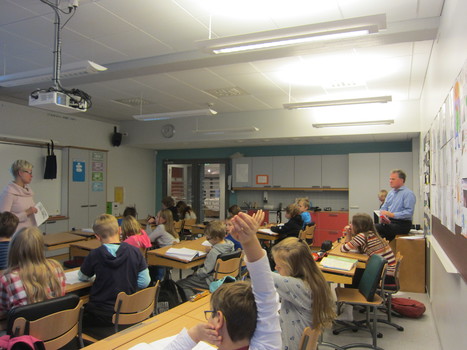
Spend five minutes in Jussi Hietava’s fourth-grade math class in remote, rural Finland, and you may learn all you need to know about education reform – if you want results, try doing the opposite of what American “education reformers” think we should do in classrooms.


Instead of control, competition, stress, standardized testing, screen-based schools and loosened teacher qualifications, try warmth, collaboration, and highly professionalized, teacher-led encouragement and assessment.


At the University of Eastern Finland’s Normaalikoulu teacher training school in Joensuu, Finland, you can see Hietava’s students enjoying the cutting-edge concept of “personalized learning.”


Learn more / En savoir plus / Mehr erfahren:


http://www.scoop.it/t/21st-century-learning-and-teaching/?tag=Finland


http://www.scoop.it/t/21st-century-learning-and-teaching/?tag=Personalized+Learning


Gust MEES's insight:
Spend five minutes in Jussi Hietava’s fourth-grade math class in remote, rural Finland, and you may learn all you need to know about education reform – if you want results, try doing the opposite of what American “education reformers” think we should do in classrooms.


Instead of control, competition, stress, standardized testing, screen-based schools and loosened teacher qualifications, try warmth, collaboration, and highly professionalized, teacher-led encouragement and assessment.


At the University of Eastern Finland’s Normaalikoulu teacher training school in Joensuu, Finland, you can see Hietava’s students enjoying the cutting-edge concept of “personalized learning.”


Learn more / En savoir plus / Mehr erfahren:


http://www.scoop.it/t/21st-century-learning-and-teaching/?tag=Finland


http://www.scoop.it/t/21st-century-learning-and-teaching/?tag=Personalized+Learning


Scooped by Gust MEES
November 7, 2016 4:35 PM
Scoop.it!

Getting ready for Modern-EDUcation: FIRST try to understand WHAT it is | #LEARNing2LEARN #ModernEDU #ICT

Getting ready for Modern-EDUcation: FIRST try to understand WHAT it is | #LEARNing2LEARN #ModernEDU #ICT | 21st Century Learning and Teaching | Scoop.it

Modern-EDUcation: FIRST try to understand WHAT it is before taking the wrong path! Let us be honest: EDUcation is far behind of WHAT it should be able to face the challenges of a modern world which is evolving quicker than WE can follow! Because of ICT everything is nearly possible: NEW professions are…


Learn more / En savoir plus / Mehr erfahren:


https://gustmees.wordpress.com/2016/05/19/a-holistic-view-of-what-will-influence-education-in-the-future/


https://gustmees.wordpress.com/2016/02/18/the-new-possibilities-to-learn-and-teach-with-ict/


https://gustmees.wordpress.com/2015/12/27/what-are-the-best-ways-of-teaching-and-learning-ideas-and-reflections/


Gust MEES's insight:

Modern-EDUcation: FIRST try to understand WHAT it is before taking the wrong path! Let us be honest: EDUcation is far behind of WHAT it should be able to face the challenges of a modern world which is evolving quicker than WE can follow! Because of ICT everything is nearly possible: NEW professions are…


Learn more / En savoir plus / Mehr erfahren:


https://gustmees.wordpress.com/2016/05/19/a-holistic-view-of-what-will-influence-education-in-the-future/


https://gustmees.wordpress.com/2016/02/18/the-new-possibilities-to-learn-and-teach-with-ict/


https://gustmees.wordpress.com/2015/12/27/what-are-the-best-ways-of-teaching-and-learning-ideas-and-reflections/


No comment yet.