21st Century Learning and Teaching
791.7K views | +4 today
21st Century Learning and Teaching
Related articles to 21st Century Learning and Teaching as also tools...
Curated by Gust MEES
Your new post is loading...

Popular Tags

Current selected tag: 'Learning 2 Learn'. Clear
Scooped by Gust MEES
April 5, 2016 4:12 PM
Scoop.it!

eduSites privés - Collaborez en toute simplicité ! | #Luxembourg #DigitalLuxembourg 

eduSites privés - Collaborez en toute simplicité ! | #Luxembourg #DigitalLuxembourg  | 21st Century Learning and Teaching | Scoop.it

Basées sur Sharepoint, ces espaces de travail collaboratifs privés offrent une façon simple et efficace pour gérer un projet d’envergure ou bien pour s'organiser, partager des documents, communiquer ou collaborer au sein d’un groupe de travail permanent, d’une équipe ou même d’un établissement scolaire. 
 

Gust MEES's insight:

Basées sur Sharepoint, ces espaces de travail collaboratifs privés offrent une façon simple et efficace pour gérer un projet d’envergure ou bien pour s'organiser, partager des documents, communiquer ou collaborer au sein d’un groupe de travail permanent, d’une équipe ou même d’un établissement scolaire.


No comment yet.
Scooped by Gust MEES
April 5, 2016 9:17 AM
Scoop.it!

The Global Search for Education: In Search of Professional Ethicists - Do they Exist? - Interview Howard GARDNER

The Global Search for Education: In Search of Professional Ethicists - Do they Exist? - Interview Howard GARDNER | 21st Century Learning and Teaching | Scoop.it
Do you think that robots with artificial intelligence could ultimately provide the expertise and multiple intelligences that we need from human experts?
It’s already clear that artificial intelligence can provide information that we used to secure from experts or that we had to look up ourselves. Just think about Siri, Encore, and the power of many other search engines. There is every reason to believe that these systems will continue to get ‘more intelligent’. As I am writing, the best “go” player in the world is struggling to compete successfully with a newly developed computational system.
I think we need to separate three issues. Firstly does the system reach its ‘answers’ in the same way that human beings do? This is the difference between ‘artificial intelligence’ and ‘human simulation. Secondly does the system manifest its intelligence? For many of us, there’s a big difference between typing a question on our pad, as opposed to conversing with a robot or avatar. The more that the robot resembles a human being, the more satisfying it will be to many individuals, although not to me! Thirdly can the computational system provide a recommended course of action that is as solid, or even more solid, than a well-trained professional? In a way that the client finds satisfying? For the foreseeable future (say a decade or two), I think that the answer is no. But I would add that for individuals who cannot afford to consult a professional, or for whom no professional is available, an artificial system will typically be much better than the recommendations of a friend or than common sense – which is all too often common non-sense.


Learn more / En savoir plus / Mehr erfahren:


http://www.scoop.it/t/21st-century-learning-and-teaching/?tag=Howard+GARDNER


http://www.scoop.it/t/21st-century-learning-and-teaching/?tag=Ethics


Gust MEES's insight:
Do you think that robots with artificial intelligence could ultimately provide the expertise and multiple intelligences that we need from human experts?
It’s already clear that artificial intelligence can provide information that we used to secure from experts or that we had to look up ourselves. Just think about Siri, Encore, and the power of many other search engines. There is every reason to believe that these systems will continue to get ‘more intelligent’. As I am writing, the best “go” player in the world is struggling to compete successfully with a newly developed computational system.
I think we need to separate three issues. Firstly does the system reach its ‘answers’ in the same way that human beings do? This is the difference between ‘artificial intelligence’ and ‘human simulation. Secondly does the system manifest its intelligence? For many of us, there’s a big difference between typing a question on our pad, as opposed to conversing with a robot or avatar. The more that the robot resembles a human being, the more satisfying it will be to many individuals, although not to me! Thirdly can the computational system provide a recommended course of action that is as solid, or even more solid, than a well-trained professional? In a way that the client finds satisfying? For the foreseeable future (say a decade or two), I think that the answer is no. But I would add that for individuals who cannot afford to consult a professional, or for whom no professional is available, an artificial system will typically be much better than the recommendations of a friend or than common sense – which is all too often common non-sense.


Learn more / En savoir plus / Mehr erfahren:


http://www.scoop.it/t/21st-century-learning-and-teaching/?tag=Howard+GARDNER


http://www.scoop.it/t/21st-century-learning-and-teaching/?tag=Ethics


No comment yet.
Scooped by Gust MEES
April 4, 2016 4:36 AM
Scoop.it!

Change Management | Adaptive HVM

Change Management | Adaptive HVM | 21st Century Learning and Teaching | Scoop.it

Change Management is a process that should be included in the planning and delivery of a project from the very beginning. The full impact of change is often not taken into consideration in the development of project plans and this is a mistake.

Other times one needs to drive a behavioural changethat results in a project team being formed (Safety/Hygiene etc)


Gust MEES's insight:

Change Management is a process that should be included in the planning and delivery of a project from the very beginning. The full impact of change is often not taken into consideration in the development of project plans and this is a mistake.

Other times one needs to drive a behavioural changethat results in a project team being formed (Safety/Hygiene etc)


Greg Webb's curator insight, April 4, 2016 9:03 AM

Change Management is a process that should be included in the planning and delivery of a project from the very beginning. The full impact of change is often not taken into consideration in the development of project plans and this is a mistake.

Other times one needs to drive a behavioural changethat results in a project team being formed (Safety/Hygiene etc)


Ricard Lloria's curator insight, April 5, 2016 1:30 AM

Change Management is a process that should be included in the planning and delivery of a project from the very beginning. The full impact of change is often not taken into consideration in the development of project plans and this is a mistake.

Other times one needs to drive a behavioural changethat results in a project team being formed (Safety/Hygiene etc)


Scooped by Gust MEES
March 31, 2016 3:47 PM
Scoop.it!

Sauvegarder ses données, un geste simple mais négligé | #Backup 

Sauvegarder ses données, un geste simple mais négligé | #Backup  | 21st Century Learning and Teaching | Scoop.it
Ce jeudi se tient la cinquième édition de la Journée mondiale de la sauvegarde informatique. L'occasion de rappeler l'importance de sauvegarder régulièrement ses données sous peine de les perdre définitivement.


Learn more / En savoir plus / Mehr erfahren:


http://www.scoop.it/t/ict-security-tools/?tag=Ransomware


http://www.scoop.it/t/21st-century-learning-and-teaching/?tag=Backup


Gust MEES's insight:
Ce jeudi se tient la cinquième édition de la Journée mondiale de la sauvegarde informatique. L'occasion de rappeler l'importance de sauvegarder régulièrement ses données sous peine de les perdre définitivement.


Learn more / En savoir plus / Mehr erfahren:


http://www.scoop.it/t/ict-security-tools/?tag=Ransomware


http://www.scoop.it/t/21st-century-learning-and-teaching/?tag=Backup


CDIMarcChagall's curator insight, April 1, 2016 2:28 AM
Ce jeudi se tient la cinquième édition de la Journée mondiale de la sauvegarde informatique. L'occasion de rappeler l'importance de sauvegarder régulièrement ses données sous peine de les perdre définitivement.


Learn more / En savoir plus / Mehr erfahren:


http://www.scoop.it/t/ict-security-tools/?tag=Ransomware


http://www.scoop.it/t/21st-century-learning-and-teaching/?tag=Backup


Fernando de la Cruz Naranjo Grisales's curator insight, April 2, 2016 7:04 AM
Ce jeudi se tient la cinquième édition de la Journée mondiale de la sauvegarde informatique. L'occasion de rappeler l'importance de sauvegarder régulièrement ses données sous peine de les perdre définitivement.


Learn more / En savoir plus / Mehr erfahren:


http://www.scoop.it/t/ict-security-tools/?tag=Ransomware


http://www.scoop.it/t/21st-century-learning-and-teaching/?tag=Backup


Scooped by Gust MEES
March 31, 2016 1:38 PM
Scoop.it!

When Kids Have Structure for Thinking, Better Learning Emerges | #LEARNing2LEARN #LEARNingByDoing

When Kids Have Structure for Thinking, Better Learning Emerges | #LEARNing2LEARN #LEARNingByDoing | 21st Century Learning and Teaching | Scoop.it
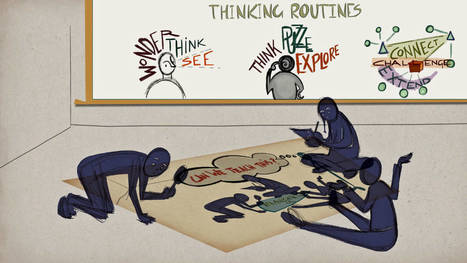
“When we have a rich meta-strategic base for our thinking, that helps us to be more independent learners,” said Project Zero senior research associate Ron Ritchhart at a Learning and the Brain conference. “If we don’t have those strategies, if we aren’t aware of them, then we’re waiting for someone else to direct our thinking.”

Helping students to “learn how to learn” or in Ritchhart’s terminology, become “meta-strategic thinkers” is crucial for understanding and becoming a life-long learner. To discover how aware students are of their thinking at different ages, Ritchhart has been working with schools to build “cultures of thinking.” His theory is that if educators can make thinking more visible, and help students develop routines around thinking, then their thinking about everything will deepen.

His research shows that when fourth graders are asked to develop a concept map about thinking, most of their brainstorming centers around what they think and where they think it. “When students don’t have strategies about thinking, that’s how they respond – what they think and where they think,” Richhart said. Many fifth graders start to include broad categories of thinking on their concept maps like “problem solving” or “understanding.” Those things are associated with thinking, but fifth graders often haven’t quite hit on the process of thinking.


Learn more / En savoir plus / Mehr erfahren:


https://gustmees.wordpress.com/2015/07/19/learning-path-for-professional-21st-century-learning-by-ict-practice/


https://gustmees.wordpress.com/2014/10/03/design-the-learning-of-your-learners-students-ideas/


Gust MEES's insight:
When we have a rich meta-strategic base for our thinking, that helps us to be more independent learners,” said Project Zero senior research associate Ron Ritchhart at a Learning and the Brain conference. “If we don’t have those strategies, if we aren’t aware of them, then we’re waiting for someone else to direct our thinking.”

Helping students to “learn how to learn” or in Ritchhart’s terminology, become “meta-strategic thinkers” is crucial for understanding and becoming a life-long learner. To discover how aware students are of their thinking at different ages, Ritchhart has been working with schools to build “cultures of thinking.” His theory is that if educators can make thinking more visible, and help students develop routines around thinking, then their thinking about everything will deepen.

His research shows that when fourth graders are asked to develop a concept map about thinking, most of their brainstorming centers around what they think and where they think it. “When students don’t have strategies about thinking, that’s how they respond – what they think and where they think,” Richhart said. Many fifth graders start to include broad categories of thinking on their concept maps like “problem solving” or “understanding.” Those things are associated with thinking, but fifth graders often haven’t quite hit on the process of thinking.


Learn more / En savoir plus / Mehr erfahren:


https://gustmees.wordpress.com/2015/07/19/learning-path-for-professional-21st-century-learning-by-ict-practice/


https://gustmees.wordpress.com/2014/10/03/design-the-learning-of-your-learners-students-ideas/


Lina Kherfan's curator insight, April 3, 2016 8:19 PM
this article talks about the importance of how children think and learn. the author stresses on the fact that for better learning, students need to have a better structure for learning, hence the title. the author states students often do not have a good structure for thinking. students tend just to memorize things and don't know how to do deep learning. the author states that teachers only teach one part of this structure. which is thinking about thinking. the structre for better thinking is not only thinking about thinking though, there is more to it. the only part of it is to monitoring and directing thinking. " When a student is reading and stops to realize he’s not really understanding the meaning behind the words, that’s monitoring. And most powerfully, directing thinking happens when students can call upon specific thinking strategies to redirect or challenge their own thinking."  monitoring is being able to check up on yourself and regulate your own learning and directing is when students can take charge of their learning and direct it to what works for them in their self learning. this article talks about the importance of deeper thinking and learning and then switches to how educators can help with the process. i chose this article because i think that it is an important thing for students in K-12 grades. in my highschool, my graduating year, they had put in place a program called common core, which emphasizes this specific topic in student learning. sadly i was not able to partake in it however i do think that it is important for incoming students learn how to think and learn deeper.
reflectin gsunny's comment, August 23, 2016 6:44 AM
Breathtaking...!!
Sara Jaramillo's curator insight, May 21, 2020 1:27 PM
I agree with what this article says and I consider that education in public schools in Colombia must have into account the theory and the strategies proposed by Ritchhart. It is very important teach students to think by themselves, to take decisions in their learning, to have critical thinking skills, is more useful and meaningful for their learning, that just provide information for them to memorize it. They would not know what to do with this information, and there will be no learning. 
Scooped by Gust MEES
March 31, 2016 9:44 AM
Scoop.it!

Better Internet for Kids - Luxembourg: That data, actually OUR data, in the Cloud | #Privacy 

Better Internet for Kids - Luxembourg: That data, actually OUR data, in the Cloud | #Privacy  | 21st Century Learning and Teaching | Scoop.it
Nowadays, the Cloud is everywhere. For most users, this technology is assimilated to some sort of a digital extension of their technology-related hardware. If from a technical standpoint the Cloud is not a revolution but a mere evolution of online services, the Cloud nonetheless changes the relationship between us, as users, our computer equipment, our data and our Internet Service Provider (ISP).


Learn more / En savoir plus / Mehr erfahren:


https://gustmees.wordpress.com/2013/12/21/privacy-in-the-digital-world-shouldnt-we-talk-about-it/


http://www.scoop.it/t/securite-pc-et-internet/?tag=Cloud-Security


Gust MEES's insight:
Nowadays, the Cloud is everywhere. For most users, this technology is assimilated to some sort of a digital extension of their technology-related hardware. If from a technical standpoint the Cloud is not a revolution but a mere evolution of online services, the Cloud nonetheless changes the relationship between us, as users, our computer equipment, our data and our Internet Service Provider (ISP).


Learn more / En savoir plus / Mehr erfahren:


https://gustmees.wordpress.com/2013/12/21/privacy-in-the-digital-world-shouldnt-we-talk-about-it/


http://www.scoop.it/t/securite-pc-et-internet/?tag=Cloud-Security


Fernando de la Cruz Naranjo Grisales's curator insight, April 2, 2016 7:06 AM
Nowadays, the Cloud is everywhere. For most users, this technology is assimilated to some sort of a digital extension of their technology-related hardware. If from a technical standpoint the Cloud is not a revolution but a mere evolution of online services, the Cloud nonetheless changes the relationship between us, as users, our computer equipment, our data and our Internet Service Provider (ISP).


Learn more / En savoir plus / Mehr erfahren:


https://gustmees.wordpress.com/2013/12/21/privacy-in-the-digital-world-shouldnt-we-talk-about-it/


http://www.scoop.it/t/securite-pc-et-internet/?tag=Cloud-Security


Scooped by Gust MEES
March 29, 2016 9:33 AM
Scoop.it!

What Compels People to Pursue Radical Innovations in Education

What Compels People to Pursue Radical Innovations in Education | 21st Century Learning and Teaching | Scoop.it

What compels people to pursue more radical innovations in education? It has now been almost two decades since I started to more seriously and systematically study innovations in education and innovative learning organizations. Many of the musings about that show up in the chapters of my book on Missional Moonshots (not to mention the many articles on this blog), but since my exploration started, I can’t think of a single day that has passed without some thought experiment or reflection about educational innovation. In that sense, it has become a consuming passion for me because I see educational innovation as an important social good, and I have immense respect for those who tap into the courage, creativity and hard work necessary to pursue revolutionary or radical innovations in education.


Learn more / En savoir plus / Mehr erfahren:


https://gustmees.wordpress.com/2016/02/18/the-new-possibilities-to-learn-and-teach-with-ict/


Gust MEES's insight:

What compels people to pursue more radical innovations in education? It has now been almost two decades since I started to more seriously and systematically study innovations in education and innovative learning organizations. Many of the musings about that show up in the chapters of my book on Missional Moonshots (not to mention the many articles on this blog), but since my exploration started, I can’t think of a single day that has passed without some thought experiment or reflection about educational innovation. In that sense, it has become a consuming passion for me because I see educational innovation as an important social good, and I have immense respect for those who tap into the courage, creativity and hard work necessary to pursue revolutionary or radical innovations in education.


Learn more / En savoir plus / Mehr erfahren:


https://gustmees.wordpress.com/2016/02/18/the-new-possibilities-to-learn-and-teach-with-ict/


Juan Quiñones's curator insight, March 31, 2016 9:38 AM

What compels people to pursue more radical innovations in education? It has now been almost two decades since I started to more seriously and systematically study innovations in education and innovative learning organizations. Many of the musings about that show up in the chapters of my book on Missional Moonshots (not to mention the many articles on this blog), but since my exploration started, I can’t think of a single day that has passed without some thought experiment or reflection about educational innovation. In that sense, it has become a consuming passion for me because I see educational innovation as an important social good, and I have immense respect for those who tap into the courage, creativity and hard work necessary to pursue revolutionary or radical innovations in education.


Learn more / En savoir plus / Mehr erfahren:


https://gustmees.wordpress.com/2016/02/18/the-new-possibilities-to-learn-and-teach-with-ict/


Skip Gole's curator insight, March 31, 2016 11:51 AM

What compels people to pursue more radical innovations in education? It has now been almost two decades since I started to more seriously and systematically study innovations in education and innovative learning organizations. Many of the musings about that show up in the chapters of my book on Missional Moonshots (not to mention the many articles on this blog), but since my exploration started, I can’t think of a single day that has passed without some thought experiment or reflection about educational innovation. In that sense, it has become a consuming passion for me because I see educational innovation as an important social good, and I have immense respect for those who tap into the courage, creativity and hard work necessary to pursue revolutionary or radical innovations in education.


Learn more / En savoir plus / Mehr erfahren:


https://gustmees.wordpress.com/2016/02/18/the-new-possibilities-to-learn-and-teach-with-ict/


Fernando de la Cruz Naranjo Grisales's curator insight, April 2, 2016 7:06 AM

What compels people to pursue more radical innovations in education? It has now been almost two decades since I started to more seriously and systematically study innovations in education and innovative learning organizations. Many of the musings about that show up in the chapters of my book on Missional Moonshots (not to mention the many articles on this blog), but since my exploration started, I can’t think of a single day that has passed without some thought experiment or reflection about educational innovation. In that sense, it has become a consuming passion for me because I see educational innovation as an important social good, and I have immense respect for those who tap into the courage, creativity and hard work necessary to pursue revolutionary or radical innovations in education.


Learn more / En savoir plus / Mehr erfahren:


https://gustmees.wordpress.com/2016/02/18/the-new-possibilities-to-learn-and-teach-with-ict/


Scooped by Gust MEES
March 24, 2016 7:41 PM
Scoop.it!

How to Fix 7 Counterproductive Learning Habits | #LEARNing2LEARN

How to Fix 7 Counterproductive Learning Habits | #LEARNing2LEARN | 21st Century Learning and Teaching | Scoop.it
At some point in our lives, we’ve all practiced some counterproductive learning habits. We’ve sabotaged ourselves without realizing it, and found ourselves stuck. There have been failures we believe have defined our potential. We’ve obsessed over perfect solutions and singular pathways. In frustrated moments we’ve refused help from others, thinking acceptance means weakness. We’ve done this as teachers, students, friends, and parents.


These are not crimes; they’re part of what makes us human. Our counterproductive learning habits usually come from what we observe and hear. We pick things up as children from well-intentioned adults in our lives. In addition, the experiences of others constantly unfold right in front of us. We observe actively, and we remember.


Eventually we come to believe that what we see is how things are, and that it never changes. We know now that this doesn’t have to be the case. We know now that we can create our own experiences. Let’s make them good ones when it comes to learning.


Leartn more / En savoir plus / Mehr erfahren:


https://gustmees.wordpress.com/2015/07/19/learning-path-for-professional-21st-century-learning-by-ict-practice/


Gust MEES's insight:
At some point in our lives, we’ve all practiced some counterproductive learning habits. We’ve sabotaged ourselves without realizing it, and found ourselves stuck. There have been failures we believe have defined our potential. We’ve obsessed over perfect solutions and singular pathways. In frustrated moments we’ve refused help from others, thinking acceptance means weakness. We’ve done this as teachers, students, friends, and parents.


These are not crimes; they’re part of what makes us human. Our counterproductive learning habits usually come from what we observe and hear. We pick things up as children from well-intentioned adults in our lives. In addition, the experiences of others constantly unfold right in front of us. We observe actively, and we remember.


Eventually we come to believe that what we see is how things are, and that it never changes. We know now that this doesn’t have to be the case. We know now that we can create our own experiences. Let’s make them good ones when it comes to learning.


Leartn more / En savoir plus / Mehr erfahren:


https://gustmees.wordpress.com/2015/07/19/learning-path-for-professional-21st-century-learning-by-ict-practice/


Dennis Swender's curator insight, March 26, 2016 4:03 AM
At some point in our lives, we’ve all practiced some counterproductive learning habits. We’ve sabotaged ourselves without realizing it, and found ourselves stuck. There have been failures we believe have defined our potential. We’ve obsessed over perfect solutions and singular pathways. In frustrated moments we’ve refused help from others, thinking acceptance means weakness. We’ve done this as teachers, students, friends, and parents.


These are not crimes; they’re part of what makes us human. Our counterproductive learning habits usually come from what we observe and hear. We pick things up as children from well-intentioned adults in our lives. In addition, the experiences of others constantly unfold right in front of us. We observe actively, and we remember.


Eventually we come to believe that what we see is how things are, and that it never changes. We know now that this doesn’t have to be the case. We know now that we can create our own experiences. Let’s make them good ones when it comes to learning.


Leartn more / En savoir plus / Mehr erfahren:


https://gustmees.wordpress.com/2015/07/19/learning-path-for-professional-21st-century-learning-by-ict-practice/


Juan Quiñones's curator insight, March 28, 2016 11:40 PM
At some point in our lives, we’ve all practiced some counterproductive learning habits. We’ve sabotaged ourselves without realizing it, and found ourselves stuck. There have been failures we believe have defined our potential. We’ve obsessed over perfect solutions and singular pathways. In frustrated moments we’ve refused help from others, thinking acceptance means weakness. We’ve done this as teachers, students, friends, and parents.


These are not crimes; they’re part of what makes us human. Our counterproductive learning habits usually come from what we observe and hear. We pick things up as children from well-intentioned adults in our lives. In addition, the experiences of others constantly unfold right in front of us. We observe actively, and we remember.


Eventually we come to believe that what we see is how things are, and that it never changes. We know now that this doesn’t have to be the case. We know now that we can create our own experiences. Let’s make them good ones when it comes to learning.


Leartn more / En savoir plus / Mehr erfahren:


https://gustmees.wordpress.com/2015/07/19/learning-path-for-professional-21st-century-learning-by-ict-practice/


Karen B Wehner's curator insight, March 31, 2016 1:36 PM
At some point in our lives, we’ve all practiced some counterproductive learning habits. We’ve sabotaged ourselves without realizing it, and found ourselves stuck. There have been failures we believe have defined our potential. We’ve obsessed over perfect solutions and singular pathways. In frustrated moments we’ve refused help from others, thinking acceptance means weakness. We’ve done this as teachers, students, friends, and parents.


These are not crimes; they’re part of what makes us human. Our counterproductive learning habits usually come from what we observe and hear. We pick things up as children from well-intentioned adults in our lives. In addition, the experiences of others constantly unfold right in front of us. We observe actively, and we remember.


Eventually we come to believe that what we see is how things are, and that it never changes. We know now that this doesn’t have to be the case. We know now that we can create our own experiences. Let’s make them good ones when it comes to learning.


Leartn more / En savoir plus / Mehr erfahren:


https://gustmees.wordpress.com/2015/07/19/learning-path-for-professional-21st-century-learning-by-ict-practice/


Scooped by Gust MEES
March 23, 2016 7:00 PM
Scoop.it!

#DigitalCitiZENship #eskills | Tip 1: Think Before You Share | #DigitalFootPrint | #OnlineReputation

To help create the best version of your online story, remember to think before you share. Anything you post online can be forwarded, copied, and found...

 

Learn more / En savoir plus / Mehr erfahren:


https://gustmees.wordpress.com/2015/01/28/practice-learning-to-learn-example-2/


Gust MEES's insight:

To help create the best version of your online story, remember to think before you share. Anything you post online can be forwarded, copied, and found...


Learn more / En savoir plus / Mehr erfahren:


https://gustmees.wordpress.com/2015/01/28/practice-learning-to-learn-example-2/


Cheryl Frose's curator insight, March 24, 2016 3:29 PM

To help create the best version of your online story, remember to think before you share. Anything you post online can be forwarded, copied, and found...

 

Learn more / En savoir plus / Mehr erfahren:


https://gustmees.wordpress.com/2015/01/28/practice-learning-to-learn-example-2/


Fernando de la Cruz Naranjo Grisales's curator insight, March 25, 2016 3:01 PM

To help create the best version of your online story, remember to think before you share. Anything you post online can be forwarded, copied, and found...


Learn more / En savoir plus / Mehr erfahren:


https://gustmees.wordpress.com/2015/01/28/practice-learning-to-learn-example-2/


Anthippi Harou's curator insight, March 26, 2016 4:23 AM

To help create the best version of your online story, remember to think before you share. Anything you post online can be forwarded, copied, and found...


Learn more / En savoir plus / Mehr erfahren:


https://gustmees.wordpress.com/2015/01/28/practice-learning-to-learn-example-2/


Scooped by Gust MEES
March 23, 2016 6:42 PM
Scoop.it!

#DigitalCitiZENship #eSkills | Tip 5: Be Positive

Treat others the way you want to be treated, offline and online! Being positive on the web means that you should only post, comment or forward something, if...


Learn more / En savoir plus / Mehr erfahren:


https://gustmees.wordpress.com/2015/01/28/practice-learning-to-learn-example-2/


Gust MEES's insight:

Treat others the way you want to be treated, offline and online! Being positive on the web means that you should only post, comment or forward something, if...


Learn more / En savoir plus / Mehr erfahren:


https://gustmees.wordpress.com/2015/01/28/practice-learning-to-learn-example-2/


Fernando de la Cruz Naranjo Grisales's curator insight, March 25, 2016 3:01 PM

Treat others the way you want to be treated, offline and online! Being positive on the web means that you should only post, comment or forward something, if...


Learn more / En savoir plus / Mehr erfahren:


https://gustmees.wordpress.com/2015/01/28/practice-learning-to-learn-example-2/


Scooped by Gust MEES
March 23, 2016 3:39 PM
Scoop.it!

Die Hattie Studie | Schule im Aufbruch | #VisibleLEARNing #JohnHATTIE

Die Hattie Studie | Schule im Aufbruch | #VisibleLEARNing #JohnHATTIE | 21st Century Learning and Teaching | Scoop.it
Wie sieht so eine Studie aus? Im Wesentlichen nimmt man eine Gruppe von Schüler*innen, bei denen man etwas verändert und eine Gruppe von Schüler*innen, bei denen man nichts ändert und guckt sich den Unterschied an – das wird in der Regel am Schreiben desselben Tests gemacht. Dann kommen statistische Meisterwerke ins Spiel, die definieren, ob die Verteilung so ist, dass das Ergebnis verlässlich ist. Und wenn es das ist, steht das Ergebnis der Forschungsgemeinschaft zur Verfügung.

John Hattie hat sich die ganze Forschungslandschaft angesehen und hat 138 Einflussgrößen auf Lernen identifiziert, die schon oft genug erforscht wurden, um verlässliche Daten zu haben. Die Bandbreite ist riesig, vom Geburtsgewicht des Kindes zu Schulgröße. Nun hat er nicht tatsächlich 5.000 Studienergebnisse verwertet, sondern 800 Metastudien. Das heißt, dass andere Wissenschaftler vor ihm schon einmal viele Ergebnisse durch denselben Prozess haben laufen lassen. Das wahrhaft innovative an der Hattie-Studie ist, dass es eine Meta-Studie von Meta-Studien ist.

Nach 15 Jahren hat er es dann geschafft. Er hat zu allen 138 Einflussgrößen die Effektstärke herausgefunden, also wie stark hier eine Veränderung das Lernergebnis verändert. Ganz salopp gesagt: positive Zahlen beweisen positive Wirkung, negative Zahlen negative Wirkung. Was genau das bedeutet, unterscheidet sich immer ein wenig je nach Interpretationsschema. Ein Wert kleiner als 0,5 gilt als kleiner Effekt, zwischen 0,5 und 0,8 zählt als mittlerer Effekt und Werte darüber als großer Effekt. Andere finden, dass die großen Effekte erst bei 1,2 beginnen. John Hattie selbst findet, man muss das ein wenig an die Gegebenheiten der Bildung anpassen und findet alles über 0.3 sehr ernst zu nehmen. So, Ende meiner statistischen Einführung…


Learn more / En savoir plus / Mehr erfahren:


http://www.bak-online.de/downloads/Seminar2-2014_S121-130.pdf


http://www.scoop.it/t/21st-century-learning-and-teaching/?tag=John+HATTIE


Gust MEES's insight:
Wie sieht so eine Studie aus? Im Wesentlichen nimmt man eine Gruppe von Schüler*innen, bei denen man etwas verändert und eine Gruppe von Schüler*innen, bei denen man nichts ändert und guckt sich den Unterschied an – das wird in der Regel am Schreiben desselben Tests gemacht. Dann kommen statistische Meisterwerke ins Spiel, die definieren, ob die Verteilung so ist, dass das Ergebnis verlässlich ist. Und wenn es das ist, steht das Ergebnis der Forschungsgemeinschaft zur Verfügung.

John Hattie hat sich die ganze Forschungslandschaft angesehen und hat 138 Einflussgrößen auf Lernen identifiziert, die schon oft genug erforscht wurden, um verlässliche Daten zu haben. Die Bandbreite ist riesig, vom Geburtsgewicht des Kindes zu Schulgröße. Nun hat er nicht tatsächlich 5.000 Studienergebnisse verwertet, sondern 800 Metastudien. Das heißt, dass andere Wissenschaftler vor ihm schon einmal viele Ergebnisse durch denselben Prozess haben laufen lassen. Das wahrhaft innovative an der Hattie-Studie ist, dass es eine Meta-Studie von Meta-Studien ist.

Nach 15 Jahren hat er es dann geschafft. Er hat zu allen 138 Einflussgrößen die Effektstärke herausgefunden, also wie stark hier eine Veränderung das Lernergebnis verändert. Ganz salopp gesagt: positive Zahlen beweisen positive Wirkung, negative Zahlen negative Wirkung. Was genau das bedeutet, unterscheidet sich immer ein wenig je nach Interpretationsschema. Ein Wert kleiner als 0,5 gilt als kleiner Effekt, zwischen 0,5 und 0,8 zählt als mittlerer Effekt und Werte darüber als großer Effekt. Andere finden, dass die großen Effekte erst bei 1,2 beginnen. John Hattie selbst findet, man muss das ein wenig an die Gegebenheiten der Bildung anpassen und findet alles über 0.3 sehr ernst zu nehmen. So, Ende meiner statistischen Einführung…


Learn more / En savoir plus / Mehr erfahren:


http://www.bak-online.de/downloads/Seminar2-2014_S121-130.pdf


http://www.scoop.it/t/21st-century-learning-and-teaching/?tag=John+HATTIE


Fernando de la Cruz Naranjo Grisales's curator insight, March 25, 2016 3:01 PM
Wie sieht so eine Studie aus? Im Wesentlichen nimmt man eine Gruppe von Schüler*innen, bei denen man etwas verändert und eine Gruppe von Schüler*innen, bei denen man nichts ändert und guckt sich den Unterschied an – das wird in der Regel am Schreiben desselben Tests gemacht. Dann kommen statistische Meisterwerke ins Spiel, die definieren, ob die Verteilung so ist, dass das Ergebnis verlässlich ist. Und wenn es das ist, steht das Ergebnis der Forschungsgemeinschaft zur Verfügung.

John Hattie hat sich die ganze Forschungslandschaft angesehen und hat 138 Einflussgrößen auf Lernen identifiziert, die schon oft genug erforscht wurden, um verlässliche Daten zu haben. Die Bandbreite ist riesig, vom Geburtsgewicht des Kindes zu Schulgröße. Nun hat er nicht tatsächlich 5.000 Studienergebnisse verwertet, sondern 800 Metastudien. Das heißt, dass andere Wissenschaftler vor ihm schon einmal viele Ergebnisse durch denselben Prozess haben laufen lassen. Das wahrhaft innovative an der Hattie-Studie ist, dass es eine Meta-Studie von Meta-Studien ist.

Nach 15 Jahren hat er es dann geschafft. Er hat zu allen 138 Einflussgrößen die Effektstärke herausgefunden, also wie stark hier eine Veränderung das Lernergebnis verändert. Ganz salopp gesagt: positive Zahlen beweisen positive Wirkung, negative Zahlen negative Wirkung. Was genau das bedeutet, unterscheidet sich immer ein wenig je nach Interpretationsschema. Ein Wert kleiner als 0,5 gilt als kleiner Effekt, zwischen 0,5 und 0,8 zählt als mittlerer Effekt und Werte darüber als großer Effekt. Andere finden, dass die großen Effekte erst bei 1,2 beginnen. John Hattie selbst findet, man muss das ein wenig an die Gegebenheiten der Bildung anpassen und findet alles über 0.3 sehr ernst zu nehmen. So, Ende meiner statistischen Einführung…


Learn more / En savoir plus / Mehr erfahren:


http://www.bak-online.de/downloads/Seminar2-2014_S121-130.pdf


http://www.scoop.it/t/21st-century-learning-and-teaching/?tag=John+HATTIE


Scooped by Gust MEES
March 19, 2016 11:32 AM
Scoop.it!

What is a VPN, and why should you be using one? | Graham Cluley | #Privacy #CyberSecurity #WiFi #ICT #eSkills

Find out the benefits of running a VPN on your laptop and smartphone, especially if you are in the habit of connecting to public Wi-Fi hotspots. 


Learn more / En savoir plus / Mehr erfahren::


http://gustmees.wordpress.com/2013/05/27/dangers-of-wifi-in-public-places/


 http://www.scoop.it/t/21st-century-learning-and-teaching/?tag=VPN


Gust MEES's insight:

Find out the benefits of running a VPN on your laptop and smartphone, especially if you are in the habit of connecting to public Wi-Fi hotspots. 


Learn more / En savoir plus / Mehr erfahren::


http://gustmees.wordpress.com/2013/05/27/dangers-of-wifi-in-public-places/


 http://www.scoop.it/t/21st-century-learning-and-teaching/?tag=VPN


Pam Huff's curator insight, March 20, 2016 10:36 AM

Find out the benefits of running a VPN on your laptop and smartphone, especially if you are in the habit of connecting to public Wi-Fi hotspots. 


Learn more / En savoir plus / Mehr erfahren::


http://gustmees.wordpress.com/2013/05/27/dangers-of-wifi-in-public-places/


 http://www.scoop.it/t/21st-century-learning-and-teaching/?tag=VPN


Frederic GOUTH's curator insight, March 20, 2016 3:01 PM

Find out the benefits of running a VPN on your laptop and smartphone, especially if you are in the habit of connecting to public Wi-Fi hotspots. 


Learn more / En savoir plus / Mehr erfahren::


http://gustmees.wordpress.com/2013/05/27/dangers-of-wifi-in-public-places/


 http://www.scoop.it/t/21st-century-learning-and-teaching/?tag=VPN


Fernando de la Cruz Naranjo Grisales's curator insight, March 23, 2016 8:24 AM

Find out the benefits of running a VPN on your laptop and smartphone, especially if you are in the habit of connecting to public Wi-Fi hotspots. 


Learn more / En savoir plus / Mehr erfahren::


http://gustmees.wordpress.com/2013/05/27/dangers-of-wifi-in-public-places/


 http://www.scoop.it/t/21st-century-learning-and-teaching/?tag=VPN


Scooped by Gust MEES
March 18, 2016 9:21 AM
Scoop.it!

How to improve your creativity

Watch this movie to get a quick overview on how to improve your writing skills. It starts from finding out your weak areas in terms of writing an...


Learn more (PracTICE):


https://gustmees.wordpress.com/?s=practice


Gust MEES's insight:

Watch this movie to get a quick overview on how to improve your writing skills. It starts from finding out your weak areas in terms of writing an...


Learn more (PracTICE):


https://gustmees.wordpress.com/?s=practice


Kerbie Sarmiento's curator insight, March 20, 2016 11:00 AM

Watch this movie to get a quick overview on how to improve your writing skills. It starts from finding out your weak areas in terms of writing an...


Learn more (PracTICE):


https://gustmees.wordpress.com/?s=practice


Santosh A's curator insight, March 22, 2016 4:32 AM

Watch this movie to get a quick overview on how to improve your writing skills. It starts from finding out your weak areas in terms of writing an...


Learn more (PracTICE):


https://gustmees.wordpress.com/?s=practice


Fernando de la Cruz Naranjo Grisales's curator insight, March 23, 2016 8:26 AM

Watch this movie to get a quick overview on how to improve your writing skills. It starts from finding out your weak areas in terms of writing an...


Learn more (PracTICE):


https://gustmees.wordpress.com/?s=practice


Scooped by Gust MEES
April 5, 2016 12:49 PM
Scoop.it!

Beacons #NeuroMarketing #ICT #Privacy How Far is TOO Far!? | #DigitalCitiZENship #digcit 

Beacons  #NeuroMarketing #ICT #Privacy  How Far is TOO Far!? | #DigitalCitiZENship #digcit  | 21st Century Learning and Teaching | Scoop.it

Beacons, WHAT are THEY and WHAT to take care about it concerning OUR "Privacy"!???


Learn more / En savoir plus / Mehr erfahren:


https://gustmees.wordpress.com/2013/12/21/privacy-in-the-digital-world-shouldnt-we-talk-about-it/


http://www.scoop.it/t/21st-century-innovative-technologies-and-developments/?tag=Beacon


Gust MEES's insight:

Beacons, WHAT are THEY and WHAT to take care about it concerning OUR "Privacy"!???


Learn more / En savoir plus / Mehr erfahren:


https://gustmees.wordpress.com/2013/12/21/privacy-in-the-digital-world-shouldnt-we-talk-about-it/


http://www.scoop.it/t/21st-century-innovative-technologies-and-developments/?tag=Beacon


No comment yet.
Rescooped by Gust MEES from Leadership
April 5, 2016 10:41 AM
Scoop.it!

The Best Leaders Have the Best Systems

The Best Leaders Have the Best Systems | 21st Century Learning and Teaching | Scoop.it
For a leader to be effective, he or she needs to create and implement systems. This post details three reasons why systems are critical for success.


  1. Most people aren’t great at developing systems.
  2. To work, most systems have to be personal.
  3. You can’t grow without systems.


Learn more / En savoir plus / Mehr erfahren:


http://www.scoop.it/t/21st-century-learning-and-teaching/?tag=LeaderShip


https://gustmees.wordpress.com/2015/07/19/learning-path-for-professional-21st-century-learning-by-ict-practice/


Via Kevin Watson, Marc Wachtfogel, Ph.D.
Gust MEES's insight:
For a leader to be effective, he or she needs to create and implement systems. This post details three reasons why systems are critical for success.


  1. Most people aren’t great at developing systems.
  2. To work, most systems have to be personal.
  3. You can’t grow without systems.


Learn more / En savoir plus / Mehr erfahren:


http://www.scoop.it/t/21st-century-learning-and-teaching/?tag=LeaderShip


https://gustmees.wordpress.com/2015/07/19/learning-path-for-professional-21st-century-learning-by-ict-practice/


Scooped by Gust MEES
April 1, 2016 8:36 AM
Scoop.it!

2 minutes to understand the potential of blockchain technology | Video Tutorials

The blockchain is a revolution with endless applications. Let’s get ready for it!


Learn more / En savoir plus / Mehr erfahren:


http://www.scoop.it/t/luxembourg-europe/?tag=Blockchain


http://www.scoop.it/t/luxembourg-europe/?tag=Bitcoin


Gust MEES's insight:
The blockchain is a revolution with endless applications. Let’s get ready for it!


Learn more / En savoir plus / Mehr erfahren:


http://www.scoop.it/t/luxembourg-europe/?tag=Blockchain


http://www.scoop.it/t/luxembourg-europe/?tag=Bitcoin


Fernando de la Cruz Naranjo Grisales's curator insight, April 2, 2016 7:04 AM
The blockchain is a revolution with endless applications. Let’s get ready for it!


Learn more / En savoir plus / Mehr erfahren:


http://www.scoop.it/t/luxembourg-europe/?tag=Blockchain


http://www.scoop.it/t/luxembourg-europe/?tag=Bitcoin


Carolina Gorosito's curator insight, April 3, 2016 8:39 AM
The blockchain is a revolution with endless applications. Let’s get ready for it!


Learn more / En savoir plus / Mehr erfahren:


http://www.scoop.it/t/luxembourg-europe/?tag=Blockchain


http://www.scoop.it/t/luxembourg-europe/?tag=Bitcoin


Greg Webb's curator insight, April 4, 2016 9:05 AM
The blockchain is a revolution with endless applications. Let’s get ready for it!


Learn more / En savoir plus / Mehr erfahren:


http://www.scoop.it/t/luxembourg-europe/?tag=Blockchain


http://www.scoop.it/t/luxembourg-europe/?tag=Bitcoin


Scooped by Gust MEES
March 31, 2016 3:15 PM
Scoop.it!

Communicate Up, Down and Sideways: #Communication, THE letter "C" in #ICT | #LEARNing2LEARN 

Communicate Up, Down and Sideways: #Communication, THE letter "C" in #ICT | #LEARNing2LEARN  | 21st Century Learning and Teaching | Scoop.it
Communication is a skill that must constantly be refined and changed based on the desired outcomes. Yet, for communication to be effective; one must always communicate a whole 360 degrees (up, down, and sideways).


Gust MEES's insight:

Communication is a skill that must constantly be refined and changed based on the desired outcomes. Yet, for communication to be effective; one must always communicate a whole 360 degrees (up, down, and sideways).


Jaro Berce's curator insight, April 1, 2016 8:54 AM

Communication is a skill that must constantly be refined and changed based on the desired outcomes. Yet, for communication to be effective; one must always communicate a whole 360 degrees (up, down, and sideways).


Fernando de la Cruz Naranjo Grisales's curator insight, April 2, 2016 7:04 AM

Communication is a skill that must constantly be refined and changed based on the desired outcomes. Yet, for communication to be effective; one must always communicate a whole 360 degrees (up, down, and sideways).


Youngmin Kim's curator insight, April 2, 2016 9:47 AM

Communication is a skill that must constantly be refined and changed based on the desired outcomes. Yet, for communication to be effective; one must always communicate a whole 360 degrees (up, down, and sideways).


Scooped by Gust MEES
March 31, 2016 9:51 AM
Scoop.it!

Designing Next-Generation Universities | Higher Ed Beta

Designing Next-Generation Universities | Higher Ed Beta | 21st Century Learning and Teaching | Scoop.it
Learning by Doing
Education, like life itself, should not be a spectator sport. Merely listening or even reading may create the illusion of learning, but without active engagement, retention of course material, or the ability to apply it, is laughably low. Students who engage in hands-on activities understand concepts more deeply and remember them more accurately.
 
Project-based, case-based, and team-based learning and problem-solving are activity-based approaches to teaching and learning, allowing students to become creators of knowledge rather than mere recipients of knowledge.
 
Students might annotate a text or play or work of art, map and analyze data, visually represent change over time, document a neighborhood or community. The web can then make student projects and research publicly accessible.
 
By learning by doing can take even richer forms. A solver community brings together students and faculty to “crowdsource” innovative solutions to the critical challenges of our time. Tackling a real-world challenge is a proven way to nurture a community of engage, creative learners. One of the broader goals is to transform a class of students into a knowledge network, an ongoing community that can continue to partner and share expertise and insights.
 
Then there are maker spaces. These are innovation greenhouses, incubators, or accelerators where innovators – whether faculty, students, staff, or others from outside the campus – can work individually or collaborative on projects in a supportive environment.
 
A new kind of student populates many campuses defined not by demographic characteristics, but by mindset and aspirations. Extraordinarily entrepreneurial, these students, in their spare time, create apps, found start-ups, and devise creative solutions to a host of pressing environmental, health, and technology problems.


Learn more / En savoir plus / Mehr erfahren:


https://gustmees.wordpress.com/2015/07/19/learning-path-for-professional-21st-century-learning-by-ict-practice/


https://gustmees.wordpress.com/2014/10/03/design-the-learning-of-your-learners-students-ideas/


Gust MEES's insight:

Learning by Doing
Education, like life itself, should not be a spectator sport. Merely listening or even reading may create the illusion of learning, but without active engagement, retention of course material, or the ability to apply it, is laughably low. Students who engage in hands-on activities understand concepts more deeply and remember them more accurately.
 
Project-based, case-based, and team-based learning and problem-solving are activity-based approaches to teaching and learning, allowing students to become creators of knowledge rather than mere recipients of knowledge.
 
Students might annotate a text or play or work of art, map and analyze data, visually represent change over time, document a neighborhood or community. The web can then make student projects and research publicly accessible.
 
By learning by doing can take even richer forms. A solver community brings together students and faculty to “crowdsource” innovative solutions to the critical challenges of our time. Tackling a real-world challenge is a proven way to nurture a community of engage, creative learners. One of the broader goals is to transform a class of students into a knowledge network, an ongoing community that can continue to partner and share expertise and insights.
 
Then there are maker spaces. These are innovation greenhouses, incubators, or accelerators where innovators – whether faculty, students, staff, or others from outside the campus – can work individually or collaborative on projects in a supportive environment.
 
A new kind of student populates many campuses defined not by demographic characteristics, but by mindset and aspirations. Extraordinarily entrepreneurial, these students, in their spare time, create apps, found start-ups, and devise creative solutions to a host of pressing environmental, health, and technology problems.


Learn more / En savoir plus / Mehr erfahren:


https://gustmees.wordpress.com/2015/07/19/learning-path-for-professional-21st-century-learning-by-ict-practice/


https://gustmees.wordpress.com/2014/10/03/design-the-learning-of-your-learners-students-ideas/


Fernando de la Cruz Naranjo Grisales's curator insight, April 2, 2016 7:05 AM

Learning by Doing
Education, like life itself, should not be a spectator sport. Merely listening or even reading may create the illusion of learning, but without active engagement, retention of course material, or the ability to apply it, is laughably low. Students who engage in hands-on activities understand concepts more deeply and remember them more accurately.
 
Project-based, case-based, and team-based learning and problem-solving are activity-based approaches to teaching and learning, allowing students to become creators of knowledge rather than mere recipients of knowledge.
 
Students might annotate a text or play or work of art, map and analyze data, visually represent change over time, document a neighborhood or community. The web can then make student projects and research publicly accessible.
 
By learning by doing can take even richer forms. A solver community brings together students and faculty to “crowdsource” innovative solutions to the critical challenges of our time. Tackling a real-world challenge is a proven way to nurture a community of engage, creative learners. One of the broader goals is to transform a class of students into a knowledge network, an ongoing community that can continue to partner and share expertise and insights.
 
Then there are maker spaces. These are innovation greenhouses, incubators, or accelerators where innovators – whether faculty, students, staff, or others from outside the campus – can work individually or collaborative on projects in a supportive environment.
 
A new kind of student populates many campuses defined not by demographic characteristics, but by mindset and aspirations. Extraordinarily entrepreneurial, these students, in their spare time, create apps, found start-ups, and devise creative solutions to a host of pressing environmental, health, and technology problems.


Learn more / En savoir plus / Mehr erfahren:


https://gustmees.wordpress.com/2015/07/19/learning-path-for-professional-21st-century-learning-by-ict-practice/


https://gustmees.wordpress.com/2014/10/03/design-the-learning-of-your-learners-students-ideas/


Fernando de la Cruz Naranjo Grisales's curator insight, April 2, 2016 7:38 AM

Learning by Doing
Education, like life itself, should not be a spectator sport. Merely listening or even reading may create the illusion of learning, but without active engagement, retention of course material, or the ability to apply it, is laughably low. Students who engage in hands-on activities understand concepts more deeply and remember them more accurately.
 
Project-based, case-based, and team-based learning and problem-solving are activity-based approaches to teaching and learning, allowing students to become creators of knowledge rather than mere recipients of knowledge.
 
Students might annotate a text or play or work of art, map and analyze data, visually represent change over time, document a neighborhood or community. The web can then make student projects and research publicly accessible.
 
By learning by doing can take even richer forms. A solver community brings together students and faculty to “crowdsource” innovative solutions to the critical challenges of our time. Tackling a real-world challenge is a proven way to nurture a community of engage, creative learners. One of the broader goals is to transform a class of students into a knowledge network, an ongoing community that can continue to partner and share expertise and insights.
 
Then there are maker spaces. These are innovation greenhouses, incubators, or accelerators where innovators – whether faculty, students, staff, or others from outside the campus – can work individually or collaborative on projects in a supportive environment.
 
A new kind of student populates many campuses defined not by demographic characteristics, but by mindset and aspirations. Extraordinarily entrepreneurial, these students, in their spare time, create apps, found start-ups, and devise creative solutions to a host of pressing environmental, health, and technology problems.


Learn more / En savoir plus / Mehr erfahren:


https://gustmees.wordpress.com/2015/07/19/learning-path-for-professional-21st-century-learning-by-ict-practice/


https://gustmees.wordpress.com/2014/10/03/design-the-learning-of-your-learners-students-ideas/


Bárbara Mónica Pérez Moo's curator insight, April 4, 2016 10:43 PM

Learning by Doing
Education, like life itself, should not be a spectator sport. Merely listening or even reading may create the illusion of learning, but without active engagement, retention of course material, or the ability to apply it, is laughably low. Students who engage in hands-on activities understand concepts more deeply and remember them more accurately.
 
Project-based, case-based, and team-based learning and problem-solving are activity-based approaches to teaching and learning, allowing students to become creators of knowledge rather than mere recipients of knowledge.
 
Students might annotate a text or play or work of art, map and analyze data, visually represent change over time, document a neighborhood or community. The web can then make student projects and research publicly accessible.
 
By learning by doing can take even richer forms. A solver community brings together students and faculty to “crowdsource” innovative solutions to the critical challenges of our time. Tackling a real-world challenge is a proven way to nurture a community of engage, creative learners. One of the broader goals is to transform a class of students into a knowledge network, an ongoing community that can continue to partner and share expertise and insights.
 
Then there are maker spaces. These are innovation greenhouses, incubators, or accelerators where innovators – whether faculty, students, staff, or others from outside the campus – can work individually or collaborative on projects in a supportive environment.
 
A new kind of student populates many campuses defined not by demographic characteristics, but by mindset and aspirations. Extraordinarily entrepreneurial, these students, in their spare time, create apps, found start-ups, and devise creative solutions to a host of pressing environmental, health, and technology problems.


Learn more / En savoir plus / Mehr erfahren:


https://gustmees.wordpress.com/2015/07/19/learning-path-for-professional-21st-century-learning-by-ict-practice/


https://gustmees.wordpress.com/2014/10/03/design-the-learning-of-your-learners-students-ideas/


Scooped by Gust MEES
March 31, 2016 8:05 AM
Scoop.it!

World Backup Day: Paragon-Backup-Software kostenlos

World Backup Day: Paragon-Backup-Software kostenlos | 21st Century Learning and Teaching | Scoop.it
Am 31. März 2016 ist der "World Backup Day". Der Tag rückt das Thema Backups und Datensicherheit in den Mittelpunkt. Mit der kostenlosen Vollversion Paragon Backup & Recovery 16 Kompakt gibt es für CHIP Nutzer keine Ausreden mehr, keine Backups zu machen.


Learn more / En savoir plus / Mehr erfahren:


http://www.scoop.it/t/best-freeware-software/?tag=Backup-Software


http://www.scoop.it/t/21st-century-learning-and-teaching/?tag=Backup


Gust MEES's insight:
Am 31. März 2016 ist der "World Backup Day". Der Tag rückt das Thema Backups und Datensicherheit in den Mittelpunkt. Mit der kostenlosen Vollversion Paragon Backup & Recovery 16 Kompakt gibt es für CHIP Nutzer keine Ausreden mehr, keine Backups zu machen.


Learn more / En savoir plus / Mehr erfahren:


http://www.scoop.it/t/best-freeware-software/?tag=Backup-Software


http://www.scoop.it/t/21st-century-learning-and-teaching/?tag=Backup


Fernando de la Cruz Naranjo Grisales's curator insight, April 2, 2016 7:06 AM
Am 31. März 2016 ist der "World Backup Day". Der Tag rückt das Thema Backups und Datensicherheit in den Mittelpunkt. Mit der kostenlosen Vollversion Paragon Backup & Recovery 16 Kompakt gibt es für CHIP Nutzer keine Ausreden mehr, keine Backups zu machen.


Learn more / En savoir plus / Mehr erfahren:


http://www.scoop.it/t/best-freeware-software/?tag=Backup-Software


http://www.scoop.it/t/21st-century-learning-and-teaching/?tag=Backup


Scooped by Gust MEES
March 25, 2016 11:54 AM
Scoop.it!

How to Destroy Creativity and Innovation

How to Destroy Creativity and Innovation | 21st Century Learning and Teaching | Scoop.it
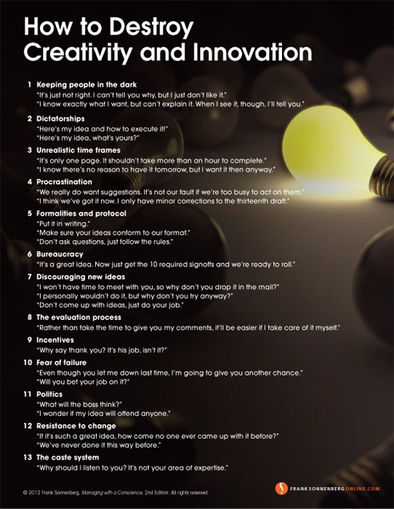
Creativity and innovation are the lifeblood of every organization. This poster describes 13 ways that creativity and innovation are destroyed every day.


Learn more / En savoir plus / Mehr erfahren:


- http://www.scoop.it/t/21st-century-learning-and-teaching/?tag=innovation


- http://www.scoop.it/t/21st-century-learning-and-teaching?tag=Creativity


- http://www.scoop.it/t/21st-century-learning-and-teaching/?tag=Sir+Ken+Robinson


- http://www.scoop.it/t/21st-century-learning-and-teaching/?tag=Frank+SONNENBERG


Gust MEES's insight:
Creativity and innovation are the lifeblood of every organization. This poster describes 13 ways that creativity and innovation are destroyed every day.


Learn more / En savoir plus / Mehr erfahren:


- http://www.scoop.it/t/21st-century-learning-and-teaching/?tag=innovation


- http://www.scoop.it/t/21st-century-learning-and-teaching?tag=Creativity


- http://www.scoop.it/t/21st-century-learning-and-teaching/?tag=Sir+Ken+Robinson


- http://www.scoop.it/t/21st-century-learning-and-teaching/?tag=Frank+SONNENBERG


Steve Wilhite's curator insight, April 2, 2016 3:00 AM
Share your insight
Silvia Nascimento's curator insight, April 4, 2016 8:21 PM
Creativity and innovation are the lifeblood of every organization. This poster describes 13 ways that creativity and innovation are destroyed every day.


Learn more / En savoir plus / Mehr erfahren:


- http://www.scoop.it/t/21st-century-learning-and-teaching/?tag=innovation


- http://www.scoop.it/t/21st-century-learning-and-teaching?tag=Creativity


- http://www.scoop.it/t/21st-century-learning-and-teaching/?tag=Sir+Ken+Robinson


- http://www.scoop.it/t/21st-century-learning-and-teaching/?tag=Frank+SONNENBERG


Felix Val's curator insight, April 5, 2016 3:21 AM
Creativity and innovation are the lifeblood of every organization. This poster describes 13 ways that creativity and innovation are destroyed every day.


Learn more / En savoir plus / Mehr erfahren:


- http://www.scoop.it/t/21st-century-learning-and-teaching/?tag=innovation


- http://www.scoop.it/t/21st-century-learning-and-teaching?tag=Creativity


- http://www.scoop.it/t/21st-century-learning-and-teaching/?tag=Sir+Ken+Robinson


- http://www.scoop.it/t/21st-century-learning-and-teaching/?tag=Frank+SONNENBERG


Scooped by Gust MEES
March 24, 2016 1:23 PM
Scoop.it!

#VirtualReality app recreates horror of #Germany concentration camp | #History #Genocide #VR #Apps 

How can virtual reality help to preserve historical heritage? In this episode of Futuris, show host Julián López Gómez travels to both Germany and Spain...


Learn more / En savoir plus / Mehr erfahren:


http://www.scoop.it/t/21st-century-learning-and-teaching/?tag=Virtual+Reality


http://www.scoop.it/t/21st-century-innovative-technologies-and-developments/?tag=Virtual+Reality+System


Gust MEES's insight:

How can virtual reality help to preserve historical heritage? In this episode of Futuris, show host Julián López Gómez travels to both Germany and Spain...


Learn more / En savoir plus / Mehr erfahren:


http://www.scoop.it/t/21st-century-learning-and-teaching/?tag=Virtual+Reality


http://www.scoop.it/t/21st-century-innovative-technologies-and-developments/?tag=Virtual+Reality+System


Antonios Bouris's curator insight, March 25, 2016 8:04 AM

How can virtual reality help to preserve historical heritage? In this episode of Futuris, show host Julián López Gómez travels to both Germany and Spain...


Learn more / En savoir plus / Mehr erfahren:


http://www.scoop.it/t/21st-century-learning-and-teaching/?tag=Virtual+Reality


http://www.scoop.it/t/21st-century-innovative-technologies-and-developments/?tag=Virtual+Reality+System


Fernando de la Cruz Naranjo Grisales's curator insight, March 25, 2016 3:01 PM

How can virtual reality help to preserve historical heritage? In this episode of Futuris, show host Julián López Gómez travels to both Germany and Spain...


Learn more / En savoir plus / Mehr erfahren:


http://www.scoop.it/t/21st-century-learning-and-teaching/?tag=Virtual+Reality


http://www.scoop.it/t/21st-century-innovative-technologies-and-developments/?tag=Virtual+Reality+System


WikiBlinks's curator insight, March 27, 2016 1:32 AM

How can virtual reality help to preserve historical heritage? In this episode of Futuris, show host Julián López Gómez travels to both Germany and Spain...


Learn more / En savoir plus / Mehr erfahren:


http://www.scoop.it/t/21st-century-learning-and-teaching/?tag=Virtual+Reality


http://www.scoop.it/t/21st-century-innovative-technologies-and-developments/?tag=Virtual+Reality+System


Scooped by Gust MEES
March 23, 2016 6:49 PM
Scoop.it!

#DigitalCitiZENship #eSkills | Tip 4: Avoid Scams | #Phishing #CyberSecurity #Awareness 

Know how to identify scams online. If someone offers you some new shoes, a free iPad or an all expense paid trip to Hawaii, you should be suspicious. 


Learn more / En savoir plus / Mehr erfahren:


https://gustmees.wordpress.com/2015/01/28/practice-learning-to-learn-example-2/


Gust MEES's insight:

Know how to identify scams online. If someone offers you some new shoes, a free iPad or an all expense paid trip to Hawaii, you should be suspicious. 


Learn more / En savoir plus / Mehr erfahren:


https://gustmees.wordpress.com/2015/01/28/practice-learning-to-learn-example-2/


Fernando de la Cruz Naranjo Grisales's curator insight, March 25, 2016 3:01 PM

Know how to identify scams online. If someone offers you some new shoes, a free iPad or an all expense paid trip to Hawaii, you should be suspicious. 


Learn more / En savoir plus / Mehr erfahren:


https://gustmees.wordpress.com/2015/01/28/practice-learning-to-learn-example-2/


Scooped by Gust MEES
March 23, 2016 6:26 PM
Scoop.it!

#DigitalCitiZENship #eSkills Tip 2: Protect Your Stuff | #Awareness #CyberSecurity #Passwords

Most of us have things on the web that we want to keep safe. One of the best ways to keep those things secure is to make sure that you have set strong passwords!


Learn more / En savoir plus / Mehr erfahren:


https://gustmeesen.wordpress.com/2012/03/16/beginners-it-security-guide/


Gust MEES's insight:

Most of us have things on the web that we want to keep safe. One of the best ways to keep those things secure is to make sure that you have set strong passwords!


Learn more / En savoir plus / Mehr erfahren:


https://gustmeesen.wordpress.com/2012/03/16/beginners-it-security-guide/


Fernando de la Cruz Naranjo Grisales's curator insight, March 25, 2016 3:01 PM

Most of us have things on the web that we want to keep safe. One of the best ways to keep those things secure is to make sure that you have set strong passwords!


Learn more / En savoir plus / Mehr erfahren:


https://gustmeesen.wordpress.com/2012/03/16/beginners-it-security-guide/


Scooped by Gust MEES
March 22, 2016 4:21 AM
Scoop.it!

Recognizing and Overcoming False Growth Mindset

Recognizing and Overcoming False Growth Mindset | 21st Century Learning and Teaching | Scoop.it
Examples of a false growth mindset include praising effort over progress, affirming students' potential without enabling them, and blaming their mindset instead of refocusing it.


Learn more / En savoir plus / Mehr erfahren:


http://www.scoop.it/t/21st-century-learning-and-teaching/?tag=Growth+Mindset


Gust MEES's insight:
Examples of a false growth mindset include praising effort over progress, affirming students' potential without enabling them, and blaming their mindset instead of refocusing it.


Learn more / En savoir plus / Mehr erfahren:


http://www.scoop.it/t/21st-century-learning-and-teaching/?tag=Growth+Mindset


Educational Peaks's curator insight, March 26, 2016 10:43 AM
Examples of a false growth mindset include praising effort over progress, affirming students' potential without enabling them, and blaming their mindset instead of refocusing it.


Learn more / En savoir plus / Mehr erfahren:


http://www.scoop.it/t/21st-century-learning-and-teaching/?tag=Growth+Mindset


Melinda Robinson's curator insight, March 27, 2016 3:30 AM
Examples of a false growth mindset include praising effort over progress, affirming students' potential without enabling them, and blaming their mindset instead of refocusing it.


Learn more / En savoir plus / Mehr erfahren:


http://www.scoop.it/t/21st-century-learning-and-teaching/?tag=Growth+Mindset


liz deskins's curator insight, April 1, 2016 7:58 AM
Examples of a false growth mindset include praising effort over progress, affirming students' potential without enabling them, and blaming their mindset instead of refocusing it.


Learn more / En savoir plus / Mehr erfahren:


http://www.scoop.it/t/21st-century-learning-and-teaching/?tag=Growth+Mindset


Scooped by Gust MEES
March 18, 2016 9:30 AM
Scoop.it!

5 Highly Effective Teaching Practices

5 Highly Effective Teaching Practices | 21st Century Learning and Teaching | Scoop.it
Check out these researched-based, best teaching practices and share with us the ways you already use them in your classroom.


Learn more:


http://www.scoop.it/t/21st-century-learning-and-teaching/?tag=Rise+of+the+Professional+Educator


Gust MEES's insight:
Check out these researched-based, best teaching practices and share with us the ways you already use them in your classroom.


Learn more:


http://www.scoop.it/t/21st-century-learning-and-teaching/?tag=Rise+of+the+Professional+Educator


Isabelle Brossard's curator insight, March 22, 2016 9:19 PM
Check out these researched-based, best teaching practices and share with us the ways you already use them in your classroom.


Learn more:


http://www.scoop.it/t/21st-century-learning-and-teaching/?tag=Rise+of+the+Professional+Educator


Himneet Khangura's curator insight, May 25, 2017 6:53 PM
Worth a read
Mr Allan's curator insight, June 7, 2017 4:40 AM

Thank you for this one! Anything like this that is straight forward and free of technical jargon is most welcome in my book.  I'm quite positive a high falutin' professor could very easily bore us to tears with reams and reams of academic justification backed by decades of research  to tell us these points. Interesting though that is... Thankfully you've scooped a classroom teachers perspective. Hallelujah! 5 points that speak directly to a teacher starting out in the profession. I'm your new fan.