21st Century Learning and Teaching
791.6K views | +4 today
21st Century Learning and Teaching
Related articles to 21st Century Learning and Teaching as also tools...
Curated by Gust MEES
Your new post is loading...

Popular Tags

Current selected tag: 'Learning 2 Learn'. Clear
Scooped by Gust MEES
November 12, 2016 11:39 AM
Scoop.it!

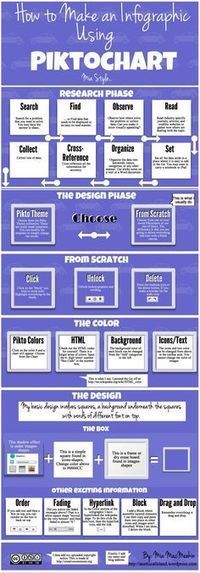
Lots of GREAT #Infographics about #LEARNing and #TEACHing from Mia macmeekin on #Pinterest

Lots of GREAT #Infographics about #LEARNing and #TEACHing from Mia macmeekin on #Pinterest | 21st Century Learning and Teaching | Scoop.it
Explore Karen Bowen's board "Mia macmeekin" on Pinterest, the world's catalog of ideas. | See more about Student, Reflective practice and Events.


Learn more / En savoir plus / Mehr erfahren:


http://www.scoop.it/t/21st-century-learning-and-teaching/?tag=Mia+MacMeekin


No comment yet.
Scooped by Gust MEES
November 10, 2016 7:48 PM
Scoop.it!

Why Is Imagination as Important as Knowledge in Education? | #Creativity

Why Is Imagination as Important as Knowledge in Education? | #Creativity | 21st Century Learning and Teaching | Scoop.it
Let’s start with the definitions of each:

Imagination is considered the faculty or action of forming new ideas, or images or concepts of external objects not present to the senses. 


Knowledge is about facts, information, and the skills acquired by a person through experience or education; the theoretical or practical understanding of a subject.

An imaginative student would be free to take risks, be a leader, and state opinions as opposed to stating the correct answer. An imaginative teacher would be free to take risks, be a leader, and be adaptable to the changing needs of their students.
Our imagination changes. It is organic. It grows as knowledge grows. Knowledge feeds the imagination which spurs us on to new knowledge. Ultimately this is the cycle of discovery and of learning we strive for in education.


Is Imagination More Important Than Knowledge?
In a recent TED conversation, readers chimed in with the following insights:


“I think imagination DRIVES knowledge acquisition. If you are really passionate about a possibility you imagine (whether it’s a better education system or a revolutionary scientific theory), you will seek out the knowledge needed to test it or to turn your vision to reality.” (Ayesha Ratnayake)


“Creativity is the product of imagination. So, both of them need knowledge to work and grow up together. Knowledge is static and creativity is changing, change is needed for new things to happen but to have change, there must first be something to change; knowledge.” (Thomas Z.)


“Both are necessary. Imagination drives inquiry and inquiry eventually leads to knowledge. With additional knowledge new levels of imagination become possible.” (Harald Jezek)


Learning more / En savoir plus / Mehr erfahren:


http://www.scoop.it/t/21st-century-learning-and-teaching/?tag=Imagination%3DCreativity%21


Gust MEES's insight:
Let’s start with the definitions of each:

Imagination is considered the faculty or action of forming new ideas, or images or concepts of external objects not present to the senses. 


Knowledge is about facts, information, and the skills acquired by a person through experience or education; the theoretical or practical understanding of a subject.

An imaginative student would be free to take risks, be a leader, and state opinions as opposed to stating the correct answer. An imaginative teacher would be free to take risks, be a leader, and be adaptable to the changing needs of their students.
Our imagination changes. It is organic. It grows as knowledge grows. Knowledge feeds the imagination which spurs us on to new knowledge. Ultimately this is the cycle of discovery and of learning we strive for in education.


Is Imagination More Important Than Knowledge?
In a recent TED conversation, readers chimed in with the following insights:


“I think imagination DRIVES knowledge acquisition. If you are really passionate about a possibility you imagine (whether it’s a better education system or a revolutionary scientific theory), you will seek out the knowledge needed to test it or to turn your vision to reality.” (Ayesha Ratnayake)


“Creativity is the product of imagination. So, both of them need knowledge to work and grow up together. Knowledge is static and creativity is changing, change is needed for new things to happen but to have change, there must first be something to change; knowledge.” (Thomas Z.)


“Both are necessary. Imagination drives inquiry and inquiry eventually leads to knowledge. With additional knowledge new levels of imagination become possible.” (Harald Jezek)


Learning more / En savoir plus / Mehr erfahren:


http://www.scoop.it/t/21st-century-learning-and-teaching/?tag=Imagination%3DCreativity%21


Xtel's curator insight, November 14, 2016 4:04 AM
Share your insight
Yudit Buitrago's curator insight, January 12, 2017 9:05 PM
I thrive on imagination. I am married to strong knowledge. I guess our kids have the best of both worlds!
Scooped by Gust MEES
November 10, 2016 5:48 PM
Scoop.it!

Why You Should Have More Empathy | #SoftSkills 

Why You Should Have More Empathy | #SoftSkills  | 21st Century Learning and Teaching | Scoop.it
Why are some people so much better at expressing empathy than others?

Psychologists define empathy as sensitivity to the emotions, both positive and negative, of other people. You can feel empathic—or empathetic (the two words are used interchangeably)—to someone who is feeling positive feelings, such as amusement or joy, in addition to someone who is feeling sadness or anger. “Empathy is being in the heart of another person,” says Susan Kuczmarski, a cultural anthropologist and adjunct faculty member in the executive education program at Northwestern University’s Kellogg School of Management.

Researchers have determined that people react in one of two ways when faced with another person’s emotions. Sometimes people respond with “empathic concern” or caregiving. They see themselves as a source of comfort or support for the other person.

But sometimes people feel threatened by the other person’s emotions and focus instead on themselves. They might try to help, to minimize their own discomfort. Typically they distance themselves. Psychologists call this response “empathic distress.”


Learn more / En savoir plus / Mehr erfahren:


http://www.scoop.it/t/21st-century-learning-and-teaching/?tag=Empathy


http://www.scoop.it/t/21st-century-learning-and-teaching/?tag=Soft+Skills


Gust MEES's insight:
Why are some people so much better at expressing empathy than others?

Psychologists define empathy as sensitivity to the emotions, both positive and negative, of other people. You can feel empathic—or empathetic (the two words are used interchangeably)—to someone who is feeling positive feelings, such as amusement or joy, in addition to someone who is feeling sadness or anger. “Empathy is being in the heart of another person,” says Susan Kuczmarski, a cultural anthropologist and adjunct faculty member in the executive education program at Northwestern University’s Kellogg School of Management.

Researchers have determined that people react in one of two ways when faced with another person’s emotions. Sometimes people respond with “empathic concern” or caregiving. They see themselves as a source of comfort or support for the other person.

But sometimes people feel threatened by the other person’s emotions and focus instead on themselves. They might try to help, to minimize their own discomfort. Typically they distance themselves. Psychologists call this response “empathic distress.”


Learn more / En savoir plus / Mehr erfahren:


http://www.scoop.it/t/21st-century-learning-and-teaching/?tag=Empathy


http://www.scoop.it/t/21st-century-learning-and-teaching/?tag=Soft+Skills


No comment yet.
Rescooped by Gust MEES from Learning & Technology News
November 10, 2016 10:12 AM
Scoop.it!

Critical pedagogy: schools must equip students to challenge the status quo | #RadicalPedagogy

Critical pedagogy: schools must equip students to challenge the status quo | #RadicalPedagogy | 21st Century Learning and Teaching | Scoop.it
Teachers should embrace a radical pedagogy and provoke students to demand equality for themselves and others, argues vice principal Tait Coles


Schools must develop a commitment to civic courage and social responsibility that ignites bravery in young people to realise they have the power and opportunity to challenge the status quo. School leaders have a duty to promote learning that encourage students to question rather than forcing teachers to lead drill-oriented, stimulus-and-response methodologies. Teachers must awaken the passions of their students and teach the knowledge and skills needed to direct and sustain it.


Students need the freedom and encouragement to determine and discover who they are and to understand that the system shouldn't define them – but rather give them the skills, knowledge and beliefs to understand that they can set the agenda. Educators must be prepared to embrace a radical pedagogy and believe that each school should be one of freedom that provokes students to fight against the corridors of power and enforce equality for themselves and others.


Critical pedagogy is the only way to achieve this. The philosophy was first described by Paulo Freire and has since been developed by the likes of Henry Giroux, Peter McLaren and Roger Simon. Critical pedagogy isn't a prescriptive set of practices – it's a continuous moral project that enables young people to develop a social awareness of freedom. This pedagogy connects classroom learning with the experiences, histories and resources that every student brings to their school. It allows students to understand that with knowledge comes power; the power that can enable young people to do something differently in their moment in time and take positive and constructive action.


Learn more / En savoir plus / Mehr erfahren:


http://www.scoop.it/t/21st-century-learning-and-teaching/?tag=Radical+Pedagogy


Via Nik Peachey
Gust MEES's insight:
Teachers should embrace a radical pedagogy and provoke students to demand equality for themselves and others, argues vice principal Tait Coles


Schools must develop a commitment to civic courage and social responsibility that ignites bravery in young people to realise they have the power and opportunity to challenge the status quo. School leaders have a duty to promote learning that encourage students to question rather than forcing teachers to lead drill-oriented, stimulus-and-response methodologies. Teachers must awaken the passions of their students and teach the knowledge and skills needed to direct and sustain it.


Students need the freedom and encouragement to determine and discover who they are and to understand that the system shouldn't define them – but rather give them the skills, knowledge and beliefs to understand that they can set the agenda. Educators must be prepared to embrace a radical pedagogy and believe that each school should be one of freedom that provokes students to fight against the corridors of power and enforce equality for themselves and others.


Critical pedagogy is the only way to achieve this. The philosophy was first described by Paulo Freire and has since been developed by the likes of Henry Giroux, Peter McLaren and Roger Simon. Critical pedagogy isn't a prescriptive set of practices – it's a continuous moral project that enables young people to develop a social awareness of freedom. This pedagogy connects classroom learning with the experiences, histories and resources that every student brings to their school. It allows students to understand that with knowledge comes power; the power that can enable young people to do something differently in their moment in time and take positive and constructive action.


Learn more / En savoir plus / Mehr erfahren:


http://www.scoop.it/t/21st-century-learning-and-teaching/?tag=Radical+Pedagogy


LundTechIntegration's curator insight, November 11, 2016 9:32 AM
Share your insight
Alexandra Duarte's curator insight, November 11, 2016 12:28 PM
Absolutely and urgent!!!
Scooped by Gust MEES
November 7, 2016 8:09 PM
Scoop.it!

How Finland broke every rule — and created a top school system - The Hechinger Report | #LEARNing2LEARN #PracTICE

How Finland broke every rule — and created a top school system - The Hechinger Report | #LEARNing2LEARN #PracTICE | 21st Century Learning and Teaching | Scoop.it
Spend five minutes in Jussi Hietava’s fourth-grade math class in remote, rural Finland, and you may learn all you need to know about education reform – if you want results, try doing the opposite of what American “education reformers” think we should do in classrooms.


Instead of control, competition, stress, standardized testing, screen-based schools and loosened teacher qualifications, try warmth, collaboration, and highly professionalized, teacher-led encouragement and assessment.


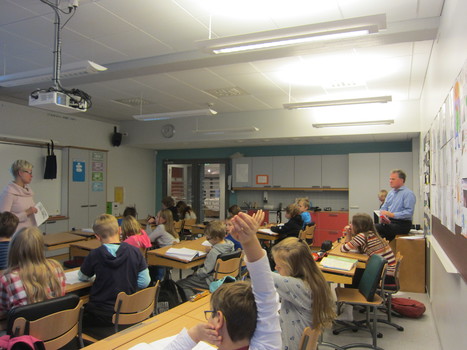
At the University of Eastern Finland’s Normaalikoulu teacher training school in Joensuu, Finland, you can see Hietava’s students enjoying the cutting-edge concept of “personalized learning.”


Learn more / En savoir plus / Mehr erfahren:


http://www.scoop.it/t/21st-century-learning-and-teaching/?tag=Finland


http://www.scoop.it/t/21st-century-learning-and-teaching/?tag=Personalized+Learning


Gust MEES's insight:
Spend five minutes in Jussi Hietava’s fourth-grade math class in remote, rural Finland, and you may learn all you need to know about education reform – if you want results, try doing the opposite of what American “education reformers” think we should do in classrooms.


Instead of control, competition, stress, standardized testing, screen-based schools and loosened teacher qualifications, try warmth, collaboration, and highly professionalized, teacher-led encouragement and assessment.


At the University of Eastern Finland’s Normaalikoulu teacher training school in Joensuu, Finland, you can see Hietava’s students enjoying the cutting-edge concept of “personalized learning.”


Learn more / En savoir plus / Mehr erfahren:


http://www.scoop.it/t/21st-century-learning-and-teaching/?tag=Finland


http://www.scoop.it/t/21st-century-learning-and-teaching/?tag=Personalized+Learning


Scooped by Gust MEES
November 7, 2016 4:35 PM
Scoop.it!

Getting ready for Modern-EDUcation: FIRST try to understand WHAT it is | #LEARNing2LEARN #ModernEDU #ICT

Getting ready for Modern-EDUcation: FIRST try to understand WHAT it is | #LEARNing2LEARN #ModernEDU #ICT | 21st Century Learning and Teaching | Scoop.it

Modern-EDUcation: FIRST try to understand WHAT it is before taking the wrong path! Let us be honest: EDUcation is far behind of WHAT it should be able to face the challenges of a modern world which is evolving quicker than WE can follow! Because of ICT everything is nearly possible: NEW professions are…


Learn more / En savoir plus / Mehr erfahren:


https://gustmees.wordpress.com/2016/05/19/a-holistic-view-of-what-will-influence-education-in-the-future/


https://gustmees.wordpress.com/2016/02/18/the-new-possibilities-to-learn-and-teach-with-ict/


https://gustmees.wordpress.com/2015/12/27/what-are-the-best-ways-of-teaching-and-learning-ideas-and-reflections/


Gust MEES's insight:

Modern-EDUcation: FIRST try to understand WHAT it is before taking the wrong path! Let us be honest: EDUcation is far behind of WHAT it should be able to face the challenges of a modern world which is evolving quicker than WE can follow! Because of ICT everything is nearly possible: NEW professions are…


Learn more / En savoir plus / Mehr erfahren:


https://gustmees.wordpress.com/2016/05/19/a-holistic-view-of-what-will-influence-education-in-the-future/


https://gustmees.wordpress.com/2016/02/18/the-new-possibilities-to-learn-and-teach-with-ict/


https://gustmees.wordpress.com/2015/12/27/what-are-the-best-ways-of-teaching-and-learning-ideas-and-reflections/


No comment yet.
Scooped by Gust MEES
November 7, 2016 9:12 AM
Scoop.it!

Doing Good Work Even When No One is Looking: A Vision for Schools

Doing Good Work Even When No One is Looking: A Vision for Schools | 21st Century Learning and Teaching | Scoop.it
Yet, note that I don’t write articles to get the approval of a teacher or another person. I write and share because I am compelled to do so. I consider it a personal calling to stretch myself and others to consider the challenges and opportunities of life and learning in a connected and digital age. I write the article whether ten people read it or ten thousand people read it. As I often draw from the wisdom of Isaac Asimov to point out, Writing is just thinking with my fingers.” I write to think and to share those thoughts with others.


I believe that ideas matter and that, too often today, we turn our ideas into propaganda by only making them visible in their finished and polished formats. I want people to see my ideas in their naked or raw format as well. They are ideas without the lipstick, without being dressed to impress.


Learn more / En savoir plus / Mehr erfahren:


http://www.scoop.it/t/21st-century-learning-and-teaching/?tag=listening


https://gustmees.wordpress.com/2016/09/22/blogs-tips-and-tricks/


Gust MEES's insight:
Yet, note that I don’t write articles to get the approval of a teacher or another person. I write and share because I am compelled to do so. I consider it a personal calling to stretch myself and others to consider the challenges and opportunities of life and learning in a connected and digital age. I write the article whether ten people read it or ten thousand people read it. As I often draw from the wisdom of Isaac Asimov to point out, Writing is just thinking with my fingers.” I write to think and to share those thoughts with others.


I believe that ideas matter and that, too often today, we turn our ideas into propaganda by only making them visible in their finished and polished formats. I want people to see my ideas in their naked or raw format as well. They are ideas without the lipstick, without being dressed to impress.


Learn more / En savoir plus / Mehr erfahren:


http://www.scoop.it/t/21st-century-learning-and-teaching/?tag=listening


https://gustmees.wordpress.com/2016/09/22/blogs-tips-and-tricks/


No comment yet.
Scooped by Gust MEES
November 6, 2016 11:48 AM
Scoop.it!

9 Characteristics Of 21st Century Learning | #ModernEDU

9 Characteristics Of 21st Century Learning | #ModernEDU | 21st Century Learning and Teaching | Scoop.it
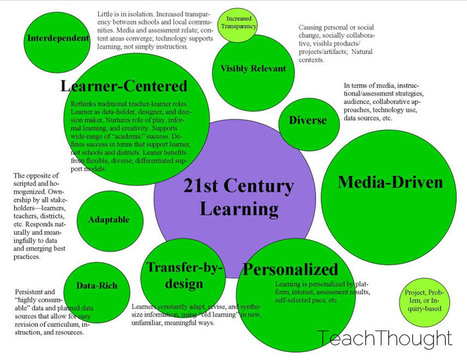
9 Characteristics Of 21st Century Learning

1. Learner-centered 

2. Media-driven (this doesn’t have to mean digital media)

3. Personalized

4. Transfer-by-Design

5. Visibly Relevant

6. Data-Rich

7. Adaptable

8. Interdependent

9. Diverse 


Gust MEES's insight:
9 Characteristics Of 21st Century Learning

1. Learner-centered 

2. Media-driven (this doesn’t have to mean digital media)

3. Personalized

4. Transfer-by-Design

5. Visibly Relevant

6. Data-Rich

7. Adaptable

8. Interdependent

9. Diverse 


Scooped by Gust MEES
November 4, 2016 12:10 PM
Scoop.it!

MakerEd on Pinterest | More than 5k of ideas | #Maker #MakerSpaces #Creativity

MakerEd on Pinterest | More than 5k of ideas | #Maker #MakerSpaces #Creativity | 21st Century Learning and Teaching | Scoop.it
Maker Movement, Tinker, Make & Learn | See more about 3D Printing, 3d printer and Arduino.


Learn more / En savoir plus / Mehr erfahren:


https://www.scoop.it/t/21st-century-learning-and-teaching/?tag=Ideas+for+makerspaces


https://gustmees.wordpress.com/2014/08/20/maker-space-a-new-trend-in-education-and-a-big-responsibility/


Gust MEES's insight:
Maker Movement, Tinker, Make & Learn | See more about 3D Printing, 3d printer and Arduino.


Learn more / En savoir plus / Mehr erfahren:


https://www.scoop.it/t/21st-century-learning-and-teaching/?tag=Ideas+for+makerspaces


https://gustmees.wordpress.com/2014/08/20/maker-space-a-new-trend-in-education-and-a-big-responsibility/


No comment yet.
Rescooped by Gust MEES from 21st Century Classroom Coaching
November 3, 2016 8:41 PM
Scoop.it!

No Student Is Unreachable | #Confidence #Acceptance #LEARNing2LEARN #IQ #EQ #EmotionalIntelligence

No Student Is Unreachable | #Confidence #Acceptance #LEARNing2LEARN #IQ #EQ #EmotionalIntelligence | 21st Century Learning and Teaching | Scoop.it

No Student Is Unreachable: 4 Strategies To Reach Students That Don't Seem To Want To Be Reached.


Students who are challenging–i.e. victims of disruptive childhoods–do not change overnight. They grow. For many of them, that growth is dependent on grasping onto an extremely diminished set of possibilities, interests, and strengths. Ultimately they’ll have the best shot at a stable life by working from the things they are good at and the things they enjoy. We serve them best by spending as much time seeking and discussing their often fragile and submerged interests and capacities as we do their significant needs and disabilities.


[Gust MEES] THEY might surprise YOU years later WHAT THEY are able to do in professional life! ;) THEY think mostly if there isn't a box, THEY don't fit in any box anyway!!! Which isn't an obstacle, should GET seen as THAT anyway!!!


Learn more / En savoir plus / Mehr erfahren:


http://www.scoop.it/t/21st-century-learning-and-teaching/?tag=innovation


Via Amy Burns
Gust MEES's insight:


No Student Is Unreachable: 4 Strategies To Reach Students That Don't Seem To Want To Be Reached.


Students who are challenging–i.e. victims of disruptive childhoods–do not change overnight. They grow. For many of them, that growth is dependent on grasping onto an extremely diminished set of possibilities, interests, and strengths. Ultimately they’ll have the best shot at a stable life by working from the things they are good at and the things they enjoy. We serve them best by spending as much time seeking and discussing their often fragile and submerged interests and capacities as we do their significant needs and disabilities.


[Gust MEES] THEY might surprise YOU years later WHAT THEY are able to do in professional life! ;) THEY think mostly if there isn't a box, THEY don't fit in any box anyway!!! Which isn't an obstacle, should GET seen as THAT anyway!!!


Learn more / En savoir plus / Mehr erfahren:


http://www.scoop.it/t/21st-century-learning-and-teaching/?tag=innovation


No comment yet.
Scooped by Gust MEES
November 2, 2016 6:29 PM
Scoop.it!

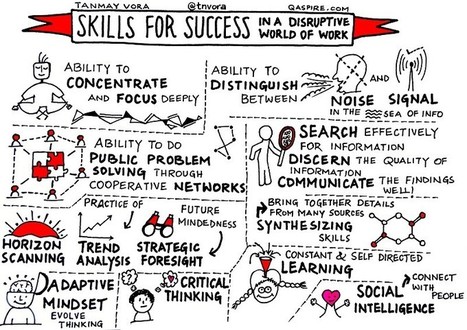
Skills for Success in a Disruptive World of Work

Skills for Success in a Disruptive World of Work | 21st Century Learning and Teaching | Scoop.it
“Skills young people should be learning to be prepared for a career in 2020 include:


The ability to concentrate, to focus deeply.


The ability to distinguish between the “noise” and the message in the ever-growing sea of information.


The ability to do public problem solving through cooperative work.


The ability to search effectively for information and to be able to discern the quality and veracity of the information one finds and then communicate these findings well.


Synthesizing skills (being able to bring together details from many sources).


The capability to be futures-minded through formal education in the practices of horizon-scanning, trends analysis and strategic foresight.”


Learn more / En savoir plus / Mehr erfahren:


https://gustmees.wordpress.com/2015/05/26/what-are-the-skills-needed-from-students-in-the-future/


Gust MEES's insight:
Skills young people should be learning to be prepared for a career in 2020 include:


The ability to concentrate, to focus deeply.


The ability to distinguish between the “noise” and the message in the ever-growing sea of information.


The ability to do public problem solving through cooperative work.


The ability to search effectively for information and to be able to discern the quality and veracity of the information one finds and then communicate these findings well.


Synthesizing skills (being able to bring together details from many sources).


The capability to be futures-minded through formal education in the practices of horizon-scanning, trends analysis and strategic foresight.”


Learn more / En savoir plus / Mehr erfahren:


https://gustmees.wordpress.com/2015/05/26/what-are-the-skills-needed-from-students-in-the-future/


David Baker's curator insight, December 14, 2016 2:50 PM
Infographic and discussion of the range of skills we need to help students learn as well as colleagues is helpful.  I was struggling with deep focus before I read this. It was a gentle reminder to step it up in many ways.
Gilson Schwartz's curator insight, December 18, 2016 8:30 AM
Antigamente a gente falava em "profissões do futuro". Agora são os "skills" do futuro"
Víctor Ríos Ochoa's curator insight, May 27, 2017 10:25 AM
Skills for Success in a Disruptive World of Work
Scooped by Gust MEES
November 2, 2016 11:46 AM
Scoop.it!

12 of the Most Dangerous Leadership Mindsets - Lolly Daskal 

12 of the Most Dangerous Leadership Mindsets - Lolly Daskal  | 21st Century Learning and Teaching | Scoop.it

Mindset is extremely important when it comes to great leadership. Mindset is the set of beliefs or way of thinking that determines your behavior, outlook and...


Learn more / En savoir plus / Mehr erfahren:


http://www.scoop.it/t/21st-century-learning-and-teaching/?tag=LeaderShip


Gust MEES's insight:

Mindset is extremely important when it comes to great leadership. Mindset is the set of beliefs or way of thinking that determines your behavior, outlook and...
 

Learn more / En savoir plus / Mehr erfahren:


http://www.scoop.it/t/21st-century-learning-and-teaching/?tag=LeaderShip


No comment yet.
Scooped by Gust MEES
October 31, 2016 7:33 PM
Scoop.it!

Hot Glue Art - Flower Vase with Flowers | #Ideas for #MakerSpaces | #Creativity #Maker #MakerED #LEARNingByDoing

Wonderful Creation Out of Hot Glue. 


Learn more / En savoir plus / Mehr erfahren:.


https://www.scoop.it/t/21st-century-learning-and-teaching/?tag=Ideas+for+makerspaces


https://gustmees.wordpress.com/2016/10/26/luxembourg-education-interviews-creativity-and-maker-spaces-maach3-ltettelbruck/


https://gustmees.wordpress.com/2016/04/05/luxembourg-education-interviews-5-creativity-and-maker-spaces-beecreative/


https://gustmees.wordpress.com/2014/08/20/maker-space-a-new-trend-in-education-and-a-big-responsibility/


Gust MEES's insight:

Wonderful Creation Out of Hot Glue. 


Learn more / En savoir plus / Mehr erfahren:.


https://www.scoop.it/t/21st-century-learning-and-teaching/?tag=Ideas+for+makerspaces


https://gustmees.wordpress.com/2016/10/26/luxembourg-education-interviews-creativity-and-maker-spaces-maach3-ltettelbruck/


https://gustmees.wordpress.com/2016/04/05/luxembourg-education-interviews-5-creativity-and-maker-spaces-beecreative/


https://gustmees.wordpress.com/2014/08/20/maker-space-a-new-trend-in-education-and-a-big-responsibility/


No comment yet.
Scooped by Gust MEES
November 12, 2016 11:17 AM
Scoop.it!

Infographic of the Week: 27 Ways to Reflect on Your Teaching | #Reflecting

Infographic of the Week: 27 Ways to Reflect on Your Teaching | #Reflecting | 21st Century Learning and Teaching | Scoop.it
The beginning of a new year typically presents individuals with a designated time and opportunity to reflect upon the events of the past 365 days, to cherish the unforgettable moments, to learn from mistakes or disappointments, and most importantly, to set goals for the next chapter in this adventure we call life. In education, we call these types of behaviors “reflective practice”, or the manner in which teachers step back and evaluate the learning environment.


As in any other profession, we assess what was successful, what didn’t work as planned and/or what needs to be adjusted the next time—all in an effort to improve our craft.


Learn more / En savoir plus / Mehr erfahren:


http://www.scoop.it/t/21st-century-learning-and-teaching/?tag=reflection


https://gustmees.wordpress.com/2016/06/01/update-twitter-chats-what-to-do-better/


https://www.pinterest.com/swirlz42/mia-macmeekin/


Gust MEES's insight:
The beginning of a new year typically presents individuals with a designated time and opportunity to reflect upon the events of the past 365 days, to cherish the unforgettable moments, to learn from mistakes or disappointments, and most importantly, to set goals for the next chapter in this adventure we call life. In education, we call these types of behaviors “reflective practice”, or the manner in which teachers step back and evaluate the learning environment.


As in any other profession, we assess what was successful, what didn’t work as planned and/or what needs to be adjusted the next time—all in an effort to improve our craft.


Learn more / En savoir plus / Mehr erfahren:


http://www.scoop.it/t/21st-century-learning-and-teaching/?tag=reflection


https://gustmees.wordpress.com/2016/06/01/update-twitter-chats-what-to-do-better/


https://www.pinterest.com/swirlz42/mia-macmeekin/


Martha Bongiorno's curator insight, November 14, 2016 9:48 AM
With teachers ever increasing to-do list, it's not unheard of to put our reflections on the back burner. This is one of the most important parts of our profession, and we need to make time for it. Here are some ideas on how to reflect!
GwynethJones's curator insight, December 10, 2016 9:44 PM

It's important to take the time to REFLECT on your teaching practice. It's a good practice! And it's from @JoyceValenza. So it's gotta be good, right?

Scooped by Gust MEES
November 10, 2016 6:57 PM
Scoop.it!

What is Emotional Intelligence and Why Should We Teach it? | #EQ #SoftSkills #Empathy 

What is Emotional Intelligence and Why Should We Teach it? | #EQ #SoftSkills #Empathy  | 21st Century Learning and Teaching | Scoop.it

Harvard theorist Howard Gardner describes emotional intelligence as “the level of your ability to understand other people, what motivates them and how to work cooperatively with them.”  Emotional intelligence can be broken down into five major components.  When we look at each in turn it becomes easy to understand why EQ plays such a key role success.


Learn more / En savoir plus / Mehr erfahren:


http://www.scoop.it/t/21st-century-learning-and-teaching/?tag=Empathy


http://www.scoop.it/t/21st-century-learning-and-teaching/?tag=Soft+Skills


Gust MEES's insight:

Harvard theorist Howard Gardner describes emotional intelligence as “the level of your ability to understand other people, what motivates them and how to work cooperatively with them.”  Emotional intelligence can be broken down into five major components.  When we look at each in turn it becomes easy to understand why EQ plays such a key role success.


Learn more / En savoir plus / Mehr erfahren:


http://www.scoop.it/t/21st-century-learning-and-teaching/?tag=Empathy


http://www.scoop.it/t/21st-century-learning-and-teaching/?tag=Soft+Skills


Andreas Christodoulou's curator insight, November 11, 2016 4:04 PM

I thought maybe some of you guys would appreciate my article "Emotional Intelligence and Leadership: The Importance of Leading by Emotions". Hope this truly serves you: http://tiny.cc/LeadingwithEQ

Scooped by Gust MEES
November 10, 2016 12:33 PM
Scoop.it!

RETHINKING EDUcation |Towards a global common good? | UNESCO [#pdf] #ModernEDU 

RETHINKING EDUcation |Towards a global common good? | UNESCO [#pdf] #ModernEDU  | 21st Century Learning and Teaching | Scoop.it

Reaffirming a humanistic approach to education Education alone cannot hope to solve all development challenges, but a humanistic and holistic approach to education can and should contribute to achieving a new development model. In such a model, economic growth must be guided by environmental stewardship and by concern for peace, inclusion and social justice.


The ethical and moral principles of a humanistic approach to development stand against violence, intolerance, discrimination and exclusion. Regarding education and learning, it means going beyond narrow utilitarianism and economism to integrate the multiple dimensions of human existence.


This approach emphasizes the inclusion of people who are often subject to discrimination – women and girls, indigenous people, persons with disabilities, migrants, the elderly and people living in countries affected by conflict. It requires an open and flexible approach to learning that is both lifelong and life-wide: an approach that provides the opportunity for all to realize their potential for a sustainable future and a life of dignity.


This humanistic approach has implications for the definition of learning content and pedagogies, as well as for the role of teachers and other educators. It is even more relevant given the rapid development of new technologies, in particular digital technologies.


Learn more / En savoir plus / Mehr erfahren:


https://gustmees.wordpress.com/2015/11/27/unlearning-the-old-relearning-learning-to-learn-howto/


Gust MEES's insight:

Reaffirming a humanistic approach to education Education alone cannot hope to solve all development challenges, but a humanistic and holistic approach to education can and should contribute to achieving a new development model. In such a model, economic growth must be guided by environmental stewardship and by concern for peace, inclusion and social justice.


The ethical and moral principles of a humanistic approach to development stand against violence, intolerance, discrimination and exclusion. Regarding education and learning, it means going beyond narrow utilitarianism and economism to integrate the multiple dimensions of human existence.


This approach emphasizes the inclusion of people who are often subject to discrimination – women and girls, indigenous people, persons with disabilities, migrants, the elderly and people living in countries affected by conflict. It requires an open and flexible approach to learning that is both lifelong and life-wide: an approach that provides the opportunity for all to realize their potential for a sustainable future and a life of dignity.


This humanistic approach has implications for the definition of learning content and pedagogies, as well as for the role of teachers and other educators. It is even more relevant given the rapid development of new technologies, in particular digital technologies.


Learn more / En savoir plus / Mehr erfahren:


https://gustmees.wordpress.com/2015/11/27/unlearning-the-old-relearning-learning-to-learn-howto/


Geemik Maria Açucena Da Silva's curator insight, November 11, 2016 4:27 PM
"This humanistic approach has implications for the definition of learning content and pedagogies, as well as for the role of teachers and other educators. It is even more relevant given the rapid development of new technologies, in particular digital technologies."
Scooped by Gust MEES
November 7, 2016 8:34 PM
Scoop.it!

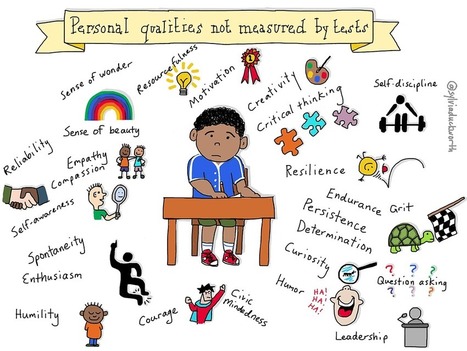
Can A Test Measure This? | #SoftSkills #Character #CriticalTHINKing #PersonalQualities

Can A Test Measure This? | #SoftSkills #Character #CriticalTHINKing #PersonalQualities | 21st Century Learning and Teaching | Scoop.it

Woe to the standardized test, bastard child of ed reform and a dated and industrialized approach learning. Damning evidence of the failure of our collective imagination to design ways to help children come to understand what’s worth understanding.


Learn more / En savoir plus / Mehr erfahren:


http://www.scoop.it/t/21st-century-learning-and-teaching/?tag=Soft+Skills


http://www.scoop.it/t/21st-century-learning-and-teaching/?tag=Character


Gust MEES's insight:

Woe to the standardized test, bastard child of ed reform and a dated and industrialized approach learning. Damning evidence of the failure of our collective imagination to design ways to help children come to understand what’s worth understanding.


Learn more / En savoir plus / Mehr erfahren:


http://www.scoop.it/t/21st-century-learning-and-teaching/?tag=Soft+Skills


http://www.scoop.it/t/21st-century-learning-and-teaching/?tag=Character


No comment yet.
Rescooped by Gust MEES from Education 2.0 & 3.0
November 7, 2016 7:34 PM
Scoop.it!

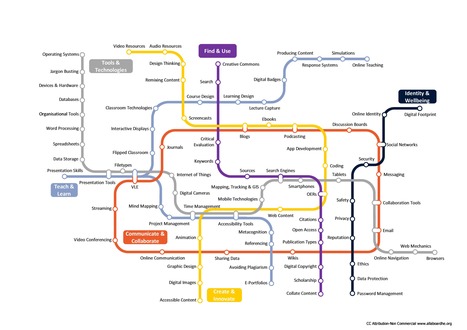
The Digital Skills Metro Map | #Design #LEARNing2LEARN #eSkills 

The Digital Skills Metro Map | #Design #LEARNing2LEARN #eSkills  | 21st Century Learning and Teaching | Scoop.it

All Aboard is rising to the challenge identified in the national Digital Roadmap of building our ‘digital capacity,’ not just in terms of infrastructure, but also in terms of people, their skills, their levels of confidence and their ability to critique and challenge pre-conceptions.


Learn more / En savoir plus / Mehr erfahren:


https://gustmees.wordpress.com/2014/10/03/design-the-learning-of-your-learners-students-ideas/


Via Nik Peachey, Yashy Tohsaku
Gust MEES's insight:

All Aboard is rising to the challenge identified in the national Digital Roadmap of building our ‘digital capacity,’ not just in terms of infrastructure, but also in terms of people, their skills, their levels of confidence and their ability to critique and challenge pre-conceptions.


Learn more / En savoir plus / Mehr erfahren:


https://gustmees.wordpress.com/2014/10/03/design-the-learning-of-your-learners-students-ideas/


Helen Wybrants's curator insight, November 12, 2016 4:32 AM
Getting embedded at last
Willem Kuypers's curator insight, November 14, 2016 5:02 AM
Idéé originale pour représenter les compétences digitales.
Daniel Collins's curator insight, January 18, 2017 12:02 AM
A really useful map of a range of digital skills necessary for higher education.
Scooped by Gust MEES
November 7, 2016 11:48 AM
Scoop.it!

Why is the Maker Movement Important? + Great Tools & Resources | #MakerED #MakerSpaces #LEARNingByDoing #Creativity

Why is the Maker Movement Important? + Great Tools & Resources | #MakerED #MakerSpaces #LEARNingByDoing #Creativity | 21st Century Learning and Teaching | Scoop.it
Why is the Maker Movement Important for Academics? Maker Movements Tools & Resources.


Learn more / En savoir plus / Mehr erfahren:


http://www.scoop.it/t/21st-century-learning-and-teaching/?tag=Ideas+for+makerspaces


https://gustmees.wordpress.com/2014/08/20/maker-space-a-new-trend-in-education-and-a-big-responsibility/


https://gustmees.wordpress.com/2016/04/05/luxembourg-education-interviews-5-creativity-and-maker-spaces-beecreative/


https://gustmees.wordpress.com/2016/10/26/luxembourg-education-interviews-creativity-and-maker-spaces-maach3-ltettelbruck/


Gust MEES's insight:
Why is the Maker Movement Important for Academics? Maker Movements Tools & Resources.


Learn more / En savoir plus / Mehr erfahren:


http://www.scoop.it/t/21st-century-learning-and-teaching/?tag=Ideas+for+makerspaces


https://gustmees.wordpress.com/2014/08/20/maker-space-a-new-trend-in-education-and-a-big-responsibility/


https://gustmees.wordpress.com/2016/04/05/luxembourg-education-interviews-5-creativity-and-maker-spaces-beecreative/


https://gustmees.wordpress.com/2016/10/26/luxembourg-education-interviews-creativity-and-maker-spaces-maach3-ltettelbruck/


No comment yet.
Scooped by Gust MEES
November 6, 2016 4:02 PM
Scoop.it!

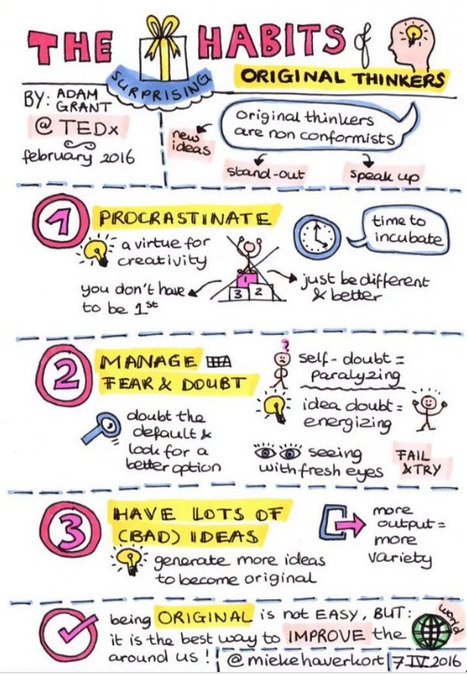
The surprising habits of original thinkers | Adam Grant

The surprising habits of original thinkers | Adam Grant | 21st Century Learning and Teaching | Scoop.it

How do creative people come up with great ideas? Organizational psychologist Adam Grant studies "originals": thinkers who dream up new ideas and take action to put them into the world. In this talk, learn three unexpected habits of originals — including embracing failure. "The greatest originals are the ones who fail the most, because they're the ones who try the most," Grant says. "You need a lot of bad ideas in order to get a few good ones."

TEDTalks is a daily video podcast of the best talks and performances from the TED Conference, where the world's leading thinkers and doers give the talk of their lives in 18 minutes (or less). Look for talks on Technology, Entertainment and Design -- plus science, business, global issues, the arts and much more.


Learn more / En savoir plus / Mehr erfahren:


https://www.youtube.com/watch?v=fxbCHn6gE3U


Scooped by Gust MEES
November 4, 2016 12:35 PM
Scoop.it!

Tinkering on Pinterest | Lots of ideas for #Maker #MakerED #MakerSpaces #Creativity

Tinkering on Pinterest | Lots of ideas for #Maker #MakerED #MakerSpaces #Creativity | 21st Century Learning and Teaching | Scoop.it
Explore Salsa 'e Maracuya's board "Tinkering" on Pinterest, the world's catalog of ideas. | See more about Arduino, Electronics and 3D Printing.


Learn more / En savoir plus / Mehr erfahren:


https://www.scoop.it/t/21st-century-learning-and-teaching/?tag=Ideas+for+makerspaces


https://gustmees.wordpress.com/2014/08/20/maker-space-a-new-trend-in-education-and-a-big-responsibility/


Gust MEES's insight:
Explore Salsa 'e Maracuya's board "Tinkering" on Pinterest, the world's catalog of ideas. | See more about Arduino, Electronics and 3D Printing.


Learn more / En savoir plus / Mehr erfahren:


https://www.scoop.it/t/21st-century-learning-and-teaching/?tag=Ideas+for+makerspaces


https://gustmees.wordpress.com/2014/08/20/maker-space-a-new-trend-in-education-and-a-big-responsibility/


kathymcdonough's curator insight, November 5, 2016 8:35 AM
Old school spool racers -----> scribble bots
 
Scooped by Gust MEES
November 3, 2016 6:50 PM
Scoop.it!

What is innovative teaching? | #LEARNing2LEARN #ProfessionalDevelopment

What is innovative teaching? | #LEARNing2LEARN #ProfessionalDevelopment | 21st Century Learning and Teaching | Scoop.it

This is not too a difficult question to address, because innovative teaching is good whether or not technology is used. A bad teacher does not suddenly become a good teacher just because technology is included into the mix. Nor does a good teacher need to always use technology to maintain their effectiveness. But before we discuss this question any further, we should define 'innovative teaching.' What is it, and how do we know a good, innovative teacher when we see one?

For me, innovative teaching is often invisible, and the teacher is very much peripheral, to the most important factor - the student and their learning. Good teachers instinctively know when to intervene and most importantly, when to get out of the way. Teaching is not so focused on instruction today (and nor should it ever have been), but is increasingly about facilitation, and considers the student holistically. Innovative teaching focuses on creating conducive environments within which good learning can occur. Innovative teachers are excellent at supporting students, and are also adept at creating engaging content and new experiences. A good teacher observes and measures progress without causing any stress to the learner or interruption to learning.

Innovative teachers are instinctive about student challenges such as lack of understanding, loss of focus, low engagement or demotivation. They strive to find new ways to keep students on task, motivate them to do their best, and encourage them to succeed. Innovative teaching is where good teachers are inventive and creative - where they continue to discover and devise new methods and content to ensure that students always get the best learning experiences. But consider that invention and innovation are not the same. Invention requires a creative individual, whereas innovation requires a courageous community (see for example Rogers' Diffusion of Innovation Theory, 2003). Therefore, innovative teachers also need courage to embed their new methods and content, especially if it runs counter to the culture they work within.


Learn more / En savoir plus / Mehr erfahren:


http://www.scoop.it/t/21st-century-learning-and-teaching/?tag=innovation


http://www.scoop.it/t/21st-century-learning-and-teaching/?tag=Rise+of+the+Professional+Educator


Gust MEES's insight:

This is not too a difficult question to address, because innovative teaching is good whether or not technology is used. A bad teacher does not suddenly become a good teacher just because technology is included into the mix. Nor does a good teacher need to always use technology to maintain their effectiveness. But before we discuss this question any further, we should define 'innovative teaching.' What is it, and how do we know a good, innovative teacher when we see one?

For me, innovative teaching is often invisible, and the teacher is very much peripheral, to the most important factor - the student and their learning. Good teachers instinctively know when to intervene and most importantly, when to get out of the way. Teaching is not so focused on instruction today (and nor should it ever have been), but is increasingly about facilitation, and considers the student holistically. Innovative teaching focuses on creating conducive environments within which good learning can occur. Innovative teachers are excellent at supporting students, and are also adept at creating engaging content and new experiences. A good teacher observes and measures progress without causing any stress to the learner or interruption to learning.

Innovative teachers are instinctive about student challenges such as lack of understanding, loss of focus, low engagement or demotivation. They strive to find new ways to keep students on task, motivate them to do their best, and encourage them to succeed. Innovative teaching is where good teachers are inventive and creative - where they continue to discover and devise new methods and content to ensure that students always get the best learning experiences. But consider that invention and innovation are not the same. Invention requires a creative individual, whereas innovation requires a courageous community (see for example Rogers' Diffusion of Innovation Theory, 2003). Therefore, innovative teachers also need courage to embed their new methods and content, especially if it runs counter to the culture they work within.


Learn more / En savoir plus / Mehr erfahren:


http://www.scoop.it/t/21st-century-learning-and-teaching/?tag=innovation


http://www.scoop.it/t/21st-century-learning-and-teaching/?tag=Rise+of+the+Professional+Educator


No comment yet.
Scooped by Gust MEES
November 3, 2016 9:55 AM
Scoop.it!

Harnessing the Incredible Learning Potential of the Adolescent Brain | #LEARNing2LEARN #Research

Harnessing the Incredible Learning Potential of the Adolescent Brain | #LEARNing2LEARN #Research | 21st Century Learning and Teaching | Scoop.it
“[Adolescence is] a stage of life when we can really thrive, but we need to take advantage of the opportunity,” said Temple University neuroscientist Laurence Steinberg at a Learning and the Brain conference in Boston. Steinberg has spent his career studying how the adolescent brain develops and believes there is a fundamental disconnect between the popular characterizations of adolescents and what’s really going on in their brains.

Because the brain is still developing during adolescence, it has incredible plasticity. It’s akin to the first five years of life, when a child’s brain is growing and developing new pathways all the time in response to experiences. Adult brains are somewhat plastic as well — otherwise they wouldn’t be able to learn new things — but “brain plasticity in adulthood involves minor changes to existing circuits, not the wholesale development of new ones or elimination of others,” Steinberg said.


The adolescent brain is exquisitely sensitive to experience,” Steinberg said. “It is like the recording device is turned up to a different level of sensitivity.” That’s why humans tend to remember even the most mundane events from adolescence much better than even important events that took place later in life. It also means adolescence could be an extremely important window for learning that sticks. Steinberg notes this window is also lengthening as scientists observe the onset of puberty happening earlier and young people taking on adult roles later in life. Between these two factors, one biological and one social, adolescence researchers now generally say the period lasts 15 years between the ages of 10 and 25.


Learn more / En savoir plus / Mehr erfahren:


http://www.scoop.it/t/21st-century-learning-and-teaching/?tag=Brain


Use #Andragogy UP from 11 years:


 https://gustmees.wordpress.com/2015/05/13/andragogy-adult-teaching-how-to-teach-ict/


Gust MEES's insight:
[Adolescence is] a stage of life when we can really thrive, but we need to take advantage of the opportunity,” said Temple University neuroscientist Laurence Steinberg at a Learning and the Brain conference in Boston. Steinberg has spent his career studying how the adolescent brain develops and believes there is a fundamental disconnect between the popular characterizations of adolescents and what’s really going on in their brains.

Because the brain is still developing during adolescence, it has incredible plasticity. It’s akin to the first five years of life, when a child’s brain is growing and developing new pathways all the time in response to experiences. Adult brains are somewhat plastic as well — otherwise they wouldn’t be able to learn new things — but “brain plasticity in adulthood involves minor changes to existing circuits, not the wholesale development of new ones or elimination of others,” Steinberg said.


The adolescent brain is exquisitely sensitive to experience,” Steinberg said. “It is like the recording device is turned up to a different level of sensitivity.” That’s why humans tend to remember even the most mundane events from adolescence much better than even important events that took place later in life. It also means adolescence could be an extremely important window for learning that sticks. Steinberg notes this window is also lengthening as scientists observe the onset of puberty happening earlier and young people taking on adult roles later in life. Between these two factors, one biological and one social, adolescence researchers now generally say the period lasts 15 years between the ages of 10 and 25.


Learn more / En savoir plus / Mehr erfahren:


http://www.scoop.it/t/21st-century-learning-and-teaching/?tag=Brain


Use #Andragogy UP from 11 years:


 https://gustmees.wordpress.com/2015/05/13/andragogy-adult-teaching-how-to-teach-ict/


Koen Mattheeuws's curator insight, November 5, 2016 7:04 AM
The problem is that many high schools confuse “challenging work” with “amount of work.”
Lon Woodbury's curator insight, February 22, 2017 10:00 AM

It seems like boredom is deadly to the learning process and that's exactly what high school students report is what is happening to them in most schools - The lack of challenge. k-Lon

Scooped by Gust MEES
November 2, 2016 12:28 PM
Scoop.it!

Make an LED Candle You Can Blow Out | #XMas #project? | #Maker #MakerED #MakerSpaces #Creativity

Make an LED Candle You Can Blow Out | #XMas #project? | #Maker #MakerED #MakerSpaces #Creativity | 21st Century Learning and Teaching | Scoop.it
Use a wind sensor and an Arduino to blow out an LED candle.


Learn more / En savoir plus / Mehr erfahren:


http://www.scoop.it/t/21st-century-learning-and-teaching/?tag=Ideas+for+makerspaces


Gust MEES's insight:
Use a wind sensor and an Arduino to blow out an LED candle.


Learn more / En savoir plus / Mehr erfahren:


http://www.scoop.it/t/21st-century-learning-and-teaching/?tag=Ideas+for+makerspaces


No comment yet.
Scooped by Gust MEES
October 31, 2016 7:51 PM
Scoop.it!

How to make 3D TEXTURED FLOWERS on a Painting with HOT GLUE | #Ideas for #MakerSpaces | #Creativity #MakerED 

Oh, hot glue--how I love thee! And yes, I keep using gold spray paint. I love gold!...and I keep forgetting to buy more spray paint. :) 


Learn more / En savoir plus / Mehr erfahren:.


https://www.scoop.it/t/21st-century-learning-and-teaching/?tag=Ideas+for+makerspaces


https://gustmees.wordpress.com/2016/10/26/luxembourg-education-interviews-creativity-and-maker-spaces-maach3-ltettelbruck/


https://gustmees.wordpress.com/2016/04/05/luxembourg-education-interviews-5-creativity-and-maker-spaces-beecreative/


https://gustmees.wordpress.com/2014/08/20/maker-space-a-new-trend-in-education-and-a-big-responsibility/


Gust MEES's insight:

Learn more / En savoir plus / Mehr erfahren:.


https://www.scoop.it/t/21st-century-learning-and-teaching/?tag=Ideas+for+makerspaces


https://gustmees.wordpress.com/2016/10/26/luxembourg-education-interviews-creativity-and-maker-spaces-maach3-ltettelbruck/


https://gustmees.wordpress.com/2016/04/05/luxembourg-education-interviews-5-creativity-and-maker-spaces-beecreative/


https://gustmees.wordpress.com/2014/08/20/maker-space-a-new-trend-in-education-and-a-big-responsibility/


No comment yet.