Your new post is loading...
Where Europe succeeds, we succeed
Europe matters to us. For the past thirty years, it’s been our aim to help fuel the European economy... The Web has prompted tremendous growth and innovation over the last two decades, but also a new set of challenges. Cybersecurity has emerged as a significant global threat. Every day more than a million people are successfully targeted by cyber criminals. ===> That’s a new victim every 14 seconds. <=== Malicious attacks are mushrooming and conservative estimates put the annual cost of cybercrime at $114 billion. Given this, it’s hardly surprising that the World Economic Forum’s Risk Response Network recently elevated cybersecurity to a top five global risk, alongside issues such as income inequality, rising greenhouse gas emissions and fiscal imbalances. Gust MEES: in the word ICT = "I", meaning "Information", so this is necessary in Education especially! IT-Security in 21st Century is a need to get included in curriculum, it's the responsibility of Education to teach IT-Security and Internet-Safety... By knowing that every 14 seconds there is a new victim to cybercriminals I hope that educators and teachers will see the importance of preparing best their learners to be best protected, even if they need to learn themselves about it, we are ALL "Life Long Learners" ;) Read more: http://www.microsoft.eu/digital-policy/posts/tackling-cybersecurity-together.aspx

|
Scooped by
Gust MEES
June 12, 2012 12:33 PM
|
Faced with external security threats from hackers and others, along with a growing array of even more dangerous internal security threats, companies worldwide are feeling the heat. Organizations traditionally have had only two options to address identity and access management: 1. Internal excessive privilege - System Administrators with complete access to servers and data can pose a tremendous internal threat if they turn against the company. Similarly, everyone from admins up to executives poses a threat to security and data if they maintain excessive access rights after changing positions or taking on different roles. 2. Third party access - Giving partners and other third parties appropriate access to data is no longer cut and dried. Data stored in the cloud may be located across the country or overseas—or sit on physical servers owned by one vendor, but housed in facilities owned by any number of data centers. Employees of these third parties often have direct access to unencrypted data, or they may retain copies of both encrypted or unencrypted data. 3. Hacktivism - Politically motivated hacking is on the rise. Members of various groups assert that much of their success comes not from their technical expertise, but from having found easy targets. While an organization may not have control over whether or not it is attacked, effective identity and access management strategies and technologies, and basic employee security training, will reduce the chances that attacks will succeed. 4. Social engineering - Social engineering is the age-old technique of using lies, deception and manipulation to gain sufficient knowledge to dupe an unwary employee or company. Using public social channels to detail every aspect of your upcoming “unplugged” vacation trip may be just what a scammer needs to put an attack in motion. 5. Internal negligence - Negligence typically is an offense committed by management when “they should have known better.” Most successful data security breaches have some element of managerial negligence associated with them, such as simply forgetting to check log reports for clearly suspicious patterns. Gust MEES: A MUST READ for Education and Business! Read more: http://www.net-security.org/secworld.php?id=13084&amp;utm_source=dlvr.it&amp;utm_medium=twitter
|
|
Scooped by
Gust MEES
June 12, 2012 6:48 AM
|
Tweens are just starting to become social and mobile, and they are definitely starting to think more about digital technologies. They want to explore Facebook, and they want to get their own mobile phone. Younger kids need things explained differently then older kids. This Tip Sheet can help. Download this new guide today, hot off the press! Gust MEES: requires email-registration... Read more: http://info.uknowkids.com/online-safety-tips-for-kids-and-tweens/
|
|
Scooped by
Gust MEES
June 11, 2012 5:51 PM
|
VERACODE: Mobile Security for the Rest of Us! Get Our Fun New E-book Join Joe IT and his blissfully unaware mobile device user Joe Worker as they navigate together the perils of BYOD. It’s a whimsical look at a serious subject and readers walk away with Ten Tips to secure their device. Gust MEES: A MUST READ! Read more about VERACODE here: http://www.veracode.com/
|
|
Scooped by
Gust MEES
June 11, 2012 8:40 AM
|
|
|
Scooped by
Gust MEES
June 11, 2012 7:55 AM
|
Within five years, I predict, the word social will seem as cliché as synergy feels now. Social connection will be like a dial tone, something we once expected to hear and now don’t bother listening for as we dial. What it represents is just there.
Between now and then, though, we have some growing up to do. We must get comfortable in our social shoes. Overcome personal and professional discomfort with relying on relationships to get work done. And do that publicly, as an intentional mindful function rather than something we’ve always done without notice or acknowledgment.
Read more: http://marciaconner.com/blog/social-everything/
Via Ana Cristina Pratas
|
|
Rescooped by
Gust MEES
from Réseau social entreprise
June 8, 2012 7:10 PM
|
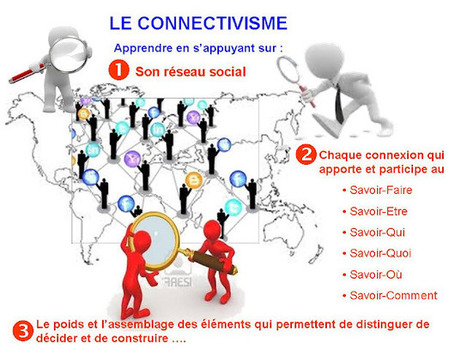
Aujourd'hui, j'ai découvert un article rédigé par CONSCIOUNESS sur le Connectivisme, une démarche d'apprentissage adaptée au monde connecté dans lequel nous évoluons de plus en plus. L'approche est intéressante à étudier dans le cadre de nos réflexions sur l'évolution des organisations personnelles, professionnelles et sociales dans lesquelles nous œuvrons quotidiennement. Lire plus : http://pbernardon.blogspot.fr/2012/02/le-connectivisme-favorise.html
Via pbernardon
|
|
Scooped by
Gust MEES
June 8, 2012 11:03 AM
|
"Twenty years after the "big leap forward" in democracy, media pluralism is in trouble in too many countries in the wider Europe. Governmental or oligarchic monopolies are getting thicker by the year, and not only in post-Soviet nations but also inside the EU walls. The burgeoning Internet-based media alone cannot provide for a functioning diversity of public opinion, and yet they are already under attack. This Pan-European Forum should pick the brains of all those concerned for the future of our shared freedoms, and move the European Union beyond non-intervention, to become a protector of media diversity in our nations." Read more: http://www.mediapluralism.eu/
|
|
Scooped by
Gust MEES
June 5, 2012 7:32 AM
|
My students are now blogging online! It’s quite exciting. We started by working through the blogging concept and process using paper blogs and a week later, we put those same ideas on our class blog. But first, we needed to make sure we were safe! In fact, I first had to have multiple meetings with my principal, the technology teacher and integration specialist – understandably so! This is a big step when it’s the first time young students will be putting themselves out there. But I made a few assurances that using kidblog.org would be safe. First, I designed this go around so that all the students’ posts would only go live after I approved them. I also made certain that would be the case for all the comments. In addition, I created our classes blog so that the posts would only be viewable by our classmates when they are logged on. In other words, it’s a closed blog. No one can see our posts, just us. Read more: http://theinspiredclassroom.com/2012/06/students-blogging-safely-online/?utm_source=feedburner&utm_medium=twitter&utm_campaign=Feed%3A+TheInspiredClassroom+%28The+Inspired+Classroom%29
|
|
Scooped by
Gust MEES
June 3, 2012 10:45 AM
|
My name is George Couros, and I am currently a Division Principal of Innovative Teaching and Learning with Parkland School Division, located in Stony Plain, Alberta, Canada. The schools are from ages K-12, and I love working with kids of all ages. I am passionate about distributed leadership within my division, and believe that creating a collaborative environment with all stakeholders, will help to ensure that we meet the best needs of all children. The term “master teacher” seems to get thrown around a lot, but is something that many educators aspire to be. In my ten years in the field of education, I would say that the definition of “master teacher” has definitely changed. When I think of a master teacher, here are the qualities that I would suggest they have: 1. Connects with kids first 2. Teaches kids first and curriculum second 3. Ensures that they draw relevance to curriculum 4. Works with students to develop a love of learning 5. Embodies lifelong learning 6. Focuses on learning goals as opposed to performance goals 7. Ensures that “character education” is an essential part of learning 8. Passionate about the content they teach 9. A master teacher is a “school teacher” - 10. Strong communication skills Read more for details: http://georgecouros.ca/blog/archives/267
|
|
|
Rescooped by
Gust MEES
from Asking Good Questions
June 13, 2012 4:58 AM
|
|
|
Scooped by
Gust MEES
June 12, 2012 12:24 PM
|
|
|
Scooped by
Gust MEES
June 12, 2012 8:05 AM
|
|
|
Scooped by
Gust MEES
June 11, 2012 11:24 AM
|
Mobility is empowering individuals and boosting productivity. But these advantages are offset by another vision of mobility as an unchained malady - multiplying the threat environment and thus making securing the enterprise even harder to manage. As companies continue to embrace mobility and BYOD, what are the myriad security implications that result and how can CSOs properly address these? With a number of up-to-the-minute feature stories, plus a Q&A with leading CSOs, and a case study detailing an enterprise mobile implementation, we explore these issues and more in this special Spotlight edition of SC Magazine. Gust MEES: you need to complete a form first to download the requested PDF document, but it is worth to read for best #BYOD and also #itsecurity... Read more: http://forms.madisonlogic.com/Form.aspx?pub=18&pgr=259&src=2397&ctg=15&ast=19699&crv=0&cmp=5619&frm=446&autodn=1&yld=0
|
|
Scooped by
Gust MEES
June 11, 2012 8:01 AM
|
|
|
Scooped by
Gust MEES
June 9, 2012 8:03 PM
|
The Internet's reach is so pervasive, it feels as though it has always been around. The reality is that the web is still in its infancy, and we don't really understand the risks it poses to our mental health. In fact, various experts, such as Larry D. Rosen, a psychologist and author of "iDisorder," believe that personal gadgets are making us mentally ill and are exacerbating other problems such as narcissism, depression or obsessive-compulsive disorder. Other mental health professionals have already identified disorders ranging from "Facebook depression" to "phantom vibration syndrome." Realistically, most of us don't have the luxury of disconnecting from the Internet, particularly communication professionals whose work depends more and more on it. However, there are various things you can do to curtail the negative effects it may have and prevent digital burnout. Read more: http://www.pbs.org/mediashift/2012/06/5-tips-to-prevent-digital-burnout-and-maintain-good-mental-health-159.html?utm_source=feedburner&utm_medium=feed&utm_campaign=Feed:+pbs/mediashift-blog+(mediashift-blog)&utm_content=Google+Reader
|
|
Scooped by
Gust MEES
June 8, 2012 12:15 PM
|
|
|
Scooped by
Gust MEES
June 6, 2012 6:48 PM
|
|
|
Scooped by
Gust MEES
June 5, 2012 7:21 AM
|
In the 21st century, technology has changed the ways in which we communicate and go about our lives. Very few educators would disagree with the notion that technology has dramatically changed the teaching and learning process. With the help of some fellow teachers, here is a short list of the top 12 ways technology has changed the way we learn: Read more: http://www.teachhub.com/how-technology-changed-learning
|
|
Scooped by
Gust MEES
June 4, 2012 7:44 AM
|
|